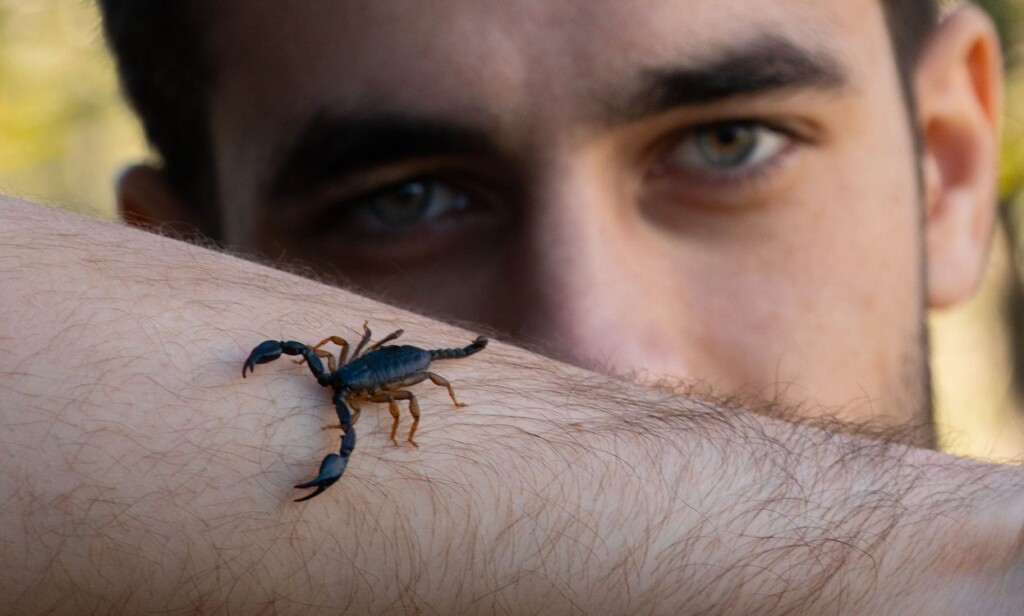
Scorpion Venom May Provide the Next Breast Cancer Breakthrough

– credit Marino Linic

Scientists in Brazil are currently testing to see if the venom of an Amazonian scorpion could be used to poison breast cancer tumors.

Researchers at the University of São Paulo’s Preto School of Pharmaceutical Sciences (FCFRP-USP) have long worked to clone and express proteins from rattlesnake and scorpion venom with hopes of transforming these powerful compounds into medicines.

Recently, their work identified that venom of the scorpion Brotheas amazonicus appears to attack breast cancer cells in a way similar to a widely used chemotherapy medication.

These early findings were generated through a collaboration with scientists from the National Institute for Amazonian Research (INPA) and the Amazonas State University (UEA).

“Through bioprospecting, we were able to identify a molecule in the species of this Amazonian scorpion that is similar to that found in the venoms of other scorpions and that acts against breast cancer cells,” said Eliane Candiani Arantes, a professor at FCFRP-USP and the coordinator of the project.

Arantes and her team identified two neurotoxins in scorpion venom with immunosuppressive effects. Working with collaborators at INPA and UEA, they found a peptide named BamazScplp1 in the venom of Brotheas amazonicus that appears to have anti-tumor potential.

Laboratory tests showed that the peptide’s impact on breast cancer cells was comparable to paclitaxel, a commonly prescribed chemotherapy treatment. It primarily triggers necrosis, a form of cell death previously associated with molecules from other scorpion species.

Arantes and her team have isolated other components of venoms from scorpions and from snakes that have been used to help develop other clinical applications, including an internal wound sealant that mimics the body’s natural clotting and scaffolding processes. It’s undergoing trials for use in nerve repair, bone healing, and restoring movement following spinal cord injury.Next time you see a scorpion, and think it a nasty creepy crawly that will send you to the hospital, show a bit of grace; they might help save a woman’s life some day. Scorpion Venom May Provide the Next Breast Cancer Breakthrough
Read More........

Brazilian satellite to be orbited by Indian rocket reaches Chennai


Brazilian satellite Amazonia-1, slated to be put into orbit by Indian Space Research Organisation's (ISRO) rocket Polar Satellite Launch Vehicle (PSLV), has landed here on an Emirates SkyCargo flight, it was announced on Wednesday. In a statement, Emirates said its freight division Emirates SkyCargo flew the Amazonia-1 satellie from Sao Jose dos Campos, Brazil to Chennai.

This is the first time that Emirates SkyCargo has transported a space satellite from South America.

Amazonia-1 is the first satellite to have been developed completely in Brazil by the National Institute for Space Research (INPE), Brazil's apex body dedicated for space research and exploration.

The satellite took eight years to be developed and once launched into space, will help monitor the ecosystem of the Amazon rainforest, the world's largest tropical rainforest, the statement said.

The satellite is due to be sent to space in February 2021 from the Satish Dhawan Space Centre located in Andhra Pradesh's Sriharikota.

Emirates SkyCargo, together with the INPE, the airport and local partners, conducted two comprehensive simulation sessions ahead of the transport date to be able to transport the sensitive cargo safely.

During the transportation process, the Amazonia-1 satellite was dismantled into multiple components to facilitate easy loading and unloading from the aircraft.

The satellite components were packed inside large containers to avoid any damage during the transport.

ISRO Chairman K.Sivan had told IANS: "End of February or early March 2021, we will be sending our rocket Polar Satellite Launch Vehicle-C51 (PSLV-C51). The primary payload will be the Brazilian satellite called Amazonia, an earth observation satellite."

"The PSLV-C51 mission will be a very special mission not only for ISRO but also for India as the rocket will be carrying the earth observation satellite Anand made by an Indian startup called Pixxel (incorporated as Syzygy Space Technologies Pvt Ltd)," he had added.

The PSLV-C51 will also carry a communication satellite built by the students of city-based Space Kidz India and another satellite built by a consortium of three Indian universities. (IANS), Source: https://southasiamonitor.org
Read More........

Interactive LED facade installed on 30-storey hotel


The 30-storey Hotel WZ Jardins in Sao Paulo, Brazil, has been fitted with an LED facade called 'The Light Creature' which directly responds to its surroundings. The display responds to air quality, sound and interaction from the general public, via an app. The edifice is covered with pixellated blocks of blue, grey, and gold, and is part of a project called 'Hacked Cities' that explores how technology can bring positive change to cities. 
The display was created with Grasshopper parametric software that recorded and analysed on-site ambient noise over a 24-hour period. Brazilian design company Estudio Guto Requena created the display to represent morning, afternoon, evening, and night using the recorded data. Peak levels are represented by gold, quieter levels by navy blue, almost silent is light blue. A complete lack of noise is shown in muted grey. Around 200 strips of low-energy LED lights are embedded in the metal skin and create an interactive dynamic between the city, its inhabitants, and the hotel. Behaving autonomously, the system reacts in real time to external forces. Ambient noise picked up through on-site microphones directly affects the form and motion of the fluid facade. The on-site sensors helps the facade change colours minute-by-minute to reflect local air quality. Red and orange colours depict pollutants, otherwise, blue and green shades appear. The public can also interact with the display with just a mobile app. Using touch and voice, the screen and microphone can transmit data onto the facade. Source: InAVate,
Read More........

New Technology To Record Whale Songs In Antarctica

Pilot Whale
Sydney, March 28 (IANS/EFE) Scientists have managed to capture up to 26,545 blue whale songs in the Antarctic in a study for which they used - for the first time - new acoustical detection and tracking techniques to locate and observe them. The work was carried out by researchers from Germany, Argentina, Australia, Brazil, Chile, the US, France, Norway, Britain, South Africa and New Zealand, all of whom are participating in the ongoing Antarctic Blue Whale Project to study the world's largest animal. Some 18 experts in acoustics and in classification of the whales, as well as engineers and observers, departed in January on a seven-week trip to the Ross Sea with the aim of deploying acoustic devices known as sonobuoys to study the population, distribution and behavior of the whales. The result was 626 hours of audio registered in real time including 26,545 songs - or vocalizations - produced by the gigantic beasts, according to the project's head acoustician, Brian Miller, with the Australian Antarctic Division. The blue whale - or Balaenoptera musculus - makes a very deep and resonant call that can be captured underwater hundreds of kilometers away, Miller said in a statement. The International Whaling Commission has calculated that in 2000 the population of blue whales in the Southern Hemisphere was between 400 and 1,400. Blue whales are the largest animals on earth, growing up to 31 meters long and weighing 170,000 kg or more. --IANS/EFE, Source: News Track India Image: flickr.com
Read More........

The secrets behind Sao Paulo’s extraordinary recycling rates

The figures are breathtaking, to the point of being on the verge of miraculous. ABAL, the Brazilian Aluminium Association’s 2011 figures show that for the tenth (yes, 10th) year running Brazil has the highest rate of aluminium canrecycling in the world reaching a new world record of 98,3%. In other words, over 98 of every 100 cans produced in Brazil make their way to the recycling plant before hitting the rubbish heap. Brazil is a vast country so that equates to 2million cans recycled per hour and in São Paulo the system is of such efficiency that the same metal you drink out of today will have a 98% chance of being back on a shelf somewhere in the city within 33 days. To put that in context, the next highest recycler of aluminium cans is Japan at 92,6%, a highly developed and procedure-focused country. The average for Europe is a shameful 66,7% which in turn is still slightly higher than the rate of 54,1% in the US. The can recycling business indirectly saves energy due to a recycled can being 20 times more energy efficient to produce than a new one and as a sector injects over R$ 600million into the Brazilian economy per year. Impressive figures but how is that achieved. Whilst the ABAL and the politicians may point to educational programs, social initiatives, environmental awareness, technlogy and processing
Recycling bins, a rare sight in São Paulo
chains, the real answer is in the last paragraph. It’s all about the money. Part of the R$ 600million comes from paying for to have these cans searched for and collected by a legion of scrap hunters or catadores as they are locally known. A catador, or scrap collector, hard at work. No catador is hunting cans for the joy of global environmental impact, rather the can has become the best scrap to hunt. You get more reais per gram handing a can than virtually anything else, and they are thrown out in abundance. It is the cheapest and most efficient recycling system and requires no government investment. For every 75 cans a catador gets approximately R$3 (depending on the region) whereas a kilo of paper or 20 plastic PET bottles fetch just a few cents.  The catadores are paid enough for it to be worthwhile for them to eek out a living on collecting cans (rather than other material) but sufficiently poorly to ensure recycling
is a highly profitable activity. Pure capitalism at work, ethically questionable, but without a doubt effective as the 98,3% figure shows. But before we celebrate here’s a thought for the next time you go to a major event in São Paulo and you see a catador collecting cans: the time he invests in collecting cans he neglects in collecting other material. And without true governmental initiatives, excelling in one sector will by definition mean failing in other. Unsurprisingly Brazil is nowhere to be seen in the ranking of top paper-recycling countries for instance…Source: Article
Read More........

Birth Of A Giant Planet: Candidate Protoplanet Spotted Inside Its Stellar Womb


Credit: ESO/L. Calçada
Astronomers using ESO’s Very Large Telescope have obtained what is likely the first direct observation of a forming planet still embedded in a thick disc of gas and dust. If confirmed, this discovery will greatly improve our understanding of how planets form and allow astronomers to test the current theories against an observable target. This artist’s impression shows the formation of a gas giant planet in the ring of dust around the young star HD 100546. This system is also suspected to contain another large planet orbiting closer to the star. The newly-discovered object lies about 70 times further from its star than the Earth does from the Sun. This protoplanet is surrounded by a thick cloud of material so that, seen from this position, its star almost invisible and red in colour because of the scattering of light from the dust. An international team led by Sascha Quanz (ETH Zurich, Switzerland) has studied the disc of gas and dust that surrounds the young star HD 100546, a relatively nearby neighbour located 335 light-years from Earth. They were surprised to find what seems to be a planet in the process of being formed, still embedded in the disc of material around the young star. The candidate planet would be a gas giant similar to Jupiter. “So far, planet formation has mostly been a topic tackled by computer simulations,”
says Sascha Quanz. “If our discovery is indeed a forming planet, then for the first time scientists will be able to study the planet formation process and the interaction of a forming planet and its natal environment empirically at a very early stage.” This composite image shows a view from the NASA/ESA Hubble Space Telescope (left) and from the NACO system on ESO’s Very Large Telescope (right) of the gas and dust around the young star HD 100546. The Hubble visible-light image shows the outer disc of gas and dust around the star. The new infrared VLT picture of a small part of the disc shows a candidate protoplanet. Both pictures were taken with a special coronagraph that suppresses the light from the brilliant star. The position of the star is marked with a red cross in both panels.  HD 100546 is a well-
Credit: ESO/NASA/ESA/Ardila et al.
studied object, and it has already been suggested that a giant planet orbits about six times further from the star than the Earth is from the Sun. The newly found planet candidate is located in the outer regions of the system, about ten times further out [1]. The planet candidate around HD 100546 was detected as a faint blob located in the circumstellar disc revealed thanks to the NACO adaptive optics instrument on ESO’s VLT, combined with pioneering data analysis techniques. The observations were made using a special coronagraph in NACO, which operates at near-infrared wavelengths and suppresses the brilliant light coming from the star at the location of the protoplanet candidate [2]. This image from the NACO system on ESO’s Very Large Telescope shows a candidate protoplanet in the disc of gas and dust around the young star HD100546. This picture was taken with a special coronagraph that suppresses the light from the brilliant star and allows the region of the protoplanet to be seen in great detail. The brightest part of this picture is the candidate protoplanet and the dark disc at the bottom is hiding the very bright. 
Credit: ESO
star itself According to current theory, giant planets grow by capturing some of the gas and dust that remains after the formation of a star [3]. The astronomers have spotted several features in the new image of the disc around HD100546 that support this protoplanet hypothesis. Structures in the dusty circumstellar disc, which could be caused by interactions between the planet and the disc, were revealed close to the detected protoplanet. Also, there are indications that the surroundings of the protoplanet are potentially heated up by the formation process. This chart shows the position of the young star HD 100546 in the southern constellation of Musca (The Fly). Most of the stars that are visible to the unaided eye from a clear and dark site are shown. The star HD 100546 is surrounded by a ring of dust where a planet appears to be in the process of formation. This star is a little too faint to see with the unaided eye,
Credit: ESO, IAU and Sky & Telescope
but can be picked up easily in binoculars. The planets and the dust ring cannot be seen in small telescopes. Adam Amara, another member of the team, is enthusiastic about the finding. “Exoplanet research is one of the most exciting new frontiers in astronomy, and direct imaging of planets is still a new field, greatly benefiting from recent improvements in instruments and data analysis methods. In this research we used data analysis techniques developed for cosmological research, showing that cross-fertilisation of ideas between fields can lead to extraordinary progress.” This image from the NASA/ESA Hubble Space Telescope shows a visible light view of the outer dust around the young star HD100546.
Credit: ESO/NASA/ESA/Ardila et al.
The position of the newly discovered protoplanet is marked with an orange spot. The inner part of this picture is dominated by artifacts from the brilliant central star, which has been digitally subtracted, and the black blobs are not real. Although the protoplanet is the most likely explanation for the observations, the results of this study require follow-up observations to confirm the existence of the planet and discard other plausible scenarios. Among other explanations, it is possible, although unlikely, that the detected signal could have come from a background source. It is also possible that the newly detected object might not be a protoplanet, but a fully formed planet which was ejected from its original orbit closer to the star. When the new object around HD 100546 is confirmed to be a forming planet embedded in its parent disc of gas and dust, it will become an unique laboratory in which to study the formation process of a new planetary system. This picture shows the sky around the young star HD 100546 in the southern constellation of Musca (The Fly). It was created from images from the Digitized Sky Survey 2. The cross-
Credit: ESO/Digitized Sky Survey 2. Acknowledgement: Davide De Martin
like features that are centred on brighter stars, as well as the coloured circles around them, are artifacts of the telescope and photographic process and are not real. Notes: [1] The protoplanet candidate orbits about 70 times further from its star than the Earth does from the Sun. This distance is comparable to the size of the orbits of outer Solar System dwarf planets such as Eris and Makemake. This location is controversial, as it does not fit well with current theories of planet formation. It is unclear at present whether the newfound planet candidate has been in its current position for the whole time since it formed or whether it could have migrated from the inner regions. [2] The team made use of a special feature called an apodised phase plate that increases the contrast of the image close to the star. [3] To study planet formation, astronomers cannot look at the Solar System, as all the planets in our neighborhood were formed more than four billion years ago. But for many years, theories about planet formation were strongly influenced by what astronomers could see in our local surroundings, as no other planets were known. Since 1995, when the first exoplanet around a sunlike star was discovered, several hundred planetary systems have been found, opening up new opportunities for scientists studying planetary formation. Up to now however, none have been “caught in the act” in the process of being formed, whilst still embedded in the disc of material around their young parent star. More information: This research was presented in a paper “A Young Protoplanet Candidate Embedded in the Circumstellar disc of HD 100546”, by S. P. Quanz et al., to appear online in the 28 February 2013 issue of Astrophysical Journal Letters. The team is composed of Sascha P. Quanz (ETH Zurich, Switzerland), Adam Amara (ETH), Michael R. Meyer (ETH), Matthew A. Kenworthy (Sterrewacht Leiden, Netherlands), Markus Kasper (ESO, Garching, Germany) and Julien H. Girard (ESO, Santiago, Chile). ESO is the foremost intergovernmental astronomy organisation in Europe and the world’s most productive ground-based astronomical observatory by far. It is supported by 15 countries: Austria, Belgium, Brazil, the Czech Republic, Denmark, France, Finland, Germany, Italy, the Netherlands, Portugal, Spain, Sweden, Switzerland and the United Kingdom. ESO carries out an ambitious programme focused on the design, construction and operation of powerful ground-based observing facilities enabling astronomers to make important scientific discoveries. ESO also plays a leading role in promoting and organising cooperation in astronomical research. ESO operates three unique world-class observing sites in Chile: La Silla, Paranal and Chajnantor.  At Paranal, ESO operates the Very Large Telescope, the world’s most advanced visible-light astronomical observatory and two survey telescopes. VISTA works in the infrared and is the world’s largest survey telescope and the VLT Survey Telescope is the largest telescope designed to exclusively survey the skies in visible light. ESO is the European partner of a revolutionary astronomical telescope ALMA, the largest astronomical project in existence. ESO is currently planning the 39-metre European Extremely Large optical/near-infrared Telescope, the E-ELT, which will become “the world’s biggest eye on the sky”. Contacts and sources: Sascha P. Quanz, ETH Zurich, Zurich, Switzerland, Julien H. Girard, ESO, Santiago, Chile, Richard Hook, ESO , Links, Research paperPhotos of the VLTSource: Nano Patents And Innovations
Read More........

Emperor Tamarin Endangered Habitat Populations.

The “Emperors Tamarin” are mainly gray on their bodies, with a mixture of fine yellow hair on their backs and a rusty-red scattering of color on their breast. They also have a silvery brown crown, black hands and feet, and a reddish white moustache that hangs down to its chest in two strands. Like most tamarins, this species has claws on all of its fingers and toes except the great toe, which has a nail. Emperor tamarins are active by day and are very graceful, friendly, and playful monkeys. They are “leapers” in their motor behavior and move through trees with rather quick, jerky movements. The estrus cycle of the Emperor Tamarin is about 15 days, and the female mates with all the males of the group. The gestation period lasts from 140-145 days, after which 1-2 young are born. The father usually helps with the baby’s birth, receiving it at the end of partruition and washing it. A newborn Emperor is completely helpless, weighs approximately 1.2 oz, and has a coat of short hair. A mother feeds her baby every 2-3 hours. The babies ride on the backs of their parents for 6-7 weeks, and at around 2-3 months of age they go through a weaning period. Most of these tamarins become sexually mature around 16-20 months of age. The life
span of this species is 10-20 years. The estrus cycle of the Emperor Tamarin is about 15 days, and the female mates with all the males of the group. The gestation period lasts from 140-145 days, after which 1-2 young are born. The father usually helps with the baby’s birth, receiving it at the end of partruition and washing it. A newborn Emperor is completely helpless, weighs approximately 1.2 oz, and has a coat of short hair. A mother feeds her baby every 2-3 hours. The babies ride on the backs of their parents for 6-7 weeks, and at around 2-3 months of age they go through a weaning period. Most of these tamarins become sexually mature around 16-20 months of age. The life span of this species is 10-20 years. DIET Their diet consists mainly of fruits, insects, and tree sap. It feeds on fruit, flowers, and nectar of different species of trees, usually those with small crowns. Emperor tamarins get most of the protein in their diet through eating invertebrates such as locusts, beetles, butterflies, spiders, and ants. The tree sap is an additional source of valuable carbohydrates and minerals. Emperor tamarins have also been known to eat
smaller vertebrates such as lizards, tree frogs, and bird eggs. STATUS: Special concern. Saguinas imperator is considered endangered or threatened in Brazil and Peru, but in other areas of their terrestrial biome, the IUCN classifies their status as indeterminate. The clearing of forest habitat by humans is the main reason they are in danger. FACTOIDS: This species also displays a need for tenderness, as in captivity they love to be stroked by hand and will actually lay on their backs in hopes of extra petting attention. Emperor tamarins were named after the Emperor of Germany, Emperor Wilhelm II. Taxidermists liked to play with these monkeys and twist up their moustaches to look like the Emperor. Swiss Zoologist Goeldi gave the species the name of “emperor” as a joke, but the name stuck and was soon given the Latin name of “Saguinas imperator”.Source: Animal-Discovery
Read More........

84 Million Stars and Counting

VISTA gigapixel mosaic of the central parts of the Milky Way
Using a whopping nine-gigapixel image from the VISTA infrared survey telescope at ESO’s Paranal Observatory, an international team of astronomers has created a catalogue of more than 84 million stars in the central parts of the Milky Way. This gigantic dataset contains more than ten times more stars than previous studies and is a major step forward for the understanding of our home galaxy. The image gives viewers an incredible, zoomable view of the central part of our galaxy. It is so large that, if printed with the resolution of a typical book, it would be 9 metres long and 7 metres tall.
Wide-field view of the Milky Way, showing the extent of a new VISTA gigapixel image
“By observing in detail the myriads of stars surrounding the centre of the Milky Way we can learn a lot more about the formation and evolution of not only our galaxy, but also spiral galaxies in general,” explains Roberto Saito (Pontificia Universidad Católica de Chile, Universidad de Valparaíso and The Milky Way Millennium Nucleus, Chile), lead author of the study.
Optical/infrared comparison of the central parts of the Milky Way
Most spiral galaxies, including our home galaxy the Milky Way, have a large concentration of ancient stars surrounding the centre that astronomers call the bulge. Understanding the formation and evolution of the Milky Way’s bulge is vital for understanding the galaxy as a whole. However, obtaining detailed observations of this region is not an easy task. “Observations of the bulge of the Milky Way are very hard because it is obscured by dust,” says Dante Minniti (Pontificia Universidad Catolica de Chile, Chile), co-author of the study. “To peer into the heart of the galaxy, we need to observe in infrared light, which is
Colour–magnitude diagram of the Galactic bulge
less affected by dust.”the The large mirror, wide field of view and very sensitive infrared detectors of ESO’s 4.1-metre Visible and Infrared Survey Telescope for Astronomy (VISTA) make it by far the best tool for this job. The team of astronomers is using data from the VISTA Variables in the Via Lactea programme (VVV) [1], one of six public surveys carried out with VISTA. The data have been used to create a monumental 108 200 by 81 500 pixel colour image containing nearly nine billion pixels. This is one of the biggest astronomical images ever produced. The team has now used these data to compile the largest catalogue of the central concentration of stars in the Milky Way ever created [2].
Annotated map of VISTA’s view of the centre of the Milky Way
To help analyse this huge catalogue the brightness of each star is plotted against its colour for about 84 million stars to create a colour–magnitude diagram. This plot contains more than ten times more stars than any previous study and it is the first time that this has been done for the entire bulge. Colour–magnitude diagrams are very valuable tools that are often used by astronomers to study the different physical properties of stars such as their temperatures, masses and ages [3]. “Each star occupies a particular spot in this diagram at any moment during its lifetime. Where it falls depends on how bright it is and how hot it is. Since the new data gives us a snapshot of all the stars in one go, we can now make a census of all the stars in this part of the Milky Way,” explains Dante Minniti. Video above: Infrared/visible light comparison of VISTA’s gigapixel view of the centre of the Milky Way. The new colour–magnitude diagram of the bulge contains a treasure trove of information about the structure and content of the Milky Way. One interesting result revealed in the new data is the large number of faint red dwarf stars. These are prime candidates around which to search for small exoplanets using the transit method [4]. “One of the other great things about the VVV survey is that it’s one of the ESO VISTA public surveys. This means that we’re making all the data publicly available through the ESO data archive, so we expect many other exciting results to come out of this great resource," concludes Roberto Saito. Notes: [1] The VISTA Variables in the Via Lactea (VVV) survey is an ESO public survey dedicated to scanning the southern plane and bulge of the Milky Way through five near-infrared filters. It started in 2010 and was granted a total of 1929 hours of observing time over a five-year period. Via Lactea is the Latin name for the Milky Way. [2] The image used in this work covers about 315 square degrees of the sky (a bit less than 1% of the entire sky) and observations were carried out using three different infrared filters. The catalogue lists the positions of the stars along with their measured brightnesses through the different filters. It contains about 173 million objects, of which about 84 million have been confirmed as stars. The other objects were either too faint or blended with their neighbours or affected by other artefacts, so that accurate measurements were not possible. Others were extended objects such as distant galaxies. The image used here required a huge amount of data processing, which was performed by Ignacio Toledo at the ALMA OSF. It corresponds to a pixel scale of 0.6 arcseconds per pixel, down-sampled from the original pixel scale of 0.34 arcseconds per pixel. [3] A colour–magnitude diagram is a graph that plots the apparent brightnesses of a set of objects against their colours. The colour is measured by comparing how bright objects look through different filters. It is similar to a Hertzsprung-Russell (HR) diagram but the latter plots luminosity (or absolute magnitude) rather than just apparent brightness and a knowledge of the distances of the stars plotted is also needed. [4] The transit method for finding planets searches for the small drop in brightness of a star that occurs when a planet passes in front of it and blocks some of its light. The small size of the red dwarf stars, typically with spectral types K and M, gives a greater relative drop in brightness when low-mass planets pass in front of them, making it easier to search for planets around them. More information: This research was presented in a paper “Milky Way Demographics with the VVV Survey I. The 84 Million Star Colour–Magnitude Diagram of the Galactic Bulge“ by R. K. Saito et al., which was published in the journal Astronomy & Astrophysics (A&A, 544, A147). The team is composed of R. K. Saito (Pontificia Universidad Católica de Chile, Santiago, Chile; Universidad de Valparaíso, Chile; The Milky Way Millennium Nucleus, Chile), D. Minniti (Pontificia Universidad Católica de Chile; Vatican Observatory), B. Dias (Universidade de São Paulo, Brazil), M. Hempel (Pontificia Universidad Católica de Chile), M. Rejkuba (ESO, Garching, Germany), J. Alonso-García (Pontificia Universidad Católica de Chile), B. Barbuy (Universidade de São Paulo), M. Catelan (Pontificia Universidad Católica de Chile), J. P. Emerson (Queen Mary University of London, United Kingdom), O. A. Gonzalez (ESO, Garching, Germany), P. W. Lucas (University of Hertfordshire, Hatfield, United Kingdom) and M. Zoccali (Pontificia Universidad Católica de Chile). The year 2012 marks the 50th anniversary of the founding of the European Southern Observatory (ESO). ESO is the foremost intergovernmental astronomy organisation in Europe and the world’s most productive ground-based astronomical observatory by far. It is supported by 15 countries: Austria, Belgium, Brazil, the Czech Republic, Denmark, France, Finland, Germany, Italy, the Netherlands, Portugal, Spain, Sweden, Switzerland and the United Kingdom. ESO carries out an ambitious programme focused on the design, construction and operation of powerful ground-based observing facilities enabling astronomers to make important scientific discoveries. ESO also plays a leading role in promoting and organising cooperation in astronomical research. ESO operates three unique world-class observing sites in Chile: La Silla, Paranal and Chajnantor. At Paranal, ESO operates the Very Large Telescope, the world’s most advanced visible-light astronomical observatory and two survey telescopes. VISTA works in the infrared and is the world’s largest survey telescope and the VLT Survey Telescope is the largest telescope designed to exclusively survey the skies in visible light. ESO is the European partner of a revolutionary astronomical telescope ALMA, the largest astronomical project in existence. ESO is currently planning a 40-metre-class European Extremely Large optical/near-infrared Telescope, the E-ELT, which will become “the world’s biggest eye on the sky”. Links: Research paper (A&A, 544, A147): http://www.aanda.org/10.1051/0004-6361/201219448, Photos of the VISTA telescope: http://www.eso.org/public/images/archive/search/?adv=&subject_name=Visible%20and%20Infrared%20Survey%20Telescope%20for%20Astronomy, Images taken with the VISTA telescope: http://www.eso.org/public/images/archive/search/?adv=&facility=30, Image, Text, Credits: ESO/VVV Consortium/Acknowledgement: Ignacio Toledo, Martin Kornmesser/Nick Risinger (skysurvey.org)/Videos: ESO/VVV Consortium/Nick Risinger (skysurvey.org)/Music: Delmo -- Acoustic (disasterpeace.com)/Acknowledgement: Ignacio Toledo, Martin Kornmesser., Greetings, Orbiter.ch, Source: Orbiter.ch Space News
Read More........

New species of 'blind snake' discovered in Brazilian river (and please stop sniggering at the back Barb)


Forgive us if this puts you off your dinner because, as snakes go, this is not much of a charmer. The unique creature, atretochoana eiselti, was found after engineers drained a hydroelectric dam which spans a river connected to the Amazon. Biologists discovered six of the unusual-looking creatures - each about a metre long - at the bottom of the river-bed on the Madeira river in Rondonia, in Brazil. The creatures were discovered in November, however it took until today for scientists to correctly classify the snake's genus - confirming it is a rare creature which has only been spotted sporadically since first spotted in 1968. It is actually more closely related to salamanders and frogs, but appearance-wise looks more like a snake.  Source: The Coming Crisis
Read More........

Chagas disease is the ‘new HIV/AIDS’

Davidsyner: Chagas disease, or American trypanosomiasis, is set to be “the new HIV/AIDS of the Americas” according to a paper in the Public Library of Science (PLoS) journal “Neglected Tropical Diseases.” The New York Times cited the article Tuesday, saying that the social and economic impact of Chagas disease, which is a close relative of African trypanosomiasis, more commonly known as sleeping sickness, will be just as devastating in coming years as HIV/AIDS has been to Africa. The paper’s authors, a group composed largely of faculty from Houston’s Baylor College of Medicine, argue that the spread of Chagas (which is named for the Brazilian physician who discovered it, Dr. Carlos Chagas) through Latin and Central America mirrors the early spread of HIV in several key ways. According to the study, approximately 10 million of the poorest 100 million people in the Americas have some stage of the disease, which like AIDS is highly stigmatized and disproportionately affects the poor. Chagas is neither a virus nor a bacterium, but an incurable single-celled parasite like malaria and sleeping sickness. Rural areas and poverty stricken communities are most commonly hit with Chagas disease because, according to the Centers for Disease Control (CDC), the triatomine bug that carries the disease “thrives under poor housing conditions (for example, mud walls, thatched roofs), so in endemic countries, people living in rural areas are at greatest risk for acquiring infection.” The bugs — also called “kissing” bugs — drink the victims’ blood, typically while they sleep, then leave their droppings near the site of the resulting wound. The droppings carry larval trypanosomes called trypanomastigotes, which penetrate skin cells around the bite wound and move on the next phase of their life cycle, when they become amastigotes, which multiply and divide until they burst free of the skin cells and enter the bloodstream as tiny worms. At this point, the victim enters the disease’s acute stage, which is marked by fatigue, fever, nausea, vomiting, diarrhea, rashes and headaches as the body’s immune system reacts to the onslaught of worms. It is also at this stage that the parasites get taken back up into the triatomine bug, where they mate and complete the other half of their life cycle. During the acute phase, many patients develop the most distinctive sign of the disease, called Romaña’s sign, the swelling and irritation of the inner eyelids, which is caused by contact with the fecal matter of triatomine bugs. The symptom occurs typically 1 to 2 weeks after exposure and is what earned the disease its previous name, “river blindess.” Chagas disease, like AIDS, can have a long, asymptomatic incubation period, and in its chronic manifestation, which follows the acute phase, it is similarly devastating to the long-term health and productivity of infected individuals. In addition to overall fatigue and malaise, according to theTimes, “About a quarter of its victims eventually will develop enlarged hearts or intestines, which can fail or burst, causing sudden death. Treatment involves harsh drugs taken for up to three months and works only if the disease is caught early.” Once the disease reaches a certain point in its development, it becomes incurable. Drugs to treat it are cheaper than AIDS drugs, but are in short supply in poorer countries. The authors of the PLoS paper argue that because Chagas is a disease of the poor, it is not a priority of governments and public health departments. The heaviest concentrations of the disease are in Mexico, Bolivia, Colombia and in Central America. An estimated 300,000 people in the U.S. have Chagas, typically in Texas and the Gulf Coast region, most of whom are immigrants. The disease can also be transmitted from mother to child during gestation, through blood transfusions and, less commonly, in contaminated food or water. Source: Davidsyner
Read More........

Top 13 scariest freshwater animals

Piranha
1 2 3 4 5 Next
China: Notorious for their sharp teeth and voracious appetites, piranhas inhabit several of the major river basins in South America. These omnivorous fish are known for their taste for meat, although attacks on human beings are quite rare, despite breathless accounts from early explorers. In a historic visit to Brazil, Theodore Roosevelt famously saw a group of piranhas shredding pieces of a cow carcass in seconds. His dramatic account would color popular imagination for years, even though it was based on a manipulated spectacle in which fishermen blocked off a group of the fish and starved them beforehand. Still, piranhas are important scavengers and predators in their native rivers, and they often resort to cannibalism if food gets scarce. It's true that local fishermen occasionally have scars from close encounters with them. It's unknown how many species of piranhas exist, with estimates ranging from 30 to 60. Source: China 
Read More........

Hunt for Planet X is back on: Noted astronomer calculates planet four times size of Earth must exist on fringe of solar system


The Coming Crisis: The evidence for 'Planet X' - the mysterious hypothesised planet on the edge of our solar system - has taken a new turn thanks to the mathematics of a noted astronomer. Rodney Gomes, an astronomer at the National Observatory of Brazil in Rio de Janeiro, says the irregular orbits of small icy bodies beyond Neptune imply that a planet four times the size of Earth is swirling around our sun in the fringes of the solar system. Planet X - perhaps mis-named now that Pluto has been demoted to a dwarf planet - has been widely hypothesised for decade, but has never been proven. Gomes measured the orbits of 92 Kuiper belt objects - small bodies and dwarf planets - and said that six objects appeared to be tugged off-course compared to their expected orbits. He told astronomers at the American Astronomical Society on Tuesday that the most likely reason for the irregular orbits was a 'planetary-mass solar companion' - a distant body of planet size that is powerful enough to move the Kuiper belt objects. He suggested the planet would be four times bigger than Earth - around the size of Nepture and would be 140 billion miles from the sun, or about 1,500 times further than the Earth. Source: The Coming Crisis
Read More........

Japan and US at top of energy-related patents in 2011

Japan and US at top of energy-related patents in 2011
The United Nations World Intellectual Property Organization (WIPO) recently revealed that international patent filings experienced record growth in 2011. Worldwide, electrical machinery, apparatus and energy-related patents accounted for 7% of the total, only superseded by computer technology patents. Applications for international patent filings experienced their fastest growth since 2005 last year, the United Nations World Intellectual Property Organization (WIPO) reported this month, adding that this signals a steady recovery despite difficult global economic conditions. Last year, 181,900 patent applications were filed under the WIPO-administered Patent Cooperation Treaty (PCT), which facilitates the process of seeking patent protection in multiple countries. This represents an almost 11 per cent growth compared to 2010. China, Japan and the United States accounted for 82 per cent of the total growth, with the Chinese telecommunications company ZTE Corporation filing the most applications in 2011, WIPO stated in a news release. Among the top filing countries, applications from China, Japan, Canada, the Republic of Korea (ROK) and the US saw the fastest growth. European countries witnessed a mixed performance with Switzerland, France, Germany and Sweden experiencing growth, and the Netherlands, Finland, Spain and the United Kingdom seeing declines.  Meanwhile, large middle-income economies such as Russia, Brazil and India recorded double-digit filing growth.  WIPO stated that patents related to digital communications amounted to 7.1 per cent of the total filing, making it the field with the largest share of applications followed by electronic machinery, medical technology and computer technology. Patent applications in selected energy-related technologies  The WIPO report included a sub-section of the development of energy-related technologies containing statistics on patent activity for selected energy-related technologies, namely, fuel cells, geothermal, solar and wind energy.  TotalSource: WIPO
number of patent applications in four energy-related fields  The total number of patent applications in the four energy-related fields reached 28,560 in 2009, almost nine times as much as in 1990. Solar energy-related patent applications account for 50.3% of the total in 2009. There was a substantial increase in solar and wind energy patent applications, while those in the field of fuel cell technology saw a small drop in the last two years. Share of total energy-related patents by country According to the WIPO’s figures, Japan (34.1%), the Republic of Korea (18.7%) and the US (14%)  accounted for more than two-thirds of total solar energy patent applications. However, only the Republic of Korea (1.6%) and China (1.1%) have more than one percent of their total PCT patent applications published in this field.  For fuel cell technology, Japan accounted for more than half of all patent applications in this field. For Japan (1.3%) and Canada (1.0%), more than one percent of their total patent applications are in this field.  Patent applications in the field of wind energy technology are more evenly distributed among several countries, with Germany and the US accounting for a similar share (around 17%). However, only in Denmark (3.1%) and Spain (1.6%) did patenting in this field represent more than one percent of total filings.  The distribution of geothermal energy patent applications is similar to that for wind energy technology. Absolute numbers and relative shares of geothermal energy patents are very low. Source: Renewable Energy Magazine
Read More........