
– SWNS
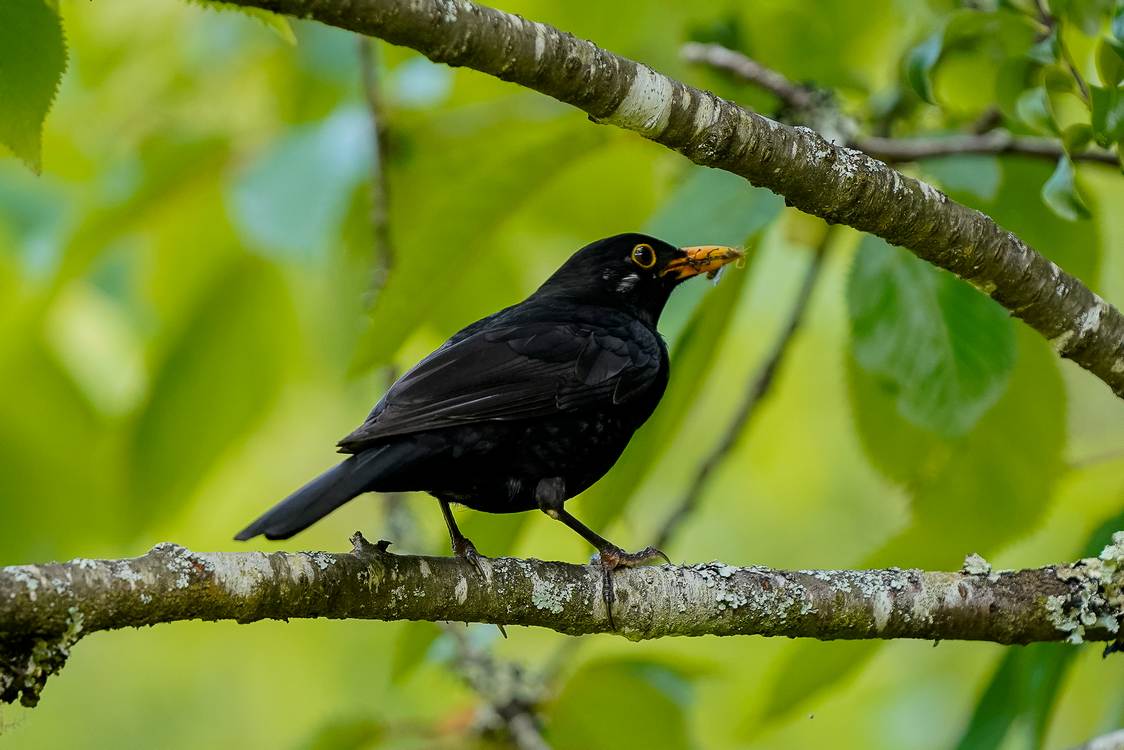
The next time you hear a blackbird singing in the dead of night, know that you’re listening to the most pleasant song in the world.
What the bird lacks in dressage it makes up for in repertoire, a new survey and study from the University of Tübingen found in which researchers set out to discover the key ingredients that make birdsong pleasant.
The blackbird topped the ‘pleasantness’ table with an average score of 4.52 out of 5, beating the willow warbler to first position (4.45) . The blackcap filled out the top 3.
“You don’t have to be a ‘bird person’ to find bird sounds beautiful,” said study author Dr. Nadine Kalb from Tübingen U. “Being able to recognize birds by their appearance or song did not affect how people rated calls.”
By asking people to listen to birdsongs and rate them for pleasantness, then cross-referencing the results with information about the calls’ acoustic characteristics, Kalb and co-authors identified key aspects that make some birdsongs seem more pleasant than others.
Participants rated the perceived pleasantness of 123 different bird songs on a scale from 1 (not very pleasant) to 5 (very pleasant). Calls which are varied, higher-pitched, and not too loud are considered most pleasant.
The research team suspected that some acoustic characteristics, such as a high amplitude—perceived as a loud noise—would be associated with a lower pleasantness rating.
But they also suspected some personal characteristics, such as individuals’ knowledge about birds, would influence pleasantness ratings, and so participants were also asked questions which measured their birding skills and their perception of birds.
“I’m very interested in human-bird relationships,” said senior study author Dr. Christoph Randler, also from the University of Tübingen.
“Bird sounds are often considered one of the most enjoyable aspects of spending time in nature, and previous research has shown that they can contribute to psychological restoration and well-being. However, not all bird sounds are perceived equally positively.”
For example, the barn owl finished rock bottom with an average pleasantness score of just 1.32.
A narrower bandwidth, which captures the range of frequencies a song used, and greater complexity, the number and variety of elements in the song, were perceived as more pleasant, as were birdsongs at a higher frequency or with a relatively low amplitude. The songs that scored highest also avoided a key frequency range where human hearing is highly sensitive.
“We might be wired to prefer more variable sounds with moderate amplitudes and frequencies because they signal a safe, healthy, and restorative environment where we can relax,” said Dr. Kalb.
To follow up the research, they want to carry out larger studies with broader samples including more men, different cultures, and more experienced birdwatchers.
“I would love to investigate how bird sounds influence people in real-world environments,” Dr. Randler said. “That would help us better understand the role that healthy ecosystems play in supporting both biodiversity and human well-being.”
Top 20 Most Pleasant (Old World) Bird Songs
- 1. Common Blackbird (4.52 average pleasantness score)
- 2. Willow Warbler (4.45)
- 3. Blackcap (4.43)
- 4. Mistle Thrush (4.33)
- 5. Garden Warbler (4.30)
- 6. Dunnock (4.30)
- 7. Chaffinch (4.29)
- 8. Common Nightingale (4.26)
- 9. Common Linnet (4.26)
- 10. European Goldfinch (4.26)
- 11. European Pied Flycatcher (4.25)
- 12. Eurasian Wren (4.24)
- 13. Skylark (4.23)
- 14. Eurasian Golden Oriole (4.17)
- 15. Common Cuckoo (4.13)
- 16. Tree Pipit (4.08)
- 17. Common Redstart (4.08)
- 18. European Greenfinch (4.08)
- 19. Eurasian Treecreeper (4.05)
- 20. European Robin (4.04)

 Credit: Erika Fletcher