Gene essential for vitamin D absorption may boost cancer treatment

IANS Photo

New Delhi, (IANS): Scientists have identified a key gene essential for vitamin D absorption, which may also boost treatments for cancer and autoimmune diseases.

The gene, called SDR42E1, is crucial for taking up vitamin D from the gut and further metabolising it -- a discovery with many possible applications in precision medicine, including cancer therapy.

"Here we show that blocking or inhibiting SDR42E1 may selectively stop the growth of cancer cells,” said Dr Georges Nemer, Professor at the University of College of Health and Life Sciences at Hamad Bin Khalifa University in Qatar.

Previous research showed that a specific mutation in the SDR42E1 gene on chromosome 16 is associated with vitamin D deficiency.

The mutation caused the protein to be cut short, rendering it inactive.

In the study, published in the journal Frontiers in Endocrinology, the researchers used CRISPR/Cas9 gene editing to transform the active form of SDR42E1 in a line of cells from a patient with colorectal cancer, called HCT116, into its inactive form.

In HCT116 cells, the expression of SDR42E1 is usually abundant, suggesting that the protein is essential for their survival.

Once the faulty SDR42E1 copy had been introduced, the viability of the cancer cells plummeted by 53 per cent, the researchers explained.

The results suggest that inhibiting the gene can selectively kill cancer cells, while leaving neighbouring cells unharmed.

“Our results open new potential avenues in precision oncology, though clinical translation still requires considerable validation and long-term development," said Dr Nagham Nafiz Hendi, Professor at Middle East University in Amman, Jordan.

“Because SDR42E1 is involved in vitamin D metabolism, we could also target it in any of the many diseases where vitamin D plays a regulatory role,” said Nemer.However, as long-term effects of SDR42E1 on vitamin D balance remain to be fully understood, the researchers stressed the need for further studies. Gene essential for vitamin D absorption may boost cancer treatment | MorungExpress | morungexpress.com
Read More........

Resourceful Singapore Finds Perfect Place for 86 MW Solar Farm–its Biggest Reservoir

– credit, courtesy of Sembcorp

How do you decarbonize a city state? With so little space, so many demands on power, and so many citizens, generating any meaningful electricity from renewable energy is a major challenge for urban planners.

But over its history, the planners of Singapore have shown themselves to be nothing if not resourceful, and so maybe it’s no surprise they’re set to begin construction on an 86-megawatt solar farm.

The surprise though comes from where they’ve built it—on top of the country’s largest reservoir—forming a floating solar farm that will join two others already present on two other reservoirs.

The contractor, Singapore-based engineering firm Sembcorp Solar Singapore, won the bidding process with designs for an 86MW PV solar farm on Pandan Reservoir, issued by Singapore’s national water agency.

It will be the third such floating solar farm built by Sembcorp, with the other two located on Singapore’s two other reservoirs. One was built in 2021, and another was commissioned this year by Facebook parent company Meta to power the data center for its local subsidiary.

All tolled, the solar panels will generate 296 megawatts of clean energy.

“Floating solar projects at reservoirs like Pandan, Tengeh and Kranji are vital for Singapore’s land-scarce energy landscape,” said Ms. Jen Tan, CEO of Sembcorp Solar Singapore.

Floating solar installations have a unique benefit to terrestrially-mounted panel arrays, which is that the water underneath helps keep their electronics cool even while their black surfaces bake in the tropical sun. When properly cooled, panels can produce around 2% more power.Other installations such as rooftop panel arrays mean that Singapore actually generates over 1,000 megawatt-hours of solar energy, half of what the city-state plans to install by 2030. It will be fascinating to see where they put the next solar array, having run out of reservoirs. Resourceful Singapore Finds Perfect Place for 86 MW Solar Farm–its Biggest Reservoir
Read More........

Local Communities Protecting Millions of Acres of Orangutan Habitat Beyond Nat. Park Boundaries

Orangutans by Getty Images for Unsplash+
On the island of Borneo, forest-dwelling communities have become key to ensuring that orangutans have enough intact forest to survive and thrive down the centuries.

Documented by the Nature Conservancy, which is assisting in establishing and equipping these forest communities for conservation, these communities maintain millions of acres of forests for sustainable economic use and conservation.

This includes logging, but research has shown that when legitimate, transparent logging operations cease, their former land concessions become akin to a no man’s land, and are taken over by illegal logging circuits, poaching, and agriculture.

Instead, by logging small numbers of mature trees one small area at a time over a 30-year time horizon, the forest doesn’t shrink, and the communities can use profits from the hardwoods to sustain their families, and ensure that areas of intact forest remain poacher free.

Areas like the vast Kutai National Park suffer from similar problems as the logging concessions, the Nature Conservancy writes. Their remoteness acts as a curtain to hide illegal activities.

But 80% of orangutans live beyond the borders of protected areas, often very near forest villages. Because of this, an estimated 1.3 million acres of forest habitat is now protected by local forest guardians for the benefit of ecotourism, honey production, scientific research and of course, conservation.

Support from the Indonesian government, which controls the majority of Borneo, the world’s third-largest island, helps the guardians manage their land concessions, while interest from the international community has also led to large-scale donations from companies like Arhaus, a furniture maker.

Matt Miller, the Nature Conservancy’s director of science communications, visited these community concessions, and saw first hand how they view their future as guardians of the forests.“The communities are the leaders here. They are the key to the conservation of Borneo’s forests and biodiversity,” a local program director told Miller. “We are here to support them. We can provide science and help them shape what they want their future to be. But this is the reflection of their dream.” Local Communities Protecting Millions of Acres of Orangutan Habitat Beyond Nat. Park Boundaries
Read More........

Locals Release 10 Endangered Siamese Crocodiles into Laos Wetlands to Save Species from Extinction

One of the Siamese crocodiles released – credit Phetpakay Bounhaxay © WCS

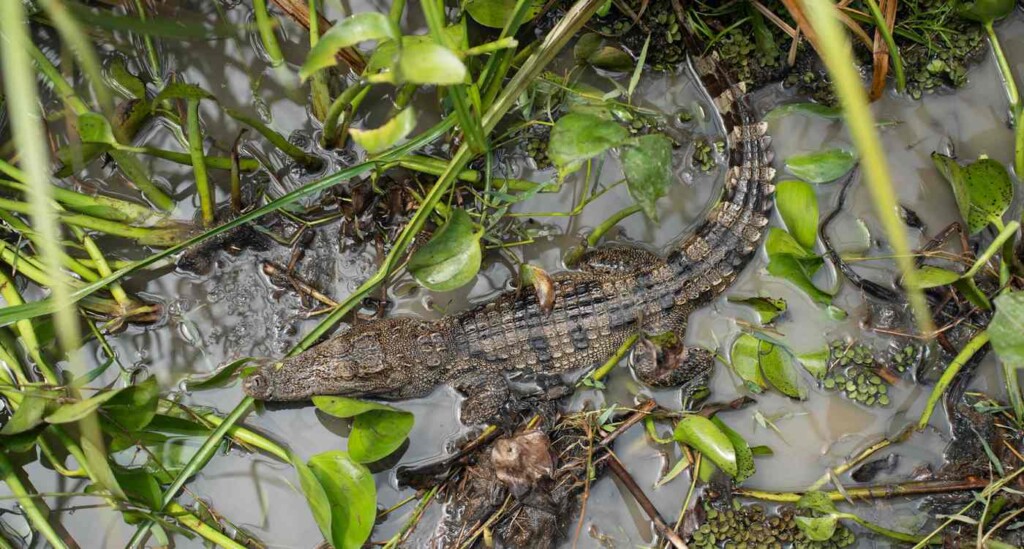
While less than 1,000 Siamese crocodiles remain in the wild, community members in Laos have released ten of the rare animals into a local wetlands to boost the population.

While crocodiles are not hunted, the species (Crocodylus siamensis) is ranked as Critically-Endangered by the International Union for Conservation of Nature because of the threats of entanglement in fishing nets, the clearance of wetlands, and seasonal draining of habitat to expand dry-season rice cultivation.

Unlike many of its other aggressive cousins, the Siamese crocodile is not a threat to humans. Communities that reside close to the species’ habitat hold the crocodiles in high regard spiritually—believing they bring good luck.

The Xe Champhone Wetland where they were released is located in the Savannakhet province which represents the larger of two ‘Ramsar sites’ (Wetland of International Importance).

It’s home to an abundance of aquatic biodiversity such as endangered turtle species and waterfowl.

A dedicated conservation program for the Siamese crocodile is in place in the four target districts where they’re found. Volunteers work with government officials and eggs are collected to be transported to the village administration office for incubation at ambient temperature for about two months.

Once hatched, the baby crocodiles will be raised for about 32 months—at which time they will exceed 3 feet in length—and then released back into the wetlands. 163 small crocodiles are currently being nursed by the crocodile conservation team at the village level.

Since the start of the program, a total of 183 crocodiles have been successfully released back into the wild. 6 to 8 nests are being found each year, and based on these nest counts, an estimated population of 200-250 Siamese crocodiles inhabit the Xe Champhone Wetlands.
A new visitor center boosts enthusiasm

The new visitors’ center offers an immersion in the incredible biodiversity of the Xe Champhone wetlands. With educational panels displayed all along the visitors’ path as well as wall murals on the crocodile’s life.

“I hope that the opening of the Xe Champhone Wetland and Crocodile Information Center, along with today’s release of the crocodiles, will bring lasting benefits to local communities as part of a long-term conservation effort,” said Mr. Khammone Thilavong, Deputy Director of Provincial Forestry and Agriculture Ministry, according to the Wildlife Conservation Society, which assisted in the reintroduction, and released a statement on the success.

“I also trust that everyone here shares a strong commitment to environmental preservation and the protection of these endangered species.” Locals Release 10 Endangered Siamese Crocodiles into Laos Wetlands to Save Species from Extinction
Read More........

Indonesia's Semeru volcano erupts again, spewing ash 1 km above summit

Jakarta, (IANS): The Semeru volcano, located in Indonesia's Java, erupted again early on Monday at 03:35 a.m. local time, spewing thick grey ash up to 1 kilometre above its summit.

"This eruption was recorded by a seismograph with a duration of 122 seconds and a significant maximum amplitude," said Ghufron Alwi, an officer at the Semeru Volcano Observation Post.

Earlier, at 01:47 a.m. local time, a similar eruption occurred with a duration of 146 seconds and an ash column height of 1 kilometre, indicating high volcanic activity in the past few hours, Xinhua news agency reported.

From January until November 11, 2024, Mount Semeru has erupted 1,738 times, with volcanic activity dominated by eruption tremors, signaling continuous magma pressure beneath the surface.

The Centre for Volcanology and Geological Hazard Mitigation (PVMBG) has prohibited people from conducting any activities within an 8-kilometre radius of the summit, including along the Besuk Kobokan River, which is at risk of hot ash clouds and lava flows.Authorities also warned of the potential for hot ash and lava flows to extend up to 13 kilometres from the summit, given the increasing eruption intensity. Indonesia's Semeru volcano erupts again, spewing ash 1 km above summit | MorungExpress | morungexpress.com
Read More........

Tears as Malaysia-born panda cubs head to China

KUALA LUMPUR - Tearful Malaysians said goodbye to two panda cubs as authorities prepared to send them to China after years of delays because of the Covid-19 pandemic.

Yi Yi and Sheng Yi -- born in 2018 and 2021 respectively -- were to be transported as part of an agreement between the two countries to send cubs born in captivity to China when they reach two years of age.

The female pandas are the offspring of Xing Xing and Liang Liang, animals China loaned to Malaysia in 2014 for a decade to celebrate 40 years of diplomatic relations. They will remain in the country.

Watching videos of the animals at Malaysia's National Zoo, panda lovers like 24-year-old photographer Cindy Lai gathered in hopes of catching a glimpse of the pair before their departure later in the day.

"It is an emotional send-off. I feel very sad since I will not be able to see the two lovely cubs," she said.

"I will definitely cry when they are loaded into the truck to be transported to the airport."

AFP | Mohd RASFAN

Yi Yi and Sheng Yi will be taken on a cargo flight to the Chinese city of Chengdu, an official familiar with the travel plan told AFP.

A farewell ceremony attended by China's ambassador to Malaysia and Kuala Lumpur's deputy environment minister was held at the zoo.

"I hope that these Giant Pandas... can further promote understanding and close cooperation between the two countries," Deputy Minister Huang Tiong Sii said in a statement.

In the wild, giant pandas can only be found in China's mountainous central regions, where bamboo -- their favourite food -- grows in abundance.

As part of its policy of "panda diplomacy", Beijing loans the animals to countries as a goodwill gesture. There are an estimated 1,860 giant pandas left in the wild, according to environmental group WWF, and about 600 in captivity in panda centres, zoos and wildlife parks worldwide. Tears as Malaysia-born panda cubs head to China
Read More........

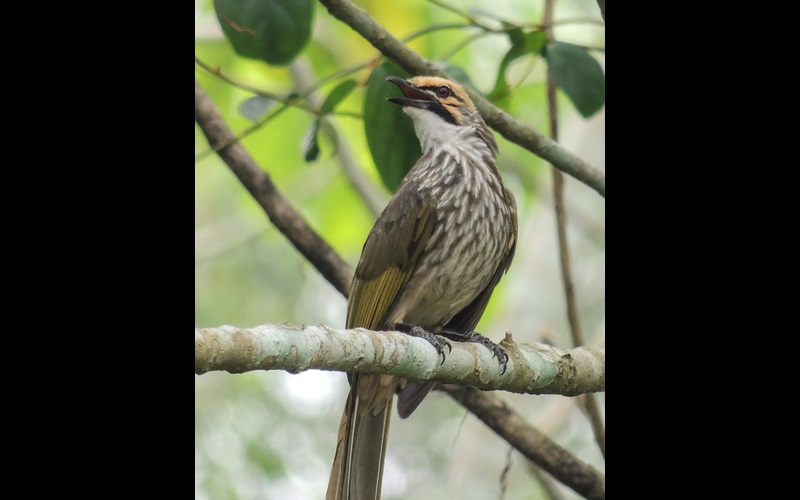
How Singapore Became an Unexpected Stronghold for a Critically Endangered Bird

Straw-headed bulbul – credit Michael MK Khor CC 2.0. Flickr

From the sprawling urban city-state of Singapore comes the unlikely story of a critically endangered songbird and a dedicated group of environmentalists helping it thrive as the population collapses overseas.

The straw-headed bulbul is a victim of its beautiful song, which has seen it extirpated from the wilds of Thailand, Myanmar, and Java as poachers capture it for the illegal songbird trade.

But as early as 1990, conservationists, birdwatchers, and government workers in Singapore have taken action on this species’ behalf.


“Whenever I hear its resonant, bubbly song, the forest seems to erupt with life,” conservationist Ho Hua Chew told Smithsonian Magazine.

Because of men like Ho, the peripheral wetlands of Singapore, the offshore island of Pulau Ubin, and the large green spaces in the city state’s interior together play host to 600 straw-headed bulbuls.

Nature Society Singapore, of which Ho was a member, was the first to push for nature protections on Pulau Ubin, the site of an old granite quarry, where nevertheless a concentrated population of these birds could be found.

This resulted in a Nature Area designation for the island in 1993, achieved through advocacy and outreach among millions of Singaporeans.

Smithsonian lists this as an early victory in the history of environmentalism on the cramped peninsular city-state.

After populations had fallen 50% over three generations, the bird was listed as “Endangered” on Singapore’s own Red Data Book, which tracks populations of every plant and animal in the country, the straw-headed bulbul was added to the Endangered Species (Import and Export) Act of 2006, a move which reversed the trend, even while populations were collapsing around Southeast Asia.

Today, there is a Straw-Headed Bulbul Working Group, co-led by the National Parks Board and the Nature Society Singapore, which ensures this beautiful warbling bird remains in tip-top condition.

If it were not for the incredible momentum that the work to conserve this bird has had over the years, its future would be alarmingly uncertain. Today, Ho believes that as the Working Group ensures the genetic diversity among the birds is in good shape, and the populations are increasing, the Singaporean straw-headed bulbuls may one day be the only population to draw from to restore populations elsewhere. How Singapore Became an Unexpected Stronghold for a Critically Endangered Bird:
Read More........

Saltwater crocodiles are slowly returning to Bali and Java. Can we learn to live alongside them?

 Brandon Michael Sideleau, Charles Darwin University

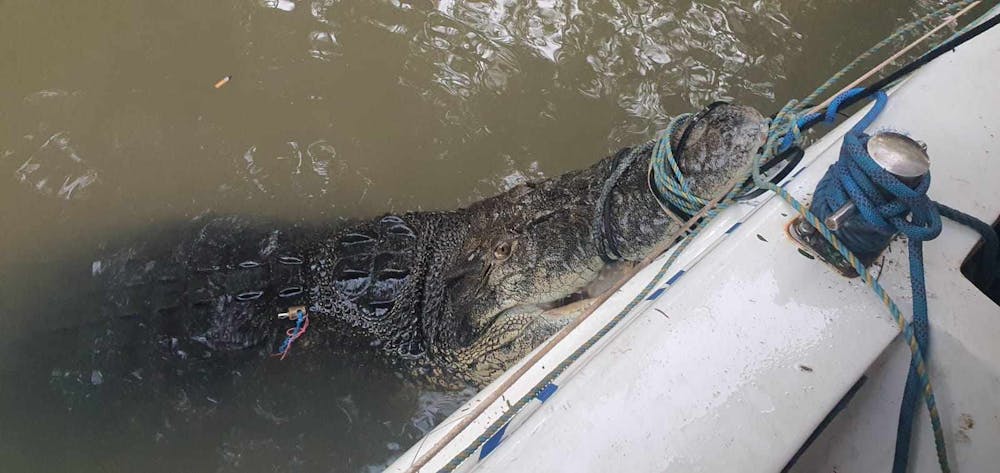
On January 4 this year, a three-metre saltwater crocodile heaved itself out of the water and up the beach. Nothing unusual about that – except this croc was on Legian Beach, one of Bali’s most popular spots. The emaciated reptile later died.

Only four months later, a large crocodile killed a man who was spearfishing with friends in Lombok’s Awang Bay, about 100 kilometres east of Bali. Authorities caught it and transferred it to captivity.

You might not associate crocodiles with Bali. But the saltwater crocodile once roamed most of Indonesia’s waters, and attacks are still common in some regions. I have been collecting records of crocodilian attacks since 2010, as the creator of the worldwide database CrocAttack. What’s new is that they’re beginning to return to areas where they were wiped out.

Does this mean tourists and residents should be wary? It’s unlikely these islands can host anywhere near the same population densities as the wide, fish-filled rivers of Australia’s tropical north. And in Bali, it’s unlikely we’ll see any crocodile recovery because of the importance of beaches to tourism and a high human population.

This 4.6-metre saltwater crocodile was captured in Lombok after the fatal attack in May. Bali Reptile Rescue, CC BY-ND

What happened to Indonesia’s crocodiles?

Saltwater crocodiles (Crocodylus porosus) are also known as estuarine crocodiles, as they prefer to live in mangrove-lined rivers. They’re the largest living reptile, reaching up to seven metres in length – far larger than Indonesia’s famous Komodo dragon, which tops out at three metres.

Historically, crocodiles lived throughout the Indonesian archipelago. We have records of attacks on humans in Bali from the early 20th century and across much of Java until the 1950s. Even Indonesia’s capital, Jakarta, had crocodiles resident in many rivers running through the city.

Crocodiles in Bali and Lombok were killed off by the mid-20th century, and later across Java. But they survived in more remote parts of the island nation.

Salties are now being regularly sighted in Indonesia’s densely populated island of Java, including in seas off Jakarta. At least 70 people are killed by crocs every year across the archipelago, with the highest numbers of attacks being reported from the Bangka-Belitung islands off Sumatra and the provinces of East Kalimantan, East Nusa Tenggara, and Riau.

Are crocodiles returning in numbers?

These incidents means numbers are increasing. But recovery may not be as significant as it seems.

On many Indonesian islands, there’s very limited mangrove habitat suitable for crocodiles, and many creeks and rivers may be naturally too small for more than a small number of them. Even a small population recovery could quickly fill up the croc capacity of estuaries and creeks. These crocodiles are the most territorial of all crocodilians. Dominant males push out smaller male crocodiles, who set out in search of new habitat.

To date, Indonesia’s crocodile surveys reveal mostly small and low-density populations. But even the arrival of a single crocodile into human territory can spark conflict – and threaten the conservation of the species.

Worldwide, saltwater crocodiles are listed as a species of least concern on the IUCN Red List of Threatened Species, thanks to their full population recovery in parts of northern Australia after hunting was banned in the early 1970s. But in Cambodia, Thailand, and Vietnam the species is extinct.

Even in sparsely populated northern Australia, there’s still conflict between humans and crocs, though this conflict is comparatively rare. In Indonesia, the problem is compounded by a massive human population which puts pressure on crocodile habitat.

Where are Bali’s crocs coming from?

You might look at a map and think crocodiles moving back into Bali are coming from Australia. But there is currently no evidence of significant crocodile movement between Australia and Indonesia. It would be a brave crocodile to swim more than 1,000 kilometres from Australia to Bali.

What we are likely witnessing is a crocodile exodus from nearby areas, though we would need to do genetic analysis to prove it. That’s because the surviving croc population centres are much closer than Australia. For Bali and Lombok, crocodiles are likely migrating from the islands to the east, such as Flores, Lembata, Sumba and Timor.

The most likely source of Java’s crocodile arrivals is southern Sumatra, which is less than 30km from Java at its nearest. This area has long been prone to crocodile attacks.

What does this mean for residents and tourists?

Earlier this month, a relatively large crocodile was photographed basking on a large fish trap in West Lombok, less than 50km from the tourist hotspot of the Gili Islands.

The spike in sightings and attacks suggests we’re going to have to find ways of living alongside these reptiles. The coastal waters and estuaries of Lombok and western Java are now likely home to a small resident population.

What can be done to prevent attacks? First, people have to know that crocs are back. Increasing crocodile awareness and caution is vital to save lives.

Some researchers believe attacks on us and our livestock get more likely if mangroves have been destroyed or fishing grounds fished out. Protecting crocodile habitat and prey species can both secure the future of the species and cut the risk of attacks.

Does it mean you should cancel your next Bali trip? No. While restoration efforts have brought back tracts of mangroves along some coastlines in Bali, the sheer popularity of the island means it’s unlikely any crocodile population will ever be reestablished there.

But we could well see crocodiles slowly return to less populated parts of Java and Lombok. While that may fill us with anxiety, they’re a vital part of the ecosystem. Crocodiles are meant to be there. The Conversation

Brandon Michael Sideleau, PhD student studying human-saltwater crocodile conflict, Charles Darwin University

This article is republished from The Conversation under a Creative Commons license. Read the original article.

Read More........

Japan starts discharging treated water into the sea : Regulation & Safety

The process for releasing the ALPS-treated water (Image: Tepco)
Tokyo Electric Power Company (Tepco) announced it has begun releasing treated water currently stored at the damaged Fukushima Daiichi nuclear power plant into the ocean. The operation - expected to take up to 30 years to complete - is being closely monitored by the International Atomic Energy Agency (IAEA).

At the Fukushima Daiichi site, contaminated water - in part used to cool melted nuclear fuel - is treated by the Advanced Liquid Processing System (ALPS), which removes most of the radioactive contamination, with the exception of tritium. This treated water is currently stored in more than 1000 tanks on site. The total tank storage capacity amounts to about 1.37 million cubic metres and all the tanks are expected to reach full capacity in late 2023 or early 2024.

Japan announced in April 2021 it planned to discharge treated water stored at the site into the sea over a period of about 30 years.

On 22 August, the government announced that it had decided to request Tepco begin preparations for the release of ALPS-treated water into the sea.

On the same day, the company transferred a very small amount of ALPS-treated water - about 1 cubic metre - to the dilution facility using the transfer facilities. This water was then diluted with about 1200 cubic metres of seawater and allowed to flow into the discharge vertical shaft (upstream water tank). The water stored in the discharge vertical shaft was then sampled.

"The results showed that the analysis value is approximately equal to the calculated concentration and below 1500 becquerels per litre," Tepco said today. "The sample of the water was also analysed by the Japan Atomic Energy Agency, who confirmed that the analysis value is below 1500 Bq/litre." In comparison, the World Health Organization guideline for drinking water is 10,000 Bq/litre.

Tepco therefore announced it has now moved to the second stage of the water release, the continuous discharge into the sea. At the same time, the company began transmitting data from various points in the process to the IAEA.

"Today at 1.00pm, the seawater transfer pumps will be started up and we will commence the discharge," Tepco said ahead of the process beginning. "During the discharge, one tank group-worth of ALPS-treated water from the measurement/confirmation facility, and the water already stored in the discharge vertical shaft (upper-stream storage) during Stage 1, will be continuously transferred/diluted and discharged into the sea.

"Furthermore, today, the intake/vertical shaft monitors will be put into operation in preparation for the discharge into the sea. We also started uploading real-time data pertaining to the discharge of ALPS-treated water into the sea to our website."
IAEA monitoring

When Japan announced the discharge plan in 2021, it asked the IAEA to review its plans against IAEA safety standards and monitor the release. Neighbouring countries have raised concerns and opposed the planned discharge. An IAEA Task Force was established to implement the assistance to Japan, which included advice from a group of internationally recognised experts from Member States, including members from the region, under the authority of the IAEA Secretariat. The IAEA opened an office at the Fukushima Daiichi plant last month.

"IAEA experts are there on the ground to serve as the eyes of the international community and ensure that the discharge is being carried out as planned consistent with IAEA safety standards," said IAEA Director General Rafael Mariano Grossi. "Through our presence, we contribute to generating the necessary confidence that the process is carried out in a safe and transparent way."

The agency, which confirmed that the discharge had begun, noted: "The IAEA's independent on-site analysis confirmed that the tritium concentration in the diluted water that is being discharged is far below the operational limit of 1500 becquerels per litre."

The IAEA said it will have a presence on site for as long as the treated water is released. It also announced the launch of a webpage to provide live data from Japan on the water discharge, including water flow rates, radiation monitoring data and the concentration of tritium after dilution.

The IAEA experts will observe onsite activities related to the ALPS-treated water discharge, including samples and measurements, and will interface with Tepco and officials from Japan's Nuclear Regulation Authority. The IAEA will also organise review missions periodically to observe activities on site and to request updates and additional data from Japanese authorities. The IAEA said its independent corroboration activities will also continue during the entirety of the discharge and will involve IAEA laboratories and third-party laboratories.

"All of these activities will work together to provide a comprehensive picture of the activities taking place at the Fukushima Daiichi nuclear power plant related to the ALPS-treated water discharge and whether these activities are consistent with relevant international safety standards," said Gustavo Caruso, Director and Coordinator for the ALPS Safety Review at the IAEA and Chair of the Task Force. "The data provided by Tepco, and displayed both by Tepco and IAEA, is just a single piece of the overall monitoring approach and the IAEA's ongoing safety review."Researched and written by World Nuclear News  Source: World Nuclear News
Read More........

Earthquake footage shows Turkey’s buildings collapsing like pancakes. An expert explains why


A pair of huge earthquakes have struck in Turkey, leaving more than 3,000 people dead and unknown numbers injured or displaced.

The first quake, near Gaziantep close to the Syrian border, measured 7.8 in magnitude and was felt as far away as the UK. The second occurred nine hours later, on what appears to be an intersecting fault, registering a magnitude of 7.5.

Adding to the devastation, some 3,450 buildings have collapsed, according to the Turkish government. Many of the modern buildings have failed in a “pancake mode” of structural collapse.

Why did this happen? Was it simply the enormous magnitude and violence of the quake, or is the problem with the buildings?

Thousands of years of earthquakes

Earthquakes are common in Turkey, which sits in a very seismically active region where three tectonic plates constantly grind against one another beneath Earth’s surface. Historical records of earthquakes in the region go back at least 2,000 years, to a quake in 17 CE that levelled a dozen towns.

The East Anatolian Fault zone that hosted these earthquakes is at the boundary between the Arabian and Anatolian tectonic plates, which move past each other at approximately 6 to 10 mm per year. The elastic strain that accumulates in this plate boundary zone is released by intermittent earthquakes, which have occurred for millions of years. The recent earthquakes are thus not a surprise.

Despite this well-known seismic hazard, the region contains a lot of vulnerable infrastructure.

Over the past 2,000 years we have learnt a lot about how to construct buildings that can withstand the shaking from even severe earthquakes. However, in reality, there are many factors that influence building construction practices in this region and others worldwide.

Poor construction is a known problem

Many of the collapsed buildings appear to have been built from concrete without adequate seismic reinforcement. Seismic building codes in this region suggest these buildings should be able to sustain strong earthquakes (where the ground accelerates by 30% to 40% of the normal gravity) without incurring this type of complete failure.

The 7.8 and 7.5 earthquakes appear to have caused shaking in the range of 20 to 50% of gravity. A proportion of these buildings thus failed at shaking intensities lower than the “design code”.

There are well-known problems in Turkey and elsewhere with ensuring safe building construction and adherence to seismic building codes. Similar building collapses have been seen in past earthquakes in Turkey.  

In 1999, a huge quake near Izmit saw some 17,000 people dead and as many as 20,000 buildings collapse.

After a quake in 2011 in which hundreds of people died, Turkey’s then prime minister, Recep Tayyip Erdogan, blamed shoddy construction for the high death toll, saying: “Municipalities, constructors and supervisors should now see that their negligence amounts to murder.”
Reconstruction

Even though Turkish authorities know many buildings are unsafe in earthquakes, it is still a difficult problem to solve. Many of the buildings are already built, and seismic retrofitting may be expensive or not considered a priority compared to other socio-economic challenges.

However, reconstruction after the quake may present an opportunity to rebuild more safely. In 2019, Turkey adopted new regulations to ensure buildings are better equipped to handle shaking.

While the new rules are welcome, it remains to be seen whether they will lead to genuine improvements in building quality.

In addition to substantive loss of life and infrastructure damage, both earthquakes are likely to have caused a myriad of environmental effects, such as ruptured ground surfaces, liquified soil, and landslides. These effects may render many areas unsafe to rebuild on – so reconstruction efforts should also include planning decisions about what can be built where, to lower future risks.

For now, aftershocks continue to shake the region, and search and rescue efforts continue. Once the dust settles, reconstruction will begin – but will we see stronger buildings, able to withstand the next quake, or more of the same?

Mark Quigley, Associate Professor of Earthquake Science, The University of Melbourne

This article is republished from The Conversation under a Creative Commons license. Read the original article.
Read More........

First element discovered in Asia named ‘nihonium’, after Japan

Kyushu University professor Kosuke Morita, head of a team of scientists who discovered element 113, points to the superheavy synthetic element on a periodic table at a news conference at the RIKEN institute''s research centre in Wako, Saitama Prefecture, Japan, in this photo taken by Kyodo on June 9, 2016. Reuters

TOKYO: Japanese scientists behind the discovery of element 113, the first atomic element found in Asia — indeed, the first found outside Europe or the United States — have dubbed it "nihonium" after the Japanese-language name for their country.

"I believe the fact that we, in Japan, found one of only 118 known atomic elements gives this discovery great meaning," said Kosuke Morita, a university professor who led the discovery team from the RIKEN Nishina Center for Accelerator-Based Science.

"Another important meaning is that until now, all the elements in the periodic table have been discovered in Europe and the United States," he told a news conference on Thursday.

"There has not been a single atomic element found in Asia, Oceania or Africa."

Element 113 was first found in 2004, and the number refers to its atomic number, or the number of protons in the nucleus of the atom. It does not exist naturally and has had to be synthesised.

Though the element was publicly recognised by the International Union of Pure and Applied Chemistry (IUPAC) in December 2015, the name was not announced by IUPAC until Wednesday. It will become permanent after a five-month public review.

If approved, it will join other newly announced elements: moscovium for element 116, tennessine for element 117 and oganesson for element 118.

It will also not be the only element to be named after a country, having been preceded by polonium and francium after the places they were discovered. — Reuters Source: http://www.tribuneindia.com/
Read More........

China launches spacecraft in longest-ever manned mission

The Shenzhou 11 astronauts are Jing Haipeng, who is flying his third mission, and 37-year-old Chen Dong.
The Shenzhou 11 mission took off from the Jiuquan Satellite Launch Center on the edge of the Gobi Desert in northern China. China launched a pair of astronauts into space Monday on a mission to dock with an experimental space station and remain aboard for 30 days in preparation for the start of operations by a full-bore facility six years from now. The Shenzhou 11 mission took off from the Jiuquan Satellite Launch Center on the edge of the Gobi Desert in northern China at 7:30 a.m. (2330 GMT) aboard a Long March-2F carrier rocket. It will dock with the Tiangong 2 space station precursor facility within two days, conduct experiments in medicine and various space-related technologies, and test systems and processes in preparation for the launching of the station's core module in 2018. Space program commander-in-chief Gen. Zhang Youxia declared the launch a success at 7:46 a.m. (2346 GMT). Defense Minister Fan Changlong then read a congratulatory message from President Xi Jinping calling for China's astronauts to explore space "more deeply and more broadly." Premier Li Keqiang and propaganda chief Liu Yunshan visited the Beijing control center to congratulate staff. It is the sixth time
China has launched astronauts into space and the duration will be the longest by far. Following the attachment of two experiment modules, the completed station is set to begin full operations in 2022 and will run for at least a decade. An earlier Tiangong 1 experimental space station launched in 2011 went out of service in March after docking with three visiting spacecraft and extending its mission for two years. The Tiangong, or "Heavenly Palace," stations are considered stepping stones to a mission to Mars by the end of the decade. The Shenzhou 11 astronauts are Jing Haipeng, who is flying his third mission, and 37-year-old Chen Dong. "It is any astronaut's dream and pursuit to be able to perform many space missions," Jing, who turns 50 during his time in space, told a briefing Sunday. China conducted its first crewed space mission in 2003, becoming only the third country after Russia and the U.S. to do so, and has since staged a spacewalk and landed its Yutu rover on the moon. Administrators suggest a crewed landing on the moon may also be in the program's future. China was prevented from participating in the International Space Station, mainly due to US concerns over the Chinese space program's strongly military character. Chinese officials are now looking to internationalize their own program by offering to help finance other countries' missions to Tiangong 2. China's space program also opened its massive fourth spacecraft launch site at Wenchang on China's southernmost island province of Hainan in June. It was inaugurated with the launch of the newly developed Long March 7 rocket that was hailed as a breakthrough in the use of safer, more environmentally friendly fuels. China is currently developing the Long March 5 heavy-lift rocket needed to launch the Tiangong 2's additional components and other massive payloads. China also plans to land a rover on Mars by 2020, attempting to recreate the success of the US Viking 1 mission that landed a rover on the planet four decades ago. A source of enormous national pride, China's space program plans a total of 20 missions. (This story first appeared in Deccan Chronicle) Source: The Asian Age
Read More........

Quantum Computing With Time Travel

Credit: Adapted from npj Quantum Information, doi:10.1038/npjqi.2015.7 (2015)
Why send a message back in time, but lock it so that no one can ever read the contents? Because it may be the key to solving currently intractable problems. That's the claim of an international collaboration who have just published a paper in npj Quantum Information. It turns out that an unopened message can be exceedingly useful. This is true if the experimenter entangles the message with some other system in the laboratory before sending it. Entanglement, a strange effect only possible in the realm of quantum physics, creates correlations between the time-travelling message and the laboratory system. These correlations can fuel a quantum computation. If the universe allows 'open timelike curves', particles travelling back in time along them could help to perform currently intractable computations. Even though such curves don't allow for interaction with anything in the past, researchers writing in npj Quantum Information show there is a gain in computational power as long as the time-travelling particle is entangled with one kept in the present. Around ten years ago researcher Dave Bacon, now at Google, showed that a time-travelling quantum computer could quickly solve a group of problems, known as NP-complete, which mathematicians have lumped together as being hard. The problem was, Bacon's quantum computer was travelling around 'closed timelike curves'. These are paths through the fabric of spacetime that loop back on themselves. General relativity allows such paths to exist through contortions in spacetime known as wormholes. Physicists argue something must stop such opportunities arising because it would threaten 'causality' -- in the classic example, someone could travel back in time and kill their grandfather, negating their own existence. And it's not only family ties that are threatened. Breaking the causal flow of time has consequences for quantum physics too. Over the past two decades, researchers have shown that foundational principles of quantum physics break in the presence of closed timelike curves: you can beat the uncertainty principle, an inherent fuzziness of quantum properties, and the no-cloning theorem, which says quantum states can't be copied. However, the new work shows that a quantum computer can solve insoluble problems even if it is travelling along 'open timelike curves', which don't create causality problems. That's because they don't allow direct interaction with anything in the object's own past: the time travelling particles (or data they contain) never interact with themselves. Nevertheless, the strange quantum properties that permit 'impossible' computations are left intact. "We avoid 'classical' paradoxes, like the grandfathers paradox, but you still get all these weird results," says Mile Gu, who led the work. Gu is at the Centre for Quantum Technologies (CQT) at the National University of Singapore and Tsinghua University in Beijing. His eight other coauthors come from these institutions, the University of Oxford, UK, Australian National University in Canberra, the University of Queensland in St Lucia, Australia, and QKD Corp in Toronto, Canada. "Whenever we present the idea, people say no way can this have an effect" says Jayne Thompson, a co-author at CQT. But it does: quantum particles sent on a timeloop could gain super computational power, even though the particles never interact with anything in the past. "The reason there is an effect is because some information is stored in the entangling correlations: this is what we're harnessing," Thompson says. There is a caveat -- not all physicists think that these open timeline curves are any more likely to be realisable in the physical universe than the closed ones. One argument against closed timelike curves is that no-one from the future has ever visited us. That argument, at least, doesn't apply to the open kind, because any messages from the future would be locked. The research is supported by the National Basic Research Program of China Grant 2011CBA00300, 2011CBA00302, the National Natural Science Foundation of China Grant 11450110058, 61033001, 61361136003, the 1000 talents program of China, the National Research Foundation and Ministry of Education in Singapore, the Tier 3 MOE2012-T3-1-009 Grant 'Random numbers from quantum processes', and the Australian Research Council Centre of Excellence for Quantum Computation and Communication Technology Project number CE110001027 and the John Templeton Foundation grant 54914,'Occam's Quantum Mechanical Razor: Can Quantum theory admit the Simplest Understanding of Reality?' Contacts and sources:  Jenny Hogan, Mile Gu ,Visiting Senior Research Fellow Centre for Quantum Technologies, National University of Singapore, Assistant Professor, Institute for Interdisciplinary Information Sciences, Tsinghua University, Citation: Xiao Yuan et al, 'Replicating the benefits of Deutschian closed timelike curves without breaking causality' npj Quantum Information, doi:10.1038/npjqi.2015.7 (2015) http://www.nature.com/articles/npjqi20157 Preprint available at http://arxiv.org/abs/1412.5596Source: http://www.ineffableisland.com/
Read More........

Isro's PSLV-C28 successfully places 5 British satellites in orbit


The Indian Space Research Organisation (Isro) on Friday successfully launched five British commercial satellites aboard its PSLV-C28 launch vehicle from its space port in Sriharikota, marking its heaviest commercial mission ever. ISRO's workhorse Polar Satellite Launch Vehicle PSLV-C28, in its 13th flight, placed the five satellites, including three identical DMC3 optical earth observation satellites, in sun synchronous orbit about 20 minutes after lift-off at 9.58 PM from the Satish Dhawan Space Centre at Sriharikota. The three DMC3 satellites, each weighing 447 kg, were launched into a 647 km sun-synchronous orbit (SSO) using the high-end version of PSLV (PSLV-XL). ''It's been a wonderful mission… an extremely successful mission,'' a beaming ISRO chairman Kiran Kumar said from the Mission Control Centre. The three identical DMC3 optical earth observation satellites were built by Surrey Satellite Technology Limited (SSTL) of the United Kingdom. The PSLV-C28 also carried two auxiliary satellites from the UK, viz, CBNT-1, a technology demonstrator earth observation micro satellite built by SSTL, and De-OrbitSail, a technology demonstrator nano satellite built by Surrey Space Centre. PSLV-C28 will be the ninth flight of the launch vehicle in 'XL' configuration. With the overall lift-off mass of 1,440 kg of the five satellites, this launch becomes the heaviest commercial mission till date undertaken by Antrix Corporation, the commercial arm of ISRO . Accommodating the three DMC3 satellites each with a height of about 3 metre within the existing payload fairing of PSLV was a challenge, according to Isro. To mount these satellites onto the launcher, Isro designed a circular launcher adaptor called L-adaptor and a triangular deck called Multiple Satellite Adapter-Version 2 (MSA-V2). These international customer satellites have been launched as part of the arrangement entered into between DMC International Imaging (DMCii), a wholly-owned subsidiary of SSTL, UK and Isro's Antrix Corporation Limited (Antrix). The DMC3 constellation, comprising of three advanced mini-satellites DMC3-1, DMC3-2 and DMC3-3, is designed to address the need for simultaneous high spatial resolution and high temporal resolution optical earth observation. Launched into a single low-earth orbit plane and phased with a separation of 120° between them, these satellites can image any target on the Earth's surface every day. Major application areas include surveying the resources on earth and its environment, managing urban infrastructure and monitoring of disasters. CBNT-1, weighing 91 kg, is an optical earth observation technology demonstration micro satellite built by SSTL. The 7-kg De-orbitSail from Surrey Space Centre, is an experimental nano satellite for demonstration of large thin membrane sail and drag deorbiting using this sail. Source: Article 
Read More........

Solar-powered plane breaks solo flight record


The solar-powered aircraft, Solar Impulse, flying from Japan to Hawaii, on the most perilous leg of a round-the-globe bid, has beaten the record for the longest solo flight, organisers said yesterday. They admitted though that veteran Swiss pilot Andre Borschberg was exhausted after over four days of continuous flying, which made the final 24 hours of flight particularly challenging. The plane was set to land this morning local time at Kalaeloa Airport on the main Hawaiian island of Oahu, some 20 miles (30 kilometers) west of Honolulu. By 7:30pm GMT (1am IST, Friday) on Thursday, Solar Impulse 2 had traveled 86 per cent of the way to the tropical US state, after flying 7,075 kilometers. However, it was in the process of crossing a cold front that required careful navigation on the part of Borschberg, which would significantly increase stress levels for the 62-year-old. Borschberg had so far flown over 97 hours easily beating the previous longest solo endurance flight undertaken in 2006. The Japan to Hawaii trip was expected to take 120 hours. The Swiss aviator was napping for only 20 minutes at a time so as to maintain control of the pioneering plane and has on the plane a parachute and life raft, in case he needed to ditch in the Pacific. The experimental solar-powered aircraft left Japan around 6pm GMT (11:30pm IST) on Sunday the early hours of Monday local time after spending a month in the central city of Nagoya. The aircraft, piloted alternately by Swiss explorers Andre Borschberg and Bertrand Piccard, embarked on its 22,000-mile (35,000-km) journey around the world from Abu Dhabi on 9 March. ''Can you imagine that a solar powered airplane without fuel can now fly longer than a jet plane!'' said Piccard in a statement. ''This is a clear message that clean technologies can achieve impossible goals.'' The plane, weighs about as much as a family sedan and has 17,000 solar cells across its wingspan. The aircraft was expected to make the trip around the globe in some 25 flight days, broken up into 12 legs at speeds between 30 to 60 miles per hour. The Solar Impulse 2 initially left Nanjing, China, on 31 May for Hawaii, but its bid was cut short a day later due to what Borschberg termed ''a wall of clouds'' over the Pacific. The plane landed in the central Japanese city of Nagoya. The solo record was earlier set in 2006 by American adventurer Steve Fossett, who flew the Virgin Atlantic Global Flyer for 76 hours non-stop. Source: domain-b.com
Read More........

Nobel Prize for Physics 2014


The Royal Swedish Academy of Sciences has decided to award the Nobel Prize in Physics for 2014 to (1) Isamu Akasaki: Meijo University, Nagoya, Japan and Nagoya University, Japan (2) Hiroshi Amano 
Nagoya:  University, Japan (3) Shuji Nakamura: University of California, Santa Barbara, CA, USA. “for the invention of efficient blue light-emitting diodes which has enabled bright and energy-saving white light sources. --> The invention of an energy source that lights up our computer and/ormobile phone screens and holds promise to brighten up the quality of life of over 1.5 billion people around the world, has been awarded the Nobel prize for physics 2014.--> The laureates were rewarded for having invented a new energy-efficient and environment-friendly light source — the blue light-emitting diode (LED). --> According
to the committee, the laureates' inventions revolutionized the field of illumination technology. --> As about one fourth of world electricity consumption is used for lighting purposes, the LEDs contribute to saving earth's resources. Materials consumption is also diminished as LEDs last up to 100,000 hours, compared to 1,000 for incandescent bulbs and 10,000 hours for fluorescent lights. --> When Isamu Akasaki, Hiroshi Amano and Shuji Nakamura produced bright blue light beams from their semi-conductors in the early 1990s, they triggered a fundamental transformation of lighting technology. Source: Article,
Read More........

India's Mars mission Q&A: what will Mangalyaan discover?


India becomes fourth nation to celebrate reaching Mars – and the first to manage it on first attempt
India's Mars Orbiter Mission spacecraft has shared its first images of Mars after entering the red planet's orbit on its very first attempt. The country's space agency became the fourth to successfully put a satellite in orbit around Mars – and the first to manage it on its first try. Prime Minister Narendra Modi called for a national day of celebration as it began circling Mars. The Indian Space Research Organisation (ISRO) later uploaded a picture (above) of the planet on its Mars Orbiter twitter account with the caption: "The view is nice up here." The image, which was taken from a height of 7,300km, was printed out and presented to Prime Minister Modi, who had previously joked that the mission's budget was lower than the sci-fi film Gravity, starring Sandra Bullock. The Mars Orbiter Mission – known as Mangalyaanor or Mom – has been lauded for its relatively low price tag – just £45m, less than the cost of a Premier League footballer. The satellite will study the Martian atmosphere from orbit and will not land on the surface of the planet, says the Daily Telegraph. The Mars Orbiter Mission joins the US's Maven satellite in orbit around Mars. Maven, which is also studying the atmosphere, reached the red planet on Monday. Nasa's Curiosity Rover is also in residence on the Martian surface – and still active. Nasa's PR team greeted the fellow traveller with a tweet from Curiosity's 'personal' Twitter account. Namaste, @MarsOrbiter! Congratulations to @ISRO and India's first interplanetary mission upon achieving Mars orbit. — Curiosity Rover (@MarsCuriosity) September 24, 2014 ISRO replied in kind: "Howdy @MarsCuriosity? Keep in touch. I'll be around." The BBC says there was an "atmosphere of excitement and tension" early on Wednesday at ISRO's mission centre in Bangalore where the scientists "many of them women and several of them young" were tracking the craft. The first breakthrough was when the satellite fired up its liquid engine to start entering orbit. There followed an "agonising" 20 minutes when Mangalyaan passed behind Mars and was therefore out of radio contact. When it returned and was confirmed to have begun an elliptical orbit around the planet, "the scientists all rose as one, cheered, clapped, hugged each other and exchanged high fives". With the odds "stacked against us," said Modi, "we have navigated our craft through a route known to very few". He added that just as the nation celebrates its cricketing victories, so it should celebrate this "historic occasion". Only the US, Russia and Europe have successfully sent missions to Mars. Japan and China have attempted to do so but failed. Here are five key questions about the historic mission: Why is it so significant? India's space programme began 44 years ago, but this is the first time it has sent a mission "to study a celestial body outside Earth's sphere of influence", explains the Times of India. In reaching the red planet, India's space agency becomes the fourth in the world after those of the US, Russia and Europe to undertake a successful Mars mission. Some observers are viewing Mom "as the latest salvo in a burgeoning space race between the Asian powers of India, China, Japan, South Korea and others", says the BBC. What exactly is the Mars Orbiter?  The Orbiter, which is also known by the informal name of Mangalyaan (Mars-craft), is a 1,337 kilogram satellite "about the size of a small car", says Indian website Zee News. The Mom carries five scientific instruments weighing about 15 kilograms. They include a sensor that will measure the levels of methane in the Martian atmosphere, a colour camera and a thermal infrared imaging spectrometer to gauge the temperature of the planet's surface. How long did it take to reach Mars? The Mom has completed a 300-day marathon to make the 200-million-kilometre journey to Mars. That included the 20-25 days it spent in the Earth's orbit "building up the necessary velocity to break free from our planet's gravitational pull", explains Zee. What scientific evidence is the MOM hoping to collect? The search for methane in the Martian atmosphere is probably the most significant part of the Mom mission. Martian methane has been detected by sensors on Earth, but NASA's robotic rover Curiosity has failed to find the gas during its time on the planet. The Indian spacecraft will also examine the rate of loss of atmospheric gases to outer space, says the BBC. "This could provide insights into the planet's history; billions of years ago, the envelope of gases around Mars is thought to have been more substantial." How much has the mission cost? The Mom, which is seen as a demonstration of India's low-cost space technology, is costing an estimated £45m. That's "a fraction of foreign equivalents", says Zee. But the budget price hasn't stopped critics asking if a country with "one of the highest rankings for childhood malnutrition in the world" should be involved in the space race, says the BBC. Others question the scientific purpose of the mission. A spokesman for the Delhi Science Forum, said: "This is a highly suboptimal mission with limited scientific objectives". Meanwhile, the economist-activist Jean Dreze, said the mission "seems to be part of the Indian elite's delusional quest for superpower status". For further concise, balanced comment and analysis on the week's news, try The Week magazine. Subscribe today and get 6 issues completely free. Source: The Week UK
Read More........

Exotic Birds Endemic to The Philippines

The Philippines is home to some of the world’s most exotic birds. With more than 600 bird species to choose from including several species of hornbills, colorful fruit doves, rare parrots and fascinating eagles and owls — its really fun to explore and learn more about these beautiful and unique birds. Here is a list of 12 exotic birdsendemic to this “bird-paradise” country. Each country has its own unique variety of birds native to its geographical location. The Philippines is home to some of the world’s most exotic birds, too. It is believed that 185 of these species can be found only in the Philippines. Sad to say, these birds are faced with the threat of eventual death, as of deforestation & human threat. Let me show you to some of the Philippines exotic-birds
Handsome sunbird.jpg
"Handsome sunbird" by Llimchiu at en.wikipedia. Licensed under CC BY-SA 3.0 via Commons.
The Handsome Sunbird:  Sunbird The Handsome (Aethopyga bella) is found only in the Philippines. It is one of the smallest sunbirds. Handsome songbirds inhabit subtropical or tropical moist lowland forests and subtropical or tropical moist mountain habitat. They maybe seen singly or in pairs frequenting flowering & fruiting trees. About 254 mm total length, they feed on nectar as well as small insects.Actenoides lindsayi -Philippines -male-8.jpg
The Spotted Wood Kingfisher: The Spotted Wood Kingfisher (Actenoides lindsayi) is endemic to the Philippines widespread in Lizon, Panay, Negros, Marinduque and Catanduanes. It inhabits subtropical or tropical moist lowland forests, perches static in dark recesses. It measures around 254 mm long & also classified as Least Concern.
Lemon-throated-leaf-birdtrek
.Subscribe
The Palawan Leafbird: The Yellow-throated Leafbird (Chloropsis palawanensis) is a small bird endemic to the Palawan and the Calamian Groupin the Philippines. It commonly inhabits forest, forest edge, and scrub. With a distinctive green color, it measures to about 15.8 – 17.2 cm long. It has pointed slender bill, yellow throat, broad wings and long dull blue tail. Feeds on fruits and seeds. it is sorted as least Concern.Gallicolumba criniger.jpg
"Gallicolumba criniger" by Magalhães from nl. Licensed under CC BY-SA 3.0 via Commons.
The Luzon Bleeding-heart: The Luzon Bleeding-heart (Gallicolumba luzonica) known for the splash of vivid red color at the heart of their white breasts, is a ground dove endemic to the central and southern parts of Luzon, and Polillo Islands, in the Philippines. Thisspecies is found in lowland forest (below 1,400 m). Generally slate grey in color, it measures about 25 cm long and weighs about 150-200 g. It has round body, black bill, a short tail and long red legs. It feeds primarily on seeds, fallen berries, grubs, insects, and worms. The species is threatened by habitat loss, and rampant hunting. it is classified as Near Threatened. The Luzon Bleeding-heart (Gallicolumba luzonica) is one of a number of species of ground dove in the genus Gallicolumba that are called "bleeding-hearts". They get this name from a splash of vivid red colour at the centre of their white breasts. The Luzon Bleeding-heart is the species in which this feature is most pronounced, and on first sight it is hard to believe that the bird has not recently been wounded. A reddish hue that extends down the belly furthers the illusion of blood having run down the bird's front. Source: Article
Ptilinopus occipitalis -zoo -adult-8a.jpg
The Yellow-breasted Fruit Dove: The Yellow-breasted Fruit Dove (Ptilinopus occipitalis), locally called Punay, is one of the five endemic fruit-dovesendemic to the Philippines. This colorful dove is widespread over the country except the Palawan region. This speciesinhabit lowland and mid elevation forests and are seen singly or in pairs. Generally, they are frugivores ( animals that eats mainly fruits). Adults reach 28-33cm in length and weigh about 204-278g. The species is Not globally threatened.Cacatua haematuropygia -Palawan, Philippines-8.jpg
The Philippine Cockatoo:  The Red-vented Cockatoo (Cacatua haematuropygia), popularly known as the Philippine Cockatoo is a critically endangered bird native to the Philippines. Its natural habitat includes mangrove forests, lowlands, forest edges and riverine. The Katala as it is locally called, measures about 33 centimeters in length with an 8.6 inches wingspan and weighs 0.29 kilogram. It is easily recognized by its all-white plumage and by the red feathers around the vent. A highly-social species, they can be seen in groups of up to 30 or more. It feeds on the seeds and fruits of wild trees. The Red-vented Cockatoo is classified Critically Endangered due to habitat loss and rampant pouchingSource: Article
Read More........