First Solar Power Plant in Kyrgyzstan Will Save 120,000 Tons of Carbon Emissions Every Year

– credit, President.kg

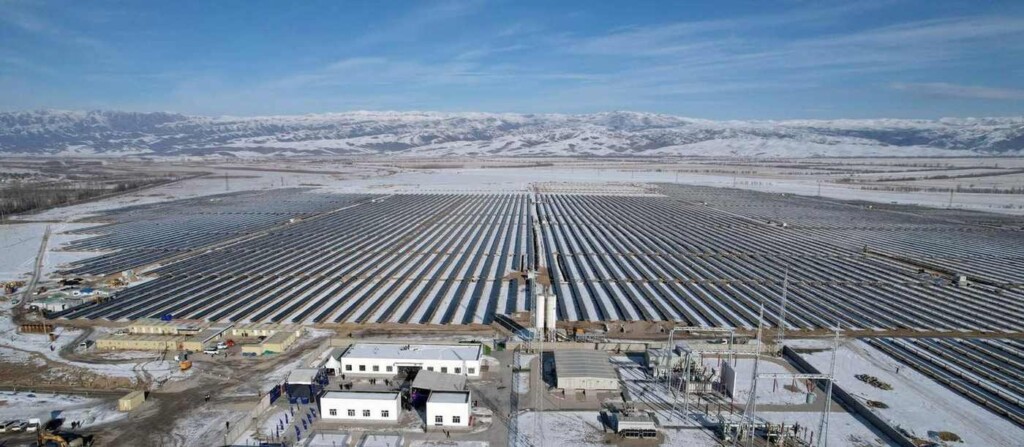
On Christmas Eve, the Central Asian nation of Kyrgyzstan inaugurated its first solar power plant, one that will power a small city and cut 120,000 tons of CO2 emissions annually.

The 100-megawatt installation will generate 210 million kWh of clean electricity annually, and represents one of the largest foreign investments into the country of any kind since independence.

It’s seen as the start of a big push to de-carbonize, with outside investors having inked 12 other agreements for solar and wind resources that will bring 5 gigawatts of clean energy online in the coming decades.

Kyrgyzstan’s energy mix is already one of the most renewable in the world, with some 72%-84% of demand met by hydropower. However, input from fossil fuels can climb just as high depending on demand level and season, since many rivers lose flow rate during winter.

Speaking at the launch ceremony, President Sadyr Japarov described the project as signaling a new phase in the country’s energy transition and its commitment to sustainable development.

“The opening of the solar power plant marks the beginning of an important stage in strengthening our country’s energy independence and developing renewable energy sources,” Japarov said.

“We now recognize that without the active development of renewables, it is impossible to fully ensure stable electricity supplies for both the population and economic sectors.”The new solar plant was built in the most populous region of the country, approximately 60 miles east of the capital, Bishkek. The collapse of the Soviet Union left the local economy of Kemin district largely rudderless, but the recent urban growth in the district’s largest city led to increasing energy demand that this solar farm aims to satisfy. First Solar Power Plant in Kyrgyzstan Will Save 120,000 Tons of Carbon Emissions Every Year
Read More........

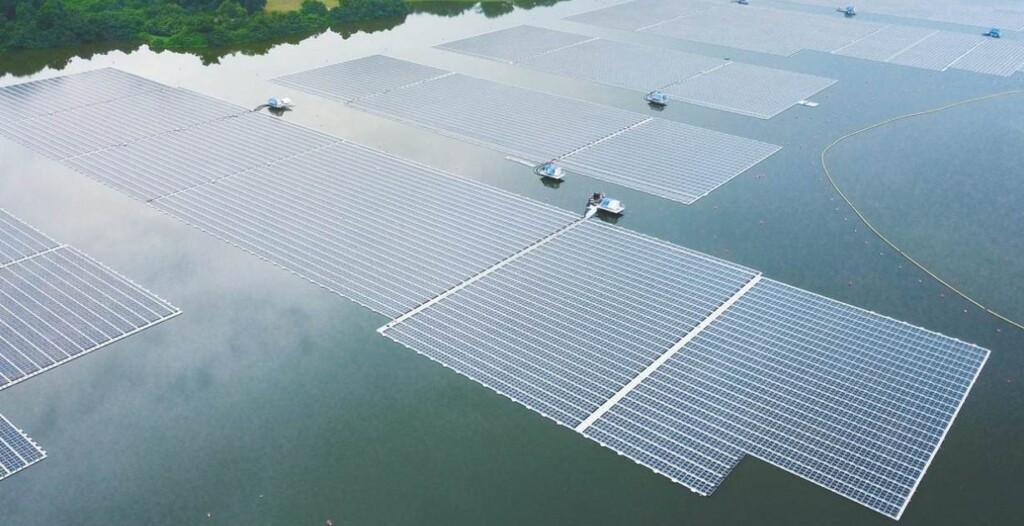
Resourceful Singapore Finds Perfect Place for 86 MW Solar Farm–its Biggest Reservoir

– credit, courtesy of Sembcorp

How do you decarbonize a city state? With so little space, so many demands on power, and so many citizens, generating any meaningful electricity from renewable energy is a major challenge for urban planners.

But over its history, the planners of Singapore have shown themselves to be nothing if not resourceful, and so maybe it’s no surprise they’re set to begin construction on an 86-megawatt solar farm.

The surprise though comes from where they’ve built it—on top of the country’s largest reservoir—forming a floating solar farm that will join two others already present on two other reservoirs.

The contractor, Singapore-based engineering firm Sembcorp Solar Singapore, won the bidding process with designs for an 86MW PV solar farm on Pandan Reservoir, issued by Singapore’s national water agency.

It will be the third such floating solar farm built by Sembcorp, with the other two located on Singapore’s two other reservoirs. One was built in 2021, and another was commissioned this year by Facebook parent company Meta to power the data center for its local subsidiary.

All tolled, the solar panels will generate 296 megawatts of clean energy.

“Floating solar projects at reservoirs like Pandan, Tengeh and Kranji are vital for Singapore’s land-scarce energy landscape,” said Ms. Jen Tan, CEO of Sembcorp Solar Singapore.

Floating solar installations have a unique benefit to terrestrially-mounted panel arrays, which is that the water underneath helps keep their electronics cool even while their black surfaces bake in the tropical sun. When properly cooled, panels can produce around 2% more power.Other installations such as rooftop panel arrays mean that Singapore actually generates over 1,000 megawatt-hours of solar energy, half of what the city-state plans to install by 2030. It will be fascinating to see where they put the next solar array, having run out of reservoirs. Resourceful Singapore Finds Perfect Place for 86 MW Solar Farm–its Biggest Reservoir
Read More........