Discovery of Genetically-Varied Worms in Chernobyl Could Help Human Cancer Research

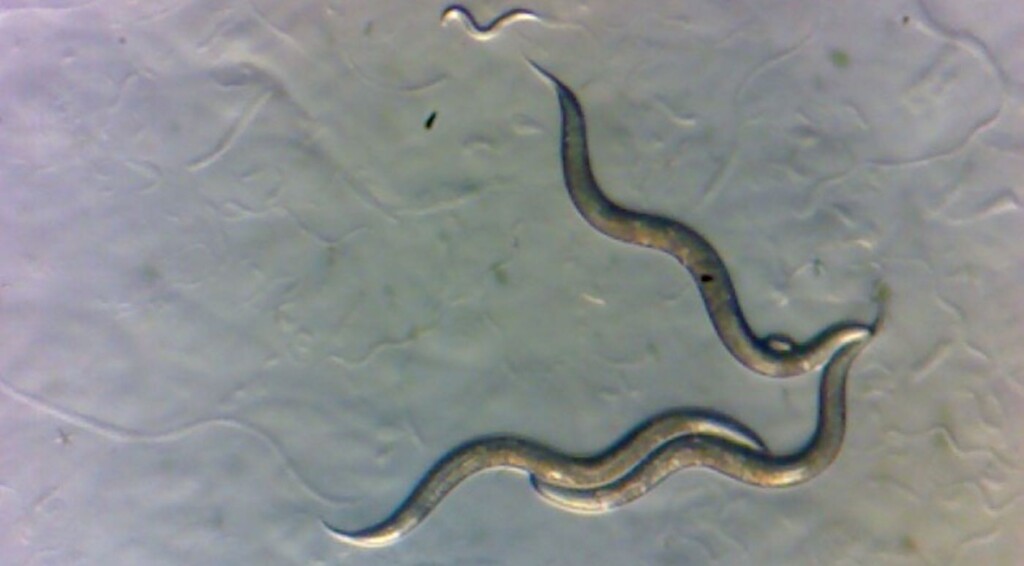
Worms collected in the Chornobyl Exclusion Zone – SWNS / New York University

The 1986 disaster at the Chernobyl nuclear power plant transformed the surrounding area into the most radioactive landscape on Earth, and now the discovery of a worm that seems to be right at home in the rads is believed to be a boon for human cancer research.

Though humans were evacuated after the meltdown of Reactor 4, many plants and animals continued to live in the region, despite the high levels of radiation that have persisted to our time.

In recent years, researchers have found that some animals living in the Chernobyl Exclusion Zone are physically and genetically different from their counterparts elsewhere, raising questions about the impact of chronic radiation on DNA.

In particular, a new study led by researchers at New York University finds that exposure to chronic radiation from Chernobyl has not damaged the genomes of microscopic worms living there today, and the team suggests the invertebrates have become exceptionally resilient.

The finding could offer clues as to why humans with a genetic predisposition to cancer develop the disease, while others do not.

“Chernobyl was a tragedy of incomprehensible scale, but we still don’t have a great grasp on the effects of the disaster on local populations,” said Sophia Tintori, a postdoctoral associate in the Department of Biology at NYU and the first author of the study, published in the Proceedings of the National Academy of Sciences.

“Did the sudden environmental shift select for species, or even individuals within a species, that are naturally more resistant to ionizing radiation?”

Tintori and her colleagues turned to nematodes, tiny worms with simple genomes and rapid reproduction, which makes them particularly useful for understanding basic biological phenomena.

“These worms live everywhere, and they live quickly, so they go through dozens of generations of evolution while a typical vertebrate is still putting on its shoes,” said Matthew Rockman, a professor of biology at NYU and the study’s senior author.

“I had seen footage of the Exclusion Zone and was surprised by how lush and overgrown it looked—I’d never thought of it as teeming with life,” added Tintori. “If I want to find worms that are particularly tolerant to radiation exposure, this is a landscape that might have already selected for that.”

In collaboration with scientists in Ukraine and U.S. colleagues, including biologist Timothy Mousseau of the University of South Carolina, who studies the effects of radiation from the Chernobyl and Fukushima disasters, Tintori and Rockman visited the Chernobyl Exclusion Zone in 2019 to see if chronic radiation has had a detectable impact on the region’s worms.

With Geiger counters in hand to measure local levels of radiation and personal protective gear to guard against radioactive dust, they gathered worms from samples of soil, rotting fruit, and other organic material.
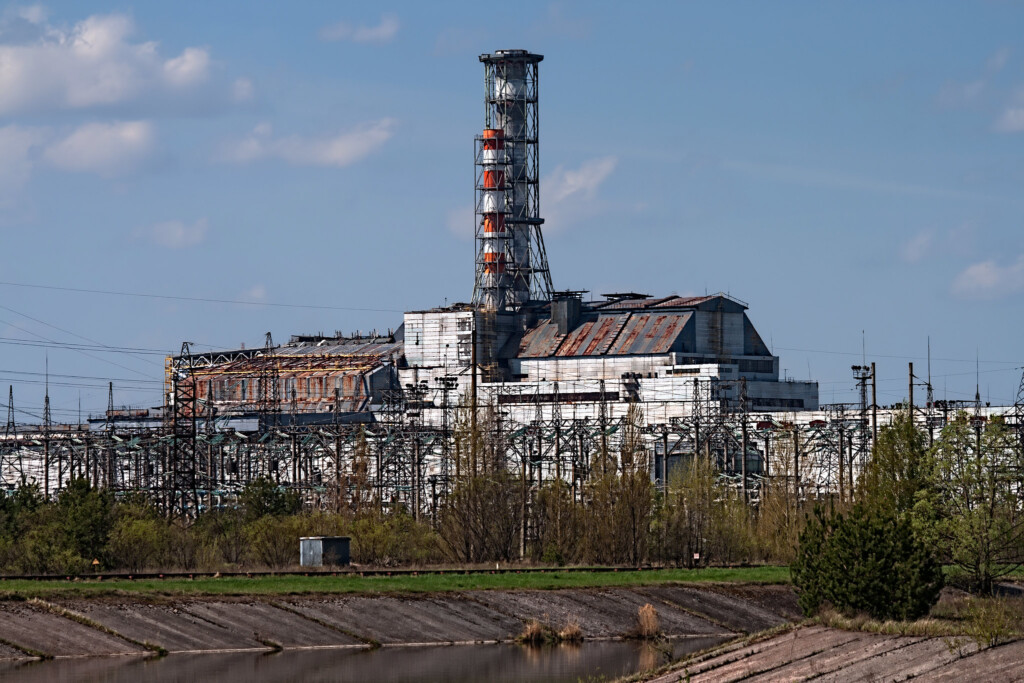
The ruins of Reactor 4, Chernobyl Exclusion Zone. credit Matt Shalvatis – CC BY-4.0. SA

Worms were collected from locations throughout the zone with different amounts of radiation, ranging from low levels on par with New York City (negligibly radioactive) to high-radiation sites on par with outer space (dangerous for humans, but of unclear if it would be dangerous to worms).

After collecting samples in the field, the team brought them to Mousseau’s field lab in a former residential home in Chernobyl, where they separated hundreds of nematodes from the soil or fruit. From there, they headed to a Kyiv hotel where, using travel microscopes, they isolated and established cultures from each worm.

Back in the lab at NYU, the researchers continued studying the worms by freezing them.

“We can cryopreserve worms, and then thaw them for study later. That means that we can stop evolution from happening in the lab, something impossible with most other animal models, and very valuable when we want to compare animals that have experienced different evolutionary histories,” said Rockman.

They focused their analyses on 15 worms of a nematode species called Oscheius tipulae, which has been used in genetic and evolutionary studies. They sequenced the genomes of the 15 O. tipulae worms from Chernobyl and compared them with the genomes of five O. tipulae from other parts of the world.

The researchers were surprised to find that, using several different analyses, they could not detect a signature of radiation damage on the genomes of the worms from Chernobyl.

“This doesn’t mean that Chernobyl is safe—it more likely means that nematodes are really resilient animals and can withstand extreme conditions,” noted Tintori. “We also don’t know how long each of the worms we collected was in the Zone, so we can’t be sure exactly what level of exposure each worm and its ancestors received over the past four decades.”

Wondering whether the lack of genetic signature was because the worms living in Chernobyl are unusually effective at protecting or repairing their DNA, the researchers designed a system to compare how quickly populations of worms grow and used it to measure how sensitive the descendants of each of the 20 genetically distinct worms were to different types of DNA damage.

The surprise in this story is that while the lineages of worms were different from each other in how well they tolerated DNA damage, these differences didn’t correspond to the levels of radiation at each collection site, meaning that unlike the origin stories of several superheroes, radiation exposure doesn’t seem to create super worms just as much as it can’t turn you or I into Spiderman or the Hulk.

Instead, the teams’ findings suggest that worms from Chernobyl are not necessarily more tolerant of radiation and the radioactive landscape has not forced them to evolve.

The results give researchers clues into how DNA repair can vary from individual to individual—and despite the genetic simplicity of O. tipulae, could lead to a better understanding of natural variation in humans.

“Now that we know which strains of O. tipulae are more sensitive or more tolerant to DNA damage, we can use these strains to study why different individuals are more likely than others to suffer the effects of carcinogens,” said Tintori.

How different individuals in a species respond to DNA damage is top of mind for cancer researchers seeking to understand why some humans with a genetic predisposition to cancer develop the disease, while others do not.

“Thinking about how individuals respond differently to DNA-damaging agents in the environment is something that will help us have a clear vision of our own risk factors,” added Tintori. Discovery of Genetically-Varied Worms in Chernobyl Could Help Human Cancer Research
Read More........

Russia launches rescue ship to space station after leaks

In this handout photo taken from video released by Roscosmos State Space Corporation, the new, empty Soyuz MS-23 capsule blasts off at the Russian leased Baikonur cosmodrome in Baikonur, Kazakhstan, on Friday, Feb. 24, 2023. Russia has launched a rescue ship for two cosmonauts and a NASA astronaut whose original ride sprang a dangerous leak at the International Space Station. (Roscosmos State Space Corporation via AP)


By MARCIA DUNN: Russia launched a rescue ship on Friday for two cosmonauts and a NASA astronaut whose original ride home sprang a dangerous leak while parked at the International Space Station.


The new, empty Soyuz capsule should arrive at the orbiting lab on Sunday.


The capsule leak in December was blamed on a micrometeorite that punctured an external radiator, draining it of coolant. The same thing appeared to happen again earlier this month, this time on a docked Russian cargo ship. Camera views showed a small hole in each spacecraft.


The Russian Space Agency delayed the launch of the replacement Soyuz, looking for any manufacturing defects. No issues were found, and the agency proceeded with Friday's predawn launch from Kazakhstan of the capsule with bundles of supplies strapped into the three seats.


Given the urgent need for this capsule, two top NASA officials traveled from the U.S. to observe the launch in person. To everyone's relief, the capsule safely reached orbit nine minutes after liftoff — “a perfect ride to orbit,” NASA Mission Control's Rob Navias reported from Houston.


Officials had determined it was too risky to bring NASA’s Frank Rubio and Russia’s Sergey Prokopyev and Dmitri Petelin back in their damaged Soyuz next month as originally planned. With no coolant, the cabin temperature would spike during the trip back to Earth, potentially damaging computers and other equipment, and exposing the suited-up crew to excessive heat.


Until the new Soyuz pulls up, emergency plans call for Rubio to switch to a SpaceX crew capsule that’s docked at the space station. Prokopyev and Petelin remain assigned to their damaged Soyuz in the unlikely need for a fast getaway. Having one less person on board would keep the temperature down to a hopefully manageable level, Russian engineers concluded.


The damaged Soyuz will return to Earth with no one aboard by the end of March, so engineers can examine it.


The three men launched in this Soyuz last September on what should have been a six-month mission. They'll now stay in space for a full year, until a new capsule is ready for their crew replacements for liftoff in September. It was their Soyuz that just launched with no one on board.


The damaged supply ship was filled with trash and cut loose over the weekend, burning up in the atmosphere as originally planned.


“The Russians are continuing to take a really close look” at both spacecraft leaks, NASA's deputy space station program manager Dana Weigel told reporters earlier this week. “They're looking at everything ... to try to understand that."


NASA has a fresh crew of four launching atop a SpaceX rocket early Monday morning from Florida’s Kennedy Space Center. SpaceX's William Gerstenmaier said the four astronauts returning to Earth in a few weeks already have inspected the Dragon capsule that will carry them home and “it all checked out fine."


___The Associated Press Health and Science Department receives support from the Howard Hughes Medical Institute’s Science and Educational Media Group. The AP is solely responsible for all content. Source: https://yourvalley.net/
Read More........

Russia reports ‘non-standard’ air leak on Space Station

Russia said Tuesday that astronauts had found an air leak in its section of the International Space Station, with a senior space official calling the air loss beyond expected levels.

The crew on the ISS — Russian cosmonauts Anatoly Ivanishin and Ivan Vagner and NASA astronaut Christopher Cassidy — have been searching for the air leak since August, first checking the US segment.

Russia’s space agency, Roscosmos, said in a statement that after analysis and a search for the leak “it was established that the spot is located in the Zvezda (star) service module, which contains scientific equipment.”

It said a search was now underfoot to pinpoint the exact location, saying the situation “is not dangerous for the life and health of the ISS crew and does not prevent the ISS continuing manned flight.”

“It’s not critical in the near future,” said Sergei Krikalyov, the executive director of Russia’s manned space programs, in a televised comment.

He said the ISS always has slight air loss due to the air purifying system.

“These leaks are predictable. What’s happening now is more than the standard leakage and naturally if it lasts a long time, it will require supplies of extra air to the station,” he said.

He said the crew were now resting but hoped to find the precise spot and fix the leak on Wednesday.

“That’s not for sure,” he added, saying there was quite a large area to search.

“We have time. The leak exists of course. It’s not good that it’s there, but it’s not critical,” he said.

NASA said that the leak had appeared to grow in size overnight Monday to Tuesday and the crew were awakened by flight controllers to carry out a search.

It was later found that a temperature change had made the leak seem to grow, while the rate of air escaping was “unchanged,” the US space agency said.

Previously, astronauts had searched for the source of the leak in the US segment of the station using an ultrasound detector.

The incident comes after astronauts in 2018 found a hole in the wall of a Russian-made Soyuz space capsule docked onto the ISS.

The cause of the hole has not yet been made public.Three new crew members, Russians Sergei Ryzhikov and Sergei Kud-Sverchkov and NASA astronaut Kate Rubins, are set to arrive in a Russian Soyuz spacecraft due to launch October 14.  Source: https://www.daily-bangladesh.com/
Read More........

Three-man US-Russian crew returns to Earth from ISS

An American astronaut and two Russian cosmonauts touched down on the Kazakhstan steppe on Thursday, completing a 196-day mission that began with the first launch under lockdown conditions.

NASA astronaut Chris Cassidy and Russian cosmonauts Anatoly Ivanishin and Ivan Vagner landed around 150 kilometres (90 miles) southeast of the Kazakh city of Zhezkazgan at 0254 GMT, footage broadcast by the Russian space agency Roscosmos showed.

A NASA commentator citing communications from crews on the ground at the landing site said that the Soyuz descent module had landed in a vertical position and that the crew were working on getting the trio out of the craft.

The three-man crew had blasted off minus the unusual fanfare in April with around half the world's population living under national lockdowns imposed to contain the spread of the coronavirus.

The mission coincided with the arrival at the space station in May of the first astronauts to blast off from US soil for almost a decade.

The mission carried out by tycoon Elon Musk's SpaceX company as part of NASA's commercial Commercial Crew Program has helped fuel talk of a new "space race" between a number of countries.

Prior to returning from his third mission in space, former US Navy SEAL Cassidy, 50, tweeted a picture of blood samples that astronauts have to submit at various points in their mission, including just before undocking.

"What is the price of a return ride back to Earth?....8 tubes of blood!! The 7 shown in this picture were taken in the morning to be placed in our deep freezer, and the 8th will be drawn just prior to undock for ground processing soon after landing," Cassidy wrote.

First-time-flyer Vagner was a rare Roscosmos presence on the micro-blogging platform, where most NASA astronauts have a profile.

"Mama, I'm coming home," the 35-year-old tweeted on Wednesday.

Ivanishin is wrapping up his third mission, after NASA's Kathleen Rubins, with whom he launched to the ISS in 2016, arrived for a second stint aboard the station last week along with Sergey Ryzhikov and Sergey Kud-Sverchkov of Roscosmos.

The ISS, has been a rare example of cooperation between Moscow and Washington.Next month will mark the 20th anniversary of the orbital lab being permanently occupied by humans, but the station is expected to be decommissioned in the next decade due to structural fatigue. Source: https://www.daily-bangladesh.com/
Read More........

SpaceX Crew Dragon “Resilience” docks with ISS

A SpaceX Crew Dragon carrying four astronauts docked with the International Space Station Monday, the first of what NASA hopes will be many routine missions ending US reliance on Russian rockets.

“Dragon SpaceX, soft capture confirmed,” said an announcer as the capsule completed its 27.5 hour journey at 11:01 pm (0401 GMT Tuesday), with the second part of the procedure, “hard capture,” occurring a few minutes later.

The spacecraft, named “Resilience,” docked autonomously with the space station some 260 miles (400 kilometers) above the Midwestern US state of Ohio.

The crew is comprised of three Americans — Michael Hopkins, Victor Glover and Shannon Walker — and Japan’s Soichi Noguchi.

Earlier, mission commander Hopkins gave pilot Glover his “gold pin,” a NASA tradition when an astronaut first crosses the 100-kilometer Karman line marking the official boundary of space.

Glover is the first Black astronaut to make an extended stay at the ISS, while Noguchi is the first non-American to fly to orbit on a private spaceship.

The crew joins two Russians and one American aboard the station, and will stay for six months.

Along the way, there was a problem with the cabin temperature control system, but it was quickly solved.

SpaceX briefly transmitted live images from inside the capsule showing the astronauts in their seats, something neither the Russians nor the Americans had done before.

US President-elect Joe Biden hailed the launch on Twitter as a “testament to the power of science and what we can accomplish by harnessing our innovation, ingenuity, and determination,” while President Donald Trump called it “great.”

Vice President Mike Pence, who attended the launch with his wife Karen, called it a “new era in human space exploration in America.”

The Crew Dragon capsule earlier this week became the first spacecraft to be certified by NASA since the Space Shuttle nearly 40 years ago. Its launch vehicle is a reusable SpaceX Falcon 9 rocket.

At the end of its missions, the Crew Dragon deploys parachutes and then splashes down in water, just as in the Apollo era.

SpaceX is scheduled to launch two more crewed flights for NASA in 2021, including one in the spring, and four cargo refueling missions over the next 15 months.

NASA turned to SpaceX and Boeing after shuttering the checkered Space Shuttle program in 2011, which failed in its main objectives of making space travel affordable and safe.

The agency will have spent more than $8 billion on the Commercial Crew program by 2024, with the hope that the private sector can take care of NASA’s needs in “low Earth orbit” so it is freed up to focus on return missions to the Moon and then on to Mars.

SpaceX, founded by Elon Musk in 2002, leapfrogged its much older rival Boeing, whose program floundered after a failed test of its uncrewed Starliner last year.

– Russians unimpressed –

But SpaceX’s success won’t mean the US will stop hitching rides with Russia altogether, said NASA administrator Jim Bridenstine. The goal is to have an “exchange of seats” between American astronauts and Russian cosmonauts.

Bridenstine also explained it was necessary in case either program was down for a period of time.

The reality, however, is that space ties between the US and Russia — one of the few bright spots in their bilateral relations — have frayed in recent years.

Russia has said it won’t be a partner in the Artemis program to return to the Moon in 2024, claiming the NASA-led mission is too US-centric.

Dmitry Rogozin, the head of Russia’s space agency, has also repeatedly mocked SpaceX’s technology, telling a state news agency he was unimpressed with the Crew Dragon’s “rather rough” water landing and saying his agency was developing a methane rocket that will be reusable 100 times. But the fact that a national space agency feels moved to compare itself to a company arguably validates NASA’s public-private strategy.

SpaceX’s emergence has also deprived Roscosmos of a valuable income stream.

The cost of round-trips on Russian rockets had been rising and stood at around $85 million per astronaut, according to estimates last year.

– Biden incoming –

Presidential transitions are always a difficult time for NASA, and the ascension of Joe Biden in January is expected to be no different.

The agency has yet to receive from Congress the tens of billions of dollars needed to finalize the Artemis program.

Bridenstine has announced that he will step down, to let the new president set his own goals for space exploration.

So far, Biden has not commented on the 2024 timeline.Democratic party documents say they support NASA’s Moon and Mars aspirations, but also emphasize elevating the agency’s Earth sciences division to better understand how climate change is affecting our planet. Source: https://www.daily-bangladesh.com/
Read More........

Three-man US-Russian crew returns to Earth from ISS

An American astronaut and two Russian cosmonauts touched down on the Kazakhstan steppe on Thursday, completing a 196-day mission that began with the first launch under lockdown conditions.

NASA astronaut Chris Cassidy and Russian cosmonauts Anatoly Ivanishin and Ivan Vagner landed around 150 kilometres (90 miles) southeast of the Kazakh city of Zhezkazgan at 0254 GMT, footage broadcast by the Russian space agency Roscosmos showed.

A NASA commentator citing communications from crews on the ground at the landing site said that the Soyuz descent module had landed in a vertical position and that the crew were working on getting the trio out of the craft.

The three-man crew had blasted off minus the unusual fanfare in April with around half the world's population living under national lockdowns imposed to contain the spread of the coronavirus.

The mission coincided with the arrival at the space station in May of the first astronauts to blast off from US soil for almost a decade.

The mission carried out by tycoon Elon Musk's SpaceX company as part of NASA's commercial Commercial Crew Program has helped fuel talk of a new "space race" between a number of countries.

Prior to returning from his third mission in space, former US Navy SEAL Cassidy, 50, tweeted a picture of blood samples that astronauts have to submit at various points in their mission, including just before undocking.

"What is the price of a return ride back to Earth?....8 tubes of blood!! The 7 shown in this picture were taken in the morning to be placed in our deep freezer, and the 8th will be drawn just prior to undock for ground processing soon after landing," Cassidy wrote.

First-time-flyer Vagner was a rare Roscosmos presence on the micro-blogging platform, where most NASA astronauts have a profile.

"Mama, I'm coming home," the 35-year-old tweeted on Wednesday.

Ivanishin is wrapping up his third mission, after NASA's Kathleen Rubins, with whom he launched to the ISS in 2016, arrived for a second stint aboard the station last week along with Sergey Ryzhikov and Sergey Kud-Sverchkov of Roscosmos.

The ISS, has been a rare example of cooperation between Moscow and Washington.Next month will mark the 20th anniversary of the orbital lab being permanently occupied by humans, but the station is expected to be decommissioned in the next decade due to structural fatigue. Source: https://www.daily-bangladesh.com
Read More........

Indian, Russian satellites barely miss collision in space


India's 700 kg cartography satellite Cartosat-2F and Russia's 450 kg Kanopus-V satellite had a near-miss in the outer space on Friday morning, said Roscosmos, Russia's state space corporation. Both the satellites were as close as 224 metres.

Roscosmos said in a statement that as per the TsNIIMash main information and analytical centre of the Warning Automated System of Hazardous Situations near the earth space-part of Roscosmos, at 1.49 UTC (IST 7.19 a.m.), Cartosat-2F, an active Indian satellite, dangerously approached Russia's Kanopus-V satellite.

According to the TsNIIMash calculations, the minimum distance between the Russian and the foreign satellite was 224 metres.

Both the spacecraft are designed for Earth's remote sensing.

Kanopus is an Earth observation sattelite with a launch mass of 450 kg mini-satellite mission of the Russian Space Agency.

The overall objective is to monitor Earth's surface, atmosphere, ionosphere, and magnetosphere to detect and study the probability of strong earthquake occurrence.

On the other hand, Cartosat-2F is the eighth in the Cartosat-2 series launched in January 2018.

While Roscosmos made the matter public, the Indian Space Research Organisation (ISRO) has maintained silence on the issue so far.

However, it is not known how the Indian satellite came so close to the Russian satellite  Source: https://southasiamonitor.org
Read More........

Astronaut trainees complete abnormal descent module landing

a

Four Indian astronauts who were undergoing training in Russia since February 2020 have successfully completed the training on crew actions in case of abnormal descent module landing on different terrains, said Glavkosmos.

The company is a subsidiary of Russian space corporation Roscosmos and the Indian astronauts are being trained at Gagarin Cosmonaut Training Center (GCTC).

According to Glavkosmos, the prospective Indian astronauts have been trained in abnormal descent module landing - in wooded and marshy areas in winter; on water surface and in the steppe in summer.

"In June 2020, all Indian astronauts-elect passed training in short-term weightlessness mode aboard the IL-76MDK special laboratory aircraft, and in July, they were trained to lift aboard a helicopter while evacuating from the descent module landing point," Glavkosmos said.

According to Glavkosmos, the upcoming programme for the prospective Indian astronauts who will be part of India's human space mission Gaganyaan includes training in a centrifuge and in a hyperbaric chamber to prepare their organisms for sustaining spaceflight factors, such as G-force, hypoxia and pressure drops.

The regular courses comprise medical and physical training, learning Russian (as one of the main international languages of communication in space), and studying the configuration, structure and systems of the Soyuz crewed spacecraft.

The health of prospective Indian astronauts is monitored on a daily basis, and once every three months, GCTC doctors conduct their thorough medical examination.

According to Glavkosmos, all the Indian trainees are in good health.

The Indians undergo the general space training programme and of the systems of the Soyuz MS crewed spacecraft.The completion of their training at GCTC is scheduled for the first quarter of 2021.

The contract for the training of Indian astronauts between Glavkosmos and the Human Spaceflight Centre of the Indian Space Research Organisation was signed on June 27, 2019 and four pilots from the Indian Air Force (IAF) were sent to GCTC for training in space travel and other aspects as part of India's maiden human space mission Gaganyaan.(IANS) Source: https://southasiamonitor.org
Read More........

Russia's Sechenov varsity claims successful human trials of Covid-19 vaccine


There was, however, no further information on when this vaccine would enter commercial production stage


Moscow: Russia has become the first nation to complete clinical trials of Covid-19 vaccine on humans, and the results have proven the medication's effectiveness, the media reported on Sunday.

Chief researcher Elena Smolyarchuk, who heads the Center for Clinical Research on Medications at Sechenov University, told Russian news agency TASS on Sunday that the human trials for the vaccine have been completed at the university and they will be discharged soon.

"The research has been completed and it proved that the vaccine is safe. The volunteers will be discharged on July 15 and July 20," Smolyarchuk was quoted as saying in the report.
Commercial production

There was, however, no further information on when this vaccine would enter commercial production stage.

Russia had allowed clinical trials of two forms of a potential Covid-19 vaccine developed by the Gamaleya National Research Center for Epidemiology and Microbiology on June 18.

The first vaccine, in the form of a solution for intramuscular administration, was carried out at the Burdenko Military Hospital.

Another vaccine, in the form of a powder for the preparation of a solution for intramuscular administration, was carried out at Sechenov First Moscow State Medical University.
How Sechenov University did it?

The first stage of research on the vaccine at Sechenov University involved a group of 18 volunteers and the second group involved 20 volunteers.

After vaccination, all volunteers were expected to remain in isolation in a hospital for 28 days.

Earlier, results of the COVID-19 vaccine tests performed on a group of volunteers in Russia showed that they were developing immunity to the coronavirus.

"The data obtained by the Gamalei National Research Center for Epidemiology and Microbiology, proves that volunteers of the first and second groups are forming an immune response after injections of the vaccine against the coronavirus," according to an earlier statement from the Russian Defense Ministry.
21 vaccines under key trials

There are at least 21 vaccines currently under key trials, according to the World Health Organisation (WHO).

Russia has reported 719,449 cases and 11,188 deaths to date.

The overall number of global COVID-19 cases was nearing 12.7 million, while the deaths have increased to more than 564,000, according to Johns Hopkins University in the US.

As of Sunday morning, the total number of cases stood at 12,681,472, while the fatalities rose to 564,420.

The US accounted for the world's highest number of infections and fatalities at 3,245,158 and 134,764. Brazil came in the second place with 1,839,850 infections and 71,469 deaths. Source: https://ummid.com/
Read More........

Inside a Russian experiment to make life possible on the Moon or Mars

The longest experiment at BIOS lasted 180 days and was held in 1972-1973. Picture: Vera Salnitskaya, The Siberian Times 
By Olga Gertcyk and Vera Salnitskaya: The BIOS-3 closed ecosystem in Siberia sustains human life autonomously by creating a micro-Earth. Begun in the Cold War more than half a century ago, the experiment anticipated the Hollywood dilemma faced in The Martian by Matt Damon when he is stranded on the Red Planet: how to create oxygen, water and food to survive in a hostile environment? Here in a scientific institute in the city of Krasnoyarsk, BIOS-3 is the third generation solution to a problem scientists first began working on in 1965 at the behest of the father of Russian space exploration, Sergei Korolyov. As far away as you could get from the West's prying eyes, it was the subject of intriguing Soviet-era tests, shutting humans inside the closed ecosystem for up to 180 days, in the expectation of future long space missions. 
Inside the BIOS-3 station, Krasnoyarsk. Pictures: Vera Salnitskaya, The Siberian Times 
Senior engineer Nikolai Bugreyev, 74, is nicknamed the 'Siberian Martian' for spending a total of 13 months inside BIOS-3. As a 'bionaut' he twice celebrated New Year in this unique ecosystem. 'I lived in this compartment. It's really small but it was enough, it's just 5 square metres. There was a table, bed, a shelf for clothes, and that was it, you don't really need anything else,' he said. 'You could see outside of the round window, there were colleagues walking there, researchers, they were waving to us. But we couldn't really speak because you couldn't hear anything through the walls. We used a special phone if need was. Relatives would come at the weekends. 'Bionauts were working all day long, there was no time to miss family and home - so we didn't have any conflicts. We went to bed covered with wires, and there was a doctor sitting on the roof of the station. He monitored the devices every night. 'Yet there was no, even tiny, deviations in the health of researchers as a result of the experiment. Quite the opposite - healthy food, routine, favourite job - what else do you need to be happy and healthy? 'If a bionaut wanted to leave the station, he or she could do that even without talking to his colleagues, But no one was even thinking of giving up.'  
Previous experiments at BIOS-3 in 1973 and 1984. Pictures: Nikolay Bugreyev
Having proved the sustainability of an ecosystem to maintain human life, there are hopes of new research as Russia along with the US and other countries start to plan for long distance missions in space. Dr Alexander Tikhomirov, executive director of International Centre for Study of Enclosed Environmental Systems of the Institute of Biophysics, in Krasnoyarsk, gave us a tour of this unique facility. 'BIOS-3 is an autonomous enclosed life-support system,' he said. 'Construction works were completed in Krasnoyarsk in 1972. A hermetic room about 315 cubic meter large (14x9x2.5m) was built in the basement of the institute. 'The room was separated in four equally large spaces that were connected by hermetically sealed doors. One of them was a so-called household compartment where people could have some rest, talk to peers, take measurements, monitor the work of the system. It also had a kitchen and a bathroom. 'Three other compartments were designed to regenerate the environment. Two had plants; wheat, oilseeds and vegetables grew. They provided a balanced diet in terms of biochemical elements. Plants were carefully selected so that you do not get bored of them, on one hand, and to provide all the necessary nutrients, on the other.'
Dr Alexander Tikhomirov. Pictures: Vera Salnitskaya, The Siberian Times 
The diet comprised wheat, soy beans, salad, chufa (cyperus esculentus), carrot, radish, beetroot, potato, cucumbers, cabbage, and onion, which were grown in a greenhouse, with artificial lighting. Not forgetting rumex patientia - also known as 'garden patience' or 'monk's rhubarb'': but all the plants were specially selected. Miniature wheat has shorter stalks allowing a reduction in waste, for example. Chufa, or Central Asian grass, was used to produce oil. BIOS-3 started functioning in 1972 and a number of long-term experiments were conducted here using human guinea pigs. 'The longest experiment was six months long: there were three participants, two men and a woman,' Tikhomirov said. 'They were not simply living there but doing certain tasks. There was an agronomist, an engineer and a doctor among them, all working to support functioning of the system.' 
Inside the BIOS-3 station, Krasnoyarsk. Picture: Vera Salnitskaya, The Siberian Times 
The system worked without livestock so the ecosystem did not involve animal proteins. 'If animals were introduced to the system, we would need to enlarge it. It would be necessary not only to feed them but also to dispose of their waste. Butter and animal proteins were taken in tins. All the rest nutrients were produced in the system. Plants were used not only for food but also to produce oxygen, absorb carbon dioxide and support water cycle. There was a full water cycle, people had enough water.' He explained: 'The last compartment contained chlorella. It is a single-celled type of green algae containing large amounts of chlorophyll. It functions well for a long period, breeds, absorbs carbon dioxide, and participate in the water cycle. It's main disadvantage was that it is not edible.  'Chlorella was building up in the system and it was negatively affecting it, so they got rid of it and replaced it with a compartment with plants. This prevented a build-up of excessive waste.'
BIOS-3 is an autonomous enclosed life-support system. Pictures: Vera Salnitskaya, The Siberian Times 
In all there were ten experiments with between one and three participants, Dr Tikhomirov said.  The longest experiment lasted 180 days and was held in 1972-1973. Gas and water systems were completely enclosed, 80% of demand in food was also met within the system. Nikolay Bugreyev, an engineer at the same institute, spent more time inside than anyone else. 'Most importantly, it was proved that humans can live and work in an enclosed space for a long time with a full cycle,' said Dr Tikhomirov. 'There were attempts to copy us but they failed. There are certain peculiarities in terms of technologies, for example the Americans wouldn't listen to us and tried to make everything themselves but didn't consider nuances of growing plants. It caused a disbalance in terms of oxygen and they were forced to stop the experiment. 'There were other problems, they liked it stylish and decorated everything with plastic, yet there are some emissions from plastic that build up in an enclosed system. It's not only dangerous for people but also for plants which start dying.  'We had everything done in stainless steel. Not very attractive but very practical. 'Our foreign peers didn't consider a lot of factors. I can give you an example: it is necessary to grow plants in rows to ensure balance human breathe and the emission of oxygen by plants. Wheat germs produce some oxygen when they're new and a lot of it when they are mature. As they age, amount of oxygen decreases again. It means that it is necessary to use extra oxygen if you're growing plants all of the same age. 'We told them of it when they were doing their experiment, but they ignored our recommendations and created single-species single-aged systems. 'Initially, they didn't have enough oxygen and later they had too much of it. It was out of balance.' 
'Similar experiments in the West are conducted on rats'. Picture: Nikolay Bugreyev
In Soviet times, there was no hesitation in experimenting with people from an early stage. 'Similar experiments in the West are conducted on rats. It is necessary to sort out lots of things, now there is such a thing as human rights. In Soviet times they were experimenting on people straight away,' - Dr Tikhomirov said. 'Today the Chinese are the closest to repeating our experiment but not completely. They haven't sorted out waste management as yet.' Research here was hit first in the final years of the USSR when budgets tightened. 'Later, the Europeans got interested in developing this subject. Grants from the European Union boosted the modernisation of BIOS. Then there was some extra funding from Russian sources.' Today's experiments here are more limited in scope. 'The aim of current experiments is increasing the sustainability of the system: making the air cleaner, growing more food at BIOS. Generally speaking, the aim is to recreate the Earth in miniature. Now we're slowly refurbishing BIOS, taking into account new technologies. 'But it is not yet clear if long-term experiments at BIOS will continue. It requires a lot of money and the government should get involved. The institute is part of the Siberian branch of the Russian Academy of Sciences. Source: http://siberiantimes.com/
Read More........

Russia Developing Terrorist-Killer Robots

Russian experts are developing robots designed to minimize casualties in terrorist attacks and neutralize terrorists, Deputy Prime Minister Dmitry Rogozin said on Friday.
By Dmitry Rogozin: Robots could also help evacuate injured servicemen and civilians from the scene of a terrorist attack, said Rogozin, who oversees the defense industry. Other antiterror equipment Russia is developing includes systems that can see terrorists through obstacles and effectively engage them in a standoff mode at a long distance without injuring their hostages, he said. Rogozin did not say when the equipment might be deployed by Russia's security and intelligence services. Human Rights Watch has criticized fully autonomous weapons, known as "killer robots," which would be able to select and engage targets without human intervention and called for the preemptive prohibition on such weapons. "Fully autonomous weapons do not exist yet, but they are being developed by several countries and precursors to fully autonomous weapons have already been deployed by high-tech militaries," HRW said in a statement on its website. "Some experts predict that fully autonomous weapons could be operational in 20 to 30 years," the human rights watchdog said. Voice of Russia, RIA. Source: http://sputniknews.com/
Read More........

Next generation drones design inspired by nature

© Photo: East News
After being inspired by birds, bats, insects and even flying snakes, researchers from 14 teams have come up with new designs of next generation drones and flying robots. These robots would have the potential to perform multiple tasks from military surveillance to search and rescue, News Tonight reports.
Olga Yazhgunovich: These robots may look similar to many things that nature has given to us in abundance, as flying robot will look like insects and butterflies, Design and Trend says. A report in EurekAlert says that scientists are working on different types of drones that look like different insects and animals. The report also said that scientists have successfully created the smallest drone of all that is as small as merely a millimeter in size. Bioinspiration and Biomimetics journal has come out with fascinating details as to how things are going to shape up in the future as far as the look and shape of the robotic drones are concerned. These drones come with exquisite flight control and can overcome many of the problems drones may face when navigating urban terrain. There is no denying the fact that flying drones are going to be of immense use in different fields in the coming days. It is true that the success of a flying robot depends, obviously, on the exactitude of its flight control, and nothing has more meticulous flight control than the creatures who are born with the gift of flight. Experts are very optimistic about the design and success of such flying robots. Dr. David Lentink of Stanford University says, “Flying animals can be found everywhere in our cities…From scavenging pigeons to alcohol-sniffing fruit flies that make precision landings on our wine glasses, these animals have quickly learnt how to control their flight through urban environments to exploit our resources.” One of the most interesting such robotic drone is a drone under development in Hungary that mimics the flocking of birds. It tries to do it by actually developing an algorithm that allows drones to huddle together while flying through the air. By understanding the ways how tiny insects stabilize themselves in turbulent air, researchers have designed many future drones. One of the researchers from the University of Maryland engineered sensors for their experimental drone based on insects' eyes to mimic amazing capability of flight in clutter. These eyes will act as cameras to record actual position of the drone which will be further monitored by engineers connected to an on-board computer. Another raptor-like appendage for a drone has been designed by some of researchers that can grasp objects at high speeds by swooping in like a bird of prey. Also, a team of researchers led by Prof. Kenny Breuer, at Brown University, has designed an eerily accurate robotic copy of a bat wing with high range of movement, tolerance and flexibility. Prof. Lentink added that membrane based bat wings have better adaptability to airflow and are unbreakable. A few issues will have to be sorted out for the success of such robots. According to the report, one of the biggest challenges facing robotic drones is the ability to survive the elements, such as extreme heat, bitter cold and especially strong winds. To overcome this issue, a team of researchers studied hawk moths as they battled different whirlwind conditions in a vortex chamber, in order to harness their superior flight control mechanisms. Another report in Bioinspiration and Biomimetics says more than a dozen teams are involved in creating flying robots that look like insects, butterflies and others that not just don’t fly in conventional ways but also in unconventional ways and so they are able to fly freely in dense jungles where we cannot expect other drones to fly. Source:http://sputniknews.com/
Read More........

Russia announces plan to build new space station with NASA


Moscow (AFP) March 28, 2015 - Russia on Saturday announced initial plans to build a new orbital space station together with NASA to replace the International Space Station (ISS), which is set to operate until 2024. Russia and NASA recently agreed to keep operating and financing the ISS until 2024, but future joint space projects have remained in doubt, as relations between Russia and the US have plunged to post-Cold War.. Source: newzscience.blogspot.comRead Full At http://www.spacedaily.comImage

China plans to build huge space solar power station: BEIJING: China plans to build a huge solar power station 36,000 kilometres above the ground in an attempt to battle smog, cut greenhouse gases and solve energy crisis, much on the lines of an idea first floated in 1941 by fiction writer Isaac Asimov, state media reported today. If realised, it will surpass the scale of the Apollo project and the International
Space Station, and be the largest-ever space project. The power station would be a super spacecraft on a geosynchronous orbit equipped with huge solar panels. The electricity generated would be converted to microwaves or lasers and transmitted to a collector on Earth, state-run Xinhua news agency reported. In
941, American science fiction writer Isaac Asimov had published a short story "Reason", in which as pace station transmits energy collected from the sun using microwave beams. https://youtu.be/zfX5-h8gxto
Read More........

Exclusive: The first pictures of blood from a 10,000 year old Siberian woolly mammoth

First ever sample of mammoth's blood was discovered by Siberian researches. Picture: Semyon Grigoriev
Remarkable images show a test tube blood sample from a female of the long-extinct species. Scientists say they have found both blood and muscle tissue - perfectly preserved in the ice - from a Siberian mammoth. The blood had dripped out of the giant animal into a natural ice capsule and it represents a dream discovery for researchers. It comes amid a hotly contested debate on whether scientists should try to recreate the extinct species using DNA, though there now seems little doubt that this WILL happen, and the Russian team from Yakutsk that made the find is working in a partnership with South Korean scientists who are actively seeking to bring the mammoth back to life. 
'We were really surprised to find mammoth blood and muscle tissue,' said Semyon Grigoriev, head of the Museum of Mammoths of the Institute of Applied Ecology of the North at the North Eastern Federal University. Picture: Semyon Grigoriev
The find was made in temperatures of minus 10C on the New Siberian Islands - or Novosibirsk Islands, off the coast of the Republic of Sakha.  'We were really surprised to find mammoth blood and muscle tissue,' said Semyon Grigoriev, head of the Museum of Mammoths of the Institute of Applied Ecology of the North at the North Eastern Federal University. 'It is the first time we managed to obtain mammoth blood. No-one has ever seen before how the mammoth's blood flows'.  He explained: 'The approximate age of this animal is about 10,000 years old. It has been preserved thanks to the special conditions, due to the fact that it did not defrost and then freeze again. 'We suppose that the mammoth fell into water or got bogged down in a swamp, could not free herself and died. Due to this fact the lower part of the body, including the lower jaw, and tongue tissue, was preserved very well.  'The upper torso and two legs, which were in the soil, were gnawed by prehistoric and modern predators and almost did not survive.' Despite this, he hails it as 'the best preserved mammoth in the history of paleontology. 
'For now our suspicion is that mammoth blood contains a kind of natural anti-freeze'. Picture: Semyon Grigoriev
The scientists believed from studying her teeth that this mammoth died when she was between 50 and 60 years of age. 'Of course, we all heard the stories, that indigenous northern people found frozen mammoth meat and fed their dogs with it. However, even if this actually happened, they did not get into hands of scientists. 'We hope that at least one living cell of the mammoth was preserved, but even in such a good condition of the carcass the chances of this are small. 'Yet it is great luck that the blood preserved and we plan to study it carefully'. 
'We have taken all possible samples: samples of blood, blood vessels, glands, soft tissue, in a word - everything that we could'. Picture: Semyon Grigoriev
'For now our suspicion is that mammoth blood contains a kind of natural anti-freeze. 'In 2010, Canadian researchers compared the DNA of the mammoth and its closest relative the Indian elephant. It turned out that mammoth haemoglobin let go of its oxygen much more readily at cold temperatures.' With the newly-discovered mammoth 'we have taken all possible samples: samples of blood, blood vessels, glands, soft tissue, in a word - everything that we could.  'Luckily we had taken with us on our expedition a special preservative agent for blood. 'We decided that taking the whole carcass by helicopter to Yakutsk would be very dangerous and that we could lose invaluable material because of defrosting. We did not take the risk, and moved the rest of carcass - it weighs about a ton - from the islands to the mainland and put it into an icehouse. 'In late July - early August, we plan to go there with our foreign colleagues for further researches.'
'We moved the rest of carcass from the islands to the mainland and put it into an icehouse'. Pictures: Semyon Grigoriev
Last year a deal was signed giving South Korean scientists exclusive rights on cloning the woolly mammoth from certain tissue samples found in the Siberian permafrost. Stem cell scientist Hwang Woo-suk's private bioengineering laboratory confirmed he is poised to make a bid to return the extinct Siberian mammoth to the planet. Once the tissues have been treated to a nuclear transfer process, the eggs will be implanted into the womb of a live elephant for a 22-month pregnancy. Source: Article
Read More........

International Space Station 2024 retired, the United States and Russia will cooperate build site

Space Station 2024The Space Agency, is preparing to launch. Both the United States and Russia on 28 March agreed to originally scheduled for 2020 retired the International Space Station (ISS) extended service to 2024, and in the following the establishment of the new International Space Station. International Space Station in 1998 was launched into space, the history of humanity, the first 9 of the space station, in near-Earth orbit, major function as in the micro gravity environment of the research laboratories. The United States National Aeronautics and Space Administration (NASA), and the Russian Federal Space Agency (RSA), Japan Aerospace Exploration Agency (JAXA), the Canadian Space Agency (CSA), BrazilianSpace Agency (AEB) and the European Space Agency (ESA) co-operation. Russian Deputy Prime Minister Dmitry Rogozin in 2014 said that Russia will be the 2020 exit ISS operation plan, then in February of this year, when Rogozin also announced that, in the hope of creating a Russia's own international space station. I have never thought that the previous two claims that are in 28 the Russian Space Secretary Igor Komarov overturned, and agree to continue to operate the ISS 2024, in the common planning new space station cooperation with space program. And Komarov also mentioned that the new space station built-in built-in, including the original ISS participating members, will take a more "open" mode, and the other with the will of the countries involved. In accordance with the Russia today (Russia Today, RT) reported that this new cooperation is merely the beginning, the Director NASA Bolton log (Charles Bolden) said that in the future between the two countries with space the ultimate aim, it will be a space expedition, the mission to Mars. Source: Article,
Read More........

Scientists create ‘virtual Arctic’ to monitor impact of humans on frozen environment

The Digital Smart Arctic will simulate realistic processes taking place in the environment and predict any problems linked to mining and drilling for oil and gas. Picture: Sergey Anisimov
By The Siberian Times reporter: Hi-tech project would use computer models to predict climate change and help with safe production of oil and gas in Northern Russia. A hi-tech virtual Arctic is being created by Siberian scientists to predict climate change and monitor the impact of mining and oil production on the roof of the world. The frozen northern region is thought to be rich with natural resources, particularly oil and gas, and a number of countries including Russia plan exploiting untapped reserves. However, environmentalists have expressed concerns about the possible knock-on effect of industrialisation and pollution. But a new computer project being developed by experts at the Siberian branch of the Russian Academy of Science will help answer many of the questions. The Digital Smart Arctic will simulate realistic processes taking place in the environment and predict any problems linked to mining and drilling for oil and gas. It will also be able to model complex safety systems, analyse pollution sources and their impact, study volcanic activity in the area and look at the climate of the Arctic basin. Being designed at the RAS Institute of Computational Mathematics and Mathematical Geophysics (ICM&MG), it will be able to make predictions decades in advance. A presentation on the project was given to scientists in Moscow by Sergey Kabanikhin, the deputy head of the ICM&MG.
The information will be incorporated into models mimicking processes in the Arctic to monitor and predict any changes in the environment. Pictures: Sergey Anisimov, Arctica Info
While it will have many uses, including being able to monitor global weather patterns and natural disasters, it will be of particular interest in the safe development of oil and gas. The system will be able to incorporate data from a number of satellites and land stations across Europe, Siberia and the Russian Far East. That information will then be incorporated into models mimicking processes in the Arctic to monitor and predict any changes in the environment. Data on what is happening in Northern Russia will be given special emphasis with patterns used to create both short-term and long-term economic planning, for agriculture, mining and the development of transport infrastructure. According to Kabanikhin it will be vital in mapping pollution in the Arctic once the excavation of oil and gas is under way, since there will be burning flare stacks in place. The experts would be able to look at the impact of petrocarbohydrate pollution in the same way that analysis has taken place for polyaerosol nickel compounds in Norilsk. The exploration of the Arctic for oil and gas reserves is considered more technically challenging than in any environment so far as a result of the cold and ice. In 2008, a US Geological Survey found that areas north of the Arctic Circle have about 90 billion barrels of undiscovered oil. Russia is eager to develop the frozen region with a new oil field discovered in October christened 'Pobeda', meaning victory. Meanwhile scientists believe there is a need to establish a Situational Analysis Centre for the Arctic, based on the Siberian supercomputer centre of the RAS and the data centre of Novosibirsk State University.Source: Article
Read More........

Mammoth could be brought back to life in Siberian reserve

An international team of experts has managed to catalogue the entire mammoth genome, an act that leaves the door open to future cloning of the extinct beast. Picture: Eldar Zakirov
International team of scientists complete major DNA study of extinct beast and fuel hopes of producing clone to live in special park. The woolly mammoth could be brought back from the dead and placed in a real-life 'Jurassic World' in Siberia, under proposals put forward by eminent scientists. An international team of experts has managed to catalogue the entire mammoth genome, an act that leaves the door open to future cloning of the extinct beast. At the very least the new research, published in the Current Biology journal, could allow scientists to genetically engineer an elephant that could survive in extreme cold. Pleistocene Park, a 16-square-kilometre reserve in northern Siberia, has even been suggested as the potential new home for such a population of mammoths or new elephants. Vincent Lynch, an evolutionary geneticist at the University of Chicago who was part of the research team, said: 'The work is a preamble to editing an entire woolly mammoth genome - and perhaps even resurrecting the woolly mammoth, or at least giving an Asian elephant enough mammoth genes to survive in the Arctic.' Earlier this year, as part of a separate experiment, a team of experts in Yakutsk had hoped to extract DNA from the remains of a mammoth to use for potential cloning. The perfectly-preserved remains were discovered two years ago in the Sakha Republic permafrost region, having been frozen for about 30,000 years.
The perfectly-preserved remains were discovered two years ago in the Sakha Republic permafrost region, having been frozen for about 30,000 years. Pictures: Semyon Grigoryev 
But while that project ended in failure, there is now renewed hope that the hairy beast may yet rise from the dead following the latest research. Led by the Swedish Museum of Natural History in Stockholm, the international experts managed to catalogue DNA from three Asian elephants and two woolly mammoths. They found about 1.4 million DNA letters that differed between mammoths and elephants, and subsequently were able to find out how the ice age giants braved the cold. The data revealed vital information about proteins and dozens of genes specific to skin and hair development, fat storage and metabolism, temperature sensation and a number of other aspects of biology relevant to life in the Arctic. It also provided an insight into how mammoths evolved, down to the last of the group that was left marooned at Wrangel Island when the rest of the global population had died out. For instance, the study showed how the mammoths had unique genes that helped them adapt to the seasonal cycles of sunlight, with almost 24 hours of darkness in winter. Pleistocene Park is a nature reserve located on the Kolyma River in the Sakha Republic, also known as Yakutia. A project is currently running to recreate the environmental conditions at the time of the last ice age, including the grasslands. This steppe had dominated Siberia and was lived on by the mammoth, but it disappeared about 10,000 years ago and was replaced by a mossy and forested tundra instead.
Pleistocene Park is a nature reserve located on the Kolyma River in the Sakha Republic, also known as Yakutia. A project is currently running to recreate the environmental conditions at the time of the last ice age, including the grasslands. Pictures: Chris Linder, Nikita Zimov 
Woolly mammoths are the best studied of all the prehistoric animals because of the discovery of frozen carcasses in Siberia and Alaska, as well as dung and skeletons. It was roughly the size as a modern African elephant, standing up to 11ft tall and weighing about seven tonnes, and its fur and long hair protected it from the harsh winters. Last month it emerged that bone disease and a lack of calcium could have led to its extinction about 3,700 years ago. Analysis by Siberian palaeontologist Sergey Leshchinsky, who has spent more than a decade examining 23,500 bones and teeth belonging to the beast, found almost every one had traces of osteoporosis. He concluded that climate change and associated geological processes affected the chemical composition of soil and water in the mammoths’ habitat, and led to them suffering from chronic mineral shortages. Now the latest study has found more data on the last days of the mammoth, including evidence of widespread in-breeding that may have also contributed to its demise.
Last month it emerged that bone disease and a lack of calcium could have led to mammoths extinction about 3,700 years ago. Pictures: Sergey Leshchinsky
By comparing two DNA copies in each mammoth, and noting when they were identical and when they were not, scientists were able to estimate how closely related its parents were. It was found that the Wrangle Island mammoth had long stretches of DNA with no variation between the mother and the father, meaning they were related and the implication being that this isolated population was very small indeed. Ian Barnes, an evolutionary biologist at the Natural History Museum in London, told the Los Angeles Times: 'Your genome is like your tool kit for getting out of trouble. If you as a species have lots of different tools available, it means some individuals will die when the environment changes or a disease arrives, but there will probably be others that will be resistant and will pass those genes on to the next generation. If you don't have the diversity, it's a challenge. Source: Article
Read More........

Russia to set fire on water without NASA

Russia to set fire on water without NASA. 53591.jpegSenior researcher at the Central Institute of Motor Engineering, Hamlet Khanyan, said in a short interview with Pravda.Ru that space sanctions would cause bigger damage to the United States, rather than to Russia. "Due to rising tensions in the US-Russia relations, NASA speeded up the development of its own manned spacecraft to compete against Russia's Soyuz spaceships. The space agency signed contracts for the construction of a new generation of spacecraft with Boeing and SpaceX. The contracts total $6.8 billion dollars. The new ships are planned to be launched from the territory of the United States (Florida). Will this experience be successful?" "As the saying goes, good luck." I do not think that the Americans will outdo the performance of Russian RD-180 engines. If you have ever watched Russian rockets and US shuttles taking off, you can see the difference. From an American shuttle, when it takes off, there is a large tail left, and the smoke in the tail is very thick, because the combustion of fuel is incomplete, so it falls down. When a Proton rocket takes off, it leaves a thin plasma column in the air that is barely visible, with an intermittent fiery stream of the purple color. This means that our fuel burns completely, and the propulsive effort is stronger. "With the Russian technology, two tons of fuel burn in one second. I do not know when the Americans can achieve this. The Proton rocket, in general, becomes a matter of the past, because we have already developed a new rocket called Angara that will fly on another type of fuel. The fuel that is used in Proton is highly toxic as it burns heptyl. This is a very good, effective fuel, but a very toxic one. Should a catastrophe occur, the contamination of the area nearby will be serious. The Angara rocket will be just as efficient, and maybe even more efficient, while using completely non-toxic fuel." "Will corporations be able to cheapen production, given the fact that, for example, Boeing buys titanium for aircraft construction in Russia?" "Boeing makes civilian aircraft. Russian companies lag behind them in terms of comfort and efficiency, but take the lead in terms of military aircraft and missiles. Cheaper production? I do not think so. The USA just wants to set us up so that Russia does not receive $70 million, for which they would buy our RD-180 engines." "How did you assess NASA's chances to deliver astronauts to the ISS, independently of Russia?" "NASA without Russia? This would be a very expensive and ineffective way to go, but they can do it. Rogozin once offered them to send astronauts to the ISS from bouncers. The USA's sudden love to Ukraine, apparently, justifies negative consequences for the industry, including in the field of space." "One of the reasons to shelve the space shuttle program in 2011 was said to be considerable spending. Is the United States now ready to invest huge sums in the space program, given the current spending on wars?" "They have money, they just print it, so they will invest. Yes, of course they can, although I do not know where it can happen. The shuttle program was closed because it was heavily advertised. It was a beautiful rocket and an impressive ship, but it was very ineffective. The cost of one Proton launch in comparison with that of a shuttle is ten times as low, so the Americans got addicted to our engines." "Will the Russian space industry suffer?" "I do not think so. It will only be relieved of freeloaders." "Will there be another space race between the USA and Russia?" "Well, we must try, because on the moon, there are enticing reserves of helium-3. This material is highly effective in thermonuclear reactions. On Earth, it is impossible to produce it, but one can fly to the moon and take it from there. This would solve the problem of controlled thermonuclear synthesis. So the current situation is a challenge for humanity, because it can give a boost to the development of the helium technology, and we will be able to set fire to the water." Source: English pravda.ru,
Read More........

Russian female cosmonaut arrives on ISS after 17 years


.Subscribe
26.09.2014 Russian manned spacecraft Soyuz TMA-14M successfully docked at the ISS on Friday, September 26. "The ship docked at the docking port of "Poisk" module in an automatic mode," ITAR-TASS reports from Baikonur. One of the solar panels did not open when required, although it did not prevent the docking. The panel opened several hours later, the head of Roscosmos, Oleg Ostapenko told reporters.  The Soyuz delivered the crew of the next long-term mission of ISS-41/42: Russian Space Agency cosmonauts Alexander Samokutyaev and Elena Serova, as well as NASA astronaut Barry Wilmore. "All three of them are doing well," Roscosmos officials said. Thirty-eight-year-old Elena Serova of Russia has thus become the first woman to have arrived at the ISS after a long break in 17 years. Serova has also become the fourth Russian woman in space in history. She became a member of the group in 2006 and was preparing for the space flight for a long time. Prior to that, she worked as an engineer of the second category at Russian Space Corporation Energia. The decision to send Elena Serova into space was made in 2011. There is another Russian citizen - Anna Kikina - among the candidates. At the opening of the Olympic Winter Games of 2014 in Sochi, Elena Serova was in the group of Soviet and Russian cosmonauts, who raised the flag of the Russian Federation. Only three Russian females have traveled into space before. Valentina Tereshkova became the world's first female cosmonaut in 1963. In the 1980s, Svetlana Savitskaya worked in orbit twice. Savitskaya also became the first female spacewalker in the world. Elena Kondakova flew into space twice during the 1990s. Her first flight to space station Mir took place from October 4, 1994 till March 22, 1995. Kondakova flew into space for the second time on board the American ship Atlantis in 1997. Elena Serova promised in early September that she would try to wash her hair on board the ISS in conditions of weightlessness. She promised to finish the process in five minutes. Famous singer Sarah Brightman may become the next woman on the ISS after Serova. The British singer will start preparations for a tourist flight to the ISS in January 2015, Yuri Lonchakov, the head of the Cosmonaut Training Center, said two weeks ago. The official did not specify, when the flight was going to take place exactly. The Russian cosmonauts and the American astronaut were delivered to the ISS in six hours. During this "short" period of transportation, the crew does not have to adapt to weightlessness inside confined space of Soyuz. The state of weightlessness begins to affect the human body in about five hours. Given the short flight period to the ISS, the crew will start to experience weightlessness already on board the ISS, in a comfortable environment. On the ISS, the newly arrived crew received a welcome from Maxim Surayev, Gregory Wiseman and Alexander Gerst. The crew will work on board the station for about 169 days. For Soyuz commander Alexander Samokutyaev, this is the second space flight. The cosmonaut was on the ISS in 2011. The new crew members will carry out an extensive program of research works and experiments, in which three Russian Progress rockets and European ATV spacecraft will be involved. Samokutyaev, together with Maxim Suraev, will go on a spacewalk.Source: English pravda.ruImage: https://upload.wikimedia.org
Read More........

Next Tourist Destination to Become Outer Space

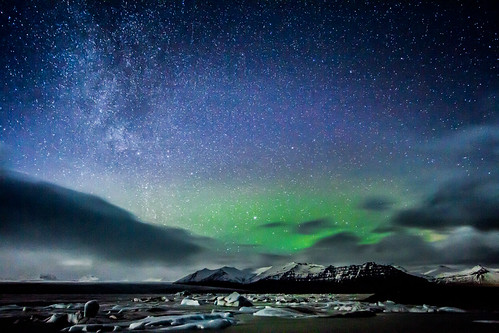
Stars over Iceland

.Subscribe
A space hotel built by the Russians in 2016 may be a possibility. It would be built by a commercial firm and would be a space station with an orbit about 350 km above the Earth.
It would be pretty exclusive with only seven passengers living in capsules. To get their two-day trip they 
would be cared for aboard a Soyuz spacecraft. Experienced professionals would accompany them to keep them safe. Windows would obviously have to be installed along with some telescopes and cameras. This I think would be appealing to almost anybody. The cost though is always the problem. It is projected to be $800,000 to get the person from Earth to the space station and five days in space would be $160,000. Virgin Galactic spearheaded by Richard Branson is working towards launching the “SpaceShip 2″ program which would make suborbital flights with a little period of weightlessness costing around $200,000. 500 people have registered for this including Stephen Hawking the renowned physicist. Space tourism does occur today but only for those who have a  large amount of cash. One day it is expected that by 2030 there will be lots of space stations all providing different destinations for tourists. They could be moon settlements, gas stations and near Earth orbit viewing platforms. In the far future there will be living areas built but that is a long way ahead. Source: Article, Image: flickr.com
Read More........