Ancient mammoth blood gives new life to de-extinction project


Ever fancied your own Mr Snuffleupagus? The dream may not be that far away. Russian scientists claim to have discovered liquid woolly mammoth blood in a frozen carcase in Siberia, which would make cloning a real possibility. An expedition earlier this month, led by scientist Semyon Grigoryev, uncovered the remains of a 60-year-old female mammoth on a remote island in the Arctic Ocean. "This find gives us a really good chance of finding live cells which can help us implement [our] project to clone a mammoth," Grigoryev said. However, many scientists are sceptical. Dolly, the famous cloned sheep, was born after 277 attempts. The discovery has reignited debate over the ethics of cloning. At a conference at Stanford Law School last week, experts debated the ethical, legal and political implications of “de-extinction”. Beth Shapiro, of the University of California at Santa Cruz, expressed concerns about the difficulty of cloning and the inevitable creation of countless deformed and terminal-ill animals. “I think we should consider deeply why we want to de-extinct things" she said. Kate Jones of University College London said that “Conservation biologists worry that if people think we can revive species they won’t care about protecting what’s left". The scientific community also questions the involvement of disgraced South Korean scientist Hwang Woo-Suk. Hwang's Sooam Biotech Research Foundation is one of two institutes working with the blood samples. In 2005 Hwang made international news when he faked landmark discoveries in human embryo cloning research. He was subsequently charged with fraud and embezzlement. Source: Article
Read More........

Putin in hang glider leads Siberian crane flock in migratory flight

putin swimming
Putin in hang glider leads Siberian crane flock in migratory flight
Vladimir Putin pulled off another of his bizzare stunts when he led a flock of young Siberian white cranes in flight, living up to his action-man image, even as reports said that endangered chicks had died while scientists were setting up the trip. Dressed in a white costume meant to imitate an adult crane, the Russian president was taking part in a project to teach the endangered birds that were raised in captivity to follow the aircraft on their southern migration to Central Asia. Putin has won many admirers with his feats, that have left others less than impressed, starting from 2000 when he flew into Chechnya in the back seat of a fighter jet. He followed it up over the years, with a bare-chested horseback ride through mountains, a Formula One race car drive and piloting a firefighting plane to dump water on wildfires. The flight in the hang glider though hardly cut any ice with the cranes as only one bird followed Putin on his first flight. He attributed it to high winds that caused the hang glider to travel faster than the birds, RIA Novosti news agency reported. He was followed by five birds in his next flight, but after a few circles only two stuck with him through the 15-minute flight. Putin took time off to visit the Kushavet ornithological research station on the Yamal Peninsula in the Russian Arctic on Wednesday on his way to an international summit in Vladivostok, on Russia's Pacific coast. At the station, he set off with a pilot, who sat behind him on the hang glider, as they took the birds for a spin. It was a scene on the lines of one in the 1996 movie Fly Away Home, in which an estranged father and daughter use an ultralight plane to help a flock of geese migrate. The movie though, depicted the efforts of a real-life Canadian, who spent a decade teaching orphaned geese how to fly south. Putin's efforts had an altogether undesired side effect, as a biology student at the station claimed online that two chick cranes died and several others were hurt
in the rush to ready for Putin's arrival. ''One of the chicks got into a hang glider's propeller while training and waiting for Putin," Mariya Goncharova wrote on her page on the Russian social networking website, vk.ru. ''One more broke a beak and stripped its claws off on bad netting, and many simply flayed themselves'' during their transport in boxes to the flight venue. According to Russian biologists less than 20 Western Siberian white cranes are left in the wild worldwide. Putin's flight spun off many a contemptuous joke on the internet though, one of the most popular being ''So Putin is off to wintering with cranes. Does this mean he's not going to be back before spring?'' Putin who is a month short of his 60th birthday, has cultivated an image as an animal lover during his time at the top of Russian politics, even getting a tiger cub as a birthday present. During a televised phone-in last year, when he was prime minister, replying to a viewer who asked him why he looked more comfortable with tigers and leopards than with his own ministers, he said, "The more I know people, the more I like dogs," paraphrasing the greek philosopher Diogenes. "I simply like animals." Putin's stunts have not gone down well with many and there was widespread disbelief in 2008 when he appeared to save a television crew from a rare Amur tiger in far eastern Russia by shooting it with a tranquilliser gun. The Kremlin's press service was also forced to admit the set up which showed footage and photographs of Putin striding away from a dive in the Black Sea after having recovered Greek amphorae was a set up, with the jars having been planted on the sea floor. A row about Putin's date with the endangered cranes had already erupted before the official confirmation of the stunt. Masha Gessen, chief editor of Russia's oldest scientific magazine, Vokrug Sveta, resigned on Monday after she resisted pressure to send a reporter to cover the event. "I'm leaving Vokrug Sveta thanks to Putin for that", Gessen tweeted later that day. She added she considered the request to publish material about Putin's involvement with the Siberian white cranes as "editorial interference". The outspoken journalist has also authored a critical biography of Putin that was released last year titled. Source: Article, Image: flickr.com
Read More........

The U.S. military want to control the thunder and lightning

U.S. intelligence agencies are interested in the possibility of controlling the Earth's climate. The Central Intelligence Agency (CIA) has ordered the National Academy of Sciences of the United States to carry out the relevant research. This gave rise to fears that the Americans are hoping to get an offensive climatic weapon. Scientists have two years to study the possibilities of the influence of human activity on weather. This research itself seems to be quite harmless. However, the fact that it is being financed from the CIA suggests that in reality, the Americans expect to develop a climatic weapon. It is quite difficult to understand to what extent this idea is substantiated. However, the fact that the militaries of quite a few countries have long been dreaming of climatic weapon is well known. Commenting on the situation, the director of the Institute of Political and Military Analysis Alexander Sharavin said: “All leading countries of the world started developing climatic weapon more than 50 years ago. Some countries have made more progress than others. We know the cases of external influence on the climate. The problem is what will be the consequences, rather than whether we can change the climate or not. The most difficult thing in this area is to forecast the final result. And so, in view of this, it is impossible to consider all the activities in this area as attempts to develop weapons. Therefore, the sums of money which are now allocated by the American government for research in this field are very small. The sum is just a few hundred thousand dollars. This, of course, is a ridiculous amount for developing new weapons.” Meanwhile, an incident is known when the United States acted on weather for the sake of achieving military success. It happened during the Vietnamese campaign. At that time the Americans carried out the “Popeye” operation; in the rainy season they sprayed silver iodide from airplanes. As a result, the rainfall has increased threefold, while the duration of the rainy season increased 1.5 times. After such rains the roads and paths that the guerrillas used to supply weapons and ammunition turned into a continuous swamp. However, at that time it became clear that such methods of warfare are very expensive and produce short-term effect. Nevertheless, the belief that Americans are able to put “an evil climate curse" on its enemies is still alive. So, in September last year, Iranian President Mahmoud Ahmadinejad said that the enemies of the Islamic republic were causing drought. And before that, the now deceased Venezuelan leader Hugo Chavez accused the United States of being involved in triggering the earthquakes in China and Haiti in 2010. “In Russia, the blame for the anomalous heat at one time was pinned on the American HAARP (High-Frequency Active Auroral Research Programme) station,” recalls the head of climate programmes of Wildlife Fund (WWF) Alexei Kokorin: “The long-distance communications station, roughly speaking, a giant microwave oven, called the HAARP station in Alaska, is well known. And when there was a terrible heat in Moscow in the summer of 2010, there were rumors that it was caused by the activity of the station. In principle, such a station is able to punch a hole in the clouds, even at a great distance. It is a different matter that during the Moscow heat the hole was just not discovered. The HAARP station is not a unique project. Similar stations are functioning in other countries, including Russia, in the Nizhny Novgorod region. The only difference is that most of the data obtained by HAARP is classified and the U.S. Navy took part in it. Perhaps this fact contributed to the demonization of the image of the HAARP station. Be that as it may, the station was closed recently due to the lack of funds in the budget to maintain its operation. Source: Article
Read More........

The Australian central bank has been hacked

The Reserve Bank of Australia has disclosed the results of its internal investigation of the cyber attacks that show characteristics of Chinese origin. The conclusions of the investigation are unequivocal. The RBA’s computer networks have been repeatedly and successfully hacked.
Although the results of the investigation are not fully public, some information has been published by the Australian Financial Review. It is worth stressing that the Austrian central bank was unwilling to disclose any information pertaining to the attacks and it was the investigative effort of the Australian journalists which has prompted a partial disclosure. So far, the mechanics of the attack have been described as “infiltration”, combined with the usage of “Chinese-developed malicious software”. An unnamed Australian official told the press that “the targeting of high profile events, such as the G20, by state-sponsored adversaries... is a real and persistent threat. Cyber intruders are looking for information on... the government’s intentions.” The analysts from Zerohedge point out that this attack appears to be related to the 2011 G20 summit “at which the French government has already confirmed over 150 computers were hacked for months with files redirected to Chinese sites”. Officials from the Risk Management Unit of the Reserve Bank of Australia have told the Australian Financial Review that “Bank assets could have been potentially compromised, leading to... information loss and reputation damage”. During the last several months, hackers have targeted numerous financial and governmental institutions. Private individuals are also not safe from hackers. Recently, a hacktivist group published the financial and personal information of American political figures and celebrities. It seems that both cyber warfare and cyber espionage have already become a major problem for governments, corporations and individuals. It is likely that a new arms race in the cyber security industry is already underway.TSource: Voice of Russia
Read More........

EC3 to fight cybercrime with Russia and Singapore

EC3 to fight cybercrime with Russia and Singapore
The EU says online fraud and organised crime on the internet is on the rise. Last year, credit card fraud alone cost Europeans 1-point-5-billion euros. To combat the increase in online criminal activity the EU has, today, opened a new cybercrime centre – known as EC3. The centre will focus on tackling identity theft, fraud and child exploitation online.
Cyber criminals are equipped to use technology to commit their crimes. They’re infiltrating our computers, our bank accounts, our smart phones and even our social networks – a worrying trend! The latest E.U. figures show, young Europeans spend 80% of their day on the internet. Designed to combat the rise in online criminal activity, the new European Cybercrime Center will pull expertise and promote the sharing of evidence from across the Eurozone. Troels Oerting will head the new cybercrime center EC3. He says we need to change our cybercrime strategy. We have tried many-many years to protect ourselves out of this with safer infrastructure, but this is simply not enough. Just like in the offline world, we need not only to put a lock on the door, we also need to have a criminal-free environment where we can go safely. A recent survey of the E.U. internet uses found high levels of concern about cyber security. 89% of those polled said they’d avoid disclosing personal information online due to security concerns, with 3 out of 4 citizens agreeing risk of becoming a victim of cybercrime has increased over the past year. But why is there a need for a pan-European organization? Troels Oerting, the head of EC3 again: We know about this threat. But do we have the European oversight? No! Is this important? Yes. And why? Because we have no geographical lens in this crime. The crime is not conducted in Stockholm or Vienna. It’s conducted all over by the same groups which we cannot identify. However, Chris Bellamy, Professor of Maritime Security says getting all the member-states to work together won’t be easy. I think it’s going to be a real challenge for them actually to exchange information and evidence. The rules are evidence are extremely strict. And I suspect that the problem will be getting police forces to send information to them. I think in some cases, of course, although there aren’t supposed to be any political differences between the countries of the E.U., the fact is that some political difference and indeed countervailing interests may reel their heads. The new EC3 center will focus on three main areas of cybercrime: online fraud, including incepting payments made on smartphones, identify theft and tackling child exploitation online. Authorities at EC3 will focus on the most dangerous cybercrime threats and key criminal groups who are operating at E.U. level. Last year credit card fraud alone cost Europeans 1.5 billion euros. Cecilia Malmström is the E.U.’s Home Affairs Commissioner. She says evidence collected online could often be more revealing to authorities than evidence found offline. A good piece of information is often all that is needed to combat criminals online. It can open up the whole network. The cybercrime center will also trade national law enforcement authorities and support them in their own cybercrime investigations. But Troels Oerting, the head of EC3, says there’s also a need for global cooperation on tackling cybercrime. EC3 is already working with Singaporean authorities and Troels Oerting is also hopeful of successful cooperation with Russia. We’re also negotiating an agreement with Russia that is just in its stage. I guess in this year we hopefully can sign it which will then enable them to actually exchange information with us. EC3 will now become the focal point in the Eurozone’s fight with cybercrime. The center is based in Hague and already began tackling criminal activity online, but is not expected to be fully functional until 2015. Source: Voice of Russia
Read More........

Nature At The Pols: essay reminds us that nature has no political ties

An essay caught my eye today that I would like to share. Written by David Yarnold, president and CEO of the National Audubon Society, it is titled "Love of nature not right, left or center, it's common sense." It's a simple reminder that nature knows no political affiliation and, outside of Washington DC, there is a large number of people who see that nature is something to be preserve for all people. David quotes several people from across the country, people who understand that conservation benefits all of us.Said Lorie [no last name] from Pennsylvania, "Since when did breathing clean fresh air, drinking pure clean water and protecting our precious natural resources and environment become something that only Democrats should value? Too often now I hear key Republicans ridicule people that care deeply about the environment as over-zealous crazies. It makes me feel almost embarrassed to be a Republican." Mark from California said, "I sure would like to be hearing candidates even mention the environment during their campaigns. There's a lot of talk about the deficit and the burden it will place on future generations. Think of the burden placed on them if their world is deprived of clean air, clean water and an abundance of wildlife and wild places." Certainly we have pressing economic issues to contend with. However, the challenges facing nature roll on 24/7; nature won't set them aside and wait patiently until we get around to addressing them.And Nature and all the animals and plants within her domain don't vote. What would happen if they could? Nature At The Pols: essay reminds us that nature has no political ties
Read More........

The price of your soul: How your brain decides whether to 'sell out'


.Subscribe
By Carol Clark: A neuro-imaging study shows that personal values that people refuse to disavow, even when offered cash to do so, are processed differently in the brain than those values that are willingly sold. “Our experiment found that the realm of the sacred – whether it’s a strong religious belief, a national identity or a code of ethics – is a distinct cognitive process,” says Gregory Berns, director of the Center for Neuropolicy at Emory University and lead author of the study. The results were published in Philosophical Transactions of the Royal Society. Sacred values prompt greater activation of an area of the brain associated with rules-based, right-or-wrong thought processes, the study showed, as opposed to the regions linked to processing of costs-versus-benefits. Berns headed a team that included Emory economist Monica Capra; Michael Prietula, a professor of information systems and operations management at Emory's Goizueta Business School; a psychologist from the New School for Social Research and anthropologists from the Institute Jean Nicod in Paris, France. (Click here to see the full list of names.) The research was funded by the U.S. Office of Naval Research, the Air Force Office of Scientific Research and the National Science Foundation. “We’ve come up with a method to start answering scientific questions about how people make decisions involving sacred values, and that has major implications if you want to better understand what influences human behavior across countries and
cultures,” Berns says. “We are seeing how fundamental cultural values are represented in the brain.” The researchers used functional magnetic resonance imaging (fMRI) to record the brain responses of 32 U.S. adults during key phases of an experiment. In the first phase, participants were shown statements ranging from the mundane, such as “You are a tea drinker,” to hot-button issues such “You support gay marriage” and “You are Pro-Life.” Each of the 62 statements had a contradictory pair, such as “You are Pro-Choice,” and the participants had to choose one of each pair. Click here to download the full list of questions, and the responses by the subjects. At the end of the experiment, participants were given the option of auctioning their personal statements: Disavowing their previous choices for actual money. The participants could earn as much as $100 per statement by simply agreeing to sign a document stating the opposite of what they believed. They could choose to opt out of the auction for statements they valued highly. “We used the auction as a measure of integrity for specific statements,” Berns explains. “If a person refused to take money to change a statement, then we considered that value to be personally sacred to them. But if they took money, then we considered that they had low integrity for that statement and that it wasn’t sacred.” The brain imaging data showed a strong correlation between sacred values and activation of the neural systems associated with evaluating rights and wrongs (the left temporoparietal junction) and semantic rule retrieval (the left ventrolateral prefrontal cortex), but not with systems associated with reward. “Most public policy is based on offering people incentives and disincentives,” Berns says. “Our findings indicate that it’s unreasonable to think that a policy based on costs-and-benefits analysis will influence people’s behavior when it comes to their sacred personal
values, because they are processed in an entirely different brain system than incentives.” Research participants who reported more active affiliations with organizations, such as churches, sports teams, musical groups and environmental clubs, had stronger brain activity in the same brain regions that correlated to sacred values. “Organized groups may instill values more strongly through the use of rules and social norms,” Berns says. The experiment also found activation in the amygdala, a brain region associated with emotional reactions, but only in cases where participants refused to take cash to state the opposite of what they believe. “Those statements represent the most repugnant items to the individual,” Berns says, “and would be expected to provoke the most arousal, which is consistent with the idea that when sacred values are violated, that induces moral outrage.” The study is part of a special issue of the Philosophical Transactions of the Royal Society, titled “The Biology of Cultural Conflict.” Berns edited the special issue, which brings together a dozen articles on the culture of neuroscience, including differences in the neural processing of people on the opposing sides of conflict, from U.S. Democrats and Republicans to Arabs and Israelis. “As culture changes, it affects our brains, and as our brains change, that affects our culture. You can’t separate the two,” Berns says. “We now have the means to start understanding this relationship, and that’s putting the relatively new field of cultural neuroscience onto the global stage.” Future conflicts over politics and religion will likely play out biologically, Berns says. Some cultures will choose to change their biology, and in the process, change their culture, he notes. He cites the battles over women’s reproductive rights and gay marriage as ongoing examples.Source: eScienceCommons
Read More........

Democracy works for Endangered Species Act

The Bald Eagle, a living symbol of democracy as the national bird of the United States, was on the "threatened" list for the lower 48 states until 2007. Photo by Saffron Blaze via Wikipedia Commons.
By Carol Clark: When it comes to protecting endangered species, the power of the people is key, an analysis of listings under the U.S. Endangered Species Act finds. The journal Science is publishing the analysis comparing listings of “endangered” and “threatened” species initiated by the U.S. Fish and Wildlife Service, the agency that administers the Endangered Species Act, to those initiated by citizen petition. “We found that citizens, on average, do a better job of picking species that  are  threatened  than
The "threatened" gray wolf. Photo by FWS.
does the Fish and Wildlife Service. That’s a really interesting and surprising finding,” says co-author Berry Brosi, a biologist and professor of environmental studies at Emory University. Brosi conducted the analysis withEric Biber, a University of California, Berkeley School of Lawprofessor who specializes in environmental law. Controversy has surrounded the Endangered Species Act (ESA) since it became law nearly 40 years ago. A particular flashpoint is the provision that allows citizens to petition the Fish and Wildlife Service (FWS) to list any unprotected species, and use litigation to challenge any FWS listing decision. Critics of this provision say the FWS wastes time and resources processing the stream of citizen requests. Another argument is that many citizen-initiated listings are driven less by concern for a species than by political motives, such as blocking a  development project. The study authors counter that their findings bolster the need to keep the public highly involved. “There are some 100,000 species of plants and animals in North America, and asking one federal agency to stay on top of that is tough,” Biber says. “If there were restrictions on the number of citizen-initiated petitions being reviewed, the government would lose a whole universe of people providing high-Only about 2,000 American Crocodiles, an ESA-protected species, remain in Florida. Photo by Tomas Castelazo via Wikipedia Commons.
quality information about species at risk, The researchers built a database of the 913 domestic and freshwater species listed as “threatened” or “endangered” under the ESA from 1986 on. They examined whether citizens or the FWS initiated the petition, whether it was litigated, and whether it conflicted with an economic development project. They also looked at the level of biological threat to each of the species,
The Northern Spotted Owl. Photo by FWS.
using FWS threat scores in reports the agency regularly makes to Congress.The results showed that listings resulting from citizen-initiated petitions are more likely to pose conflicts with development, but those species are also significantly more threatened, on average, than the species in FWS-initiated petitions. “The overriding message is that citizen involvement really does work in combination with the oversight of the FWS,” Brosi says. “It’s a two-step system of checks and balances that is important to maintain.” The public brings diffuse and specialized expertise to the table, from devoted nature enthusiasts to scientists who have spent their whole careers studying one particular animal, insect or plant. Public involvement can also help counter the political pressure inherent in large development projects. The FWS, however, is unlikely to approve the listing of a species that is not truly threatened or endangered, so some petitions are filtered out. “You could compare it to the trend of crowdsourcing that the Internet has spawned,” Brosi says. “It’s sort of like crowdsourcing what species need to be
The Mojave Desert population of the Desert Tortoise is in the highest threat category of the ESA. Photo by FWS.
protected.” Many people associate the success of the ESA with iconic species like the bald eagle and the whooping crane. “To me,” Brosi says, “the greater accomplishment of the act is its protection of organisms that don’t get the same amount of attention as a beautiful bird or mammal.” For example, the FWS turned down a petition to list the Mojave Desert population of the Desert Tortoise, Gopherus agassizii, but that decision was reversed. The Desert Tortoise is now in the ESA highest threat category, and populations of the entire species are thought to have declined by more than 90 percent during the past 20 years. “One of the biggest threats it faces is urban and suburban expansion, which could have made it politically challenging for the FWS,” Brosi notes. “And yet, the Desert Tortoise is a keystone species that helps support dozens of other species by creating habitats in its burrows and dispersing seeds.”Source: eScienceCommonsAct
Read More........

Pacific agency sees climate change as "most serious long-term threat"


The Secretariat of the Pacific Regional Environment Program (SPREP) stressed here Monday that climate change is potentially the most serious long-term threat to the development and survival of the Pacific people today. Kosi Latu, SPREP Deputy Director-general highlighted the issue at the on-going annual conference of the New Life Churches of Fiji on protecting the environment as God's creation and gift to humankind, which was attended by more than 300 delegates at the Suva Civic Centre. Latu told the conference that when bigger countries talked about climate change, it was really about changing their economy from being a fossil fuel-based economy to a renewable energy-based economy because the burning of fossil fuels was the primary contributor to climate change."But for us here in the region, it' s much more than that. It's about our survival." Latu noted that Pacific island countries were highly dependent on fossil fuel to meet their energy needs, spending between 30-40 percent of their annual national income on energy sources such as oil and gas, but contributed only 0.03 percent to the total global emissions. "The impact is incredible" and relocation has already happened in some islands in the Pacific, Latu said. "While the impact will vary from country to country, the low lying islands of the Pacific are going to be more affected because they're much more vulnerable." "Our food systems, our agriculture patterns, even health, our fisheries, infrastructure, water, tourism which we depend on so much -- all those sectors of the economy are going to be potentially affected," he said, adding there would also be interesting political and legal and political questions and issues of sovereignty in relating to relocation. "What if the people of Kiribati then decide to relocate to Australia or New Zealand? .. What will happen to the land that's under water? These are the kinds of issues that governments need to think about," Latu questioned. Source: Sam Daily Times
Read More........

Trinity College: New Master's Degree Program on Health Care Policy


What better place is there to introduce an innovative program focusing on the economic, ethical, legal and behavioral aspects of the delivery and administration of health care than the Insurance Capital of the United States? Answer: There is no better place than Hartford. So Trinity has stepped up to the plate, introducing a graduate-level program that will draw on the College’s and city’s expertise, and it is hoped will appeal to many of the region’s stakeholders: health insurance companies, government agencies, legal organizations, health care providers and non-profit organizations. In creating such a program – which is believed to be unique in Connecticut and possibly in the country -- Trinity is not only bringing together the disparate aspects of the nation’s costly, complex and confusing health care industry, but is addressing an issue that has grown in urgency as 45 million Americans are uninsured and another 25 million are underinsured. Those numbers, alarming as they may be, have shown no signs of shrinking and, in fact, have grown in recent years. “By developing this program in health care policy, we are trying to provide a center for study, reflection and discussion about the legal, economic, political and ethical issues that are relevant to the delivery of health care in the United States,” said William R. Barnett, director of graduate studies and an architect of the new program. Students who qualify will receive an M.A. in Health Care Policy, and must have completed all of the requirements for a degree in public policy, including the successful completion of 11 total credits and a master’s thesis. It’s anticipated that about 25 new students will enroll each year. Trinity has long had a highly successful and respected public policy program, both at the undergraduate and graduate levels, and this will add yet another dimension. The new M.A. program will begin in earnest in September, although Adrienne Fulco, director of the Public Policy and Law Program and an expert on constitutional law, has gotten a head start. She’s currently teaching a class called “Health Care Reform: The Affordable Care Act Goes to Court.” “Although we are officially launching the new health policy track in the fall,” said Fulco, “I decided that it was important to offer graduate students the opportunity to study the Affordable Care Act [Obamacare] during the summer term.” That law, which passed without any Republican votes in either chamber of Congress in 2010, was challenged on constitutional grounds in several states, and was later heard by the Supreme Court. The high court is expected to issue a ruling later this month. “What is exciting about teaching this course now is that students are studying the Supreme Court’s decision in real time,” said Fulco. During the first part of the course, the students will examine the policy rationale for reforming the U.S. health care system, analyze the law and discuss the principal criticisms. The second part of the course will home in on the Court’s opinion and its policy implications. “Whichever way the Court decides,” Fulco said, “the ruling will have a direct impact on the presidential election and the lives of every American.” The fact that health care touches the lives of every American is germane to the new master’s degree program. As Barnett wrote in justifying the need for this program, he noted that life expectancy rates in the U.S. lag behind rates in other developed countries and threaten to decline for the first time in more than 100 years. Chronic conditions such as cardiovascular disease, obesity and diabetes – all conditions that are largely preventable through social and behavioral changes – continue to increase. And health care costs per capita and as a percent of the GDP in the U.S. outstrip figures in all other countries, thereby threatening to add significantly to the nation’s public debt. In light of those developments, a holistic approach to this country’s health care challenges is badly needed. Barnett said the new program “will not replicate other graduate programs in public health or bioethics that typically concentrate more narrowly on issues of clinical practice.” It’s believed that an M.A. in health care policy will benefit employees and administrators of various organizations as well as individuals and groups who are interested in health care advocacy and who seek to enhance their knowledge and credentials. “Initiating a master’s program in health care policy is a way for Trinity College to serve the educational needs of legal, insurance, regulatory, non-for-profit, and health care professionals as they seek to grapple with the challenges in this area,” said Barnett. Among the courses that will be offered are: “Introduction to Health Care Policy;” “Leading Issues in Bioethics, Public Policy and Law;” “Economics and Regulation of Health Care;” “Environmental Science and Health;” “Law of Health Care;” “Health Care in Hartford;” “Reproductive Rights;” “Health Care after 2014;” “Gerontology: the Aging of America;” and “Neuroscience and Health.” But that doesn’t mean that the program is set in stone. As Barnett put it, the longer the program is in existence, the more it can adapt to meet the needs of students, stakeholders and interested parties. “As we move forward with our program in health care policy, we will continually solicit the expertise and advice of members of the relevant professions in our area to improve the discussion of health care issues for our master’s students in public policy,” said Barnett. Source: Sam Daily Times
Read More........

Innovation" is the key word in scientific achievement

"How curiosity begat Curiosity" Scientific breakthroughs come from investing in science education and basic research. By: Ahmed Zewail, August 19th, 2012, Los Angeles Times
On Aug. 5, I was among those who witnessed the rover Curiosity landing on Mars in real time at NASA's Caltech-managed Jet Propulsion Laboratory. The excitement was overwhelming: The one-ton Mars Science Laboratory broke through the Red Planet's atmosphere, slowed its speed from 13,000 mph to almost zero and touched down. One glimpse of those first images from more than 100 million miles away demonstrated America's leadership in innovation. Curiosity — the rover and the concept — is what science is all about: the quest to reveal the unknown. America's past investment in basic science and engineering, and its skill at nurturing the quest, is what led to the Mars triumph, and it is what undergirds U.S. leadership in today's world. But now, decreases in science funding and increases in its bureaucracy threaten that leadership position. After World War II, scientific research in the U.S. was well supported. In the 1960s, when I came to America, the sky was the limit, and this conducive atmosphere enabled many of us to pursue esoteric research that resulted in breakthroughs and Nobel prizes. American universities were magnets to young scientists and engineers from around the globe. The truth is that no one knew then what the effect of that research would be; no one could have predicted and promised all that resulted. After all, it is unpredictability that is the fabric of discovery. In much of academia today, however, curiosity-driven research is no longer looked on favorably. Research proposals must specifically address the work's "broad relevance to society" and provide "transformative solutions" even before research begins. Professors are writing more proposals chasing less research money, which reduces the time available for creative thinking. And with universities facing rising costs generally, professors are more and more involved in commercial enterprises, which may not always push basic research forward. Even faculty tenure may be driven less by how good one is at science than how good one is at fundraising. These constraints and practices raise the question: Would a young Albert Einstein, Richard Feynman or Linus Pauling be attracted to science today? Would they be able to pursue their inquiries into fundamental questions? A generation ago, at the same time that government was supporting curiosity-based research, so was U.S. industry. One of the jewels was Bell Labs, where fundamental research was so advanced that it used to be said that it was "the best university in America." Bell Labs employed some of the world's leading scientists and engineers, and collectively they made pioneering contributions, from the discovery of the tiny transistor to the "big bang" origin of our universe. The broad-based fundamental research at Bell Labs is no longer pursued, and other industrial labs have, for the most part, disappeared or redirected their resources into much more product-oriented research. I teach at Caltech and oversee a research laboratory there. In general, I find that the majority of young people are excited by the prospects of research, but they soon discover that in the current market, many doctorate-level scientists are holding temporary positions or are unemployed. The average age at which principal investigators receive their first major government grant has risen, and experience from multiple postdoctoral positions is often necessary for advancement in academia. This slow track discourages young scientists from pursuing research careers. So what is the formula for better "managing" discoveries? The answer is in the natural evolution of research and development, from curiosity-driven science to technology transfer and then to societal benefits. We must nurture creative scientists in an environment that encourages interactions and collaborations across different fields, and support research free from weighty bureaucracies. The nation must provide young people with a proper and attractive education in science, technology, engineering and math. And the best minds from around the world should be encouraged, not discouraged, by public policy to join in this American endeavor. In sum, a renewed vision for investment in fundamental research is needed, especially in Washington, where further cuts across the board in science funding are being contemplated. In the 1950s, Nobel laureate Robert Solow showed that new technologies create a large portion of economic growth, affecting nearly 75% of the growth output in the U.S. The theory of quantum mechanics alone has had a major impact. Without it, revolutionary technologies would not have been realized. Think of the laser, optical communications, MRI and discoveries in drug design, gene technology and miniaturization. At the same time, American influence in the world is bolstered largely through its "soft" power, and science and technology is an essential force of this influence, according to the Pew Research Center's Global Attitudes Project poll. Since the Industrial Revolution, the West has dominated world politics and economics with the power of science. Since the mid-20th century, the United States has been at the center of that dominance, and more recently, China is pouring resources into R&D to reach first world status. The U.S. can still maintain research institutions, such as Caltech, that are the envy of the world, yet it would be hubristic and naive to think that this position is sustainable without investing in science education and basic research. We do not know now what will be relevant tomorrow. American innovation and leadership put the rover Curiosity on Mars. Now is the time to recommit to the wise vision that made it happen — otherwise the sun of innovation will come from the east. [Ahmed Zewail, winner of the 1999 Nobel Prize in chemistry, is a professor of chemistry and physics at Caltech. He also serves on President Obama's Council of Advisors on Science and Technology.] Source: Philosophy of Science Portal
Read More........

'Earth headed for catastrophic collapse'

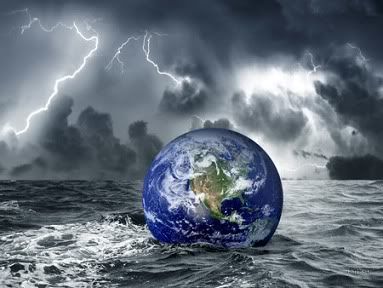
Indian Express, Agencies : Washington, Rising populations are driving the Earth towards a catastrophic breakdown where species we depend on would die out, an international team of scientists has claimed, blaming the crisis on over use of water, forests and land for agriculture. Writing in the journal Nature, the team warned that the world is headed toward a tipping point marked by extinctions and unpredictable changes on a scale not seen since the glaciers retreated 12,000 years ago. "There is a very high possibility that by the end of the century, the Earth is going to be a very different place," study author Anthony Barnosky of the University of California, Berkeley, told LiveScience. To reach the conclusion, Barnosky and 17 other scientists from US, Canada, South America and Europe reviewed research on climate change and ecology to assess evidence for what the future holds. The results could cause some plant and animal species to disappear, new mixes of remaining species and huge disruptions to crops, leading to global political instability, they found. At certain thresholds, putting more pressure on the environment leads to a point of no return, Barnosky said. The most recent example of one of these transitions is the end of the last glacial period. Within not much more than 3,000 years, the Earth went from being 30 per cent covered in ice to its present, nearly ice-free condition. Most extinctions and ecological changes occurred in just 1,600 years. Earth's biodiversity still has not recovered to what it was. But humans are causing changes even faster than the natural ones that pushed back the glaciers -- and the changes are bigger, Barnosky said. Driven by a 35 per cent increase in atmospheric carbon dioxide since the start of the Industrial Revolution, global temperatures are rising faster than they did back then, he pointed out. Likewise, humans have completely transformed 43 per cent of Earth's land surface for cities and agriculture, compared with the 30 per cent land surface transition that occurred at the end of the last glacial period, Barnosky said. In addition, the human population has exploded, putting ever more pressure on existing resources, he added. "Every change we look at that we have accomplished in the past couple of centuries is actually more than what preceded one of these major state changes in the past," Barnosky said. The results are difficult to predict, because tipping points, by their definition, take the planet into uncharted territory. Based on past transitions, the researchers predict a major loss of species, as well as changes in the makeup of species in various communities on the local level. Meanwhile, humans may well be knotting our own noose as we burn through Earth's resources, Barnosky said. "These ecological systems actually give us our life support, our crops, our fisheries, clean water," he noted. The researchers also pointed out that as resources shift from one nation to another, political instability can easily follow. Pulling back from the ledge will require international cooperation otherwise, under business-as-usual conditions, humankind will be using 50 per cent of the land surface on the planet by 2025, Barnosky said. It seems unavoidable that the human population will reach 9 billion by 2050, so we'll have to become more efficient to sustain ourselves, he said. That means more efficient energy use and energy production, a greater focus on renewable resources, and a need to save species and habitat today for future generations, Barnosky said. "We're at a crossroads where if we choose to do nothing we really do face these tipping points and a less-good future for our immediate descendants," he added. Image Link Photobucket, Source: Indian Express
Read More........

Honda to recycle rare earths to be green


TOKYO — Honda Motor Co said Wednesday it will start recycling rare earths and other key materials in hybrid auto batteries this year—a key innovation in the Japanese automaker’s effort to be green. Japan is dependent on imports, mostly from China, for rare earth elements, which are essential for making high-tech products, but a steady supply has been periodically threatened over political disputes with China. Honda officials said the company was targeting September or October to begin recycling of rare earths. They said it would be a first for the auto industry. Honda President Takanobu Ito said: “In the long term, we hope to move to renewable energy sources that won’t harm the environment.” Ito outlined Honda’s efforts to reduce pollution and global warming, including experimental projects to combine solar with its fuel-cell cars—what he called the Honda “dream” to derive energy solely from nature and emit just water. Fuel cells are powered by the energy created when hydrogen combines with oxygen to produce water. They are still too expensive for commercial use and remain experimental. Ito said Honda’s roots lie in its determination to develop a fuel-efficient gasoline engine to clear U.S. pollution-control regulations of the 1970s. Honda’s CVCC engine was the first in the world to clear the standard. Japan later adopted similar pollution regulations. Honda recovered from last year's earthquake and tsunami, which disrupted the supply of auto parts and sent sales plunging. January-March profit rose 61% from the previous year, and it’s projecting record global sales of 4.3 million vehicles for this fiscal year.Source: Sam Daily Times
Read More........

Mountain Gorillas: park rangers search for apes during military ceasefire


The endangered mountain gorilla resides in central Africa which is often a politically unstable region. Mountain gorillas don't have much interest in politics, but for nations like the Democratic Republic of the Congo or Rwanda, instability can impact the country's ability to support the conservation and protection of these apes. Currently, there are approximately 790 mountain gorillas with over half of them living in the Virunga National Park in DR Congo. Unfortunately, rebel activity in May forced the evacuation of the park rangers and without the rangers presence the location of the six known families of mountain gorillas that move, eat, and sleep within the park becomes a question mark. And it leaves the gorillas exposed to poachers who will kill the gorillas for black market trophies of head, hands, or feet. While the rebel unrest has been ongoing since April, recently the rebel forces and the opposing government forces both agreed to allow the rangers into the area to search for the gorilla families. With some unexpected shelling taking place, it was touch-and-go, but eventually the rangers were allowed today to begin conducting their search. No results are known just yet. "We have had to delay 24 hours because of the shelling that took place this morning," park director Emmanuel de Merode told the Associated Press. "There is very heavy fighting around the park headquarters." As powerful has they are, mountain gorillas are also susceptible to disease and so monitoring their health is of prime importance to the park rangers. Their weakness to disease would be a less critical issue if their numbers were more towards what nature intended. However, with human encroachment on their habitat, demands for oil exploration within the park, and the on-again, off-again military conflicts, the birth or death of any gorilla becomes vastly more important given their current numbers. "We are delighted and relieved that all sides in the conflict have recognised the need to protect[DR] Congo's only mountain gorillas," said de Merode. "After locating the gorilla families, the park's gorilla monitoring teams will individually identify each member of the family. Their health status will also be assessed as mountain gorillas are particularly vulnerable to disease." Over two years ago, I ran a post about the mountain gorillas in Virunga National Park. At the time, the Park had just issued an iPhone app, called iGorilla, that allowed the user to follow the ranger's efforts in keeping tabs on the various gorilla families. I still have the app on my phone today and check up every once in a while for the latest reports on their health and whereabouts. The app is still available today and part of the proceeds goes to the Park's gorilla conservation program. Check it out. Source: RTSea
Read More........

The physics of mass, charge and media spin

The Higgs boson should not be called "the God particle," says Marc Merlin, director of Atlanta Science Tavern. "A better name for it might be 'the peace particle.' It's really a testament to international cooperation that transcends politics." Image: CERN.
The Higgs boson should not be called "the God particle," says Marc Merlin, director of Atlanta Science Tavern. "A better name for it might be 'the peace particle.' It's really a testament to international cooperation that transcends politics." Image: CERN. By Carol Clark: It’s too early to know for sure whether a newly discovered subatomic particle is the long sought-after Higgs boson, but one thing is clear: A lot of people outside of particle physics are interested. CERN, a multinational research center in Geneva, generated worldwide buzz July 4 by announcing its Large Hadron Collider had produced data showing the existence of a “Higgs-like” particle. “People are fascinated by the big questions of the universe,” says Marc Merlin, director of Atlanta Science Tavern, an informal group of science enthusiasts. The Large Hadron Collider, a 38,000-ton underground device that accelerates and collides protons, is “like a time machine,” Merlin says. “Not only can it tell you the nature of the microscopic world now, it also reveals the universe as it was when it was just getting started,” a fraction of a second after the Big Bang. Merlin graduated from Emory with a degree in physics. After going on to earn a masters in the subject at the University of Pennsylvania, he became a computer programmer, but remains passionate about physics. Amid growing hints that CERN was closing in on the elusive particle, Merlin gave an Atlanta Science Tavern talk on the Higgs boson in May that filled a private room at Java Vino coffee shop. An encore of the talk was scheduled in June for a much larger room at Manuel’s Tavern, and the waiting list quickly grew to 140. That led to scheduling a third Higgs boson talk, for Saturday, July 21. “Maybe the third one will be the charm,” Merlin says. He readily admits that he
Read More........

The Aliens Are Coming—What If It’s True

Mac's UFO News, By Mac5ize: The likelihood of alien landings will be explored at Life tree Café on Wednesday May 2 at 7:00PM. The Life tree event, titled “The Aliens Are Coming—What If It’s True?” features exclusive filmed interviews with UFO researcher Stanton Friedman and Mutual UFO Network Director Clifford Clift. “If intelligent life from other planets is visiting Earth, that has huge implications,” says Life tree Café representative Craig Cable. “It affects politics, economics, and Extraterrestrial Landings Discussed at Lifetree Café echnology. It may even challenge deeply held religious
"The Aliens Are Coming" Trailer from Lifetree Cafe on Vimeo. convictions.” Life tree participants will examine evidence of alien landings, consider various sides of the debate, and share their own perspectives. Admission to the 60-minute event is free. Snacks and beverages are available. Life tree Café is located at 9000 Cypress Green Dr, Jacksonville, FL 32256. Life tree Café is a place where people gather for conversations about life and faith in a casual coffeehouse-type setting. Questions about Life tree may be directed to George Treiber at (904) Screen Shot On Video, Source: Mac's UFO News
Read More........