New Airship-style Wind Turbine Can Find Gusts at Higher Altitudes for Constant, Cheaper Power

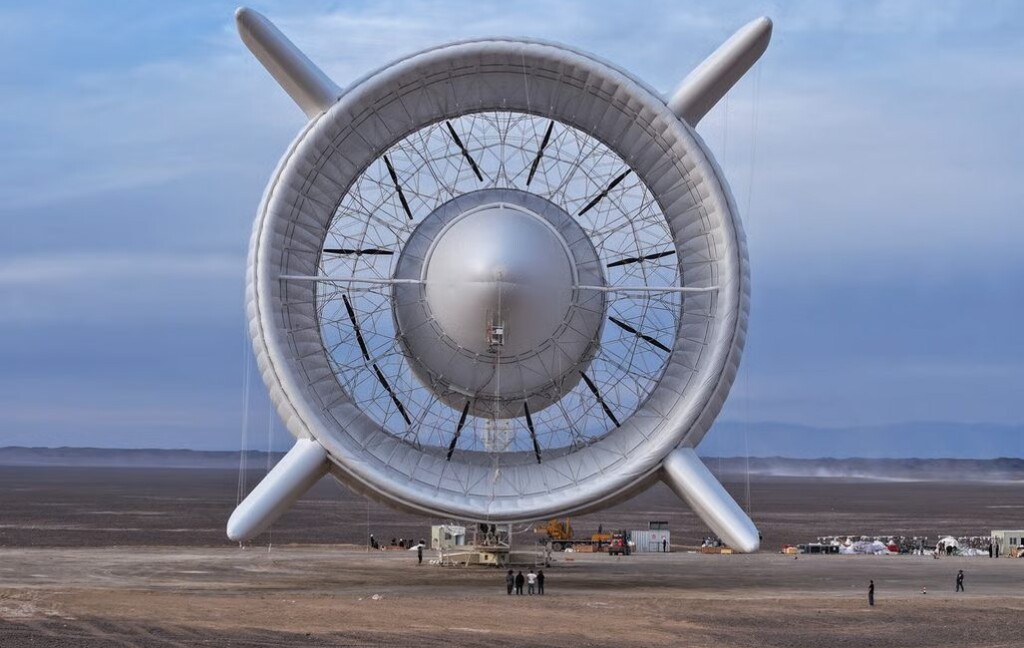
The S1500 from Sawes – credit, handout

A new form of wind energy is under development that promises more consistent power and lower deployment costs by adapting the design of a dirigible, or zeppelin.

Suspended 1,000 feet up where the wind is always blowing, it presents as an ideal energy source for rural communities, disaster areas, or places where wind turbines aren’t feasible to build.

The design has grown through multilateral innovation by dozens of engineers and scientists, but an MIT startup called Altaeros, and Beijing-based start-up Sawes Energy Technology have taken it to market. Both have already produced prototypes that boast some serious performance.


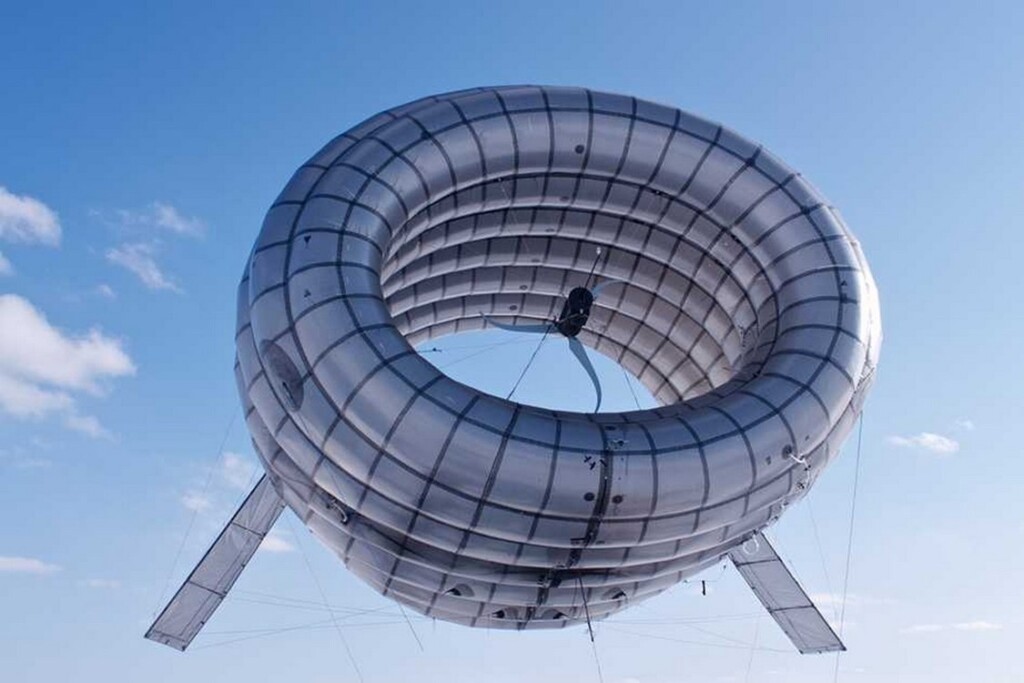
In 2014, Altaeros’ Buoyant Air Turbine (or BAT) was ready for commercial deployment in rural Alaska, where diesel generators are still heavily relied on for power. Its 35-foot-long inflatable shell, made of the same materials as modern blimps, provided 30 kilowatts of wind energy.

As a power provider, though, Altaeros could never get off the ground, and now has adopted much of its technology to the provision of wireless telecommunication services for civil and commercial contracting.

Heir to Altaeros’ throne, Sawes has managed to greatly exceed the former’s power generation, and now hopes to achieve nothing less than contributing a Chinese solution to the world’s energy transition.

Altaeros’ BAT – credit, Altaeros, via MIT

During a mid-September test, Sawes’ airship-like S1500, as long and wide as a basketball court and as tall as a 13-storey building, generated 1 megawatt of power which it delivered through its tether cable down to a generator below.

Conducted in the windy, western desert province of Xinjiang, the S1500 surpassed the capabilities of its predecessor turbine by 10-times, which achieved 100 kilowatts in October of last year.

Dun Tianrui, the company’s CEO and chief designer, called the megawatt-mark “a critical step towards putting the product into real-world use” which would happen next year when the company expects to begin mass production.

At the same time, the Sawes R&D team is looking into advances in materials sciences and optimization of manufacturing that will ensure the cost of supplying that megawatt to rural grids will be around $0.01 per kilowatt-hour—literally 100-times cheaper than what was theorized as the cost for Altaeros’ model from 10 years ago.

One of the major positives of the BAT is that by floating 1,000 to 2,000 feet above the ground, they render irrelevant the main gripe and failing of wind energy—that some days the wind doesn’t blow. A conventional turbine reaches only between 100 and 300 feet up, putting birds at risk as well as not collecting all the air that’s blowing over the landscape.

Sawes’ unit is about 40% cheaper to build and deploy than a normal turbine, presenting the opportunity for a 30% lower cost for buying the wind energy.According to a piece in the Beijing Daily, reported on by South China Morning Post, challenges remain before commercial deployment can begin, including what to do during storms, and whether or not it will compete in communities with existing coal-power supply. New Airship-style Wind Turbine Can Find Gusts at Higher Altitudes for Constant, Cheaper Power
Read More........

Worldwide spending on AI is expected to be nearly $1.5 trillion in 2025: Report

IANS Photo

New Delhi, (IANS): Worldwide spending on artificial intelligence (AI) is expected to be nearly $1.5 trillion in 2025, up nearly 50 per cent up from $987,904 in 2024, a report said on Monday.

Further, the overall global AI spending is likely to top $2 trillion in 2026, led by AI integration into products such as smartphones and PCs, as well as infrastructure, according to a business and technology insights company Gartner, Inc report.

Mirroring last year's spending graph, generative AI integration in smartphones would lead the spending at $298,189 this year as well, followed by AI services ($282,556), AI-optimised servers ($267,534), AI processing semiconductor ($209,192), AI application software ($172,029) and AI infrastructure Software ($126,177).

"The forecast assumes continued investment in AI infrastructure expansion, as major hyperscalers continue to increase investments in data centres with AI-optimised hardware and GPUs to scale their services," said John-David Lovelock, Distinguished VP Analyst at Gartner.

"The AI investment landscape is also expanding beyond traditional U.S. tech giants, including Chinese companies and new AI cloud providers. Furthermore, venture capital investment in AI providers is providing additional tailwinds for AI spending," he added.

According to the report, the AI spending would reach $2.02 trillion in 2026 following a similar growth trajectory.

In 2026, spending on Generative AI integration in smartphones is likely to be at $393,297. Meanwhile, the spending on AI Services would reach $324,669, and for AI-optimised servers, it would go around $329,528

Similarly, AI processing semiconductor ($267,934), AI application software ($269,703) and AI infrastructure software ($229,885) will also put weight in spending on AI.

The other segments, attracting AI spending, would be AI PCs by ARM and x86, AI-optimised IaaS, and GenAI Models.Gartner providers equip tech leaders and their teams with role-based best practices, industry insights and strategic views into emerging trends and market changes to achieve their mission-critical priorities and build the successful organisations of tomorrow. Worldwide spending on AI is expected to be nearly $1.5 trillion in 2025: Report | MorungExpress | morungexpress.com
Read More........

How math and impatient driving inspired student's award-winning startup

UWM PhD student Joel Roberts is the founder of Shepherd Traffic, a company that uses computer vision, geometry and smart algorithms to capture more detailed and accurate traffic data than what’s currently available. (UWM Photo/Laura Otto)

Joel Roberts really hates sitting at red lights – especially the ones that hold you hostage while not a single car passes in the cross-direction.

“Sitting in traffic bothers me,” said Roberts, a PhD student in civil engineering at UWM. “So, getting drivers through intersections efficiently is interesting to math guys like myself because it’s basically an optimization problem.”

Now, that everyday frustration has fueled something bigger: an award-winning startup.

Roberts is the founder of Shepherd Traffic, a company that uses computer vision, geometry and smart algorithms to capture more detailed and accurate traffic data than what’s currently available. The idea is to let the computer do the watching – and the counting.

When traffic management professionals need to time a light or redesign roads, the initial data they need are object counts and classifications, which you can take from videos.

His pitch for the company beat out top student innovators from across Wisconsin to win the $2,500 grand prize at the WiSys Big Idea Pitch Competition.

Smarter intersections, less waiting

Traffic lights usually run on fixed timing patterns that do not respond to the small nuances of traffic, Roberts said. Timings get the main gist of traffic, but they can’t optimize every exact situation. A fully adaptive system would.

“The first thing I built was an algorithm that recognizes and calculates the delay for every object – cars, trucks, bikes, pedestrians – at any given point when the light changes,” he said. “It figures out the best moment to switch to minimize everyone’s wait.”

His system doesn’t just count objects. It logs trajectories and could help predict movement.

And unlike many competitors who still rely on manual traffic counting (clipboards and all), Roberts’ approach is automated – making it faster, cheaper and more scalable.

From idea to incubator

The turning point came two years ago when Roberts took his idea to UWM’s Lubar Entrepreneurship Center. Encouraged by friends, he applied to I-Corps, a national program that helps turn university research into startups.

He applied to the program as a community member and met Xiao Qin, UWM professor of civil engineering and an expert in traffic systems. Qin not only agreed to help him but also encouraged Roberts to pursue his graduate studies at UWM, where he also received an assistantship.

As a graduate student in the department, Roberts could work on his startup as part of his academic research.

That turned out to be pivotal to advancing his goals, Roberts said.

“I needed time to work on this project, deeper expertise and a way to support myself while doing it,” he said. “I’m grateful to Dr. Qin, who also is an expert in many aspects of what I’m building my business on.”

The road ahead

Through I-Corps, Roberts learned that it’s not uncommon for 40% of traffic project budgets to be spent just on data collection. That’s a huge opportunity, he said, especially if his system can deliver better results at a lower cost.

Looking ahead, he plans to expand his data capabilities to include pedestrians — often overlooked in traffic studies — and to add the aspect of data involving “near misses,” a topic that Qin has conducted research on.

He hopes his system can one day help forecast risky driving behavior — such as the likelihood of someone running a red light. It’s the kind of insight that could transform how cities plan intersections, adjust signal timing and improve safety.

He’s also exploring two business models: selling the traffic insights directly or licensing the software behind them.For now, the demand may be modest. But as smart cities grow and infrastructure modernizes, Roberts believes his vision for data-driven intersections will be right on time. How math and impatient driving inspired student's award-winning startup
Read More........

India now OpenAI’s second largest market, Altman says

FILE PHOTO: OpenAI CEO Sam Altman speaks during a press conference with Kakao CEO Chung Shina to announce partnerships on AI services, in Seoul, South Korea, February 4, 2025. REUTERS/Kim Hong-Ji/File Photo

(Reuters) -OpenAI CEO Sam Altman on Wednesday said India is now OpenAI’s second-largest market by number of users, which have tripled in the past year.

Altman met with India’s IT Minister Ashwini Vaishnaw and discussed India’s plan of creating a low-cost AI ecosystem. Altman lauded the country’s rapid AI adoption and growing ambitions.

Vaishnaw posted on X that he had a “super cool discussion” with Altman on India’s “strategy of creating the entire AI stack – GPUs, model, and apps” and that OpenAI was willing to collaborate on all three.

“I think India should be doing everything. I think India should be one of the leaders of the AI revolution”, Altman said, a reversal from last year when he cast doubt on whether the country could build a substantial model in the OpenAI space with a $10 million budget.

It was Altman’s first visit since 2023 to India, where his company faces legal challenges.

Vaishnaw last week praised Chinese startup DeepSeek for shaking up the sector with its low-cost AI assistant, likening its frugal approach to his government’s efforts to build a localised AI model.

“Our country sent a mission to the moon at a fraction of the cost that many other countries did right, why can’t we do a model that will be a fraction of the cost that many others do?” Vaishnaw said in a video of part of the discussion with Altman that he posted.

Earlier, India’s finance ministry issued an advisory urging employees to avoid using tools such as ChatGPT and DeepSeek for official work, citing risks posed to confidentiality of government documents and data, an internal department advisory showed.

Before India, Altman visited Japan and South Korea, securing deals with SoftBank Group and Kakao. In Seoul, he also discussed the Stargate AI data center project with SoftBank and Samsung.

OpenAI also faces a high-profile copyright infringement battle with India’s top media houses. The company has said in court filings it does not have its servers in the country and Indian courts should not hear the matter.(Reporting by Nandan Mandayam in Bengaluru; Additional reporting by Surbhi Misra and Urvi Dugar; Editing by Edwina Gibbs and David Gregorio) India now OpenAI’s second largest market, Altman says
Read More........

India’s e-waste offers $6 billion economic opportunity: Report


Bengaluru, (IANS): There is an estimated economic potential of $6 billion from recoverable materials through metal extraction as India’s e-waste holds a great economic opportunity, a report said on Friday.

India is now the world’s third-largest e-waste producer, after China and the US. The country’s e-waste has doubled from 2 million metric tonnes (MMT) in FY14 to 3.8 MMT in FY24, fuelled by urbanisation and rising incomes, said the report by Redseer Strategy Consultants.

Predominantly generated by households and businesses, the consumer segment contributes nearly 70 per cent of total e-waste in FY24.

A significant trend in e-waste generation is the shift in material intensity. While appliances are becoming more compact and lightweight, the sheer volume of discarded items is increasing, necessitating efficient recycling strategies.

“The volume of e-waste is expected to rise in the coming years. The rising value of metals in e-waste presents a major opportunity for India to enhance recovery efficiency and establish itself as a leader in sustainable metal extraction,” said Jasbir S. Juneja, Partner at Redseer Strategy Consultants.

Currently, only 16 per cent of consumer e-waste in India is processed by formal recyclers. Despite projections of a 17 per cent CAGR growth in the formal recycling sector by FY35, it is expected to handle just 40 per cent of India’s e-waste.

The sector faces stiff competition from informal players who benefit from lower compliance costs and extensive collection networks.

Meanwhile, 10-15 per cent of e-waste remains stored in households, and 8-10 per cent ends up in landfills, reducing overall recycling efficiency.

To build a sustainable e-waste management ecosystem, the Indian government has introduced the Extended Producer Responsibility (EPR) framework. Initially voluntary in 2011, EPR has since evolved into a mandatory system with defined collection targets for producers. However, gaps remain due to low minimum EPR fees and insufficient formal recycling capacity.

Strengthening formal recycling networks is key to improving metal recovery rates and maximising returns. This could slash India’s metal import demand by up to $1.7 billion, while ensuring a steady supply of high-value recycled metals.Scaling formal recycling operations, strengthening regulatory enforcement, and incentivising circular economy practices will be crucial for sustainable economic and environmental benefits, said Juneja. India’s e-waste offers $6 billion economic opportunity: Report | MorungExpress | morungexpress.com
Read More........

AI technologies set to revolutionise Indian businesses this year: Report


New Delhi, (IANS): India is expected to witness a transformative shift in its technological landscape this year, driven by advancements in artificial intelligence (AI) and generative AI (GenAI), a report said on Thursday.

The Indian organisations are rapidly adopting AI technologies across key domains such as automation, cybersecurity, robotics, and supply chain management, said Capgemini Research Institute’s report.

Nearly 80 per cent of surveyed Indian organisations are planning to initiate proof-of-concepts (PoCs) or fully adopt AI agents by 2025.

Additionally, 36 per cent of Indian organisations plan to partially implement AI agents in specific areas, said the report.

The enthusiasm for AI is also echoed by Indian venture capitalists (VCs) and executives, with 85 per cent of VCs and 70 per cent of business leaders believing AI agents will play a transformative role in the AI and data domain by 2025.

Generative AI is also set to make waves in cybersecurity. According to the report, around 63 per cent of Indian organisations surveyed expect Gen AI to enable faster threat detection.

Retail and telecom sectors are particularly optimistic, with 92 per cent and 91 per cent of executives, respectively, ranking Gen AI among the top three cybersecurity trends for 2025, said the report.

Over 70 per cent of Indian companies are expected to integrate AI and Gen AI into their cybersecurity strategies in the coming year, the report said.

The adoption of AI-powered robots is another key trend highlighted in the report. More than 50 per cent of organisations in India are projected to deploy AI-powered robots by 2025, with 45 per cent planning to implement these technologies in specific parts of their operations.

This surge in robotic automation is expected to revolutionise industries such as manufacturing, logistics, and healthcare.

India is also making strides in modernising its supply chains through AI-driven innovations. Over 75 per cent of Indian organisations are currently in the PoC stage for adopting next-generation supply chains, though many are starting with limited use cases.Globally, the energy and retail sectors are leading the charge, with 80 per cent and 78 per cent of executives, respectively, ranking new-generation supply chains as a top tech trend. AI technologies set to revolutionise Indian businesses this year: Report | MorungExpress | morungexpress.com
Read More........

India has talent, expertise to be a global leader in semiconductor industry: MeitY Secy

New Delhi, (IANS): Ministry of Electronics and Information Technology (MeitY) Secretary S Krishnan said that India has the talent and deep expertise to be a global player in the semiconductor industry, an important sector for the country.

Speaking at a conference organised by fabless semiconductor firm iVP Semiconductor, Krishnan said that the government is helping the industry to create the ecosystem to build semiconductors.

He highlighted the government's commitment to creating an environment conducive to the industry's growth, including providing necessary support and infrastructure.

The Secretary also mentioned that iVP Semiconductors plays an important role in creating demand to fill up the manufacturing capacity in the wafer fab.

"I would like to congratulate iVP Semiconductor on the creation of an Indian fabless chip company," he said.

According to the global management consulting firm McKinsey, the semiconductor industry is expected to become a trillion-dollar industry globally, while the India Electronics and Semiconductor Association (IESA) estimated the sector to reach $100 billion by 2030.

Meanwhile, a recent report by TeamLease Degree Apprenticeship said that the country will require 2.5 lakh-3 lakh skilled professionals by 2027 across Research and Development (R&D), design, manufacturing and advanced packaging domains.The report mentioned that the expansion is poised to generate approximately 1 million global jobs by 2025-2026, aligning with India's broader economic and industrial growth objectives. India has talent, expertise to be a global leader in semiconductor industry: MeitY Secy | MorungExpress | morungexpress.com
Read More........

Wayve secures $1bn in funding for AI-powered autonomous vehicles

UK self-driving car startup Wayve has secured $1.05 billion in investments to develop its artificial intelligence (AI)-powered vehicles, led by Japanese bank Softbank and with1notable contributions from Nvidia and Microsoft.

Founded in 2017, Wayve develops AI foundation models to help enable autonomous driving. Its technology equips vehicles with a ‘robot brain’ that can learn from and interact with real-world environments. Known as ‘embodied AI’, the technology will help self-driving vehicles react to situations that do not follow set patterns or rules, such as unexpected events from pedestrians.

“AI is revolutionising mobility,” said Kentaro Matsui, Managing Partner at SoftBank Investment Advisers in a press release.

“Vehicles can now interpret their surroundings like humans, enabling enhanced decision-making that promises higher safety standards. The potential of this type of technology is transformative; it could eliminate 99% of traffic accidents. SoftBank Group is delighted to be at the forefront of this effort with Wayve,” he continued.

“By utilizing Microsoft’s supercomputing capabilities and cloud computing technology, copilot-enabled developer platform, enterprise data management applications, and leading AI model commercialization expertise, Wayve can deliver and scale innovative Embodied AI solutions that enable safer and more accessible autonomous driving experiences,” said Dominik Wee, Corporate Vice President of Manufacturing and Mobility at Microsoft.

The deal has caught the attention of UK Prime Minister Rishi Sunak, who said in a government press release that “the fact that a homegrown, British business has secured the biggest investment yet in a UK AI company is a testament to our leadership in this industry.” The news of the investment comes as the UK’s Automated Vehicles Bill, which will regulate the use of automated vehicles in the UK is in the final stages processing, having sailed though both the House of Commons and the House of Lords. Wayve secures $1bn in funding for AI-powered autonomous vehicles
Read More........

Cultivated Biosciences secures US$5 million seed funding amid US market launch in 2025

(Image credit: Cultivated Biosciences)
07 Mar 2024 --- Cultivated Biosciences, a Swiss biotech start-up, has recently announced the closure of its US$5 million seed funding round. This financial milestone will boost the development of its innovative yeast cream in collaboration with the food industry, setting the stage for a US market launch slated for 2025. The latest funding round attracted a group of investors led by Navus Ventures, a Dutch venture capital firm with a focus on sustainable food and energy systems. The investors were drawn to the company’s progress following a US$1.5 million pre-seed round in September 2022. “This funding validates our innovative approach and enables us to introduce our revolutionary yeast cream to the market,” says Tomas Turner, Cultivated Biosciences’ CEO. “We aim to make alternative dairy products appealing to traditional dairy consumers, not just to reduce CO2 emissions from dairy production but also to tap into a multi-billion dollar market opportunity.” Innovative yeast cream: In the dairy-free sector, efforts to replicate the dairy experience involve utilizing plant-based proteins combined with vegetable oils and various additives such as emulsifiers and texturizers. These attempts aim to recreate both the sensory and functional characteristics of dairy products. Cultivated Biosciences is innovating on a different approach. Its yeast cream is a natural emulsion produced through yeast biomass fermentation. This method is claimed to be non-GMO, more cost-effective, and easier to scale than precision fermentation. According to the company, this ingredient is patented and improves the stability of dairy-free products, replaces additives, and doesn’t affect taste. The yeast cream has fats, proteins, and fibers, all derived from yeast, and features a microstructure that mirrors milk fat droplets, allowing it to blend into various consumer products such as coffee creamers, milk, and ice cream. Enter the market: Cultivated Biosciences was a participant in the ProVeg Incubator program, which focused specifically on emerging food technologies and novel ingredients for the alternative protein sector. In the latest interview with Food Ingredients First, Antje RÀuscher, programme & innovation manager, and Albrecht Wolfmeyer, international director from ProVeg, shared about the rising global demand for plant-based diets. This growing market aligns with the increasing consumer demand for health- and environmentally-conscious products. Cultivated Biosciences plans to launch in the US market next year and the European market in 2026, pending regulatory approvals.Edited by Sichong Wang. Cultivated Biosciences secures US$5 million seed funding amid US market launch in 2025
Read More........

Gold, Diamond Companies Joined IBM to Develop Blockchain Technology


$IBM, $BRK-A, $AU

Gold and diamond companies including Berkshire Hathaway (NYSE:BRK-A)Richline Group Inc joined with IBM to develop blockchain technology to track the origin of jewelry and ensure it is ethically sourced, the companies said Thursday.

The joint initiative, TrustChain goal to make it easier for consumers to track diamonds and precious metals through the various steps of the supply chain as they become finished pieces jewelry, the companies said.

The technology will initially help track 6 styles of diamond and gold engagement rings and is expected to be available to consumers by the end of Y 2018, the companies said.

Other firms involved in the initiative include precious metals refiner Asahi Refining, jewelry retailer Helzberg Diamonds, precious metals supplier LeachGarner and 3rd-party verification provider UL.

Blockchain 1st emerged as the system powering cryptocurrency Bitcoin (BTC) is a shared database that is maintained by a network of computers connected to the Internet.

Because it makes it easier for multiple parties to jointly create and update tamper-proof records, the firms involved in the project believe it is well suited to securely and efficiently track and prove the origin and ethical sourcing of jewelry.

Berkshire’s Richline Group had previously attempted to create a similar database using different technology, but the process was heavily manual and prone to inaccuracies.

The TrustChain platform was tested last week to track the provenance of a diamond ring across the supply chain.

Other companies in the industry have started to explore using blockchain technology.

Anglo American’s (NYSE:AU) diamond unit De Beers said in January that it aims to create an industry wide blockchain to track gems each time they change hands starting from the moment they are dug from the ground.

Companies in other sectors have also been seeking to adapt blockchain help simplify and reduce the costs some of their most data processes.

Supply chain management is one of the areas where businesses believe blockchain holds the most promise, as it involves numerous parties and is still very manual.

IBM is also working with large food retail companies on a blockchain platform to help track food supply chains and improve safety. Source: Live Trading News
Read More........

Spain: Government expects solar to dominate by 2030 with up to 77 GW

Spain has currently an installed PV power of around 4.8 GW. Image: Solaria Energía
In a new report, the Spanish Ministry of Industry, Tourism and Digital Agenda has predicted that solar will become the country’s largest electricity source by the end of the next decade. Cumulative installed PV power could even reach 77 GW by the end of 2030, according to the most bullish scenario drafted by the Spanish government.APRIL 3, 2018 EMILIANO BELLINI

Spain’s Ministry of Industry, Tourism and Digital Agenda has published a new report, including new growth scenarios for the future of the Spanish energy market, which recognizes solar as the future cheapest source of power, and the dominance of PV above all other energy sources by 2030.

The first scenario, called the “distributed generation scenario” (DG), forecasts strong development of renewable energy distributed generation coupled with storage systems.

According to the most optimistic figures provided by the ministry, solar is expected to reach a power production capacity of 47.1 TWh by 2030, thus becoming the country’s leading power source, followed by wind (31.0 TWh), combined cycle plants (24.5 TWh), hydropower (23.0 TWh), cogeneration facilities (8.5 TWh), and nuclear power (7.1 TWh). Overall, storage is expected to account for 2.3 TWh of total demand.

Under this scenario, renewables would have a 70% share in Spain’s electricity mix, while solar PV technology would reach a cumulative installed power of around 77 GW, followed by wind with 47.5 GW.

A second, less ambitious scenario, called “sustainable transition scenario” (TS), also expects solar to become the largest and cheapest source of power by 2030, but with “only” 40 TWh of power production capacity, and no storage deployed. Under this scenario, however, renewables would still account for 67% of total power generation capacity, although part of the missing 7 TWh from solar would be partly replaced with 4 TWh of power generation from coal.

The country’s power demand is expected to increase from around 253 TWh currently, to 285 TWh (TS scenario) and 296 TWh (DG scenario), respectively. Costs of power generation, meanwhile, would range from €52/MWh in the TS scenario to €32.7/MWh in the DG scenario.

Commenting on the scenario with the highest penetration of solar and renewables, the Spanish government said that their increasing share would significantly reduce power generation costs, thus enabling savings of around €9.6 billion.

This would negatively impact the profitability of thermal back-up capacity, which will still be necessary in order to deal with fluctuations, while also making renewable energy project investment returns more problematic, the ministry said.

CO2 emissions, however, would be more than halved, and power exports to France would increase by around 236%, as a consequence of the price spread with the neighboring country, the report’s authors noted.

Spanish solar association, UNEF has welcomed the findings of the report, claiming that the Spanish government has finally acknowledged the high value of the PV technology.

“The forecast of a considerable increase in installed PV capacity by 2030, which would increase tenfold compared to current levels, is a key opportunity to allow citizens to have access to cheaper energy and to reach a more stable development model, in contrast to the dynamics of acceleration-braking-acceleration that has characterized the last years,” said association president, José Donoso.

Read More........

LG Uplus success in demonstrating '31Gbps' speed at 5G base stations

LG Uplus and Huawei engineers demonstrate 31Gbps transmission speed using 5G base stations
Using a frequency of 28GHz, which is considered to be a powerful 5G frequency, the 2GB high-definition movie is down in 0.5 seconds.

BY YEON CHOUL-WOONG (INFO@KOREAITTIMES.COM): LG Uplus demonstrated the downloading speed of up to 31Gbps, which is more than 100 times faster than the current 3-band LTE_A technology using the test 5G base station,

When LG Uplus's 5G base station is commercialized, a 2GB high-definition movie will be downloaded to the mobile phone in 0.5 seconds.

This technology demonstration was conducted in cooperation with Huawei, a global network equipment maker. LG Uplus demonstrated the speed of 31Gbps by supporting 'Massive MiMO', which is considered as core technology of 5G network, in ultra high frequency (mmWave) Because it was applicable to Huawei equipment.

Massive Massive Multiple-Input Multiple-Output (MIMO) increases the number of digital signal transmission antennas connected to one base station from two or three to more than 100, delivering data to a large number of users at the same time, It is a next generation network technology that can transmit data.

With the application of massive MIMO's ultra broadband support equipment, even if several people connect to one base station at the same time, it is possible to provide 5G service to all users at a high speed without any speed degradation. Therefore, Virtual Reality(VR), Augmented reality(AR), Ultra High Definition(UHD) Broadcasting and other high-speed streaming services.

LG Uplus explained that the demonstration was conducted based on the 5G test base station and test terminal, and it was meaningful because it used the 28GHz frequency, which is considered to be dominant in 5G frequency in Korea.

LG UPLUS is testing the quality of 5G networks and commercialization of 5G networks in the future.

As such, LG Uplus is actively engaged in early commercialization of 5G base stations in cooperation with global equipment manufacturers to flexibly respond to surging data traffic while securing 5G network leadership by introducing next-generation network core technologies..

Kang Jeong-ho of the Network Technology Department of LG Uplus said, "Ericsson has demonstrated speeds of up to 26Gbps through 5G test bases, but at this demonstration, LG Uplus introduced 5G technology-based base stations and equipment faster than previously developed base stations." and "We expect to contribute greatly to the activation of high-quality services such as 4K and 8K UHD and VR in the future."Source: http://www.koreaittimes.com/
Read More........

World's first 1 terabyte SD card is announced

Hard drive manufacturer Western Digital has announced the first 1 terabyte capacity SD card at Photokina 2016.
Western Digital Corporation (WDC), which acquired SanDisk for US$19 billion in May, has unveiled a 1 terabyte (TB) SDXC card prototype at the world's leading trade fair for photo and video professionals. With ever-increasing demand for high resolution content, such as 4K and 8K, the company continues to push the boundaries of technology and to demonstrate the power of exponential growth. "Showcasing the most advanced imaging technologies is truly exciting for us," said Dinesh Bahal, Vice President of Product Management. "16 years ago we introduced the first SanDisk 64MB SD card and today we are enabling capacities of 1TB. Over the years, our goal has remained the same: continue to innovate and set the pace for the imaging industry. The SanDisk 1TB SD card prototype represents another significant achievement as growth of high-resolution content and capacity-intensive applications such as virtual reality, video surveillance and 360 video, are progressing at astounding rates." Since the introduction of a record-breaking 512GB memory card at Photokina 2014, Western Digital has proven it can nearly double the capacity in the same SD card form factor using proprietary technology. Higher capacity cards expand the possibilities for professional videographers and photographers, giving them even greater ability to create more of the highest quality content, without the interruption of changing cards. "Just a few short years ago, the idea of a 1TB capacity point in an SD card seemed so futuristic," said Sam Nicholson, CEO of Stargate Studios and a member of the American Society of Cinematographers. "It's amazing that we're now at the point where it's becoming a reality. With growing demand for applications like VR, we can certainly use 1TB when we're out shooting continuous high-quality video. High-capacity cards allow us to capture more without interruption – streamlining our workflow, and eliminating the worry that we may miss a moment because we have to stop to swap out cards." Western Digital will be demonstrating the SanDisk 1TB card prototype and showcasing its newest offerings at Photokina, Hall 02.1 Stand A014. Source: http://www.futuretimeline.net
Read More........

Google and GSK invest £540M to create bioelectronic medicines


An early prototype concept for a smart contact lens. This wearable tech would measure glucose levels in tears, using a tiny wireless chip and miniaturised sensor embedded between layers of soft contact lens material. When glucose levels fall below a certain threshold, tiny LED lights will activate themselves to function as a warning system for the wearer. Credit: Google
Google's Verily (formerly Google Life Sciences) has announced a partnership with British pharmaceutical giant, GlaxoSmithKline (GSK), to form Galvani Bioelectronics – a new company focused on the research, development and commercialisation of bioelectronic medicines. Verily (owned by Google's parent company, Alphabet) has announced an agreement with GSK to form Galvani Bioelectronics to accelerate the research, development and commercialisation of bioelectronic medicines. GSK will hold a 55% interest in the new jointly owned company and Verily will hold 45%. Galvani Bioelectronics will be headquartered in the UK, with the parent companies contributing existing intellectual property rights and up to £540 million of investment over seven years, subject to successful completion of various discovery and development milestones. Bioelectronic medicine is a relatively new scientific field that aims to tackle a wide range of chronic diseases using miniaturised, implantable devices that can modify electrical signals that pass along nerves in the body, including irregular or altered impulses that occur in many illnesses. GSK has been active in this field since 2012 and believes certain chronic conditions such as arthritis, diabetes and asthma could potentially be treated using these devices. The agreement to establish Galvani Bioelectronics represents an important next step in GSK's bioelectronics research. It will combine GSK's world class drug discovery and development expertise, and deep understanding of disease biology, with Verily's world-leading technical expertise in the miniaturisation of low power electronics, device development, data analytics and software for clinical applications. The initial work will centre on establishing clinical proofs of principle in metabolic, inflammatory and endocrine disorders, including type 2 diabetes, where substantial evidence already exists in animal models; and developing the associated miniaturised, precision devices.
A chemical chip to control the delivery of the neurotransmitter acetylcholine. Credit: LiU/Ingemar Franzén
Moncef Slaoui, GSK's Chairman of Global Vaccines, who was instrumental in establishing GSK's investments in the field of bioelectronics, will chair the board of the new company: "Many of the processes of the human body are controlled by electrical signals firing between the nervous system and the body's organs, which become distorted in many chronic diseases," he said. "Bioelectronic medicine's vision is to employ the latest advances in biology and technology to interpret this electrical conversation and to correct the irregular patterns found in disease states, using miniaturised devices attached to individual nerves. If successful, this approach offers the potential for a new therapeutic modality alongside traditional medicines and vaccines."This agreement with Verily to establish Galvani Bioelectronics signals a crucial step forward in GSK's bioelectronics journey, bringing together health and tech to realise a shared vision of miniaturised, precision electrical therapies. Together, we can rapidly accelerate the pace of progress in this exciting field, to develop innovative medicines that truly speak the electrical language of the body." Brian Otis, Verily's Chief Technology Officer, said: "This is an ambitious collaboration, allowing GSK and Verily to combine forces and have a huge impact on an emerging field.Bioelectronic medicine is a new area of therapeutic exploration, and we know that success will require the confluence of deep disease biology expertise and new highly miniaturised technologies. "This partnership provides an opportunity to further Verily's mission by deploying our focused expertise in low power, miniaturised therapeutics and our data analytics engine to potentially address many disease areas with greater precision with the goal of improving outcomes." Since 2012, a dedicated team of scientists at GSK has been researching the potential of bioelectronic medicines. In that time, the company has established a leadership position in the field, creating a global network of around 50 research collaborations and investing $50 million in a dedicated bioelectronics venture capital fund. Through these collaborations and investments, GSK has seen encouraging proof of principles in animal models in a range of diseases. GSK believes the first bioelectronic medicines could be ready for approval within the next decade. Source: http://www.futuretimeline.net/
Read More........

Indian firm develops ‘world’s first’ Zika virus vaccine

Dr Krishna Ella, Bharat Biotech chairman
Suresh Dharur & Aditi Tandon, Tribune News Service, Hyderabad/New Delhi, February 3In a major breakthrough, Hyderabad-based biotechnology research company Bharat Biotech has announced that it has developed the world’s first vaccine for Zika virus. The company has submitted two vaccine candidates — one inactivated and one recombinant — to the Government of India and is waiting for regulatory approvals to produce the vaccine on a large scale. The company officials are confident of producing one million doses of the vaccine, if clinical trials are completed as per the plan and approvals are given swiftly. Zika virus is transmitted through the bite of an infected Aedes mosquito, which also transmits diseases such as dengue and chikungunya. Bharat Biotech submitted the necessary
information to the Indian Council of Medical Research four days ago. The government today called researchers for discussions on the vaccine quality to see if its development can be fast-tracked. Dr Soumya Swaminathan, Secretary, Health Research, and Director General, ICMR, said, “Bharat Biotech has taken a lead in the possibility of developing a Zika vaccine. They applied for a patent for the vaccine almost a year ago. This step places the company at the head of Zika vaccine research developments.” Bharat Biotech has also manufactured Rota virus vaccine, which the government is set to roll out from March in four states. This is the first indigenous Rota virus vaccine.

Centre calls researchers for meeting tomorrow:
  • Hyderabad-based Bharat Biotech has submitted two vaccine candidates for Zika virus — a candidate means vaccine in a form which can be injected into an animal or a human to test efficacy
  • WHO had declared Zika virus as global health emergency on Feb 1
  • The Government of India has called Bharat Biotech researchers for discussions on Friday to decide if the vaccine development can be fast-tracked. Source: tribuneindia.com
Read More........

VR startup adds new skin to real world

Tech startup Wild has become the latest company to blend virtual reality with the physical world. The project uses a dedicated environment that serves as a physical framework that the user can explore while interacting with a virtual overlay as seen through a VR headset. WILD is initially aiming its creation at the marketing and visitor attraction markets. 
Merging real and virtual environments is a popular concept at the moment, with several companies such as Surreal Vision - a company recently acquired by Oculus Rift – and VOID (Vision Of Infinite Dimensions) developing similar projects. US-firm Wild’s prototype has been built in its offices in Oregon and allows a user to open a door into a world where they can speed up and slow down traffic outside the office’s virtual window and change the weather with the flick of a 'real' switch. The explorers can interact – or in some cases eat – things that exist in both the real and virtual world such as popcorn.  Wild’s prototype uses a Samsung Gear VR headset with integrated smartphone. Multiple sensors track the whereabouts of the user, and establishes their interaction with the items in the space. It is these interactions with real world objects that ‘grounds’ the experience for the user, developers believe, and ultimately makes it more believable. Wild describes itself as a firm that provides creative technology for branded environments and live events. Earlier in the year it launched an interactive game called CTRL ALT PDX which was installed on 750 square feet (or more than nine million pixels) of storefront windows in Wild’s hometown of Portland. Source: InAVate
Read More........

Google launches new mapping and analysis tool for potential solar customers


BY:  PV MAGAZINE STAFF: The tech giant's latest foray into renewable energy involves aggregating information for customers looking to set up a new pv system, complete with shading analysis, financials and information on local installers. Project Sunroof is currently limited to San Francisco, Fresno and Boston. On Monday Google launched Project Sunroof, a new tool to provide information for prospective solar customers. The product utilizes Google Maps' vast data and a host of other resources, in a bid to make the choice to install PV “easy and understandable for anyone”. When an individual interested in installing PV provides his or her address, the program will provide a complete shading analysis, including trees and other obstructions that could lead to complications in output, as well as cloud patterns. The program is currently limited to San Francisco, Fresno and Boston, however Google plans to extend it to the entire nation. The program then asks for information on customer electricity usage, in order to calculate the optimal system size, with an aim towards 100% coverage. The program also provides information on federal, state and utility rebates and incentives, as well as renewable energy credits and net metering. Finally, Project Sunroof provides potential customers with information on solar providers in their region. While Google is offering a sophisticated service, the core components of this concept are not new. For years the U.S. Department of Energy's National Renewable Energy Laboratories (NREL) has been providing energy production and cost estimates through its PV Watts Tool. Additionally, third-party service provider Sungevity has been providing online estimates that include analysis of roof shading, power output and financial payback; however this service was offered to potential customers, not the general public through an anonymous online process. Source: PV-Magazine
Read More........

Isro's PSLV-C28 successfully places 5 British satellites in orbit


The Indian Space Research Organisation (Isro) on Friday successfully launched five British commercial satellites aboard its PSLV-C28 launch vehicle from its space port in Sriharikota, marking its heaviest commercial mission ever. ISRO's workhorse Polar Satellite Launch Vehicle PSLV-C28, in its 13th flight, placed the five satellites, including three identical DMC3 optical earth observation satellites, in sun synchronous orbit about 20 minutes after lift-off at 9.58 PM from the Satish Dhawan Space Centre at Sriharikota. The three DMC3 satellites, each weighing 447 kg, were launched into a 647 km sun-synchronous orbit (SSO) using the high-end version of PSLV (PSLV-XL). ''It's been a wonderful mission… an extremely successful mission,'' a beaming ISRO chairman Kiran Kumar said from the Mission Control Centre. The three identical DMC3 optical earth observation satellites were built by Surrey Satellite Technology Limited (SSTL) of the United Kingdom. The PSLV-C28 also carried two auxiliary satellites from the UK, viz, CBNT-1, a technology demonstrator earth observation micro satellite built by SSTL, and De-OrbitSail, a technology demonstrator nano satellite built by Surrey Space Centre. PSLV-C28 will be the ninth flight of the launch vehicle in 'XL' configuration. With the overall lift-off mass of 1,440 kg of the five satellites, this launch becomes the heaviest commercial mission till date undertaken by Antrix Corporation, the commercial arm of ISRO . Accommodating the three DMC3 satellites each with a height of about 3 metre within the existing payload fairing of PSLV was a challenge, according to Isro. To mount these satellites onto the launcher, Isro designed a circular launcher adaptor called L-adaptor and a triangular deck called Multiple Satellite Adapter-Version 2 (MSA-V2). These international customer satellites have been launched as part of the arrangement entered into between DMC International Imaging (DMCii), a wholly-owned subsidiary of SSTL, UK and Isro's Antrix Corporation Limited (Antrix). The DMC3 constellation, comprising of three advanced mini-satellites DMC3-1, DMC3-2 and DMC3-3, is designed to address the need for simultaneous high spatial resolution and high temporal resolution optical earth observation. Launched into a single low-earth orbit plane and phased with a separation of 120° between them, these satellites can image any target on the Earth's surface every day. Major application areas include surveying the resources on earth and its environment, managing urban infrastructure and monitoring of disasters. CBNT-1, weighing 91 kg, is an optical earth observation technology demonstration micro satellite built by SSTL. The 7-kg De-orbitSail from Surrey Space Centre, is an experimental nano satellite for demonstration of large thin membrane sail and drag deorbiting using this sail. Source: Article 
Read More........

Windows 10 may be selling well, how Microsoft are still not satisfied?

Windows 10
Strong demand for Windows 10 surface (also to be the ultimate test of the market) is more the result of its error correction again in the traditional PC market and the value of compromise, rather than a manifestation of the true value, while the market and users for its functionin the mobile space indifference, but also seems to presage Windows 10 in the mobile market than previous Windows 8 will not have too much outstanding performance. Microsoft has been hailed as the mobile market to reverse the decline and transition heavyweight upcoming Windows 10 operating system market. So Windwos 10 can receive favorable for the market, the relationship with Microsoft's future prospects in the mobile market, and "Mobile led the cloud-first" strategy proposed CEO can be implemented. Recently, the results of a recent survey of IT professionals for research institutions Spiceworks released, Microsoft's Windows 10 operating system abnormalities strong potential demand. That plan to install Windows 10 system users in two years the ratio reached 73%, of which about 40% of users plan to install Windows 10 systems within a year. From that perspective, the demand for Windows 10 system is indeed strong, at least compared with its predecessor Windows 8 system is this. It stands to reason such a high market and customer needs, for Microsoft, should be fond of fishes, but in this report we read carefully the user to upgrade or install Windows 10, the main driver ── Strong demand for Microsoft Windows 10 may not be all good, and even worries: In Spiceworks report, Windows 10 system, most attention is the traditional start button return, 64% of respondents believe that, Windows 10 system, the traditional start button back, is one of its most popular feature; secondly, Microsoft for Windows 10 available to Windows 7 andWindows 8 users a free upgrade, got 55 percent of respondents supported, to become the second most popular properties; 51% of respondents believe that the safety performance enhancements, Windows 10 system is the third most popular properties . I do not know the industry see the three main drivers feel? First, from the first drivers to see, so much innovative Windows 10, as it was for the previous generation of Windows 8 errors corrected. Industry know, Windows 8 due to the cancellation of the traditional PC user habits start button and much industry criticism, and become one of the main Windows 8 market performance incompetence. Followed by the so-called free upgrades factors caused. Because smart phones and tablets to the traditional PC and PC impact of highly sophisticated applications, the traditional PC users fromWindows 8 since it has lost the power system upgrade for Windows, so Microsoft on Windows 10 had to take a free market strategy stimulate users to upgrade, so that 55 percent of respondents approved of Microsoft Windows for free, from another perspective, it could be for Windows 10 value (s) of a negative 10. Finally, security.As we all know, security has been paying more attention to the aspects of the Windows system, after all, the majority of enterprises in the current IT system (including PC) running Windows system, so security is a matter of course to do Windows. The above Windows10 upgrade or install three drivers, we believe strong demand for Windows 10 behind, is not a positive driving force for innovation itself due to Windows 10, but for Windows systems prior to correction and change to depreciate the value (from Pay to free) is a market rebound, which is the market and users before the upgrade or install Windows because of its innovative value due to different. It is worth noting that in some innovative features on Windows10 conference was Microsoft deliberately emphasized, such as Cortana, the Edge browser and Continuum drew etc., did not attract the attention of the respondents, that these so-called innovations did not become market and users to upgrade and install Windows 10, the main driving force. Also, I wonder if there is no set term or for other reasons survey, Windows 10 support feature iOS and Android applications, and does not appear in the user is therefore welcomed and select Windows 10, and possession of what proportion of the survey. Perhaps the user does not care about Windows 10 support iOS and Android applications. So the question is, to support iOS and Android applications are Windows10 in the mobile market, the biggest selling point, but gradually marginalized in the PC era, one of the main objectives developed by Microsoft Windows10 is hoping to win the smartphone market, and, ultimately, Microsoft cross-platform, cross-device, unified experience "mobile first" strategy. Industry support for Windows10 iOS and Android applications veiled criticism: First, there will be a "lowest common denominator phenomenon" in the software migration (the most banal metaphor popular product), namely those who are most desirable to use a low-cost means to port software to the people on other platforms, but also the most reluctant in every on a platform that will be the most sophisticated user experience people. The implication is that Windows for iOS and Android compatibility and portability, you can not attract the iOS and Android platforms best software. In addition, compatible Android and iOS versions of software Windows 10, mobile application developers have no reason to think more specially developed Windows versions, which only makes the fragile ecosystems more vulnerable Windows Phone Moreover, if the market and users are more like Android or iOS platform application, then why Windows platform through experience? It seems the market and users do not care for Windows10 compatible Android and iOS applications, or do not become a reason to choose Windows 10 is not unfounded, and this is bound to affect the value and performance of Windows 10 in the mobile market. The above analysis is not difficult to see that the strong demand for Windows10 surface (also to be the ultimate test of the market) is more a result of its error correction again in the traditional PC market and the value of compromise, rather than a manifestation of the true value. While the market and users for their indifference in the mobile space capabilities, but also seems to presage Windows10 have too outstanding performance in the mobile market more compared to the previous Windows 8 will not. It might get higher than the Windows 8 upgrade or install Microsoft is happy to see the amount, but the overall value of Windows and Microsoft cross-platform, cross-device, unified experience "mobile first" strategy from the perspective of Windows 10 in the PC market , it is likely to worry. Because, as may be the last Windows version, in this version of the life cycle of these strategies will be difficult to achieve. Source: Article

Read More........

ISRO to launch Google satellite


The Indian Space Research Organisation will be launching a satellite for Google’s Sky Box Imaging for GPS maps this year from its spaceport at Sriharikota. This will be the first US satellite to be launched by Isro. Google, which has acquired the satellite imaging company Sky Box Imaging, wants to develop precision maps using its own network of 180-odd satellites. The first among them is Sky Sat Gen II. Sky Box had entered into an agreement with Antrix Corporation before its takeover to launch the 120-kg satellite. It will be flown as a co-passenger along with the main payload during one of the satellite launchings this year. According to senior officials involved in space research, Google is keen on making use of Skybox satellites to keep Google Maps closer to real-time, accurate with up-to-date imagery. Google is also keen on using Skybox’s team and technology to help improve Internet access and disaster relief, the areas in which the company has long been interested. Shar director Dr M.Y.S. Prasad said that Sky Box Imaging had approached them to launch one of its satellites and had also informed that they had plans to place 180 micro satellites in orbit. “They may launch experimental satellites before going ahead. Although they want to us to launch a single satellite now, there is potential in future. This is the first US-based satellite being launched by Isro,” Dr Prasad said. Source: The Asian Age
Read More........