Miracle Recovery for World’s Rarest and Strangest Deer – Just 39 Became 8,200

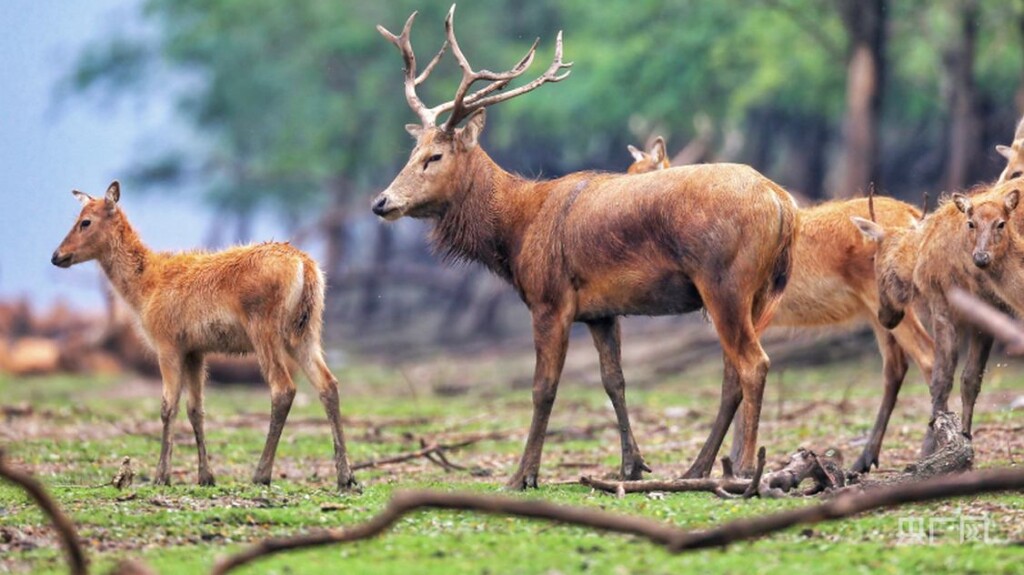
Pere David’s deer at the Jiangsu Dafeng Elk National Nature Reserve – credit, Jiangsu Dafeng Elk National Nature Reserve

Tramping through coastal marshlands in eastern China, a strange looking deer roams freely in herds of hundreds; a remarkable recovery from where they had been just a few decades ago.

Described in ancient China as a beast with the antlers of a deer, hooves of an ox, face of a horse, and tail of a donkey, PÚre David’s deer was at one time the rarest of its kind on Earth.

Hunted to extinction in the wild 125 years ago, captive animals clung to life in a far away land, until in 1985, their descendants could return to a wiser China where a more eco-conscious population welcomed them home to the quiet marshlands.

In the early 20th century, the British nobleman and politician Herbrand Russell, 11th Duke of Bedford, acquired a few PÚre David’s deer from the Berlin Zoo and built up a large herd on his estate at Woburn Abbey.

In 1985 the duke’s great-grandson Robin Russell, 14th Duke of Bedford, donated 39 PÚre David’s deer to the Chinese government for a reintroduction program. They were placed in a park/reserve that once belonged exclusively for canned hunts conducted by the emperors in Beijing—the killing field had become a sanctuary.

A second re-introduction into China was conducted in 1986 where 36 PÚre David’s deer were chosen from five UK zoological gardens. From less than 100, these original animals have multiplied into 8,200 and seem—as if by a miracle—not be be suffering from low genetic diversity. They enjoy a 17% annual growth rate in the population.

Today, all of the deer that roam China are descended from Russel’s herd, and across China’s many elk sanctuaries like Tianezhou and Dafeng, dozens of square miles of pristine habitat are protected for this incredible animal. Plans are underway to reintroduce the deer to much more wild areas, where they will have to learn to avoid predators and battle the elements once again.

A Chinese-language moniker for the PÚre David’s deer translates to “the four dislikes” referring to the component appearance mentioned above. As is so often the case in Chinese society, this strangeness is paired with a legend.

The following was taken from Wikipedia,

According to Chinese legend, when the tyrant King Zhou of Shang ruled the land more than 3,000 years ago, a horse, a donkey, an ox and a deer went into a cave in the forest to meditate and on the day the King executed his minister Bigan, the animals awoke from their meditation and turned into humans.

They entered society, learned of the King’s heinous acts and wanted to take recourse against the King, who was powerful. So they transformed themselves into one creature that combined the speed of the horse, the strength of the ox, the donkey’s keen sense of direction and the nimble agility of the deer.

This new animal then galloped to the Kunlun Mountains to seek the advice of the Primeval Lord of Heaven. The Lord was astonished at the sight of a creature that had antlers of a deer, hooves of an ox, face of a horse and tail of a donkey.“It’s unlike any of four creatures!” he exclaimed. Upon learning of the animal’s quest, Lord gave his blessing and dispatched the creature to his disciple the sage Jiang Ziya, who was battling the King. Jiang Ziya rode the creature to victory over the King and helped found the Zhou dynasty. Miracle Recovery for World’s Rarest and Strangest Deer – Just 39 Became 8,200
Read More........

Biodegradable Plastic Made from Bamboo Is Stronger and Easy to Recycle

Bamboo forest – credit Bady Abbas, via Unsplash

GNN has reported previously on how versatile bamboo is for construction and craft, so it maybe shouldn’t be a surprise that researchers in China have found a way to turn this miracle plant into plastic.

While many biodegradable materials have already been developed for replacing lighter, flexible plastic, durable or rigid plastic replacements are few. The kinds of plastic used for tools, car interiors, and appliance exteriors have few if any biodegradable replacements.

Enter Dawei Zhao at Shenyang University of Chemical Technology in China’s far northeast, who has developed a method for turning cellulose from bamboo into a rigid yet biodegradable plastic that outperforms not only alternative biodegradable options, but plastic itself for mechanical strength and thermo-mechanical properties.

“Bamboo’s rapid growth makes it a highly renewable resource, providing a sustainable alternative to traditional timber sources, but its current applications are still largely limited to more traditional woven products,” Zhao told New Scientist.

His method takes cellulose from bamboo and subjects it to zinc chloride and a simple acid to break up the complex polysaccharide bonds that hold this plant fiber together. Next they add ethanol into the soup of smaller molecules, and from that derive a plastic for use in injection, molding, and machining manufacturing techniques.

One major drawback is the bamboo plastic’s inflexibility, which limits its incorporation into the full gamut of products that petroleum-based plastics can fulfil. On the other hand, however, these are often the plastics that remain in the ecosystem longest, and are the hardest to recycle. Therefore replacing them still represents a valuable contribution to reducing the overall plastic burden in the environment and waste streams.

Zhao and his team published a paper on the process and properties of the bamboo plastic in Nature, including in which is a cost-analysis that finds the bioplastic’s recyclability emerges as a value that sees it attain cost-competitiveness with conventional plastic. Biodegradable Plastic Made from Bamboo Is Stronger and Easy to Recycle
Read More........

Rarest Monkeys Now Number Close to 2,000 Thanks to One Man's Jane Goodall-like Passion

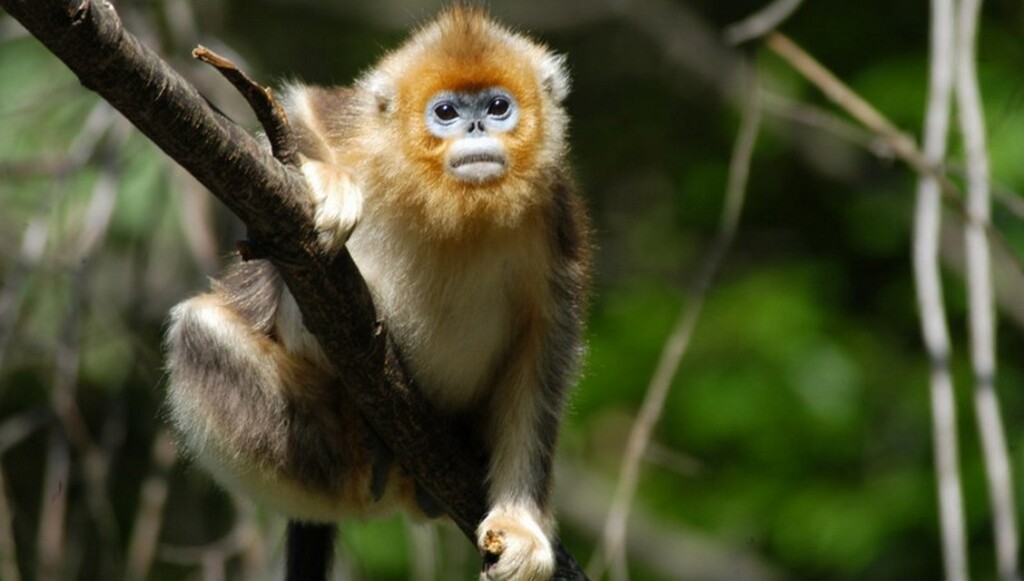
A golden snub-nosed monkey in Tanjiahe National Nature Reserve, Sichuan Province – credit, David Blank CC BY-NC-SA 3.0.

From the BBC comes the story of an intrepid and dedicated scientist who has spent decades working in China’s mountain forests in an effort to protect and understand one of the nation’s most amazing animals.

The golden sub-nosed monkey is revered alongside the giant panda as “national treasures” of Chinese wildlife, yet this couldn’t protect them from logging and hunting that followed in the wake of Mao’s Cultural Revolution.

Members of this sub-species located in the UNESCO-listed Shennongjia mountains of Hubei Province, were the subject of intense study by Professor Yang Jingyuan, a research ecologist who arrived in these mountains in 1991.

For Yang, the golden sub-nosed monkey was Jane Goodall’s chimpanzees. By the time Yang arrived in Shennongjia, the population had collapsed to just 500 or so individuals across 6 family groups. Years of illegal logging as a form of subsistence living had reduced forest coverage in the mountains to 63%.

But before Yang could protect the animals, he had to first learn to understand them. With his research colleagues, he began striking out into the newly-created Shennongjia Forest Reserve to study these incredible animals.

The monkeys were at first so wary of humans that Yang and his team had to stay half a mile away to be able just to observe the monkeys in their habitat. Eventually though, with repeated encounters, half a mile became and quarter mile, and a quarter mile became 200 yards, 100 yards, 20 yards—until Yang and whoever he brought with him were accepted by the troupes.

The BBC’s China Correspondent, Stephen McDonell, experienced this treatment as baby monkeys and curious juveniles climbed all over him on a visit to special, 100 square kilometer monkey zones hat are off-limits to the hundreds of thousands of visitors who come to enjoy a mountain ecosystem that is without exaggeration unique in the world.

“Even after logging was banned there were still people illegally felling timber. If they didn’t cut down trees, how would they have money?” Professor Yang, director of the Shennongjia National Park Scientific Research Institute, told McDonell.

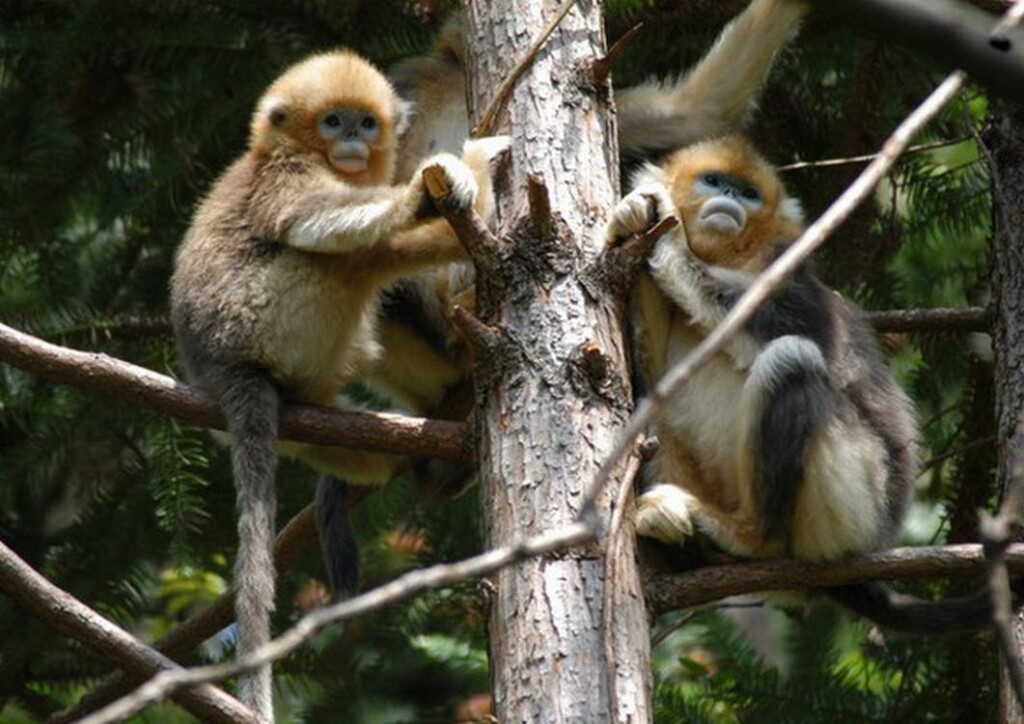
Golden snub-nosed monkeys in Tanjiahe National Nature Reserve, Sichuan Province – credit, David Blank CC BY-NC-SA 3.0.

Shennongjia virgin forest – credit, Evilbish CC BY-SA 3.0

“There were also people secretly hunting here to survive. It was only after a long period of building awareness that the consciousness of local farmers changed.”

In the 1990s, with a shifting focus from forestry to forest conservation, local residents eking out this subsistence living were offered government money to relocate so that the forests could regrow. Many accepted the offer, and now benefit from the tourism boom the mountains are experiencing.

There is no place on Earth that has greater biodiversity of deciduous woody plants than Shennongjia, and a dizzying 3,400 higher-order plant species, and over 600 invertebrates have been recorded there. The golden snub-nosed monkey is very much a fuzzy golden cherry on top of a biodiverse cake ten layers-high.

“I’m very optimistic,” said Prof Yang. “Their home is now very well protected. They have food and drink, no worries about life’s necessities and, most of all, their numbers are growing.”

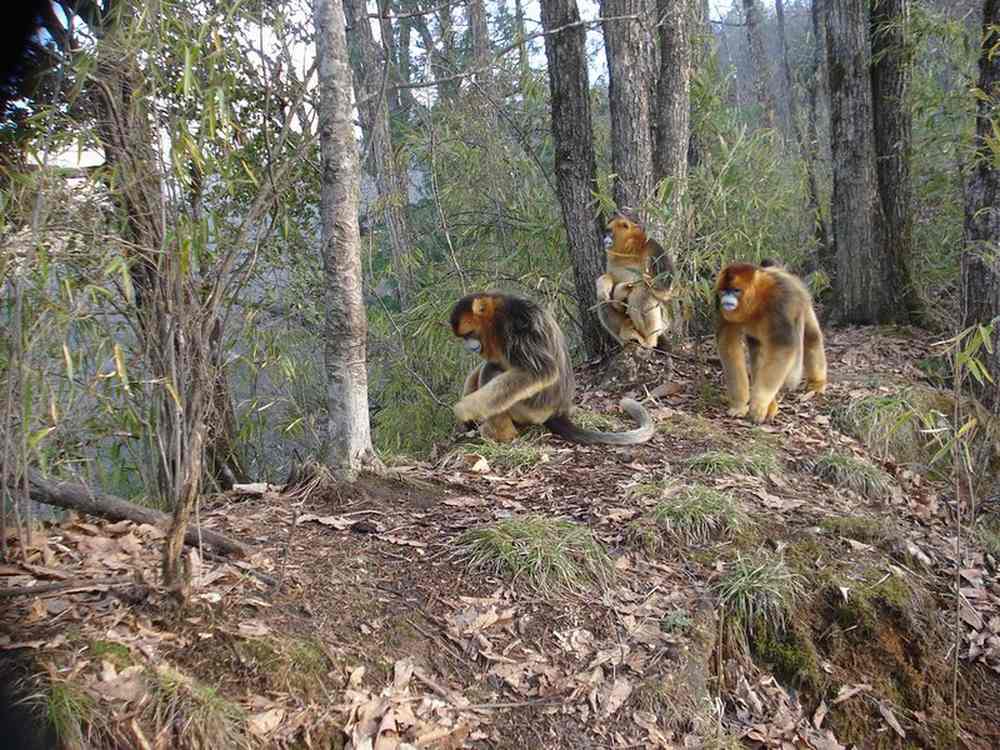
Golden snub-nosed monkeys captured via camera trap – credit, eMammal CC 2.0. via Flickr

Indeed, an archived report from Xinhua claimed that those 500 remnant individuals became 1,200 by 2013. This represents major progress since females give birth to only one baby at a time.

At the time McDonell visited, their numbers had jumped again to 1,600, and forest cover along the hills and valleys had increased to around 96% of the reserve’s total area.

Professor Yang can live freely among them like some character of fable. He speaks to them in their calls, having learned the meanings of each vocalization during his many years of observing them.

Like Goodall, his research has yielded incredible insights into their lives. For example, each monkey has an egg timer-like understanding of its lifespan, and when it’s time to pass away, they silently leave their families behind and visit special, secluded areas to die alone in the forest.

According to Yang, there hasn’t been a single successful attempt to find these sites, either by researchers or rangers.Yang’s institute estimates that the monkeys will come to number 2,000 individuals in Shennongjia sometime over the next 10 years, a testament to the magnificent outcomes conservation can provide, providing there’s someone in the right place at the right time to make the effort to make a difference. Rarest Monkeys Now Number Close to 2,000 Thanks to One Man's Jane Goodall-like Passion
Read More........

Resourceful Singapore Finds Perfect Place for 86 MW Solar Farm–its Biggest Reservoir

– credit, courtesy of Sembcorp

How do you decarbonize a city state? With so little space, so many demands on power, and so many citizens, generating any meaningful electricity from renewable energy is a major challenge for urban planners.

But over its history, the planners of Singapore have shown themselves to be nothing if not resourceful, and so maybe it’s no surprise they’re set to begin construction on an 86-megawatt solar farm.

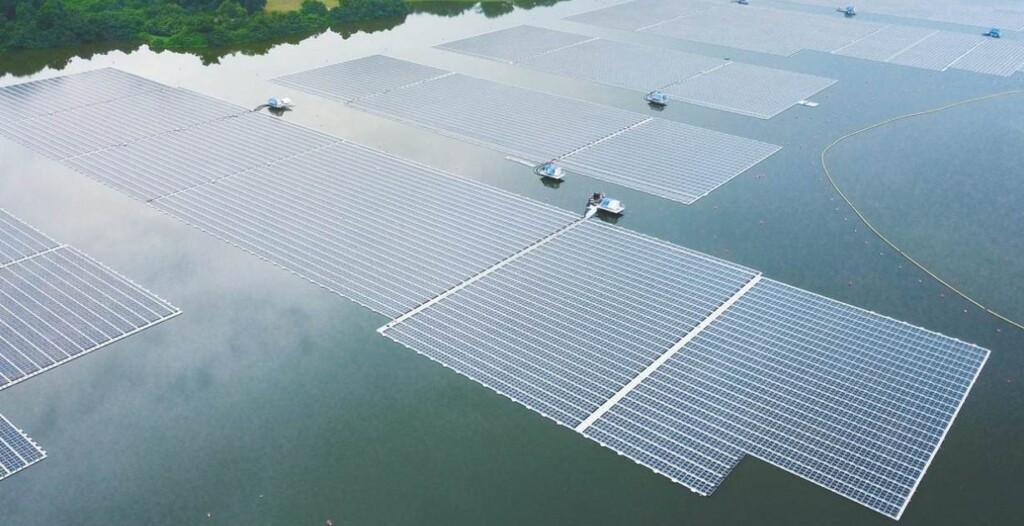
The surprise though comes from where they’ve built it—on top of the country’s largest reservoir—forming a floating solar farm that will join two others already present on two other reservoirs.

The contractor, Singapore-based engineering firm Sembcorp Solar Singapore, won the bidding process with designs for an 86MW PV solar farm on Pandan Reservoir, issued by Singapore’s national water agency.

It will be the third such floating solar farm built by Sembcorp, with the other two located on Singapore’s two other reservoirs. One was built in 2021, and another was commissioned this year by Facebook parent company Meta to power the data center for its local subsidiary.

All tolled, the solar panels will generate 296 megawatts of clean energy.

“Floating solar projects at reservoirs like Pandan, Tengeh and Kranji are vital for Singapore’s land-scarce energy landscape,” said Ms. Jen Tan, CEO of Sembcorp Solar Singapore.

Floating solar installations have a unique benefit to terrestrially-mounted panel arrays, which is that the water underneath helps keep their electronics cool even while their black surfaces bake in the tropical sun. When properly cooled, panels can produce around 2% more power.Other installations such as rooftop panel arrays mean that Singapore actually generates over 1,000 megawatt-hours of solar energy, half of what the city-state plans to install by 2030. It will be fascinating to see where they put the next solar array, having run out of reservoirs. Resourceful Singapore Finds Perfect Place for 86 MW Solar Farm–its Biggest Reservoir
Read More........

Scientists Discover Oldest Bird Fossils, Rewrite History of Avian Evolution

A photograph and interpretive line drawing show the Baminornis zhenghensis fossil – credit: Min Wang

According to a truly field-altering fossilized bird found in China, birds already existed in the Late Jurassic period, approximately 160 million years ago.

The new discovery suggests that rather than a linear evolutionary path from dinosaur to bird, these two orders evolved somewhat simultaneously.

An artistic representation of the newly discovered species, Baminornis zhenghensis, with the preserved bones highlighted – credit: Zhao Chuang.

Baminornis zhenghensis is the world’s oldest species of avid. A holotype fossil was recently found in East China’s Fujian Province and described in the journal Nature. The pelvis, trunk, forelimbs, and part of the hindlimb are all intact.

“Baminornis is a landmark discovery and ranks among the most important bird fossils unearthed since the discovery of Archaeopteryx in the early 1860s,” Stephen Brusatte, a paleontologist from the University of Edinburgh who was not involved in the study but wrote a commentary accompanying it, tells Xinhua.

“This is a groundbreaking discovery. It overturns the previous situation that Archaeopteryx was the only bird found in the Jurassic Period,” Zhonghe Zhou, a paleontologist at the Chinese Academy of Sciences and co-author of the study, tells the Chinese news agency Xinhua.

China’s wealth of cultural and historical treasures is almost matched in importance by its role as one of the world’s great crucibles of paleontological discoveries. Dinosaurs and prehistoric animals from every age, of every size, and of every description have been found there.

Archaeopteryx, the missing link that connected dinosaurs to birds, was first discovered in Germany, but several other iterations of paleo-avids, including a “Cretaceous cormorant,” a prehistoric wader, and the gliding Microraptor have been found in China.

Baminornis displays a number of characteristic bird features, the most important among them being a short tail—a critical innovation in bird flight.

“Previously, the oldest record of short-tailed birds is from the Early Cretaceous,” Wang Min, a paleontologist author of the study from the Chinese Academy of Sciences, explains in a statement. Baminornis is now the “oldest short-tailed bird yet discovered, pushing back the appearance of this derived bird feature by nearly 20 million years.”

The short tail shifted the center of gravity forward, allowing for greater aerodynamism. This stands in direct contrast to Archaeopteryx which had a long feathered tail.

Pelvic and pectoral girdles strengthen Baminornis’s bird-like biology, but a pair of clearly dinosaur-shaped hands betray its origin.

Wang believes that to have two different animals that were developing avian features, living in a relatively close period, but with such different physical shapes, suggests that millions of years of avid evolution had already taken place before Baminornis walked the Earth. Scientists Discover Oldest Bird Fossils, Rewrite History of Avian Evolution
Read More........

China building more wind, solar capacity than rest of world combined: report


BEIJING - China is building almost twice as much wind and solar energy capacity as every other country combined, research published on Thursday showed.

The world's second-largest economy is the biggest emitter of the greenhouse gases that drive climate change.

China has committed to bring carbon emissions to a peak by 2030 and to net zero by 2060.

It has endured several waves of extreme weather in recent months that scientists say are rendered more severe by climate change.

China currently has a total of 339 gigawatts (GW) of capacity under construction, including 159 GW of wind and 180 GW of solar.

That is "nearly twice as much as the rest of the world combined", according to the study by Global Energy Monitor, a US-based NGO.

The figure far exceeds the second-ranked nation, the United States, which is building a total of just 40 GW, the report said.

It said China has broken ground on a third of new wind and solar capacity it has announced to date, compared to a global average of just seven percent.

"The stark contrast in construction rates illustrates the active nature of China's commitment to building renewables projects," the study said.

China's national grid still relies on heavily polluting coal plants to deal with surges in power demand

AFP/File | HECTOR RETAMAL

Beijing's vast renewable energy buildout does have some drawbacks.

The national grid falls back on heavily polluting coal plants to deal with surges in power demand.

And it struggles to transmit renewable energy generated in remote northwestern regions to economic and population centres in the east.

However, China's combined wind and solar capacity is set to overtake coal this year, according to the report.

It said the rapid renewables expansion raises hopes that Beijing's carbon emissions will peak even sooner than expected, China building more wind, solar capacity than rest of world combined: report
Read More........

More good news for coffee drinkers from a study of sitting and sipping

Sedentary coffee drinkers had a 24 percent reduced risk of mortality compared with those who sat for more than six hours and didn’t drink coffee, according to the lead author of a study published recently in the journal BMC Public Health.

The finding, which was not part of the original article, was calculated at The Washington Post’s request and provided by Huimin Zhou, a researcher at the Medical College of Soochow University’s School of Public Health in China and the lead author of the study on coffee and health.

In the article, researchers reported that non-coffee drinkers who sat six hours or more per day were 58 percent more likely to die of all causes than coffee drinkers sitting for less than six hours a day, indicating both the risk of sedentary behavior and the benefit of coffee drinking. In his analysis for The Post, Zhou wrote that the comparison was chosen because it involved two “riskiest” behaviors with two least “risky” behaviors.

The study used data from 10,639 subjects, collected from 2007 to 2018 in the National Health and Nutrition Examination Survey (NHANES) by the National Center for Health Statistics. The NHANES survey, used to measure Americans’ health and nutrition status, has been collected every two years since 1999.

The researchers, primarily from the Medical College of Soochow University in Suzhou, China, also found that sitting more than eight hours a day was associated with a 46 percent higher risk of all-cause mortality and 79 percent higher risk of cardiovascular disease mortality, when compared with those sitting for less than four hours a day.

Additionally, those who drank the most coffee (more than two cups per day) showed a 33 percent reduced risk of all-cause mortality and 54 percent reduced risk of cardiovascular disease mortality compared with non-coffee drinkers.In their conclusion, the researchers note that “given that coffee is a complex compound, further research is needed to explore this miracle compound.”More good news for coffee drinkers from a study of sitting and sipping
Read More........

59-year-old Man Who Had Type 2 Diabetes for 25 Years is Cured by Stem Cells

Regular insulin and a syringe from ampoules and vials of medicines

Stem cells are being used more and more widely in treatments across the spectrum of medicine, but a recent breakthrough from Shanghai promises the best may still be yet to come.

A senior who had suffered from type-2 diabetes for 25 years hasn’t taken insulin for 33 months after he received a regenerative islet cell transplantation.

Diabetes, particularly type 2—the form that can develop in one’s life because of poor diet and lifestyle choices—is one of the most prevalent non-communicable diseases on Earth.

China in particular is one of the world’s diabetes hotspots, with 140 million people unable to make their own insulin, and so suffer from kidney problems, blindness, amputation, and cardiovascular problems.

But this new breakthrough, coming after 10 years of research and testing, may change this paradigm of sickness forever.

Yin Hao, a leading researcher on the team and director of Shanghai Changzheng Hospital’s Organ Transplant Center, said they took the patient’s own peripheral blood mononuclear cells and used existing methods to reprogram them back into pluripotent stem cells for injection into the pancreas.

“Our technology has matured and it has pushed boundaries in the field of regenerative medicine for the treatment of diabetes,” Yin, told China Daily whose team conducted the research with scientists from the Center for Molecular Cell Science at the Chinese Academy of Sciences.

Existing transplant treatments for type-2 diabetes are hindered by a lack of donor cells, and the complexity of pancreatic islet cell isolation technology.

Pancreatic islet cells are the major insulin-producing cells in the body, and the patients’ were almost completely inhibited. He relied on multiple insulin injections daily in addition to a kidney transplant.

After receiving the manufactured stem cells in 2021, he was weened off of external insulin over 11 weeks, after which his disease seemed to be largely gone.

“Follow-up examinations showed that the patient’s pancreatic islet function was effectively restored, and his renal function was within normal range,” Yin said. “Such results suggested that the treatment can avoid the progression of diabetic complications.”The paper was published in Cell Discovery on April 30th, and future studies, the authors wrote, should explore the pharmacology of drugs that might provide off-the-shelf equivalents for islet transplantation.59-year-old Man Who Had Type 2 Diabetes for 25 Years is Cured by Stem Cells
Read More........

China starts mass production of carbon-14 isotope

The Qinshan plant (Image: CNNC)

The carbon-14 isotope is being produced at the Qinshan nuclear power plant, China National Nuclear Corporation (CNNC) has announced.

According to CNNC the development means that the country can fully meet its demand for carbon-14, which is used in medical and scientific research and in fields including agriculture and chemistry as well as in medicine and biology. Radiocarbon dating uses carbon-14 to determine the true age of ancient objects up to 50,000 years old.

Apart from very limited production in experimental reactors, it was previously imported, with CNNC saying it was "expensive and supply could not be guaranteed - the shortage of supply has seriously restricted development of downstream industries". The irradiated carbon-14 target was successfully extracted from the Qinshan Nuclear Power Plant's heavy water reactor unit at 13:48 on Saturday 20 April.

Shang Xianhe, general manager of Qinshan Nuclear Power, told reporters: "This is the first time China has achieved mass production of carbon-14 isotopes in a commercial nuclear power reactor. From now on, it is expected that we can produce about 150 curies of carbon-14 isotopes every year, which can fully meet China's market demand."

The carbon-14 targets will be supplied to the market at the end of 2024 after being separated and purified, CNNC said. "This will effectively promote the development of China's isotope application industry chain and further establish and improve industry-university-research cooperation to develop commercial reactors. The research and development system for irradiation-produced isotopes promotes and drives the research and development of high-tech nuclear drugs and nuclear medicine industries by downstream medical enterprises, providing strong support for the development of the domestic isotope application industry."Qinshan is China's largest nuclear power plant, comprising seven reactors. Construction of Phase I of the plant - a 300 MWe pressurised water reactor (PWR) which was the first indigenously-designed Chinese nuclear power station to be built - began in 1985, with the unit entering commercial operation in 1994. Qinshan Phase II is home to four operating CNP-600 PWRs, built with a high degree of localisation. Units 1 and 2, comprising the first stage of Phase II, began operating in 2002 and 2004, respectively. Units 3 and 4 entered commercial operation in October 2010 and April 2021. Phase III consists of two 750 MWe pressurised heavy water reactors supplied by Atomic Energy of Canada Ltd and commissioned in 2002 and 2003. Researched and written by World Nuclear News China starts mass production of carbon-14 isotope : New Nuclear - World Nuclear News
Read More........

Nuclear battery: Chinese firm aiming for mass market production

The BV100 battery (Image: Betavolt)
Beijing Betavolt New Energy Technology Company Ltd claims to have developed a miniature atomic energy battery that can generate electricity stably and autonomously for 50 years without the need for charging or maintenance. It said the battery is currently in the pilot stage and will be put into mass production on the market.

Atomic energy batteries - also known as nuclear batteries or radioisotope batteries - work on the principle of utilising the energy released by the decay of nuclear isotopes and converting it into electrical energy through semiconductor converters.

Betavolt, which was established in April 2021, says its battery "combines nickel-63 nuclear isotope decay technology and China's first diamond semiconductor (4th generation semiconductor) module to successfully realise the miniaturisation of atomic energy batteries".

The company's team of scientists developed a unique single-crystal diamond semiconductor that is just 10 microns thick, placing a 2-micron-thick nickel-63 sheet between two diamond semiconductor converters. The decay energy of the radioactive source is converted into an electrical current, forming an independent unit. Betavolt said its nuclear batteries are modular and can be composed of dozens or hundreds of independent unit modules and can be used in series and parallel, so battery products of different sizes and capacities can be manufactured.

The composition of a nuclear battery (Image: Betavolt)
Betavolt says its batteries can meet the needs of long-lasting power supply in multiple scenarios such as aerospace, AI equipment, medical equipment, micro-electromechanical systems, advanced sensors, small drones and micro-robots. "If policies allow, atomic energy batteries can allow a mobile phone to never be charged, and drones that can only fly for 15 minutes can fly continuously," it said.

The first battery that the company plans to launch is the BV100, which it claims will be the world's first nuclear battery to be mass-produced. Measuring 15mm by 15mm and 5 mm thick, the battery can generate 100 microwatts, with a voltage of 3V. The company plans to launch a 1-watt battery in 2025.

Betavolt says its atomic energy battery is "absolutely safe, has no external radiation, and is suitable for use in medical devices such as pacemakers, artificial hearts, and cochleas in the human body". It adds: "Atomic energy batteries are environmentally friendly. After the decay period, the nickel-63 isotope as the radioactive source turns into a stable isotope of copper, which is non-radioactive and does not pose any threat or pollution to the environment."

The company plans to continue research on using isotopes such as strontium-90, promethium-147 and deuterium to develop atomic energy batteries with higher power and a service life of 2-30 years.Researched and written by World Nuclear News. Nuclear battery: Chinese firm aiming for mass market production : Corporate - World Nuclear News
Read More........

1st baby pangolin in Europe born in Prague zoo, doing well

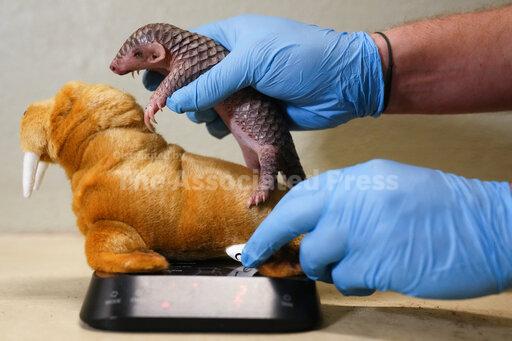
A baby Chinese pangolin is being weighed at the Prague Zoo, Czech Republic, Thursday, Feb. 23, 2023. A female baby of Chinese pangolin has been born in the Prague zoo on Feb 2, 2023, as the first birth of the critically endangered animal on the European continent, and was doing well, the park said. (AP Photo/Petr David Josek)

PRAGUE (AP) — A Chinese pangolin has been born in the Prague zoo, the first birth of the critically endangered animal in captivity in Europe, and is doing well after initial troubles, the park said on Thursday.

For the first few days after the baby female was born on Feb 2, park keepers were worried because it was losing weight.

The reason was found to be that the mother, Run Hou Tang, didn’t have enough milk. Following consultations with experts from Taiwan, a program of artificial feeding with milk from a cat was introduced and the mother was stimulated to produce more of her own.

That turned things around with the zoo now expressing cautious optimism about the pup, which still has no name but has been nicknamed “Little Cone” because it resembles a spruce cone.

Prague received the rare animals from Taiwan last year, becoming only the second European zoo to keep the species.

Guo Bao, the male pangolin, and Run Hou Tang both came from the Taipei zoo, the leading breeder of the mammals that are hunted heavily for their scales and meat.

It’s estimated that almost 200,000 were trafficked in 2019 because of the scales that are used in traditional medicine in Asia and elsewhere.

The pangolins’ arrival in Prague came after relations with China became strained, among other reasons, after Prague decided to revoke a sister-city agreement with Beijing and signed a similar deal in 2020 with the Taiwanese capital, Taipei. That agreement also included cooperation between the zoos of the two cities.

Taiwan split from mainland China amid a civil war in 1949, but Beijing considers the self-ruled island part of its territory.The Czech government recognizes the one-China principle but Prague officials said they wanted to focus on cultural and other cooperation, not on politics. Source: https://yourvalley.net/
Read More........

Now ‘Cat Que’ virus is spreading like wildfire in China!


The new terror is called the cat que virus. Although the whole world, including India, is looking for a way out to get rid of coronavirus infection, the new virus is spreading like wildfire. And again, this time too, the epicenter of this new virus is China; reports several Indian portals according to the medical experts’ warnings, that the new virus could be brought to India from China as before.

What are the symptoms of ‘cat que virus’ (CQV)?

Scientists associated with ICMR say that there is more than one symptom of the Cat Q virus. According to the news published in All India Media News – Mint, people infected with the Cat Que virus can get fever. Meningitis, pediatric encephalitis can also occur.

What is the cat que virus?

Scientists say the Cat que virus is a type of airborne virus that is carried by other animals. So far one existence has been observed in China and Vietnam. The ICMR says mosquitoes are the main carriers of the Cat Que virus. The main carriers of this virus are Azepti, Culex quinquefasciatus, Culex trichinarinicus. Pigs, on the other hand, can also carry the virus in mammals.

The CQV is arthropod-borne viruses or arboviruses. China and Vietnam have reported the presence of CQV inside culex mosquitoes and pigs.

According to the ICMR study, data has revealed that Indian mosquitoes, namely, aegypti, Cx. Quinquefasciatus, and Cx. Tritaeniorhynchus, are susceptible to the CQV. Swines are the primary mammalian host of the CQV. Source: https://www.daily-bangladesh.com
Read More........

Apps from Hyd vying to fill void left by ban on Chinese apps


Hyderabad : At a time when Corornavirus induced lockdown forced people to stay indoors and look for avenues of social engagement, and the recent ban on Chinese apps created a void, few mobile applications developed by Hyderabad-based firms have caught the imagination of consumers.

These 'made in Hyderabad' apps have emerged hot favourites and are witnessing tremendous downloads on both GooglePlay store and Apple iStore.

The ban on popular Chinese apps, led to Dubshoot emerging as a favourite video-sharing social networking platform among the regional language speaking netizens of India. Developed by mTouch Labs, the platform is witnessing over 15,000 new user-shared videos getting added every day, making it one of the largest social networking mobile application in the country.

"People of India have given a thumbs up to the Prime Minister's call to use Made in India goods and platforms, and we see that happening across all avenues including mobile applications," said P. Venkateswara Rao, CEO & Co-founder, Dubshoot.

He pointed out that even before a ban was imposed on Chinese mobile applications, many users were shifting their loyalty towards home grown platforms like Dubshoot. "It's evident from the fact that Dubshoot attracted close to half a million users base before June, a number that is rising at unprecedented rate since last week," Rao said.

"A technically strong platform, Dubshoot has plenty of features including content creation tools like dub videos for dialogues once rendered by celebrities in cinema or otherwise. This user generated content platform is supported in all Indian regional languages along with Hindi and English. While user privacy is assured, Dubshoot never uploads content without user's consent to do so," added Rao.

In addition to a large user base in India, Dubshoot is fast attracting as a favourite among users from the United States, Middle East nations, Sri Lanka and other countries.

VacYa, is another mobile application made in the city of pearls that witnessed tremendous growth during the nation-wide lockdown being observed for over three months. The platform now has over 1,00,000 signups as the software has been made available for free during these unsettling times of Covid-19 and today it is the largest 'Made in India' unified communications and collaboration platform, say the developers.

VacYa Meet helps enable enterprise employees, virtual teams, and custom vertical users in fields including government, healthcare, education, and more to collaborate in real-time as though they were working in the same room. VacYa's solutions help simplify business processes, improve results, and increase efficiency in daily activities with security being a fundamental parameter.

"Thousands of people have used our platform already and it is growing at a steady pace. Users appreciate the simplicity of the product. VacYa makes security the top priority in the design, development, deployment, and maintenance of its networks, platforms, and applications," said Chandra S. Potineni, Founder, VacYa.

According to him, the product is built on the latest WebRTC signalling and media standards, adhering to all required security protocols. The VacYa platform supports adaptive bandwidth management to ensure that each participant is independently managed, working to maintain the overall quality of the meeting experience for every participant.

As mandated by the government, VacYa focuses on data localization and privacy. All VacYa India meetings happen locally on Indian servers. With the government banning some foreign-made mobile applications, he feels VacYa is well positioned to be the solution of choice for India with their data localization and security.

Another fast-emerging prospect in the lot is Just-A-Sec, a location-based information services app that runs on an augmented reality platform. This app provides consumers with a great user experience when seeking information. It serves as a single point of reference to provide consumers with location-specific information. A consumer will receive personalized notifications based on preset preferences which means that the App works as an intuitive tool to search, view, and locate the places that one finds interesting and want to know more about. Source: https://english.madhyamam.com/
Read More........

China operates world's biggest radio telescope to discover 'laws of universe'

World's largest radio telescope has become operational in southwestern China, with officials in Beijing saying that the project will help scientists search for alien life.
Since the early 1930s, when the first primitive radio telescopes began operating in an attempt to hunt for alien radio signals, astronomers have been busy sifting through the data collected from the immensity of the space to detect the faintest radio signals transmitted from a supposed alien civilization and to help the mankind feel, at last, that its loneliness in the incomprehensible universe is finally eased. The latest of such scientific endeavors is the world’s biggest radio telescope made by Chinese scientists and unveiled on Sunday.
The Aperture Spherical Telescope (FAST), measuring 500 meters in diameter, is erected in a scenic karst valley in Pingtang county, a mountainous area in the southeastern province of Guizhou in China.
The gigantic telescope, which took five years and devoured some $180 million to complete, clearly demonstrates China's growing ambitions in outer space explorations and its vigorous pursuit of global scientific prestige. 
The new Chinese telescope, whose massive dish is made of 4,450 panels, dwarfs the half-a-century old Arecibo Observatory in Puerto Rico as the world's largest single-dish radio telescope, since its sensitivity is twice as the old pal with a reflector as big as 30 football fields. The speed of FAST in surveying is also five to 10 times more than that of the Arecibo Observatory.
The 500-meter Aperture Spherical Telescope (FAST) is seen at the final stage of construction, in the mountains in Pingtang county, Guizhou province, China. (Photo by Reuters)
“The ultimate goal of FAST is to discover the laws of the development of the universe,” said Qian Lei, an associate researcher with the National Astronomical Observatories of the Chinese Academy of Sciences, in remarks broadcast by state broadcaster CCTV on Sunday.
“In theory, if there is civilization in outer space, the radio signal it sends will be similar to the signal we can receive when a pulsar (spinning neutron star) is approaching us,” Qian added.
The huge Chinese cosmic ear requires a radio silence within a five-kilometer radius, therefore the 8,000 residents of the eight villages in the vicinity of the telescope site were forced to abandon their homes.
According to state media, the displaced villagers would be compensated, in the form of cash or new houses, from a budget of $269 million.
The CCTV report said that FAST managed to receive radio signals from a pulsar as far as 1,351 light years from the Earth during its recent test. Source: http://www.jokpeme.com
Read More........

China launches spacecraft in longest-ever manned mission

The Shenzhou 11 astronauts are Jing Haipeng, who is flying his third mission, and 37-year-old Chen Dong.
The Shenzhou 11 mission took off from the Jiuquan Satellite Launch Center on the edge of the Gobi Desert in northern China. China launched a pair of astronauts into space Monday on a mission to dock with an experimental space station and remain aboard for 30 days in preparation for the start of operations by a full-bore facility six years from now. The Shenzhou 11 mission took off from the Jiuquan Satellite Launch Center on the edge of the Gobi Desert in northern China at 7:30 a.m. (2330 GMT) aboard a Long March-2F carrier rocket. It will dock with the Tiangong 2 space station precursor facility within two days, conduct experiments in medicine and various space-related technologies, and test systems and processes in preparation for the launching of the station's core module in 2018. Space program commander-in-chief Gen. Zhang Youxia declared the launch a success at 7:46 a.m. (2346 GMT). Defense Minister Fan Changlong then read a congratulatory message from President Xi Jinping calling for China's astronauts to explore space "more deeply and more broadly." Premier Li Keqiang and propaganda chief Liu Yunshan visited the Beijing control center to congratulate staff. It is the sixth time
China has launched astronauts into space and the duration will be the longest by far. Following the attachment of two experiment modules, the completed station is set to begin full operations in 2022 and will run for at least a decade. An earlier Tiangong 1 experimental space station launched in 2011 went out of service in March after docking with three visiting spacecraft and extending its mission for two years. The Tiangong, or "Heavenly Palace," stations are considered stepping stones to a mission to Mars by the end of the decade. The Shenzhou 11 astronauts are Jing Haipeng, who is flying his third mission, and 37-year-old Chen Dong. "It is any astronaut's dream and pursuit to be able to perform many space missions," Jing, who turns 50 during his time in space, told a briefing Sunday. China conducted its first crewed space mission in 2003, becoming only the third country after Russia and the U.S. to do so, and has since staged a spacewalk and landed its Yutu rover on the moon. Administrators suggest a crewed landing on the moon may also be in the program's future. China was prevented from participating in the International Space Station, mainly due to US concerns over the Chinese space program's strongly military character. Chinese officials are now looking to internationalize their own program by offering to help finance other countries' missions to Tiangong 2. China's space program also opened its massive fourth spacecraft launch site at Wenchang on China's southernmost island province of Hainan in June. It was inaugurated with the launch of the newly developed Long March 7 rocket that was hailed as a breakthrough in the use of safer, more environmentally friendly fuels. China is currently developing the Long March 5 heavy-lift rocket needed to launch the Tiangong 2's additional components and other massive payloads. China also plans to land a rover on Mars by 2020, attempting to recreate the success of the US Viking 1 mission that landed a rover on the planet four decades ago. A source of enormous national pride, China's space program plans a total of 20 missions. (This story first appeared in Deccan Chronicle) Source: The Asian Age
Read More........

Cheaper, More Reliable Solar Power with New World Record for Polymer Solar Cells

Credit: Stefan Jerrevång/Linkoping university
Polymer solar cells can be even cheaper and more reliable thanks to a breakthrough by scientists at Linköping University and the Chinese Academy of Sciences (CAS). This work is about avoiding costly and unstable fullerenes. Polymer solar cells have in recent years emerged as a low cost alternative to silicon solar cells. In order to obtain high efficiency, fullerenes are usually required in polymer solar cells to separate charge carriers. However, fullerenes are unstable under illumination, and form large crystals at high temperatures. Polymer solar cells manufactured using low-cost roll-to-roll printing technology, demonstrated here by professors Olle InganÀs (right) and Shimelis Admassie. Now, a team of chemists led by Professor Jianhui Hou at the CAS set a new world record for fullerene-free polymer solar cells by developing a unique combination of a polymer called PBDB-T and a small molecule called ITIC. With this combination, the sun's energy is converted with an efficiency of 11%, a value that strikes most solar cells with fullerenes, and all without fullerenes. Feng Gao, together with his colleagues Olle InganÀs and Deping Qian at Linköping University, have characterized the loss spectroscopy of photovoltage (Voc), a key figure for solar cells, and proposed approaches to further improving the device performance. The two research groups are now presenting their results in the high-profile journal Advanced Materials. -We have demonstrated that it is possible to achieve a high efficiency without using fullerene, and that such solar cells are also highly stable to heat. Because solar cells are working under constant solar radiation, good thermal stability is very important, said Feng Gao, a physicist at the Department of Physics, Chemistry and Biology, Linköping University. -The combination of high efficiency and good thermal stability suggest that polymer solar cells, which can be easily manufactured using low-cost roll-to-roll printing technology, now come a step closer to commercialization, said Feng Gao. 
  • Contacts and sources: Feng Gao, Linköping University
  • Citation: Fullerene-free polymer solar cells with over 11% efficiency and excellent thermal stability, by Wenchao Zhao, Deping Qian, Shaoqing Zhang, Sunsun Li, Olle InganÀs, Feng Gao and Jianhui Hou. Advanced Materials 2016. DOI: 10.1002/adma.201600281. Source:http://www.ineffableisland.com/
Read More........

Superluminous Supernova 20 Times Brighter Than 100 Billion Stars Wows Astronomers

Records are made to be broken, as the expression goes, but rarely are records left so thoroughly in the dust. Stunned astronomers have witnessed a cosmic explosion about 200 times more powerful than a typical supernova--events which already rank amongst the mightiest outbursts in the universe--and more than twice as luminous as the previous record-holding supernova. At its peak intensity, the explosion--called ASASSN-15lh--shone with 570 billion times the brightness of the Sun. If that statistic does not impress, consider that this luminosity level is approximately 20 times the entire output of the 100 billion stars comprising our Milky Way galaxy. The record-breaking blast is thought to be an outstanding example of a "superluminous supernova," a recently discovered, supremely rare variety of explosion unleashed by certain stars when they die. Scientists are frankly at a loss, though, regarding what sorts of stars and stellar scenarios might be responsible for these extreme supernovae. These are pseudo-color images showing the host galaxy before the explosion of ASASSN-15lh taken by the Dark Energy Camera (DECam) [Left], and the supernova by the Las Cumbres Observatory Global Telescope Network (LCOGT) 1-meter telescope network [Right]. As described in a new study published today in Science, ASASSN-15lh
Credit: The Dark Energy Survey, B. Shappee and the ASAS-SN team
is amongst the closest superluminous supernovae ever beheld, at around 3.8 billion light years away. Given its uncanny brightness and closeness, ASASSN-15lh might offer key clues in unlocking the secrets of this baffling class of celestial detonations. "ASASSN-15lh is the most powerful supernova discovered in human history," said study lead author Subo Dong, an astronomer and a Youth Qianren Research Professor at the Kavli Institute for Astronomy and Astrophysics (KIAA) at Peking University. "The explosion's mechanism and power source remain shrouded in mystery because all known theories meet serious challenges in explaining the immense amount of energy ASASSN-15lh has radiated." ASASSN-15lh was first glimpsed in June 2015 by twin telescopes with 14-centimeter diameter lenses in Cerro Tololo, Chile conducting the All Sky Automated Survey for SuperNovae (ASAS-SN), an international collaboration headquartered at The Ohio State University. (Hence ASASSN-15lh's somewhat menacing moniker.) These two tiny telescopes sweep the skies to detect suddenly appearing objects like ASASSN-15lh that are intrinsically very bright, but are too far away for human observers to notice. "ASAS-SN is the first astronomical project in history to frequently scan the entire optical sky for optical transients," said Krzysztof Stanek, professor of astronomy at the Ohio State University and the co-Principal Investigator of ASAS-SN. "Every time in science we open up a new discovery space, exciting findings should follow. The trick is not to miss them." Dong and colleagues immediately put out word about the sighting of ASASSN-15lh in order for as much data as possible to be gathered. Multiple, far larger ground-based telescopes across the globe, as well as NASA's Swift satellite, have since taken part in an intense observing campaign that continues to this day. In just the first four months after it went kablooie, so much energy beamed out of ASASSN-15lh that it would take our Sun in its current state more than 90 billion years to equal its emissions. By examining this bright, slowly fading afterglow, astronomers have gleaned a few basic clues about the origin of ASASSN-15lh. Using the 2.5-meter du Pont telescope in Chile, Dong's colleagues Ben Shappee and Nidia Morrell at the Carnegie Observatories in the United States took the first spectrum of ASASSN-15lh to identify the signatures of chemical elements scattered by the explosion. This spectrum puzzled the ASAS-SN team members, for it did not resemble any of spectra from the 200 or so supernovae the project had discovered to date. These are two of the 14-centimeter diameter lens telescopes in use for the All Sky Automated Survey for SuperNovae (ASAS-SN) that discovered ASASSN-15lh. Since this photo was taken, two more
Credit: Wayne Rosing
telescopes have been added to the ASAS-SN station in Cerro Tololo, Chile. Inspired by suggestions from Jose Prieto at Universidad Diego Portales and Millennium Institute of Astrophysics in Chile and Stanek, Dong realized that ASASSN-15lh might in fact be a superluminous supernova. Dong found a close spectral match for ASASSN-15lh in a 2010 superluminous supernova, and if they were indeed of a kind, then ASASSN-15lh's distance would be confirmable with additional observations. Nearly 10 days passed as three other telescopes, stymied by bad weather and instrument mishaps, attempted to gather these necessary spectra. Finally, the 10-meter South African Large Telescope (SALT) secured the observations of elemental signatures verifying ASASSN-15lh's distance and extreme potency. "Upon seeing the spectral signatures from SALT and realizing that we had discovered the most powerful supernova yet, I was too excited to sleep the rest of the night," said Dong, who had received word of the SALT results at 2 AM in Beijing on July 1, 2015. The ongoing observations have further revealed that ASASSN-15lh bears certain features consistent with "hydrogen-poor" (Type I) superluminous supernovae, which are one of the two main types of these epic explosions so named for lacking signatures of the chemical element hydrogen in their spectra. ASASSN-15lh has likewise shown a rate of temperature decrease and radius expansion similar to some previously discovered Type I superluminous supernova. Yet in other ways, besides its brute power, ASASSN-15lh stands apart. It is way hotter, and not just brighter, than its apparently nearest of supernova kin. The galaxy it calls home is also without precedent. Type I superluminous supernova seen to date have all burst forth in dim galaxies both smaller in size and that churn out stars much faster than the Milky Way. Noticing the pattern, astronomers hoped this specific sort of galactic environment had something to do with superluminous supernovae, either in the creation of the exotic stars that spawn them or in setting these stars off. Exceptionally, however, ASASSN-15lh's galaxy appears even bigger and brighter than the Milky Way. On the other hand, ASASSN-15lh might in fact reside in an as-yet-unseen, small, faint neighboring galaxy of its presumed, large galactic home. To clear up where exactly ASASSN-15lh is located, as well as numerous other mysteries regarding it and its hyper-kinetic ilk, the research team has been granted valuable time this year on the Hubble Space Telescope. With Hubble, Dong and colleagues will obtain the most detailed views yet of the aftermath of ASASSN-15lh's stunning explosion. Important insights into the true wellspring of its power should then come to light. One of the best hypotheses is that superluminous supernovae's stupendous energy comes from highly magnetized, rapidly spinning neutron stars called magnetars, which are the leftover, hyper-compressed cores of massive, exploded stars. But ASASSN-15lh is so potent that this compelling magnetar scenario just falls short of the required energies. Instead, ASASSN-15lh-esque supernovae might be triggered by the demise of incredibly massive stars that go beyond the top tier of masses most astronomers would speculate are even attainable. "The honest answer is at this point that we do not know what could be the power source for ASASSN-15lh," said Dong. "ASASSN-15lh may lead to new thinking and new observations of the whole class of superluminous supernova, and we look forward to plenty more of both in the years ahead." 
Contacts and sources:  Jim Cohen: The Kavli Institute for Astronomy and Astrophysics (KIAA) 

More information:
Read More........

Cute golden monkeys play in the snow in nature reserve

1   2   3   4   5   Next  
Two baby golden monkeys play in the tree at the Dalongtan Golden Monkey Research Center in Shennongjia, in central China's Hubei Province, on Jan. 12, 2016. The Shennongjia Nature Reserve is home to the rare golden monkeys, which have lived for many years on the verge of extinction since they were first spotted in Shennongjia in the 1960s. The amount of golden monkeys in the nature reserve has doubled since the 1980s because of better environmental protection. [Photo/Xinhua]. Source: China.org.cn
Read More........

Scientists make printer that needs no ink, only water


Scientists have created a printer that uses just water to print instead of ink. After about 22 hours, the paper fades back to a plain sheet of white paper, allowing it to be reused. A group of chemists assert that the “water-jet” technology, that is capable of reprinting numerous times, spares people their money and saves trees.
"Several international statistics indicate that about 40 percent of office prints [are] taken to the waste paper basket after a single reading," Sean Xiao-An Zhang, a chemistry professor at Jilin University in China, who supervised the work, said. The paper alone is not ordinary at all, as it is coated with an invisible dye that shows color when water hits it. Later on, the print slowly fades away within a matter of 22 hours, but disappears much faster if exposed to high levels of heat. According to the designers, the print comes out clear and the technology is not expensive at all. "Based on 50 times of rewriting, the cost is only about 1 percent of the inkjet prints," Zhang said in a video. If one page were reused just 12 times, the cost would only be one-seventeenth that of its inkjet counterpart. Zhang said dye-treating the paper, of the type generally used for printing, added about five percent to its price, but this is more than compensated for by the saving on ink. There is no need to change the printer, but the ink cartridge needs to be filled up with water with the help of a syringe. "Water is a renewable resource and obviously poses no risk to the environment," said the study. In the past, such ventures using disappearing ink gave way to low-contrast results at a high price, with some methods using questionable chemicals. Oxazolidine, a dye compound, is the type of mix Zhang and his group used to print off the paper, with clear blue showing in less than one second after the water was put on the page. Four water colors can be printed for the time being, which are blue, magenta, gold, and purple. However, only one color can be printed off at a time. The team hopes to make the resolution and duration time for printing better. Zhang said the dyed paper was "very safe" but toxicity tests are underway on mice to be sure. Voice of Russia, The Sydney Morning Herald Source: http://sputniknews.com/
Read More........

China scientist ‘ready’ to clone humans

Boyalife Group shows three cloned puppies in an incubator at a facility in Tianjin, China. (Photo: AFP)
The Chinese scientist behind the world’s biggest cloning factory has technology advanced enough to replicate humans, he said, and is only holding off for fear of the public reaction. Boyalife Group and its partners are building the giant plant in the northern Chinese port of Tianjin, where it is due to go into production within the next seven months and aims for an output of one million cloned cows a year by 2020. But cattle are only the beginning of chief executive Xu Xiaochun’s ambitions. In the factory pipeline are also thoroughbred racehorses, as well as pet and police dogs, specialised in searching and sniffing. Boyalife is already working with its South Korean partner Sooam and the Chinese Academy of Sciences to improve primate cloning capacity to create better test animals for disease research. And it is a short biological step from monkeys to humans, potentially raising a host of moral and ethical controversies. “The technology is already there,” Xu said. “If this is allowed, I don’t think there are other companies better than Boyalife that make better technology.” The firm does not currently engage in human cloning activities, Xu said, adding that it has to be “self-restrained” because of possible adverse reaction. But social values can change, he pointed out, citing changing views of homosexuality and suggesting that in time humans could have more choices about their own reproduction. “Unfortun-ately, currently, the only way to have a child is to have it be half its mum, half its dad,” he said. “Maybe in the future you have three choices instead of one,” he went on. “You either have fifty-fifty, or you have a choice of having the genetics 100 per cent from daddy or 100 per cent from mummy. This is only a choice.” Xu, 44, went to university in Canada and the US, and has previously worked for US pharmaceutical giant Pfizer, and in drug development. Presenting cloning as a safeguard of biodiversity, the Tianjin facility will house a gene bank capable of holding up to approximately five million cell samples frozen in liquid nitrogen, a catalogue of the world’s endangered species for future regeneration. Boyalife’s South Korean partner Sooam is already working on a project to bring the woolly mammoth back from extinction by cloning cells preserved for thousands of years in the Siberian permafrost. Sooam also serves a niche market recreating customers’ dead pet dogs, reportedly for $100,000 a time. Sooam founder Hwang Woo-Suk was a national hero with his own postage stamp before being embroiled in controversy a decade ago after his claims to be the first in the world to clone a human embryo were discredited. Hwang, who created Snuppy, the world’s first cloned dog, in 2005, lost his university position, had two major papers retracted, and was accused of crimes ranging from violation of bioethics laws to embezzling research funds. Earlier this year, he was quoted in South Korea’s Dong-A Ilbo newspaper saying that his firm was planning a cloning joint venture in China “because of South Korea’s bioethics law that prohibits the use of human eggs”. “We have decided to locate the facilities in China in case we enter the phase of applying the technology to human bodies,” he was quoted as saying. For now, Xu seeks to become the world’s first purveyor of “cloned” beef, breeding genetically identical super-cattle that he promises will taste like Kobe and allow butchers to “slaughter less and produce more” to meet the demands of China’s booming middle class. Cloning differs from genetic modification, but its application to animals would enable the firm to homogenise its output. Source: The Asian Age
Read More........