Underground nuclear tests are hard to detect. A new method can spot them 99% of the time

Since the first detonation of an atomic bomb in 1945, more than 2,000 nuclear weapons tests have been conducted by eight countries: the United States, the Soviet Union, the United Kingdom, France, China, India, Pakistan and North Korea.

Groups such as the Comprehensive Nuclear-Test-Ban Treaty Organization are constantly on the lookout for new tests. However, for reasons of safety and secrecy, modern nuclear tests are carried out underground – which makes them difficult to detect. Often, the only indication they have occurred is from the seismic waves they generate.

In a paper published in Geophysical Journal International, my colleagues and I have developed a way to distinguish between underground nuclear tests and natural earthquakes with around 99% accuracy.

Fallout

The invention of nuclear weapons sparked an international arms race, as the Soviet Union, the UK and France developed and tested increasingly larger and more sophisticated devices in an attempt to keep up with the US.

Many early tests caused serious environmental and societal damage. For example, the US’s 1954 Castle Bravo test, conducted in secret at Bikini Atoll in the Marshall Islands, delivered large volumes of radioactive fallout to several nearby islands and their inhabitants.

Between 1952 and 1957, the UK conducted several tests in Australia, scattering long-lived radioactive material over wide areas of South Australian bushland, with devastating consequences for local Indigenous communities.

In 1963, the US, the UK and the USSR agreed to carry out future tests underground to limit fallout. Nevertheless, testing continued unabated as China, India, Pakistan and North Korea also entered the fray over the following decades.

How to spot an atom bomb

During this period there were substantial international efforts to figure out how to monitor nuclear testing. The competitive nature of weapons development means much research and testing is conducted in secret.

Groups such as the Comprehensive Nuclear-Test-Ban Treaty Organization today run global networks of instruments specifically designed to identify any potential tests. These include:

  • air-testing stations to detect minute quantities of radioactive elements in the atmosphere
  • aquatic listening posts to hear underwater tests
  • infrasound detectors to catch the low-frequency booms and rumbles of explosions in the atmosphere
  • seismometers to record the shaking of Earth caused by underground tests.

A needle in a haystack

Seismometers are designed to measure seismic waves: tiny vibrations of the ground surface generated when large amounts of energy are suddenly released underground, such as during earthquakes or nuclear explosions.

There are two main kinds of seismic waves. First are body waves, which travel outwards in all directions, including down into the deep Earth, before returning to the surface. Second are surface waves, which travel along Earth’s surface like ripples spreading out on a pond.

The Comprehensive Test-Ban-Treaty Organization uses seismic stations to monitor the globe for underground nuclear explosions.

The difficulty in using seismic waves to monitor underground nuclear tests is distinguishing between explosions and naturally occurring earthquakes. A core goal of monitoring is never to miss an explosion, but there are thousands of sizeable natural quakes around the world every day.

As a result, monitoring underground tests is like searching for a potentially non-existent needle in a haystack the size of a planet.

Nukes vs quakes

Many different methods have been developed to aid this search over the past 60 years.

Some of the simplest include analysing the location or depth of the source. If an event occurs far from volcanoes and plate tectonic boundaries, it might be considered more suspicious. Alternatively, if it occurs at a depth greater than say three kilometres, it is unlikely to have been a nuclear test.

However, these simple methods are not foolproof. Tests might be carried out in earthquake-prone areas for camouflage, for example, and shallow earthquakes are also possible.

A more sophisticated monitoring approach involves calculating the ratio of the amount of the energy transmitted in body waves to the amount carried in surface waves. Earthquakes tend to expend more of their energy in surface waves than explosions do.

This method has proven highly effective for identifying underground nuclear tests, but it too is imperfect. It failed to effectively classify the 2017 North Korean nuclear test, which generated substantial surface waves because it was carried out inside a tunnel in a mountain.

This outcome underlines the importance of using multiple independent discrimination techniques during monitoring – no single method is likely to prove reliable for all events.

An alternative method

In 2023, my colleagues and I from the Australian National University and Los Alamos National Laboratory in the US got together to re-examine the problem of determining the source of seismic waves.

We used a recently developed approach to represent how rocks are displaced at the source of a seismic event, and combined it with a more advanced statistical model to describe different types of event. As a result, we were able to take advantage of fundamental differences between the sources of explosions and earthquakes to develop an improved method of classifying these events.

We tested our approach on catalogues of known explosions and earthquakes from the western United States, and found that the method gets it right around 99% of the time. This makes it a useful new tool in efforts to monitor underground nuclear tests.

Robust techniques for identification of nuclear tests will continue to be a key component of global monitoring programs. They are critical for ensuring governments are held accountable for the environmental and societal impacts of nuclear weapons testing.The Conversation

Mark Hoggard, DECRA Research Fellow, Australian National University

This article is republished from The Conversation under a Creative Commons license. Read the original article.

Read More........

Was going to space a good idea?

NASA Alice Gorman, Flinders UniversityIn 1963, six years after the first satellite was launched, editors from the Encyclopaedia Britannica posed a question to five eminent thinkers of the day: “Has man’s conquest of space increased or diminished his stature?” The respondents were philosopher Hannah Arendt, writer Aldous Huxley, theologian Paul Tillich, nuclear scientist Harrison Brown and historian Herbert J. Muller.

Sixty years later, as the rush to space accelerates, what can we learn from these 20th-century luminaries writing at the dawn of the space age?

The state of space 60 years on

Much has happened since. Spacecraft have landed on planets, moons, comets and asteroids across the Solar System. The two Voyager deep space probes, launched in 1977, are in interstellar space.

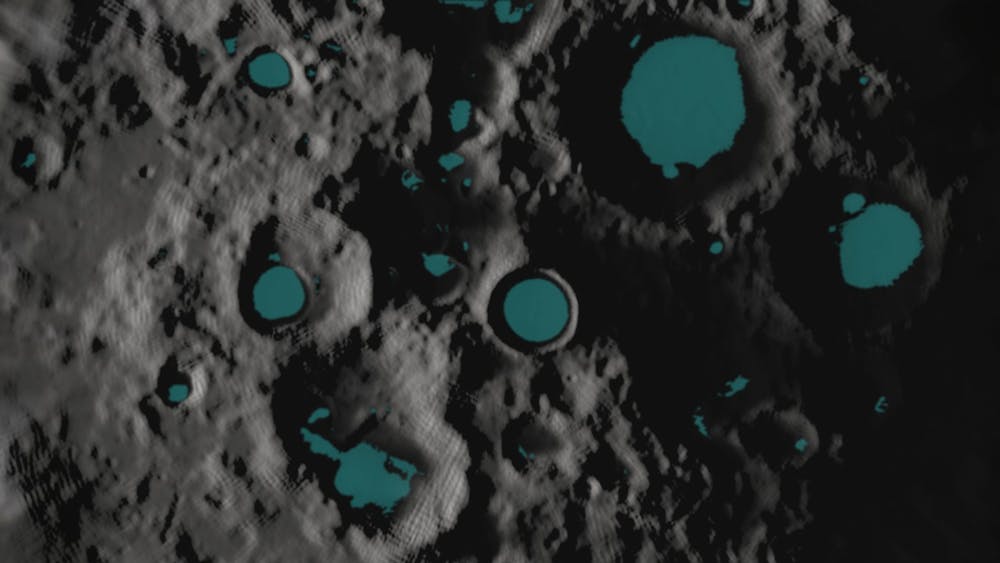
A handful of people are living in two Earth-orbiting space stations. Humans are getting ready to return to the Moon after more than 50 years, this time to establish a permanent base and mine the deep ice lakes at the south pole.

Water ice in the permanently shadowed craters of the lunar south pole. NASA/Goddard Space Flight Center Scientific Visualization Studio. Data from JAXA/Selene

There were only 57 satellites in Earth orbit in 1963. Now there are around 10,000, with tens of thousands more planned.

Satellite services are part of everyday life. Weather prediction, farming, transport, banking, disaster management, and much more, all rely on satellite data.

Despite these tremendous changes, Arendt, Huxley and Tillich, in particular, have some illuminating insights.

A brave new world

Huxley is famous for his 1932 dystopian science fiction novel Brave New World, and his experimental use of psychedelic drugs.

In his essay, he questioned who this “man” who had conquered space was, noting it was not humans as a species but Western urban-industrial society that had sent emissaries into space.

This has not changed. The 1967 Outer Space Treaty says space is the province of all humanity, but in reality it’s dominated by a few wealthy nations and individuals.

Huxley said the notion of “stature” assumed humans had a special and different status to other living beings. Given the immensity of space, talking of conquest was, in his opinion, “a trifle silly”.

Tillich was a theologian who fled Nazi Germany before the second world war. In his essay he wrote about how seeing Earth from outside allowed us to “demythologise” our planet.

In contrast to the much-discussed “overview effect” which inspires astronauts with a feeling of almost mystical awe, Tillich argued that the view from space made Earth a “large material body to be looked at and considered as totally calculable”.

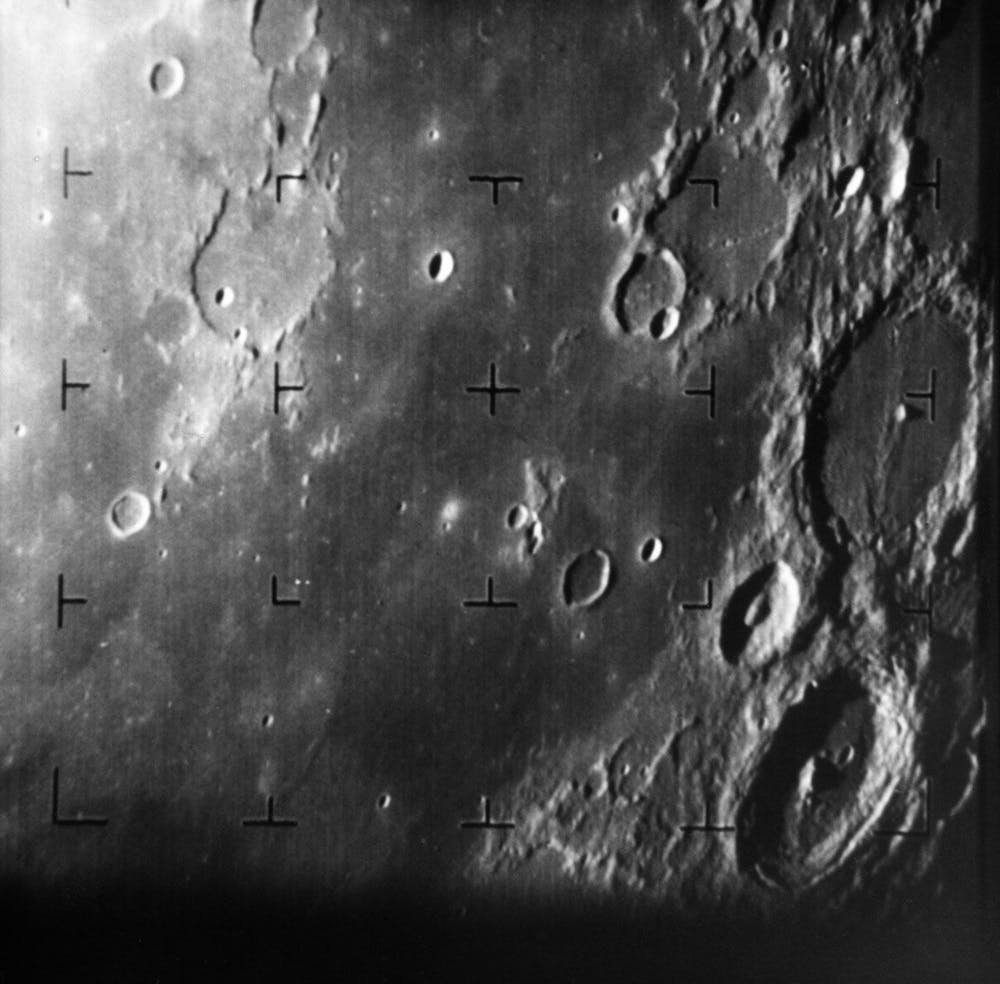
An image of the lunar surface taken by the US Ranger 7 spacecraft in 1964. NASA/JPL-Caltech

When spacecraft began imaging the lunar surface in the 1960s, the process of calculation started for the Moon. Now, its minerals are being evaluated as commodities for human use.

Have humans changed, or is it how we view Earth?

Like Tillich, Arendt left Germany under the shadow of Nazism in 1933. She’s best remembered for her studies of totalitarian states and for coining the term “the banality of evil”.

Her essay explored the relationship between science and the human senses. It’s a dense and complex piece; almost every time I read it, I come away with something different.

In the early 20th century, Einstein’s theory of special relativity and quantum mechanics showed us a reality far beyond the ability of our senses to comprehend. Arendt said it was absurd to think such a cosmos could be “conquered”. Instead, “we have come to our present capacity to ‘conquer space’ through our new ability to handle nature from a point in the universe outside the earth”.

The new geocentrism

The short human lifespan and the impossibility of moving faster than the speed of light mean humans are unlikely to travel beyond the Solar System. There is a limit to our current expansion into space.

When that limit is reached, said Arendt, “the new world view that may conceivably grow out of it is likely to be once more geocentric and anthropomorphic, although not in the old sense of the earth being the center of the universe and of man being the highest being there is”. Humans would turn back to Earth to make meaning of their existence, and cease to dream of the stars.

This new geocentrism may be exacerbated by an environmental problem already emerging from the rapid growth of satellite megaconstellations. The light they reflect is obscuring the view of the night sky, cutting our senses off from the larger cosmos.

The far future

But what if it were technologically possible for humans to expand into the galaxy?

Arendt said assessing humanity from a position outside Earth would reduce the scale of human culture to the point at which humans would become like laboratory rats, studied as statistical patterns. From far enough away, all human culture would appear as nothing more than a “large scale biological process”.

Arendt did not see this as an increase in stature:

The conquest of space and the science that made it possible have come perilously close to this point [of seeing human culture as a biological process]. If they ever should reach it in earnest, the stature of man would not simply be lowered by all standards we know of, but have been destroyed.

Sixty years on, nations are competing to exploit lunar and asteroid mineral resources. Private corporations and space billionaires are increasingly being touted as the way forward. After the Moon, Mars is the next world in line for “conquest”. The contemporary movement known as longtermism promotes living on other planets as insurance against existential risk, in a far future where humans (or some form of them) spread to fill the galaxies.

But the question remains. Is space travel enhancing what we value about humanity? Arendt and her fellow essayists were not convinced. For me, the answer will depend on what values we choose to prioritise in this new era of interplanetary expansion.


This article developed from a panel discussion at the Wheeler Centre. You can listen to it here.The Conversation

Alice Gorman, Associate Professor in Archaeology and Space Studies, Flinders University

This article is republished from The Conversation under a Creative Commons license. Read the original article.
Read More........

South Africa’s great white sharks are changing locations – they need to be monitored for beach safety and conservation

South Africa is renowned for having one of the world’s biggest populations of great white sharks (Carcharodon carcharias). Substantial declines have been observed, however, in places where the sharks normally gather on the coast of the Western Cape province. Sharks congregate at these locations to feed, interact socially, or rest.

In Cape Town, skilled “shark spotters” documented a peak of over 300 great white shark sightings across eight beaches in 2011, but have recorded no sightings since 2019. These declines have sparked concerns about the overall conservation status of the species.

Conserving great white sharks is vital because they have a pivotal role in marine ecosystems. As top predators, they help maintain the health and balance of marine food webs. Their presence influences the behaviour of other marine animals, affecting the entire ecosystem’s structure and stability.

Marine biologists like us needed to know whether the decline in shark numbers in the Western Cape indicated changes in the whole South African population or whether the sharks had moved to a different location.

To investigate this problem, we undertook an extensive study using data collected by scientists, tour operators and shore anglers. We examined the trends over time in abundance and shifts in distribution across the sharks’ South African range.

Our investigation revealed significant differences in the abundance at primary gathering sites. There were declines at some locations; others showed increases or stability. Overall, there appears to be a stable trend. This suggests that white shark numbers have remained constant since they were given protection in 1991.

Looking at the potential change in the distribution of sharks between locations, we discovered a shift in human-shark interactions from the Western Cape to the Eastern Cape. More research is required to be sure whether the sharks that vanished from the Western Cape are the same sharks documented along the Eastern Cape.

The stable population of white sharks is reassuring, but the distribution shift introduces its own challenges, such as the risk posed by fisheries, and the need for beach management. So there is a need for better monitoring of where the sharks are.

Factors influencing shark movements

We recorded the biggest changes between 2015 and 2020. For example, at Seal Island, False Bay (Western Cape), shark sightings declined from 2.5 sightings per hour in 2005 to 0.6 in 2017. Shifting eastward to Algoa Bay, in 2013, shore anglers caught only six individual sharks. By 2019, this figure had risen to 59.

The changes at each site are complex, however. Understanding the patterns remains challenging.

These predators can live for more than 70 years. Each life stage comes with distinct behaviours: juveniles, especially males, tend to stay close to the coastline, while sub-adults and adults, particularly females, venture offshore.

Environmental factors like water temperature, lunar phase, season and food availability further influence their movement patterns.

Changes in the climate and ocean over extended periods might also come into play.

As adaptable predators, they target a wide range of prey and thrive in a broad range of temperatures, with a preference for 14–24°C. Their migratory nature allows them to seek optimal conditions when faced with unfavourable environments.

Predation of sharks by killer whales

The movement complexity deepens with the involvement of specialist killer whales with a taste for shark livers. Recently, these apex predators have been observed preying on white, sevengill and bronze whaler sharks.

Cases were first documented in 2015 along the South African coast, coinciding with significant behavioural shifts in white sharks within Gansbaai and False Bay.

Although a direct cause-and-effect link is not firmly established, observations and tracking data support the notion of a distinct flight response among white sharks following confirmed predation incidents.

More recently, it was clear that in Mossel Bay, when a killer whale pod killed at least three white sharks, the remaining sharks were prompted to leave the area.

Survival and conservation of sharks

The risk landscape for white sharks is complex. A study published in 2022 showed a notable overlap of white sharks with longline and gillnet fisheries, extending across 25% of South Africa’s Exclusive Economic Zone. The sharks spent 15% of their time exposed to these fisheries.

The highest white shark catches were reported in KwaZulu-Natal, averaging around 32 per year. This emphasised the need to combine shark movement with reliable catch records to assess risks to shark populations.

As shark movement patterns shift eastward, the potential change in risk must be considered. Increased overlap between white sharks, shark nets, drumlines (baited hooks) and gillnets might increase the likelihood of captures.

Beach safety and management adaptation

Although shark bites remain a low risk, changing shark movements could also influence beach safety. The presence of sharks can influence human activities, particularly in popular swimming and water sports areas. Adjusting existing shark management strategies might be necessary as distributions change.

Increased signage, temporary beach closures, or improved education about shark behaviour might be needed.

In Cape Town, for example, shark spotters have adjusted their efforts on specific beaches. Following two fatal shark incidents in 2022, their programme expanded to Plettenberg Bay. Anecdotal evidence highlights additional Eastern Cape locations where surfers and divers encounter more white sharks than before.

Enhanced monitoring and long-term programmes

Further research is required to understand the factors behind the movements of sharks and their impact on distribution over space and time. Our study underscores the importance of standardising data collection methods to generate reliable abundance statistics across their entire range. Other countries suffer from the same problem.

Additionally, we propose establishing long-term monitoring programmes along the Eastern Cape and continuing work to reduce the number of shark deaths.

Sarah Waries, a master’s student and CEO of Shark Spotters in Cape Town, contributed to this article.The Conversation

Alison Kock, Marine Biologist, South African National Parks (SANParks); Honorary Research Associate, South African Institute for Aquatic Biodiversity (SAIAB), South African Institute for Aquatic Biodiversity; Alison Towner, Marine biologist, Rhodes University; Heather Bowlby, Research Lead, Fisheries and Oceans Canada; Matt Dicken, Adjunct Professor of Marine Biology, Nelson Mandela University, and Toby Rogers, PhD Candidate, University of Cape Town

This article is republished from The Conversation under a Creative Commons license. Read the original article.
Read More........

Mars rover sees hints of past life in latest rock samples

NASA's Perseverance Mars rover has detected its highest concentrations yet of organic molecules, in a potential signal of ancient microbes that scientists are eager to confirm when the rock samples are eventually brought to Earth.

While organic matter has been found on the Red Planet before, the new discovery is seen as especially promising because it came from an area where sediment and salts were deposited into a lake -- conditions where life could have arisen.

"It is very fair to say that these are going to be, these already are, the most valuable rock samples that have ever been collected," David Shuster, a Perseverance return sample scientist, told reporters during a briefing.

Organic molecules -- compounds made primarily of carbon that usually include hydrogen and oxygen, but also at times other elements -- are not always created by biological processes.

Further analysis and conclusions will have to wait for the Mars Sample Return mission -- a collaboration between NASA and the European Space Agency (ESA) to bring back the rocks that is set for 2033.

Nicknamed Percy, the rover landed on Mars' Jezero Crater in February 2021, tasked with caching samples that may contain signs of ancient life, as well as characterizing the planet's geology and past climate.

The delta it is exploring formed 3.5 billion years ago. The rover is currently there investigating sedimentary rocks, which came about from particles of various sizes settling in the then watery environment.

Percy cored two samples from a rock called "Wildcat Ridge," which is about three feet (one meter) wide, and on July 20 abraded some of its surface so it could be analyzed with an instrument called SHERLOC that uses ultraviolet light.

The results showed a class of organic molecules called aromatics, which play a key role in biochemistry.

"This is a treasure hunt for potential signs of life on another planet," NASA astrobiologist Sunanda Sharma said.

"Organic matter is a clue and we're getting stronger and stronger clues...I personally find these results so moving because it feels like we're in the right place, with the right tools, at a very pivotal moment."

There have been other tantalizing clues about the possibility of life on Mars before, including repeated detections of methane by Perseverance's predecessor, Curiosity.

While methane is a digestive byproduct of microbes here on Earth, it can also be generated by geothermal reactions where no biology is at play.DailyBangladesh/SA, Mars rover sees hints of past life in latest roc
Read More........

NASA scrubs launch of giant Moon rocket, may try again Friday

NASA scrubs launch of giant Moon rocket, may try again Friday
NASA has scrubbed a test flight of its powerful new rocket, in a setback to its plan to send humans back to the Moon and eventually to Mars, but may shoot for another launch attempt on Friday. "We don't launch until it's right," NASA administrator Bill Nelson said after an engine issue forced a cancellation of Monday's flight from the Kennedy Space Center in Florida. "This is a very complicated machine," Nelson said. "You don't want to light the candle until it's ready to go." The goal of the mission, baptized Artemis 1 after the twin sister of Apollo, is to test the 322-foot (98-meter) Space Launch System (SLS) rocket and Orion crew capsule that sits on top. The mission is uncrewed -- mannequins equipped with sensors are standing in for astronauts and will record acceleration, vibration and radiation levels. Mike Sarafin, mission manager of Artemis 1, said the space agency is hoping to make another launch attempt later this week. "Friday is definitely in play," Sarafin said. NASA would have a better idea of whether a Friday launch is feasible after a meeting on Tuesday of the management team, he said. "We just need a little bit of time to look at the data," Sarafin said. Next Monday, September 5, is an alternative launch date. Blastoff had been planned for 8:33 am (1233 GMT) but was cancelled because a test to get one of the rocket's four RS-25 engines to the proper temperature range for launch was not successful. Delays are "part of the space business," Nelson said, expressing confidence NASA engineers will "get it fixed and then we'll fly." Tens of thousands of people -- including US Vice President Kamala Harris -- had gathered to watch the launch, which comes 50 years after Apollo 17 astronauts last set foot on the Moon. "Our commitment to the Artemis Program remains firm, and we will return to the Moon," Harris tweeted. Veteran NASA astronaut Stan Love told reporters he was disappointed but "not really surprised." "This is a brand new vehicle," Love said. "It has a million parts. All of them have to work perfectly." Extreme temperatures: Overnight operations to fill the orange-and-white rocket with ultra-cold liquid hydrogen and oxygen were briefly delayed by a risk of lightning. A potential leak was detected during the filling of the main stage with hydrogen, causing a pause. After tests, the flow resumed. NASA engineers later detected the engine temperature problem and decided to scrub the launch. The Orion capsule is to orbit the Moon to see if the vessel is safe for people in the near future. At some point, Artemis aims to put a woman and a person of color on the Moon for the first time. During the 42-day trip, Orion will follow an elliptical course around the Moon, coming within 60 miles (100 kilometers) at its closest approach and 40,000 miles at its farthest -- the deepest into space by a craft designed to carry humans. One of the main objectives is to test the capsule's heat shield, which at 16 feet in diameter is the largest ever built. On its return to Earth's atmosphere, the heat shield will have to withstand speeds of 25,000 miles per hour and a temperature of 5,000 degrees Fahrenheit (2,760 degrees Celsius) -- roughly half as hot as the Sun. Crewed mission to Mars: NASA is expected to spend $93 billion between 2012 and 2025 on the Artemis program, which is already years behind schedule, at a cost of $4.1 billion per launch. The next mission, Artemis 2, will take astronauts into orbit around the Moon without landing on its surface. The crew of Artemis 3 is to land on the Moon in 2025 at the earliest. And since humans have already visited the Moon, Artemis has its sights set on another lofty goal: a crewed mission to Mars. The Artemis program aims to establish a lasting human presence on the Moon with an orbiting space station known as Gateway and a base on the surface.Gateway would serve as a staging and refueling station for a voyage to the Red Planet that would take a minimum of several months. Source: https://www.daily-bangladesh.com/
Read More........

Nokia, NASA to install 4G on the Moon

Finnish multinational telecommunications, information technology, and consumer electronics company Nokia announced its expansion into a new market on Monday, winning a deal to install the first cellular network on the Moon.

The Finnish equipment manufacturer said it was selected by NASA to deploy an “ultra-compact, low-power, space-hardened” wireless 4G network on the lunar surface, as part of the US space agency’s plan to establish a long-term human presence on the Moon by 2030, according to a report by AFP.

The $14.1 million contracts, awarded to Nokia’s US subsidiary, is part of NASA’s Artemis program which aims to send the first woman, and next man, to the moon by 2024.

The astronauts will begin carrying out detailed experiments and explorations which the agency hopes will help it develop its first human mission to Mars.

Nokia’s network equipment will be installed remotely on the Moon’s surface using a lunar hopper built by Intuitive Machines in late 2022, Nokia said.

“The network will self-configure upon deployment,” Nokia said in a statement, adding that the wireless technology will allow for “vital command and control functions, remote control of lunar rovers, real-time navigation and streaming of high definition video.”

The 4G equipment can be updated to a super-fast 5G network in the future, Nokia said.

In all, NASA announced last week it would distribute $370 million to 14 companies to supply “Tipping Point” technologies for its mission, which include robotics and new methods of harvesting the resources required for living on the moon, such as oxygen and energy sources.

Among them, Elon Musk’s SpaceX received $53.2 million for a demonstration of the transferring of ten metric tons of liquid oxygen between tanks on a starship vehicle, NASA said.Source: AFP Source: https://www.daily-bangladesh.com
Read More........

SpaceX Crew Dragon “Resilience” docks with ISS

A SpaceX Crew Dragon carrying four astronauts docked with the International Space Station Monday, the first of what NASA hopes will be many routine missions ending US reliance on Russian rockets.

“Dragon SpaceX, soft capture confirmed,” said an announcer as the capsule completed its 27.5 hour journey at 11:01 pm (0401 GMT Tuesday), with the second part of the procedure, “hard capture,” occurring a few minutes later.

The spacecraft, named “Resilience,” docked autonomously with the space station some 260 miles (400 kilometers) above the Midwestern US state of Ohio.

The crew is comprised of three Americans — Michael Hopkins, Victor Glover and Shannon Walker — and Japan’s Soichi Noguchi.

Earlier, mission commander Hopkins gave pilot Glover his “gold pin,” a NASA tradition when an astronaut first crosses the 100-kilometer Karman line marking the official boundary of space.

Glover is the first Black astronaut to make an extended stay at the ISS, while Noguchi is the first non-American to fly to orbit on a private spaceship.

The crew joins two Russians and one American aboard the station, and will stay for six months.

Along the way, there was a problem with the cabin temperature control system, but it was quickly solved.

SpaceX briefly transmitted live images from inside the capsule showing the astronauts in their seats, something neither the Russians nor the Americans had done before.

US President-elect Joe Biden hailed the launch on Twitter as a “testament to the power of science and what we can accomplish by harnessing our innovation, ingenuity, and determination,” while President Donald Trump called it “great.”

Vice President Mike Pence, who attended the launch with his wife Karen, called it a “new era in human space exploration in America.”

The Crew Dragon capsule earlier this week became the first spacecraft to be certified by NASA since the Space Shuttle nearly 40 years ago. Its launch vehicle is a reusable SpaceX Falcon 9 rocket.

At the end of its missions, the Crew Dragon deploys parachutes and then splashes down in water, just as in the Apollo era.

SpaceX is scheduled to launch two more crewed flights for NASA in 2021, including one in the spring, and four cargo refueling missions over the next 15 months.

NASA turned to SpaceX and Boeing after shuttering the checkered Space Shuttle program in 2011, which failed in its main objectives of making space travel affordable and safe.

The agency will have spent more than $8 billion on the Commercial Crew program by 2024, with the hope that the private sector can take care of NASA’s needs in “low Earth orbit” so it is freed up to focus on return missions to the Moon and then on to Mars.

SpaceX, founded by Elon Musk in 2002, leapfrogged its much older rival Boeing, whose program floundered after a failed test of its uncrewed Starliner last year.

– Russians unimpressed –

But SpaceX’s success won’t mean the US will stop hitching rides with Russia altogether, said NASA administrator Jim Bridenstine. The goal is to have an “exchange of seats” between American astronauts and Russian cosmonauts.

Bridenstine also explained it was necessary in case either program was down for a period of time.

The reality, however, is that space ties between the US and Russia — one of the few bright spots in their bilateral relations — have frayed in recent years.

Russia has said it won’t be a partner in the Artemis program to return to the Moon in 2024, claiming the NASA-led mission is too US-centric.

Dmitry Rogozin, the head of Russia’s space agency, has also repeatedly mocked SpaceX’s technology, telling a state news agency he was unimpressed with the Crew Dragon’s “rather rough” water landing and saying his agency was developing a methane rocket that will be reusable 100 times. But the fact that a national space agency feels moved to compare itself to a company arguably validates NASA’s public-private strategy.

SpaceX’s emergence has also deprived Roscosmos of a valuable income stream.

The cost of round-trips on Russian rockets had been rising and stood at around $85 million per astronaut, according to estimates last year.

– Biden incoming –

Presidential transitions are always a difficult time for NASA, and the ascension of Joe Biden in January is expected to be no different.

The agency has yet to receive from Congress the tens of billions of dollars needed to finalize the Artemis program.

Bridenstine has announced that he will step down, to let the new president set his own goals for space exploration.

So far, Biden has not commented on the 2024 timeline.Democratic party documents say they support NASA’s Moon and Mars aspirations, but also emphasize elevating the agency’s Earth sciences division to better understand how climate change is affecting our planet. Source: https://www.daily-bangladesh.com/
Read More........

Indian-American Raja Chari among 3 astronauts selected by NASA for SpaceX Crew-3 mission


DEC 16, 2020 WASHINGTON: Indian-American US Air Force Colonel Raja Chari has been selected as the Commander of the SpaceX Crew-3 mission to the International Space Station (ISS) by NASA and the European Space Agency. Chari, 43, will serve as the commander while NASA's Tom Marshburn will be pilot and ESA's Matthias Maurer will serve as a mission specialist for the SpaceX Crew-3 mission to the ISS, which is expected to launched next year. A fourth crew member will be added at a later date, following a review by NASA and its international partners, NASA said in a statement on Monday. "Excited and honored to be training with @astro_matthias and @AstroMarshburn in prep for a trip to the @Space_Station," Chari said in a tweet on Monday. "Proud to be working and training with Matthias Maurer and Thomas Henry Marshburn in preparation for a mission to the International Space Station aboard the SpaceX Crew Dragon," he posted on his Facebook page. This will be the first spaceflight for Chari, who became a NASA astronaut in 2017. He was born in Milwaukee, but considers Cedar Falls, Iowa, his hometown, NASA said. He is a colonel in the US Air Force and joins the mission with extensive experience as a test pilot. He has accumulated more than 2,500 hours of flight time in his career. Chari was selected earlier this month as a member of the Artemis Team and is now eligible for assignment to a future lunar mission, it said in a statement. Chari's father Srinivas Chari came to the US at a young age from Hyderabad for an engineering degree. "It's official... next stop: International @Space_Station! In late 2021, I'll fly to humankind's orbital outpost for the first time, continuing our quest to discover more in space for #Earth. Get ready for #cosmickiss - a declaration of love for space," Maurer tweeted. Maurer comes from Sankt Wendel, in the German state of Saarland. Like Chari, Maurer will be making his first trip to space with the Crew-3 mission. Before becoming an astronaut, Maurer held a number of engineering and research roles, both in a university setting and at European Space Agency (ESA). Marshburn is a Statesville, North Carolina, native who became an astronaut in 2004. Prior to serving in the astronaut corps, the medical doctor served as a flight surgeon at NASA's Johnson Space Center in Houston and later became medical operations lead for the International Space Station. The Crew-3 mission will be his third visit to the space station and his second long-duration mission. When Chari, Marshburn, and Maurer arrive at the orbiting laboratory, they will become expedition crew members for the duration of their six-month stay. The crew will have a slight overlap with the Crew-2 astronauts, who are expected to launch in the spring of 2021. This will not be the first commercial crew mission to overlap. The Crew-1 astronauts, who are currently on the station, and the Crew-2 astronauts, also are expected to coincide in their sojourns for a short time. Increasing the total number of astronauts aboard the station is allowing the agency to boost the number of science investigations conducted in the unique microgravity environment, NASA said. This will be the third crew rotation mission of SpaceX's human space transportation system and its fourth flight with astronauts, including the Demo-2 test flight, to the space station through NASA's Commercial Crew Program. The goal of the programme is to provide safe, reliable, and cost-effective crew access to the space station and low-Earth orbit in partnership with American aerospace industry. NASA's contract with SpaceX is for six total crew missions to the orbiting laboratory. Commercial transportation to and from the station will provide expanded utility, additional research time, and broader opportunities for discovery on the orbital outpost, the US space agency said. For more than 20 years, humans have lived and worked continuously aboard the International Space Station, advancing scientific knowledge and demonstrating new technologies, making research breakthroughs not possible on Earth. As a global endeavour, 242 people from 19 countries have visited the unique microgravity laboratory that has hosted more than 3,000 research and educational investigations from researchers in 108 countries and areas, the statement said. The station is a critical test bed for NASA to understand and overcome the challenges of long-duration spaceflight. As commercial companies focus on providing human transportation services to and from low-Earth orbit, NASA is free to focus on building spacecraft and rockets for deep space missions to the Moon and Mars, it said. Copyright © Jammu Links News, Source: Jammu Links News
Read More........

SpaceX Crew Dragon “Resilience” docks with ISS

A SpaceX Crew Dragon carrying four astronauts docked with the International Space Station Monday, the first of what NASA hopes will be many routine missions ending US reliance on Russian rockets.

“Dragon SpaceX, soft capture confirmed,” said an announcer as the capsule completed its 27.5 hour journey at 11:01 pm (0401 GMT Tuesday), with the second part of the procedure, “hard capture,” occurring a few minutes later.

The spacecraft, named “Resilience,” docked autonomously with the space station some 260 miles (400 kilometers) above the Midwestern US state of Ohio.

The crew is comprised of three Americans — Michael Hopkins, Victor Glover and Shannon Walker — and Japan’s Soichi Noguchi.

Earlier, mission commander Hopkins gave pilot Glover his “gold pin,” a NASA tradition when an astronaut first crosses the 100-kilometer Karman line marking the official boundary of space.

Glover is the first Black astronaut to make an extended stay at the ISS, while Noguchi is the first non-American to fly to orbit on a private spaceship.

The crew joins two Russians and one American aboard the station, and will stay for six months.

Along the way, there was a problem with the cabin temperature control system, but it was quickly solved.

SpaceX briefly transmitted live images from inside the capsule showing the astronauts in their seats, something neither the Russians nor the Americans had done before.

US President-elect Joe Biden hailed the launch on Twitter as a “testament to the power of science and what we can accomplish by harnessing our innovation, ingenuity, and determination,” while President Donald Trump called it “great.”

Vice President Mike Pence, who attended the launch with his wife Karen, called it a “new era in human space exploration in America.”

The Crew Dragon capsule earlier this week became the first spacecraft to be certified by NASA since the Space Shuttle nearly 40 years ago. Its launch vehicle is a reusable SpaceX Falcon 9 rocket.

At the end of its missions, the Crew Dragon deploys parachutes and then splashes down in water, just as in the Apollo era.

SpaceX is scheduled to launch two more crewed flights for NASA in 2021, including one in the spring, and four cargo refueling missions over the next 15 months.

NASA turned to SpaceX and Boeing after shuttering the checkered Space Shuttle program in 2011, which failed in its main objectives of making space travel affordable and safe.

The agency will have spent more than $8 billion on the Commercial Crew program by 2024, with the hope that the private sector can take care of NASA’s needs in “low Earth orbit” so it is freed up to focus on return missions to the Moon and then on to Mars.

SpaceX, founded by Elon Musk in 2002, leapfrogged its much older rival Boeing, whose program floundered after a failed test of its uncrewed Starliner last year.

– Russians unimpressed –

But SpaceX’s success won’t mean the US will stop hitching rides with Russia altogether, said NASA administrator Jim Bridenstine. The goal is to have an “exchange of seats” between American astronauts and Russian cosmonauts.

Bridenstine also explained it was necessary in case either program was down for a period of time.

The reality, however, is that space ties between the US and Russia — one of the few bright spots in their bilateral relations — have frayed in recent years.

Russia has said it won’t be a partner in the Artemis program to return to the Moon in 2024, claiming the NASA-led mission is too US-centric.

Dmitry Rogozin, the head of Russia’s space agency, has also repeatedly mocked SpaceX’s technology, telling a state news agency he was unimpressed with the Crew Dragon’s “rather rough” water landing and saying his agency was developing a methane rocket that will be reusable 100 times. But the fact that a national space agency feels moved to compare itself to a company arguably validates NASA’s public-private strategy.

SpaceX’s emergence has also deprived Roscosmos of a valuable income stream.

The cost of round-trips on Russian rockets had been rising and stood at around $85 million per astronaut, according to estimates last year.

– Biden incoming –

Presidential transitions are always a difficult time for NASA, and the ascension of Joe Biden in January is expected to be no different.

The agency has yet to receive from Congress the tens of billions of dollars needed to finalize the Artemis program.

Bridenstine has announced that he will step down, to let the new president set his own goals for space exploration.

So far, Biden has not commented on the 2024 timeline.Democratic party documents say they support NASA’s Moon and Mars aspirations, but also emphasize elevating the agency’s Earth sciences division to better understand how climate change is affecting our planet. Source:https://www.daily-bangladesh.com
Read More........

Lakes of liquid water discovered on Mars


A major new study has found three new underground lakes of liquid water near the south pole of Mars, reports BBC.

According to the report, scientists have also confirmed the existence of a fourth lake which was hinted at in 2018.

The researchers’ remark, such findings could be key in the search for alien life on the planet as liquid water is a must for anyone to survive any place.

However, it is assumed that the lakes are extremely salty, which could make it difficult for any life to survive in them.

After that, the researchers call for future work to better examine Mars, and whether there might be any chance of living alien here.

Researchers announced that they had found a vast lake beneath the surface of Mars in 2018. But the study was questioned by experts. Source: https://www.daily-bangladesh.com
Read More........

Astronaut trainees complete abnormal descent module landing

a

Four Indian astronauts who were undergoing training in Russia since February 2020 have successfully completed the training on crew actions in case of abnormal descent module landing on different terrains, said Glavkosmos.

The company is a subsidiary of Russian space corporation Roscosmos and the Indian astronauts are being trained at Gagarin Cosmonaut Training Center (GCTC).

According to Glavkosmos, the prospective Indian astronauts have been trained in abnormal descent module landing - in wooded and marshy areas in winter; on water surface and in the steppe in summer.

"In June 2020, all Indian astronauts-elect passed training in short-term weightlessness mode aboard the IL-76MDK special laboratory aircraft, and in July, they were trained to lift aboard a helicopter while evacuating from the descent module landing point," Glavkosmos said.

According to Glavkosmos, the upcoming programme for the prospective Indian astronauts who will be part of India's human space mission Gaganyaan includes training in a centrifuge and in a hyperbaric chamber to prepare their organisms for sustaining spaceflight factors, such as G-force, hypoxia and pressure drops.

The regular courses comprise medical and physical training, learning Russian (as one of the main international languages of communication in space), and studying the configuration, structure and systems of the Soyuz crewed spacecraft.

The health of prospective Indian astronauts is monitored on a daily basis, and once every three months, GCTC doctors conduct their thorough medical examination.

According to Glavkosmos, all the Indian trainees are in good health.

The Indians undergo the general space training programme and of the systems of the Soyuz MS crewed spacecraft.The completion of their training at GCTC is scheduled for the first quarter of 2021.

The contract for the training of Indian astronauts between Glavkosmos and the Human Spaceflight Centre of the Indian Space Research Organisation was signed on June 27, 2019 and four pilots from the Indian Air Force (IAF) were sent to GCTC for training in space travel and other aspects as part of India's maiden human space mission Gaganyaan.(IANS) Source: https://southasiamonitor.org
Read More........

NASA InSight lander provides first ever "sounds" of Martian winds on Red Planet

InSight sensors captured a haunting low rumble caused by vibrations from the wind, estimated to be blowing between 10 to 15 mph on Dec 1

[One of two Mars InSight's 7-foot (2.2 meter) wide solar panels was imaged by the lander's Instrument Deployment Camera, which is fixed to the elbow of its robotic arm. (Photo: NASA/JPL-Caltech)]
Los Angeles: NASA's InSight lander, which touched down on Mars last week, has provided the first ever "sounds" of Martian winds on the Red Planet, said NASA on Friday.

InSight sensors captured a haunting low rumble caused by vibrations from the wind, estimated to be blowing between 10 to 15 mph (5 to 7 meters a second) on Dec. 1, from northwest to southeast, according to NASA.

The winds were consistent with the direction of dust devil streaks in the landing area, which were observed from orbit, said NASA.

"Capturing this audio was an unplanned treat," said Bruce Banerdt, InSight principal investigator at NASA's Jet Propulsion Laboratory (JPL) in Pasadena, California. "But one of the things our mission is dedicated to is measuring motion on Mars, and naturally that includes motion caused by sound waves."

According to NASA, two very sensitive sensors on the spacecraft detected these wind vibrations: an air pressure sensor inside the lander and a seismometer sitting on the lander's deck, awaiting deployment by InSight's robotic arm.

The two instruments recorded the wind noise in different ways. The air pressure sensor, which will collect meteorological data, recorded these air vibrations directly. The seismometer recorded lander vibrations caused by the wind moving over the spacecraft's solar panels, which are each 7 feet (2.2 meters) in diameter and stick out from the sides of the lander like a giant pair of ears.

This is the only phase of the mission during which the seismometer, called the Seismic Experiment for Interior Structure (SEIS), will be capable of detecting vibrations generated directly by the lander, said NASA.

In a few weeks, it will be placed on the Martian surface by InSight's robotic arm, then covered by a domed shield to protect it from wind and temperature changes. It will detect the lander's movement through the Martian surface, said NASA.

SEIS is recording vibrational data that scientists later will be able to use to cancel out noise from the lander when SEIS is on the surface, allowing them to detect better actual marsquakes.

With a reach of nearly 6 feet (2 meters), the arm of inSight will be used to pick up science instruments from the lander's deck, gently setting them on the Martian surface at Elysium Planitia, the lava plain where InSight touched down.

The arm will use its Instrument Deployment Camera, located on its elbow, to take photos of the terrain in front of the lander. These images will help mission team members determine where to set SEIS and heat flow probe, the only instruments ever to be robotically placed on the surface of another planet, said NASA.

Another camera, called the Instrument Context Camera, located under the lander's deck, will also offer views of the workspace.

InSight landed safely on Mars on Nov. 26, kicking off a two-year mission to explore the deep interior of the Red Planet. Source: https://ummid.com/
Read More........

Cosmic lighthouses to help space travellers find ways to Moon, Mars

Washington: Just as lighthouses have helped sailors navigate safely into harbor for centuries, future space travellers may receive similar guidance from the steady signals created by pulsars.

Scientists and engineers are using the International Space Station to develop pulsar-based navigation using these cosmic lighthouses to assist with wayfinding on trips to the Moon under NASA's Artemis programme and on future human missions to Mars, the US space agency said on Wednesday.

Pulsars, or rapidly spinning neutron stars, are the extremely dense remains of stars that exploded as supernovas.

They emit X-ray photons in bright, narrow beams that sweep the sky like a lighthouse as the stars spin.

From a great distance they appear to pulse, hence the name pulsars.

An X-ray telescope on the exterior of the space station, the Neutron star Interior Composition Explorer or NICER, collects and timestamps the arrival of X-ray light from neutron stars across the sky.

Software embedded in NICER, called the Station Explorer for X-ray Timing and Navigation Technology or SEXTANT, is using the beacons from pulsars to create a GPS-like system.

This concept, often referred to as XNAV, could provide autonomous navigation throughout the solar system and beyond.

"GPS uses precisely synchronised signals. Pulsations from some neutron stars are very stable, some even as stable as terrestrial atomic clocks in the long term, which makes them potentially useful in a similar way," said Luke Winternitz, a researcher at NASA's Goddard Space Flight Center in Greenbelt, Maryland.

The stability of the pulses allows highly accurate predictions of their time of arrival to any reference point in the solar system.

Scientists have developed detailed models that predict precisely when a pulse would arrive at, for example, the centre of Earth.

Timing the arrival of the pulse to a detector on a spacecraft, and comparing that to when it is predicted to arrive at a reference point, provides information for navigating far beyond our planet.

"Navigation information provided by pulsars does not degrade by moving away from Earth since pulsars are distributed throughout our Milky Way galaxy," said SEXTANT team member Munther Hassouneh, navigation technologist.

"It effectively turns the ‘G' in GPS from Global to Galactic," added team member Jason Mitchell, Director of the Advanced Communications and Navigation Technology Division in NASA's Space Communication and Navigation Program."

"It could work anywhere in the solar system and even carry robotic or crewed systems beyond the solar system", Mitchell added. Source: https://ummid.com/
Read More........

Nasa’s Perseverance to scour Mars for signs of life


A handout photo, released by Nasa, of engineers in a clean room at the Jet Propulsion Laboratory in Pasadena, California, observe the first driving test for the Perseverance rover late last year.
  • By Ivan Couronne, AFP Washington: Nasa’s most advanced Mars rover, Perseverance, launches from Earth on July 30, on a mission to seek out signs of ancient microbial life on what was once a river delta.
  • The interplanetary voyage will last six months.
  • Should the SUV-sized vehicle touch down unscathed, it will start collecting and storing rock and soil samples, to be retrieved by a future mission and brought back to Earth in 2031.
  • Perseverance follows in the tyre tracks of four rovers before it, all American, which first launched in the late 1990s.
  • Together with satellite and surface probes, they have transformed our understanding of Mars, showing that the Red Planet wasn’t always a cold and barren place.
  • Instead, it had the ingredients for life as we know it: water, organic compounds and a favourable climate.
  • Scientists will examine the samples obtained by Perseverance to look for fossilised bacteria and other microbes to try to confirm if aliens did once live on our neighbouring planet.
  • Nasa has been teleworking for months because of the Covid-19 pandemic, but the launch calendar for this $2.7bn mission hasn’t been affected.
  • “This mission was one of two missions that we protected to make sure that we were going to be able to launch in July,” said Nasa chief Jim Bridestine.
  • Earth and Mars are on the same side of the Sun every 26 months, a window that can’t be missed.
  • The United States is the only country on the planet to have successfully landed robots on Mars: four landers, which aren’t mobile, and the rovers Pathfinder, Spirit, Opportunity and Curiosity.
  • Of the rovers, only Curiosity is still active, with the others left on the surface after their machinery failed or contact was lost.
  • It’s only in the past two decades that it’s been confirmed Mars once had oceans, rivers and lakes.
  • Curiosity confirmed the presence of complex organic molecules — but its instruments aren’t capable of concluding that they were created by biological processes.
  • The first two landers, Viking 1 and 2, both looked for signs of life as far back as 1976, but haphazardly.
  • “At the time the experiment for life detection was considered to be a complete failure,” said G Scott Hubbard, who launched the current Mars exploration programme in the 2000s.
  • Nasa then decided to proceed in stages.
  • By studying the soil, analysing the molecular composition of rocks, and carrying out satellite observations, geologists and astrobiologists gradually understood where water had flowed, and what areas could have been conducive to life.
  • “Understanding where Mars would have been habitable in the past, and what kind of fingerprints of life you’re looking for, was a necessary precursor to then going, at significant expense, to this very well selected spot that would produce these samples,” said Hubbard.
  • On February 18, 2021, Perseverance should land in the Jezero Crater, home to an ancient river that fanned out into a lake between 3bn and 4bn years ago, depositing mud, sand and sediment.
  • “Jezero is host to one of the best preserved deltas on the surface of Mars,” said Katie Stack Morgan, a member of the science team.
  • On Earth, scientists have found the fossilised remains of bacteria billions of years old in similar ancient deltas.
  • The six-wheeled rover is 3m long, weighs a ton, has 19 cameras, two microphones and a two-meter-long robotic arm.
  • Its most important instruments are two lasers and an X-ray which, when projected on rocks, can analyse their chemical composition and identify possible organic compounds.
  • Also on board is the experimental mini-helicopter Ingenuity, which weighs 1.8kg. Nasa hopes it will be the first chopper to take flight on another planet.
  • Perseverance probably won’t be able to determine whether a rock has ancient microbes.
  • To know for sure, the samples will have to be brought back to Earth where they can be cut into ultra-thin slices.
  • “Getting true scientific consensus...that life once existed on Mars, I think that would still require a sample return,” Ken Williford, deputy head of the science project told AFP.
  • One thing we shouldn’t expect are the fossilised shells that people find on Earth, he added.
  • If life once did exist on Mars, it probably didn’t have time to evolve into more complex organisms before the planet dried up completely. Source: https://www.gulf-times.com
Read More........

Scientists Develop New Ways to Solve the Mysteries of Mars

Credit: ESA

Scientists hope to finally reveal how and why Mars has changed so dramatically through time, from an ancient world of rivers and oceans, to the dry and dusty planet that we see today.

Dr James Darling, at the University of Portsmouth, is leading a three-year study which aims to get to the bottom of what happened to Earth’s nearest neighbour, the so-called red planet.

He has been awarded £ 342,000 funding from the Science and Technology Facilities Council (STFC).

Dr Darling is an expert in isotope geochemistry in the University’s School of Earth and Environmental Sciences.

He said: “Without a robust timeline of the geological events on Mars, we can’t understand how or why it changed from an ancient world of rivers, oceans, volcanoes and meteorite impacts to the cold, dry planet that we see today.

“This project will help to reveal how the planet has evolved through new radiometric age dating of martian meteorites. Previously, this has been very difficult because these rocks have experienced extreme deformation during meteorite impact events, which can disturb the isotopic systems used for dating. We can now overcome this by identifying microscopic deformation features in crystals that can be avoided or targeted for radiometric dating using the latest techniques in mass spectrometry.

“I am excited to see where this will lead.”

The project begins in April, 2019.

Dr Darling will lead a multidisciplinary team of scientists, including partners from other leading universities in the UK, Canada and Germany, to test how the crust and mantle of Mars have evolved and influenced the surface and atmosphere.

The same questions are top of scientific wishlist of ongoing and new spacecraft missions, including NASA InSightand Mars 2020 Rover and the ESA ExoMars 2020 mission.

Astrophysicist Professor Bob Nichol, acting Pro-Vice Chancellor for Research and Innovation at the University of Portsmouth, said: “Congratulations to James in gaining such competitive funding. While the red planet is a bit close for my studies, I am fascinated by our quest for answers about life in the Universe which probably means locating water on other planets. Looking at what happened on Mars first makes total sense.”

Contacts and sources: University of Portsmouth, Source: https://www.ineffableisland.com/
Read More........

How Did Early Earth Stay Warm?

An artist’s depiction of an ice-covered planet in a distant solar system resembles what the early Earth might have looked like if a mysterious mix of greenhouse gases had not warmed the climate, Credit: ESA
A UC Riverside-led astrobiology team discovered that methane, a potent greenhouse gas, was not the climate savior once imagined for the mysterious middle chapter of Earth history For at least a billion years of the distant past, planet Earth should have been frozen over but wasn’t. Scientists thought they knew why, but a new modeling study from the Alternative Earths team of the NASA Astrobiology Institute has fired the lead actor in that long-accepted scenario. Humans worry about greenhouse gases, but between 1.8 billion and 800 million years ago, microscopic ocean dwellers really needed them. The sun was 10 to 15 percent dimmer than it is today—too weak to warm the planet on its own. Earth required a potent mix of heat-trapping gases to keep the oceans liquid and livable. For decades, atmospheric scientists cast methane in the leading role. The thinking was that methane, with 34 times the heat-trapping capacity of carbon dioxide, could have reigned supreme for most of the first 3.5 billion years of Earth history, when oxygen was absent initially and little more than a whiff later on. (Nowadays oxygen is one-fifth of the air we breathe, and it destroys methane in a matter of years.) “A proper accounting of biogeochemical cycles in the oceans reveals that methane has a much more powerful foe than oxygen,” said Stephanie Olson, a graduate student at the University of California, Riverside, a member of the Alternative Earths team and lead author of the new study published September 26 in the Proceedings of the National Academy of Sciences. “You can’t get significant methane out of the ocean once there is sulfate.” Sulfate wasn’t a factor until oxygen appeared in the atmosphere and triggered oxidative weathering of rocks on land. The breakdown of minerals such as pyrite produces sulfate, which then flows down rivers to the oceans. Less oxygen means less sulfate, but even 1 percent of the modern abundance is sufficient to kill methane, Olson said. Stephanie Olson and Tim Lyons next to an image of visualizations of sulfate concentrations (top) and methane destruction (bottom) from their biogeochemical model of Earth’s ocean and atmosphere roughly one billion years ago.
Credit: UC Riverside
Olson and her Alternative Earths coauthors, Chris Reinhard, an assistant professor of earth and atmospheric sciences at Georgia Tech University, and Timothy Lyons, a distinguished professor of biogeochemistry at UC Riverside, assert that during the billion years they assessed, sulfate in the ocean limited atmospheric methane to only 1 to 10 parts per million—a tiny fraction of the copious 300 parts per million touted by some previous models. The fatal flaw of those past climate models and their predictions for atmospheric composition, Olson said, is that they ignore what happens in the oceans, where most methane originates as specialized bacteria decompose organic matter. Seawater sulfate is a problem for methane in two ways: Sulfate destroys methane directly, which limits how much of the gas can escape the oceans and accumulate in the atmosphere. Sulfate also limits the production of methane. Life can extract more energy by reducing sulfate than it can by making methane, so sulfate consumption dominates over methane production in nearly all marine environments. The numerical model used in this study calculated sulfate reduction, methane production, and a broad array of other biogeochemical cycles in the ocean for the billion years between 1.8 billion and 800 million years ago. This model, which divides the ocean into nearly 15,000 three-dimensional regions and calculates the cycles for each region, is by far the highest resolution model ever applied to the ancient Earth. By comparison, other biogeochemical models divide the entire ocean into a two-dimensional grid of no more than five regions. “There really aren’t any comparable models,” says Reinhard, who was lead author on a related paper in Proceedings of the National Academy of Sciences that described the fate of oxygen during the same model runs that revealed sulfate’s deadly relationship with methane. Reinhard notes that oxygen dealt methane an additional blow, based on independent evidence published recently by the Alternative Earths team in the journals Science and Geology. These papers describe geochemical signatures in the rock record that track extremely low oxygen levels in the atmosphere, perhaps much less than 1 percent of modern values, up until about 800 million years ago, when they spiked dramatically. Less oxygen seems like a good thing for methane, since they are incompatible gases, but with oxygen at such extremely low levels, another problem arises. “Free oxygen [O2] in the atmosphere is required to form a protective layer of ozone [O3], which can shield methane from photochemical destruction,” Reinhard said. When the researchers ran their model with the lower oxygen estimates, the ozone shield never formed, leaving the modest puffs of methane that escaped the oceans at the mercy of destructive photochemistry. With methane demoted, scientists face a serious new challenge to determine the greenhouse cocktail that explains our planet’s climate and life story, including a billion years devoid of glaciers, Lyons said. Knowing the right combination other warming agents, such as water vapor, nitrous oxide, and carbon dioxide, will also help us assess habitability of the hundreds of billions of other Earth-like planets estimated to reside in our galaxy. “If we detect methane on an exoplanet, it is one of our best candidates as a biosignature, and methane dominates many conversations in the search for life on Mars,” Lyons said. “Yet methane almost certainly would not have been detected by an alien civilization looking at our planet a billion years ago—despite the likelihood of its biological production over most of Earth history.” 
Read More........

Inside a Russian experiment to make life possible on the Moon or Mars

The longest experiment at BIOS lasted 180 days and was held in 1972-1973. Picture: Vera Salnitskaya, The Siberian Times 
By Olga Gertcyk and Vera Salnitskaya: The BIOS-3 closed ecosystem in Siberia sustains human life autonomously by creating a micro-Earth. Begun in the Cold War more than half a century ago, the experiment anticipated the Hollywood dilemma faced in The Martian by Matt Damon when he is stranded on the Red Planet: how to create oxygen, water and food to survive in a hostile environment? Here in a scientific institute in the city of Krasnoyarsk, BIOS-3 is the third generation solution to a problem scientists first began working on in 1965 at the behest of the father of Russian space exploration, Sergei Korolyov. As far away as you could get from the West's prying eyes, it was the subject of intriguing Soviet-era tests, shutting humans inside the closed ecosystem for up to 180 days, in the expectation of future long space missions. 
Inside the BIOS-3 station, Krasnoyarsk. Pictures: Vera Salnitskaya, The Siberian Times 
Senior engineer Nikolai Bugreyev, 74, is nicknamed the 'Siberian Martian' for spending a total of 13 months inside BIOS-3. As a 'bionaut' he twice celebrated New Year in this unique ecosystem. 'I lived in this compartment. It's really small but it was enough, it's just 5 square metres. There was a table, bed, a shelf for clothes, and that was it, you don't really need anything else,' he said. 'You could see outside of the round window, there were colleagues walking there, researchers, they were waving to us. But we couldn't really speak because you couldn't hear anything through the walls. We used a special phone if need was. Relatives would come at the weekends. 'Bionauts were working all day long, there was no time to miss family and home - so we didn't have any conflicts. We went to bed covered with wires, and there was a doctor sitting on the roof of the station. He monitored the devices every night. 'Yet there was no, even tiny, deviations in the health of researchers as a result of the experiment. Quite the opposite - healthy food, routine, favourite job - what else do you need to be happy and healthy? 'If a bionaut wanted to leave the station, he or she could do that even without talking to his colleagues, But no one was even thinking of giving up.'  
Previous experiments at BIOS-3 in 1973 and 1984. Pictures: Nikolay Bugreyev
Having proved the sustainability of an ecosystem to maintain human life, there are hopes of new research as Russia along with the US and other countries start to plan for long distance missions in space. Dr Alexander Tikhomirov, executive director of International Centre for Study of Enclosed Environmental Systems of the Institute of Biophysics, in Krasnoyarsk, gave us a tour of this unique facility. 'BIOS-3 is an autonomous enclosed life-support system,' he said. 'Construction works were completed in Krasnoyarsk in 1972. A hermetic room about 315 cubic meter large (14x9x2.5m) was built in the basement of the institute. 'The room was separated in four equally large spaces that were connected by hermetically sealed doors. One of them was a so-called household compartment where people could have some rest, talk to peers, take measurements, monitor the work of the system. It also had a kitchen and a bathroom. 'Three other compartments were designed to regenerate the environment. Two had plants; wheat, oilseeds and vegetables grew. They provided a balanced diet in terms of biochemical elements. Plants were carefully selected so that you do not get bored of them, on one hand, and to provide all the necessary nutrients, on the other.'
Dr Alexander Tikhomirov. Pictures: Vera Salnitskaya, The Siberian Times 
The diet comprised wheat, soy beans, salad, chufa (cyperus esculentus), carrot, radish, beetroot, potato, cucumbers, cabbage, and onion, which were grown in a greenhouse, with artificial lighting. Not forgetting rumex patientia - also known as 'garden patience' or 'monk's rhubarb'': but all the plants were specially selected. Miniature wheat has shorter stalks allowing a reduction in waste, for example. Chufa, or Central Asian grass, was used to produce oil. BIOS-3 started functioning in 1972 and a number of long-term experiments were conducted here using human guinea pigs. 'The longest experiment was six months long: there were three participants, two men and a woman,' Tikhomirov said. 'They were not simply living there but doing certain tasks. There was an agronomist, an engineer and a doctor among them, all working to support functioning of the system.' 
Inside the BIOS-3 station, Krasnoyarsk. Picture: Vera Salnitskaya, The Siberian Times 
The system worked without livestock so the ecosystem did not involve animal proteins. 'If animals were introduced to the system, we would need to enlarge it. It would be necessary not only to feed them but also to dispose of their waste. Butter and animal proteins were taken in tins. All the rest nutrients were produced in the system. Plants were used not only for food but also to produce oxygen, absorb carbon dioxide and support water cycle. There was a full water cycle, people had enough water.' He explained: 'The last compartment contained chlorella. It is a single-celled type of green algae containing large amounts of chlorophyll. It functions well for a long period, breeds, absorbs carbon dioxide, and participate in the water cycle. It's main disadvantage was that it is not edible.  'Chlorella was building up in the system and it was negatively affecting it, so they got rid of it and replaced it with a compartment with plants. This prevented a build-up of excessive waste.'
BIOS-3 is an autonomous enclosed life-support system. Pictures: Vera Salnitskaya, The Siberian Times 
In all there were ten experiments with between one and three participants, Dr Tikhomirov said.  The longest experiment lasted 180 days and was held in 1972-1973. Gas and water systems were completely enclosed, 80% of demand in food was also met within the system. Nikolay Bugreyev, an engineer at the same institute, spent more time inside than anyone else. 'Most importantly, it was proved that humans can live and work in an enclosed space for a long time with a full cycle,' said Dr Tikhomirov. 'There were attempts to copy us but they failed. There are certain peculiarities in terms of technologies, for example the Americans wouldn't listen to us and tried to make everything themselves but didn't consider nuances of growing plants. It caused a disbalance in terms of oxygen and they were forced to stop the experiment. 'There were other problems, they liked it stylish and decorated everything with plastic, yet there are some emissions from plastic that build up in an enclosed system. It's not only dangerous for people but also for plants which start dying.  'We had everything done in stainless steel. Not very attractive but very practical. 'Our foreign peers didn't consider a lot of factors. I can give you an example: it is necessary to grow plants in rows to ensure balance human breathe and the emission of oxygen by plants. Wheat germs produce some oxygen when they're new and a lot of it when they are mature. As they age, amount of oxygen decreases again. It means that it is necessary to use extra oxygen if you're growing plants all of the same age. 'We told them of it when they were doing their experiment, but they ignored our recommendations and created single-species single-aged systems. 'Initially, they didn't have enough oxygen and later they had too much of it. It was out of balance.' 
'Similar experiments in the West are conducted on rats'. Picture: Nikolay Bugreyev
In Soviet times, there was no hesitation in experimenting with people from an early stage. 'Similar experiments in the West are conducted on rats. It is necessary to sort out lots of things, now there is such a thing as human rights. In Soviet times they were experimenting on people straight away,' - Dr Tikhomirov said. 'Today the Chinese are the closest to repeating our experiment but not completely. They haven't sorted out waste management as yet.' Research here was hit first in the final years of the USSR when budgets tightened. 'Later, the Europeans got interested in developing this subject. Grants from the European Union boosted the modernisation of BIOS. Then there was some extra funding from Russian sources.' Today's experiments here are more limited in scope. 'The aim of current experiments is increasing the sustainability of the system: making the air cleaner, growing more food at BIOS. Generally speaking, the aim is to recreate the Earth in miniature. Now we're slowly refurbishing BIOS, taking into account new technologies. 'But it is not yet clear if long-term experiments at BIOS will continue. It requires a lot of money and the government should get involved. The institute is part of the Siberian branch of the Russian Academy of Sciences. Source: http://siberiantimes.com/
Read More........