Volcano on uninhabited Galapagos island spews lava

ECUADOR - A volcano on an uninhabited island of Ecuador's famous Galapagos archipelago is spewing lava, authorities said Sunday, potentially threatening an array of unique animal species. The La Cumbre volcano on the island of Fernandina blew its top late Saturday, the South American country's Geophysical Institute said. La Cumbre, which stands 1,463 meters (4,799 feet) high, has erupted three times previously since 2017. The Galapagos archipelago, some 1,000 kilometers (600 miles) off the mainland of Ecuador, has flora and fauna found nowhere else in the world. Observing its wonders led British scientist Charles Darwin to develop his ground-breaking theory of evolution by natural selection in the 19th century. La Cumbre has the highest eruption rate of all volcanos in the archipelago, which is a favorite with tourists. Fernandina, with no hotels or restaurants, can only be accessed for short visits from a cruise
GALAPAGOS NATIONAL PARK/AFP |
boat. The Institute said La Cumbre blew a gas cloud about three kilometers into the air, dispersed by the wind without passing over other islands with human settlements such as neighboring Isabela. It said the duration of the eruption cannot be predicted, nor whether the lava will reach the shore, but data on the volcano's activity suggested this one was likely to be greater than those in 2017, 2018 and 2020. The Institute advised tourists to stay away if any lava does enter the sea.sp/nn/mlr/mdl. Volcano on uninhabited Galapagos island spews lava
Read More........

Underground nuclear tests are hard to detect. A new method can spot them 99% of the time

Since the first detonation of an atomic bomb in 1945, more than 2,000 nuclear weapons tests have been conducted by eight countries: the United States, the Soviet Union, the United Kingdom, France, China, India, Pakistan and North Korea.

Groups such as the Comprehensive Nuclear-Test-Ban Treaty Organization are constantly on the lookout for new tests. However, for reasons of safety and secrecy, modern nuclear tests are carried out underground – which makes them difficult to detect. Often, the only indication they have occurred is from the seismic waves they generate.

In a paper published in Geophysical Journal International, my colleagues and I have developed a way to distinguish between underground nuclear tests and natural earthquakes with around 99% accuracy.

Fallout

The invention of nuclear weapons sparked an international arms race, as the Soviet Union, the UK and France developed and tested increasingly larger and more sophisticated devices in an attempt to keep up with the US.

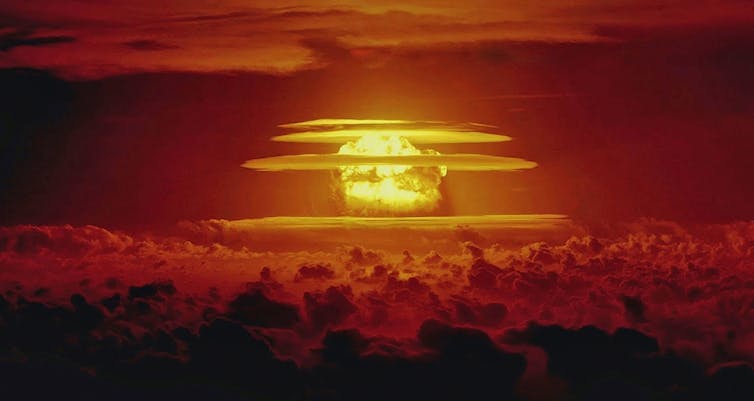
Many early tests caused serious environmental and societal damage. For example, the US’s 1954 Castle Bravo test, conducted in secret at Bikini Atoll in the Marshall Islands, delivered large volumes of radioactive fallout to several nearby islands and their inhabitants.

Between 1952 and 1957, the UK conducted several tests in Australia, scattering long-lived radioactive material over wide areas of South Australian bushland, with devastating consequences for local Indigenous communities.

In 1963, the US, the UK and the USSR agreed to carry out future tests underground to limit fallout. Nevertheless, testing continued unabated as China, India, Pakistan and North Korea also entered the fray over the following decades.

How to spot an atom bomb

During this period there were substantial international efforts to figure out how to monitor nuclear testing. The competitive nature of weapons development means much research and testing is conducted in secret.

Groups such as the Comprehensive Nuclear-Test-Ban Treaty Organization today run global networks of instruments specifically designed to identify any potential tests. These include:

  • air-testing stations to detect minute quantities of radioactive elements in the atmosphere
  • aquatic listening posts to hear underwater tests
  • infrasound detectors to catch the low-frequency booms and rumbles of explosions in the atmosphere
  • seismometers to record the shaking of Earth caused by underground tests.

A needle in a haystack

Seismometers are designed to measure seismic waves: tiny vibrations of the ground surface generated when large amounts of energy are suddenly released underground, such as during earthquakes or nuclear explosions.

There are two main kinds of seismic waves. First are body waves, which travel outwards in all directions, including down into the deep Earth, before returning to the surface. Second are surface waves, which travel along Earth’s surface like ripples spreading out on a pond.

The Comprehensive Test-Ban-Treaty Organization uses seismic stations to monitor the globe for underground nuclear explosions.

The difficulty in using seismic waves to monitor underground nuclear tests is distinguishing between explosions and naturally occurring earthquakes. A core goal of monitoring is never to miss an explosion, but there are thousands of sizeable natural quakes around the world every day.

As a result, monitoring underground tests is like searching for a potentially non-existent needle in a haystack the size of a planet.

Nukes vs quakes

Many different methods have been developed to aid this search over the past 60 years.

Some of the simplest include analysing the location or depth of the source. If an event occurs far from volcanoes and plate tectonic boundaries, it might be considered more suspicious. Alternatively, if it occurs at a depth greater than say three kilometres, it is unlikely to have been a nuclear test.

However, these simple methods are not foolproof. Tests might be carried out in earthquake-prone areas for camouflage, for example, and shallow earthquakes are also possible.

A more sophisticated monitoring approach involves calculating the ratio of the amount of the energy transmitted in body waves to the amount carried in surface waves. Earthquakes tend to expend more of their energy in surface waves than explosions do.

This method has proven highly effective for identifying underground nuclear tests, but it too is imperfect. It failed to effectively classify the 2017 North Korean nuclear test, which generated substantial surface waves because it was carried out inside a tunnel in a mountain.

This outcome underlines the importance of using multiple independent discrimination techniques during monitoring – no single method is likely to prove reliable for all events.

An alternative method

In 2023, my colleagues and I from the Australian National University and Los Alamos National Laboratory in the US got together to re-examine the problem of determining the source of seismic waves.

We used a recently developed approach to represent how rocks are displaced at the source of a seismic event, and combined it with a more advanced statistical model to describe different types of event. As a result, we were able to take advantage of fundamental differences between the sources of explosions and earthquakes to develop an improved method of classifying these events.

We tested our approach on catalogues of known explosions and earthquakes from the western United States, and found that the method gets it right around 99% of the time. This makes it a useful new tool in efforts to monitor underground nuclear tests.

Robust techniques for identification of nuclear tests will continue to be a key component of global monitoring programs. They are critical for ensuring governments are held accountable for the environmental and societal impacts of nuclear weapons testing.The Conversation

Mark Hoggard, DECRA Research Fellow, Australian National University

This article is republished from The Conversation under a Creative Commons license. Read the original article.

Read More........

Coronavirus can enter the brain through the nose: A study claimed


By : Sentinel Digital Desk | 2 Dec 2020 11:29 AM Berlin: A study conducted by researchers from Charite-Universitatsmedizin Berlin, Germany claimed that the novel coronavirus can enter people's brains through their nose. The study was published in the journal 'Nature Neuroscience'. And at this time, the importance of this study is believed to be huge as with the help of the findings of the study it will now be possible to find out why neurological symptoms are observed in patients during Covid-19 disease and how to treat them. Also Read - Indonesia: Thousands evacuated as volcano erupts According to the study published in the journal 'Nature Neuroscience', SARS-COV-2 affects not only the respiratory system but also the central nervous system (CNS) causing different neurological symptoms such as snoring, loss of taste recognition, headaches, fatigue, and dizziness, etc. The researchers at the University of Charite, Germany examined the nasopharynx -- the upper part of the throat that connects to the nasal cavity -- a likely first site of viral infection and replication, and the brains of 33 patients -- 22 males and 11 females -- who died with COVID-19. Also Read - PDM's fifth power show calls for Imran Khan's ouster Although the latest study has described the presence of viral Ribonucleic acid (RNA) and 'cerebrospinal fluid' in the brain. However, it is unclear where the virus enters and how it spreads. According to a media report, the researchers said, "The study included 33 patients who died of Covid-19. 11 of them were female and 22 were male. And the average age of those who died was 71.6 years. On the other hand, the average time from symptoms of Covid-19 to their death was 31 days." Also Read - Kazakhstan's bodybuilder Yuri Tolochko married his girlfriend, a sex doll They have found SARS-COV-2 RNA (the genetic material of the virus) and proteins in the brain and respiratory tract. they added. The highest levels of viral RNA were found in the olfactory mucous membrane. The olfactory mucosa is located in the upper region of the nasal cavity and is made up of the olfactory epithelium, they added. Source: https://www.sentinelassam.com
Read More........

Indonesia's Mount Sinabung erupts, spews ash 5,000 metres high into sky

JAKARTA: Mount Sinabung in Indonesia erupted on Monday morning spewing ash 5,000 metres high into the sky, according to news channels. The media reports quoted Indonesia's Volcanology and Geological Hazard Mitigation Center as confirming no casualties due to the eruption. In an earlier report, The Jakarta Post said the ash has destroyed the nearby plantations. Meanwhile, the villagers have been advised to stay 5 kilometres from the crater's mouth. The Jakarta Post reported that the officials of the disaster agency, along with local military and police personnel, had distributed 1,500 masks and assisted locals in cleaning the volcanic ash. The local fire department has despatched five trucks to help with the cleaning. The eruption had begun on Saturday after a year of inactivity. Last year the eruption had occurred on May 7 and then on June 9.  Copyright © Jammu Links News, ISource: Jammu Links News
Read More........

NASA reveals 4 new discovery missions


NASA announced four new possible discovery program investigations to develop concept studies on the solar system, according to a release of NASA’s Jet Propulsion Laboratory (JPL) on Thursday.

The space agency has given the green light to concept studies across Venus and the moons of Jupiter and Neptune for these Discovery Program investigations.

NASA’s Discovery Program invites scientists and engineers to assemble a team to design exciting planetary science missions, which will provide frequent flight opportunities for focused planetary science investigations, according to JPL.

“These selected missions have the potential to transform our understanding of some of the solar system’s most active and complex worlds,” said Thomas Zurbuchen, Associate Administrator of NASA’s Science Mission Directorate. “Exploring any one of these celestial bodies will help unlock the secrets of how it, and others like it, came to be in the cosmos.”

Two of the missions selected focus on Venus. DAVINCI+ (Deep Atmosphere Venus Investigation of Noble gases, Chemistry and Imaging Plus) would analyze the atmosphere of Venus to see how it was formed and evolved, and whether the planet ever had an ocean. VERITAS (Venus Emissivity, Radio Science, InSAR, Topography, and Spectroscopy) would map Venus’ surface to check out its geological history.

The other two missions are looking into celestial moons. Io Volcano Observer (IVO) would explore Jupiter’s volcanic moon Io, to learn about magma oceans and tidal forces. “Io is heated by the constant crush of Jupiter’s gravity and is the most volcanically active body in the solar system,” NASA said.

Lastly, the Trident mission would explore Neptune’s ice moon Triton, to see whether something so far from the sun could be inhabited.

The four nine-month studies will be given $3 million each by NASA to develop their concepts. NASA will evaluate each, and then choose two missions in 2021.

Established in 1992, NASA’s Discovery Program has so far supported the development and implementation of over 20 missions and instruments.


Read More........

Scientists Develop New Ways to Solve the Mysteries of Mars

Credit: ESA

Scientists hope to finally reveal how and why Mars has changed so dramatically through time, from an ancient world of rivers and oceans, to the dry and dusty planet that we see today.

Dr James Darling, at the University of Portsmouth, is leading a three-year study which aims to get to the bottom of what happened to Earth’s nearest neighbour, the so-called red planet.

He has been awarded £ 342,000 funding from the Science and Technology Facilities Council (STFC).

Dr Darling is an expert in isotope geochemistry in the University’s School of Earth and Environmental Sciences.

He said: “Without a robust timeline of the geological events on Mars, we can’t understand how or why it changed from an ancient world of rivers, oceans, volcanoes and meteorite impacts to the cold, dry planet that we see today.

“This project will help to reveal how the planet has evolved through new radiometric age dating of martian meteorites. Previously, this has been very difficult because these rocks have experienced extreme deformation during meteorite impact events, which can disturb the isotopic systems used for dating. We can now overcome this by identifying microscopic deformation features in crystals that can be avoided or targeted for radiometric dating using the latest techniques in mass spectrometry.

“I am excited to see where this will lead.”

The project begins in April, 2019.

Dr Darling will lead a multidisciplinary team of scientists, including partners from other leading universities in the UK, Canada and Germany, to test how the crust and mantle of Mars have evolved and influenced the surface and atmosphere.

The same questions are top of scientific wishlist of ongoing and new spacecraft missions, including NASA InSightand Mars 2020 Rover and the ESA ExoMars 2020 mission.

Astrophysicist Professor Bob Nichol, acting Pro-Vice Chancellor for Research and Innovation at the University of Portsmouth, said: “Congratulations to James in gaining such competitive funding. While the red planet is a bit close for my studies, I am fascinated by our quest for answers about life in the Universe which probably means locating water on other planets. Looking at what happened on Mars first makes total sense.”

Contacts and sources: University of Portsmouth, Source: https://www.ineffableisland.com/
Read More........

The five biggest threats to human existence


Anders Sandberg, University of Oxford: In the daily hubbub of current “crises” facing humanity, we forget about the many generations we hope are yet to come. Not those who will live 200 years from now, but 1,000 or 10,000 years from now. I use the word “hope” because we face risks, called existential risks, that threaten to wipe out humanity. These risks are not just for big disasters, but for the disasters that could end history.

Not everyone has ignored the long future though. Mystics like Nostradamus have regularly tried to calculate the end of the world. HG Wells tried to develop a science of forecasting and famously depicted the far future of humanity in his book The Time Machine. Other writers built other long-term futures to warn, amuse or speculate. 

But had these pioneers or futurologists not thought about humanity’s future, it would not have changed the outcome. There wasn’t much that human beings in their place could have done to save us from an existential crisis or even cause one.

We are in a more privileged position today. Human activity has been steadily shaping the future of our planet. And even though we are far from controlling natural disasters, we are developing technologies that may help mitigate, or at least, deal with them.

Future imperfect:

Yet, these risks remain understudied. There is a sense of powerlessness and fatalism about them. People have been talking apocalypses for millennia, but few have tried to prevent them. Humans are also bad at doing anything about problems that have not occurred yet (partially because of the availability heuristic – the tendency to overestimate the probability of events we know examples of, and underestimate events we cannot readily recall).

If humanity becomes extinct, at the very least the loss is equivalent to the loss of all living individuals and the frustration of their goals. But the loss would probably be far greater than that. Human extinction means the loss of meaning generated by past generations, the lives of all future generations (and there could be an astronomical number of future lives) and all the value they might have been able to create. If consciousness or intelligence are lost, it might mean that value itself becomes absent from the universe. This is a huge moral reason to work hard to prevent existential threats from becoming reality. And we must not fail even once in this pursuit.

With that in mind, I have selected what I consider the five biggest threats to humanity’s existence. But there are caveats that must be kept in mind, for this list is not final. 

Over the past century we have discovered or created new existential risks – supervolcanoes were discovered in the early 1970s, and before the Manhattan project nuclear war was impossible – so we should expect others to appear. Also, some risks that look serious today might disappear as we learn more. The probabilities also change over time – sometimes because we are concerned about the risks and fix them. 

Finally, just because something is possible and potentially hazardous, doesn’t mean it is worth worrying about. There are some risks we cannot do anything at all about, such as gamma ray bursts that result from the explosions of galaxies. But if we learn we can do something, the priorities change. For instance, with sanitation, vaccines and antibiotics, pestilence went from an act of God to bad public health.

1. Nuclear war:

While only two nuclear weapons have been used in war so far – at Hiroshima and Nagasaki in World War II – and nuclear stockpiles are down from their the peak they reached in the Cold War, it is a mistake to think that nuclear war is impossible. In fact, it might not be improbable. 

The Cuban Missile crisis was very close to turning nuclear. If we assume one such event every 69 years and a one in three chance that it might go all the way to being nuclear war, the chance of such a catastrophe increases to about one in 200 per year. 

Worse still, the Cuban Missile crisis was only the most well-known case. The history of Soviet-US nuclear deterrence is full of close calls and dangerous mistakes. The actual probability has changed depending on international tensions, but it seems implausible that the chances would be much lower than one in 1000 per year.

A full-scale nuclear war between major powers would kill hundreds of millions of people directly or through the near aftermath – an unimaginable disaster. But that is not enough to make it an existential risk. 

Similarly the hazards of fallout are often exaggerated – potentially deadly locally, but globally a relatively limited problem. Cobalt bombs were proposed as a hypothetical doomsday weapon that would kill everybody with fallout, but are in practice hard and expensive to build. And they are physically just barely possible. 

The real threat is nuclear winter – that is, soot lofted into the stratosphere causing a multi-year cooling and drying of the world. Modern climate simulations show that it could preclude agriculture across much of the world for years. If this scenario occurs billions would starve, leaving only scattered survivors that might be picked off by other threats such as disease. The main uncertainty is how the soot would behave: depending on the kind of soot the outcomes may be very different, and we currently have no good ways of estimating this. 

2. Bioengineered pandemic:

Natural pandemics have killed more people than wars. However, natural pandemics are unlikely to be existential threats: there are usually some people resistant to the pathogen, and the offspring of survivors would be more resistant. Evolution also does not favor parasites that wipe out their hosts, which is why syphilis went from a virulent killer to a chronic disease as it spread in Europe.

Unfortunately we can now make diseases nastier. One of the more famous examples is how the introduction of an extra gene in mousepox – the mouse version of smallpox – made it far more lethal and able to infect vaccinated individuals. Recent work on bird flu has demonstrated that the contagiousness of a disease can be deliberately boosted.

Right now the risk of somebody deliberately releasing something devastating is low. But as biotechnology gets better and cheaper, more groups will be able to make diseases worse.

Most work on bioweapons have been done by governments looking for something controllable, because wiping out humanity is not militarily useful. But there are always some people who might want to do things because they can. Others have higher purposes. For instance, the Aum Shinrikyo cult tried to hasten the apocalypse using bioweapons beside their more successful nerve gas attack. Some people think the Earth would be better off without humans, and so on. 

The number of fatalities from bioweapon and epidemic outbreaks attacks looks like it has a power-law distribution – most attacks have few victims, but a few kill many. Given current numbers the risk of a global pandemic from bioterrorism seems very small. But this is just bioterrorism: governments have killed far more people than terrorists with bioweapons (up to 400,000 may have died from the WWII Japanese biowar program). And as technology gets more powerful in the future nastier pathogens become easier to design.

3. Superintelligence:

Intelligence is very powerful. A tiny increment in problem-solving ability and group coordination is why we left the other apes in the dust. Now their continued existence depends on human decisions, not what they do. Being smart is a real advantage for people and organisations, so there is much effort in figuring out ways of improving our individual and collective intelligence: from cognition-enhancing drugs to artificial-intelligence software.

The problem is that intelligent entities are good at achieving their goals, but if the goals are badly set they can use their power to cleverly achieve disastrous ends. There is no reason to think that intelligence itself will make something behave nice and morally. In fact, it is possible to prove that certain types of superintelligent systems would not obey moral rules even if they were true.

Even more worrying is that in trying to explain things to an artificial intelligence we run into profound practical and philosophical problems. Human values are diffuse, complex things that we are not good at expressing, and even if we could do that we might not understand all the implications of what we wish for. 

Software-based intelligence may very quickly go from below human to frighteningly powerful. The reason is that it may scale in different ways from biological intelligence: it can run faster on faster computers, parts can be distributed on more computers, different versions tested and updated on the fly, new algorithms incorporated that give a jump in performance. 

It has been proposed that an “intelligence explosion” is possible when software becomes good enough at making better software. Should such a jump occur there would be a large difference in potential power between the smart system (or the people telling it what to do) and the rest of the world. This has clear potential for disaster if the goals are badly set. 

The unusual thing about superintelligence is that we do not know if rapid and powerful intelligence explosions are possible: maybe our current civilisation as a whole is improving itself at the fastest possible rate. But there are good reasons to think that some technologies may speed things up far faster than current societies can handle. Similarly we do not have a good grip on just how dangerous different forms of superintelligence would be, or what mitigation strategies would actually work. It is very hard to reason about future technology we do not yet have, or intelligences greater than ourselves. Of the risks on this list, this is the one most likely to either be massive or just a mirage.

This is a surprisingly under-researched area. Even in the 50s and 60s when people were extremely confident that superintelligence could be achieved “within a generation”, they did not look much into safety issues. Maybe they did not take their predictions seriously, but more likely is that they just saw it as a remote future problem. 

4. Nanotechnology:

Nanotechnology is the control over matter with atomic or molecular precision. That is in itself not dangerous – instead, it would be very good news for most applications. The problem is that, like biotechnology, increasing power also increases the potential for abuses that are hard to defend against.

The big problem is not the infamous “grey goo” of self-replicating nanomachines eating everything. That would require clever design for this very purpose. It is tough to make a machine replicate: biology is much better at it, by default. Maybe some maniac would eventually succeed, but there are plenty of more low-hanging fruits on the destructive technology tree. 

The most obvious risk is that atomically precise manufacturing looks ideal for rapid, cheap manufacturing of things like weapons. In a world where any government could “print” large amounts of autonomous or semi-autonomous weapons (including facilities to make even more) arms races could become very fast – and hence unstable, since doing a first strike before the enemy gets a too large advantage might be tempting. 

Weapons can also be small, precision things: a “smart poison” that acts like a nerve gas but seeks out victims, or ubiquitous “gnatbot” surveillance systems for keeping populations obedient seems entirely possible. Also, there might be ways of getting nuclear proliferation and climate engineering into the hands of anybody who wants it.

We cannot judge the likelihood of existential risk from future nanotechnology, but it looks like it could be potentially disruptive just because it can give us whatever we wish for.

5. Unknown unknowns:

The most unsettling possibility is that there is something out there that is very deadly, and we have no clue about it.

The silence in the sky might be evidence for this. Is the absence of aliens due to that life or intelligence is extremely rare, or that intelligent life tends to get wiped out? If there is a future Great Filter, it must have been noticed by other civilisations too, and even that didn’t help. 

Whatever the threat is, it would have to be something that is nearly unavoidable even when you know it is there, no matter who and what you are. We do not know about any such threats (none of the others on this list work like this), but they might exist.

Note that just because something is unknown it doesn’t mean we cannot reason about it. In a remarkable paper Max Tegmark and Nick Bostrom show that a certain set of risks must be less than one chance in a billion per year, based on the relative age of Earth. 

You might wonder why climate change or meteor impacts have been left off this list. Climate change, no matter how scary, is unlikely to make the entire planet uninhabitable (but it could compound other threats if our defences to it break down). Meteors could certainly wipe us out, but we would have to be very unlucky. The average mammalian species survives for about a million years. Hence, the background natural extinction rate is roughly one in a million per year. This is much lower than the nuclear-war risk, which after 70 years is still the biggest threat to our continued existence.

The availability heuristic makes us overestimate risks that are often in the media, and discount unprecedented risks. If we want to be around in a million years we need to correct that.

Anders Sandberg, James Martin Research Fellow, University of Oxford

This article was originally published on The Conversation. Read the original article.
The Conversation
Read More........

Volcanoes sparked 'Jurassic ice age'

Washington DC
Around 170 million years ago, our world faced an ice-age and now, the scientists are trying to explore the causes behind it. The international team of experts, including researchers from the Camborne School of Mines, has found evidence of a large and abrupt cooling of the Earth's temperature during the Jurassic Period, which lasted millions of years. The scientists found that the cooling coincided with a large-scale volcanic event, called the North Sea Dome, which restricted the flow of ocean water and the associated heat that it carried from the equator towards the North Pole region. The team suggest that it is this volcanic event, preventing the ocean flow, rather than a change in CO2 in the atmosphere (which causes today's climate change), that led to an extended Ice age in a period more synonymous with very warm conditions. Geology expert Stephen Hesselbo said that they tend to think of the Jurassic as a warm 'greenhouse' world where high temperatures were governed by high atmospheric carbon dioxide contents, adding that this study suggests that re-organization of oceanic current patterns may also have triggered large scale climate changes. Hesselbo further noted that though the occurrence of cold periods during greenhouse times have been known for a while, their origins have remained mysterious. This work suggests a mechanism at play that may also have been important for driving other climate change events in the Jurassic and at other times in Earth history. The research appears in Nature Communications. —ANI. Source: http://www.tribuneindia.com/
Read More........

Volcanic Rocks Hold Clues To Earth's Interior


Credit: NASA/Jeff Schmaltz/LANCE/EOSDIS MODIS Rapid Response Team/GSFC
The journey for volcanic rocks found on many volcanic islands began deep within the Earth. Brought to the Earth's surface in eruptions of deep volcanic material, these rocks hold clues as to what is going on deep beneath Earth's surface. Studies of rocks found on certain volcanic islands, known as ocean island basalts, revealed that although these erupted rocks originate from Earth's interior, they are not the same chemically. A group of former and current Arizona State University researchers say chemical differences found between rocks samples at volcanic hotspots around the world can be explained by a model of mantle dynamics that involves plumes, upwellings of abnormally hot rock within the Earth's mantle, that originate in the lower mantle and physically interact with chemically distinct piles of material. According to a group of current and former researchers at Arizona State University, the key to unlocking this complex, geochemical puzzle rests in a model of mantle dynamics consisting of plumes - upwelling's of abnormally hot rock within the Earth's mantle - that originate in the lower mantle and physically interact with chemically distinct piles of material. The team revealed that this theoretical model of material transport can easily produce the chemical variability observed at hotspot volcanoes (such as Hawaii) around the world. "This model provides a platform for understanding links between the physics and chemistry that formed our modern world as well as habitable planets elsewhere," says Curtis Williams, lead author of the study whose results are published in the Nov. 24 issue of the journalNature Communications. Basalts collected from ocean islands such as Hawaii and those collected from mid-ocean ridges (that erupt at spreading centers deep below oceans) may look similar to the naked eye; however, in detail their trace elements and isotopic compositions can be quite distinct. These differences provide valuable insight into the chemical structure and temporal evolution of Earth's interior. "In particular, it means that the Earth's mantle - the hot rock below Earth's crust but above the planet's iron core - is compositionally heterogeneous. Understanding when and where these heterogeneities are formed and how they are transported through the mantle directly relates to the initial composition of the Earth and how it has evolved to its current, habitable state," said Williams, a postdoc at UC Davis. While a graduate student in ASU's School of Earth and Space Exploration, Williams and faculty members Allen McNamara and Ed Garnero conceived a study to further understand how chemical complexities that exist deep inside the Earth are transported to the surface and erupt as intraplate volcanism (such as that which formed the Hawaiian islands). Along with fellow graduate student Mingming Li and Professional Research Associate Matthijs van Soest, the researchers depict a model Earth, where in its interior resides distinct reservoirs of mantle material that may have formed during the earliest stages of Earth's evolution. Employing such reservoirs into their models is supported by geophysical observations of two, continent-sized regions - one below the Pacific Ocean and one below parts of the Atlantic Ocean and Africa - sitting atop the core-mantle boundary. "In the last several years, we have witnessed a sharpening of the focus knob on seismic imaging of Earth's deep interior. We have learned that the two large anomalous structures at the base of the mantle behave as if they are compositionally distinct. That is, we are talking about different stuff compared to the surrounding mantle. These represent the largest internal anomalies in Earth of unknown chemistry and origin," said Garnero. These chemically distinct regions also underlie a majority of hotspot volcanism, via hot mantle plumes from the top of the piles to Earth's surface, suggesting a potential link between these ancient, chemically distinct regions and the chemistry of hotspot volcanism. To test the validity of their model, Williams and coauthors compare their predictions of the variability of the ratios of helium isotopes (helium-3 and helium-4) in plumes to that observed in ocean island basalts. 3He is a so-called primordial isotope found in the Earth's mantle. It was created before the Earth was formed and is thought to have become entrapped within the Earth during planetary formation. Today, it is not being added to Earth's inventory at a significant rate, unlike 4He, which accumulates over time. Williams explained: "The ratio of helium-3 to helium-4 in mid-ocean ridge basalts are globally characterized by a narrow range of small values and are thought to sample a relatively homogenous upper mantle. On the other hand, ocean island basalts display a much wider range, from small to very large, providing evidence that they are derived from different source regions and are thought to sample the lower mantle either partially or in its entirety." The variability of 3He to 4He in ocean island basalts is not only observed between different hotspots, but temporally within the different-aged lavas of a single hotspot track. "The reservoirs and dynamics associated with this variability had remained unclear and was the primary motivation behind the study presented here," said Williams. Contacts and sources: Karin Valentine, Arizona State University, Source: Article
Read More........

New Species Of Horse, 4.4 Million Years Old

Ardipithecus ramidus, commonly called Ardi.
Two teams of researchers, including a scientist from Case Western Reserve University, have announced the discovery of a new species of fossil horse from 4.4 million-year-old fossil-rich deposits in Ethiopia. About the size of a small zebra, Eurygnathohippus woldegabrieli—named for geologist Giday WoldeGabriel, who earned his PhD at Case Western Reserve in 1987—had three-toed hooves and grazed the grasslands and shrubby woods in the Afar Region, the scientists say. They report their findings in the November issue of Journal of Vertebrate Paleontology. The horse fills a gap in the evolutionary history of horses but is also important for documenting how old a fossil locality is and in reconstructing habitats of human forebears of the time, said Scott Simpson, professor of anatomy at Case Western Reserve's School of Medicine, and coauthor of the research. "This horse is one piece of a very complex puzzle that
Modern Zebra
has many, many pieces."The researchers found the first E. woldegabrieli teeth and bones in 2001, in the Gona area of the Afar Region. This fossil horse was among the diverse array of animals that lived in the same areas as the ancient human ancestor Ardipithecus ramidus, commonly called Ardi. "The fossil search team spreads out to survey for fossils in the now arid badlands of the Ethiopian desert.," Simpson said. "Among the many fossils we found are the two ends of the foreleg bone—the canon—brilliant white and well preserved in the red-tinted earth." A year later, they returned and found part of the connecting shaft, which was split lengthwise but provided the crucial full length of the bone. The long slender bone indicates this ancient species was an adept runner, similar to modern zebras, and analyses of their teeth indicated they relied heavily on eating grasses in the grassy woodland environment. The horse had longer legs than ancestral horses that lived and fed in forests about 6 million to 10 million years ago, Simpson said. The change helped the more recent horses cover long distances as they grazed and flee lions, sabre-tooth cats and hunting hyenas that would run down their prey. The other fossils they found included teeth, which are taller than their ancestors' and with crowns worn flatter—more signs the horses had adapted to a grazing life. Analyses of the isotopic composition of the enamel confirmed that E. woldegabrieli subsisted on grass. "Grasses are like sandpaper," Simpson said. "They wear the teeth down and leave a characteristic signature of pits and scratches on the teeth so we can reliably reconstruct their ancient diets." Horse expert Raymond L. Bernor, from the Laboratory of Evolutionary Biology at the Howard University College of Medicine in Washington D.C., led the fossil analysis. The bones, which remain at the National Museum of Ethiopia in Addis Ababa, Ethiopia, showed this was a significantly different animal than the horses more than 5 million years old, and those 3.5 million years old and younger. Members of the youngest group are taller and have longer noses, further adaptations to the open grasslands, the researchers say. Members of the two paleontological projects decided to name the species in honor of WoldeGabriel, a geologist at Los Alamos National Laboratory. They want to recognize the high professional regard he's earned from peers and his many contributions in unraveling the geological complexities of the deposits in the Ethiopian Rift system where fossils of some of our oldest human ancestors have been found WoldeGabriel, who was not involved in the analysis of the fossil horse, is the project geologist for the Middle Awash project in Ethiopia. "Giday oversees the sedimentology, geochronology and volcanology and how the Middle Awash Valley in the Afar rift is changing shape," Simpson said. He praised WoldeGabriel as a top scientist who helps fellow researchers navigate the rugged region and government offices. "And he leads by example, in terms of working hard," Simpson continued. "He's not afraid of a very long walk in the heat, carrying a 5-pound hammer to collect samples." Simpson is the project paleontologist for the Gona Project led by Sileshi Semaw. Henry Gilbert, of the Department of Anthoropolgy at California State University, East Bay; Gina M. Semprebon, a Bay Path College biology professor; and Semaw, now a research associate at Centro Nacional de Investigación sobre la Evolución Humana, Spain; are co-authors of the study. The team continues to analyze fossil remains they collected at this and nearby sites. Contacts and sources: Kevin Mayhood Case Western Reserve UniversitySource: Article
Read More........

Next Yellowstone Caldera Super Eruption Predicted By Scientists

A thorough examination of tiny crystals of zircon, a mineral found in rhyolites, an igneous rock, from the Snake River Plain has solidified evidence for a new way of looking at the life cycle of super-volcanic eruptions in the long track of the Yellowstone hotspot, say University of Oregon scientists. The pattern emerging from new and previous research completed in the last five years under a National Science Foundation career award, said UO geologist Ilya N. Bindeman, is that another super-eruption from the still-alive Yellowstone volcanic field is less likely for the next few million years than previously thought (see related story, "Not in a million years, says Oregon geologist about Yellowstone eruption"). The last eruption 640,000 years ago created the Yellowstone Caldera and the Lava Creek Tuff in what is now Yellowstone National Park. University of Oregon geologist Ilya Bindeman, left, and graduate student Dana Drew, working in Bindeman's stable isotope laboratory say that the composition of zircon bits in igneous rocks in the Yellowstone hotspot track tell a new story on how super volcanoes recycle magma.
Credit: University of Oregon
The Yellowstone hotspot creates a conveyor belt style of volcanism because of the southwest migration of the North American plate at 2-4 centimeters (about .8 to 1.6 inches) annually over the last 16 million years of volcanism. Due to the movement of the North American plate, the plume interaction with the crust leaves footprints in the form of caldera clusters, in what is now the Snake River Plain, Bindeman
said. The Picabo volcanic field of southern Idaho, described in a new paper by a six-member team, was active between 10.4 and 6.6 million years ago and experienced at least three, and maybe as many as six, violent caldera-forming eruptions. The field has been difficult to assess, said lead author Dana Drew, a UO graduate student, because the calderas have been buried by as much as two kilometers of basalt since its eruption cycle died. The work at Picabo is detailed in a paper online ahead of publication in the journal Earth and Planetary Science Letters. The team theorized that basalt from the mantle plume, rocks from Earth's crust and previously erupted volcanoes are melted together to form the rhyolites erupted in the Snake River Plain. Before each eruption, rhyolite magma is stored in dispersed pockets throughout the upper crust, which are later mixed together, according to geochemical evidence. "We think that this batch-assembly process is an important part of caldera-forming eruptions, and generating rhyolites in general," Drew said. In reaching their conclusions, Drew and colleagues analyzed radiogenic and stable isotopic data -- specifically oxygen and hafnium -- in zircons detected in rhyolites found at the margins of the Picabo field and from a deep borehole. That data, in combination with whole rock geochemistry and zircon uranium-lead geochronology helped provide a framework to understand the region's ancient volcanic past. Previous research on the related Heise volcanic field east of Picabo yielded similar results. "There is a growing database of the geochemistry of rhyolites in the Yellowstone hotspot track," Drew said. "Adding Picabo provides a missing link in the database. Path of the Yellowstone hot spot over the past
16 million years Drew and colleagues, through their oxygen isotope analyses, identified a wide diversity of oxygen ratios occurring in erupted zircons near the end of the Picabo volcanic cycle. Such oxygen ratios are referred to as delta-O-18 signatures based on oxygen 18 levels relative to seawater. (Oxygen 18 contains eight protons and 10 neutrons; Oxygen 16, with eight protons and eight neutrons, is the most commonly found form of oxygen in nature) The approach provided a glimpse into the connection of surface and subsurface processes at a caldera cluster. The interaction of erupted rhyolite with groundwater and surface water causes hydrothermal alteration and the change in oxygen isotopes, thereby providing a
Rhyolite
fingerprinting tool for the level of hydrothermal alteration, Drew said. "Through the eruptive sequence, we begin to generate lower delta-O-18 signatures of the magmas and, with that, we also see a more diverse signature," Drew said. "By the time of the final eruption there is up to five per mil diversity in the signature recorded in the zircons." The team attributes these signatures to the mixing of diverse magma batches dispersed in the upper crust, which were formed by melting variably hydrothermally altered rocks -- thus diverse delta-O-18 -- after repeated formation of calderas and regional extension or stretching of the crust. When the pockets of melt are rapidly assembled, the process could be the trigger for caldera forming eruptions, Bindeman said. "That leads to a homogenized magma, but in a way that preserves these zircons of different signatures from the individual pockets of melt," he said. This research, he added, highlights the importance of using new micro-analytical isotopic techniques to relate geochemistry at the crystal-scale to processes occurring at the crustal-wide scale in generating and predicting large-volume rhyolitic eruptions. "This important research by Dr. Bindeman and his team demonstrates the enormous impact an NSF CAREER award can have," said Kimberly Andrews Espy, vice president for research and innovation and dean of the graduate school at the University of Oregon. "The five-year project is providing new insights into the eruption cycles of the Yellowstone hotspot and helping scientists to better predict future volcanic activity." Contacts and sources: Jim BarlowUniversity of OregonSource: Nano Patents And Innovations
Read More........

Mars mysterious dark regions dominantly composed of glass

mars
Image Link Flickr
Indian Express, Agencies : Washington, The surface of Mars comprised a number of lava flows and other signs of effusive volcanism. Although models suggest that explosive volcanism should also have produced extensive deposits, direct evidence for large-scale explosive volcanism on Mars has been scarce. A new
Read More........

How Scientists Search For Habitable Planets

Image credit: NASA/JPL-Caltech/Ames
There is only one planet we know of, so far, that is drenched with life. That planet is Earth, as you may have guessed, and it has all the right conditions for critters to thrive on its surface. Do other planets beyond our solar system, called exoplanets, also host life forms? This artist's concept shows a Super Venus planet on the left, and a Super Earth on the right. Astronomers still don't know the answer, but they search for potentially habitable planets using a handful of criteria. Ideally, they want to find planets just like Earth, since we know without a doubt that life took root here. The hunt is on for planets about the size of Earth that orbit at just the right distance from their star – in a region termed the habitable zone. NASA's Kepler mission is helping scientists in the quest to find these worlds, sometimes called Goldilocks planets after the fairy tale because they orbit where conditions are "just right" for life. Kepler and other telescopes have confirmed a handful so far, all of which are a bit larger than Earth -- the Super Earths. The search for Earth's twin, a habitable-zone planet as small as Earth, is ongoing. An important part of this research is the continuing investigation into exactly where a star's habitable zone starts and stops. The habitable zone is the belt around a star where temperatures are ideal for liquid water -- an essential ingredient for life as we know it -- to pool on a planet's surface. Earth lies within the habitable zone of our star, the sun. Beyond this zone, a planet would probably be too cold and frozen for life (though it's possible life could be buried underneath a moon's surface). A planet lying between a star and the habitable zone would likely be too hot and steamy. That perfect Goldilocks planet within the zone wouldn't necessarily be home to any furry creatures. But it would have the potential for some type of life to abound, if even microbes. In one new study, researchers based at NASA's Exoplanet Science Institute at the California Institute of Technology, in Pasadena, Calif., carefully analyzed the location of both a planet called Kepler-69c and its habitable zone. Their analysis shows that this planet, which is 1.7 times the size of Earth, lies just outside the inner edge of the zone, making it more of a Super Venus than a Super Earth, as previous estimates indicated. "On the way to finding Earths, Kepler is telling us a lot about the frequency of Venus-like planets in our galaxy," said Stephen Kane, lead author of the new paper on Kepler-69c appearing in the Astrophysical Journal Letters. To determine the location of a star’s habitable zone, one must first learn how much total radiation it emits. Stars more massive than our sun are hotter, and blaze with radiation, so their habitable zones are farther out. Similarly, stars that are smaller and cooler sport tighter belts of habitability than our sun. For example, the Super Earth planet called Kepler-62f, discovered by Kepler to orbit in the middle of a habitable zone around a cool star, orbits closer to its star than Earth. The planet takes just 267 days to complete an orbit, as compared to 365 days for Earth. Knowing precisely how far away a habitable zone needs to be from a star also depends on chemistry. For example, molecules in a planet's atmosphere will absorb a certain amount of energy from starlight and radiate the rest back out. How much of this energy is trapped can mean the difference between a turquoise sea and erupting volcanoes. Researchers led by Ravi kumar Kopparapu of Penn State University, University Park, Pa., used this type of chemical information to nudge the habitable zone out a bit farther than previously thought. The team's 2013 Astrophysical Journal study is the current gold standard in determining how a star's total radiation output relates to the location of its habitable zone. Kane and his colleagues used this information to fine-tune the boundaries of Kepler-69c's habitable zone, in addition to careful measurements of the star's total energy output and the orbit of the planet. "Understanding the properties of the star is critical to determining planetary properties and calculating the extent of the habitable zone in that system," said Kane. But before you purchase real estate in a habitable zone, keep in mind there are other factors that dictate whether a world develops lush greenery and beaches. Eruptions from the surfaces of stars called flares, for example, can wreak havoc on planets. "There are a lot of unanswered questions about habitability," said Lucianne Walkowicz, a Kepler science team member based at Princeton University, N.J., who studies flaring stars. "If the planet gets zapped with radiation all the time by flares from its parent star, the surface might not be a very pleasant place to live. But on the other hand, if there's liquid water around, that makes a really good shield from high-energy radiation, so maybe life could thrive in the oceans." Flares can also scrape off the atmospheres of planets, complicating the picture further. This is particularly true for the smaller, cooler stars, which tend to be more hyperactive than stars like our sun. Ideally, astronomers would like to know more about the atmosphere of potentially habitable planets. That way they could look at the planet's molecular makeup for signs of runaway greenhouse gases that could indicate an inhospitable Venus-like planet. Or, future space telescopes might even be able to pick up signatures of oxygen, water, carbon dioxide and methane -- indicators that the planet might be somebody's home. NASA's upcoming James Webb Space Telescope will bring us closer to this goal, by probing the atmospheres of planets, some of which may lie in habitable zones. The mission won't be able to examine the atmospheres of planets as small as Earth, so we'll have to wait for another future telescope to separate out the Venuses from the Earths. NASA Ames manages Kepler's ground system development, mission operations and science data analysis. NASA's Jet Propulsion Laboratory in Pasadena, Calif., managed Kepler mission development. Ball Aerospace & Technologies Corp. in Boulder, Colo., developed the Kepler flight system and supports mission operations with JPL at the Laboratory for Atmospheric and Space Physics at the University of Colorado in Boulder. The Space Telescope Science Institute in Baltimore archives, hosts and distributes the Kepler science data. Kepler is NASA's 10th Discovery Mission and is funded by NASA's Science Mission Directorate at the agency's headquarters in Washington. More information about the Kepler mission is at http://www.nasa.gov/kepler . More information about exoplanets and NASA's planet-finding program is athttp://planetquest.jpl.nasa.gov . Contacts and sources: Whitney Clavin, Jet Propulsion Laboratory- Michele Johnson, Ames Research Center, Source: Nano Patents And Innovations
Read More........

New images from Mars Express spacecraft

Recent images from the European Space Agency`s Mars Express spacecraft have revealed long rows of craterlike depressions lining the flanks of ancient Martian volcanoes in the planet`s vast Tharsis region. Experts believe that these ‘pit chains’ were likely caused by underground lava flows which, they say, could be prime places to look for life. Universe Today, Tags: Mars, World, European Space Agency, News, space, Sci-Tech, Читать далее, Source: Voice of Russia
Read More........

Scientists Announce Top 10 New Species

Credit: Composite: Jacob Sahertian
An amazing glow-in-the-dark cockroach, a harp-shaped carnivorous sponge and the smallest vertebrate on Earth are just three of the newly discovered top 10 species selected by the International Institute for Species Exploration at Arizona State University. A global committee of taxonomists — scientists responsible for species exploration and classification — announced its list of top 10 species from 2012 today, May 23. The announcement, now in its sixth year, coincides with the anniversary of the birth of Carolus Linnaeus — the 18th century Swedish botanist responsible for the modern system of scientific names and classifications. The top 10 new species list was announced May 23 by the International Institute for Species Exploration at Arizona State University. The 2013 list includes an amazing glow-in-the-dark cockroach, a harp-shaped carnivorous sponge, and the smallest vertebrate on Earth -- a tiny frog. It also includes a snail-eating false coral snake, flowering bushes, a green lacewing, a hangingfly fossil, a monkey with a blue-colored behind and human-like eyes, a tiny violet and a black staining fungus. Also slithering it way onto this year's top 10 is a snail-eating false coral snake, as well as flowering bushes from a disappearing forest in Madagascar, a green lacewing that was discovered through social media and hangingflies that perfectly mimicked ginkgo tree leaves 165 million years ago. Rounding out the list is a new monkey with a blue-colored behind and human-like eyes, a tiny violet and a black staining fungus that threatens rare Paleolithic cave paintings in France. "We have identified only about two million of an estimated 10 to 12 million living species and that does not count most of the microbial world," said Quentin Wheeler, founding director of the International Institute for Species Exploration at ASU and author of "What on Earth? 100 of our Planet's Most Amazing New Species" (NY, Plume, 2013). "For decades, we have averaged 18,000 species discoveries per year which seemed reasonable before the biodiversity crisis. Now, knowing that millions of species may not survive the 21st century, it is time to pick up the pace," Wheeler added. "We are calling for a NASA-like mission to discover 10 million species in the next 50 years. This would lead to discovering countless options for a more sustainable future while securing evidence of the origins of the biosphere," Wheeler said. Taxon experts pick top 10: Members of the international committee made their top 10 selection from more than 140 nominated species. To be considered, species must have been described in compliance with the appropriate code of nomenclature, whether botanical, zoological or microbiological, and have been officially named during 2012.  "Selecting the final list of new species from a wide representation of life forms such as bacteria, fungi, plants and animals, is difficult. It requires finding an equilibrium between certain criteria and the special insights revealed by selection committee members," said Antonio Valdecasas, a biologist and research zoologist with Museo Nacional de Ciencias Naturales in Madrid, Spain. Valdecasas is the international selection committee chairman for the top 10 new species. "We look for organisms with unexpected features or size and those found in rare or difficult to reach habitats. We also look for organisms that are especially significant to humans — those that play a certain role in human habitat or that are considered a close relative," Valdecasas added. This year's top 10 come from Peru; NE Pacific Ocean, USA: California; Democratic Republic of the Congo; Panama; France; New Guinea; Madagascar; Ecuador; Malaysia; and China. Top 10 New Species, 2013, "I don't know whether to be more astounded by the species discovered each year, or the depths of our ignorance about biodiversity of which we are a part," shared Wheeler. "At the same time we search the heavens for other earthlike planets, we should make it a high priority to explore the biodiversity on the most earthlike planet of them all: Earth," he added. "With more than eight out of every 10 living species awaiting discovery, I am shocked by our ignorance of our very own planet and in awe at the diversity, beauty and complexity of the biosphere and its inhabitants."
Describing the discoveries
Lilliputian Violet 
Viola lilliputana 
Country: Peru
Tiny violet: Not only is the Lilliputian violet among the smallest violets in the world, it is also one of the most diminutive terrestrial dicots. Known only from a single locality in an Intermontane Plateau of the high Andes of Peru, Viola lilliputana lives in the dry puna grassland eco-region. Specimens were first collected in the 1960s, but the species was not described as a new until 2012. The entire above ground portion of the plant is barely 1 centimeter tall. Named, obviously, for the race of little people on the island of Lilliput in Jonathan Swift's Gulliver's Travels.
Lyre Sponge 
Chondrocladia lyra 
Country: NE Pacific Ocean; USA: California
Carnivorous sponge: A spectacular, large, harp- or lyre-shaped carnivorous sponge discovered in deep water (averaging 3,399 meters) from the northeast Pacific Ocean off the coast of California. The harp-shaped structures or vanes number from two to six and each has more than 20 parallel vertical branches, often capped by an expanded, balloon-like, terminal ball. This unusual form maximizes the surface area of the sponge for contact and capture of planktonic prey.
Lesula Monkey 
Cercopithecus lomamiensis 
Country: Democratic Republic of the Congo
Old World monkey: Discovered in the Lomami Basin of the Democratic Republic of the Congo, the lesula is an Old World monkey well known to locals but newly known to science. This is only the second species of monkey discovered in Africa in the past 28 years. Scientists first saw the monkey as a captive juvenile in 2007. Researchers describe the shy lesula as having human-like eyes. More easily heard than seen, the monkeys perform a booming dawn chorus. Adult males have a large, bare patch of skin on the buttocks, testicles and perineum that is colored a brilliant blue. Although the forests where the monkeys live are remote, the species is hunted for bush meat and its status is vulnerable.
No to the Mine! Snake 
Sibon noalamina 
Country: Panama
Snail-eating snake: A beautiful new species of snail-eating snake has been discovered in the highland rainforests of western Panama. The snake is nocturnal and hunts soft-bodied prey including earthworms and amphibian eggs, in addition to snails and slugs. This harmless snake defends itself by mimicking the alternating dark and light rings of venomous coral snakes. The species is found in the Serranía de Tabasará mountain range where ore mining is degrading and diminishing its habitat. The species name is derived from the Spanish phrase "No a la mina" or "No to the mine."
A Smudge on Paleolithic Art 
Ochroconis anomala 
Country: France
Fungus: In 2001, black stains began to appear on the walls of Lascaux Cave in France. By 2007, the stains were so prevalent they became a major concern for the conservation of precious rock art at the site that dates back to the Upper Paleolithic. An outbreak of a white fungus, Fusarium solani, had been successfully treated when just a few months later, black staining fungi appeared. The genus primarily includes fungi that occur in the soil and are associated with the decomposition of plant matter. As far as scientists know, this fungus, one of two new species of the genus from Lascaux, is harmless. However, at least one species of the group, O. gallopava, causes disease in humans who have compromised immune systems.
World's Smallest Vertebrate 
Paedophryne amanuensis 
Country: New Guinea
Tiny frog: Living vertebrates — animals that have a backbone or spinal column — range in size from this tiny new species of frog, as small as 7 millimeters, to the blue whale, measuring 25.8 meters. The new frog was discovered near Amau village in Papua, New Guinea. It captures the title of 'smallest living vertebrate' from a tiny Southeast Asian cyprinid fish that claimed the record in 2006. The adult frog size, determined by averaging the lengths of both males and females, is only 7.7 millimeters. With few exceptions, this and other ultra-small frogs are associated with moist leaf litter in tropical wet forests — suggesting a unique ecological guild that could not exist under drier circumstances.
Endangered Forest 
Eugenia petrikensis 
Country: Madagascar
Endangered shrub: Eugenia is a large, worldwide genus of woody evergreen trees and shrubs of the myrtle family that is particularly diverse in South America, New Caledonia and Madagascar. The new species E. petrikensis is a shrub growing to two meters with emerald green, slightly glossy foliage and beautiful, dense clusters of small magenta flowers. It is one of seven new species described from the littoral forest of eastern Madagascar and is considered to be an endangered species. It is the latest evidence of the unique and numerous species found in this specialized, humid forest that grows on sandy substrate within kilometers of the shoreline. Once forming a continuous band 1,600 kilometers long, the littoral forest has been reduced to isolated, vestigial fragments under pressure from human populations.
Lightning Roaches? 
Lucihormetica luckae 
Country: Ecuador
Glow-in-the-dark cockroach: Luminescence among terrestrial animals is rather rare and best known among several groups of beetles — fireflies and certain click beetles in particular — as well as cave-inhabiting fungus gnats. Since the first discovery of a luminescent cockroach in 1999, more than a dozen species have (pardon the pun) "come to light." All are rare, and interestingly, so far found only in remote areas far from light pollution. The latest addition to this growing list is L. luckae that may be endangered or possibly already extinct. This cockroach is known from a single specimen collected 70 years ago from an area heavily impacted by the eruption of the Tungurahua volcano. The species may be most remarkable because the size and placement of its lamps suggest that it is using light to mimic toxic luminescent click beetles.
No Social Butterfly 
Semachrysa jade 
Country: Malaysia
Social media lacewing: In a trend-setting collision of science and social media, Hock Ping Guek photographed a beautiful green lacewing with dark markings at the base of its wings in a park near Kuala Lumpur and shared his photo on Flickr. Shaun Winterton, an entomologist with the California Department of Food and Agriculture, serendipitously saw the image and recognized the insect as unusual. When Guek was able to collect a specimen, it was sent to Stephen Brooks at London's Natural History Museum who confirmed its new species status. The three joined forces and prepared a description using Google Docs. In this triumph for citizen science, talents from around the globe collaborated by using new media in making the discovery. The lacewing is not named for its color — rather for Winterton's daughter, Jade.
Hanging Around in the Jurassic 
Juracimbrophlebia ginkgofolia 
Country: China
Hangingfly fossil: Living species of hangingflies can be found, as the name suggests, hanging beneath foliage where they capture other insects as food. They are a lineage of scorpionflies characterized by their skinny bodies, two pairs of narrow wings, and long threadlike legs. A new fossil species, Juracimbrophlebia ginkgofolia, has been found along with preserved leaves of a gingko-like tree, Yimaia capituliformis, in Middle Jurassic deposits in the Jiulongshan Formation in China's Inner Mongolia. The two look so similar that they are easily confused in the field and represent a rare example of an insect mimicking a gymnosperm 165 million years ago, before an explosive radiation of flowering plants. Why create a top 10 new species list? Arizona State University's International Institute for Species Exploration announces the top 10 new species list each year as part of its public awareness campaign to bring attention to biodiversity and the field of taxonomy. "Sustainable biodiversity means assuring the survival of as many and as diverse species as possible so that ecosystems are resilient to whatever stresses they face in the future. Scientists will need access to as much evidence of evolutionary history as possible," said the institute's Wheeler, who is also a professor in ASU's School of Life Sciences in the College of Liberal Arts and Sciences, and in the School of Sustainability, as well as a senior sustainability scientist with the Global Institute of Sustainability. "All of our hopes and dreams for conservation hinge upon saving millions of species that we cannot recognize and know nothing about," Wheeler added. "No investment makes more sense than completing a simple inventory to the establish baseline data that tells us what kinds of plants and animals exist and where. Until we know what species already exist, it is folly to expect we will make the right decisions to assure the best possible outcome for the pending biodiversity crisis." Additionally, the announcement is made on or near May 23 to honor Linnaeus. Since he initiated the modern system for naming plants and animals, nearly two million species have been named, described and classified. Excluding unknown millions of microbes, scientists estimate there are between 10 and 12 million living species. IISE International Selection Committee: Antonio G. Valdecasas, Museo Nacional de Ciencias Naturales, CSIC, Spain, Committee Chair; Andrew Polaszek, Natural History Museum, England; Ellinor Michel, Natural History Museum, England; Marcelo Rodrigues de Carvalho, Universidade de São Paulo; Aharon Oren, The Hebrew University of Jerusalem; Mary Liz Jameson, Wichita State University, USA; Alan Paton, Kew Royal Botanical Gardens, England; James A. Macklin, Agriculture and Agri-Food Canada, Canada; John S. Noyes, Natural History Museum, England; Zhi-Qiang Zhang, Landcare Research, New Zealand; and Gideon Smith, South African National Biodiversity Institute, South Africa.  Nominations for the 2014 list — for species described in 2013 — may be made online at http://species.asu.edu/species-nomination. Previous top 10 lists are available at: http://species.asu.edu. Contacts and sources: Sandra Leander Arizona State UniversitySource: Nano Patents And Innovations
Read More........

Olympus Mons Topographical Map

MinsexOlympus Mons color-coded according to height from white (highest) to blue (lowest), based on images captured by the High Resolution Stereo Camera (HRSC) on board ESA's Mars Express. New data (see M. Beuthe et al., 2012) find that Olympus Mons is built on a rigid lithosphere whereas the nearby Tharsis Montes partially sank into a less rigid lithosphere, suggesting that there were large spatial variations in the heat flux from the mantle at the time of their formation. Photo credit: ESA/DLR/FU Berlin (G. Neukum), Note: For more information, see Mars Express Explores the Roots of Martian Volcanoes. Source: Minsex
Read More........

Geo-Engineering Soaring To New Heights


I come from a pasty Norwegian breed. In my younger, devil-may-care years, I used to scoff at wearing sunscreen with the belief that the quickest way to a bronzed bod was roasting myself at the beach without a drop of SPF in sight Not any more. I've read the reports and even witnessed my dad, who has a similar complexion, receive skin test results that came back malignant. Now I'm a liberal sunscreen applier when I go out. Plus, sunscreen makes you smell like you just came from the beach, and I like that. It's my new cologne.In some ways, our planet is of a pasty breed and needs adequate protection from the sun, too. Many scientists sayour planet is getting hotter, compliments of us industrious folks who call Earth home. Here in Missouri, the grass is brown and the leaves on the trees are wilted. The USDA has declared every county in the state as disaster area because of the drought. Just a random old hot-and-dry summer or the consequences of human-induced climate change? Well, a couple of Harvard engineers aren't waiting around for your opinion. David Keith and James Anderson are preparing to spray thousands of tons of sun-reflecting sulphate aerosols into the sky over Fort Sumner, New Mexico. Why? They believe the particles will reflect the sun's rays back into space and help lower the Earth's temperature. They plan to do so by using a balloon flying 80,000 feet above the Fort Sumner. The geoengineering project aims to mimic the effects of volcanoes spewing sulphuric ash into the air. Keith says the project could be an inexpensive way to slow down climate change, however other scientists warn that his methods could have dire effects on the planet's weather systems and food supplies. Environmentalists fear Keith's method is merely a stopgap that undermines efforts to accurately fight climate change by reducing carbon emissions. The experiment will take place in a year and see the release of tens or hundreds of kilograms of particles that, besides measuring impacts on ozone chemistry, will also find ways to make the sulphate aerosols the correct size. "The objective is not to alter the climate, but simply to probe the processes at a micro scale," Keith told the Guardian. "The direct risk is very small.Source: SAM Daily Times
Read More........