Mice sing like jet engines to find mates


Mice court one another with ultrasonic love songs that are inaudible to the human ear using a mechanism that has only previously been observed in supersonic jet engines, scientists including one of Indian origin have found. 

Mice, rats and many other rodents produce ultrasonic songs that they use for attracting mates and territorial defence.

These 'singing' mice are often used to study communication disorders in humans, such as stuttering, said researchers, including those from University of Cambridge in the UK.

However, until now it was not understood how mice can make these ultrasonic sounds, which may aid in the development of more effective animal models for studying human speech disorders.

The new study has found that when mice 'sing', they use a mechanism similar to that seen in the engines of supersonic jets.

"Mice make ultrasound in a way never found before in any animal," said lead author Elena Mahrt, from Washington State University in the US.

Earlier, it had been thought that these 'Clangers'-style songs were either the result of a mechanism similar to that of a tea kettle, or of the resonance caused by the vibration of the vocal cords.

In fact, neither hypothesis turned out to be correct. Instead, mice point a small air jet coming from the windpipe against the inner wall of the larynx, causing a resonance and producing an ultrasonic whistle.

Using ultra-high-speed video of 100,000 frames per second the researchers showed that the vocal folds remain completely still while ultrasound was coming from the mouse's larynx.

"This mechanism is known only to produce sound in supersonic flow applications, such as vertical takeoff and landing with jet engines, or high-speed subsonic flows, such as jets for rapid cooling of electrical components and turbines," said Anurag Agarwal from Cambridge.

"Mice seem to be doing something very complicated and clever to make ultrasound," he added.

"It seems likely that many rodents use ultrasound to communicate, but very little is known about this — it is even possible that bats use this cool mechanism to echolocate," said Coen Elemans from the University of Southern Denmark, in Denmark.

"Even though mice have been studied so intensely, they still have some cool tricks up their sleeves," Elemans said.

The study was published in the journal Current Biology. — PTI Source: http://www.tribuneindia.com/
Read More........

Is It Love Or Lust At First Sight? Difference Revealed By Eye Movements

Courtesy of Stephanie Cacioppo 
Soul singer Betty Everett once proclaimed, “If you want to know if he loves you so, it’s in his kiss.” But a new study by University of Chicago researchers suggests the difference between love and lust might be in the eyes after all. Specifically, where your date looks at you could indicate whether love or lust is in the cards. The new study found that eye patterns concentrate on a stranger’s face if the viewer sees that person as a potential partner in romantic love, but the viewer gazes more at the other person’s body if he or she is feeling sexual desire. That automatic judgment can occur in as little as half a second, producing different gaze patterns. University of Chicago researchers analyzed eye movements and found patterns in how subjects experienced feelings of romantic love or sexual desire. In this image, a viewer’s eyes fixate mostly on the faces of a couple that evokes feelings of romantic love. “Although little is currently known about the science of love at first sight or how people fall in love, these patterns of response provide the first clues regarding how automatic attentional processes, such as eye gaze, may differentiate feelings of love from feelings of desire toward strangers,” noted lead author Stephanie Cacioppo, director of the UChicago High-Performance Electrical NeuroImaging Laboratory. Cacioppo co-authored the report, now published online in the journal Psychological Science, with colleagues from UChicago’s Departments of Psychiatry and Psychology, and the University of Geneva. Previous research by Cacioppo has shown that different networks of brain regions are activated by love and sexual desire. In this study, the team performed two experiments to test visual patterns in an effort to assess two different emotional and cognitive states that are often difficult to disentangle from one another—romantic love and sexual desire (lust). Male and female students from the University of Geneva viewed a series of black-and-white photographs of persons they had never met. In part one of the study, participants viewed photos of young, adult heterosexual couples who were looking at or interacting with each other. In part two, participants viewed photographs of attractive individuals of the opposite sex who were looking directly at the camera/viewer. None of the photos contained nudity or erotic images. In both experiments, participants were placed before a computer and asked to look at different blocks of photographs and decide as rapidly and precisely as possible whether they perceived each photograph or the persons in the photograph as eliciting feelings of sexual desire or romantic love. The study found no significant difference in the time it took subjects to identify romantic love versus sexual desire, which shows how quickly the brain can process both emotions, the researchers believe. But analysis of the eye-tracking data from the two studies revealed marked differences in eye movement patterns, depending on whether the subjects reported feeling sexual desire or romantic love. People tended to visually fixate on the face, especially when they said an image elicited a feeling of romantic love. However, with images that evoked sexual desire, the subjects’ eyes moved from the face to fixate on the rest of the body. The effect was found for male and female participants. “By identifying eye patterns that are specific to love-related stimuli, the study may contribute to the development of a biomarker that differentiates feelings of romantic love versus sexual desire,” said co-authorJohn Cacioppo, the Tiffany and Margaret Blake Distinguished Service Professor and director of the Center for Cognitive and Social Neuroscience. “An eye-tracking paradigm may eventually offer a new avenue of diagnosis in clinicians’ daily practice or for routine clinical exams in psychiatry and/or couple therapy.” Co-author Mylene Bolmont, a graduate student at the University of Geneva, Switzerland, contributed to the design of the study, conducted the testing and data collection for the study, and assisted with the data analyses. Source: http://news.uchicago.edu/
  • Contacts and sources: By Jann Ingmire, University of Chicago
Read More........

Women More Attracted To Men In Red


It's a symbol of courage and sacrifice, of sin and sexuality, of power and passion -- and now new research demonstrates that the color red makes men more alluring to women. In the United States, England, Germany and China, women found men more appealing when they were either pictured wearing red or framed in red, compared with other colors. The finding is reported in the August issue of the Journal of Experimental Psychology: General, published by the American Psychological Association. "Red is typically thought of as a sexy color for women only," said Andrew Elliot, PhD, of the University of Rochester and University of Munich. "Our findings suggest that the link between red and sex also applies to men." Twenty-five men and 32 women briefly viewed a black-and-white photo of a Caucasian man in a polo shirt, surrounded by a red or white matte. Using a nine-point scale, they answered three questions: "How attractive do you think this person is?" "How pleasant is this person to look at?" and "If I were to meet the person in this picture face to face, I would think he is attractive." Red warmed up women only. Women who looked at a man surrounded by red or white rated the man surrounded by red a little over one point higher on a nine-point scale of attractiveness, a statistically significant bump. Another experiment featured a man in a color photo, dressed in either a red or a green shirt. A pool of 55 women rated the man in red as significantly more attractive -- on average, nearly one point higher on the same nine-point scale. They also thought he was more desirable, according to a second, five-item measure that asked viewers to rate, for example, the likelihood that they'd want to have sex with him. Although red means different things in different cultures, the finding of women (but not men) drawn to men in red was consistent across countries. And it's true about red power ties: Women in a follow-up study perceived men wearing red T-shirts to be significantly more likely to be high in status than men wearing blue T-shirts, in addition to the men in red seeming more generally and sexually attractive. Five smaller studies (20-38 participants) comparing women's responses to men in red or gray, including their sense of the men's status, established a chain of evidence that red may enhance sexual attractiveness because red is a status symbol, according to the authors. The power of red holds throughout the primate world. Female primates (including women) are "extremely adept at detecting and decoding blood flow changes in the face," the authors wrote, "and women have been shown to be more sensitive to the perception of red stimuli than are men." Are men aware that red may work in the bedroom as well as the boardroom? The authors suggest red might make men more likely to strut their stuff. "A man who wears red may feel dominant," they added, "which influences his self-confidence and behavior and in turn may impress women." The American Psychological Association, in Washington, D.C., is the largest scientific and professional organization representing psychology in the United States and is the world's largest association of psychologists. APA's membership includes more than 152,000 researchers, educators, clinicians, consultants and students. Through its divisions in 54 subfields of psychology and affiliations with 60 state, territorial and Canadian provincial associations, APA works to advance psychology as a science, as a profession and as a means of promoting health, education and human welfare. Contacts and sources: Public Affairs OfficeAmerican Psychological Association, Journal of Experimental Psychology: General, Article: "Red, Rank, and Romance in Women Viewing Men," Andrew Elliot, PhD, University of Rochester and University of Munich; Daniela Niesta Kayser, PhD, University of Rochester; Tobias G. Greitemeyer, PhD, University of Innsbruck; Stephanie Lichtenfield, PhD, University of Munich; Richard H. Gramzow, PhD, University of Southampton; Markus A. Maier, PhD, University of Munich; Huijun Liu, PhD, Tianjin Medical University; Journal of Experimental Psychology: General, Vol. 139, No. 3. (Full text of the article is available from the APA Public Affairs Office and at http://www.apa.org/pubs/journals/releases/xge-139-3-399.pdf), Source: Article
Read More........

Serotonin: A Critical Chemical for Human Intimacy and Romance

Alternate B&W Remember to Love the Heart / Retro Romance The judgments we make about the intimacy of other couples’ relationships appear to be influenced by the brain chemical serotonin, reports a new study published in Biological Psychiatry. Healthy adult volunteers, whose levels of serotonin activity had been lowered, rated couples in photos as being less intimate and less romantic than volunteers with normal serotonin activity. The approach involved giving amino acid drinks to two groups of volunteers in order to manipulate blood concentrations of the amino acid tryptophan, which is a vital ingredient in the synthesis of serotonin. One group received drinks that contained tryptophan. The other group received drinks that did not contain tryptophan. They were then asked to make judgments about sets of photographs of couples. Differences in the judgments made by the two groups reflected changes in their serotonin activity. “Serotonin is important in social behavior, and also plays a significant role in psychological disorders such as depression,” explained Professor Robert Rogers of Oxford University, who led the research. “We wanted to see whether serotonin activity influences the judgments we make about peoples' close personal relationships.” The volunteers who received the drink without tryptophan consistently rated the couples in the photos as being less ‘intimate’ and ‘romantic’ than the participants who received the control drink. This finding is an important reminder that our relationships with other people are influenced by processes beyond our awareness and control. But we should not be surprised by this revelation. Serotonin function drops in association with episodes of depression, where the capacity for intimacy also is often compromised. Understanding the powerful influence of these chemicals is important as supportive close relationships are known to protect against the development of mental illnesses and to promote recovery in those affected by psychiatric conditions. The opposite is also true: dysfunctional relationships can be triggers for those at risk of these conditions. The results raise the possibility that lower serotonin activity in people with depression and other psychiatric conditions could contribute to changes in the way they perceive personal relationships, or even in their ability to maintain positive personal relationships. “Although this is only a small study, the same patterns may well extend to the way we perceive our own relationships,” said Professor Rogers. “The ability to chemically influence the capacity for intimacy could be very important. Reduced capacity for intimacy can be a vexing symptom of many psychiatric disorders and an important target for treatment,” noted Dr. John Krystal, Editor of Biological Psychiatry. “Drugs that ameliorate the impact of serotonin deficits might play a role in the treatment of this symptom.” Although much more research is necessary before a drug might come to market that can help promote intimacy, it is clear for now that our chemistry has an impact on nearly aspect of our lives, from our most public actions to our most private, as we see here with human intimacy and romantic feelings. Contacts and sources: Chris J. PfisterElsevier, Full bibliographic information, The article is “Serotonergic Activity Influences the Cognitive Appraisal of Close Intimate Relationships in Healthy Adults” by Amy C. Bilderbeck, Ciara McCabe, Judi Wakeley, Francis McGlone, Tirril Harris, Phillip J. Cowen, and Robert D. Rogers. Bilderbeck, McCabe, Wakeley, Cowen, and Rogers are affiliated with Oxford University, Oxford, United Kingdom. McGlone is affiliated with University of Liverpool, Liverpool, United Kingdom. Harris and Cowen are from King’s College, London, United Kingdom. The article appears in Biological Psychiatry, Volume 69, Number 8 (April 15, 2011), published by Elsevier. John H. Krystal, M.D. is Chairman of the Department of Psychiatry at the Yale University School of Medicine and a research psychiatrist at the VA Connecticut Healthcare System. His disclosures of financial and conflicts of interests are available at http://journals.elsevierhealth.com/webfiles/images/journals/bps/Biological-Psychiatry-Editorial-Disclosures-7-22-10.pdf. Source: ArticleImage: flickr.com
Read More........

The science of love

Can love potions move from fairy tale to fact? Studies are showing the potential to chemically manipulate affection and social bonding. “A single molecule can have a profound effect on relationships,” said Emory neuroscience Larry Young, during his recent “Life of the Mind” talk. His research involves prairie voles, highly social animals that tend to form life-long bonds with their mates. An infusion of oxytocin, a hormone associated with neural rewards and addictions, can cause female prairie voles to become attached to the nearest male, while the hormone vasopressin spurs males’ interest in a female. Male prairie voles with a genetically limited response to vasopressin were less likely to bond to a mate. Other researchers have identified similar behavior in human males with this genetic trait. But what about
plasticity of the brain, asked religion scholar Bobbi Patterson, who led a conversation with Young, following his lecture. Patterson studies how ancient contemplative communities practiced shaping their minds. Their ultimate goal was for love and compassion, minus the intense hormonal urges. “The biochemistry of the brain, they thought of that as the juices of human behavior, the passions – things that would get you in trouble by sexual behaviors or violence – they would try to block that by training the mind,” Patterson said. “When humans are involved in love and compassion, there’s this sense of making a choice.” Studies have revealed that even prairie voles have a great deal of plasticity, and that their experiences can shape their hormone levels and their behaviors, said Young. He also cited Emory research showing that women who were seriously abused as children have low oxytocin levels as adults. “Much more of our behavior is probably determined by cortical structures that are sort of integrating what is the social structure, what is expected of me,” Young said. “You can inhibit or activate certain of these components much more easily than a vole.” Still, biology plays an undeniable role in our ability to love and form social bonds, he said. “A lot of people say, ‘Doesn’t that take away a lot of the magic?’ But, to me, it’s even more beautiful to think that love is being produced through neurotransmission.”Source: eScienceCommons
Read More........

Watch: Koko's Tribute to Robin Williams

Koko the gorilla is a resident at the Gorilla Foundation in Woodside, CA and communicates understands spoken English and uses over 1,000 signs to share her feelings and thoughts on daily life. Robin Williams met Koko in 2001. According to Koko's caretaker, it was a very cheerful encounter for both, and Koko has treasured it to this day. "When Koko learned of Robin's passing (on Aug. 11, 2014) she became very sad.
We hope this video will lift her spirits and remind everyone of the profound gift of joy that Robin Williams brought to our world." Source: Article
Read More........

The Ability To Love Takes Root In Earliest Infancy

Back sleep 5
The ability to trust, love, and resolve conflict with loved ones starts in childhood—way earlier than you may think. That is one message of a new review of the literature in Current Directions in Psychological Science, a journal published by the Association for Psychological Science. “Your interpersonal experiences with your mother during the first 12 to 18 months of life predict your behavior in romantic relationships 20 years later,” says psychologist Jeffry A. Simpson, the author, with University of Minnesota colleagues W. Andrew Collins and Jessica E. Salvatore. “Before you can remember, before you have language to describe it, and in ways you aren’t aware of, implicit attitudes get encoded into the mind,” about how you’ll be treated or how worthy you are of love and affection. While those attitudes can change with new relationships, introspection, and therapy, in times of stress old patterns often reassert themselves. The mistreated infant becomes the defensive arguer; the baby whose mom was attentive and supportive works through problems, secure in the goodwill of the other person. This is an “organizational” view of human social development. Explains Simpson: “People find a coherent, adaptive way, as best as they can, to respond to their current environments based on what’s happened to them in the past.” What happens to you as a baby affects the adult you become: It’s not such a new idea for psychology—but solid evidence for it has been lacking. Simpson, Collins, and Salvatore have been providing that evidence: investigating the links between mother-infant relationships and later love partnerships as part of the Minnesota Longitudinal Study of Risk and Adaptation. Their subjects are 75 children of low-income mothers whom they’ve been assessing from birth into their early 30s, including their close friends and romantic partners.  When the children were infants, they were put into strange or stressful situations with their mothers to test how securely the pairs were bonded. Since then, the children—who are now adults—have returned regularly for assessments of their emotional and social development. The authors have focused on their skills and resilience in working through conflicts with school peers, teenage best friends, and finally, love partners. Through multiple analyses, the research has yielded evidence of that early encoding—confirming earlier psychological theories. But their findings depart from their predecessors’ ideas, too. “Psychologists started off thinking there was a lot of continuity in a person’s traits and behavior over time,” says Simpson. “We find a weak but important thread” between the infant in the mother’s arms and the 20-year-old in his lover’s. But “one thing has struck us over the years: It’s often harder to find evidence for stable continuity than for change on many measures.” The good news: “If you can figure out what those old models are and verbalize them,” and if you get involved with a committed, trustworthy partner, says Simpson, “you may be able to revise your models and calibrate your behavior differently.” Old patterns can be overcome. A betrayed baby can become loyal. An unloved infant can learn to love. Contacts and sources: Divya MenonSource: ArticleImage: flickr.com
Read More........

Neuroscientist explores how dogs love us


“The heart of my interest is the dog-human relationship,” says Emory neuroeconomist Gregory Berns, director of the university's Center for Neuropolicy. His latest research involves training dogs to enter a functional magnetic resonance imaging scanner (fMRI) and hold perfectly still, so that he can scan their brain activity. Berns' research began with his own pet, Callie, adopted from an animal shelter, and has expanded to include a dozen “MRI-certified” canines. Only positive training methods are used on the dogs. They remain awake and unrestrained in the fMRI as they respond to stimuli like hand signals indicating food and smells of familiar humans. The results Berns has gathered so far are the subject of his new book, “How Dogs Love Us: A Neuroscientist and His Adopted Dog Decode the Canine Brain.” “The idea behind the book is essentially my deep-seated desire to know what my dogs are thinking, and whether they love us for something more than food,” Berns says. “I think the answer is definitely, yes. They love us for things far beyond food, basically the same things that humans love us for. Things like social comfort and social bonds.” Source: eScienceCommons
Read More........

Scientists develop robot with 'feelings'

A 'friendly robot' has been developed to help scientists understand how long-term relationships may be forged between humans and androids. The robot called ERWIN (Emotional Robot with Intelligent Network) is the brainchild of Dr John Murray, from the School of Computer Science, University of Lincoln, UK. It is now being used as part of a study to find out how some of the human-like thought biases in robot characteristics affect the human-robot relationship. It is hoped the research will not only help scientists to understand and develop better, more realistic relationships between humans and 'companion' robots, but that it could also help to inform how relationships are formed by children with autism, Asperger syndrome or attachment disorder. "Cognitive biases make humans what they are, fashioning characteristics and personality, complete with errors and imperfections. Therefore, introducing cognitive biases in a robot's characteristics makes the robot imperfect by nature, but also more human-like," said PhD student Mriganka Biswas. "Based on human interactions and relationships, we will introduce 'characteristics' and 'personalities' to the robot. If we can explain how human-to-human long-term relationships begin and develop, then it would be easier to plan the human-robot relationship," said Biswas. When two people interact for the first time, if the two different personalities attract each other, a relationship forms. But, in the case of conventional human-robot interaction, after gathering information about the robot, the robot's lack of identifiable characteristics and personality prevents any relationship bond developing.  ERWIN has the ability to express five basic emotions while interacting with a human. "Robots are increasingly being used in different fields, such as rescuing people from debris, in medical surgeries, elderly support and as an aid for people who have autism," Biswas said.  For the latter two especially, robots need to be friendly and relatively more sympathetic and emotive to its users. A companion robot needs to be friendly and have the ability to recognise users' emotions and needs, and to act accordingly. Scientists will be collating data from the robot's interactions with humans, while also employing a 3D-printed humanoid robot and Keepon - a small yellow robot designed to study social development by interacting with children.  Its simple appearance and behaviour are intended to help children, particularly those with developmental disorders such as autism, to understand its attentive and emotive actions.. Source: SAM Daily Times
Read More........

“Mozart effect”, or can music make you smarter?

Музыка ноты
Much has been written on the “Mozart effect” - the theory that classical music can stimulate the listener's brain and make them cleverer. Further studies however have refuted the finding and have allegedly proved that the only real benefit to be gained from listening to music is pleasure. It now seems that this enjoyment could be of particular importance where health is concerned.
The “Mozart effect” has long been used as a marketing ploy to sell educational toys or child development materials such as CDs and DVDs. The basic idea was that children who listened to Mozart's music received a "brain boost" to improve their IQ. However, this theory is little more than a medical fairytale. According to Dr. Jessica Grahn, a cognitive scientist at Western University in London, Ontario: “The Mozart effect is a media-driven myth. One study in 1992 showed that undergraduate students who listened to Mozart before a test did better than students who sat in silence or listened to a relaxation tape.” Despite its appeal, the effect has never been confirmed by further studies. As Jessica Grahn said in an interview with the ‘Voice of Russia’: “Later studies showed that this improvement probably had nothing to do with Mozart at all, but instead happens anytime we do something that boosts mood and arousal.” In fact a beneficial effect might indeed be obtained from listening to Mozart; but other kinds of music have been shown to work just as well. What matters is the listener's taste. Dr. Glenn Schellenberg, a psychologist from the University of Toronto, said in an interview with the ‘Voice of Russia’ that: “It doesn’t matter if it's Mozart or Schubert. It is just that music makes you feel good. You can get lots of different effects like that with different kinds of stimulus, which make the listeners feel better.” A study on young children has shown, for example, the "Blur effect" similar to what Mozart was thought to achieve. The effect of music is not related to a specific musical genre. Dr. Glenn continued: “We’ve observed that with 9-11 year old children, pop music works better and on 5 year old kids, children's music works better. It actually depends on the listeners; on which music is going to make somebody feel good. The effects can be noticed with every kind of music, but not if the listener hates it!” Enjoyment is the key; examining the brains of people who were listening to music, scientists have discovered that, while the main effect is pleasure, movement is also involved. Dr. Grahn underlined that: “Several studies have shown that 'reward' areas of the brain, areas that respond to pleasurable things like food or sex, also respond when listening to pleasurable music, particularly if it is music that can give you chills”. Music makes you feel good, but it also makes you move, as Grahn added: “I have also found that when people listen to music, areas of the brain that are responsible for controlling movement are active. This suggests music engages our movement systems, even if we're staying perfectly still.”  Even so, music impacts ordinary listeners and musicians differently. As Jessica Grahn observed: “Many responses are similar across listeners and players. However, players sometimes show more responses in movement areas, perhaps because they are imagining playing along.” Moreover, several studies have proved that playing music regularly can improve IQ by a few points. Although listening to music doesn’t actually boost intelligence, it does make you feel good and in that way influences every aspect of life. Dr. Glenn Schellenberg observed that the effect of music on feelings should not be underestimated: “If you talk about a ‘mood effect’, you’re discounting the power that music has on well-being and health in general.” Music can have a crucial impact on health. “If people undergo an operation, if they’re listening to their favourite CD, then they need less medication. There are lots of examples of effects of music on health, and on well-being more generally. Music makes people feel good and how you feel really has a huge impact on every aspect of life,” Schellenberg stressed. The use of music as a complementary therapy is developing. Music is being utilised in hospitals and clinics around the world. More and more charities organise concerts in hospitals. Members of the British NGO“Music in Hospitals” play for patients all over the UK. Music can often minimise pain and increase a patient's well-being. For example, when people undergo surgery, the use of music as a part of their treatment eases anaesthesia, and helps to speed up the healing process.  Although music has no real impact on intelligence, it does seem to have an important role to play as a therapeutic tool which will probably boost your health, but probably not your IQ! Eva BertrandSource: Article
Read More........

Putin in hang glider leads Siberian crane flock in migratory flight

putin swimming
Putin in hang glider leads Siberian crane flock in migratory flight
Vladimir Putin pulled off another of his bizzare stunts when he led a flock of young Siberian white cranes in flight, living up to his action-man image, even as reports said that endangered chicks had died while scientists were setting up the trip. Dressed in a white costume meant to imitate an adult crane, the Russian president was taking part in a project to teach the endangered birds that were raised in captivity to follow the aircraft on their southern migration to Central Asia. Putin has won many admirers with his feats, that have left others less than impressed, starting from 2000 when he flew into Chechnya in the back seat of a fighter jet. He followed it up over the years, with a bare-chested horseback ride through mountains, a Formula One race car drive and piloting a firefighting plane to dump water on wildfires. The flight in the hang glider though hardly cut any ice with the cranes as only one bird followed Putin on his first flight. He attributed it to high winds that caused the hang glider to travel faster than the birds, RIA Novosti news agency reported. He was followed by five birds in his next flight, but after a few circles only two stuck with him through the 15-minute flight. Putin took time off to visit the Kushavet ornithological research station on the Yamal Peninsula in the Russian Arctic on Wednesday on his way to an international summit in Vladivostok, on Russia's Pacific coast. At the station, he set off with a pilot, who sat behind him on the hang glider, as they took the birds for a spin. It was a scene on the lines of one in the 1996 movie Fly Away Home, in which an estranged father and daughter use an ultralight plane to help a flock of geese migrate. The movie though, depicted the efforts of a real-life Canadian, who spent a decade teaching orphaned geese how to fly south. Putin's efforts had an altogether undesired side effect, as a biology student at the station claimed online that two chick cranes died and several others were hurt
in the rush to ready for Putin's arrival. ''One of the chicks got into a hang glider's propeller while training and waiting for Putin," Mariya Goncharova wrote on her page on the Russian social networking website, vk.ru. ''One more broke a beak and stripped its claws off on bad netting, and many simply flayed themselves'' during their transport in boxes to the flight venue. According to Russian biologists less than 20 Western Siberian white cranes are left in the wild worldwide. Putin's flight spun off many a contemptuous joke on the internet though, one of the most popular being ''So Putin is off to wintering with cranes. Does this mean he's not going to be back before spring?'' Putin who is a month short of his 60th birthday, has cultivated an image as an animal lover during his time at the top of Russian politics, even getting a tiger cub as a birthday present. During a televised phone-in last year, when he was prime minister, replying to a viewer who asked him why he looked more comfortable with tigers and leopards than with his own ministers, he said, "The more I know people, the more I like dogs," paraphrasing the greek philosopher Diogenes. "I simply like animals." Putin's stunts have not gone down well with many and there was widespread disbelief in 2008 when he appeared to save a television crew from a rare Amur tiger in far eastern Russia by shooting it with a tranquilliser gun. The Kremlin's press service was also forced to admit the set up which showed footage and photographs of Putin striding away from a dive in the Black Sea after having recovered Greek amphorae was a set up, with the jars having been planted on the sea floor. A row about Putin's date with the endangered cranes had already erupted before the official confirmation of the stunt. Masha Gessen, chief editor of Russia's oldest scientific magazine, Vokrug Sveta, resigned on Monday after she resisted pressure to send a reporter to cover the event. "I'm leaving Vokrug Sveta thanks to Putin for that", Gessen tweeted later that day. She added she considered the request to publish material about Putin's involvement with the Siberian white cranes as "editorial interference". The outspoken journalist has also authored a critical biography of Putin that was released last year titled. Source: Article, Image: flickr.com
Read More........

PUCK – The Talking Wonder

"Puck, a budgerigar, or budgie (popularly known as a parakeet in America), was accepted into the 1995 Guinness Book of World Records as "the bird with the largest vocabulary in the world." He was acknowledged as having 1,728 wordswhen the Guinness Book went to press. The documentation for his feat took place over a six-month period when 21 volunteer observers in 21 separate sessions took notes on what they heard Puck say. Several observers were members of the Redwood Empire Cage Bird Club (Sonoma County, California), and most were familiar with various species of parrots. Two of the volunteers were avian veterinarians. In addition to the volunteer observations, tape recordings and a video were provided as documentation for Guinness. Puck's owner/caregiver, Camille Jordan, of Petaluma, California has about 30 hours of Puck tape recordings, videos and detailed records of every word she heard spoken! Puck appeared on several Bay Area newscasts in December 1991 after an article was written about him
in American Cage-Bird Magazine. Another article about Puck appeared in Bird World (Vol. 15, No. 6, 1994). Rather than just mimicking, Puck created his own phrases and sentences. He often used the appropriate phrase in a situation, and sometimes displayed an uncanny understanding of his environment. For example, on Christmas morning, 1993 Puck was entertaining himself on the coffee table in the living room when Camille and her husband heard him say: "It's Christmas. That's what's happening. That's what it's all about. I love Pucky. I love everyone." Unfortunately, Puck's life was too brief. He was only five years old when he died of a gonadal tumor on August 25th, 1994(rip). He had been accepted into the Guinness Book only a few months earlier. Puck appeared in the 1995 through 1998 Guinness Books, was omitted from the 1999 through 2002 editions and reappeared in the 2003 and 2004 editions. The 2005 paperback Guinness Book has not been released at the time of this writing. Readers should note that record holders will not necessarily appear in every Guinness Book!" Source: Article
Read More........

Search for ape man continues against the odds

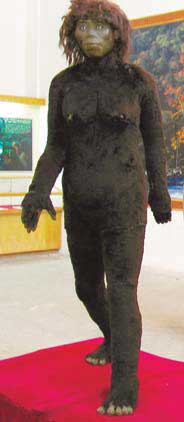
An imagined recreation of the disputed ape-like creature, Bigfoot, stands in a museum in Shennongjia, Hubei province. [File photo/For China Daily]
That ever elusive figure known as Bigfoot, or Yeren (wild man) to the Chinese, is bouncing back to life as a group of Chinese scientists and explorers scout around for international help to mount a new search for it - even though the debate over its existence has lingered for decades. Bigfoot, also known elsewhere as the  abominable snowman, in this case refers to a half-man, half-ape creature in the Shennongjia Nature Reserve, in a remote, mountainous part of Hubei province, in Central China. Back in the 1970s and 1980s, authorities organized three high-profile expeditions to search for signs of Bigfoot, but came up empty handed. In view of the large amount of expenditure required for these expeditions, the government decided to put a stop to them. Nonetheless, curiosity about the mysterious man-like creature still lingered among experts and ordinary folk alike. Then, last November, the Wild Man Research Association was founded in Hubei, pulling in more than 100 members interested in the search for Yeren, including a number of scientists and experts. These included the 75-year-old Wang Shancai, of the Hubei Relics and Archaeology Institute, who is vice-president of the association, and happens to be a strong believer in Bigfoot. One of Wang's reasons for his passion: "Over 30 years, I've collected a large amount of data." In spite of the fact that while those expeditions in the 1970s and 1980s yielded little other than some hair, a footprint, and some excrement suspected of belonging to Yeren, there was no conclusive proof, but Wang is undeterred. He said there were more than 400 people who claimed to have seen Bigfoot in the Shennongjia area over the last century. To him, "that's strong proof". And he's gotten support from a local "witness", Zhang Jiahong, a sheep rancher in the town of Muyu in the nature reserve, who says he saw two wild men as recently as September 2005. What did they look like? Zhang told China Daily on Monday that they had "hairy faces, eyes like black holes, prominent noses, faces that resembled both a man and a monkey, disheveled hair, and stood more than 2 meters tall". But that does not hold water with everyone, for example, Hu Hongxing. He is a 75-year-old Wuhan University professor who thinks that the search is nonsense and just a bunch of hype. Hu's field is ornithology and he has been studying animals in the Shennongjia area for a long time. His reasoning goes like this: "That location is not consistent with that of ape man. There's a basic standard for judging whether it exists, for example, the species grouping and area of distribution. There's no area for wild man's activity in Shennongjia." He concludes by pointing to the failure of the 1970s and 1980s expeditions. Wang, pressing ahead, thinks it is normal to have different opinions. "Thirty years ago when we discovered golden monkeys in Shennongjia, some zoologists said it was impossible. It turned out that there were more than 500 of them living there," he concludes. As for the new expedition, he has new ideas and blames the failure of the previous searches on their "unscientific" nature. "It's difficult and expensive getting all the technology to cover a 3,200-square-kilometer range of mountains, a large part of which is primeval forest." So, the association is looking for volunteers from around the world to join this latest high-tech search for Yeren. What kind of people should apply? "We want devoted team members," said Luo Baosheng, vice-president of the group, "since it will involve a lot a hard work." The search area has been broken up into target areas, Luo explained - especially caves that the creature would most likely inhabit. According to Wang, the team's first hurdle is to come up with about 10 million yuan ($1.5 million), so they are talking to companies and other organizations about funding. There's no timetable yet for when they might start out on their trek. Lest you think that China is a stranger to all this crypto-zoology, do not be so sure. After all, tales abound of mysterious, Loch Ness monster-like creatures inhabiting the remote reaches of the country's lakes. And, Tibetans have long talked about the existence of the yeti, up there somewhere in the high snowy mountains of the Tibet Autonomous Region. Source: Image, Source: China.org.cn
Read More........

Popular game Angry Birds now on Facebook

Are you fond of Computer games and facebook? If you want to be on facebook and play your favourite game at same time, then it is possible now. As promised, the mega popular casual game Angry Birds has made its way to Facebook for the first time. The game's developer Rovio previously announced it would bring the avian-flinging adventure to the social platform just in time for Valentine's Day, and here we are. How romantic Yes, nothing screams romance and valentines quite like oblong green pigs, so the launch date seems perfectly fitting. This isn't the first time Valentine's Day has been an important affair for Angry Birds. Rovio previously released a themed 'holiday' version of the game filled with pink backgrounds and a whole slew of little hearts. Angry Birds has, of course, become one of the most popular casual games of all time. However, it is largely a single-player affair. Rovio could have brought it to Facebook a long time ago but it was apparently working on how to turn it into a more social experience. Angry Birds on Facebook includes online leaderboards and special power-ups that users can buy for 99 cents a pop. In case you've been keeping track, Angry Birds is already available for Android, the iPhone and iPad, Windows Phone, handheld game systems, and TV set-top boxes. And that doesn't even include the board game or any of the myriad other merchandising ventures. So as for Angry Birds making its way to Facebook, the only real reaction to have is - it's about time.Source: Ananta-Tec
Read More........

5 Reasons to Love Solar Car Racing


This week 32 solar powered cars from 17 countries have converged on Australia’s outback to compete for the title of World Solar Car Champion. The race, the “World Solar Challenge” takes place every two years – giving teams ample time to raise money, design, build and test their dream vehicles. It’s a unique event and there are 5 reasons to love every part of it. 1. Sexy: The silhouette of a solar car has always held the public’s fascination. The cars are so “space-age” and other-worldly they don’t seem real. Their movement is powered purely from the energy of the sun – a wheeled creation that allures through it’s beauty and it’s brains. 2. Sophisticated: The top teams from around the world have one thing in common. They realize from the outset that a successful solar car program requires a true blend of disciplines. Take for example the University of Michigan solar car program. Their program (see video and original post), involves a core of about 40 students with input from a total of 100-200 students. It’s a truly interdisciplinary group with 50% engineering and 50% business, PR and support personnel. Solar cars are expensive, demanding the highest quality components, so the business side has to raise huge amounts of money to allow the engineers to implement their designs. Teamwork is paramount and these students are learning that lesson well. 3. Smart: The competitors consist primarily of major Universities from around the world. The competition is fierce, but imbued with the collegiality and sharing that most of us can only remember whimsically from our college days. This is what makes solar car racing so intriguing. The sense of higher purpose, learning for learning sake, and genuine concern for others welfare all ties in with the common goal of seeking clean and efficient sources of energy. In an increasingly hostile world, solar cars represent intellectual energy in its purest form. 4. Scary Solar car racing is dangerous. Driver safety is of paramount interest and all cars are fitted with state of the art roll cages. Still, the sexy silhouette comes at a cost. A car that can reach speeds of 87 miles per hour using only the energy of a hairdryer, must be trimmed of all excess weight. The “shell” of the car is precisely that – a thin fiberglass sheet whose primary purpose is to house the solar array on it’s surface. The wheels are slimmed down to reduce wind resistance, making them prone to blow outs. Unfortunately, crashes are all too commonplace. When you see the
wreckage of a solar car crash you quickly realize how vulnerable drivers can be.  5. Sobering: This is a race we all have to win. As the concern over climate change builds and the price of precious fossil fuels gyrate on the world markets, we are increasingly dependent on innovation for our energy security. The World Solar Challenge is a catalyst for some of the planets brightest minds to think outside the box and apply those ideas to the real world. These cars seem futuristic, and they are, but the future requires that we speed up our quest for cleaner energy cars, buses, planes and self-sufficient homes. The students that have dedicated their last two years to these solar car projects all deserve our thanks, respect, and admiration for their advancement of technologies that will indeed affect how we live in the years to come. Note: dasolar.com is a proud sponsor of the Michigan solar car, MIT solar car, and the Berkeley solar car. Thank you for your creativity! Source: Automotive
Read More........

The peculiar 3D model which allows parents to hold their baby... BEFORE it's even born

Expectant parents in Japan who can't wait to show the world what their baby will look like can now buy a 3D model of the foetus
Expectant parents who cannot wait to hold their new child can now buy a three-dimensional model of the foetus to cradle and show friends. Japanese inventors have devised a way to transform the commonplace ultrasound scan into an anatomically correct resin replica for parents to handle and keep as a memento. The nine-centimetre (3.6-inch) resin model of the white foetus, encased in a transparent block in the shape of the mother's body, is fashioned by a 3D printer after an MRI scan. FASOTEC, the company offering the 'Shape of an Angel' model, even offers parents a miniature version which could be a 'nice adornment to a mobile phone strap or key chain.' Tomohiro Kinoshita, of FASOTEC, said: 'As it is only once in a lifetime that you are pregnant with that child, we received requests for these kind of models from pregnant women who... do not want to forget the feelings and experience of that time.' The 'Shape of an
3D model of their unborn child's face
Angel' costs 100,000 yen (or around £760), and the company said the ideal time for a scan is around eight or nine months into the pregnancy. For those who would like a less pricey version, the company will start offering a 3D model of the face of the foetus at 50,000 yen - £380 - in December. It will use ultrasound images taken at a medical clinic in Tokyo that has forged a tie-up with the company. FASOTEC, originally a supplier of devices including 3D printers, uses a layering technique to build up three-dimensional structures. The company also produces 3D models of internal organs that can be used by doctors to plan surgery or by medical students for training, a spokesman said. It is also possible that models can be used in hospitals to better inform patients what their problems are, instead of relying on difficult-to-understand diagrams. The technology 'realises not only the form but also texture of the model -- for example making it hard or soft', the firm said . 'By making a model that is similar to a real organ or bone, one can simulate operations and practise different surgical techniques.' Kinoshita said the company hit upon the idea of making 3D models of unborn babies in the hope that people would become more aware of the technology. But there are medical benefits too. The company said some medics could also foresee diagnostic possibilities with the models that may help predict difficulties in the birthing process. Three-dimensional printers have been around for several decades but advances in the technology mean it is now gaining in popularity in several fields. The machines work in a similar way to an inkjet printer, but instead of ink they deposit layers of material on top of each other, gradually building up the product they are making. Where traditional manufacturing only becomes efficient with economies of scale because of the need to produce moulds, 3D printing is capable of producing single copies of relatively complicated objects. The technology is not yet advanced enough to build telephones or computers but it is already used to make components. Source: Ananta-Tec
Read More........

Scientists decode why love makes us nervous and unstable

Love lochaResearchers have mapped the chemical changes that occur in a person's brain when he falls in love and discovered the areas that activate and shut down during the heady days of courtship. Scanning technology allows neurologists to unravel the mystery of why love can turn us giddy, irrational and even ridiculous and make us nervous and unstable. Researchers hope it may also one day reveal why a few of us might overstep the mark when dealing with the object of our affections, the 'Daily Mail' reported. They found the frontal cortex, vital to judgement, shuts down when we fall in love. MRI scans show this de-activation occurs only when someone is shown a photo of the person they adore, causing them to suspend all criticism or doubt. "When you look at someone you are passionate about, some areas of the brain become active. But a large part is de-activated, the part that plays a role in judgement," Semir Zeki, professor of neuro-aesthetics at University College London, said. Zeki believes the brain may behave in this way for "higher biological purposes" - it makes reproduction more likely. If judgement is suspended, the most unlikely pair can get together and reproduce. Studies have shown brain chemical dopamine is at higher levels in those in love, the report said. Dopamine is key to our experiences of pleasure and pain, linked to desire, addiction, euphoria, and a surge may cause such acute feelings of reward that it makes love hard to give up. Tests show that taking opioid drugs such as cocaine have a similar effect on dopamine as love. A side effect of rising dopamine levels is a reduction in another chemical, serotonin, a key hormone in our moods and appetite. Serotonin levels may fall in a similar way to those seen in people with obsessive-compulsive disorder, explaining why love can make us feel anxious and jittery. According to researchers, the love chemical we are most familiar with is adrenaline. This hormone is behind why our heart races, palms sweat and mouth goes dry when we see the person we like. The same hormone is also released when we are frightened. This means that two people only vaguely attracted to one another can fall madly in love if they go through an exciting or scary experience together. Researchers said it may also explain the lure of forbidden love. Source: Indian Express
Read More........

Compassion meditation may boost neural basis of empathy

The idea behind the compassion-based meditation is that "the feelings we have about people can be trained in optimal ways," says Lobsang Tenzin Negi, who developed the protocol.
By Carol Clark: A compassion-based meditation program can significantly improve a person’s ability to read the facial expressions of others, finds a study published by Social Cognitive and Affective Neuroscience. This boost in empathic accuracy was detected through both behavioral testing of the study participants and through functional magnetic resonance imaging (fMRI) scans of their brain activity. “It’s an intriguing result, suggesting that a behavioral intervention could enhance a key aspect of empathy,” says lead author Jennifer Mascaro, a post-doctoral fellow in anthropology at Emory University. “Previous research has shown that both children and adults who are better at reading the emotional expressions of others have better relationships.” The meditation protocol, known as Cognitively-Based Compassion Training, or CBCT, was developed at Emory by study co-author Lobsang Tenzin Negi, director of the Emory-Tibet Partnership. Although derived from ancient Tibetan Buddhist practices, the CBCT program is secular in content and presentation. The research team also included senior author Charles Raison, formerly a psychiatrist at Emory’s School of Medicine and currently at the University of Arizona, and
Research shows that people better at reading the emotions of others have better relationships.
 Emory anthropologist James Rilling. When most people think of meditation, they think of a style known as “mindfulness,” in which practitioners seek to improve their ability to concentrate and to be non-judgmentally aware of their thoughts and feelings. While CBCT includes these mindfulness elements, the practice focuses more specifically on training people to analyze and reinterpret their relationships with others. “The idea is that the feelings we have about people can be trained in optimal ways,” Negi explains. “CBCT aims to condition one’s mind to recognize how we are all inter-dependent, and that everybody desires to be happy and free from suffering at a deep level.” Study participants were healthy adults without prior meditation experience. Thirteen participants randomized to CBCT meditation completed regular weekly training sessions and at-home practice for eight weeks. Eight randomized control subjects did not
meditate, but instead completed health discussion classes that covered mind-body subjects like the effects of exercise and stress on well-being. To test empathic accuracy before and following CBCT, all participants received fMRI brain scans while completing a modified version of the Reading the Mind in the Eyes Test (RMET). The RMET consists of black-and-white photographs that show just the eye region of people making various expressions. Those being tested must judge what the person in the photograph is thinking or feeling. Eight out of the 13 participants in the CBCT meditation group improved their RMET scores by an average of 4.6 percent, while the control participants showed no increase, and in the majority of cases, a decrease in correct answers for the RMET. The meditators, in comparison to those in the control group, also had significant increases in neural activity in areas of the brain important for empathy, including the inferior frontal gyrus and dorsomedial prefrontal cortex. These changes in brain activity accounted for changes in the empathic accuracy scores of the participants. “These findings raise the intriguing possibility that CBCT may have enhanced empathic abilities by increasing activity in parts of the brain that are of central importance for our ability to recognize the emotional states of others,” Raison says. “An important next step will be to evaluate the effects of CBCT on diverse populations that may particularly benefit from enhanced empathic accuracy, such as those suffering from high-functioning autism or severe depression.” Findings from the current study add to a growing database indicating that the CBCT style of meditation may have physical and emotional effects relevant to health and well-being. For example, previous research at Emory found that practicing CBCT reduced emotional distress and enhanced physical resilience in response to stress in both healthy young adults and in high-risk adolescents in foster care. Source: eScienceCommons
Read More........

Science can be sexy! Megan Fox stars as sultry scientist in new computer advert...and talks to dolphins

Marine lover: Megan Fox stars in a new laptop advert and plays an actress turned sexy marine biologist (Screen Shot On Uploaded Video)
By HAYLEY COYLE: Megan Fox apparently has a secret mission in life...to talk to dolphins. The Transformers star plays an actress turned marine biologist who wants to talk to dolphins in a new advert for the Acer Aspire S7 laptop. In the commercial Fox meets her agent in a restaurant but is distracted by
Scientist: In the ad Fox's dream come true would be to be able to communicate from dolphins
the lobster tank...her 'hidden passion' for marine life is so strong she storms to the tank, reaches in returns the  two lobsters back to the ocean. The 26-year-old is then transported to a lab and transformed into a sexy research scientist while a voiceover says: 'We all have our hidden talents and for Megan Fox
an egg and a it's marine life. 'The new Acer Aspire means that she can now follow her dream of talking to dolphins.' The nerdy scientists are all starstruck when she lands on their lab and call her 'brilliant'. Fox, who is married to actor Brian Austin Green, 39, can then be seen showing a dolphin various objects like
Baffled: The 26-year-old tries to invent technology to help her speak to dolphins while the other scientist are starstruck and marvel at her brilliance (Screen Shot On Uploaded Video)
fish to try and get it to communicate with her. She is even seen reading it the raunchy book 50 Shades of Gray. After some scientific tweaking Fox's new technology is a success and the dolphin says: 'Hello Megan. Do I get a hug?'  The advert is supposed to be funny but has been slammed by
Slammed: However the ad has been widely criticised since its release in particular the awkwardness of her performance and her lack of on-screen charisma (Screen Shot On Uploaded Video)
critics. AdWeek said of it: 'Fox's ad was deflating, because I expected an over-the-top payoff with Megan getting her legs torn off by cackling dolphins.'Even the ‘punch line’ of a dolphin asking for a hug seems a little soggy.'Source: Travelfwd+
Read More........

Male sheep and female deer are dear mates

Beijing, December 06: Staff at a wildlife park in southwest China have turned to the country's half a billion web users for advice after a male sheep and a female deer began mating -- and soon became inseparable. A posting on the park's microblog posed the question: "What do you do when a ram falls in love with a deer?" It asked readers whether they agreed it would be "unethical" to let the unusual pairing continue. "They do not want to be separated but it is unethical to let them go on,"said the posting, addressed to users of China's hugely popular weibos -- microblogging services similar to Twitter that have taken the country by storm. The romantic liaison hit headlines this week after a local television station in the southwestern province of Yunnan picked up on the story, reporting that attempts to separate the pair had been unsuccessful. The ram -- whose Chinese name Changmao means Long Hair -- had "completely integrated himself into deer society" after being placed in a pen with the animals, the Global Times daily reported. Source: Article
Read More........