Nasa's SOFIA finds water on sunlit surface of Moon

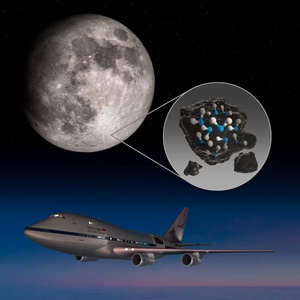
Nasa’s Stratospheric Observatory for Infrared Astronomy (SOFIA) – a telescope operating from an aircraft - has confirmed, for the first time, water on the sunlit surface of the Moon. This discovery indicates that water may be distributed across the lunar surface, and not limited to cold, shadowed places, Nasa revealed today.
SOFIA, a joint project of Nasa and the German Aerospace Centre. has detected water molecules (H2O) in Clavius Crater, one of the largest craters visible from Earth, located in the Moon’s southern hemisphere, the US space agency said. While previous observations of the Moon’s surface had detected some form of hydrogen, Nasa said, they were unable to distinguish between water and its close chemical relative, hydroxyl (OH). 
Data from this location reveal water in concentrations of 100 to 412 parts per million – roughly equivalent to a 12-ounce bottle of water – trapped in a cubic meter of soil spread across the lunar surface. The results are published in the latest issue of Nature Astronomy.
“We had indications that H2O – the familiar water we know – might be present on the sunlit side of the Moon,” said Paul Hertz, director of the Astrophysics Division in the Science Mission Directorate at NASA Headquarters in Washington. “Now we know it is there. This discovery challenges our understanding of the lunar surface and raises intriguing questions about resources relevant for deep space exploration.”
In comparison, the Sahara desert has 100 times the amount of water than what SOFIA detected in the lunar soil. Despite the small amounts, the discovery raises new questions about how water is created and how it persists on the harsh, airless lunar surface.
Since water is a precious resource in deep space and a key ingredient of life, Nasa is using its Artemis programme to study the presence of water on the Moon ahead of sending the first woman and next man to the lunar surface in 2024 with a view to establishing a sustainable human presence there by the end of the decade.
Under SOFIA’s results build on years of previous research examining the presence of water on the Moon. When the Apollo astronauts first returned from the Moon in 1969, it was thought to be completely dry. Orbital and impactor missions over the past 20 years, such as Nasa’s Lunar Crater Observation and Sensing Satellite, confirmed ice in permanently shadowed craters around the Moon’s poles.
Meanwhile, several spacecraft, including the Cassini mission and Deep Impact comet mission, as well as the Indian Space Research Organisation’s Chandrayaan-1 mission, and Nasa’s ground-based Infrared Telescope Facility, looked broadly across the lunar surface and found evidence of hydration in sunnier regions. Yet those missions were unable to definitively distinguish the form in which it was present – either H2O or OH.
“Prior to the SOFIA observations, we knew there was some kind of hydration,” said Casey Honniball, the lead author who published the results from her graduate thesis work at the University of Hawaii at Manoa in Honolulu. “But we didn’t know how much, if any, was actually water molecules – like we drink every day – or something more like drain cleaner.”
Scientists using Nasa’s telescope on an airplane, the Stratospheric Observatory for Infrared Astronomy, discovered water on a sunlit surface of the Moon for the first time. 
SOFIA is a modified Boeing 747SP aircraft that allows astronomers to study the solar system and beyond in ways that are not possible with ground-based telescopes. Molecular water, H2O, was found in Clavius Crater, one of the largest craters visible from Earth in the Moon’s southern hemisphere. This discovery indicates that water may be distributed across the lunar surface, and not limited to cold, shadowed places.
SOFIA offered a new means of looking at the Moon. Flying at altitudes of up to 45,000 feet, this modified Boeing 747SP jetliner with a 106-inch diameter telescope reaches above 99 per cent of the water vapor in Earth’s atmosphere to get a clearer view of the infrared universe. Using its Faint Object infraRed CAmera for the SOFIA Telescope (FORCAST), SOFIA was able to pick up the specific wavelength unique to water molecules, at 6.1 microns, and discovered a relatively surprising concentration in sunny Clavius Crater.
“Without a thick atmosphere, water on the sunlit lunar surface should just be lost to space,” said Honniball, who is now a postdoctoral fellow at Nasa’s Goddard Space Flight Center in Greenbelt, Maryland. “Yet somehow we’re seeing it. Something is generating the water, and something must be trapping it there.”
Several forces could be at play in the delivery or creation of this water. Micrometeorites raining down on the lunar surface, carrying small amounts of water, could deposit the water on the lunar surface upon impact. Another possibility is there could be a two-step process whereby the Sun’s solar wind delivers hydrogen to the lunar surface and causes a chemical reaction with oxygen-bearing minerals in the soil to create hydroxyl. Meanwhile, radiation from the bombardment of micrometeorites could be transforming that hydroxyl into water.
How the water then gets stored – making it possible to accumulate – also raises some intriguing questions. The water could be trapped into tiny beadlike structures in the soil that form out of the high heat created by micrometeorite impacts. Another possibility is that the water could be hidden between grains of lunar soil and sheltered from the sunlight – potentially making it a bit more accessible than water trapped in beadlike structures.
For a mission designed to look at distant, dim objects such as black holes, star clusters, and galaxies, SOFIA’s spotlight on Earth’s nearest and brightest neighbor was a departure from business as usual. The telescope operators typically use a guide camera to track stars, keeping the telescope locked steadily on its observing target. But the Moon is so close and bright that it fills the guide camera’s entire field of view. With no stars visible, it was unclear if the telescope could reliably track the Moon. To determine this, in August 2018, the operators decided to try a test observation.
“It was, in fact, the first time SOFIA has looked at the Moon, and we weren’t even completely sure if we would get reliable data, but questions about the Moon’s water compelled us to try,” said Naseem Rangwala, SOFIA’s project scientist at Nasa's Ames Research Center in California's Silicon Valley. “It’s incredible that this discovery came out of what was essentially a test, and now that we know we can do this, we’re planning more flights to do more observations.”
SOFIA’s follow-up flights will look for water in additional sunlit locations and during different lunar phases to learn more about how the water is produced, stored, and moved across the Moon. The data will add to the work of future Moon missions, such as Nasa’s Volatiles Investigating Polar Exploration Rover (VIPER), to create the first water resource maps of the Moon for future human space exploration.
In the same issue of Nature Astronomy, scientists have published a paper using theoretical models and Nasa's Lunar Reconnaissance Orbiter data, pointing out that water could be trapped in small shadows, where temperatures stay below freezing, across more of the Moon than currently expected. The results can be found here. 
“Water is a valuable resource, for both scientific purposes and for use by our explorers,” said Jacob Bleacher, chief exploration scientist for Nasa’s Human Exploration and Operations Mission Directorate. “If we can use the resources at the Moon, then we can carry less water and more equipment to help enable new scientific discoveries.”SOFIA is a joint project of Nasa and the German Aerospace Center. Ames manages the SOFIA programme, science, and mission operations in cooperation with the Universities Space Research Association, headquartered in Columbia, Maryland, and the German SOFIA Institute at the University of Stuttgart. The aircraft is maintained and operated by Nasa’s Armstrong Flight Research Center Building 703, in Palmdale, California. Source: https://www.domain-b.com/
Read More........

A New Way To See The High-Energy Sky

Credit: HAWC Collaboration
University of Maryland (UMD) physicists pioneered development of observatory that has located new high-energy sources in the universe and provided more detail on known sources in first year of full operation. HAWC observations show that a previously known gamma ray source in the Milky Way galaxy, TeV J1930+188, which is probably due to a pulsar wind nebula, is far more complicated than originally thought. Where researchers previously identified a single gamma ray source, HAWC identified several hot spots. The United States and Mexico constructed the High Altitude Water Cherenkov (HAWC) Gamma-ray Observatory to observe some of the most energetic phenomena in the known universe--the aftermath when massive stars die, glowing clouds of electrons around rapidly spinning neutron stars, and supermassive black holes devouring matter and spitting out powerful jets of particles. These violent explosions produce high-energy gamma rays and cosmic rays, which can travel large distances--making it possible to see objects and events far outside our own galaxy. Today, scientists operating HAWC released a new survey of the sky made from the highest energy gamma rays ever observed. The new sky map, which uses data collected since the observatory began running at full capacity last March, offers a deeper understanding of high-energy processes taking place in our galaxy and beyond. "HAWC gives us a new way to see the high-energy sky," said Jordan Goodman, professor of physics at the University of Maryland, and U.S. lead investigator and spokesperson for the HAWC collaboration. "This new data from HAWC shows the galaxy in unprecedented detail, revealing new high-energy sources and previously unseen details about existing sources." HAWC researchers presented the new observation data and sky map April 18, 2016, at the American Physical Society meeting. They also participated in a press conference at the meeting. The new sky map shows many new gamma ray sources within our own Milky Way galaxy. Because HAWC observes 24 hours per day and year-round with a wide field-of-view and large area, the observatory boasts a higher energy reach especially for extended objects. In addition, HAWC can uniquely monitor for gamma ray flares by sources in our galaxy and other active galaxies, such as Markarian 421 and Markarian 501. This is a view of two-thirds of the entire sky with very-high-energy gamma rays observed by HAWC. Many sources are clearly visible in our own Milky Way galaxy, as well as two other galaxies: Markarian 421 and Markarian 501. Some well-known constellations are shown as a reference. The center of the Milky Way is located toward
Credit: HAWC Collaboration
Sagittarius. One of HAWC's new observations provides a better understanding of the high-energy nature of the Cygnus region--a northern constellation lying on the plane of the Milky Way. A multitude of neutron stars and supernova remnants call this star nursery home. HAWC scientists observed previously unknown objects in the Cygnus region and identified objects discovered earlier with sharper resolution. In a region of the Milky Way where researchers previously identified a single gamma ray source named TeV J1930+188, HAWC identified several hot spots, indicating that the region is more complicated than previously thought. "Studying these objects at the highest energies can reveal the mechanism by which they produce gamma rays and possibly help us unravel the hundred-year-old mystery of the origin of high-energy cosmic rays that bombard Earth from space," said Goodman. HAWC--located 13,500 feet above sea level on the slopes of Mexico's Volcán Sierra Negra--contains 300 detector tanks, each holding 50,000 gallons of ultrapure water with four light sensors anchored to the floor. When gamma rays or cosmic rays reach Earth's atmosphere they set off a cascade of charged particles, and when these particles reach the water in HAWC's detectors, they produce a cone-shaped flash of light known as Cherenkov radiation. The effect is much like a sonic boom produced by a supersonic jet, because the particles are traveling slightly faster than the speed of light in water when they enter the detectors. The complete array of HAWC detector tanks is seen here in Dec. 2014.
Credit: HAWC Collaboration
The light sensors record each flash of Cherenkov radiation inside the detector tanks. By comparing nanosecond differences in arrival times at each light sensor, scientists can reconstruct the angle of travel for each particle cascade. The intensity of the light indicates the primary particle's energy, and the pattern of detector hits can distinguish between gamma rays and cosmic rays. With 300 detectors spread over an area equivalent to more than three football fields, HAWC "sees" these events in relatively high resolution. "Unlike traditional telescopes, with HAWC we have now an instrument that surveys two-thirds of the sky at the highest energies, day and night," said Andrés Sandoval, Mexico spokesperson for HAWC. HAWC exhibits 15-times greater sensitivity than its predecessor--an observatory known as Milagro that operated near Los Alamos, New Mexico, and ceased taking data in 2008. In eight years of operation, Milagro found new sources of high-energy gamma rays, detected diffuse gamma rays from the Milky Way galaxy and discovered that the cosmic rays hitting earth had an unexpected non-uniformity. "HAWC will collect more data in the next few years, allowing us to reach even higher energies," said Goodman. "Combining HAWC observations with data from other instruments will allow us to extend the reach of our understanding of the most violent processes in the universe." Contacts and sources:Abby Robinson, University of Maryland (UMD) Source: http://www.ineffableisland.com/
Read More........

Gravitational waves detected for the first time

Credits: R. Hurt/Caltech-JPL
In a historical scientific landmark, researchers have announced the first detection of gravitational waves, as predicted by Einstein's general theory of relativity 100 years ago. This major discovery opens a new era of astronomy.
For the first time, scientists have directly observed "ripples" in the fabric of spacetime called gravitational waves, arriving at the Earth from a cataclysmic event in the distant universe. This confirms a major prediction of Einstein’s 1915 general theory of relativity and opens an unprecedented new window onto the cosmos. The observation was made at 09:50:45 GMT on 14th September 2015, when two black holes collided. However, given the enormous distance involved and the time required for light to reach us, this event actually occurred some 1.3 billion years ago, during the mid-Proterozoic Eon. For context, this is so far back that multicellular life here on Earth was only just beginning to spread. The signal came from the Southern Celestial Hemisphere, in the rough direction of (but much further away than) the Magellanic Clouds. The two black holes were spinning together as a binary pair, turning around each other several tens of times a second, until they eventually collided at half the speed of light. These objects were 36 and 29 times the mass of our Sun. As their event horizons merged, they became one – like two soap bubbles in a bath. During the fraction of a second that this happened, three solar masses were converted to gravitational waves, and for a brief instant the event hit a peak power output 50 times
The gravitational waves were detected by both of the twin Laser Interferometer Gravitational-wave Observatory (LIGO) detectors, located in Livingston, Louisiana, and Hanford, Washington, USA. The LIGO Observatories are funded by the National Science Foundation (NSF), and were conceived, built, and are operated by Caltech and MIT. The discovery was published yesterday in the journal Physical Review Letters.
that of the entire visible universe. Prof. Stephen Hawking told BBC News: "Gravitational waves provide a completely new way of looking at the Universe. The ability to detect them has the potential to revolutionise astronomy. This discovery is the first detection of a black hole binary system and the first observation of black holes merging. Apart from testing General Relativity, we could hope to see black holes through the history of the Universe. We may even see relics of the very early Universe during the Big Bang at some of the most extreme energies possible." "There is a Nobel Prize in it – there is no doubt," said Prof. Karsten Danzmann, from the Max Planck Institute for Gravitational Physics and Leibniz University in Hannover, Germany, who collaborated on the study. In an interview with the BBC, he claimed the significance of this discovery is on a par with the determination of the structure of DNA. "It is the first ever direct detection of gravitational waves; it's the first ever direct detection of black holes and it is a confirmation of General Relativity because the property of these black holes agrees exactly with what Einstein predicted almost exactly 100 years ago." "We found a beautiful signature of the merger of two black holes and it agrees exactly – fantastically – with the numerical solutions to Einstein equations ...

LIGO measurement of gravitational waves at the Hanford (left) and Livingston (right) detectors, compared to the theoretical predicted values.By Abbott et al. [CC BY 3.0]
it looked too beautiful to be true." "Scientists have been looking for gravitational waves for decades – but we’ve only now been able to achieve the incredibly precise technologies needed to pick up these very, very faint echoes from across the universe," said Danzmann. "This discovery would not have been possible without the efforts and the technologies developed by the Max Planck, Leibniz Universität, and UK scientists working in the GEO collaboration." Researchers at the LIGO Observatories were able to measure tiny and subtle disturbances the waves made to space and time as they passed through the Earth, with machines detecting changes just fractions of the width of an atom. At each observatory, the two-and-a-half-mile (4-km) long L-shaped LIGO interferometer uses laser light split into two beams that travel back and forth along tubes kept at a near-perfect vacuum. The beams are used to monitor the distance between mirrors precisely positioned at the ends of the arms. According to Einstein’s theory, the distance between the mirrors will change by an infinitesimal amount when gravitational waves pass by the detector. A change in the lengths of the arms smaller than one-ten-thousandth the diameter of a proton can be detected; equivalent to a human hair's diameter over three light years from Earth. "The Advanced LIGO detectors are a tour de force of science and technology, made possible by a truly exceptional international team of technicians, engineers, and scientists," says David Shoemaker of MIT. "We are very proud that we finished this NSF-funded project on time and on budget." "We spent years modelling the gravitational-wave emission from one of the most extreme events in the universe: pairs of massive black holes orbiting with each other and then merging. And that’s exactly the kind of signal we detected!" says Prof. Alessandra Buonanno, director at the Max Planck Institute for Gravitational Physics in Potsdam. "With this discovery, we humans are embarking on a marvellous new quest: the quest to explore the warped side of the universe – objects and phenomena that are made from warped spacetime," says Kip Thorne, Feynman Professor of Theoretical Physics at Caltech. "Colliding black holes and gravitational waves are our first beautiful examples." Advanced LIGO is among the most sensitive instruments ever built. During its next observing stage, it is expected to detect five more black hole mergers and to detect around 40 binary star mergers each year, in addition to an unknown number of more exotic gravitational wave sources, some of which may not be anticipated by current theory. Source: Futurtimeline.net
Read More........

NASA camera reveals 'dark side' of moon

Bright and dark side of the moon
Washington: From nearly 1.6 lakh km away, a NASA camera has captured a stunning view of the far side of the moon as it moved in front of the sun-lit side of Earth last month. The images show the fully illuminated “dark side” of the moon that is never visible from Earth. The lunar far side lacks the large and dark basaltic plains (called maria) that are so prominent on the Earth-facing side. A thin sliver of shadowed area of moon is visible on its right side. "It is surprising how much brighter Earth is than the moon. Our planet is a truly brilliant object in dark space compared to the lunar surface,” said said Adam Szabo, project scientist at NASA's Goddard Space Flight Center in Greenbelt, Maryland. The images were captured by NASA's Earth Polychromatic Imaging Camera (EPIC), a four megapixel CCD camera and telescope aboard the Deep Space Climate Observatory (DSCOVR) satellite orbiting 1 million miles (1.6 lakh km) from Earth. EPIC maintains a constant view of the fully-illuminated Earth as it rotates, providing scientific observations of ozone, vegetation, cloud height and aerosols in the atmosphere. The far side of the moon was not seen until 1959 when the Soviet Luna 3 spacecraft returned the first images. Since then, several NASA missions have imaged the lunar far side in great detail. The same side of the moon always faces an earthbound observer because the moon is tidally locked to Earth. That means its orbital period is the same as its rotation around its axis. Once EPIC begins regular observations next month, NASA will post daily colour images of Earth to a dedicated public website. About twice a year, the camera will capture the moon and Earth together as the orbit of DSCOVR crosses the orbital plane of the moon. Source: ummid.comImage: flickr.com
Read More........

Carbon Glow of Galaxies At 'Cosmic Dawn' Observed

When galaxies first assembled, during a period often referred to as 'Cosmic Dawn,' most of the space between the stars was filled with a mixture of hydrogen and helium produced in the Big Bang. As subsequent generations of massive stars ended their brief but brilliant lives as supernovas, they seeded the interstellar medium with a fine dust of heavy elements, mostly carbon, silicon, and oxygen, which are forged in their nuclear furnaces. Astronomers study the elements scattered between the stars to learn about the internal workings of galaxies, their motion and chemistry. To date, however, attempts to detect the telltale radio signature of carbon in the very early Universe have been thwarted, perhaps -- as some have speculated -- by the need to allow a few billion years more for stars to manufacture sufficient quantities to be observed across such vast cosmic distances. New observations with the Atacama Large Millimeter/submillimeter Array (ALMA), however, readily detected the first faint traces of carbon atoms permeating the interstellar atmospheres of so-called normal galaxies, seen only one billion years after the Big Bang. This suggests that even though normal galaxies in the very early Universe were already brimming with carbon, they were not nearly as chemically evolved as similar galaxies observed just a few billion years later. In these later galaxies most of the ionized carbon has condensed into dust grains -- simple organic molecules like carbon monoxide (CO). The ALMA data for four of these galaxies is show in relation to objects in the COSMOS field taken with the Hubble Space Telescope shown above. 'Astronomers are trying to better understand how we went from the primordial gas of the Big Bang to the heavy atoms and complex molecules we see in galaxies throughout the Universe today,' said Peter Capak, an astronomer with the California Institute of Technology in Pasadena and lead author on a study appearing in the journal Nature. 'Before ALMA, there was no way to directly sample these very young, very distant galaxies because any radio emission from carbon would have simply been too weak to detect.' ALMA, with its unprecedented sensitivity, was able to detect the faint millimeter 'glow' of ionized carbon in the interstellar atmospheres of nine very distant, very young galaxies seen when the Universe was only seven percent of its current age. Atoms like carbon can become ionized by the powerful ultraviolet radiation emitted by bright, massive stars. 'The particular spectral signature of ionized carbon has long been considered a potentially powerful tool to study the enrichment of galaxies with elements heavier than hydrogen and helium. It's also a unique probe of early galaxy dynamics,' said co-author Chris Carilli with theNational Radio Astronomy Observatory in Socorro, N.M. 'The results from this paper clearly demonstrate this potential and portend a great future for these kinds of studies.' Since carbon has an affinity for other elements, binding to make simple and complex organic molecules, it doesn't remain in an unbound, ionized state for very long. It is therefore typically found in much lower concentrations when compared with other heavy elements in the interstellar medium. This makes ionized carbon an excellent tracer of relatively young unevolved galaxies. 'The fact that we see carbon in this peculiar state reveals that the concentrations of other heavier elements in the interstellar medium are relatively low,' said Capak. 'This is in stark contrast to galaxies just two billion years later, which are teeming with a dust of heavy elements and present a much lower concentration of ionized carbon.' The astronomers also used the data in these same observations as an intergalactic speed camera, and were able to clock the interstellar gas in these galaxies careening up to 380 kilometers per second. 'This is a measurement that was previously impossible for such distant galaxies,' noted Capak. 'It opens up a new window into understanding how the first galaxies assembled and evolved.' The velocities observed by ALMA are similar to those seen in normal, star-forming galaxies a few billion years later and even today in the nearby Universe. The ALMA data also show that the mass of each of these distant galaxies is between 10-100 billion times the mass of the Sun, which is comparable to the mass of the Milky Way. These results surprised astronomers because they had assumed normal galaxies in the early Universe would be less energetic and have lower masses than those observed at later epochs. Instead, the ALMA data reveal that the early Universe was capable of creating what we now consider to be normal-size galaxies. The difference in chemistry and the conspicuous lack of dust, however, indicate that they are in a very immature stage of evolution. For their research, the astronomers selected nine typical star-forming galaxies about 13 billion light-years away. The galaxies were selected from the Cosmic Evolution Survey (COSMOS) and their distances were determined with the Deep Extragalactic Imaging Multi-Object Spectrograph (DEIMOS) on the W. M. Keck-II Observatory in Hawaii. ALMA, located in the Atacama Desert of Chile, is able to detect the faint millimeter-wavelength radiation emitted by atoms and molecules in space. Earlier studies of galaxies at this extreme distance failed to detect this same signature because they focused on atypical galaxies undergoing merger, which may have masked the faint signal from ionized carbon. The new ALMA observations, which were achieved with only a portion of the array in less than 20 minutes of observations on each source, offer promise that subsequent observations with ALMA's full complement of antennas will present an even clearer picture of the assembly of galaxies and their chemical compositions. The Daily Galaxy via National Radio Astronomy Observatory, Image credit: ALMA (NRAO/ESO/NAOJ), P. Capak; B. Saxton (NRAO/AUI/NSF), NASA/ESA Hubble , Source: Article
Read More........

Largest Yellow Star Ever Found, 1300 Times The Sun's Diameter

Credit: ESO/Digitized Sky Survey 2
Using ESO's Very Large Telescope Interferometer (VLTI), Olivier Chesneau (Observatoire de la Côte d'Azur, Nice, France) and an international team of collaborators have found that the yellow hypergiant star HR 5171 A[1] is absolutely huge — 1300 times the diameter of the Sun and much bigger than was expected [2].  This makes it the largest yellow star known. It is also in the top ten of the largest stars known — 50% larger than the famous red supergiant Betelgeuse — and about one million times brighter than the Sun. HR 5171, the brightest star just below the centre of this wide-field image, is a yellow hypergiant, a very rare type of stars with only a dozen known in our galaxy. Its size is over 1,300 times that of the Sun -- one of the 10 largest stars found so far. Observations with ESO's Very Large Telescope Interferometer have shown that it is actually a double star, with the companion in contact with the main star. "The new observations also showed that this star has a very close binary partner, which was a real surprise," says Chesneau. "The two stars are so close that they touch and the whole system resembles a gigantic peanut." The astronomers made use of a technique called interferometry to combine the light collected from multipleindividual telescopes, effectively creating a giant telescope up to 140 metres in size. The new results prompted the team to thoroughly investigate older observations of the star spanning more than sixty years, to see how it had behaved in the past [3]. This artist’s impression shows the yellow hypergiant star HR 5171. This is a very rare type of star with only a dozen known in our galaxy. Its size is over 1300 times that of our Sun — one of the largest ten stars found so far. Observations with ESO’s Very Large Telescope Interferometer have shown that it is actually a double star, with the
Credit: ESO
companion in contact with the main star. Yellow hypergiants are very rare, with only a dozen or so known in our galaxy — the best-known example being Rho Cassiopeiae. They are among the biggest and brightest stars known and are at a stage of their lives when they are unstable and changing rapidly. Due to this instability, yellow hypergiants also expel material outwards, forming a large, extended atmosphere around the star. This artist’s animation shows the yellow hypergiant star HR 5171. This is a very rare type of star and only a dozen are known in our galaxy. Its size is over 1300 times that of the Sun — one of the ten biggest stars found so far. Observations with ESO’s Very Large Telescope Interferometer have shown
(Credit: ESO)
that it is actually a double star, with the companion in contact with the main star.Despite its great distance of nearly 12 000 light-years from Earth, the object can just about be seen with the naked eye [4] by the keen-sighted. HR 5171 A has been found to be getting bigger over the last 40 years, cooling as it grows, and its evolution has now been caught in action. Only a few stars are caught in this very brief phase, where they undergo a dramatic change in temperature as they rapidly evolve. By analysing data on the star's varying brightness, using observations from other observatories, the astronomers confirmed the object to be an eclipsing binary system where the smaller component passes in front and behind the larger one as it orbits. In this case HR 5171 A is orbited by its companion star every 1300 days. The smaller companion is only slightly hotter than HR 5171 A's surface temperature of 5000 degrees Celsius. Chesneau concludes "The companion we have found is very significantas it can have an influence on the fate of HR 5171 A, for example, stripping off its outer layers and modifying its evolution." This new discovery highlights the importance of studying these huge and short-lived yellow hypergiants, and could provide a means of understanding the evolutionary processes of massive stars in general. This zoom sequence takes us from a wide view of the spectacular southern Milky Way into a closeup view of one of its biggest and rarest stars — the yellow hypergiant star HR 5171. This monster stars has a radius over 1300 times that of the Sun — it is one of the largest ten stars found so far. Observations with ESO’s Very Large Telescope Interferometer have shown that it is actually a double star, with the companion in contact with the main star. Credit: ESO/Nick Risinger (skysurvey.org)/Digitized Sky Survey 2. Music: movetwo, Contacts and sources: Richard Hook, Source: Article
Read More........

Extreme Power of Black Hole Revealed

Astronomers have used NASA's Chandra X-ray Observatory and a suite of other telescopes to reveal one of the most powerful black holes known. The black hole has created enormous structures in the hot gas surrounding it and prevented trillions of stars from forming
The black hole is in a galaxy cluster named RX J1532.9+3021 (RX J1532 for short), located about 3.9 billion light years from Earth. The image here is a composite of X-ray data from Chandra revealing hot gas in the cluster in purple and optical data from the Hubble Space Telescope showing galaxies in yellow. The cluster is very bright in X-rays implying that it is extremely massive, with a mass about a quadrillion - a thousand trillion - times that of the sun. At the center of the cluster is a large elliptical galaxy containing the supermassive black hole. The large amount of hot gas near the center of the cluster presents a puzzle. Hot gas glowing with X-rays should cool, and the dense gas in the center of the cluster should cool the fastest. The pressure in this cool central gas is then expected to drop, causing gas further out to sink in towards the galaxy, forming trillions of stars along the way. However, astronomers have found no such evidence for this burst of stars forming at the center of this cluster. This problem has been noted in many galaxy clusters but RX J1532 is an extreme case, where the cooling of gas should be especially dramatic because of the high density of gas near
Artist's view of the Chandra X-ray Observatory
the center. Out of the thousands of clusters known to date, less than a dozen are as  extreme as RX J1532. The Phoenix Cluster is the most extreme, where, conversely, large numbers of stars have been observed to be forming. What is stopping large numbers of stars from forming in RX J1532? Images from the Chandra X-ray Observatory and the NSF's Karl G. Jansky Very Large Array (VLA) have provided an answer to this question. The X-ray image shows two large cavities in the hot gas on either side of the central galaxy. The Chandra image has been specially processed to emphasize the cavities. Both cavities are aligned with jets seen in radio images from the VLA. The location of the supermassive black hole between the cavities is strong evidence that the supersonic jets generated by the black hole have drilled into the hot gas and pushed it aside, forming the cavities. Shock fronts - akin to sonic booms - caused by the expanding cavities and the release of energy by sound waves reverberating through the hot gas provide a source of heat that prevents most of the gas from cooling and forming new stars. The cavities are each about 100,000 light years across, roughly equal to the width of the Milky Way galaxy. The power needed to generate them is among the largest known in galaxy clusters. For example, the power is almost 10 times greater than required to create the well-known cavities in Perseus. Although the energy to power the jets must have been generated by matter falling toward the black hole, no X-ray emission has been detected from infalling material. This result can be explained if the black hole is "ultramassive" rather than supermassive, with a mass more than 10 billion times that of the sun. Such a black hole should be able to produce powerful jets without consuming large amounts of mass, resulting in very little radiation from material falling inwards. Another possible explanation is that the black hole has a mass only about a billion times that of the sun but is spinning extremely rapidly. Such a black hole can produce more powerful jets than a slowly spinning black hole when consuming the same amount of matter. In both explanations the black hole is extremely massive. A more distant cavity is also seen at a different angle with respect to the jets, along a north-south direction. This cavity is likely to have been produced by a jet from a much older outburst from the black hole. This raises the question of why this cavity is no longer aligned with the jets. There are two possible explanations. Either large-scale motion of the gas in the cluster has pushed it to the side or the black hole is precessing, that is, wobbling like a spinning top. A paper describing this work was published in the November 10th, 2013 issue of The Astrophysical Journal and is available online (http://arxiv.org/abs/1306.0907). The first author is Julie Hlavacek-Larrondo from Stanford University. The Hubble data used in this analysis were from the Cluster Lensing and Supernova survey, led by Marc Postman from Space Telescope Science Institute: http://www.stsci.edu/~postman/CLASH/Home.html, NASA's Marshall Space Flight Center in Huntsville, Ala., manages the Chandra program for NASA's Science Mission Directorate in Washington. The Smithsonian Astrophysical Observatory in Cambridge, Mass., controls Chandra's science and flight operations. For more information about Chandra X-ray Observatory, visit: http://www.nasa.gov/mission_pages/chandra/main/, Chandra on Flickr: http://www.flickr.com/photos/nasamarshall/sets/72157606205297786/, Images, Text, Credits: X-ray: NASA/CXC/Stanford/J.Hlavacek-Larrondo et al, Optical: NASA/ESA/STScI/M.Postman & CLASH team.Greetings, Orbiter.ch, Source: Orbiter.ch Space News
Read More........

‘Death Stars’ In Orion Blast Planets Before They Form

Credit: NRAO/AUI/NSF; B. Saxton
The Orion Nebula is home to hundreds of young stars and even younger protostars known as proplyds. Many of these nascent systems will go on to develop planets, while others will have their planet-forming dust and gas blasted away by the fierce ultraviolet radiation emitted by massive O-type stars that lurk nearby. This artist's concept shows two proplyds, or protostars, around a massive O-type star. The nearer proplyd is having its planet-forming dust and gas blasted away by the radiation from the star. The farther proplyd is able to retain its planet-making potential. A team of astronomers from Canada and the United States has used the Atacama Large Millimeter/submillimeter Array (ALMA) to study the often deadly relationship between highly luminous O-type stars and nearby protostars in the Orion Nebula. Their data reveal that protostars within 0.1 light-years (about 600 billion miles) of an O-type star are doomed to have their cocoons of dust and gas stripped away in just a few millions years, much faster than planets are able to form. "O-type stars, which are really monsters compared to our Sun, emit tremendous amounts of ultraviolet radiation and this can play havoc during the development of young planetary systems," remarked Rita Mann, an astronomer with the National Research Council of Canada in Victoria, and lead author on a paper in the Astrophysical Journal. "Using ALMA, we looked at dozens of embryonic stars with planet-forming potential and, for the first time, found clear indications where protoplanetary disks simply vanished under the intense glow of a neighboring massive star." Many, if not all, Sun-like stars are born in crowded stellar nurseries similar to the Orion Nebula. Over the course of just a few million years, grains of dust and reservoirs of gas combine into larger, denser bodies. Left relatively undisturbed, these systems will eventually evolve into fully fledged star systems, with planets -- large and small -- and ultimately drift away to become part of the galactic stellar population. Fly-in to the Orion Nebula where ALMA reveals massive stars blasting away planet-forming dust-gas around young protoplanetary disks. 
Narration: Dr. Rita K. Mann; Video and Images Courtesy of Brian Kent, NRAO/AUI/NSF; Model from Brian Abbot (AMNH/Hayden); Data from Hillenbrand, L., 1997, AJ, 113, 1733; Bill Saxton, NRAO/AUI/NSF; NASA/ESA, M. Robberto (Space Telescope Science Institute/ESA) and the Hubble Space Telscope Orion Treasury Project Team; NASA/ESA Hubble Space Telescope Bally et al.; Smith et al.; NASA, C.R. O'Dell and S.K. Wong (Rice University) Astronomers believe that massive yet short-lived stars in and around large interstellar clouds are essential for this ongoing process of star formation. At the end of their lives, massive stars explode as supernovas, seeding the surrounding area with dust and heavy elements that will get taken up in the next generation of stars. These explosions also provide the kick necessary to initiate a new round of star and planet formation. But while they still shine bright, these larger stars can be downright deadly to planets if an embryonic solar systems strays too close. "Massive stars are hot and hundreds of times more luminous than our Sun," said James Di Francesco, also with the National Research Council of Canada. "Their energetic photons can quickly deplete a nearby protoplanetary disk by heating up its gas, breaking it up, and sweeping it away." Earlier observations with the Hubble Space Telescope revealed striking images of proplyds in Orion. Many had taken on tear-drop shapes, with their dust and gas trailing away from a nearby massive star. These optical images, however, couldn't reveal anything about the amount of dust that was present or how the dust and gas concentrations changed in relation to massive stars. The new ALMA observations detected these and other never-before-imaged proplyds, essentially doubling the number of protoplanetary disks discovered in that region. ALMA also could see past their surface appearance, peering deep inside to actually measure how much mass was in the proplyds. Combining these studies with previous observations from the Submillimeter Array (SMA) in Hawaii, the researchers found that any protostar within the extreme-UV envelope of a massive star would have much of its disk of material destroyed in very short order. Proplyds in these close-in regions retained only a fraction (one half or less) of the mass necessary to create one Jupiter-size planet. Beyond the 0.1 light-year radius, in the far-UV dominated region, the researchers observed a wide range of disk masses containing anywhere for one to 80 times the mass of Jupiter. This is similar to the amount of dust found in low-mass star forming regions. "Taken together, our investigations with ALMA suggest that extreme UV regions are not just inhospitable, but they’re downright hazardous for planet formation. With enough distance, however, it’s possible to find a much more congenial environment," said Mann. "This work is really the tip of the iceberg of what will come out of ALMA; we hope to eventually learn how common solar systems like our own are." Other researchers involved in this project include Doug Johnstone, National Research Council of Canada; Sean M. Andrews, Harvard-Smithsonian Center for Astrophysics; Jonathan P. Williams, University of Hawaii; John Bally, University of Colorado; Luca Ricci, California Institute of Technology; A. Meredith Hughes, Wesleyan University, and Brenda C. Matthews, National Research Council of Canada. ALMA, an international astronomy facility, is a partnership of Europe, North America and East Asia in cooperation with the Republic of Chile. ALMA construction and operations are led on behalf of Europe by ESO, on behalf of North America by the National Radio Astronomy Observatory (NRAO), and on behalf of East Asia by the National Astronomical Observatory of Japan (NAOJ). The Joint ALMA Observatory (JAO) provides the unified leadership and management of the construction, commissioning and operation of ALMA. Contacts and sources: Charles Blue, National Radio Astronomy ObservatorySource: Article
Read More........

Herschel Discovers Water Vapor Around Dwarf Planet Ceres

Dwarf planet Ceres is located in the main asteroid belt, between the orbits of Mars and Jupiter, as illustrated in this artist's conception. Observations by the Herschel space observatory between 2011 and 2013 find that the dwarf planet has a thin water vapor atmosphere. This is the first unambiguous detection of water vapor around anobject in the asteroid belt. Illustration credit: ESA/ATG medialab, Note: For more information, see PIA17831: Water Detection on Ceres, Herschel Telescope Detects Water on Dwarf Planet and Herschel Discovers Water Vapor Around Dwarf Planet CeresSource: Article
Read More........

Binary-Star Formation Theory Boosted By New Study

Credit: Bill Saxton, NRAO/AUI/NSF
Using the new capabilities of the upgraded Karl G. Jansky Very Large Array (VLA), scientists have discovered previously-unseen binary companions to a pair of very young protostars. The discovery gives strong support for one of the competing explanations for how double-star systems form. Astronomers know that about half of all Sun-like stars are members of double or multiple-star systems, but have debated over how such systems are formed. Binary star formation through disk fragmentation starts (left) with a young star surrounded by a rotating disk of gas and dust. The disk fragments under its own gravity, with a second star forming within the disk (center), surrounded by its own disk. At right, the two stars form an orbiting pair. 100 Astronomical Units (AU) is roughly the diameter of our Solar System. "The only way to resolve the debate is to observe very young stellar systems and catch them in the act of formation," said John Tobin, of the National Radio Astronomy Observatory (NRAO). "That's what we've done with the stars we observed, and we got valuable new clues from them," he added. Their new clues support the idea that double-star systems form when a disk of gas and dust whirling around one young star fragments, forming another new star in orbit with the first. Young stars that still are gathering matter from their surroundings form such disks, along with jet-like outflows rapidly propelling material in narrow beams perpendicular to the disk. When Tobin and an international team of astronomers studied gas-enshrouded young stars roughly 1,000 light-years from Earth, they found that two had previously-unseen companions in the plane where their disks would be expected, perpendicular to the direction of the outflows from the systems. One of the systems also clearly had a disk surrounding both young stars. "This fits the theoretical model of companions forming from fragmentation in the disk," Tobin said. "This configuration would not be required by alternative explanations," he added. The new observations add to a growing body of evidence supporting the disk-fragmentation idea. In 2006, a different VLA observing team found an orbiting pair of young stars, each of which was surrounded by a disk of material. The two disks, they found, were aligned with each other in the same plane. Last year, Tobin and his colleagues found a large circumstellar disk forming around a protostar in the initial phases of star formation. This showed that disks are present early in the star formation process, a necessity for binary pairs to form through disk fragmentation. "Our new findings, combined with the earlier data, make disk fragmentation the strongest explanation for how close multiple star systems are formed," said Leslie Looney of NRAO and the University of Illinois. "The increased sensitivity of the VLA, produced by a decade-long upgrade project completed in 2012, made the new discovery possible," Claire Chandler of NRAO said. The new capability was particularly valuable at the VLA's highest frequency band, from 40-50 GHz, where dust in the disks surrounding young stars emits radio waves. The astronomers observed the young stars during 2012 with the VLA and with the Combined Array for Research in Millimeter-wave Astronomy (CARMA) in California. Tobin, Chandler, and Looney were part of a research team of astronomers from the U.S., Mexico, and the Netherlands. The scientists published their findings in the Astrophysical Journal. Contacts and sources: Dave FinleyNational Radio Astronomy Observatory, The National Radio Astronomy Observatory is a facility of the National Science Foundation, operated under cooperative agreement by Associated Universities, Inc. Source: Article
Read More........

Colossus In Coma Cluster One Of Largest Structures In Universe, Enormous Arms Of Hot Gas Stretch Half A Million Light Years

Coma Cluster                                                                                                                                                                                                                                                                                           Credit: Chandra
A team of astronomers has discovered enormous arms of hot gas in the Coma cluster of galaxies by using NASA's Chandra X-ray Observatory and ESA's XMM-Newton. These features, which span at least half a million light years, provide insight into how the Coma cluster has grown through mergers of smaller groups and clusters of galaxies to become one of the largest structures in the Universe held together by gravity. A new composite image, with Chandra data in pink and optical data from the Sloan Digital Sky Survey appearing in white and blue, features these spectacular arms (mouse over the image for their location). In this image, the Chandra data have been processed so extra detail can be seen. The X-ray emission is from multimillion-degree gas and the optical data shows galaxies in the Coma Cluster, which contain only about 1/6 the mass in hot gas. Only the brightest X-ray emission is shown here, to emphasize the arms, but the hot gas is present over the entire field of view. Researchers think that these arms were most likely formed when smaller galaxy clusters had their gas stripped away by the head wind created by the motion of the cluster through the hot gas, in much the same way that the headwind created by a roller coaster blows the hats off riders. Coma is an unusual galaxy cluster because it contains not one, but two giant elliptical galaxies near its center. These two giant elliptical galaxies are probably the vestiges from each of the two largest clusters that merged with Coma in the past. The researchers also uncovered other signs of past collisions and mergers in the data. X-Ray Image of Coma Cluster
Credit: Chandra
From their length, and the speed of sound in the hot gas (~4 million km/hr), the newly discovered X-ray arms are estimated to be about 300 million years old, and they appear to have a rather smooth shape. This gives researchers some clues about the conditions of the hot gas in Coma. Most theoretical models expect that mergers between clusters like those in Coma will produce strong turbulence, like ocean water that has been churned by many passing ships. Instead, the smooth shape of these lengthy arms points to a rather calm setting for the hot gas in the Coma cluster, even after many mergers. Large-scale magnetic fields are likely responsible for the small amount of turbulence that is present in Coma. Estimating the amount of turbulence in a galaxy cluster has been a challenging problem for astrophysicists. Researchers have found a range of answers, some of them conflicting, and so observations of other clusters are needed. Two of the arms appear to be connected to a group of galaxies located about two million light years from the center of Coma. One or both of these arms connects to a larger structure seen in the XMM-Newton data, and spans a distance or at least 1.5 million light years. A very thin tail also appears behind one of the galaxies in Coma. This is probably evidence of gas being stripped from a single galaxy, in addition to the groups or clusters that have merged there. These new results on the Coma cluster, which incorporate over six days worth of Chandra observing time, are available online will appear in the September 20, 2013, issue of the journal Science. The first author of the paper is Jeremy Sanders from the Max Planck Institute for Extraterrestrial Physics in Garching, Germany. The co-authors are Andy Fabian from Cambridge University in the UK; Eugene Churazov from the Max Planck Institute for Astrophysics in Garching, Germany; Alexander Schekochihin from University of Oxford in the UK; Aurora Simionescu from the Institute of Space and Astronautical Science in Sagamihara, Japan; Stephen Walker from Cambridge University in the UK and Norbert Werner from Stanford University in Stanford, CA. NASA's Marshall Space Flight Center in Huntsville, Ala., manages the Chandra Program for NASA's Science Mission Directorate in Washington. The Smithsonian Astrophysical Observatory controls Chandra's science and flight operations from Cambridge, Mass. Source: Nano Patents And Innovations
Read More........

Meteorites: the secret signs

Meteorites fall on the Earth (Artist's view)
The international expedition to study meteorite catastrophes of the past - a joint Russian-American mission, headed by world-renowned scientist - Dallas Abbott. It belongs to her discovery of a number of such craters on the planet and the hypothesis about the impact of meteorites on Earth evolution. At this time, the scientists are going to dot the "i" in the origin of the two Russian lakes. "Smerdyache" - the most enigmatic and mysterious lake in the Moscow region, near the Shatura. Even the name is scary. It is said that once there was a church. She went into the water together with the priest. Truth or fiction, is not known. However, the landscape around adds mystique ... and unusual shape of the lake - a perfect
Smerdyache lake
circle. "This lake is the most suspicious of 30-40 lakes in Shatura, - said Vyacheslav Gusiakov, head of the Laboratory of the Institute of Computational Mathematics and Mathematical Geophysics SB RAS. - The origin of the remaining lakes are more or less clear. And here is flat terrain and suddenly there is a ring structure, surrounded by a rampart and further reduction ... " But it is almost perfectly round shape of the lake and attracted fans of extraterrestrial stories. Their version: Lake meteorite origin. Formed ten thousand years from the fall of 20 meter outer body. Evidence of this hypothesis, a lot. However, he has not yet found a meteorite. A joint Russian-American expedition just to dot the "i" in the origin of this water body. Vyacheslav Gusiakov believes that the main thing - to find the right place and to take samples under the ground, to see if there are rocks ejected from the depths, to study the geological section of the
Depression Svetloyar Lake - Crater meteorite origin
site at a depth of 50-60 meters. But the first round of the lake, and the most cursory examination of his right brings some interesting finds. "There is a set of stones that just amazed how all of this - says a leading researcher at the Institute of Geography, Russian Academy of Sciences Alexander Maccabees. - In some places there are pebbles on which surprisingly smooth parallel cracks. But these cracks occur when the subject put a lot of pressure and suddenly take it off. " The task of scientists to take as many samples and conduct laboratory research to say for sure whether the Moscow region in the past undergone a meteoric bombardment. "As part of any meteorite is metal, nickel - sure researcher Dallas Abbott, leader of the expedition. - On the ground, the soil is very little nickel. And if we find it in large numbers, it could be argued that it was the fall of the cosmic body. This is one way to prove that the lake
Image above: As part of an international expedition took part: Professor Dallas Abbott, a member of the Observatory-Doherty Earth Lomond, a researcher micrographs Dee Breger.
appeared as a direct result of a meteorite. "Renowned scholar American Dallas Abbott for the first time in the Russian outback. It belongs to her discovery of several craters on Earth. The most famous - underwater crater Mahuika near New Zealand. It was formed in 1447. Then, according to Abbott, fell into the ocean a huge meteorite, which caused a mega-tsunami, the wave height of over 100 meters. In 2009, she made a sensational new report: Little Ice Age in the 6th century, which lasted four years on Earth, too, caused by the fall of a large meteorite. It was followed by volcanic eruptions, dust emission in the atmosphere, crop failure, famine. The result - a global epidemic of plague. Dallas does not exclude that the Flood could also arise due to the fall of the celestial body. In the history of mankind are many myths and legends about the raging elements. But not knowing how to explain the disaster, people attributed their otherworldly forces. A striking example - Lake Svetloyar in the Nizhny Novgorod region. From this
Alexey Kiselev long held the view of meteoritic origin of the lake Svetloyar
place connects the mysterious disappearance of Kitezh City, according to the legend of the past into the water together with the people, not willing to surrender to the army of Batu. There are earlier - Mari myth. Lecturer of the Department of Astronomy of the University Mininskogo Alexey Kiselev retells it: "According to legend, there lived a tribe pans. Goddess Turk angry with the tribe and sent fiery horse, and this horse has destroyed the rebellious lords ... " But, there to have spoken, and the fall of meteorites - the phenomenon is not rare in our lives. But unlike a dead moon, where craters all at a glance, everything on Earth "space wounds" quickly tightened the winds and the rain. Search craters - this is one way to revive the memories of the past. Even after a century, the modern world reflect the cosmic threat not yet in force. ROSCOSMOS Press Release: http://www.federalspace.ru/main.php?id=2&nid=20141, Images, Text, Credits: Roscosmos TV studio (ROSCOSMOS PAO) / Dmitry Karabelnikov (images) / Translation: Orbiter.ch Aerospace. Greetings, Source: Orbiter.ch Space News
Read More........

Hubble breaks record for furthest supernova


Record-breaking supernova in the CANDELS Ultra Deep Survey
The NASA/ESA Hubble Space Telescope has broken the record in the quest to find the furthest supernova of the type used to measure cosmic distances. This supernova exploded more than 10 billion years ago (redshift 1.914), at a time the Universe was in its early formative years and stars were being born at a rapid rate. The supernova, designated SN UDS10Wil [1], belongs to a special class of exploding stars known as Type Ia supernovae. These bright beacons are prized by astronomers because they can be used as a yardstick for measuring cosmic distances, thereby yielding clues to the nature of dark
Record-breaking supernova in the CANDELS Ultra Deep Survey (compass and scale)
energy, the mysterious force accelerating the rate of expansion of the Universe. “This new distance record holder opens a window into the early Universe, offering important new insights into how these supernovae form,” said astronomer David O. Jones of The Johns Hopkins University in Baltimore, Md., lead author on the science paper detailing the discovery. “At that epoch, we can test theories about how reliable these detonations are for understanding the evolution of the Universe and its expansion.” One of the debates surrounding Type Ia supernovae is the nature of the fuse that ignites them. This latest discovery adds credence to one of two competing theories of how they explode. Although preliminary, the evidence favours the explosive merger of two burned out stars — small, dim, and dense stars known as white
The CANDELS Ultra Deep Survey (UDS)
dwarfs, the final state for stars like our Sun. The discovery was part of a three-year Hubble program called the CANDELS+CLASH Supernova Project, begun in 2010 [2]. This program aimed to survey faraway Type Ia supernovae to determine their distances and see if their behaviour has changed over the 13.8 billion years since the Big Bang, using the sharpness and versatility of Hubble’s Wide Field Camera 3. So far, CANDELS+CLASH has uncovered more than 100 supernovae of all types that exploded from 2.4 to over 10 billion years ago. The team has identified eight of these discoveries as Type Ia supernovae that exploded more than 9 billion years ago — including this new record-breaker, which, although only four percent older than the previous record holder, pushes the record roughly 350 million years further back in
Record-breaking supernova in the CANDELS Ultra Deep Survey: before, after, and difference
time [3]. The supernova team’s search technique involved taking multiple near-infrared images spaced roughly 50 days apart over the span of three years, looking for a supernova’s faint glow. After spotting SN UDS10Wil in December 2010, the CANDELS team then used the spectrometer on Hubble’s Wide Field Camera 3, along with the European Southern Observatory’s Very Large Telescope, to verify the supernova’s distance and to decode its light, hoping to find the unique signature of a Type Ia supernova. Finding remote supernovae opens up the possibility to measure the Universe’s accelerating expansion due to dark energy [4]. However, this is an area that is not fully understood — and nor are the origins of Type Ia supernovae. “This new result is a really exciting step forward in our study of supernovae and the distant Universe,” said team member Jens Hjorth of the Dark Cosmology Centre at the Niels Bohr Institute, University of Copenhagen. “We can begin to explore and understand the stars that cause these
After view of the record-breaking supernova in the CANDELS Ultra Deep Survey
violent explosions.” The team’s preliminary evidence shows a sharp decline in the rate of Type Ia supernova blasts between roughly 7.5 billion years ago and more than 10 billion years ago. This, combined with the discovery of such Type Ia supernovae so early in the Universe, suggests that the explosion mechanism is a merger between two white dwarfs. In the single white dwarf scenario — a pathway in which a white dwarf gradually feeds off a partnering normal star and explodes when it accretes too much mass — the rate of supernovae can be relatively high in the early Universe, because some of these systems can reach the point of explosion very quickly. The steep drop-off favours the double white dwarf mechanism, because it predicts that most stars in the early Universe are too young to become
Hubble in orbit
Type Ia supernovae. Knowing what triggers Type Ia supernovae will also show how quickly the Universe enriched itself with heavier elements, such as iron. These exploding stars produce about half of the iron in the Universe, the raw material for building planets, and life. The team’s results will appear in the 10 May 2013 issue of The Astrophysical Journal. Notes: [1] The supernova has been catalogued as SN UDS10Wil in the CANDEL-CLASH list. It has also been nicknamed SN Wilson, after the 28th U.S. president Woodrow Wilson. [2] This project searches for supernovae in near-infrared light and verifies their distances with spectroscopy. The supernova search draws on two large Hubble programs studying distant galaxies and galaxy clusters: the Cosmic Assembly Near-Infrared Deep Extragalactic Legacy Survey (CANDELS) and the Cluster Lensing and Supernova Survey with Hubble (CLASH). [3] The previous record holder was recently announced by a team that identified a supernova that exploded around 9 billion years ago (redshift 1.7). The paper was published in The Astrophysical Journal, available here:http://iopscience.iop.org/0004-637X/763/1/35 [4] It has been known since the late 1920s that distant galaxies appear to be moving away from us with a speed that is proportional to their distance. Edwin Hubble and Georges Lemaître were the first to infer that this implied the whole Universe is expanding. In 2011, the Nobel Prize in Physics was awarded to the teams of astronomers that discovered, using Type Ia supernovae, that this expansion is actually accelerating (ann11069) — Adam Riess of Johns Hopkins University, Saul Perlmutter of the University of California at Berkeley, and Brian Schmidt of the Australian National University in Canberra. This acceleration is attributed to dark energy, whose nature is unknown. Notes for editors: The Hubble Space Telescope is a project of international cooperation between ESA and NASA. The research is presented in a paper entitled “The Discovery of the Most Distant Known Type Ia Supernova at Redshift 1.914”, accepted for publication in 10 May 2013 issue of The Astrophysical Journal. The international team of astronomers in this study consists of: D. O. Jones (Johns Hopkins University, USA), S. A. Rodney (Johns Hopkins University, USA; Hubble Fellow), A. G. Riess (Johns Hopkins University, USA; Space Telescope Science Institute, USA), B. Mobasher (University of California, USA), T. Dahlen (Space Telescope Science Institute, USA), C. McCully (The State University of New Jersey, USA), T. F. Frederiksen (University of Copenhagen, Denmark), S. Casertano (Space Telescope Science Institute, USA), J. Hjorth (University of Copenhagen, Denmark), C. R. Keeton (The State University of New Jersey, USA), A. Koekemoer (Space Telescope Science Institute, USA), L. Strolger (Western Kentucky University, USA), T. G. Wiklind (Joint ALMA Observatory, ESO, Chile), P. Challis (Harvard/Smithsonian Center for Astrophysics, USA), O. Graur (Tel-Aviv University, Israel; American Museum of Natural History, USA), B. Hayden (University of Notre Dame, USA), B. Patel (The State University of New Jersey, USA), B. J. Weiner (University of Arizona, USA), A. V. Filippenko (University of California, USA), P. Garnavich (University of Notre Dame, USA), S. W. Jha (The State University of New Jersey, USA), R. P. Kirshner (Harvard/Smithsonian Center for Astrophysics, USA), S. M. Faber (University of California, USA), H. C. Ferguson (Space Telescope Science Institute, USA), N. A. Grogin (Space Telescope Science Institute, USA), and D. Kocevski (Harvard/Smithsonian Center for Astrophysics, USA). Links: Images of Hubble: http://www.spacetelescope.org/images/archive/category/spacecraft/, NASA press release: http://hubblesite.org/newscenter/archive/releases/2013/11/, CANDELS survey: http://candels.ucolick.org/, CLASH collaboration: http://www.stsci.edu/~postman/CLASH/, Research paper: http://www.spacetelescope.org/static/archives/releases/science_papers/heic1306.pdf, Images, Text, Credits: NASA, ESA, A. Riess, Z. Levay (STScI and JHU), and D. Jones and S. Rodney (JHU) / S. Faber (University of California, Santa Cruz), H. Ferguson (STScI), and the CANDELS team. Greetings, Orbiter.ch, Source: Orbiter.ch Space News
Read More........

Baffling Pulsar Leaves Astronomers in the Dark.


This illustration shows the two states of emission observed from pulsar PSR B0943+10, which is well known for switching between a 'bright' and 'quiet' mode at radio wavelengths. Observations of PSR B0943+10, performed simultaneously with ESA's XMM-Newton X-ray observatory and ground-based radio telescopes, revealed that this source exhibits variations in its X-ray emission that mimic in reverse the changes seen in radio waves. No current model is able to predict what could cause such sudden and drastic changes to the pulsar's entire magnetosphere and result in such a curious emission. In the upper part of the illustration, the artist's impression on the left shows the pulsar with glowing cones of radiation stemming from its magnetic poles – a state referred to as 'radio-bright' mode. Radio emission from pulsars is known to arise from these cones, and we see it pulsate because the pulsar's rotation and magnetic axes are misaligned. The graphs on the right side show data from X-ray observations, performed with XMM-Newton (upper graph), and from radio observations, performed with the Low Frequency Array (LOFAR; lower graph). The upper graph shows that, in the 'radio-bright' mode, the pulsar does not shine brightly in X-rays. The lower graph shows a bright and pulsating emission at radio wavelengths. In the lower part of the illustration, the artist's impression on the left shows the pulsar in a different state, with glowing 'hot-spots' that are located at its magnetic poles. In particular, the illustration shows the pulsar in a state characterized by bright X-ray emission, arising from the polar caps, and relatively low radio emission from the cones that stem from the pulsar's magnetic poles ('X-ray-bright/radio-quiet' mode). The graphs on the right side show how, in this mode, the pulsar exhibits a brighter and pulsating X-ray emission, whereas the radio emission is fainter but still pulsating. Illustration credit: ESA/ATG medialab; ESA/XMM-Newton; ASTRON/LOFARBaffling Pulsar Leaves Astronomers in the DarkSource: Minsex
Read More........

World’s largest space observatory opens in Chile


The ALMA space observatory was inaugurated here on a desert plateau some 5,000 meters (16,400 feet) above sea level, at a ceremony attended by President Sebastian Pinera and other dignitaries. “Here in this desert, the driest in the world, it is a great privilege to inaugurate the observatory,” Pinera said. Calling it “the world’s most powerful,” he said the observatory will make “a significant contribution to humanity, enable a better understanding of the universe in which we live, and perhaps assist us discover life beyond Earth.” “ALMA is a huge telescope 16 kilometers (10 miles) in diameter,” said the facility’s director Thijs de Graauw, as it was declared officially opened. Amid excited applause, 59 of the 66 antennas slowly began to rotate and point toward the interior of the universe. By October, all the antennas will be fully installed and operational. Gianni Marconi, an astronomer at the massive ground array of telescopes, recently proudly proclaimed to AFP that ALMA is “the largest observatory that has ever been built.” ALMA — short for the Atacama Large Millimeter-submillimeter Array, an acronym which means “soul” in Spanish — is a joint effort among North American, European and Asian agencies. The observatory is located near Pedro de Atacama, a desert town popular with tourists. With almost no humidity or vegetation to block its view of the heavens, ALMA’s antennas range in diameter from seven meters (23 feet) to 12 meters (39 feet.) “There is virtually no water vapor, there is just so little that whatever light is emitted from a heavenly body, galaxy or star, it gets here with no interference” Marconi said. When scientists who homed in on this site for ALMA said they were looking for a place that had a high altitude, low humidity, sunny weather and fairly effortless logistical access. De Graauw told AFP recently that ALMA’s ultra-precise equipment would be used to seek answers to huge questions — star formation, the birth of planets and how the system was created after the Big Bang. Unlike optical or infrared telescopes, ALMA can capture the faint glow and gas present in the formation of the first stars, galaxies and planets in an extremely cold region of the universe. “It\'s a revolution in the history of the universe in the realm of millimetric and sub-millimetric waves, which can look through clouds of dust and focus on the formation of stars themselves,” De Graauw added. “Telescopes cannot see what is happening inside these clouds. With ALMA, we can. And that is like opening a new window. Source: Chillnews.net
Read More........

Clues to the Mysterious Origin of Cosmic RaysSN 1006


This remarkable image was created from pictures taken by different telescopes in space and on the ground. It shows the thousand-year-old remnant of the brilliant SN 1006 supernova, as seen in radio (red), X-ray (blue) and visible light (yellow).
Very detailed new observations with ESO’s Very Large Telescope (VLT) of the remains of a thousand-year-old supernova have revealed clues to the origins of cosmic rays. The image on the left (bottom) shows the entire SN 1006 supernova remnant, as seen in radio (red), X-ray (blue) and visible light (yellow). The second panel, corresponding to the small square region marked at the left, is a NASA/ESA Hubble Space Telescope close up view of the remarkably narrow region of the shock front, where the material
from the  supernova is colliding with interstellar medium. The third panel shows how the integral field unit of the VIMOS instrument splits up the image into many small regions, the light from each of which is spread out into a spectrum of its component colors. When these spectra are analyzed, maps of the properties of the underlying object can be derived. The example shown here at the right is a map of one property of the gas (the width a spectral line), which is surprisingly variable, and implies, along with other indicators, the presence of very high-speed protons. Top image credit: Radio: NRAO/AUI/NSF/GBT/VLA/Dyer, Maddalena & Cornwell, X-ray: Chandra X-ray Observatory; NASA/CXC/Rutgers/G. Cassam-Chenaï, J. Hughes et al., Visible light: 0.9-metre Curtis Schmidt optical telescope; NOAO/AURA/NSF/CTIO/Middlebury College/F. Winkler and Digitized Sky Survey. Bottom image credit: ESO, Radio: NRAO/AUI/NSF/GBT/VLA/Dyer, Maddalena & Cornwell, X-ray: Chandra X-ray Observatory; NASA/CXC/Rutgers/G. Cassam-Chenaï, J. Hughes et al., Visible light: 0.9-metre Curtis Schmidt optical telescope; NOAO/AURA/NSF/CTIO/Middlebury College/F. Winkler and Digitized Sky Survey. Note: For more information, see Clues to the Mysterious Origin of Cosmic RaysSource: Minex
Read More........