India’s CO2 emissions account 8pc of global total, to rise by 4.6pc in 2024: Report

New Delhi, (IANS): India accounts for per cent of the global total carbon dioxide (CO2) emissions, and it is expected to increase by 4.6 per cent in 2024, according to a new report released on Wednesday, ahead of the UN climate conference in Baku, Azerbaijan.

The report by Global Carbon Project, involving an international team of more than 120 scientists, showed that global carbon emissions from fossil fuels have reached a record high in 2024 -- 37.4 billion tonnes in 2024, up 0.8 per cent from 2023 levels.

The report led by the University of Exeter showed “there is ‘no sign’ that the world has reached a peak in fossil CO2 emissions”. This is despite the urgent need to cut emissions to slow climate change.

It showed that emissions from coal are expected to rise by 0.2 per cent; oil by 0.9 per cent; and gas by 2.4 per cent.

China’s emissions -- which account for 32 per cent of the global total -- are projected to marginally increase by 0.2 per cent, while US emissions (which account for 13 per cent of the global total) are projected to decrease by 0.6 per cent.

Notably, emissions from the European Union (accounting for 7 per cent of the global total) will decrease by 3.8 per cent.

Emissions in the rest of the world (accounting for 38 per cent of the global total) are projected to increase by 1.1 per cent, said the report, published in the journal Earth System Science Data.

Currently, more than 40 billion tonnes of CO2 emissions are released each year. This is increasing the level of CO2 in the atmosphere -- driving increasingly dangerous global warming.

“Time is running out to meet the Paris Agreement goals," said Professor Pierre Friedlingstein, from the University of Exeter’s Global Systems Institute, who led the study.

He called on world leaders meeting at the upcoming COP29 to “bring about rapid and deep cuts to fossil fuel emissions”, which will help the world to stay well below 2 degrees Celsius warming above pre-industrial levels.This study estimates the remaining “carbon budget” before the 1.5 degrees Celsius target is breached consistently over multiple years, not just for a single year. At the current rate of emissions, the Global Carbon Budget team estimates a 50 per cent chance global warming will exceed 1.5 degrees Celsius consistently in about six years. India’s CO2 emissions account 8pc of global total, to rise by 4.6pc in 2024: Report | MorungExpress | morungexpress.com
Read More........

Earthquake footage shows Turkey’s buildings collapsing like pancakes. An expert explains why


A pair of huge earthquakes have struck in Turkey, leaving more than 3,000 people dead and unknown numbers injured or displaced.

The first quake, near Gaziantep close to the Syrian border, measured 7.8 in magnitude and was felt as far away as the UK. The second occurred nine hours later, on what appears to be an intersecting fault, registering a magnitude of 7.5.

Adding to the devastation, some 3,450 buildings have collapsed, according to the Turkish government. Many of the modern buildings have failed in a “pancake mode” of structural collapse.

Why did this happen? Was it simply the enormous magnitude and violence of the quake, or is the problem with the buildings?

Thousands of years of earthquakes

Earthquakes are common in Turkey, which sits in a very seismically active region where three tectonic plates constantly grind against one another beneath Earth’s surface. Historical records of earthquakes in the region go back at least 2,000 years, to a quake in 17 CE that levelled a dozen towns.

The East Anatolian Fault zone that hosted these earthquakes is at the boundary between the Arabian and Anatolian tectonic plates, which move past each other at approximately 6 to 10 mm per year. The elastic strain that accumulates in this plate boundary zone is released by intermittent earthquakes, which have occurred for millions of years. The recent earthquakes are thus not a surprise.

Despite this well-known seismic hazard, the region contains a lot of vulnerable infrastructure.

Over the past 2,000 years we have learnt a lot about how to construct buildings that can withstand the shaking from even severe earthquakes. However, in reality, there are many factors that influence building construction practices in this region and others worldwide.

Poor construction is a known problem

Many of the collapsed buildings appear to have been built from concrete without adequate seismic reinforcement. Seismic building codes in this region suggest these buildings should be able to sustain strong earthquakes (where the ground accelerates by 30% to 40% of the normal gravity) without incurring this type of complete failure.

The 7.8 and 7.5 earthquakes appear to have caused shaking in the range of 20 to 50% of gravity. A proportion of these buildings thus failed at shaking intensities lower than the “design code”.

There are well-known problems in Turkey and elsewhere with ensuring safe building construction and adherence to seismic building codes. Similar building collapses have been seen in past earthquakes in Turkey.  

In 1999, a huge quake near Izmit saw some 17,000 people dead and as many as 20,000 buildings collapse.

After a quake in 2011 in which hundreds of people died, Turkey’s then prime minister, Recep Tayyip Erdogan, blamed shoddy construction for the high death toll, saying: “Municipalities, constructors and supervisors should now see that their negligence amounts to murder.”
Reconstruction

Even though Turkish authorities know many buildings are unsafe in earthquakes, it is still a difficult problem to solve. Many of the buildings are already built, and seismic retrofitting may be expensive or not considered a priority compared to other socio-economic challenges.

However, reconstruction after the quake may present an opportunity to rebuild more safely. In 2019, Turkey adopted new regulations to ensure buildings are better equipped to handle shaking.

While the new rules are welcome, it remains to be seen whether they will lead to genuine improvements in building quality.

In addition to substantive loss of life and infrastructure damage, both earthquakes are likely to have caused a myriad of environmental effects, such as ruptured ground surfaces, liquified soil, and landslides. These effects may render many areas unsafe to rebuild on – so reconstruction efforts should also include planning decisions about what can be built where, to lower future risks.

For now, aftershocks continue to shake the region, and search and rescue efforts continue. Once the dust settles, reconstruction will begin – but will we see stronger buildings, able to withstand the next quake, or more of the same?

Mark Quigley, Associate Professor of Earthquake Science, The University of Melbourne

This article is republished from The Conversation under a Creative Commons license. Read the original article.
Read More........

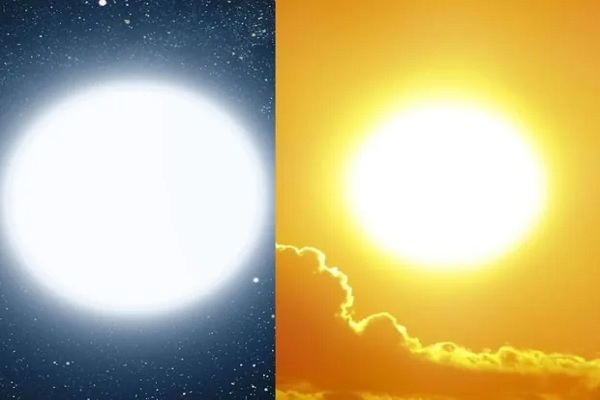
Sun is white and not yellow, confirms former NASA astronaut!


Most people believe the Sun is yellow since it appears yellow from the ground, but after reading this tweet, we may have to rethink our views.

This space truth was recently confirmed by NASA astronaut Scott Kelly in a widely shared tweet. The Sun's true colour is actually white, and the explanation the dwarf star typically seems yellow is due to an odd interaction between light physics that causes the sun to look yellow the majority of the time.

Our atmosphere causes the sun to appear yellow. But once you are outside of the atmosphere of the Earth, the Sun appears to be all white. NASA claims that this is because of way our eyes see colour.

Sunsets and sunrises seem red, yellow, or orange because the sun's light must traverse through all of Earth's atmosphere to reach the surface when it is lower in the sky than when it is directly overhead.

According to NASA, shorter light wavelengths, like blue, are more likely to be scattered through the atmosphere as time goes on, whereas longer light wavelengths, like red, can go considerably farther.

Since the amount of sunshine merely inundates the photoreceptor cells in our eyes, blending all the colours together, we are unable to distinguish a single colour from the sun. White is the result of combining all colours of light. As a result, the sun appears white in space and yellow on Earth. DailyBangladesh/RAH, Source: https://www.daily-bangladesh.com/
Read More........

Mars rover sees hints of past life in latest rock samples

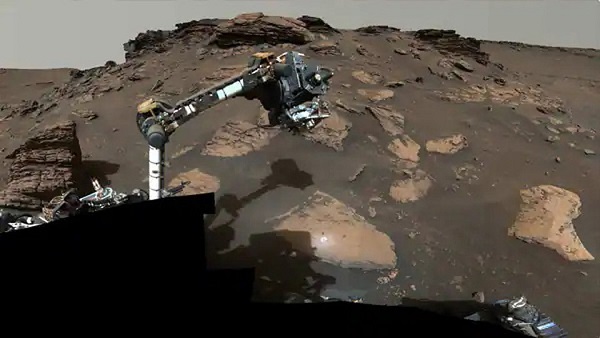
NASA's Perseverance Mars rover has detected its highest concentrations yet of organic molecules, in a potential signal of ancient microbes that scientists are eager to confirm when the rock samples are eventually brought to Earth.

While organic matter has been found on the Red Planet before, the new discovery is seen as especially promising because it came from an area where sediment and salts were deposited into a lake -- conditions where life could have arisen.

"It is very fair to say that these are going to be, these already are, the most valuable rock samples that have ever been collected," David Shuster, a Perseverance return sample scientist, told reporters during a briefing.

Organic molecules -- compounds made primarily of carbon that usually include hydrogen and oxygen, but also at times other elements -- are not always created by biological processes.

Further analysis and conclusions will have to wait for the Mars Sample Return mission -- a collaboration between NASA and the European Space Agency (ESA) to bring back the rocks that is set for 2033.

Nicknamed Percy, the rover landed on Mars' Jezero Crater in February 2021, tasked with caching samples that may contain signs of ancient life, as well as characterizing the planet's geology and past climate.

The delta it is exploring formed 3.5 billion years ago. The rover is currently there investigating sedimentary rocks, which came about from particles of various sizes settling in the then watery environment.

Percy cored two samples from a rock called "Wildcat Ridge," which is about three feet (one meter) wide, and on July 20 abraded some of its surface so it could be analyzed with an instrument called SHERLOC that uses ultraviolet light.

The results showed a class of organic molecules called aromatics, which play a key role in biochemistry.

"This is a treasure hunt for potential signs of life on another planet," NASA astrobiologist Sunanda Sharma said.

"Organic matter is a clue and we're getting stronger and stronger clues...I personally find these results so moving because it feels like we're in the right place, with the right tools, at a very pivotal moment."

There have been other tantalizing clues about the possibility of life on Mars before, including repeated detections of methane by Perseverance's predecessor, Curiosity.

While methane is a digestive byproduct of microbes here on Earth, it can also be generated by geothermal reactions where no biology is at play.DailyBangladesh/SA, Mars rover sees hints of past life in latest roc
Read More........

UK becomes first nation to approve Omicron vaccine


AUG 16, 2022 Britain has become the first country to authorise a Covid-19 vaccine that targets the Omicron variant. The UK medicine regulator (MHRA) approved the 'bivalent' vaccine made by Moderna as a booster for adults, Reuters reported. The agency's decision was based on clinical trial data that showed the booster triggered "a strong immune response" against both Omicron (BA.1) and the original 2020 virus, it said. The UK medicine regulator also cited an exploratory analysis in which the shot was also found to generate a good immune response against the currently dominant Omicron sub-variants BA.4 and BA.5, Copyright © Jammu Links News, Source: Jammu Links News
Read More........

Chemists crack complete quantum nature of water

"Now that we have a good template for understanding how water molecules interact among themselves, we have a basis to deepen our understanding of the role of water in biochemical processes essential to life," says Joel Bowman, Emory professor of theoretical chemistry. Chemists have produced the first full quantum mechanical model of water — one of the key ingredients of life. The Journal of Physical Chemistry Letters published the breakthrough, which used machine learning to develop a model that gives a detailed, accurate description for how large groups of water molecules interact with one another. “We believe we have found the missing piece to a complete, microscopic understanding of water,” says Joel Bowman, professor of theoretical chemistry at Emory University and senior author of the study. “It appears that we now have all that we need to know to describe water molecules under any conditions, including ice, liquid or vapor over a range of temperature and pressure.” The researchers developed free, open-source software for the model, which they dubbed “q-AQUA.” The q-AQUA software provides a universal tool for studying water. “We anticipate researchers using it for everything from predicting whether an exoplanet may have water to deepening our understanding of the role of water in cellular function,” Bowman says. Read more about the discovery here.  Source: eScienceCommons
Read More........

DRDO Celebrates 63rd Foundation Day; Chairman Reddy Calls To Focus On Cyber Security, Space, AI

New Delhi: The Defence Research & Development Organisation (DRDO) observed the 63rd Foundation Day of its establishment on Friday, 1st January 2021. G. Satheesh Reddy, Secretary DDR&D & Chairman DRDO met Defence Minister Rajnath Singh and presented him with a model of the Akash Missile System, which was recently cleared for export. On the occasion, the Chairman of DRDO along with DGs and Directors of DRDO HQ paid floral tributes to former President APJ Abdul Kalam at DRDO Bhawan, according to a press statement from the Ministry of Defence. The Ministry stated that DRDO was established in 1958 with just 10 laboratories to enhance the research work in the Defence sector and was tasked with designing and developing cutting-edge defence technologies for the Indian Armed Forces. The Defence Ministry stated that today, the DRDO is working in multiple cutting-edge military technology areas, which include aeronautics, armaments, combat vehicles, electronics, instrumentation, engineering systems, missiles, materials, naval systems, advanced computing, simulation, cyber, life sciences, and other technologies for defence. Addressing the DRDO fraternity, the DRDO Chairman Reddy extended warm wishes to DRDO employees and their families. He stated that an eventful year has passed and a new one is about to begin, and asked scientists to innovate and create for the nation. He said that efforts of DRDO have given a quantum jump to India’s self reliance in defence, contributing towards Atmanirbhar Bharat. He declared ‘Export’ as the theme of DRDO for 2021 and mentioned that many products based on DRDO technologies have already been exported by DPSUs and industry. He said that in 2020, the DRDO achieved many milestones such as the maiden landing of LCA Navy onboard INS Vikramaditya, demonstration of Hypersonic Technology Demonstration Vehicle (HSTDV), Quantum Key Distribution (QKD) & QRNG developments in the area of Quantum Technology, Laser Guided Anti Tank Guided Missile (ATGM), Supersonic Missile Assisted Release of Torpedo (SMART), Anti Radiation Missile (NGARM), enhanced version of PINAKA Rocket System, Quick Reaction Surface to Air Missile (QRSAM), Maiden launch of MRSAM, 5.56 x 30 mm Joint Venture Protective Carbine (JVPC), and many other milestones. He highlighted the contributions of DRDO during the Covid-19 pandemic and said that nearly 40 DRDO laboratories developed more than 50 technologies and over 100 products on a war footing for combating the Novel Coronavirus pandemic in India. These included PPE kits, sanitizers, masks, UV-based disinfection systems, Germi Klean, and critical parts of ventilators leading to ventilator manufacturing in the country in a very short span of time. He further said that DRDO has established three dedicated Covid hospitals at Delhi, Patna, and Muzaffarpur in a record time for strengthening the medical infrastructure. In addition, Mobile Virology Research and Diagnostics Laboratory (MVRDL) were developed to speed-up the Covid-19 screening and R&D activities at various locations for strengthening the Covid testing capabilities. The DRDO Chairman mentioned that new policies and procedures were launched for increasing the efficiency and ease of engagement with various stakeholders in the development, saying DRDO has also taken major steps for further strengthening its base for taking up technological challenges for the defence systems development and will continue to strive for the best in defence technology and ensure the system development in the shortest time. While congratulating DRDO scientists and all other personnel who worked in close coordination with the armed forces for user trials, he set many targets for them. He talked about the flagship programmes of DRDO such as Hypersonic Cruise Missile, Advanced Medium Combat Aircraft (AMCA), New Generation MBT, Unmanned Combat Aerial Vehicle, Enhanced AEW&CS, LCA MK II, and many other systems. In his speech, Chairman Reddy called upon DRDO scientists to focus on next generation needs including cyber security, space and, artificial intelligence. The immense potential available in DRDO has been a catalyst for the development of industries in defence manufacturing sector, he said, as per the Defence Ministry statement. The Chairman highlighted that the academic institutes, R&D organisations and industry need to work together on the advanced and futuristic technologies to make India self-reliant in defence sector. He mentioned that a number of SMEs and MSMEs are supplying small components to subsystems for all DRDO projects and have been nurtured by DRDO. Now they have become partners in all new developments. He stated that DRDO conducted a competition called ‘Dare to Dream’ for startups and very enthusiastic response have been received. He further added that at least 30 startups should be supported every year to develop innovative products for the armed forces. He said that DRDO should make efforts towards strengthening long term ties with academia and aim to leverage the academic expertise available in the country and increase the synergy with them, remarking that DRDO should concentrate on applied research and translational research and then make prototypes from the applied research. He further said that the industry should be in a position to adopt these technologies and have necessary infrastructure, and scale these up to market with sustained quality. He underlined the need to focus on documentation and production for faster induction, and said that many new initiatives towards enabling the industry and empowering youth for Defence R&D will be taken by DRDO.DRDO Chairman Reddy also launched an Online Industry Partner Registration Module to simplify the process of vendor registration. He released the DRDO Monograph on ‘Issues on Development of Communication Technology using Orbiting Satellites’ and also the Environmental Safety Manual and Guidelines for Disposal of Life Expired Chemicals and Gases at DRDO Laboratories. Source: https://indusdictum.com/

Read More........

Apollo 11 astronaut Michael Collins dies at 90

American astronaut Michael Collins, who flew the Apollo 11 command module while his crewmates became the first people to land on the Moon in 1969, died on Wednesday after battling cancer, his family said.

“Mike always faced the challenges of life with grace and humility, and faced this, his final challenge, in the same way,” Collins’ family tweeted on his official Twitter account.

Often described as the "forgotten" third astronaut on the historic mission, Collins remained alone for more than 21 hours until his two colleagues returned in the lunar module. He lost contact with mission control in Houston each time the spacecraft circled the dark side of the moon.

"Not since Adam has any human known such solitude as Mike Collins," the mission log said, referring to the biblical figure.

Collins wrote an account of his experiences in his 1974 autobiography, "Carrying the Fire," but largely shunned publicity."I know that I would be a liar or a fool if I said that I have the best of the three Apollo 11 seats, but I can say with truth and equanimity that I am perfectly satisfied with the one I have," Collins said in comments released by NASA in 2009. Source: https://www.daily-bangladesh.com/
Read More........

Inoculated individual may carry coronavirus, scientist says

An individual who was inoculated against the novel coronavirus infection may remain its carrier and therefore should observe preventive measures, acting director of the Smorodintsev Research Institute of Influenza of the Russian Healthcare Ministry Dmitry Lioznov said at a press conference on Thursday.

“An inoculated individual, he is protected, he does not develop the disease but the agent can get on the mucous lining, remain there for some time and emit to the external environment. A healthy individual can also be [a carrier] without developing the disease but he can be that temporary carrier.

This is precisely why we say that a vaccinated individual should observe certain anti-epidemic measures in order not to infect the others,” the scientist said.According to deputy director for research of the Smorodintsev Research Institute of Influenza Darya Danilenko, an individual is considered to be vaccinated if he received the full dose of a vaccine, that is, was inoculated twice when it’s necessary. “After the second administration, at least three weeks should elapse after which we consider that enough time has elapsed for a person to be considered vaccinated, that is, his immune system responded to the administration of a vaccine,” she explained. Until then, according to her, the probability that this individual may be a carrier is higher. Source: https://www.daily-bangladesh.com
Read More........

Russia reports ‘non-standard’ air leak on Space Station

Russia said Tuesday that astronauts had found an air leak in its section of the International Space Station, with a senior space official calling the air loss beyond expected levels.

The crew on the ISS — Russian cosmonauts Anatoly Ivanishin and Ivan Vagner and NASA astronaut Christopher Cassidy — have been searching for the air leak since August, first checking the US segment.

Russia’s space agency, Roscosmos, said in a statement that after analysis and a search for the leak “it was established that the spot is located in the Zvezda (star) service module, which contains scientific equipment.”

It said a search was now underfoot to pinpoint the exact location, saying the situation “is not dangerous for the life and health of the ISS crew and does not prevent the ISS continuing manned flight.”

“It’s not critical in the near future,” said Sergei Krikalyov, the executive director of Russia’s manned space programs, in a televised comment.

He said the ISS always has slight air loss due to the air purifying system.

“These leaks are predictable. What’s happening now is more than the standard leakage and naturally if it lasts a long time, it will require supplies of extra air to the station,” he said.

He said the crew were now resting but hoped to find the precise spot and fix the leak on Wednesday.

“That’s not for sure,” he added, saying there was quite a large area to search.

“We have time. The leak exists of course. It’s not good that it’s there, but it’s not critical,” he said.

NASA said that the leak had appeared to grow in size overnight Monday to Tuesday and the crew were awakened by flight controllers to carry out a search.

It was later found that a temperature change had made the leak seem to grow, while the rate of air escaping was “unchanged,” the US space agency said.

Previously, astronauts had searched for the source of the leak in the US segment of the station using an ultrasound detector.

The incident comes after astronauts in 2018 found a hole in the wall of a Russian-made Soyuz space capsule docked onto the ISS.

The cause of the hole has not yet been made public.Three new crew members, Russians Sergei Ryzhikov and Sergei Kud-Sverchkov and NASA astronaut Kate Rubins, are set to arrive in a Russian Soyuz spacecraft due to launch October 14.  Source: https://www.daily-bangladesh.com/
Read More........

NASA to send a new toilet to Space Station

The US space agency NASA is set to test a new zero-gravity toilet to the International Space Station (ISS) before its probable use in a future mission to the Moon.

The $23m (195 crores BDT) toilet, which sucks waste from the body, will be sent to the ISS on a cargo ship.

According to NASA, the toilet's "vacuum system" was designed for the comfort of female astronauts, unlike previous models.

The toilet was supposed to be sent to the space station from Virginia by the rocket on Thursday afternoon. But three minutes before the launch, the mission was aborted due to a technical error. If the engineers can fix the errors, they will try again.

According to NASA, the Titanium Space Toilet will help in missions to more remote areas. The vacuum system is being used here to discharge body wastes in the zero gravity region.

The toilet uses a vacuum system to suck waste away from the body in a zero-gravity environment. For privacy, the toilet is located inside a cubicle - just like in a public bathroom on Earth.

It weighs 45kg (100lbs) and standing 28in (71cm) tall, the toilet is 65% smaller and 40% lighter than the one currently in use.

NASA project manager Melissa McKinley said the Universal Waste Management System (UWMS) toilet has been designed for a long time. The commode seat and urine funnel are more refined than before. Women astronauts will feel more comfortable.

In a video posted to Twitter, Nasa astronaut Jessica Meir described the toilet as a "vacuum system".

"So imagine you have a vacuum cleaner and you're sucking things down. You turn on a big fan, so that's pulling everything down inside the toilet," she said.She added that this toilet will process and recycle urine as drinking water for astronauts in a special way. Source:https://www.daily-bangladesh.com:
Read More........

Xiaomi 80W wireless charging technology goes official

Chinese technology company Xiaomi has announced its next salvo in the fast charging wars, a new 80W wireless method that the company claims beats out any other competitor. The 80W solution is said to be able to charge a 4,000mAh battery up to 50 percent full in eight minutes and 100 percent full in 19 minutes. The video above shows it in action on a modified Mi 10 Pro.

Xiaomi already has the fastest wireless charging on a shipping phone; the Mi 10 Ultra has 50W wireless technology that can fully charge its 4,500mAh battery in 40 minutes. Oppo recently announced a 65W solution that is said to be able to charge a 4,000mAh battery in 30 minutes, but the tech is yet to ship in a commercial device.

Fast wireless charging is much less common outside China, where companies like Huawei and Xiaomi have been working to outdo each other for a while. The fastest option that’s widely available in the West is the OnePlus 8 Pro, which has an optional 30W wireless charger. Apple’s new MagSafe chargers for the iPhone 12 line charge at up to 15W.Xiaomi hasn’t announced when a phone with 80W wireless charging will actually ship, but it shouldn’t be too far off. The company has consistently released phones with ever-higher wireless power specs over the past couple of years, with the Mi 10 Ultra only coming out a couple of months ago. Source: https://www.daily-bangladesh.com
Read More........

Nokia, NASA to install 4G on the Moon

Finnish multinational telecommunications, information technology, and consumer electronics company Nokia announced its expansion into a new market on Monday, winning a deal to install the first cellular network on the Moon.

The Finnish equipment manufacturer said it was selected by NASA to deploy an “ultra-compact, low-power, space-hardened” wireless 4G network on the lunar surface, as part of the US space agency’s plan to establish a long-term human presence on the Moon by 2030, according to a report by AFP.

The $14.1 million contracts, awarded to Nokia’s US subsidiary, is part of NASA’s Artemis program which aims to send the first woman, and next man, to the moon by 2024.

The astronauts will begin carrying out detailed experiments and explorations which the agency hopes will help it develop its first human mission to Mars.

Nokia’s network equipment will be installed remotely on the Moon’s surface using a lunar hopper built by Intuitive Machines in late 2022, Nokia said.

“The network will self-configure upon deployment,” Nokia said in a statement, adding that the wireless technology will allow for “vital command and control functions, remote control of lunar rovers, real-time navigation and streaming of high definition video.”

The 4G equipment can be updated to a super-fast 5G network in the future, Nokia said.

In all, NASA announced last week it would distribute $370 million to 14 companies to supply “Tipping Point” technologies for its mission, which include robotics and new methods of harvesting the resources required for living on the moon, such as oxygen and energy sources.

Among them, Elon Musk’s SpaceX received $53.2 million for a demonstration of the transferring of ten metric tons of liquid oxygen between tanks on a starship vehicle, NASA said.Source: AFP Source: https://www.daily-bangladesh.com
Read More........

Google removes 3 popular apps from Play Store

Google has removed three popular apps used by kids from its Play Store periodically when the apps are caught violating its policies.

The International Digital Accountability Council (IDCA) had found that the three apps, identified as Princess Salon, Number Coloring, and Cats & Cosplay, were collecting data of users, who happen to be children in most instances, in violation of the Play Store policies, and that this data was potentially leaking to SDKs of third parties.

"The practices we observed in our research raised serious concerns about data practices within these apps," IDAC president Quentin Palfrey told TechCrunch.

The website also got a response from Google, which told it, “We can confirm that the apps referenced in the report were removed. Whenever we find an app that violates our policies, we take action.”

It is not clear what sort of data the three innocent-looking apps were collecting. But these were the apps used by kids as they claimed to gamify learning. A number of such apps continue to be available on the app stores managed by Google and Apple.

When it comes to the data of children, companies like Apple and Google have more stringent requirements from app developers. The data of children has to be handled more carefully and in many cases, it cannot be passed on to third parties. In fact, so sensitive are the rules governing the use of technology by children in many but not all countries that Google even offers services that are specific to kids, such as YouTube Kids.This is not the first time Google has removed apps from its play store. Earlier, the company removed a number of malicious apps from the Play Store. Check the list below and remove them if you have them on your phone. Source: https://www.daily-bangladesh.com
Read More........

Whatsapp delivers 100 billion messages each day: Zuckerberg

Facebook CEO Mark Zuckerberg during the latest quarterly earnings call in late October said WhatsApp now delivers close to 100 billion messages every day . 

Zuckerberg shared that 2.5 billion people around the world use WhatsApp, and other apps owned by Facebook every day and there are more than 10 million active advertisers across services.

WhatsApp usually experiences a significant spike in messages in the day of New Year's Eve and this has been a trend for the past several years. In 2017, WhatsApp saw 63 billion messages sent globally on New Year's Eve, followed by 75 billion in 2018, and over 100 billion last year. Since then, almost 100 billion messages are now delivered every day.Earlier in this year, WhatsApp’s user base has crossed the 2 billion mark and there is no other messaging service that is delivering these many messages when compared to the number of this Zuckerberg's messaging platform delivers. According to a report by Statista, WhastApp reached five billion downloads on Android in January this year, making it only the second non-Google app to achieve this milestone. Source: https://www.daily-bangladesh.com
Read More........

Apple bringing 5G to the MacBook

Apple has begun working on its first cellular modem to bring 5G to its growing system-on-chip components, a new report from Bloomberg claims. However, it will bring 5G to the MacBook and due to this modem, the battery consumption will be much higher than usual.

Johnny Srozy, Apple's senior vice president of hardware technology, has confirmed the development of that 5G modem, saying “kicked off the development of our first internal cellular modem which will enable another key strategic transition.” 

Intel has been working on making Five-G modems for the last few years, however, they did not succeed in the project of making modems. Qualcomm also had problems with the device overheating and battery consumption when it first built the Five-G modem.It has not been yet known when Apple will be able to bring MacBook with Five-G modem, it’s probably going to take a while to implement. Source: https://www.daily-bangladesh.com
Read More........

Mutated virus variant from South Africa found in UK

A new, potentially more infectious variant of the novel coronavirus that causes Covid-19 has been found in Britain in cases linked to South Africa, British Health Secretary Matt Hancock said yesterday.
South Africa’s health department said last week that a new genetic mutation of the virus had been discovered and might be responsible for a recent surge in infections there.
“Thanks to the impressive genomic capability of the South Africans, we’ve detected two cases of another new variant of coronavirus here in the UK,” Hancock told a media briefing.
“Both are contacts of cases who have travelled from South Africa over the past few weeks.”
Britain is already trying to curb the spread of a mutated strain of the virus which is up to 70% more transmissible, and further studies aerie being carried out on the new variant.
“This new variant is highly concerning, because it is yet more transmissible, and it appears to have mutated further than the new variant has been discovered in the UK,” he said.
Close contacts of those with the new variant and all those who have been in South Africa in the last fortnight, or were in close contact with someone who had, must quarantine, he said.
Immediate restrictions were being imposed on travel from South Africa, he added.
Countries around the world have in recent days closed their borders to both Britain and South Africa following the identification of the new, fast-spreading variants of the coronavirus.
“So the new variant in the UK, which we’ve identified, is very different to the variant in South Africa, it’s got different mutations,” said Susan Hopkins from Public Health England.
“Both of them look like they’re more transmissible. We have more evidence on the transmission for the UK variant because we’ve been studying that with great detail with academic partners. We’re still learning about the South African variant.”
She expressed confidence that the spread of the South Africa-linked variant would be controlled and said vaccines that have already been developed should be effective.
“We have no evidence at the moment that the vaccine will not work, so actually what that means in fact is that there’s strong evidence that it will work, because the vaccine produces a strong immune response and it’s broad and acts against lots of variation in the virus,” she said. Source: https://www.gulf-times.com
Read More........

Modi impressed with rise in leopard population In India


Prime Minister Narendra Modi on Tuesday expressed happiness over the increasing population of leopards in India which has registered more than 60 per cent rise in the latest report. 

"Great news! After lions and tigers, the leopard population increases," the Prime Minister tweeted.

Extending congratulations to all those who are working towards animal conservation, the Prime Minister appealed to such institutions and people to keep up these efforts and ensure "our animals live in safe habitats".

Prime Minister's message came after Union Minister Prakash Javadekar released the "Status of Leopard in India 2018" report.

Javadekar informed in a tweet that "India now has 12,852 leopards", saying it is "more than 60 per cent increase in the population compared to the previous estimate which was conducted in 2014". Source: https://southasiamonitor.org/
Read More........

Research Strongly Suggests COVID-19 Virus Enters the Brain


A study published in Nature Neuroscience shows how spike protein crosses the blood-brain barrier.

The S1 protein likely causes the brain to release inflammatory products causing a storm in the brain, researchers said.

More and more evidence is coming out that people with COVID-19 are suffering from cognitive effects, such as brain fog and fatigue.

And researchers are discovering why. The SARS-CoV-2 virus, like many viruses before it, is bad news for the brain. In a study published Dec.16 in Nature Neuroscience, researchers found that the spike protein, often depicted as the red arms of the virus, can cross the blood-brain barrier in mice.

This strongly suggests that SARS-CoV-2, the cause of COVID-19, can enter the brain.

The spike protein, often called the S1 protein, dictates which cells the virus can enter. Usually, the virus does the same thing as its binding protein, said lead author William A. Banks, a professor of medicine at the University of Washington School of Medicine and a Puget Sound Veterans Affairs Healthcare System physician and researcher. Banks said binding proteins like S1 usually by themselves cause damage as they detach from the virus and cause inflammation.

“The S1 protein likely causes the brain to release cytokines and inflammatory products,” he said.

In science circles, the intense inflammation caused by the COVID-19 infection is called a cytokine storm. The immune system, upon seeing the virus and its proteins, overreacts in its attempt to kill the invading virus. The infected person is left with brain fog, fatigue and other cognitive issues.

Banks and his team saw this reaction with the HIV virus and wanted to see if the same was happening with SARS CoV-2.

Banks said the S1 protein in SARS-CoV2 and the gp 120 protein in HIV-1 function similarly. They are glycoproteins – proteins that have a lot of sugars on them, hallmarks of proteins that bind to other receptors. Both these proteins function as the arms and hand for their viruses by grabbing onto other receptors. Both cross the blood-brain barrier and S1, like gp120, is likely toxic to brain tissues.

“It was like déjà vu,” said Banks, who has done extensive work on HIV-1, gp120, and the blood-brain barrier.

The Banks’ lab studies the blood-brain barrier in Alzheimer’s, obesity, diabetes, and HIV. But they put their work on hold and all 15 people in the lab started their experiments on the S1 protein in April. They enlisted long-time collaborator Jacob Raber, a professor in the departments of Behavioral Neuroscience, Neurology, and Radiation Medicine, and his teams at Oregon Health & Science University.

The study could explain many of the complications from COVID-19.

“We know that when you have the COVID infection you have trouble breathing and that’s because there’s infection in your lung, but an additional explanation is that the virus enters the respiratory centers of the brain and causes problems there as well,” said Banks.

Raber said in their experiments transport of S1 was faster in the olfactory bulb and kidney of males than females. This observation might relate to the increased susceptibility of men to more severe COVID-19 outcomes.

As for people taking the virus lightly, Banks has a message:

“You do not want to mess with this virus,” he said. “Many of the effects that the COVID virus has could be accentuated or perpetuated or even caused by virus getting in the brain and those effects could last for a very long time.”

This study was partially supported by a National Institute on Aging-funded COVID-19 supplement to a shared RF1 grant of Banks and Raber.​

Contacts and sources: 
Bobbi Nodell
University of Washington Health Sciences

Publication: The S1 protein of SARS-CoV-2 crosses the blood–brain barrier in mice Elizabeth M. Rhea, Aric F. Logsdon, Kim M. Hansen, Lindsey M. Williams, May J. Reed, Kristen K. Baumann, Sarah J. Holden, Jacob Raber, William A. Banks & Michelle A. Erickson Nature Neuroscience (2020) https://www.nature.com/articles/s41593-020-00771-8 http://dx.doi.org/10.1038/s41593-020-00771-8 Source: https://www.ineffableisland.com/
Read More........

Scientists evaluate various mask protection, modifications against COVID-19


DEC 12, 2020 NEW YORK: Scientists have assessed the filtering efficiency provided by various types of facemask modifications, and found that masks made of two layers of woven nylon are some of the most effective when fit snug against the wearer's face. The scientists, including those from the University of North Carolina (UNC) School of Medicine in the US, noted that over the course of the COVID-19 pandemic, there have been a number of innovative "hacks," devices, and mask enhancements that claim to improve the performance of conventional masks. However, they believe there have been few evaluations of the efficiency of these face coverings or mask enhancements at filtering airborne particles. In the study, published in the journal JAMA Internal Medicine, the scientists assessed the protectiveness of various kinds of consumer-grade and modified masks, assuming the mask wearer was exposed to the virus. According to the researchers, surgical masks offered 38.5 per cent filtration efficacy, but when the ear loops were tied in a specific way to tighten the fit, the efficacy improved to 60.3 per cent. When a layer of nylon was added, they said these masks offered 80 per cent effectiveness. "Limiting the amount of virus is important because the more viral particles we're exposed to, the more likely it is we will get sick and potentially severely ill," said Emily Sickbert-Bennett, another co-author of the study from UNC. The study found that cotton bandanas folded and worn as "bandit style masks" were only 49 per cent effective, whereas N95 respirators were 98 per cent protective. According to the researchers, the presence of nose bridges, and the washing of cotton and nylon masks, significantly improved their protectiveness. "While modifications to surgical masks can enhance the filtering capabilities and reduce inhalation of airborne particles by improving the fit of the mask, we demonstrated that the fitted filtration efficiencies of many consumer-grade masks were nearly equivalent to or better than surgical masks," said study co-first author Phillip Clapp from the UNC School of Medicine. Copyright © Jammu Links News, Source: Jammu Links News
Read More........