India puts into orbit its 42nd communication satellite


India on Thursday successfully placed its 42nd communication satellite CMS-01 (formerly GSAT-12R) in the geosynchronous transfer orbit in a textbook style.

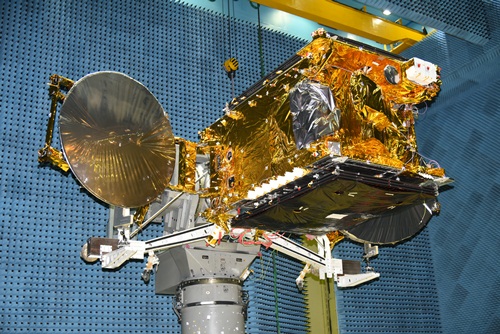
India's brand new communication satellite CMS-01 with a life span of seven years will provide services in Extended-C Band of the frequency spectrum. The satellite will cover Indian mainland, Andaman and Nicobar and Lakshadweep Islands, said Indian Space Research Organisation (ISRO), the country's space agency.

The CMS-01 will be a replacement for GSAT-12 that weighed 1,410 kg and was launched on July 11, 2011 with a mission life of eight years.

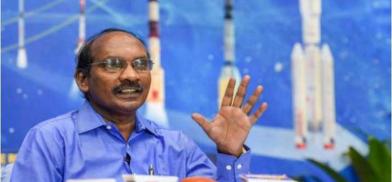
Expressing his happiness at the successful launch of CMS-01 satellite, ISRO Chairman K.Sivan said: "In four days time the CMS-01 satellite will be taken to its intended geosynchronous orbit. The satellite's solar panel has been deployed."

He said the next rocket that would fly in Feb-March 2021 will be PSLV-C51 which will be a special one for ISRO as well as for the country.

Sivan said the rocket will be carrying India's first earth observation satellite from a start-up called Pixxel. The rocket will also carry communication satellite built by students part of SpaceKidz team and another satellite built by consortium of three Indian universities.

"The primary payload for PSLV-C51 rocket will be a Brazilian satellite weighing between 600-700kg," Sivan told IANS.

He also said Team ISRO has a busy schedule ahead with the launch of Aditya satellite, Gaganyaaan-India's human space mission, realisation of small rocket Small Satellite Launch Vehicle (SSLV). Source: i
Read More........

PSLV-C50 to launch communication satellite CMS-01 on Dec 17: ISRO


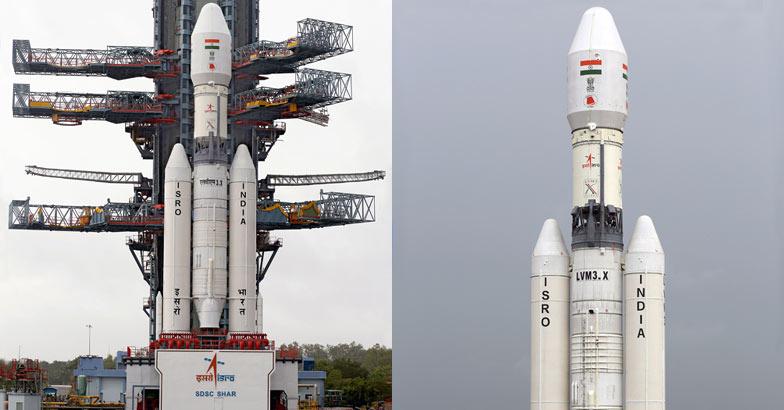
DEC 11, 2020 BENGALURU: The launch of communication satellite CMS-01 onboard the Polar Satellite Launch Vehicle (PSLV-C50), is scheduled on December 17 from the Satish Dhawan Space Centre at Sriharikota, the Indian Space Research Organisation said on Friday. "PSLV-C50, which is the 52nd mission of PSLV, will launch CMS-01 from the Second Launch Pad (SLP) of Satish Dhawan Space Centre (SDSC) SHAR, Sriharikota. The launch is tentatively scheduled at 15:41 Hrs IST on December 17, 2020 subject to weather conditions," the space agency said. CMS-01 is a communication satellite envisaged for providing services in Extended-C Band of the frequency spectrum, it said. The Extended-C Band coverage will include Indian mainland, Andaman-Nicobar and Lakshadweep Islands. CMS-01 is the 42nd Communication Satellite of India. PSLV-C50 is the 22nd flight of PSLV in ''XL'' configuration (with 6 strap-on motors), ISRO said, adding that this will be the 77th launch vehicle mission from SDSC SHAR, Sriharikota. Copyright © Jammu Links News, Source: Jammu Links News
Read More........

India's human space flight may face slight delay: ISRO chief

a

India's human space flight mission Gaganyaan will be "slightly delayed" owing to the impact of the Covid-19 pandemic even as ISRO resumes rocket launch activities from the first week of November, space agency chief K. Sivan said on Monday.

Answering a query at the plenary session of the International Astronautical Congress 2020, the Indian Space Research Organisation (ISRO) Chairman said India's first human space flight was targeted in August 2022, but owing to Covid-19's impact on the operations, the there will be a slight slip in meeting the mission's target date.

Prime Minister Narendra Modi, during his Independence Day speech on August 15, 2018, had said when the nation is celebrating 75th year of Independence in 2022, an Indian son or daughter will be flying into space under the Gaganyaan mission.

Sivan said that the Gaganyaan mission has advanced well and the country is taking the help of other space-faring nations like Russia for training the astronauts and some other critical aspects, France in the space medical area and is also approaching US space agency NASA.

On resuming rocket launches, he said some missions were delayed as officials were unable to travel to the rocket port from different cities.

Sivan said ISRO is planning to launch its Polar Satellite Launch Vehicle C49 (PSLV C49) during the first week of November.

The PSLV C49 rocket will fly with RISAT-2BR2 as the main passenger and about several other third party satellites for a fee.

According to Sivan, international cooperation is the hallmark of India's space activities.

The country has signed about 250 collaboration agreements with about 59 nations.

He said India's international collaborations are a mix-some for getting advanced technologies and some are for helping other space faring nations and pointed out training 60 persons from 23 nations in building nano-satellites  Source: https://southasiamonitor.org/
Read More........

ISRO gearing up for rocket launches with Virtual Launch Control Centre

a

The Indian space agency ISRO is gearing up for three quick rocket launches carrying domestic and foreign satellites, said a senior official. It has also developed a Virtual Launch Control Centre to test the rocket systems at the rocket port in Sriharikota in Andhra Pradesh remotely from the Thiruvananthapuram based Vikram Sarabhai Space Centre (VSSC), part of the Indian Space Research Organisation (ISRO), he added.

"With Covid-19 pandemic prevailing, the Indian space agency in order to reduce the number of people travelling to Sriharikota, has developed a Virtual Launch Control Centre at VSSC. As a result, the testing of various rocket systems is being done at VSSC," S. Somanath, Director, VSSC, told IANS.

The physical launch control centre is located in the building that houses the Mission Control Centre in Sriharikota and the systems there have been replicated at VSSC in the form of a virtual launch control centre.

"Three rockets are getting ready for launch at the rocket port in Sriharikota viz Polar Satellite Launch Vehicle C49 (PSLV C49), PSLV C50 and Geosynchronous Satellite Launch Vehicle (GSLV). The first rocket to fly will be the PSLV C49 sometime next month with about 10 satellites. It will be carrying India's RISAT-2BR2 and other commercial satellites lifting off from the first launch pad," Somanath said.

The next one to fly will be PSLV C50 with the GSAT-12R satellite. The rocket is being assembled at Sriharikota with various systems coming from different centres. It will fly from the second launch pad, he added.

"We are targeting PSLV C50 sometime in December. It needs about 30 days to get ready for another launch after one launch," he said.

Presently four Indian satellites are ready for launch viz GISAT, Microsat-2A, GSAT-12R and, RISAT-2BR2. (IANS), Source: https://southasiamonitor.org
Read More........

ISRO successfully launches earth monitoring satellite HysIS

The primary mission of the Hyper Spectral Imaging Satellite (HysIS), whose mission life is five years

Sriharikota (AP): Adding another feather to its cap, ISRO's workhorse rocket PSLV-C43 Thursday successfully injected into orbit India's earth observation satellite HysIS. The 30 other co-passenger international satellites including those from the United States of America and Australia among others, will soon be placed into orbit.

The rocket lifted off majestically into cloudy skies in a burst of orange flames at 9.57 am from the first launch pad at this spaceport at the end of the 28-hour countdown. The HysIS was placed in orbit 17 minutes and 27 seconds after lift-off.

"#PSLVC43 successfully lifts off with 31 satellites, including #HysIS, from Satish Dhawan Space Centre, Sriharikota", ISRO announced on its Twitter handler Thursday morning.

"#PSLVC43 successfully injects Indian satellite #HysIS, into sun-synchronous polar orbit", ISRO wrote on Twitter minutes later.

The primary mission of the Hyper Spectral Imaging Satellite (HysIS), whose mission life is five years, is to study the earth's surface in visible near infrared and shortwave infrared regions of the electromagnetic spectrum.

"HysIS is an earth observation satellite developed by ISRO. It is the primary satellite of the PSLV-C43 mission. The satellite will be placed in 636 km polar sun synchronous orbit (SSO) with an inclination of 97.957 deg. The mission life of the satellite is 5 years," ISRO said.

The co-passenger satellites have been contracted for launch through ISRO's commercial arm Antrix Corporation Limited. PSLV-C43, is the 'Core Alone' version of PSLV. It is the lightest version of the launch vehicle.

This is ISRO's second launch in the month. The space agency had launched its latest communication satellite GSAT-29 on board GSLV MkIII-D2 on November 14. Source: ummid.com
Read More........

ISRO releases new photos of moon craters by Chandrayaaan 2

AUG 27, 2019 BENGALURU: Chandrayaan-2, which is currently orbiting the Moon, has captured some more images of the lunar surface showing several craters, the Indian Space Research Organisation (ISRO) said on Monday. Sharing the pictures, the ISRO said in a statement that the photos captured by the lunar spacecraft are those of craters Somerfeld, Kirkwood, Jackson, Mach, Korolev, Mitra, Plaskett, Rozhdestvenskiy and Hermite. These craters have been named after great scientists, astronomers and physicists. Crater Mitra has been named after Prof Sisir Kumar Mitra, an Indian physicist and Padma Bhushan recipient known for his pioneering work in the field of ionosphere and Radiophysics. The space agency said these pictures of the lunar surface were taken on August 23 by the Terrain Mapping Camera-2 of Chandrayaan-2 from an altitude of about 4,375 km. The first picture of Moon captured by Chandrayaan-2 was released by ISRO on August 22. Chandrayaan-2, a three-module spacecraft comprising an orbiter, lander and rover, was launched on July 22. ISRO had on August 21 performed second lunar bound orbit manoeuvre for Chandrayaan-2 and said all spacecraft parameters are normal. There will be three more orbit manoeuvres before the lander''s separation from the Orbiter on September 2 and eventual soft landing in the south polar region of the Moon, planned on September 7. Copyright © Jammu Links News, Source: Jammu Links News
Read More........

India launches high-power communication satellite GSAT-30

India today successfully launched its latest and most powerful communication satellite GSAT-30 from the European Space Agency’s spaceport in French Guiana during the early hours of the day.
The launch was carried out using European Space Agency’s launch vehicle Ariane. The Ariane 5 VA-251 lifted off from the Kourou launch base in French Guiana at 2:35 am IST carrying India’s GSAT-30 and EUTELSAT KONNECT for Eutelsat, as scheduled.
After a flight lasting 38 minutes 25 seconds, GSAT-30 separated from the Ariane 5 upper stage in an elliptical Geosynchronous Transfer Orbit, Isro stated in a release. 
With a lift-off mass of 3,357 kg, GSAT-30 will provide continuity to operational services on some of the in-orbit satellites. GSAT-30 derives its heritage from Isro’s earlier INSAT/GSAT satellite series and will replace INSAT-4A in orbit.
"A strong start to 2020 as Ariane 5 successfully deploys its two satellite passengers - EUTELSAT KONNECT and GSAT-30 - into geostationary transfer orbit! I appreciate the trust from the two customers on this mission: Arianespace CEO Stephane Israel tweeted confirming the successful launch.
Isro's UR Rao Satellite Centre Director P Kunhikrishnan, who was present in Kourou, congratulated the Isro community and Arianespace team on the successful launch.
Calling it an "excellent start" to 2020 for Isro with the launch, he said, "The mission team at the master control facility have already acquired the satellite and they will immediately complete the post launch operations...."
The 3,357-kg satellite is configured on Isro's enhanced I-3K Bus structure to provide communication services from Geostationary orbit in C and Ku bands. The communication payload of GSAT-30 is specifically designed and optimised to maximise the number of transponders on the spacecraft bus, Isro stated.
“GSAT-30 has a unique configuration of providing flexible frequency segments and flexible coverage. The satellite will provide communication services to Indian mainland and islands through Ku-band and wide coverage covering Gulf countries, a large number of Asian countries and Australia through C-band” Isro chairman K Sivan said.
“GSAT-30 will provide DTH television services, connectivity to VSATs for ATM, stock exchange, television uplinking and teleport services, Digital Satellite News Gathering (DSNG) and e-governance applications. The satellite will also be used for bulk data transfer for a host of emerging telecommunication applications,” Sivan added.
Isro’s Master Control Facility (MCF) at Hassan in Karnataka took over the command and control of GSAT-30 immediately after its separation from the launch vehicle. Preliminary health checks of the satellite revealed its normal health.
In the days ahead, Isro will carry our orbit-raising manoeuvres to place the satellite in Geostationary Orbit (36,000 km above the equator) by using its on-board propulsion system.
During the final stages of its orbit raising operations, the two solar arrays and the antenna reflectors of GSAT-30 will be deployed. Following this, the satellite will be put in its final orbital configuration. The satellite will be operational after the successful completion of all in-orbit tests.
Read More........

Isro's PSLV-C28 successfully places 5 British satellites in orbit


The Indian Space Research Organisation (Isro) on Friday successfully launched five British commercial satellites aboard its PSLV-C28 launch vehicle from its space port in Sriharikota, marking its heaviest commercial mission ever. ISRO's workhorse Polar Satellite Launch Vehicle PSLV-C28, in its 13th flight, placed the five satellites, including three identical DMC3 optical earth observation satellites, in sun synchronous orbit about 20 minutes after lift-off at 9.58 PM from the Satish Dhawan Space Centre at Sriharikota. The three DMC3 satellites, each weighing 447 kg, were launched into a 647 km sun-synchronous orbit (SSO) using the high-end version of PSLV (PSLV-XL). ''It's been a wonderful mission… an extremely successful mission,'' a beaming ISRO chairman Kiran Kumar said from the Mission Control Centre. The three identical DMC3 optical earth observation satellites were built by Surrey Satellite Technology Limited (SSTL) of the United Kingdom. The PSLV-C28 also carried two auxiliary satellites from the UK, viz, CBNT-1, a technology demonstrator earth observation micro satellite built by SSTL, and De-OrbitSail, a technology demonstrator nano satellite built by Surrey Space Centre. PSLV-C28 will be the ninth flight of the launch vehicle in 'XL' configuration. With the overall lift-off mass of 1,440 kg of the five satellites, this launch becomes the heaviest commercial mission till date undertaken by Antrix Corporation, the commercial arm of ISRO . Accommodating the three DMC3 satellites each with a height of about 3 metre within the existing payload fairing of PSLV was a challenge, according to Isro. To mount these satellites onto the launcher, Isro designed a circular launcher adaptor called L-adaptor and a triangular deck called Multiple Satellite Adapter-Version 2 (MSA-V2). These international customer satellites have been launched as part of the arrangement entered into between DMC International Imaging (DMCii), a wholly-owned subsidiary of SSTL, UK and Isro's Antrix Corporation Limited (Antrix). The DMC3 constellation, comprising of three advanced mini-satellites DMC3-1, DMC3-2 and DMC3-3, is designed to address the need for simultaneous high spatial resolution and high temporal resolution optical earth observation. Launched into a single low-earth orbit plane and phased with a separation of 120° between them, these satellites can image any target on the Earth's surface every day. Major application areas include surveying the resources on earth and its environment, managing urban infrastructure and monitoring of disasters. CBNT-1, weighing 91 kg, is an optical earth observation technology demonstration micro satellite built by SSTL. The 7-kg De-orbitSail from Surrey Space Centre, is an experimental nano satellite for demonstration of large thin membrane sail and drag deorbiting using this sail. Source: Article 
Read More........

After Mars, Isro aims for Venus probe in 2-3 years


A top French astrophysicist will be working with Isro team: Venus beckons India’s space scientists after their successful outing to Mars, and if everything goes according to plan, a home-grown probe should be cruising towards the brightest and hottest planet in the solar system in about two-and-a-half years, in yet another shot at understanding the evolution of the world. This mission to Venus could have a French connection as Prof. Jacques Blamont, a renowned astrophysicist and a friend of the late Dr Vikram Sarabhai, who was awarded the Padma Shri this year, has offered to help the Indian Space Research Organisation with gigantic balloons carrying several instruments but designed to pop in and out of the extremely hot atmosphere of the planet after being unfettered from the orbiter. “It is possible to build and launch the spacecraft in about two-and-a-half years. Dr Adimurthy (who, incidentally, wrote the first feasibility report on the Mars Orbiter Mission) and a big team at VSSC (Vikram Sarabhai Space Centre, Thiruvananthapuram) are working out all the details like the ideal launch window, the best orbit for the orbiter and the instruments to go on board,” Prof U.R. Rao, former chairman of Isro and head of the space agency’s Advisory Committee for Space Sciences, told this newspaper. He said Isro could bank on its workhorse rocket, Polar Satellite Launch Vehicle, which hurled Chandrayaan-I and MOM into space for its outing to Venus as well. Source: The Asian AgeImage: flickr.com
Read More........

ISRO to launch Google satellite


The Indian Space Research Organisation will be launching a satellite for Google’s Sky Box Imaging for GPS maps this year from its spaceport at Sriharikota. This will be the first US satellite to be launched by Isro. Google, which has acquired the satellite imaging company Sky Box Imaging, wants to develop precision maps using its own network of 180-odd satellites. The first among them is Sky Sat Gen II. Sky Box had entered into an agreement with Antrix Corporation before its takeover to launch the 120-kg satellite. It will be flown as a co-passenger along with the main payload during one of the satellite launchings this year. According to senior officials involved in space research, Google is keen on making use of Skybox satellites to keep Google Maps closer to real-time, accurate with up-to-date imagery. Google is also keen on using Skybox’s team and technology to help improve Internet access and disaster relief, the areas in which the company has long been interested. Shar director Dr M.Y.S. Prasad said that Sky Box Imaging had approached them to launch one of its satellites and had also informed that they had plans to place 180 micro satellites in orbit. “They may launch experimental satellites before going ahead. Although they want to us to launch a single satellite now, there is potential in future. This is the first US-based satellite being launched by Isro,” Dr Prasad said. Source: The Asian Age
Read More........

Isro tests lunar crew module on its heaviest rocket GSLV-Mark III

GSLV Mk-III integrated with CARE being transported to Second Launch Pad 
The Indian Space Research Organisation (Isro) today successfully launched its heaviest rocket GSLV-Mk III on Thursday at 9:30 am from Sriharikota in Andhra Pradesh, marking a significant day for India's space programme. The 630-tonne 42.4 metre tall three-stage rocket blasted off with an experimental crew module that separated from the launch vehicle after reaching a sub-orbital height of around 120km and then splashed into the Andaman Sea. Naval ships waiting for the splashdown later picked up the crew module. Isro would study the flight validation of the complex atmospheric flight regime of the crew module, called LVM 3. The experiment will validate the module's ability to re-enter the earth's atmosphere with thermal resistance, parachute deployment in cluster formation, aero braking system and apex cover separation procedures. The crew module separated from the rocket as planned and made a 'soft-crash' into the Bay of Bengal some few hundred kilometres from Indira Point in the Andaman and Nicobar Islands with the help of parachutes, which was picked up by Indian Coast Guard ships. GSLV-Mk III is conceived and designed to make India fully self reliant in launching heavier communication satellites of INSAT-4 class, which weigh 4,500 to 5,000 kg. It would also enhance the capability of the country to be a competitive player in the multimillion dollar commercial launch market. While the rocket cost Isro Rs140 crore, the crew module has taken another Rs15 crore. The crew module, shaped like a giant-size cup cake - black in colour on top and brown at the bottom - weighs around four tonnes. It is about the
size of a small bedroom and can accommodate two - three people.  Isro had earlier carried out a similar experiment on a smaller scale in which the module had orbited around the earth for 15 days before entering back and the current experimental flight of the LMV 3 is a further validation of Isro's human space mission capabilities. Isro chief Dr K Radhjakrishnan confirmed the successful launch of GSLV-Mk III, terming it a very significant day for India. The Isro chief congratulated his team on the highly successful launch. ''Isro has successfully carried out human crew module experiment. The module has safely splashed down into Bay of Bengal off Andaman and Nicobar Islands,'' said Radhakrishnan. "GSLV-Mark III test flight mission successful. It is a significant day in India's space history," Radhakrishnan said after the launch. Prime Minister Narendra Modi congratulated Isro for the successful launch of GSLV Mk-III. "Successful launch of GSLV-Mk III is yet another triumph of brilliance and hardwork of our scientists," the Prime Minister tweeted. GSLV-Mk III was launched using a dummy engine as Isro is still in the process of developing the cryogenic engine capable of carrying heavier payloads up to four tonnes, which is expected to be ready within two years, Radhakrishnan said. He said the cryogenic engine was being developed at the Liquid Propulsion Systems Centre at Mahendragiri in Tirunelveli district of Tamil Nadu. The GSLV-Mk III was on Thursday launched with active S200 and L110 propulsive stages and a passive cryogenic stage (C25) with dummy engine. Isro, meanwhile, is gearing up for the launch of another Indian Regional Navigational Satellites System (IRNSS), the fourth in the series of seven satellites of the IRNSS, in the first week of March next year. With the completion of the system, India would join a select group of countries having their own navigation systems. This comes less than three months after Isro successfully launched Mangalyaan – a spacecraft orbiting Mars – catapulting India to the elite club of nations that have successfully sent missions to the red planet (See: MOM Mangalyaan sends pics of Martian dust storm). Source: Article
Read More........

India's Mars mission Q&A: what will Mangalyaan discover?


India becomes fourth nation to celebrate reaching Mars – and the first to manage it on first attempt
India's Mars Orbiter Mission spacecraft has shared its first images of Mars after entering the red planet's orbit on its very first attempt. The country's space agency became the fourth to successfully put a satellite in orbit around Mars – and the first to manage it on its first try. Prime Minister Narendra Modi called for a national day of celebration as it began circling Mars. The Indian Space Research Organisation (ISRO) later uploaded a picture (above) of the planet on its Mars Orbiter twitter account with the caption: "The view is nice up here." The image, which was taken from a height of 7,300km, was printed out and presented to Prime Minister Modi, who had previously joked that the mission's budget was lower than the sci-fi film Gravity, starring Sandra Bullock. The Mars Orbiter Mission – known as Mangalyaanor or Mom – has been lauded for its relatively low price tag – just £45m, less than the cost of a Premier League footballer. The satellite will study the Martian atmosphere from orbit and will not land on the surface of the planet, says the Daily Telegraph. The Mars Orbiter Mission joins the US's Maven satellite in orbit around Mars. Maven, which is also studying the atmosphere, reached the red planet on Monday. Nasa's Curiosity Rover is also in residence on the Martian surface – and still active. Nasa's PR team greeted the fellow traveller with a tweet from Curiosity's 'personal' Twitter account. Namaste, @MarsOrbiter! Congratulations to @ISRO and India's first interplanetary mission upon achieving Mars orbit. — Curiosity Rover (@MarsCuriosity) September 24, 2014 ISRO replied in kind: "Howdy @MarsCuriosity? Keep in touch. I'll be around." The BBC says there was an "atmosphere of excitement and tension" early on Wednesday at ISRO's mission centre in Bangalore where the scientists "many of them women and several of them young" were tracking the craft. The first breakthrough was when the satellite fired up its liquid engine to start entering orbit. There followed an "agonising" 20 minutes when Mangalyaan passed behind Mars and was therefore out of radio contact. When it returned and was confirmed to have begun an elliptical orbit around the planet, "the scientists all rose as one, cheered, clapped, hugged each other and exchanged high fives". With the odds "stacked against us," said Modi, "we have navigated our craft through a route known to very few". He added that just as the nation celebrates its cricketing victories, so it should celebrate this "historic occasion". Only the US, Russia and Europe have successfully sent missions to Mars. Japan and China have attempted to do so but failed. Here are five key questions about the historic mission: Why is it so significant? India's space programme began 44 years ago, but this is the first time it has sent a mission "to study a celestial body outside Earth's sphere of influence", explains the Times of India. In reaching the red planet, India's space agency becomes the fourth in the world after those of the US, Russia and Europe to undertake a successful Mars mission. Some observers are viewing Mom "as the latest salvo in a burgeoning space race between the Asian powers of India, China, Japan, South Korea and others", says the BBC. What exactly is the Mars Orbiter?  The Orbiter, which is also known by the informal name of Mangalyaan (Mars-craft), is a 1,337 kilogram satellite "about the size of a small car", says Indian website Zee News. The Mom carries five scientific instruments weighing about 15 kilograms. They include a sensor that will measure the levels of methane in the Martian atmosphere, a colour camera and a thermal infrared imaging spectrometer to gauge the temperature of the planet's surface. How long did it take to reach Mars? The Mom has completed a 300-day marathon to make the 200-million-kilometre journey to Mars. That included the 20-25 days it spent in the Earth's orbit "building up the necessary velocity to break free from our planet's gravitational pull", explains Zee. What scientific evidence is the MOM hoping to collect? The search for methane in the Martian atmosphere is probably the most significant part of the Mom mission. Martian methane has been detected by sensors on Earth, but NASA's robotic rover Curiosity has failed to find the gas during its time on the planet. The Indian spacecraft will also examine the rate of loss of atmospheric gases to outer space, says the BBC. "This could provide insights into the planet's history; billions of years ago, the envelope of gases around Mars is thought to have been more substantial." How much has the mission cost? The Mom, which is seen as a demonstration of India's low-cost space technology, is costing an estimated £45m. That's "a fraction of foreign equivalents", says Zee. But the budget price hasn't stopped critics asking if a country with "one of the highest rankings for childhood malnutrition in the world" should be involved in the space race, says the BBC. Others question the scientific purpose of the mission. A spokesman for the Delhi Science Forum, said: "This is a highly suboptimal mission with limited scientific objectives". Meanwhile, the economist-activist Jean Dreze, said the mission "seems to be part of the Indian elite's delusional quest for superpower status". For further concise, balanced comment and analysis on the week's news, try The Week magazine. Subscribe today and get 6 issues completely free. Source: The Week UK
Read More........

India eyeing global satellite market with successful GSLV-D5 launch

Rocketry is often a leap of faith. The Indian Space Research Organisation (Isro) knows this only too well as it begins the countdown on Saturday for the scheduled launch of the Geostationary Satellite Launch Vehicle (GSLV)-D5 on Sunday from Sriharikota. Barring bad weather or any last-minute technical glitch, the rocket should put into orbit the GSAT 14 communication satellite. But more importantly, Isro is desperate to break a jinx that doomed the heavy-lift GSLV’s last three launch attempts. In fact, since its first experimental flight in 2001, there have been four failures in seven launches of the GSLV. The last attempt, in August 2013, was dramatically scrubbed a couple of hours before liftoff, when launch officials detected a leak in the hydrazine fuel system on the rocket’s second stage. So a successful return-to-flight of the GSLV
programme this  weekend would loft into orbit much more than a communication satellite: the rocket would carry aloft the spirit of India’s space scientists. Standing 161 feet tall and weighing 640 tonne at liftoff, the GSLV-D5 belongs to the GSLV-Mk III series and is the heaviest rocket built in India. After the last launch attempt failed, Isro engineers worked tirelessly to redesign the launcher’s liquid hydrogen-fuelled second stage. They seem to be leaving nothing to chance this time round, swarming all over the launcher with technical tooth combs to ensure an uninterrupted countdown and liftoff. "The solid first stage and core base shroud have also been inspected and the affected elements replaced. The vehicle’s four strap-on engines, too, have been replaced," says S Somnath, GSLV-Mk III’s project director. The most important objectiveof the GSLV-D5  mission, however, is to flight-test the rocket’s all-important third stage: the indigenously-built cryogenic upper stage (CUS). The CUS, expected to be the mainstay of future GSLV flights, replaces the Russian cryogenic engine which was used in the rocket’s earlier experimental flights. There will be a lot of crossed fingers at Sriharikota during the launch, considering the new engine had a disastrous maiden flight in April 2010, shutting down less than a second after ignition, with the rocket plunging into the sea. The GSLV’s significance lies in the fact that the future of the global satellite market lies in the field of communications. The GSAT 14 satellite piggybacking the GSLV-D5 carries six Ku-band and six extended C-band transponders to help in digital audio broadcasting and other communications across the entiresubcontinent. Designed to last for a dozen years in its orbit, the satellite will replace the GSAT-3 (EDUSAT) which has been in orbit for 10 years. The big boosters in the GSLV series can hoist heavy communication satellites into geosynchronous orbits 36,000 km above the equator. In this position, the satellite keeps pace with Earth’s rotation and, as a result, appears stationary from the ground. This makes it easier to build simpler antennas on the ground, which do not have to track moving satellites in the sky. But powerful GSLV Mark IIIs (like the GSLV-D5) that can carry five-tonne satellites need cryogenic engines. These engines use fuels like oxygen and hydrogen inliquid form — stored at extremely low temperatures — to produce enormous amounts of thrust per unit mass (engineering parlance for the mass of fuel the engine requires to provide maximum thrust for a specific period such as, say, pounds of fuel per hour per pound of thrust). Rockets powered by cryogenic motors, therefore, need to carry much less fuel than would otherwise be required. Cryogenic fuels are also extremely clean as they give out only water while burning. A successful GSLV-D5 flight will make India only the sixth nation to possess this cutting edge technology, joining the United States, Russia, France, Japan and China in an elite club. India’s cryogenicmotor development encountered some rough weather in 1993 when exaggerated US jitters — that India might utilise its space capabilities for military purposes — led to Moscow chickening out of a cryo-engine technology transfer deal with New Delhi. Of course, the real reason for guarding cryogenic engine technology so zealously probably had more to do with economics than national security. India’s arrival in the global heavy-lift launch market as a low cost launch source would have threatened the business interests of Europe, Russia, and the US. In hindsight, though, it seems to have been a disguised blessing for Indian scientists who were forced to developthe technology on their own. The GSLV will reduce India’s dependence on foreign launchers like the ESA’s Ariane to launch INSAT-class satellites. Isro sources speak of plans to fly two more GSLVs at six-month-intervals before using the third one for the Chandrayaan-2 Moon mission. The GSLV-Mark III is also earmarked for launching human space flights in future and building orbiting space stations. Isro has built up an impressive portfolio of comparatively cheap space products and services that are attractive to foreign space agencies that want to outsource space missions. Together with the old workhorse Polar Satellite Launch Vehicle (PSLV), the GSLV can bolsterIndia’s launch capability, which already boasts 30 to 35% cheaper launches than other countries. That said, however, the space agency cannot afford to ignore the fact that other players jostling in the international space market are constantly pushing the bar still higher. For the moment, though, all eyes will be on the GSLV-D5 mission, which will determine how soon Isro can claim its rightful share of the $300 billion global space market. GSLV D5 successfully places GSAT-14 on orbit: Sriharikota: The Indian Space Research Organisation or ISRO achieved another milestone today as it successfully launched the Geo-synchronous Satellite Launch Vehicle or GSLV-D5 from the space port at Sriharikota in Andhra Pradesh. The advanced GSAT-14 communications satellite that GSLV-D5 is carrying has also been separated from the
rocket. If  launched into orbit successfully, the Rs. 350-crore mission will mark India's entry into the multi-billion dollar commercial launcher market on a fully indigenous large rocket. An India-made cryogenic engine powers the GSLV-D5, which stands almost 50 meters tall (as high as a 17-storey building) and weighs a whopping 415 tons (as much 80 full grown elephants). "I am happy to saythat Team ISRO has done it," ISRO chief Dr K Radhakrishnan said after what was called a make-or-break launch owing to two failures earlier. The GSLV program had suffered twin back-to-back failures three years ago and its last launch in August was aborted minutes before lift-off. On August 19, 2013, a major mishap was averted and the launch of the GSLV was aborted 74 minutes before lift-off after ISRO scientists found that about 750 kilograms of highly inflammable and explosive fuel had leaked out in the second stage. Source: Article1, Images: http://antariksh-space.blogspot.in
Read More........

NASA-Funded Scientists Detect Water on Moon's Surface that Hints at Water Below


Chandrayaan-1 Moon mission description
NASA-funded lunar research has yielded evidence of water locked in mineral grains on the surface of the 
moon from an unknown source deep beneath the surface. Using data from NASA's Moon Mineralogy Mapper (M3) instrument aboard the Indian Space Research Organization's Chandrayaan-1 spacecraft, scientists remotely detected magmatic water, or water that originates from deep within the moon's interior, on the surface of the moon. The findings, published Aug. 25 in Nature Geoscience, represent the first detection of this form of water from lunar orbit. Earlier studies had shown the existence of magmatic water in lunar samples returned during the Apollo program. M3 imaged the lunar impact crater Bullialdus, which lies near the lunar equator. Scientists were interested in studying this area because they could better quantify the amount of water inside the rocks due to the crater's location and the type of rocks it held. The central peak of the crater is made up of a type of rock that forms deep within the lunar crust and mantle when magma is trapped underground. "This rock, which normally resides deep beneath the surface, was excavated from the lunar depths by the impact that formed Bullialdus crater," said Rachel Klima, a planetary geologist at the Johns Hopkins University
NASA patch / NASA / ISRO - Chandrayaan-1 Moon Mineralogy Mapper (M3) patch's.
Applied Physics Laboratory (APL) in Laurel, Md. "Compared to its surroundings, we found that the central portion of this crater contains a significant amount of hydroxyl - a molecule consisting of one oxygen atom and one hydrogen atom -- which is evidence that the rocks in this crater contain water that originated beneath the lunar surface," Klima said. In 2009, M3 provided the first mineralogical map of the lunar surface and discovered water molecules in the polar regions of the moon. This water is thought to be a thin layer formed from solar wind hitting the moon's surface. Bullialdus crater is in a region with an unfavorable environment for solar wind to produce significant amounts of water on the surface. "NASA missions like Lunar Prospector and the Lunar Crater Observation and Sensing Satellite and instruments like M3 have gathered crucial data that fundamentally changed our understanding of whether water exists on the surface of the moon," said S. Pete Worden, center director at NASA's Ames Research Center in Moffett Field, Calif. "Similarly, we hope that
LADEE Mission poster
upcoming NASA missions such as the Lunar Atmosphere and Dust Environment Explorer, or LADEE, will change our understanding of the lunar sky." The detection of internal water from orbit means scientists can begin to test some of the findings from sample studies in a broader context, including in regions that are far from where the Apollo sites are clustered on the near side of the moon. For many years, researchers believed that the rocks from the moon were bone-dry and any water detected in the Apollo samples had to be contamination from Earth. "Now that we have detected water that is likely from the interior of the moon, we can start to compare this water with other characteristics of the lunar surface," said Klima. "This internal magmatic water also provides clues about the moon's volcanic processes and internal composition, which helps us address questions about how the moon formed, and how magmatic processes changed as it cooled." APL is a not-for-profit division of Johns Hopkins University. Joshua Cahill and David Lawrence of APL and Justin Hagerty of the U.S. Geological Survey's Astrogeology Science Center in Flagstaff, Ariz., co-authored the paper. NASA's Lunar Advanced Science and Engineering Program, the NASA Lunar Science Institute (NLSI) at Ames and the NASA Planetary Mission Data Analysis Program supported the research. NLSI is a virtual organization jointly funded by NASA's Science Mission Directorate and NASA's Human Exploration and Operations Mission Directorate in Washington, to enable collaborative, interdisciplinary research in support of NASA lunar science programs. For more information about NASA programs, visit: http://www.nasa.gov. Images, Text, Credit: NASA / JPL / ISRO. Greetings, Orbiter.ch. Source: Orbiter.ch Space News
Read More........

NASA, ISRO in talks to jointly develop a satellite for the first time

US space agency NASA and India's premier space agency ISRO are in talks for jointly building a satellite for the first time. "Now, there is a feasibility study going on whether we can jointly make a satellite, with synthetic aperture radar (SAR) payloads working on two frequency bands - L-band and S-band", Chairman of Indian Space Research Organisation (ISRO) K Radhakrishnan told PTI in Bangalore. Charles F Bolden Jr, Administrator of National Aeronautics and Space Administration (NASA) of United States, visited the Space Applications Centre (SAC) of ISRO in Ahmedabad on June 25.He had a meeting with Mr Radhakrishnan, also Secretary, Department of Space, along with senior officials of ISRO to discuss the ongoing cooperative activities between ISRO and NASA and also the potential areas of future cooperation. "...the joint satellite mission is an important step. It's not making an instrument and plugging it actually. It's working together. That's what we are discussing. It (working together) should happen in the next few months", Radhakrishnan said. "Both organisations are coming together and saying let's develop it together...use your strength, use my strength. That's a good way of working", he said. "It (the proposed satellite) is interesting from scientific point of view, it's interesting from normal resource management point of view," he said. Mr Radhakrishnan said NASA's Jet Propulsion Laboratory would make the radar system "if it (in case of NASA, ISRO deciding to work together on the mission) is getting through". On ISRO's role, he said, "We will be working together. Some will be built by us, some will be built by them. So, this (work-sharing) has to be finalised", adding, data generated by the mission would be used by both ISRO and NASA. Source: Article
Read More........

Launch of Indian PSLV C22 Rocket with IRNSS-1 satellite

Launch of Indian PSLV C22 Rocket with IRNSS-1 An Indian Polar Satellite Launch Vehicle (PSLV) succesfully launched from India today, July 1st 2013 at 18:11 UTC carrying the first of seven IRNSS satellites into orbit. Indian Regional Navigation Satellite System (IRNSS) will provide real time navigation and time data to multiple users. Indian Regional Navigation Satellite  System (IRNSS) description. 
Image credit: thehindu.com This was the very first night launch of the Indian Polar Satellite Launch Vehicle which uses four stages. India has successfully put the country’s first Navigation Satellite into orbit on Monday. A Polar Satellite Launch Vehicle blasted off from the Satish Dhawan Space Center on India’s East coast at 18:11 UTC and made a flawless ascent mission delivering the IRNSS-1A spacecraft 
to its intended orbit about 20 minutes after launch. The flight was declared a complete success – marking the birth of India’s own navigation constellation, the Indian Regional Navigation System that will cover the 
Image above: LIFTOFF of an Indian PSLV from Satish Dhawan carrying India’s first navigation satellite. India’s first navigation satellite has arrived in orbit. Photo Screen Capture from ISRO TV. 
Indian Regional Navigation Satellite System (IRNSS). Credit: ISRO 
country and surrounding areas. Credit ISRO. For more information about Indian Space Research Organization (ISRO), visit: http://www.isro.org/ Images (mentioned), Video, Text, Credits: ISRO / ISRO TV. Best regards, Source: Orbiter.ch Space News
Read More........

PSLV-C20 successfully places 7 satellites in orbit news

PSLV-C20 / SARAL launch
An Indian Polar Satellite Launch Vehicle (PSLV) rocket successfully launched on February 25th 2013 at 12:31 UTC carrying Saral and 6 commercial secondary payloads into orbit from the Satish Dhawan Space Centre. ISRO's Polar Satellite Launch Vehicle, PSLV-C20, successfully launched the joint Indo-French Satellite, SARAL, today in its twenty third flight from Satish Dhawan Space Centre (SDSC) SHAR, Sriharikota. Six other satellites, namely, UNIBRITE (NLS 8.1) and BRITE (NLS 8.2) from Austria, SAPPHIRE and NEOSSAT from Canada, AAUSAT-3 (NLS 8.3) from Denmark; and STRaND-1 from the
Launch of Indian PSLV Rocket with Saral
United Kingdom, have also been launched into their planned orbits along with SARAL. At the completion of the countdown, PSLV-C20 lifted off from the First Launch Pad at SDSC SHAR, at 1801 hrs (IST) with the ignition of the first stage of the launch vehicle. The important flight events, namely, stage ignitions, heat-shield separation, stage separations and satellite injections took place exactly as planned. After a flight of 17 minutes 55 seconds, the main payload, SARAL, weighing 407 kg was injected to an orbit very close to the intended orbit. Following this, the six auxiliary satellites were also successfully injected. 
SARAL ocean altimetry satellite
This has been the twenty second successive successful launch of ISRO's workhorse launch vehicle PSLV. Since its first successful launch in 1994, PSLV has launched 27 Indian satellites and 35 satellites for customers from abroad, including the satellites launched today. It has also launched India's geosynchronous satellites, Kalpana-1 and GSAT-12, thereby proving its versatility. PSLV also launched India's first spacecraft mission to moon, Chandrayaan-1, in 2008. It is scheduled to launch India's first interplanetary mission, the Mars Orbiter Mission (MOM) spacecraft, by the end of this year. Satellite with Argos and Altika (SARAL) is an oceanographic satellite jointly developed by ISRO and the French Space Agency CNES. The satellite is built by ISRO, whereas CNES contributed the ARGOS and ALTIKA payloads. Data from SARAL will be useful for researchers besides having many practical applications like marine meteorology and sea state forecasting, climate monitoring, continental ice studies, environmental monitoring, protection of biodiversity and improvement in maritime security. ISRO Telemetry, Tracking and Command Network (ISTRAC) in Bangalore took over the SARAL's monitoring and control operations immediately after its injection. Following the automatic deployment of SARAL's solar panels, shortly after reaching orbit, all the subsequent operations are proceeding normally.Images, Video, Text, Credits: Indian Space Research Organization (ISRO) / CNES, Greetings, Orbiter.ch, Source: Orbiter.ch Space News
Read More........

India launches GSAT-10 successfully

An Ariane 5 rocket carrying two satellites, ASTRA 2F and GSAT-10, blasts off from the European space centre of Kourou, French Guiana. AFP/CNES/CSG/S Martin
India's advanced communication satellite GSAT-10 that would augment telecommunication, direct-to-home broadcasting and radio navigation services was successfully launched early on Saturday on board Ariane-5 rocket from Europe's spaceport in French Guiana in South America. At the end of a smooth countdown lasting 11 hours and 30 minutes, Ariane-5 ECA rocket injected GSAT-10 into an elliptical Geosynchronous Transfer Orbit (GTO), very close to the intended one, after a flight of 30 minutes and 45 seconds, Indian Space Research Organisation said. At 3,400kg at lift-off, GSAT-10 is the heaviest built by Bangalore-headquartered Isro. GSAT-10 project is a Rs. 750 crore mission that includes the cost of satellite, launch services by the European space consortium Arianespace and insurance. Soon after GSAT-10 was hurtled into space, Isro's Master Control Facility (MCF) at Hassan in Karnataka took over the command and control of the satellite and declared the launch of Indian space agency's 101st space mission a success. "The satellite is in good health," Isro said after checks on various subsystems of the spacecraft, adding all its parameters were satisfactory. Blasting off from the launch pad at 2.48am (IST), Arianespace's rocket first injected European co-passenger ASTRA 2F into orbit followed by GSAT-10. With a 15-year design life, GSAT-10 is expected to be operational by November and will augment telecommunication, DTH and radio navigation services by adding 30 more to the much-in-demand transponder capacity, now hit by a crunch. Isro chairman K Radhakrishnan, who was at MCF at Hassan at the launch, said, "By November 2012, we expect to operationalise GSAT-10 and make it available to the user community. GSAT-10 is fitted with 30 transponders (12 Ku-band, 12 C-band and six Extended C-Band), which will provide vital augmentation to INSAT/GSAT transponder capacity. With a scramble for transponders, India is now managing a significant part of its requirement by leasing foreign transponders to meet the domestic demand. GSAT-10 also has a navigation payload – GAGAN (GPS aided Geo Augmented Navigation) -- that would provide improved accuracy of GPS signals (of better than seven metres) to be used by Airports Authority of India for civil aviation requirements. This is the second satellite in INSAT/GSAT constellation with GAGAN payload after GSAT-8, launched in May 2011. GSAT-10 was originally scheduled for a Sept 22 launch, but was deferred after scientists detected a small glitch --one gram of dust -- in the upper part of the rocket. GSAT-10 project director TK Anuradha, additional secretary of department of Space, S Srinivasan and director of Isro Satellite Centre SK Shivakumar were among key Isro officials who were in French Guiana for the launch. Shivakumar said GSAT-10 would give an impetus to the 'communication revolution' in India.Arianespace chairman & CEO Jean-Yves Le Gall said at the launch base that Isro is a highly loyal customer, as the collaboration with it began more than 30 years ago with its Apple satellite's orbiting by the third flight of an Ariane vehicle – an Ariane 1 version launched in June 1981. In the coming five days, orbit raising manoeuvres will be performed to place the satellite in the Geostationary Orbit with required inclination with reference to the equator, Isro said. The satellite will be moved to the Geostationary Orbit (36,000km above the equator) by using the satellite propulsion system in a three step approach. After the completion of orbit raising operations, the two solar panels and both the dual gridded antenna reflectors of GSAT-10 will be deployed for further tests and operations. It is planned to experimentally turn on the communication payloads in the second week of October, Isro said. After the successful completion of all in-orbit tests, GSAT-10 will be ready for operational use by November. GSAT-10 will be positioned at 83 deg East orbital location along with INSAT-4A and GSAT-12.Source: Hindustan Times
Read More........

India launches 100th space mission successfully


Making history in its space odyssey, India on Sunday successfully launched its 100th mission with its workhorse PSLV-C21 placing in orbit two foreign satellites in a flawless flight from the spaceport here. The third wholly commercial launch with no Indian satellite was a textbook mission as ISRO's Polar Satellite Launch Vehicle placed in orbit French spacecraft SPOT 6 and Japanese micro satellite Proiteres some 18 minutes after lift-off at 9.53 am.The lift-off was delayed by two minutes at the end of the 51-hour countdown to avoid collision with space debris. The historic mission was described as a 'spectacular success' by Prime Minister Manmohan Singh, who keenly watched the launch sequence at the mission control centre at Satish Dhawan Space Centre here, about 110 km from Chennai. "I warmly congratulate the Department of Space and all members of Indian Space Research Organisation fraternity for this spectacular success," he told the scientists minutes after the successful launch. Describing the mission as a milestone  in  the  nation's space capabilities, he said the launch was 'testimony to the commercial competitiveness of the Indian space industry and is a tribute to Indian innovation and ingenuity'. A beaming ISRO chief K. Radhakrishnan told the post-launch media conference that with today's successful mission the agency has launched 62 satellites, one space recovery module and 37 rockets, making it a grand 100. Each Indian rocket going up is considered a mission as also each Indian satellite being placed in orbit. The 44-metre PSLV took off on its 22nd flight, zoomed into the overcast skies carrying the French satellite with a lift-off mass of 712 kg, the heaviest ever to be launched by India for an international client, and the 15 kg Japanese micro spacecraft. The mission was a historic landmark for ISRO in its five- decade old space programme since beginning on a humble note with the launch of the indigenous 'Aryabhatta' on board a Russian rocket on April 19, 1975. PSLV yet again proved its versatility and robustness scripting its 21st successful mission in a row after its first flight in September 1993 ended in a failure. SPOT-6 is the biggest commercial lift so far since India forayed into the multi-billion dollar global commercial satellite launch market after 350 kg Agile of Italy, put in orbit in 2007 by PSLV. Twelve other foreign commercial satellites launched by ISRO weighed below 300 kg. Significantly, France's five earlier SPOT satellites were launched by European Araine rocket. SPOT-6 is an earth observation satellite, while Proiteres is intended to observe Kansai district of Japan through high-resolution camera. Radhakrishnan said the launch originally scheduled for 9.51 am was adjusted to 9.53 am following analysis of space debris for the past few days. According to American space agency NASA, over 500,000 pieces of debris or 'space junk' are tracked as they orbit the Earth. The debris, which travel at speed up to 17,500 mph, could damage a satellite or a spacecraft. Radhakrishnan declined to divulge the cost of today's mission, saying it was paid by the customers. Mission director Kunhali Krishnan termed the launch a 'grand success' and said all four stages of the rocket performed 'exceedingly well'.  Source: Deccan Chronicle
Read More........

India all set to give go ahead for Mars mission


India is all set to give the go-ahead for an ambitious mission to Mars, expected in November next year, a top Space Department official said here on Saturday. “A lot of studies have been done on the possible mission to Mars”, Secretary in the Department of Space and Chairman of Indian Space Research Organisation K Radhakrishnan told reporters here. “We have come to the last phase of approvals”, he said.“And I am sure that, maybe soon, we will be hearing an announcement on the Mars mission“. According to ISRO officials, a significant amount of work on the planned Mars mission has been completed and scientific payloads have been short-listed. The project report for Indian Mars Orbiter mission has been submitted for government approval. The mission envisages launching an Orbiter around Mars using Polar Satellite Launch Vehicle (PSLV-XL). The Orbiter will be placed in an orbit of 500 x 80,000 km around MARS and will have a provision to carry nearly 25 kg of scientific payloads on-board. The tentative scientific objective for the Mars mission will be to focus on life, climate, geology, origin, evolution and sustainability of life on the planet,” according to ISRO. Scientific payloads have been short-listed by ISRO’s Advisory Committee for Space Sciences (ADCOS) review committee. Baseline, solar array and reflector configuration of the satellite have been finalised, the Bangalore-headquartered space agency said. PTI Image Credit: ESA/DLR/FU Berlin (G. Neukum).(Image just taken for the reference purpose about mars: where NASA's Mars Odyssey (MO) and Mars Reconnaissance Orbiter (MRO) are in a low orbit around Mars and will never get as close to Phobos as Mars Express.), Source: The Hans India
Read More........