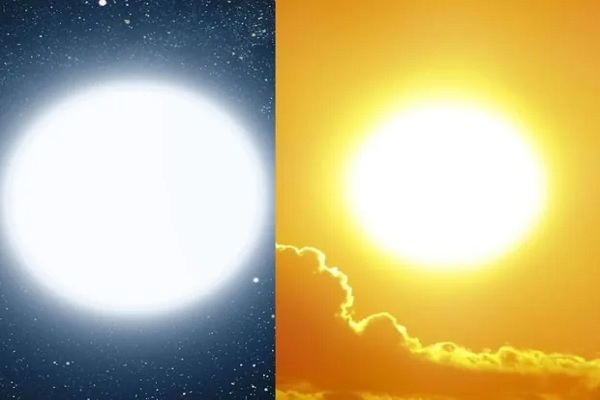
Sun is white and not yellow, confirms former NASA astronaut!


Most people believe the Sun is yellow since it appears yellow from the ground, but after reading this tweet, we may have to rethink our views.

This space truth was recently confirmed by NASA astronaut Scott Kelly in a widely shared tweet. The Sun's true colour is actually white, and the explanation the dwarf star typically seems yellow is due to an odd interaction between light physics that causes the sun to look yellow the majority of the time.

Our atmosphere causes the sun to appear yellow. But once you are outside of the atmosphere of the Earth, the Sun appears to be all white. NASA claims that this is because of way our eyes see colour.

Sunsets and sunrises seem red, yellow, or orange because the sun's light must traverse through all of Earth's atmosphere to reach the surface when it is lower in the sky than when it is directly overhead.

According to NASA, shorter light wavelengths, like blue, are more likely to be scattered through the atmosphere as time goes on, whereas longer light wavelengths, like red, can go considerably farther.

Since the amount of sunshine merely inundates the photoreceptor cells in our eyes, blending all the colours together, we are unable to distinguish a single colour from the sun. White is the result of combining all colours of light. As a result, the sun appears white in space and yellow on Earth. DailyBangladesh/RAH, Source: https://www.daily-bangladesh.com/
Read More........

A Blazar in the Early Universe: Details Revealed in Galaxy's Jet 12.8 Billion Light-Years from Earth

Credit: Spingola et al.; Bill Saxton, NRAO/AUI/NSF.

The supersharp radio "vision" of the National Science Foundation's Very Long Baseline Array (VLBA) has revealed previously unseen details in a jet of material ejected at three-quarters the speed of light from the core of a galaxy some 12.8 billion light-years from Earth. The galaxy, dubbed PSO J0309+27, is a blazar, with its jet pointed toward Earth, and is the brightest radio-emitting blazar yet seen at such a distance. It also is the second-brightest X-ray emitting blazar at such a distance. 

In this image, the brightest radio emission comes from the galaxy's core, at bottom right. The jet is propelled by the gravitational energy of a supermassive black hole at the core, and moves outward, toward the upper left. The jet seen here extends some 1,600 light-years, and shows structure within it.

At this distance, PSO J0309+27 is seen as it was when the universe was less than a billion years old, or just over 7 percent of its current age.

An international team of astronomers led by Cristiana Spingola of the University of Bologna in Italy, observed the galaxy in April and May of 2020. Their analysis of the object's properties provides support for some theoretical models for why blazars are rare in the early universe. The researchers reported their results in the journal Astronomy & Astrophysics.

The National Radio Astronomy Observatory is a facility of the National Science Foundation, operated under cooperative agreement by Associated Universities, Inc.

Contacts and sources: 
Dave Finley
The National Radio Astronomy Observatory i

Read More........

Indian-American among 18 astronauts selected for NASA's manned Moon mission


DEC 11, 2020 WASHINGTON: An Indian-American is among the 18 astronauts selected by NASA for its manned mission to the Moon and beyond. NASA on Wednesday named the 18 astronauts -- half of them women -- who will train for its Artemis moon-landing programme. Raja Jon Vurputoor Chari, 43, a graduate of the US Air Force Academy, MIT, and US Naval Test Pilot School, is the only Indian-American in the list. He was selected by NASA to join the 2017 Astronaut Candidate Class. He reported for duty in August 2017 and having completed the initial astronaut candidate training is now eligible for a mission assignment. "My fellow Americans, I give you the heroes of the future who will carry us back to the Moon and beyond: the Artemis Generation," Vice President Mike Pence said at NASA''s Kennedy Space Centre in Florida on Wednesday. "It really is amazing to think that the next man and the first woman on the Moon are among the names that we just read...We started today reflecting on a great hero of the past. The Artemis Generation are the heroes of American space exploration in the future," Pence said after he introduced the members of the Artemis Team during the eighth National Space Council meeting. The astronauts on the Artemis Team come from a diverse range of backgrounds, expertise and experience. Most of the astronauts in the group are in their 30s or 40s. The oldest is 55, the youngest 32. The agency's modern lunar exploration programme will land the first woman and next man on the Moon in 2024 and establish a sustainable human lunar presence by the end of the decade, NASA said. NASA will announce flight assignments for astronauts later, pulling from the Artemis Team. Additional Artemis Team members, including international partner astronauts, will join this group, as needed. "We are incredibly grateful for the president and vice president's support of the Artemis program, as well as the bipartisan support for all of NASA's science, aeronautics research, technology development, and human exploration goals," said NASA Administrator Jim Bridenstine. "As a result, we're excited to share this next step in exploration - naming the Artemis Team of astronauts who will lead the way, which includes the first woman and next man to walk on the lunar surface," he added. The selected astronauts will help NASA prepare for the coming Artemis missions, which begin next year working with the agency's commercial partners as they develop human landing systems; assisting in the development of training; defining hardware requirements; and consulting on technical development. They also will engage the public and industry on NASA''s exploration plans. "There is so much exciting work ahead of us as we return to the moon, and it will take the entire astronaut corps to make that happen," Chief Astronaut Pat Forrester said. "Walking on the lunar surface would be a dream come true for any one of us, and any part we can play in making that happen is an honour," he said. The other members on the list include Christina Koch and Jessica Meir -- the two astronauts who performed the world''s first all-female spacewalk last year. Copyright © Jammu Links News, Source: Jammu Links News
Read More........

Japan begins space capsule analysis hoping for asteroid sample

Japan begins space capsule analysis hoping for asteroid sample

Scientists in Japan on Tuesday began analysing a capsule sent back to Earth by a probe, hoping to find asteroid material that could offer clues on how the universe was formed.

Officials from Japan’s space agency said they were jubilant about the successful return of the capsule, which landed in Australia on Sunday after separating from the Hayabusa-2 probe.

“I’m genuinely appreciative of the fact that the capsule came back, after a 5.24 billion-kilometre round-trip,” project manager Yuichi Tsuda told reporters.

Scientists hope it will yield up to 0.1 grams of material collected from the asteroid Ryugu some 300 million kilometres from Earth — though they won’t know for sure until they look inside.

“I’m really looking forward to seeing (the samples) with my own eyes,” Tsuda said.

But that isn’t expected to happen before at least next week, with a series of steps required first to ensure the material is not contaminated.

For now, the capsule is “in a secure location” at a space centre in Sagamihara, south of Tokyo, agency director general Hitoshi Kuninaka said.

“Now we move to the matter-analysis phase,” he said. The samples — collected last year — are hoped to include both surface dust and pristine material stirred up when Hayabusa-2 fired an “impactor” into Ryugu.

Scientists hope they can shed light on how the formation of the universe unfolded, as well as on the origins of life on Earth.

The space agency has begun carefully processing the capsule, beginning by collecting gas inside. It will be opened later under strict conditions, including a nitrogen-filled box for the capsule.

“The key is that samples will not be polluted by Earth’s environment… so they can be provided to researchers around the world,” said Tomohiro Usui, leader of the extraterrestrial matter-analysis group.

“If we see something black inside the capsule, which is itself made of aluminium and whiteish, it’s near-certain it is from Ryugu,” he added. “But that is just supporting evidence, and we’ll not be able to say something for sure until we do chemical analysis.”

The nature of the gas extracted from the capsule also needs to be clarified, though officials said they believe it too was collected from the asteroid.

Half of Hayabusa-2’s samples will be shared between the Japanese space agency and other international organisations, while the rest will be kept for future study as advances are made in technology.The probe’s mission has been extended for more than a decade, with two new asteroids now being targeted for observation. Source: https://www.daily-bangladesh.com
Read More........

Baffling radio signal coming from inside Milky Way Galaxy

Astronomers detect mysterious bursts of radio signals from distant galaxy; Photo: cbsnews

A mysterious intense blast of radio energy has been detected inside our own galaxy, astronomers have said in a new study published in the journal Nature.

The Independent reported that the detected signals are Fast Radio Bursts (FRBs) that last only a small fraction of a second, however, it can possess more than the sun itself. Despite the intensity of FRBs, their causal origin remains largely unknown.

In the new study, however, astronomers observed a fast radio burst in our own Milky Way Galaxy for the first time – which is closer than any FRBs that was previously detected and might help astronomers understand their origin.

Scientists have long struggled to uncover the origin of these intense blasts because they are so short, unpredictable and originate far away. But the consensus is they are formed within some of the most extreme conditions possible in our universe — with potential explanations ranging from dying stars to alien technology. 

The bursts of radio energy appear to have come from a magnetar, or a star with a very powerful magnetic field, the scientists who discovered the new FRBs said. 

“This great mystery as to what would produce these great outbursts of energy, which until now we’ve seen coming from halfway across the universe,” said Kiyoshi Masui, assistant professor of physics at MIT, who led the team’s analysis of the FRB’s brightness, adding: “This is the first time we’ve been able to tie one of these exotic fast radio bursts to a single astrophysical object.”

The detection began on 27 April when researchers using two space telescopes – multiple X-ray and gamma-ray emissions – coming from a magnetar at the other end of our galaxy. The next day, researchers used two North American telescopes to observe that patch of sky and picked up the blast that came to be known as FRB 200428.

Pragya Chawla, one of the co-authors on the study and a senior Ph.D. student in the Physics Department at McGill, said they calculated such an intense burst coming from another galaxy which would be indistinguishable from some fast radio bursts. “This really gives weight to the theory suggesting that magnetars could be behind at least some FRBs,” he added.FRBs were first discovered in 2007, immediately gave speculation on what could be able to cause such intense blasts of energy. The new study is the first to provide evidence linking the FRBs with magnetars. At the very least, that could be a valuable clue to the origin of at least some of those FRBs. Source: https://www.daily-bangladesh.com/
Read More........

SpaceX capsule with 4 astronauts reaches space station


NOV 17, 2020 SpaceX's newly launched capsule with four astronauts arrived Monday at the International Space Station, their new home until spring. The Dragon capsule pulled up and docked late Monday night, following a 27-hour, completely automated flight from NASA''s Kennedy Space Center. The linkup occurred 262 miles (422 kilometers) above Idaho. "Oh, what a good voice to hear," space station astronaut Kate Rubins called out when the Dragon''s commander, Mike Hopkins, first made radio contact. "We can''t wait to have you on board," she added after the two spacecraft were latched together. This is the second astronaut mission for SpaceX. But it''s the first time Elon Musk''s company delivered a crew for a full half-year station stay. The two-pilot test flight earlier this year lasted two months. The three Americans and one Japanese astronaut will remain at the orbiting lab until their replacements arrive on another Dragon in April. And so it will go, with SpaceX - and eventually Boeing - transporting astronauts to and from the station for NASA. This regular taxi service got underway with Sunday night''s launch. Hopkins and his crew - Victor Glover, Shannon Walker and Japan''s Soichi Noguchi - join two Russians and one American who flew to the space station last month from Kazakhstan. Glover is the first African-American to move in for a long haul. A space newcomer, Glover was presented his gold astronaut pin Monday. The four named their capsule Resilience to provide hope and inspiration during an especially difficult year for the whole world. They broadcast a tour of their capsule Monday, showing off the touchscreen controls, storage areas and their zero gravity indicator: a small plush Baby Yoda. Walker said it was a little tighter for them than for the two astronauts on the test flight. "We sort of dance around each other to stay out of each other''s way," she said. For Sunday''s launch, NASA kept guests to a minimum because of coronavirus, and even Musk had to stay away after tweeting that he "most likely" had an infection. He was replaced in his official launch duties by SpaceX President Gwynne Shotwell, who assured reporters he was still very much involved with Sunday night''s action, although remotely. As they prepared for the space station linkup, the Dragon crew beamed down live window views of New Zealand and a brilliant blue, cloud-streaked Pacific 250 miles below. "Looks amazing," Mission Control radioed from SpaceX headquarters in Hawthorne, California. "It looks amazing from up here, too," Hopkins replied. Source: Jammu Links News
Read More........

Astronaut trainees complete abnormal descent module landing

a

Four Indian astronauts who were undergoing training in Russia since February 2020 have successfully completed the training on crew actions in case of abnormal descent module landing on different terrains, said Glavkosmos.

The company is a subsidiary of Russian space corporation Roscosmos and the Indian astronauts are being trained at Gagarin Cosmonaut Training Center (GCTC).

According to Glavkosmos, the prospective Indian astronauts have been trained in abnormal descent module landing - in wooded and marshy areas in winter; on water surface and in the steppe in summer.

"In June 2020, all Indian astronauts-elect passed training in short-term weightlessness mode aboard the IL-76MDK special laboratory aircraft, and in July, they were trained to lift aboard a helicopter while evacuating from the descent module landing point," Glavkosmos said.

According to Glavkosmos, the upcoming programme for the prospective Indian astronauts who will be part of India's human space mission Gaganyaan includes training in a centrifuge and in a hyperbaric chamber to prepare their organisms for sustaining spaceflight factors, such as G-force, hypoxia and pressure drops.

The regular courses comprise medical and physical training, learning Russian (as one of the main international languages of communication in space), and studying the configuration, structure and systems of the Soyuz crewed spacecraft.

The health of prospective Indian astronauts is monitored on a daily basis, and once every three months, GCTC doctors conduct their thorough medical examination.

According to Glavkosmos, all the Indian trainees are in good health.

The Indians undergo the general space training programme and of the systems of the Soyuz MS crewed spacecraft.The completion of their training at GCTC is scheduled for the first quarter of 2021.

The contract for the training of Indian astronauts between Glavkosmos and the Human Spaceflight Centre of the Indian Space Research Organisation was signed on June 27, 2019 and four pilots from the Indian Air Force (IAF) were sent to GCTC for training in space travel and other aspects as part of India's maiden human space mission Gaganyaan.(IANS) Source: https://southasiamonitor.org
Read More........

Black Hole in 'Mirachs Ghost' Galaxy Hints at How It Was Born

Credit: Cardiff University

Astronomers zoom in on black hole with one of the lowest masses ever observed in nearby "ghost" galaxy.

"On the left is shown a color composite Hubble Space Telescope image of the centre of `Mirachs Ghost'. On the right is shown the new ALMA image of this same region, revealing the distribution of the cold, dense gas that swirls around this centre of this object in exquisite detail."

A research team led by Cardiff University scientists say they are closer to understanding how a supermassive black hole (SMBH) is born thanks to a new technique that has enabled them to zoom in on one of these enigmatic cosmic objects in unprecedented detail.

Scientists are unsure as to whether SMBHs were formed in the extreme conditions shortly after the big bang, in a process dubbed a 'direct collapse', or were grown much later from 'seed' black holes resulting from the death of massive stars.

If the former method were true, SMBHs would be born with extremely large masses - hundreds of thousands to millions of times more massive than our Sun - and would have a fixed minimum size.

If the latter were true then SMBHs would start out relatively small, around 100 times the mass of our Sun, and start to grow larger over time by feeding on the stars and gas clouds that live around them.

Astronomers have long been striving to find the lowest mass SMBHs, which are the missing links needed to decipher this problem.

In a study published today, the Cardiff-led team has pushed the boundaries, revealing one of the lowest-mass SMBHs ever observed at the centre of a nearby galaxy, weighing less than one million times the mass of our sun.

The SMBH lives in a galaxy that is familiarly known as "Mirach's Ghost", due to its close proximity to a very bright star called Mirach, giving it a ghostly shadow.

The findings were made using a new technique with the Atacama Large Millimeter/submillimeter Array (ALMA), a state-of-the-art telescope situated high on the Chajnantor plateau in the Chilean Andes that is used to study light from some of the coldest objects in the Universe.

"The SMBH in Mirach's Ghost appears to have a mass within the range predicted by 'direct collapse' models," said Dr Tim Davis from Cardiff University's School of Physics and Astronomy.

"We know it is currently active and swallowing gas, so some of the more extreme 'direct collapse' models that only make very massive SMBHs cannot be true.

"This on its own is not enough to definitively tell the difference between the 'seed' picture and 'direct collapse' - we need to understand the statistics for that - but this is a massive step in the right direction."

Black holes are objects that have collapsed under the weight of gravity, leaving behind small but incredibly dense regions of space from which nothing can escape, not even light.

An SMBH is the largest type of black hole that can be hundreds of thousands, if not billions, of times the mass of the Sun.

It is believed that nearly all large galaxies, such as our own Milky Way, contain an SMBH located at its centre.

"SMBHs have also been found in very distant galaxies as they appeared just a few hundred million years after the big bang", said Dr Marc Sarzi, a member of Dr. Davis' team from the Armagh Observatory & Planetarium.

"This suggest that at least some SMBHs could have grown very massive in a very short time, which is hard to explain according to models for the formation and evolution of galaxies."

"All black holes grow as they swallow gas clouds and disrupt stars that venture too close to them, but some have more active lives than others."

"Looking for the smallest SMBHs in nearby galaxies could therefore help us reveal how SMBHs start off," continued Dr. Sarzi.

In their study, the international team used brand new techniques to zoom further into the heart of a small nearby galaxy, called NGC404, than ever before, allowing them to observe the swirling gas clouds that surrounded the SMBH at its centre.

The ALMA telescope enabled the team to resolve the gas clouds in the heart of the galaxy, revealing details only 1.5 light years across, making this one of the highest resolution maps of gas ever made of another galaxy.

Being able to observe this galaxy with such high resolution enabled the team to overcome a decade's worth of conflicting results and reveal the true nature of the SMBH at the galaxy's centre.

"Our study demonstrates that with this new technique we can really begin to explore both the properties and origins of these mysterious objects," continued Dr Davis.

"If there is a minimum mass for a supermassive black hole, we haven't found it yet."

###

The results of the study have been published today in the Monthly Notices of the Royal Astronomical Society.

Contacts and sources: Michael Bishop, Cardiff University

Read More........

Universe is expanding faster than expected


Photo Source: Thinkstock
Washington: The universe is expanding 5 to 9 per cent faster than thought, astronomers using NASA's Hubble Space Telescope have discovered. "This surprising finding may be an important clue to understanding those mysterious parts of the universe that make up 95 per cent of everything and don't emit light, such as dark energy, dark matter, and dark radiation," said study leader and Nobel Laureate Adam Riess of the Space Telescope Science Institute and The Johns Hopkins University in the US. Researchers made the discovery by refining the universe's current expansion rate to unprecedented accuracy, reducing the uncertainty to only 2.4 per cent. The team made the refinements by developing innovative techniques that improved the precision of distance measurements to faraway galaxies. They looked for galaxies containing both Cepheid stars and Type Ia supernovae. Cepheid stars pulsate at rates that correspond to their true brightness, which can be compared with their apparent brightness as seen from Earth to accurately determine their distance. Type Ia supernovae, another commonly used cosmic yardstick, are exploding stars that flare with the same brightness and are brilliant enough to be seen from relatively longer distances. By measuring about 2,400 Cepheid stars in 19 galaxies and comparing the observed brightness of both types of stars, researchers accurately calculated distances to roughly 300 Type Ia supernovae in far-flung galaxies. They compared those distances with the expansion of space as measured by the stretching of light from receding galaxies. The team used these two values to calculate how fast the universe expands with time, or the Hubble constant. The improved Hubble constant value is 73.2 km per second per megaparsec. A megaparsec equals 3.26 million light-years. The new value means the distance between cosmic objects will double in another 9.8 billion years. This refined calibration presents a puzzle, however, because it does not quite match the expansion rate predicted for the universe from its trajectory seen shortly after the Big Bang. Measurements of the afterglow from the Big Bang by NASA's Wilkinson Microwave Anisotropy Probe and the European Space Agency's Planck satellite mission yield predictions for the Hubble constant that are 5 per cent and 9 per cent smaller. "If we know the initial amounts of stuff in the universe, such as dark energy and dark matter, and we have the physics correct, then you can go from a measurement at the time shortly after the big bang and use that understanding to predict how fast the universe should be expanding today," said Riess. "However, if this discrepancy holds up, it appears we may not have the right understanding, and it changes how big the Hubble constant should be today," he said. The research appears in The Astrophysical Journal. — PTI. Source: http://www.tribuneindia.com/
Read More........

New dwarf galaxy found orbiting the Milky Way

crater 2 dwarf galaxy 3d map
Original image by Andrew Z. Colvin [CC BY-SA 3.0], via Wikimedia Commons. Adapted version by Gabriel Torrealba and Will Fox.
A never-before-seen galaxy has been spotted orbiting the Milky Way. With a diameter of around 7,000 light years, it becomes the fourth largest known satellite of the Milky Way, surpassed only by the Large Magellanic Cloud, Small Magellanic Cloud and the Sagittarius Dwarf. Known as "Crater 2", it was discovered by the University of Cambridge's Institute of Astronomy. Crater 2 is extremely faint compared to other members of the Local Group. Its diffuseness allowed it to remain hidden, but it was identified in recent data from the VST ATLAS survey. A computer algorithm processed images taken by the Very Large Telescope in Chile, pinpointing regions that might have unusual clustering of stars. This revealed an entire new satellite galaxy, located 380,000 light years away. "This is indeed a very rare discovery. A galaxy like Crater 2 is a sort of invisible object," says Dr. Vasily Belokurov. "We have found many similar objects in the last 10 years, but never such a large beast. It is orders of magnitude less luminous compared to most objects of similar size. It is extremely diffuse. We believe it was born that fluffy. But why, we do not yet know."
If the brightness of Crater 2 were increased by 1,000 times, its angular diameter would be twice that of the full Moon, as shown in the illustration below. This suggests there might be other dark neighbours lurking nearby. Indeed, Dr. Belokurov and his team are now using their technique to hunt for additional objects that might have been missed. It is hoped these discoveries could lead to a better understanding of the origin and evolution of our own galaxy, the Milky Way. "In the last two years alone, the number of known Milky Way satellite galaxies has doubled, largely thanks to the Dark Energy Camera on the Blanco 4m telescope in Chile," Dr. Evan Kirby, assistant 
Credit: Vasily Belokurov, et al.
professor at Caltech, who was not involved in the research, told the Huffington Post. "These galaxies are intense concentrations of dark matter," he added. "If there's a place in the universe where we can look to learn about dark matter, it's dwarf galaxies. How is it distributed? What is it made of? Future observations, especially spectroscopy, will help answer those questions." Crater 2 seems to be aligned in 3-D with the globular cluster Crater, the pair of dwarfs Leo IV and Leo V and the classical dwarf Leo II. The researchers argue that such arrangement "is probably not accidental and, in fact, can be viewed as evidence for the accretion of the Crater-Leo group." Their study is published in Monthly Notices of the Royal Astronomical SocietySource: http://www.futuretimeline.net/
Read More........

Superluminous Supernova 20 Times Brighter Than 100 Billion Stars Wows Astronomers

Records are made to be broken, as the expression goes, but rarely are records left so thoroughly in the dust. Stunned astronomers have witnessed a cosmic explosion about 200 times more powerful than a typical supernova--events which already rank amongst the mightiest outbursts in the universe--and more than twice as luminous as the previous record-holding supernova. At its peak intensity, the explosion--called ASASSN-15lh--shone with 570 billion times the brightness of the Sun. If that statistic does not impress, consider that this luminosity level is approximately 20 times the entire output of the 100 billion stars comprising our Milky Way galaxy. The record-breaking blast is thought to be an outstanding example of a "superluminous supernova," a recently discovered, supremely rare variety of explosion unleashed by certain stars when they die. Scientists are frankly at a loss, though, regarding what sorts of stars and stellar scenarios might be responsible for these extreme supernovae. These are pseudo-color images showing the host galaxy before the explosion of ASASSN-15lh taken by the Dark Energy Camera (DECam) [Left], and the supernova by the Las Cumbres Observatory Global Telescope Network (LCOGT) 1-meter telescope network [Right]. As described in a new study published today in Science, ASASSN-15lh
Credit: The Dark Energy Survey, B. Shappee and the ASAS-SN team
is amongst the closest superluminous supernovae ever beheld, at around 3.8 billion light years away. Given its uncanny brightness and closeness, ASASSN-15lh might offer key clues in unlocking the secrets of this baffling class of celestial detonations. "ASASSN-15lh is the most powerful supernova discovered in human history," said study lead author Subo Dong, an astronomer and a Youth Qianren Research Professor at the Kavli Institute for Astronomy and Astrophysics (KIAA) at Peking University. "The explosion's mechanism and power source remain shrouded in mystery because all known theories meet serious challenges in explaining the immense amount of energy ASASSN-15lh has radiated." ASASSN-15lh was first glimpsed in June 2015 by twin telescopes with 14-centimeter diameter lenses in Cerro Tololo, Chile conducting the All Sky Automated Survey for SuperNovae (ASAS-SN), an international collaboration headquartered at The Ohio State University. (Hence ASASSN-15lh's somewhat menacing moniker.) These two tiny telescopes sweep the skies to detect suddenly appearing objects like ASASSN-15lh that are intrinsically very bright, but are too far away for human observers to notice. "ASAS-SN is the first astronomical project in history to frequently scan the entire optical sky for optical transients," said Krzysztof Stanek, professor of astronomy at the Ohio State University and the co-Principal Investigator of ASAS-SN. "Every time in science we open up a new discovery space, exciting findings should follow. The trick is not to miss them." Dong and colleagues immediately put out word about the sighting of ASASSN-15lh in order for as much data as possible to be gathered. Multiple, far larger ground-based telescopes across the globe, as well as NASA's Swift satellite, have since taken part in an intense observing campaign that continues to this day. In just the first four months after it went kablooie, so much energy beamed out of ASASSN-15lh that it would take our Sun in its current state more than 90 billion years to equal its emissions. By examining this bright, slowly fading afterglow, astronomers have gleaned a few basic clues about the origin of ASASSN-15lh. Using the 2.5-meter du Pont telescope in Chile, Dong's colleagues Ben Shappee and Nidia Morrell at the Carnegie Observatories in the United States took the first spectrum of ASASSN-15lh to identify the signatures of chemical elements scattered by the explosion. This spectrum puzzled the ASAS-SN team members, for it did not resemble any of spectra from the 200 or so supernovae the project had discovered to date. These are two of the 14-centimeter diameter lens telescopes in use for the All Sky Automated Survey for SuperNovae (ASAS-SN) that discovered ASASSN-15lh. Since this photo was taken, two more
Credit: Wayne Rosing
telescopes have been added to the ASAS-SN station in Cerro Tololo, Chile. Inspired by suggestions from Jose Prieto at Universidad Diego Portales and Millennium Institute of Astrophysics in Chile and Stanek, Dong realized that ASASSN-15lh might in fact be a superluminous supernova. Dong found a close spectral match for ASASSN-15lh in a 2010 superluminous supernova, and if they were indeed of a kind, then ASASSN-15lh's distance would be confirmable with additional observations. Nearly 10 days passed as three other telescopes, stymied by bad weather and instrument mishaps, attempted to gather these necessary spectra. Finally, the 10-meter South African Large Telescope (SALT) secured the observations of elemental signatures verifying ASASSN-15lh's distance and extreme potency. "Upon seeing the spectral signatures from SALT and realizing that we had discovered the most powerful supernova yet, I was too excited to sleep the rest of the night," said Dong, who had received word of the SALT results at 2 AM in Beijing on July 1, 2015. The ongoing observations have further revealed that ASASSN-15lh bears certain features consistent with "hydrogen-poor" (Type I) superluminous supernovae, which are one of the two main types of these epic explosions so named for lacking signatures of the chemical element hydrogen in their spectra. ASASSN-15lh has likewise shown a rate of temperature decrease and radius expansion similar to some previously discovered Type I superluminous supernova. Yet in other ways, besides its brute power, ASASSN-15lh stands apart. It is way hotter, and not just brighter, than its apparently nearest of supernova kin. The galaxy it calls home is also without precedent. Type I superluminous supernova seen to date have all burst forth in dim galaxies both smaller in size and that churn out stars much faster than the Milky Way. Noticing the pattern, astronomers hoped this specific sort of galactic environment had something to do with superluminous supernovae, either in the creation of the exotic stars that spawn them or in setting these stars off. Exceptionally, however, ASASSN-15lh's galaxy appears even bigger and brighter than the Milky Way. On the other hand, ASASSN-15lh might in fact reside in an as-yet-unseen, small, faint neighboring galaxy of its presumed, large galactic home. To clear up where exactly ASASSN-15lh is located, as well as numerous other mysteries regarding it and its hyper-kinetic ilk, the research team has been granted valuable time this year on the Hubble Space Telescope. With Hubble, Dong and colleagues will obtain the most detailed views yet of the aftermath of ASASSN-15lh's stunning explosion. Important insights into the true wellspring of its power should then come to light. One of the best hypotheses is that superluminous supernovae's stupendous energy comes from highly magnetized, rapidly spinning neutron stars called magnetars, which are the leftover, hyper-compressed cores of massive, exploded stars. But ASASSN-15lh is so potent that this compelling magnetar scenario just falls short of the required energies. Instead, ASASSN-15lh-esque supernovae might be triggered by the demise of incredibly massive stars that go beyond the top tier of masses most astronomers would speculate are even attainable. "The honest answer is at this point that we do not know what could be the power source for ASASSN-15lh," said Dong. "ASASSN-15lh may lead to new thinking and new observations of the whole class of superluminous supernova, and we look forward to plenty more of both in the years ahead." 
Contacts and sources:  Jim Cohen: The Kavli Institute for Astronomy and Astrophysics (KIAA) 

More information:
Read More........

Earth Collects 5 to 300 Tons of Cosmic Dust a Day

Image credit: ESO/Y. Beletsky
Currently, estimates of the Earth's intake of space dust vary from around five tons to as much as 300 tons every day. A €2.5 million international project, led by Professor John Plane from the University's School of Chemistry, will seek to address this discrepancy. Scientists at the University of Leeds are looking to discover how dust particles in the solar system interact with the Earth's atmosphere. Currently, estimates of the Earth's intake of space dust vary from around five tons to as much as 300 tons every day. A € 2.5 million international project, led by ERC Advanced grantee John Plane from the University's School of Chemistry, will seek to address this discrepancy. The Cosmic Dust in the Terrestrial Atmosphere (CODITA) project will investigate what happens to the dust from its origin in the outer solar system all the way to the earth's surface. The work, funded by the European Research Council, will also explore whether cosmic dust has a role in the Earth's climate and how it interacts with the ozone layer in the stratosphere. "People tend to think space is completely empty, but if all the dust between the Sun and Jupiter was compressed it would create a moon 16 miles across. It's surprising that we aren't more certain how much of this comes to Earth" said Professor Plane. "If the dust input is around 300 tons per day, then the particles are being transported down through the atmosphere considerably faster than generally believed; if the 5-ton figure is correct, we will need to revise substantially our understanding of how dust evolves in the Solar System and is transported from the edge of space around 50 miles high to the surface," added Professor Plane. Over the next five years, the scientists at Leeds, and visiting
Zodiacal Light Seen from Paranal, Credit: ©ESO/Y.Beletsky
colleagues from Germany and the United States, will replicate in the laboratory the chemical processes that dust particles undergo as they enter and filter through the atmosphere."Our work in the lab will look at the nature of cosmic dust evaporation and the formation of meteoric smoke particles, which play a role in ice nucleation and the freezing of polar stratospheric clouds," said Professor Plane. In the atmosphere, the dust particles undergo very rapid heating through collisions with air molecules, reaching temperatures well in excess of 1600 degrees Celsius. At this point they melt and evaporate. The larger particles can be seen as "shooting stars", whilst the electrons produced from ionizing collisions with air enable smaller dust particles to be detected using specialist high-powered radar equipment. By replicating this heating in the lab, it is hoped that radar measurements of meteors can be better understood and used to make accurate measurements of the dust input. The metallic vapours recondense in the atmosphere to form nanometre-sized particles known as meteor smoke. In 2014, the team will be involved in a Norwegian rocket experiment to measure meteor smoke in ice particles in the upper atmosphere. "Cosmic dust and meteor smoke are both believed to interact with the clouds which play a key role in causing stratospheric ozone depletion - most notably the formation of the Antarctic Ozone Hole," said Professor Martyn Chipperfield, from the University's School of Earth and Environment. "We will use the lab data in a detailed chemistry-climate model of the whole atmosphere. This will make it possible, for the first time, to model the effects of cosmic dust consistently from the outer reaches of the Solar System all the way down to the Earth's surface," said Professor Chipperfield. "It has been suggested that to combat global warming sulphate aerosol could be released into the atmosphere to reflect some of the Sun's heat. Understanding the quantity of cosmic dust and the potential chemical reactions which may occur is crucial to moving this idea forward," said Professor Chipperfield. CODITA is funded by the European Research Council (ERC). The climate model which will be used in the project is supported at Leeds by the Natural Environment Research Council (NERC), and is a flagship model produced by the US National Center for Atmospheric Research (NCAR). Contacts and sources: University of Leeds, Cosmic Dust in the Terrestrial Atmosphere. Source: Article
Read More........

Brighter Than 100 Billion Stars

Three-dimensional simulation of a Type Ia supernova explosion, Image: F. K. Röpke MPI for Astrophysics, Garching
Modern astronomy began with a supernova. In November 1572, Danish astronomer Tycho Brahe discovered a new star – and destroyed the idea of a sky of fixed stars. Today, we know that Brahe was observing the death of a star, which ended in a massive explosion. Friedrich Röpke aims to find out how these supernova explosions proceed. The astrophysicist is now leader of the new research group "Physics of Stellar Objects" (PSO) at Heidelberg Institute for Theoretical Studies (HITS). As of March 1, 2015, he has been appointed professor for Theoretical Astrophysics at Heidelberg University. His workplace is HITS. This joint appointment is a perfect proof for the close cooperation between the two institutes. With Friedrich Röpke and Volker Springel, there now are two HITS astrophysicists who are also professors at Heidelberg University. “The new group is another important component of our concept, “ says Klaus Tschira who founded the HITS in 2010 as a non-profit research institute. “Research on stellar astrophysics, like Friedrich Röpke does, is a perfect complement of the work of Volker Springel’s group on large-scale processes like galaxy formation.“ Friedrich Röpke (40) studied Physics at the University of Jena and the University of Virginia, Charlottesville/USA, and received his PhD in 2003 from the Technische Universität München. In the following years, he worked as a postdoc at the Max-Planck-Institute for Astrophysics (MPA) in Garching and at the University of California, Santa Cruz/USA. In 2008, Friedrich Röpke habilitated at the TU München and also became leader of an Emmy Noether research group at MPA. Three years later, he got appointed professor for Astrophysics at the University of Würzburg. In 2010, the researcher was awarded the "ARCHES Award" by the German Federal Ministry for Education and Research together with Prof. Avishay Gal-Yam from the Weizmann Institute, Rehovot/Israel. The award honors young scientists whose work shows great potential to have noticeable impact on their respective fields of research. Friedrich Röpke studies Type Ia supernovae. Observation of these cosmic explosions allows astronomers to determine distances in space. In 2011, the Nobel Prize in Physics was awarded to researchers who proved the accelerated expansion of the Universe with supernovae. The PSO group collaborates closely with one of the laureates from 2011, Brian Schmidt (Australian National University, Canberra) in a program supported by the German Academic Exchange Service DAAD. Friedrich Röpke’s research aims to understand exactly what happens when stars die. Remnant of SN 1572 as seen in X-ray light from the Chandra X-ray Observatory. The supernova of 1572 is often called "Tycho's supernova", because of Tycho Brahe's extensive work De nova et nullius aevi memoria prius visa stella ("Concerning the Star, new and never before seen in the life or memory of anyone", published in 1573 with reprints overseen by Johannes Kepler in 1602, and 1610), a work containing both Tycho Brahe's own observations and the analysis of sightings from many other
Credit: Chandra X-ray Observatory.
observers. Together with other scientists, he used computer simulations to show that some highly-luminous supernovae are the result of two compact stars, so-called “white dwarfs", merging together. He also investigates alternatives by modeling the explosion of a white dwarf when it reaches its maximum stable mass (the so-called Chandrasekhar limit), using highly complex simulations on supercomputers. White dwarfs are only about the size of the Earth and are extremely dense. When they explode as supernova, they shine brighter than the whole galaxy. "Our detailed simulations helped us to predict data that closely reproduce actual telescope observations of Type Ia supernovae, " explains the astrophysicist. “Modelling of supernova explosions is, however, just one part of our research at HITS,” says Friedrich Röpke. “We also strive for a better understanding of how stars evolve and how the elements that make up our world are formed within them.” Classical astrophysics follows stellar evolution based on very simplifying assumptions. "To improve the predictive power of the models, we have to describe the physical processes taking place within stars in a dynamic way," says the astrophysicist. He and his group have developed a new computer code that – combined with the rapidly increasing capacities of supercomputers – opens new perspectives for the modelling of stars. In contrast to what we are used to from our solar system, most stars in the Universe exist as part of multiple star systems. The interaction between those stars greatly affects their evolution but the involved physical processes are poorly understood until today. The two astrophysics groups at HITS are cooperating on new computer simulations to bring some light into the darkness. Contacts and sources: Heidelberg Institute for Theoretical Studies, Source: inffableislamd.com
Read More........

Two Stars Merging Into A Supermassive Star Seen By Astronomers

Credit: Javier Lorenzo (Universidad de Alicante)
A study of "MY Camelopardalis" binary system, published in the journal Astronomy & Astrophysics, shows that the most massive stars are made up by merging with other smaller stars, as predicted by theoretical models. Most of the stars in our galaxy have been formed in binary or multiple systems, some of which are "eclipsing", this is consists of two or more stars which, observed from Earth, undergo eclipses and mutual transits because of their orbital plane facing our planet. One such system is the eclipsing binary MY Camelopardalis (MY Cam). Artistic rendering of MY Cam system. The proportions between the components reflect the analysis results. The stars are deformed by its very fast rotation and the gravitational pull of the companion. The journal Astronomy & Astrophysics has published an article on MY Cam, one of the most massive star known, with the results of observations from the Calar Alto Observatory (Almería) signed by astronomers at the University of Alicante, the Astrobiology Centre of the Spanish National Research Council (CAB-CSIC) and the Canaries’ Astrophysics Institute (IAC), along with amateur astronomers. This article concludes that MY Cam is the most massive binary star observed and its components, two stars of spectral type O (blue, very hot and bright), 38 and 32 times the Sun's mass, are still on the main sequence and are very close to each other, with an orbital period of less than 1.2 days, in other words, the shortest orbital period in this type of stars. This indicates that the binary was virtually formed as it is now: the stars were almost in contact at the time they were formed. The expected development is the merger of both components into a single object over 60 solar masses before any of them have time to evolve significantly. Hence, these results demonstrate the viability of some theoretical models suggesting that most massive stars are formed by merging less massive stars. Massive binary systems: Stars which, like the Sun, move alone in the Galaxy by trailing only their planetary system are a minority. Most stars spend their lives tied by gravity to a companion star (forming what is called a binary system) or several (what was known as multiple system). As explained by Javier Lorenzo, from the University of Alicante and first author of article, in these systems all stars describe their orbits around a common centre of mass. In particular, the stars much more massive than the Sun contain an equivalent mass to many suns and tend to always appear in company. Recent studies suggest that these high-mass stars, that are much larger and hotter than the Sun, form part of systems with at least one other companion of comparable mass. A particularly striking example is the binary system known as MY Camelopardalis (MY Cam), in the constellation of the Giraffe. This object is the brightest star in the open cluster "Alicante 1", which was recently identified as a small stellar nursery by researchers at the University of Alicante. Although it has been known for over fifty years that MY Cam is a high-mass star, it was only ten years ago that it was recognised as an eclipsing binary, a system in which one star passes in front of the other every time they complete their orbit, leading to changes in the brightness of the system that we perceive from Earth. This property of eclipsing binaries allows us to know many of the characteristics of the component stars through a careful study of the light that comes from them and the simple application of Newton’s law of universal gravitation. For the study of MY Cam, professional astrophysicists obtained a large number of spectra of the system with FOCES spectrograph, which operated for many years in the 2.2 m telescope of Calar Alto Observatory. Using the Doppler Effect, these spectra allow us to measure the velocities with which the stars move in their orbits. Also, astrophysicists can determine the fundamental properties of stars, as their surface temperature and its size through a comprehensive analysis of the characteristics of the spectra. To complete the work, they had the help of amateur astronomers who measured the changes in the amount of light coming from the system along the orbit, what astrophysicists call the light curve of the system. Analysis of these data has shown that MY Cam is a truly exceptional system. The light curve- as explained by Sergio Simon, IAC researcher and one of the authors of the article - shows that the orbital period of the system is only 1.2 days. Given the large size of the stars, they have to be extremely close to be able to do a full turn so quickly. The stars are moving at a speed of over one million km/h, but being so close, the tidal forces between them make them rotate about themselves with the same period, ie, each star turns on itself in just over a day, while the Sun, which is much smaller, turns on itself once every 26 days. Stars are like giant spinning tops and every point of the surface moves with a speed of over one million km/h. Each has a radius around 700 times bigger than the Earth’s, but turns on itself at about the same time. But also, the stars are extremely massive. Their masses are 38 and 32 times the Sun's mass. Such huge stars do not fit so easily into such a small orbit and the conclusion of the study is that they are actually in touch and the material of their outer layers is mixing, giving place to a common envelope (what is known as a contact binary). MY Cam is one of the most massive contact binaries known and by far the most massive whose components are so young they have not yet begun to evolve. As stated by Ignacio Negueruela, another author from the University of Alicante, this is the most interesting aspect of MY Cam since its foreseeable future confirms some of the current theories of formation of extremely massive stars. The properties of the two components of MY Cam suggest that they are extremely young stars formed in the past two million years. This extreme youth allows us to suspect that the system was formed essentially as it is now, although perhaps the two stars were not touching initially. As they get older, their natural evolution is to become larger. Given that they have no clearance between them, this process will lead to the merger of the two stars in a single object, a real star mastodon. The details of the merger process are not known, because it has never been seen before. Some theoretical models suggest that the merger process is extremely fast, releasing a huge amount of energy in a kind of explosion. Other studies favor a less violent process, but in any event spectacular. Anyway, many astrophysicists believe that the merger of the components of a close binary is probably the most effective way to generate extremely massive stars. MY Cam is the first example of a system that can lead to one of these objects. Contacts and sources: Asociación RUVID, Citation: J. Lorenzo, I. Negueruela, A.K.F. Val Baker (Universidad de Alicante), M. García (CAB-CSIC), S. Simón-Díaz (IAC), P. Pastor, M. Méndez Majuelos (amateurs). “MY Camelopardalis, a very massive merger progenitor”. Astronomy & Astrophysics. 2014. http://arxiv.org/abs/1410.5575Source: ineffableisland.com
Read More........

Astronomers Create First Realistic Virtual Universe

Credit: Dr Debora Sijacki, Cambridge University
Tracking 13 billion years of cosmic evolution, astronomers have created the first realistic virtual simulation of the Universe. A newly-developed computer simulation has created the first realistic version of the Universe, enabling researchers to understand how galaxies, black holes and other cosmic phenomena developed from shortly after the Big Bang to the present day. The simulation, known as Illustris, follows the complex development of both normal and dark matter over 13 billion years, matching many of the features observed in the real Universe for the first time. Developed by an international team of researchers, Illustris tracks the development of the Universe from 12 million years after the Big Bang up to the present, and identified more than 41,000 galaxies in a cube of simulated space 350 million light years on each side. The results are reported in the May 8th issue of the journal Nature.  Over the past two decades, researchers have been attempting to build accurate computer simulations of the development of the Universe, using computer programs which are capable of encapsulating all the relevant laws of physics governing the formation of galaxies. Previous attempts to simulate the universe were hampered by lack of computing power and the complexities of the underlying physics.As a result those programseither were limited in resolution, or forced to focus on a small portion of the universe. Earlier simulations also had trouble modelling complex feedback from star formation, supernova explosions, and supermassive black holes. Illustris employs a sophisticated computer program to recreate the evolution of the universe in high fidelity. It includes both normal matter and dark matter using 12 billion 3D “pixels,” or resolution elements. Illustris yields a realistic mix of spiral galaxies like the Milky Way and giant elliptical galaxies. It also recreated large-scale structures like galaxy clusters and the bubbles and voids of the cosmic web. The team dedicated five years to developing the Illustris project. The actual calculations took three months of run time, using a total of 8,000 CPUs running in parallel. In comparison, the same calculations would have taken an average desktop computer more than 2,000 years to complete. “Until now, no single simulation was able to reproduce the Universe on both large and small scales simultaneously,” says lead author Dr Mark Vogelsberger of the Massachusetts Institute of Technology and Harvard University, who conducted the work in collaboration with researchers at the University of Cambridge, the Harvard-Smithsonian Center for Astrophysics and the Heidelberg Institute for Theoretical Studies. “The Illustris simulation is a remarkable technical achievement,” said Dr Debora Sijacki of Cambridge’s Institute of Astronomy, one of the paper’s co-authors. “It shows us for the first time how the bewildering variety of galaxies and the supermassive black holes at their centres have formed.” Since light travels at a fixed speed, the farther away astronomers look, the farther back in time they can see. A galaxy one billion light-years away is seen as it was a billion years ago. Telescopes like Hubble can give us views of the early Universe by looking to greater distances. However, astronomers can’t use Hubble to follow the evolution of a single galaxy over time. “Illustris is like a time machine. We can go forward and backward in time. We can pause the simulation and zoom into a single galaxy or galaxy cluster to see what’s really going on,” said co-author Dr Shy Genel of Harvard University. A selection of videos and imagery from the project are available online at www.illustris-project.orgSource: Ineffableisia.com 
  • Contacts and sources: Dr Debora Sijacki, Institute of Astronomy, Cambridge University
Read More........

Aliens may be discovered within 20 years, US astronomers believe

Astronomers and space enthusiasts around the world have long been baffled by the question - is there life beyond Earth? Now, two of the United States' top astronomers are telling the public it is only a matter of 20 years.
Director Dan Werthimer of the Berkeley SETI Research Center and senior astronomer Seth Shostak of the SETI Institute in Mountain View, California in a meeting Wednesday with the science committee of the US House of Representatives opened the discussions by enumerating the efforts of space agencies and SETI in searching for other life forms in neighboring planets and galaxies. Over the past 50 years, multiple attempts have been made to look for signs of alien life beyond Earth. Now scientists have discovered billions of Earth-like planets within our own Milky Way galaxy alone – and they are located within a "habitable" zone suitable for life - Werthimer suggested, "The universe is likely to be teeming with primitive life." "Billions of these planets are Earth-sized and in the 'habitable' or so called 'Goldilocks' zone - not too distant from their host star (too cold), and not too close to their star (too hot). And there are billions of other galaxies outside our Milky Way galaxy - plenty of places where life could emerge and evolve," he said. "At least a half-dozen other worlds (besides Earth) that might have life are in our solar system," Seth Shostak, a senior astronomer at SETI Institute, caonfirmed, adding. "The chances of finding it, I think, are good, and if that happens, it’ll happen in the next 20 years, depending on the financing." SETI programs, according to the institute, use the world's largest radio and optical telescopes to search for evidence of advanced civilizations and their technology on distant planets. NASA's Kepler space probe, which is expected to resume operations following the approval of the K2 mission, is even cited by the SETI astronomers as one of the major contributors to the quest. Werthimer said through Kepler's eyes, scientists were able to gaze at approximately two thousand of Milky Way Galaxy's planets and probably trillions of them are out there, outshining even the known number of stars. Werthimer and Shostak also bared new projects, such as the "eavesdropping SETI," in which they would use sophisticated tools to listen to two far-flung planets the moment they aligned to Earth in case their respective life forms plan to exchange messages through radio signals, and the Allen Telescope Array of small dishes situated in California. As noted by the Huffington Post, Werthimer also submitted written testimony to lawmakers, in which he noted that the search for intelligent life also deserved more funding from Congress. Source: The Voice of Russia
Read More........

‘Death Stars’ In Orion Blast Planets Before They Form

Credit: NRAO/AUI/NSF; B. Saxton
The Orion Nebula is home to hundreds of young stars and even younger protostars known as proplyds. Many of these nascent systems will go on to develop planets, while others will have their planet-forming dust and gas blasted away by the fierce ultraviolet radiation emitted by massive O-type stars that lurk nearby. This artist's concept shows two proplyds, or protostars, around a massive O-type star. The nearer proplyd is having its planet-forming dust and gas blasted away by the radiation from the star. The farther proplyd is able to retain its planet-making potential. A team of astronomers from Canada and the United States has used the Atacama Large Millimeter/submillimeter Array (ALMA) to study the often deadly relationship between highly luminous O-type stars and nearby protostars in the Orion Nebula. Their data reveal that protostars within 0.1 light-years (about 600 billion miles) of an O-type star are doomed to have their cocoons of dust and gas stripped away in just a few millions years, much faster than planets are able to form. "O-type stars, which are really monsters compared to our Sun, emit tremendous amounts of ultraviolet radiation and this can play havoc during the development of young planetary systems," remarked Rita Mann, an astronomer with the National Research Council of Canada in Victoria, and lead author on a paper in the Astrophysical Journal. "Using ALMA, we looked at dozens of embryonic stars with planet-forming potential and, for the first time, found clear indications where protoplanetary disks simply vanished under the intense glow of a neighboring massive star." Many, if not all, Sun-like stars are born in crowded stellar nurseries similar to the Orion Nebula. Over the course of just a few million years, grains of dust and reservoirs of gas combine into larger, denser bodies. Left relatively undisturbed, these systems will eventually evolve into fully fledged star systems, with planets -- large and small -- and ultimately drift away to become part of the galactic stellar population. Fly-in to the Orion Nebula where ALMA reveals massive stars blasting away planet-forming dust-gas around young protoplanetary disks. 
Narration: Dr. Rita K. Mann; Video and Images Courtesy of Brian Kent, NRAO/AUI/NSF; Model from Brian Abbot (AMNH/Hayden); Data from Hillenbrand, L., 1997, AJ, 113, 1733; Bill Saxton, NRAO/AUI/NSF; NASA/ESA, M. Robberto (Space Telescope Science Institute/ESA) and the Hubble Space Telscope Orion Treasury Project Team; NASA/ESA Hubble Space Telescope Bally et al.; Smith et al.; NASA, C.R. O'Dell and S.K. Wong (Rice University) Astronomers believe that massive yet short-lived stars in and around large interstellar clouds are essential for this ongoing process of star formation. At the end of their lives, massive stars explode as supernovas, seeding the surrounding area with dust and heavy elements that will get taken up in the next generation of stars. These explosions also provide the kick necessary to initiate a new round of star and planet formation. But while they still shine bright, these larger stars can be downright deadly to planets if an embryonic solar systems strays too close. "Massive stars are hot and hundreds of times more luminous than our Sun," said James Di Francesco, also with the National Research Council of Canada. "Their energetic photons can quickly deplete a nearby protoplanetary disk by heating up its gas, breaking it up, and sweeping it away." Earlier observations with the Hubble Space Telescope revealed striking images of proplyds in Orion. Many had taken on tear-drop shapes, with their dust and gas trailing away from a nearby massive star. These optical images, however, couldn't reveal anything about the amount of dust that was present or how the dust and gas concentrations changed in relation to massive stars. The new ALMA observations detected these and other never-before-imaged proplyds, essentially doubling the number of protoplanetary disks discovered in that region. ALMA also could see past their surface appearance, peering deep inside to actually measure how much mass was in the proplyds. Combining these studies with previous observations from the Submillimeter Array (SMA) in Hawaii, the researchers found that any protostar within the extreme-UV envelope of a massive star would have much of its disk of material destroyed in very short order. Proplyds in these close-in regions retained only a fraction (one half or less) of the mass necessary to create one Jupiter-size planet. Beyond the 0.1 light-year radius, in the far-UV dominated region, the researchers observed a wide range of disk masses containing anywhere for one to 80 times the mass of Jupiter. This is similar to the amount of dust found in low-mass star forming regions. "Taken together, our investigations with ALMA suggest that extreme UV regions are not just inhospitable, but they’re downright hazardous for planet formation. With enough distance, however, it’s possible to find a much more congenial environment," said Mann. "This work is really the tip of the iceberg of what will come out of ALMA; we hope to eventually learn how common solar systems like our own are." Other researchers involved in this project include Doug Johnstone, National Research Council of Canada; Sean M. Andrews, Harvard-Smithsonian Center for Astrophysics; Jonathan P. Williams, University of Hawaii; John Bally, University of Colorado; Luca Ricci, California Institute of Technology; A. Meredith Hughes, Wesleyan University, and Brenda C. Matthews, National Research Council of Canada. ALMA, an international astronomy facility, is a partnership of Europe, North America and East Asia in cooperation with the Republic of Chile. ALMA construction and operations are led on behalf of Europe by ESO, on behalf of North America by the National Radio Astronomy Observatory (NRAO), and on behalf of East Asia by the National Astronomical Observatory of Japan (NAOJ). The Joint ALMA Observatory (JAO) provides the unified leadership and management of the construction, commissioning and operation of ALMA. Contacts and sources: Charles Blue, National Radio Astronomy ObservatorySource: Article
Read More........

The Council Of Giants And Earth's Place In The Universe


Credit: Marshall McCall / York University
We live in a galaxy known as the Milky Way – a vast conglomeration of 300 billion stars, planets whizzing around them, and clouds of gas and dust floating in between. Though it has long been known that the Milky Way and its orbiting companion Andromeda are the dominant members of a small group of galaxies, the Local Group, which is about 3 million light years across, much less was known about our immediate neighbourhood in the universe. An animation that illustrates the positions of the nearby galaxies, including those in the "Council of Giants, " in three dimensions. 

Now, a new paper by York University Physics & Astronomy Professor Marshall McCall, published today in the Monthly Notices of the Royal Astronomical Society, maps out bright galaxies within 35-million light years of the Earth, offering up an expanded picture of what lies beyond our doorstep. "All bright galaxies within 20 million light years, including us, are organized in a 'Local Sheet' 34-million light years across and only 1.5-million light years thick," says McCall. "The Milky Way and Andromeda are encircled by twelve large galaxies arranged in a ring about 24-million light years across – this 'Council of Giants' stands in gravitational judgment of the Local Group by restricting its range of influence." This is a diagram showing the brightest galaxies within 20 million light years of the Milky Way, as seen from above. The largest galaxies, here shown in yellow at different points around the dotted line, make up the "Council of Giants." McCall says twelve of the fourteen giants in the Local Sheet, including the Milky Way and Andromeda, are "spiral galaxies" which have highly flattened disks in which stars are forming. The remaining two are more puffy "elliptical galaxies", whose stellar bulks were laid down long ago. Intriguingly, the two ellipticals sit on opposite sides of the Council. Winds expelled in the earliest phases of their development might have shepherded gas towards the Local Group, thereby helping to build the disks of the Milky Way and Andromeda. McCall also examined how galaxies in the Council are spinning. He comments: "Thinking of a galaxy as a screw in a piece of wood, the direction of spin can be described as the direction the screw would move (in or out) if it were turned the same way as the galaxy rotates. Unexpectedly, the spin directions of Council giants are arranged around a small circle on the sky. This unusual alignment might have been set up by gravitational torques imposed by the Milky Way and Andromeda when the universe was smaller." This is a diagram showing the brightest galaxies within 20 million light years of the Milky Way, this time viewed from the side. 

Credit: Marshall McCall / York University
The boundary defined by the Council has led to insights about the conditions which led to the formation of theMilky Way. Most important, only a very small enhancement in the density of matter in the universe appears to have been required to produce the Local Group. To arrive at such an orderly arrangement as the Local Sheetand its Council, it seems that nearby galaxies must have developed within a pre-existing sheet-like foundation comprised primarily of dark matter. "Recent surveys of the more distant universe have revealed that galaxies lie in sheets and filaments with large regions of empty space called voids in between," says McCall. "The geometry is like that of a sponge. What the new map reveals is that structure akin to that seen on large scales extends down to the smallest." Contacts and sources: Robin HeronYork UniversitySource: ArticleImage Source1-2
Read More........

Largest Solar System Moon Detailed in Geologic Map

Animation of a rotating globe of Jupiter's moon Ganymede, with a geologic map superimposed over a global color mosaic. The 37-second animation begins as a global color mosaic image of the moon then quickly fades in the geologic map. The views incorporate the best available imagery from NASA's Voyager 1 and 2 spacecraft and NASA's Galileo spacecraft. To present the best information in a single view of Jupiter's moon Ganymede, a global image mosaic was assembled, incorporating the best available imagery from NASA's Voyager 1 and 2 spacecraft and NASA's Galileo spacecraft. This image shows Ganymede centered at 200 west longitude. This mosaic (right) served as the base map for the geologic map of Ganymede (left). Video credit (top): USGS Astrogeology Science Center/Wheaton/ASU/NASA/JPL-Caltech; image credit (bottom): USGS Astrogeology Science Center/Wheaton/NASA/JPL-Caltech Note: For more information, see Largest Solar System Moon Detailed in Geologic Map. Source: Article
Read More........

Deceased--Halton C. Arp

"Halton C. Arp, Astronomer Who Challenged Big Bang Theory, Dies at 86"
By: Dennis Overbye, January 6th, 2014, The New York Times: Halton C. Arp, a prodigal son of American astronomy whose dogged insistence that astronomers had misread the distances to quasars cast doubt on the Big Bang theory of the universe and led to his exile from his peers and the telescopes he loved, died on Dec. 28 in Munich. He was 86. The cause was pneumonia, said his daughter Kristana Arp, who said he also had Parkinson’s disease. As a staff astronomer for 29 years at Hale Observatories, which included the Mount Wilson and Palomar Mountain observatories in Southern California, Dr. Arp was part of their most romantic era, when astronomers were peeling back the sky and making discovery after discovery that laid the foundation for the modern understanding of the expansion of the universe. But Dr. Arp, an artist’s son with a swashbuckling air, was no friend of orthodoxy. A skilled observer with regular access to a 200-inch telescope on Palomar Mountain, he sought out unusual galaxies and collected them in “The Atlas of Peculiar Galaxies” (1966), showing them interacting and merging with loops, swirls and streamers that showed the diversity and beauty of nature. But these galaxies also revealed something puzzling and controversial. In the expanding universe, as discovered by Edwin Hubble in 1929, everything is moving away from us. The farther away it is, the faster it is going, as revealed by its redshift, a stretching of light waves — like the changing tone of an ambulance siren as it goes past — known as a Doppler shift. Dr. Arp found that galaxies with radically different redshifts, and thus at vastly different distances from us, often appeared connected by filaments and bridges of gas. This suggested, he said, that redshift was not always an indication of distance but could be caused by other, unknown physics. The biggest redshifts belonged to quasars — brilliant, pointlike objects that are presumably at the edge of the universe. Dr. Arp found, however, that they were often suspiciously close in the sky to relatively nearby spiral galaxies. This suggested to him that quasars were not so far away after all, and that they might have shot out of the nearby galaxies. If he was right, the whole picture of cosmic evolution given by the Big Bang — of a universe that began in a blaze of fire and gas 14 billion years ago and slowly condensed into stars, galaxies and creatures over the eons — would have to go out the window. A vast majority of astronomers dismissed Dr. Arp’s results as coincidences or optical illusions. But his data appealed to a small, articulate band of astronomers who supported a rival theory of the universe called Steady State and had criticized the Big Bang over the decades. Among them were Fred Hoyle, of Cambridge University, who had invented the theory, and Geoffrey Burbidge, a witty and acerbic astrophysicist at the University of California, San Diego. Dr. Arp survived both of them. “When he died, he took a whole cosmology with him,” said Barry F. Madore, a senior research associate at the Carnegie Observatories in Pasadena, Calif. Halton Christian Arp was born on March 21, 1927, in New York City, the only son of August and Anita Arp. His father was an artist and his mother ran institutions for children and adolescents. Halton grew up in Greenwich Village and various art colonies and did not go to school until fifth grade. After bouncing around public schools in New York, he was sent to Tabor Academy, on Buzzards Bay in Massachusetts, a prep school for the United States Naval Academy. After a year in the Navy, he attended Harvard, where he majored in astronomy. He graduated in 1949 and went on to obtain a Ph.D. in 1953 at the California Institute of Technology, which had started an astronomy graduate program to prepare for the advent of the 200-inch telescope. At Harvard, he became one of the best fencers in the United States, ultimately competing in world championship matches in Paris in 1965. Cutting a dashing figure, he would adopt a fencer’s posture when giving talks. “He would strut across the stage and then strut back, as if he were dueling,” Dr. Madore said. Dr. Arp married three times. He is survived by his third wife, Marie-Helene Arp, an astronomer in Munich; four daughters, Kristana, Alissa, Andrice and Delina Arp; and five grandchildren. Dr. Arp became a staff astronomer at the Hale Observatories after stints as a postdoctoral fellow at the Carnegie Institution for Science and Indiana University. His breakthrough occurred, as he recalled, on a rainy night at Palomar in 1966, when he decided to investigate a chance remark by a colleague that a lot of his peculiar galaxies had radio sources near them in the sky. Looking them up in the Palomar library, he realized that many of those radio sources were quasars that could have been shot out of a nearby galaxy, an idea first explored by the Armenian astronomer Victor Ambartsumian a decade earlier. “It is with reluctance that I come to the conclusion that the redshifts of some extragalactic objects are not due entirely to velocity causes,” Dr. Arp wrote in a paper a year later. He combed the sky for more evidence that redshifts were not ironclad indicators of cosmic distance, knowing that he was striking at the heart of modern cosmology. He turned out to be an expert at finding quasars in suspicious places, tucked under the arm of a galaxy or at the end of a tendril of gas. One of the most impressive was a quasarlike object known as Markarian 205, which had a redshift corresponding to a distance of about a billion light years but appeared to be in front of a galaxy only 70 million light years away. The redshift controversy came to a boil in 1972, when Dr. Arp engaged in a debate, arranged by the American Association for the Advancement of Science, with John N. Bahcall, a young physicist at the Institute for Advanced Study. Timothy Ferris described the event in his book “The Red Limit” (1977): “When the debate was over, it was difficult not to be impressed with Arp’s sincerity and his love for the mysterious galaxies he studied, but it was also difficult to feel that his case had suffered anything short of demolition.” As Dr. Arp’s colleagues lost patience with his quest, he was no longer invited to speak at major conferences, and his observing time on the mighty 200-inch telescope began to dry up. Warned in the early 1980s that his research program was unproductive, he refused to change course. Finally, he refused to submit a proposal at all on the grounds that everyone knew what he was doing. He got no time at all. Dr. Arp took early retirement and joined the Max Planck Institute for Astrophysics near Munich, where he continued to promote his theories. He told his own side of the redshift story in a 1989 book, “Quasars, Redshifts and Controversies.”  Halton C. Arp [Wikipedia]Halton C. Arp - The Official WebsiteArp Peculiar Galaxy Club IntroductionATLAS OF PECULIAR GALAXIESSource: Article
Read More........