Hey dad, your health affects your baby’s well-being too

As a society, we put a significant emphasis on women’s healthF both immediately prior to and during pregnancy – and rightly so. A woman needs to prepare her body for the arduous nine months of gestation ahead to give the growing baby the best possible start to life.

A pregnant woman is likely to take supplements and maintain a healthy diet free of alcohol and cigarettes while protecting herself from unnecessary environmental toxin exposure. In comparison, men’s health prior to conception is relatively insignificant right? Wrong!

Enter father

Our research shows that male diet prior to conception – particularly a fast-food-based diet – can be significantly detrimental to pregnancy success. Using an animal model of diet-induced obesity, we compared pregnancy outcomes when fathers were either normal weight or obese.

We found that rates of pregnancy were significantly lower when the father was obese because embryos generated with sperm from obese males weren’t very good and failed to implant into the mother’s uterus.

When obese fathers were able to achieve a pregnancy, the resulting foetus and placenta were both smaller than normal and the foetus was developmentally delayed. As the theory of the developmental origins of health and disease suggests, these small-for-gestational-age foetuses are at a higher risk of disease in later life, including cardiovascular disease, type 2 diabetes and high blood pressure.

Indeed, our data indicate that being an obese male could significantly compromise the health of the resultant offspring. Initial studies in humans have also shown that the time taken to become pregnant is significantly longer if the father is obese, and IVF embryos are of poorer quality.

This is of particular concern given the rising rates of global obesity.

Smoking fathers

And bad diet isn’t the only vice of modern man that can affect not only his fertility but also the health of his offspring. Almost 20% of Australian adult males smoke despite its well-publicised health risks. Studies from China, Australia and Europe have identified an approximately 30% increase in the rate of childhood cancers when fathers smoke prior to conception.

In particular, the rate of leukaemia, lymphoma and brain tumours were up to 80% higher in children under the age of five when fathers had smoked prior to conception, even though mothers were non-smokers. And the rate of childhood cancer was highest when fathers smoked more cigarettes per day, had been smoking for a longer time, and started smoking before the age of 20.

What’s more, passive smoke exposure of mothers around the time of conception – likely due to fathers’ smoking – is associated with a significantly higher incidence of serious congenital heart defects in infants.

Alcohol harms

The effect of fathers’ alcohol consumption on offspring health is harder to define because of conflicting reports. It’s been suggested that a father’s alcohol consumption prior to conception results in a significant reduction in foetal birth weight, but this is yet to be conclusively proven and is subject to a number of confounding factors.

Animal models have shown fathers’ alcohol consumption to be associated with increased malformations, growth retardation, and behavioural anomalies in offspring, although alcohol exposure in these cases is reasonably high. So any adverse effects of paternal preconception alcohol exposure may be more subtle than this.

The dangers of work

While the effects of paternal diet, smoking, and alcohol consumption on offspring health can be mitigated with appropriate lifestyle changes before starting a family, occupational toxin exposure is harder to avoid.

A recent study involving almost 10,000 children with birth defects was able to relate the rate of foetal malformation to job types their fathers did. Overwhelmingly, fathers exposed to solvents and chemicals in the workplace, such as artists, cleaners, hairdressers, scientists, welders, metal and food processing workers have significantly higher rates of a variety of birth defects among their offspring.

And several paternal occupations such as office jobs and law enforcement were associated with significantly reduced rates of foetal birth defects. But avoiding occupational exposure to reproductive toxicants when planning to start a family is another question altogether. As a society, we really need to know what is bad for sperm.

Passing it on

Damage or changes to the male germ line, the sperm, is how paternal lifestyle and occupation end up having a detrimental effect on foetal development and offspring health. Sperm are particularly vulnerable to oxidative stress, which can damage DNA. And both a high-fat diet and smoking have been associated with increasing levels of oxidative stress.

Fathers’ health prior to conception is clearly just as important as mothers’, and when thinking of starting a family both mum and dad need to be as healthy as possible.The Conversation

David Gardner, Head of the Department of Zoology, The University of Melbourne; Natalie Binder, PhD student, The University of Melbourne, and Natalie Hannan, NHMRC Early Career Research Fellow, The University of Melbourne

This article is republished from The Conversation under a Creative Commons license. Read the original article.

Read More........

WhatsApp bans 2.4 million Indian accounts in July

WhatsApp banned 2.39 million Indian accounts in July, the highest so far this year, the Meta-owned popular instant messaging app said late on Thursday in its monthly report.

The Asian nation’s stricter IT laws have made it necessary for large digital platforms to publish compliance reports every month.

Draft rules circulated in June proposed setting up a panel to hear user appeals, and said that significant social media messaging platforms shall allow identification of the first originator of information if directed by courts to do so.

Of the accounts barred, 1.42 million were ‘proactively banned,’ before any reports from users.

Several accounts were banned based on complaints received through the company’s grievances channel and the tools and resources it uses to detect such offenses, the social media platform said. In July, WhatsApp received a total of 574 grievance reports.

The messsaging platform, which has been criticised earlier for spreading fake news and hate speech in the country, as well as elsewhere in the world, had taken down 2.21 million accounts in India in June WhatsApp bans 2.4 million Indian accounts in July: WhatsApp bans 2.4 million Indian accounts in July
Read More........

A synthetic embryo, made without sperm, could lead to infertility


A synthetic embryo, made without sperm or egg, could lead to infertility treatments

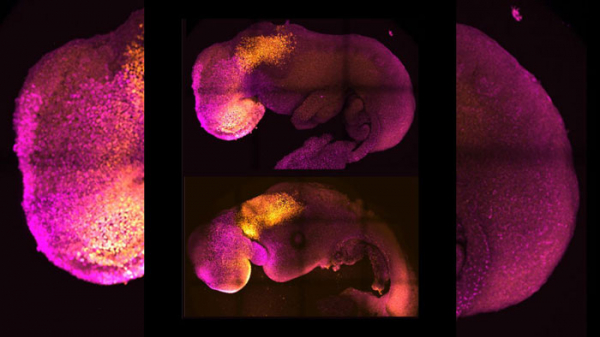
Scientists have created mouse embryos in a dish, and it could one day help families hoping to get pregnant, according to a new study.

After 10 years of research, scientists created a synthetic mouse embryo that began forming organs without a sperm or egg, according to the study published Thursday in the journal Nature. All it took was stem cells.

Stem cells are unspecialized cells that can be manipulated into becoming mature cells with special functions.

"Our mouse embryo model not only develops a brain, but also a beating heart, all the components that go on to make up the body," said lead study author Magdalena Zernicka-Goetz, professor of mammalian development and stem cell biology at the University of Cambridge in the United Kingdom.

"It's just unbelievable that we've got this far. This has been the dream of our community for years, and a major focus of our work for a decade, and finally we've done it."

The paper is an exciting advance and tackles a challenge scientists face studying mammal embryos in utero, said Marianne Bronner, a professor of biology at the California Institute of Technology in Pasadena (Caltech). Bronner was not involved in the study.

"These develop outside of the mother and therefore can be easily visualized through critical developmental stages that were previously difficult to access," Bronner added.

The researchers hope to move from mouse embryos to creating models of natural human pregnancies -- many of which fail in the early stages, Zernicka-Goetz said.

By watching the embryos in a lab instead of a uterus, scientists got a better view into the process to learn why some pregnancies might fail and how to prevent it, she added.

For now, researchers have only been able to track about eight days of development in the mouse synthetic embryos, but the process is improving, and they are already learning a lot, said study author Gianluca Amadei, a postdoctoral researcher at the University of Cambridge.

"It reveals the fundamental requirements that have to be fulfilled to make the right structure of the embryo with its organs," Zernicka-Goetz said.

Where it stands, the research doesn't apply to humans and "there needs to be a high degree of improvement for this to be truly useful," said Benoit Bruneau, the director of the Gladstone Institute of Cardiovascular Disease and a senior investigator at Gladstone Institutes. Bruneau was not involved in the study.

But researchers see important uses for the future. The process can be used immediately to test new drugs, Zernicka-Goetz said. But in the longer term, as scientists move from mouse synthetic embryos to a human embryo model, it also could help build synthetic organs for people who need transplants, Zernicka-Goetz added.

"I see this work as being the first example of work of this kind," said study author David Glover, research professor of biology and biological engineering at Caltech.

How they did it

In utero, an embryo needs three types of stem cells to form: One becomes the body tissue, another the sac where the embryo develops, and the third the placenta connecting parent and fetus, according to the study.

In Zernicka-Goetz's lab, researchers isolated the three types of stem cells from embryos and cultured them in a container angled to bring the cells together and encourage crosstalk between them.

Day by day, they were able to see the group of cells form into a more and more complex structure, she said.

There are ethical and legal considerations to address before moving to human synthetic embryos, Zernicka-Goetz said. And with the difference in complexity between mouse and human embryos, it could be decades before researchers are able to do a similar process for human models, Bronner said.

But in the meantime, the information learned from the mouse models could help "correct failing tissues and organs," Zernicka-Goetz said.

The mystery of human life

The early weeks after fertilization are made up of these three different stem cells communicating with one another chemically and mechanically so the embryo can grow properly, the study said.

"So many pregnancies fail around this time, before most women (realize) they are pregnant," said Zernicka-Goetz, who is also professor of biology and biological engineering at Caltech. "This period is the foundation for everything else that follows in pregnancy. If it goes wrong, the pregnancy will fail."

But by this stage, an embryo created through in vitro fertilization is already implanted in the parent, so scientists have limited visibility into the processes it is going through, Zernicka-Goetz said.

They were able to develop foundations of a brain -- a first for models such as these and a "holy grail for the field," Glover said.

"This period of human life is so mysterious, so to be able to see how it happens in a dish -- to have access to these individual stem cells, to understand why so many pregnancies fail and how we might be able to prevent that from happening -- is quite special," Zernicka-Goetz said in a press release. "We looked at the dialogue that has to happen between the different types of stem cell at that time -- we've shown how it occurs and how it can go wrong."- 

Read More........

Behaviors of tiniest water droplets revealed

Water mediates all biological processes, but we still don't fully understand its behavior.
From Science Daily: “A new study by researchers at the University of California, San Diego, and Emory University has uncovered fundamental details about the hexamer structures that make up the tiniest droplets of water, the key component of life – and one that scientists still don't fully understand. “The research, recently published in the Journal of the American Chemical Society, provides a new interpretation for experimental measurements as well as a vital test for future studies of our most precious resource. Moreover, understanding the properties of water at the molecular level can ultimately have an impact on many areas of science, including the development of new drugs or advances in climate change
research.A 3-D model of the prism structure of the water hexamer, the smallest drop of water. "Ours are the first simulations that use an accurate, full-dimensional representation of the molecular interactions and exact inclusion of nuclear quantum effects through state-of-the-art computational approaches," says study co-author Joel Bowman, a theoretical chemist at Emory University. "These allow ws to accurately determine the stability of the different isomers over a wide range of temperatures." ‘"About 60% of our bodies are made of water that effectively mediates all biological processes,’ said Francesco Paesani, a study co-author and a biochemist at UC San Diego. ‘Without water, proteins don't work and life as we know it wouldn't exist. Understanding the molecular properties of the hydrogen bond network of water is the key to understanding everything else that happens in water. And we still don't have a precise picture of the molecular structure of liquid water in different environments.’ “As described in the JACS paper, researchers have determined the relative populations of the different isomers of the water hexamer as they
assemble into various configurations called 'cage', 'prism', and 'book'. A 3-D model of the cage structure of the water hexamer. The mesh contours represent the actual quantum-mechanical densities of the oxygen (red) and hygrogen (white) atoms. The small yellow spheres represent the hydrogen bonds between the six water molecules. Model images courtesy of UC San Diego. “The water hexamer is considered the smallest drop of water because it is the smallest water cluster that is three dimensional, i.e., a cluster where the oxygen atoms of the molecules do not lie on the same plane. As such, it is the prototypical system for understanding the properties of the hydrogen bond dynamics in the condensed phases because of its direct connection with ice, as well as with the structural arrangements that occur in liquid water. “This system also allows scientists to better understand the structure and dynamics of water in its liquid state, which plays a central role in many phenomena of relevance to different areas of science, including physics, chemistry, biology, geology, and climate research. For example, the hydration structure around proteins affects their stability and function, water in the active sites of enzymes affects their catalytic power, and the behavior of water adsorbed on atmospheric particles drives the formation of clouds.” Source: eScienceCommons
Read More........

Ethics: Robots, androids, and cyborgs

There may come a time when robots, androids, and cyborgs will be more than science fiction and develop "intelligence" and with intelligence comes decision-making, freedom, responsibility--ETHICS.

One of the local television stations last night dug into its vaults and aired "Westworld" [MGM-1973] written and directed by Michael Crichton and staring Yul Brynner, Richard Benjamin, and James Brolin. An inexpensive film shot on studio back lots, dessert, and Harold Lloyd's estate, the film exploits dreams of a perfect fantasy vacation [at $1,000 a day] at an amusement facility called Delos where the paying adventurer can choose from Roman World, Medieval World, and Western World. Sophisticated androids are the counterparts of the human visitors and bend at the will of human interaction with NO harm to the humans. Well, maybe. Minor glitches happen which are expected in the complicated computer setup...normal malfunction parameters as expressed by a review board. It isn't much longer when the "glitches" become more complicated and numerous until finally there ensues android revolt--utter chaos. Humans are dying. Not a good thing for the investors of Delos...paid realism with deathly results. Yul Brynner [the gunslinger from the "Western World"] runs amuck, the scientists/programers are sealed in their room with locked doors and perish from asphyxiation, James Brolin dies for real in a shoot out with Yul Brynner, and the rest of the film is a quest by the gunslinger to get Richard Benjamin at all costs. Human ingenuity and reason finally foil the gunslinger, but the whole film, beyond its entertainment value, is the question of the rise of mechanical machines driven by computer programs and the establishment of ethical values. The film neither revealed why the androids changed [substandard, untested components?] and why they took an "evil" and "destructive" stance. Why not a stance of superior intelligence. That would have produced a film of little interest for sure. But the question remains as to the nature of the relationship of androids and the development of the fostering of ethical principals. Is the first stage of quality societal norms a function of a pool of negativity, antisocial behavior; that given time the androids would have evolved into positive, functioning members of their own "species" and interact well with other species? Where do ethical norms originate?

How about the penultimate android with an attitude problem and unshakeable pessimistic disposition--"Marvin, the Paranoid Android" equipped with "GPP" [Genuine People Personalities], from the very popular British TV series and the film "Hitchhiker's Guide To The Galaxy". The story line is somewhat complex in this episodic tale but here is a good summation by Joseph DeMarco:

"Narrowly escaping the destruction of the earth to make way for an intergalatic freeway, hitchhikers Arthur Dent (Earthling Idiot) and Ford Prefect (Writer for the Guide) go on a crazy journey across time and space. They are read bad poetry which is considered terrible torture, and they are almost sucked out an air lock into space. After almost being killed many times, and narrowly escaping at the end of each chapter, they join forces with Zaphod Beeblebrox (A two-headed cocky alien), Trillian (another worthless earthling) and Marvin (the depressed robot) to search for the answer to the meaning of life, which may have been hidden on the recently demolished earth."

When you are contemplating this topic consider the character "Data" from "Star Trek: Next Generation", and recall the 1990 episode of "Star Trek: Next Generation" [#64] called "The Offspring" whereby Data has created a daughter called "Lal". Lal is capable of perception and feeling and given Data's "software" of ethics by "neural transfers". But Lal has some problems with citizens of the star ship. Befriended by Guinan she is introduced to the inhabitants of "Ten Forword" to broaden her social intercourse. Data and Captain Picard are embroiled in a discussion regarding Lal's removal from the star ship when they are interrupted by an emergency message from Counselor Troi. Lal is dying...her functions broke down after experiencing an extraordinary gamut of feelings in the counselor's presence. All attempts to save Lal fail and she succumbs to what we humans all must face--DEATH. Curiously, Lal's demise may have been contributed to a more advanced stage of sensitivity and she was unable to interface the new feelings with the supplied software. Consider Data's inability to experience the grief and emotion the crew feels at Lal's loss and must be content to have only memories of Lal. Data may well be equipped with a sense of ethics when dealing with human issues of loyalty, responsibility, self-sacrifice, etc., but he, and all androids of his caliber, may never fully integrate the full range of human emotions--well beyond the ethics.

Remember Isaac Asimov's "Three Laws of Robotics" which I assume would be relegated to androids too? All is fine until something breaks down or a truly unique circumstance arises that confounds even the best mind's of mankind.

1. A robot may not injure humans nor, through inaction, allow them to come to harm.

2. A robot must obey human orders except where such orders conflict with the First Law.

3. A robot must protect its own existence insofar as such protection does not conflict with the First or Second law.

Roger Clarke has written this detailed essay on Asimov's "laws of Robotics".

As I suspect...there will BE those unique events where Asimov's robot imperatives or any additional instructions will fail: "The freedom of fiction enabled Asimov to project the laws into many future scenarios; in so doing, he uncovered issues that will probably arise someday in real- world situations. Many aspects of the laws discussed in this article are likely to be weaknesses in any robotic code of conduct."

I suppose some wonder about definitions here. For example is there a clear cut distinction between robots and androids and another version--cyborgs. Maybe not, and all is a matter of semantics. And it may well be a fortuitous effort to make such a distinction other than what is common sense. Cyborgs and androids clearly take on the mantle of sentient beings whereas not all robots are merely drones of task oriented character such as Robbie the Robot [Forbidden Planet, "Lost In Space"] or "Marvin" ["Hitchhiker's Guide To The Galaxy"]. And consider too that the discussion here is really existing within the realm of science fiction and certainly not correlated to any real life antecedents [yet], but is still worthy of discussion and analysis. The advent of sophisticated computers, biotechnology, genetics, etc. force us to become aware of the possibility of artificial devices becoming human like and subject to the same issues that humans face--those pesky ethical dilemmas. The development and integration of these new forms may just well be part of the whole picture of evolution as one writer suggested. Seeing the forest is impossible for us and thus humans may not realize that "humans" aren't the only form of life in a complex evolutionary scheme; that a carbon based sentient being is neither the end product of evolution nor the only species to embrace ethical issues.

Steve Mizrach offers this essay on cyborg ethics.

Now consider the notion that species ethics are non-transferable; that a species ethics is a category of one and implicitly forbids the overlapping of another category. In such a case the attribution [transfer] of ethical principles [involving servitude and safety of the primary or transferring species, i.e. Asimov's "Three Rules"] would be impossible for an android. This makes the ensuing comment: Each species is unique in its own ethics and only chance would afford similarity. Earth residents have one set of ethics while residents of some very distant planet would have theirs. A unique set for each species that except for chance could well exhibit diametrically opposed ethics. A learning bridge for the sharing of ethics just may not exist--or the simple transfer of ethics that ensures a species safety is impossible. Divergent species just may not have common grounds for mutual acceptance of ethics.

The notion of sound ethics stemming from religion/theology is not new and does carry some significance. [Unfortunately, on the whole, the implementation of such sound ethics has historically been short of world wide demonstration.] Now, whether an android community would adopt ethical norms [be they their own constructs or implanted or borrowed from other beings] to ensure the safety and perpetuation of their species is another mater. It would be arrogant, despite what may appear beneficial, to assume that mankind's ethical resolutions are the best for all species of intelligence or even the only set of ethics in the universe. Androids may discover that the "self" is the most beneficial status and one wonders just how long such a stance would last. Androids may have no community sense of ethics as we would understand. Ethics becomes twisted and inverted in substantial meaning to what we experience. You are quite correct in that survival of the individual and perpetuation of the species is what establishes a set of ethics. Most humans are guided by good ethics and do have a conscience. But you have to wonder just how far those great ethics are really understood and believed. There is no particular pleasure in killing another, but faced with a situation where food for one's survival is at issue, one would consider killing the intruder to sustain one's own existence. Maybe androids would have similar compunctions or maybe they have a different set of ethics that enable them to diffuse the life and death ethical situation.

"From the far horizons of the unknown come transcribed tales of new dimensions in time and space. These are stories of the future, adventures in which you'll live in a million could-be years on a thousand may-be worlds. The National Broadcasting Company in cooperation with Street & Smith, publishers of Astounding Science Fiction Magazine present: "X Minus One".

For you old time radio fans of yesteryear, X Minus One offered many episodes of robots, androids, humanoids, and the like, but one of the most delightful was an episode called "How To" [Episode #45 that aired April 3rd, 1956]. The story was by Clifford D. Simak, radio transcription was by William Welch, and stared Alan Bunce, Ann Seymour, Les Demon, Joe Bell, Jane Bruce, Santos Ortega, Ben Grauer. As the plot indicates: "A man orders a do-it-yourself robotic dog kit and is accidentally sent a kit for an experimental robot humanoid. The mechanical man is both a blessing and a curse." [Troy Holaday]. This has just about everything: Benevolent robots, counterfeiters, tax men, lawyers.

Let's suppose for the sake of the following argument that androids exist and that they have a set of ethics akin to man: A right to life [murder prohibited], mercy, altruism, etc.--including jurisprudence. Jurisprudence for androids?--yes. If they mirror human ethics of conduct, then they must also abide by the laws of human society and be subject to all of the ramifications.

Robert A. Freitas Jr. offers this essay on jurisprudence.

And finally..."Jennifer, an emotionally troubled whiz kid with obsessive-compulsive disorder, is desperate to find her birth mother in China. But she's also petrified to leave her house. So she uses her technological genius to build Jenny Chow, a surrogate devoid of dysfunction, to take the journey in her place."--New York Academy of Sciences.


A new play has opened called "The Intelligent Design of Jenny Chow" by Rolin Jones and is concerned with a lonely young woman's [Jennifer Marcus] acute agoraphobia and genius who builds a companion--an android called Jenny Chow. While reviewer Charles Isherwood is dismayed at the overall tone of the play especially the whimsical demeanor of the android, it nevertheless illustrates the value of, shall we say, an alternate personality--far more complex and interactive than the standard doll or teddy bear of childhood. For those individuals that find it difficult or impossible to relate to "real" people or the "real" world such an android is not without merit for such an item will offer comfort, lessen loneliness, offer interaction on that person's level of communication and may possess value of therapy. Chemical sympathy may not be needed--just someone to talk to would be far more beneficial. life, which may have been hidden on the recently demolished earth. Source: Article
Read More........

Deceased--Halton C. Arp

"Halton C. Arp, Astronomer Who Challenged Big Bang Theory, Dies at 86"
By: Dennis Overbye, January 6th, 2014, The New York Times: Halton C. Arp, a prodigal son of American astronomy whose dogged insistence that astronomers had misread the distances to quasars cast doubt on the Big Bang theory of the universe and led to his exile from his peers and the telescopes he loved, died on Dec. 28 in Munich. He was 86. The cause was pneumonia, said his daughter Kristana Arp, who said he also had Parkinson’s disease. As a staff astronomer for 29 years at Hale Observatories, which included the Mount Wilson and Palomar Mountain observatories in Southern California, Dr. Arp was part of their most romantic era, when astronomers were peeling back the sky and making discovery after discovery that laid the foundation for the modern understanding of the expansion of the universe. But Dr. Arp, an artist’s son with a swashbuckling air, was no friend of orthodoxy. A skilled observer with regular access to a 200-inch telescope on Palomar Mountain, he sought out unusual galaxies and collected them in “The Atlas of Peculiar Galaxies” (1966), showing them interacting and merging with loops, swirls and streamers that showed the diversity and beauty of nature. But these galaxies also revealed something puzzling and controversial. In the expanding universe, as discovered by Edwin Hubble in 1929, everything is moving away from us. The farther away it is, the faster it is going, as revealed by its redshift, a stretching of light waves — like the changing tone of an ambulance siren as it goes past — known as a Doppler shift. Dr. Arp found that galaxies with radically different redshifts, and thus at vastly different distances from us, often appeared connected by filaments and bridges of gas. This suggested, he said, that redshift was not always an indication of distance but could be caused by other, unknown physics. The biggest redshifts belonged to quasars — brilliant, pointlike objects that are presumably at the edge of the universe. Dr. Arp found, however, that they were often suspiciously close in the sky to relatively nearby spiral galaxies. This suggested to him that quasars were not so far away after all, and that they might have shot out of the nearby galaxies. If he was right, the whole picture of cosmic evolution given by the Big Bang — of a universe that began in a blaze of fire and gas 14 billion years ago and slowly condensed into stars, galaxies and creatures over the eons — would have to go out the window. A vast majority of astronomers dismissed Dr. Arp’s results as coincidences or optical illusions. But his data appealed to a small, articulate band of astronomers who supported a rival theory of the universe called Steady State and had criticized the Big Bang over the decades. Among them were Fred Hoyle, of Cambridge University, who had invented the theory, and Geoffrey Burbidge, a witty and acerbic astrophysicist at the University of California, San Diego. Dr. Arp survived both of them. “When he died, he took a whole cosmology with him,” said Barry F. Madore, a senior research associate at the Carnegie Observatories in Pasadena, Calif. Halton Christian Arp was born on March 21, 1927, in New York City, the only son of August and Anita Arp. His father was an artist and his mother ran institutions for children and adolescents. Halton grew up in Greenwich Village and various art colonies and did not go to school until fifth grade. After bouncing around public schools in New York, he was sent to Tabor Academy, on Buzzards Bay in Massachusetts, a prep school for the United States Naval Academy. After a year in the Navy, he attended Harvard, where he majored in astronomy. He graduated in 1949 and went on to obtain a Ph.D. in 1953 at the California Institute of Technology, which had started an astronomy graduate program to prepare for the advent of the 200-inch telescope. At Harvard, he became one of the best fencers in the United States, ultimately competing in world championship matches in Paris in 1965. Cutting a dashing figure, he would adopt a fencer’s posture when giving talks. “He would strut across the stage and then strut back, as if he were dueling,” Dr. Madore said. Dr. Arp married three times. He is survived by his third wife, Marie-Helene Arp, an astronomer in Munich; four daughters, Kristana, Alissa, Andrice and Delina Arp; and five grandchildren. Dr. Arp became a staff astronomer at the Hale Observatories after stints as a postdoctoral fellow at the Carnegie Institution for Science and Indiana University. His breakthrough occurred, as he recalled, on a rainy night at Palomar in 1966, when he decided to investigate a chance remark by a colleague that a lot of his peculiar galaxies had radio sources near them in the sky. Looking them up in the Palomar library, he realized that many of those radio sources were quasars that could have been shot out of a nearby galaxy, an idea first explored by the Armenian astronomer Victor Ambartsumian a decade earlier. “It is with reluctance that I come to the conclusion that the redshifts of some extragalactic objects are not due entirely to velocity causes,” Dr. Arp wrote in a paper a year later. He combed the sky for more evidence that redshifts were not ironclad indicators of cosmic distance, knowing that he was striking at the heart of modern cosmology. He turned out to be an expert at finding quasars in suspicious places, tucked under the arm of a galaxy or at the end of a tendril of gas. One of the most impressive was a quasarlike object known as Markarian 205, which had a redshift corresponding to a distance of about a billion light years but appeared to be in front of a galaxy only 70 million light years away. The redshift controversy came to a boil in 1972, when Dr. Arp engaged in a debate, arranged by the American Association for the Advancement of Science, with John N. Bahcall, a young physicist at the Institute for Advanced Study. Timothy Ferris described the event in his book “The Red Limit” (1977): “When the debate was over, it was difficult not to be impressed with Arp’s sincerity and his love for the mysterious galaxies he studied, but it was also difficult to feel that his case had suffered anything short of demolition.” As Dr. Arp’s colleagues lost patience with his quest, he was no longer invited to speak at major conferences, and his observing time on the mighty 200-inch telescope began to dry up. Warned in the early 1980s that his research program was unproductive, he refused to change course. Finally, he refused to submit a proposal at all on the grounds that everyone knew what he was doing. He got no time at all. Dr. Arp took early retirement and joined the Max Planck Institute for Astrophysics near Munich, where he continued to promote his theories. He told his own side of the redshift story in a 1989 book, “Quasars, Redshifts and Controversies.”  Halton C. Arp [Wikipedia]Halton C. Arp - The Official WebsiteArp Peculiar Galaxy Club IntroductionATLAS OF PECULIAR GALAXIESSource: Article
Read More........

PMO announce Bharat Ratna for Prof CNR Rao and Sachin Tendulkar

Chintamani Nagesa Ramachandra Rao, also known as C.N.R. Rao (Kannada :ಚಿಂಀಾಮಣಿ ಚಾಗೇಶ ರಾಮಚಂಊ್ರ ರಾವ್ ) (born 30 June 1934), is an Indian chemist who has worked mainly in solid-state and structural chemistry. He currently serves as the Head of the Scientific Advisory Council to the Prime Minister of India. Dr. Rao has Honorary Doctorates from 60 Universities worldwide. He has authored around 1,500 research papers and 45 scientific books. On 16th November 2013, The Government of India decided to confer upon him Bharat Ratna, the highest civilian award in India making him the third Scientist after C.V.Raman and A P J Abdul Kalam to get the award.
Early life and education: C.N.R. Rao was born in Bangalore in a Kannada family to father Hanumantha Nagesa Rao, and mother Nagamma Nagesa Rao. He obtained his bachelors degree from Mysore University in 1951, obtaining a masters from BHU two years later, and obtained his Ph.D. in 1958 from Purdue University. In 1961 he received DSc from Mysore University. He joined the faculty of Indian Institute of Technology Kanpur in 1963.[He has received Honorary Doctorates from many Universities such as Bordeaux, Caen, Colorado, Khartoum, Liverpool, Northwestern, Novosibirsk, Oxford, Purdue, Stellenbosch, Universite Joseph Fourier, Wales, Wroclaw, Notre Dame, Uppsala, Aligarh Muslim, Anna, AP, Banaras, Bengal Engineering, Bangalore, Burdwan, Bundelkhand, Delhi, Hyderabad, IGNOU, IIT-Bombay, Kharagpur,Delhi and Patna, JNTU, Kalyani, Karnataka, Kolkata, Kuvempu, Lucknow, Mangalore, Manipur, Mysore, Osmania, Punjab, Roorkee, Sikkim Manipal, SRM, Tumkur, Sri Venkateswara, Vidyasagar, & Visveswaraya Technological University. Profession: Rao is currently
the National Research Professor and Linus Pauling Research Professor and Honorary President of the Jawaharlal Nehru Centre for Advanced Scientific Research in Bangalore, India. He is the founding President of the Jawaharlal Nehru Centre for Advanced Scientific Research. He was appointed Chair of the Scientific Advisory Council to the Indian Prime Minister in January 2005, a position which he had occupied earlier during 1985–89. He is also the director of the International Centre for Materials Science (ICMS). Earlier, he served as a faculty member in the Department of Chemistry at the Indian Institute of Technology Kanpur from 1963 to 1976 and as the Director of the Indian Institute of Science from 1984 to 1994. He has also been a visiting professor at Purdue University, the University of Oxford, the University of Cambridge and University of California, Santa Barbara. He was the Jawaharlal Nehru Professor at  the  University  of  Cambridge  and  Professorial  Fellow  at  the  King's
College, Cambridge during 1983-1984. Rao is one of the world's foremost solid state and materials chemists. He has contributed to the development of the field over five decades.His work on transition metal oxides has led to basic understanding of novel phenomena and the relationship between materials properties and the structural chemistry of these materials. Rao was one of the earliest to synthesize two-dimensional oxide materials such as La2CuO4. His work has led to a systematic study of compositionally controlled metal-insulator transitions. Such studies have had a profound impact in application fields such as colossal magneto resistance and high temperature superconductivity. Oxide semiconductors have unusual promise. He has made immense contributions to nanomaterials over the last two decades, besides his work on hybrid materials. He is the author of around 1500 research papers. He has authored and edited 45 books. Rao serves on the board of the Science Initiative GroupAwards: He will be awarded the Bharat Ratna, as declared by the Government of India on 16 November, 2013. He was awarded the Hughes Medal by the Royal Society in 2000, and he became the first recipient of the India Science Award, instituted by the
Government of India, for his contributions to solid state chemistry and materials science, awarded in 2004.He had also been given the honours Padma Shri and Padma Vibhushan by the Indian Government and Karnataka Ratna by the Karnataka state government. He has won several other international prizes and awards. He was awarded Dan David Prize in 2005, by the Dan David Foundation, Tel Aviv University, which he shared with George Whitesides and Robert Langer.[12] In 2005, he was conferred the title Chevalier de la Légion d'honneur (Knight of the Legion of Honour) by France, awarded by the French Government. He is a foreign fellow of Bangladesh Academy of Sciences.[13]He was also awarded an honorary Doctor of Science by the University of Calcutta in 2004. Dr Rao has also been conferred with China's top science award for his important contributions in boosting Sino-India scientific cooperation.[15] The award was given by Chinese Academy of Sciences (CAS) in January 2013, which is China's top academic and research institution for natural sciences. He received 'Distinguished academician award' from IIT Patna in 2013.He is a member of many of the world's scientific associations, including the U.S. National Academy of Sciences, American Academy of Arts and Sciences, the Royal Society (London; FRS, 1982), French Academy, Japanese Academy, Serbian Academy of Sciences and Arts and the Pontifical Academy. Prime Minister's Office has released a statement deciding to confer BharatRatna, the highest civilian award to God of cricket Sachin Tendulkar and eminent scientist Prof C.N.R. Rao. Sachin will be the first sportsperson to receive Bharat Ratna. Prof. C.N.R. Rao is an eminent scientist. He has published over 1,400 research papers and 45 books. He has been honored with several national and international awards. Sachin Tendulkar has taken retirement from cricket today. He has played 200 test matches. For the past 24 years, this legend has served our country and millions of its people with several high class performances. Playing since the tender age of 16 years, Sachin has touched heart of millions across the globe and won laurels for our country. He has been a true ambassador of India in the world of sports. His  achievements  in cricket   are   unparalleled,   the   records   set   by  him unmatched, and the spirit of sportsmanship displayed by him exemplary. The announcement of the award has been described by one and all as a timely and befitting tribute to the legendary player, who has contributed immensely to the game of cricket. They said that it was appropriate that after he bid farewell to the game of cricket, the government had taken the initiative to give him the award. On Friday, veteran playback singer Lata Mangeshkar said Tendulkar deserved the Bharat Ratna and added that he could have carried on playing for at least another year. The scope of the Bharat Ratna, which was earlier restricted to the field of "exceptional services in arts, literature and science, and in recognition of public services of the highest order" has been recently expanded to include the performance of the highest order "in any field of human endeavor" which has enabled sportspersons to dream of the honor. Source: News Track IndiaImage Courtesy: Money LifeChemistry ViewsNanodigestlivemintIndiatechonlineCourtesy: Wikipedia
Read More........

Young Apes Manage Emotions Like Humans

Researchers studying young bonobos in an African sanctuary have discovered striking similarities between the emotional development of the bonobos and that of children, suggesting these great apes regulate their emotions in a human-like way. This is important to human evolutionary history because it shows the socio-emotional framework commonly applied to children works equally well for apes. Using this framework, researchers can test predictions of great ape behavior and, as in the case of this study, confirm humans and apes share many aspects of emotional functioning. Zanna Clay, PhD, and Frans de Waal, PhD, of the Living Links Center at the Yerkes National Primate Research Center, Emory University, conducted the study at a bonobo sanctuary near Kinshasa, the capital of the Democratic Republic of the
Congo. The results are published in the current issue of theProceedings of the National Academy of Sciences. Detailed video analysis of daily social life at the sanctuary allowed Clay and de Waal to measure how bonobos handle their own emotions as well as how they react to the emotions of others. They found the two were related in that bonobos that recovered quickly and easily from their own emotional upheavals, such as after losing a fight, showed more empathy for their fellow great apes. Clay notes those bonobos more often gave body comfort (kissing, embracing, touching) to those in distress. The bonobo (Pan paniscus), one of our closest primate relatives, is as genetically similar to humans as is the chimpanzee. The bonobo is widely considered the most empathic great ape, a conclusion brain research supports. "This makes the species an ideal candidate for psychological comparisons," says de Waal. "Any fundamental similarity between humans and bonobos probably traces back to their last common ancestor, which lived around six million years ago," he continues. If the way bonobos handle their own emotions predicts how they react to those of others, this hints at emotion regulation, such as the ability to temper strong emotions and avoid over-arousal. In children, emotion regulation is crucial for healthy social development. Socially competent children keep the ups and downs of their emotions within bounds. A stable parent-child bond is essential for this, which is why human orphans typically have
trouble managing their emotions. The bonobo sanctuary in this study includes many victims of bushmeat hunting. Human substitute mothers care for the juvenile bonobos that were forcefully removed at an early age from their bonobo mothers. This care continues for years until the bonobos are transferred to a forested enclosure with bonobos of all ages. "Compared to peers reared by their own mothers, the orphans have difficulty managing emotional arousal," says Clay. She observed how the orphans would take a long time recovering from distress: "They would be very upset, screaming for minutes after a fight compared to mother-reared juveniles, who would snap out of it in seconds.""Animal emotions have long been scientifically taboo," says de Waal, but he stresses how such studies that zoom in on emotions can provide valuable information about humans and our society. "By measuring the expression of distress and arousal in great apes, and how they cope, we were able to confirm that efficient emotion regulation is an essential part of empathy. Empathy allows great apes and humans to absorb the distress of others without getting overly distressed themselves," continues de Waal. He says this also explains why orphan bonobos, which have experienced trauma that hampers emotional development, are less socially competent than their mother-raised peers. Contacts and sources: Lisa NewbernEmory Health SciencesSource: Nano Patents And Innovations
Read More........

Elephants Understand Humans Says New Research


Credit: University of St. Andrews 
Elephants understand humans in a way most other animals don’t, according to the latest research from the University of St Andrews The new study, published today (Thursday 10 October 2013) by Current Biology, found that elephants are the only wild animals to understand human pointing without any training to do so. The researchers, Anna Smet and Professor Richard Byrne from the University’s School of Psychology and Neuroscience, set out to test whether African elephants could learn to follow pointing – and were surprised to find them responding successfully from the first trial. They said, “In our study we found that African elephants spontaneously understand human pointing, without any training to do so. This has shown that the ability to understand pointing is not uniquely human but has also evolved in a lineage of animal very remote from the primates.” Elephants are part of an ancient African radiation of animals, including the hyrax, golden mole, aardvark and manatee. Elephants share with humans an elaborate and complex living network in which support, empathy and help for others are critical for survival. The researchers say that it may be only in such a society that the ability to follow pointing has adaptive value. Professor Byrne explained, “When people want to direct the attention of others, they will naturally do so by pointing, starting from a very young age. Pointing is the most immediate and direct way that humans have for controlling others’ attention. Elephants making a point from University of St Andrews on Vimeo. “Most other animals do not point, nor do they understand pointing when others do it. Even our closest relatives, the great apes, typically fail to understand pointing when it’s done for them by human carers; in contrast, the domestic dog, adapted to working with humans over many thousands of years and sometimes selectively bred to follow pointing, is able to follow human pointing – a skill the dogs probably learn from repeated, one-to-one interactions with their owners.” The St Andrews’ researchers worked with a group of elephants who give rides to tourists in Zimbabwe. The animals were trained to follow certain vocal commands, but they weren’t accustomed to pointing. Anna Smet explained, “We always hoped that our elephant subjects – whose ‘day job’ is taking tourists for elephant-back rides near Victoria Falls – would be able to learn to follow human pointing. “But what really surprised us is that they did not apparently need to learn anything. Their understanding was as good on the first trial as the last, and we could find no sign of learning over the experiment.” The researchers say that it is possible that elephants may do something akin to pointing as a means of communicating with each other,
using their long trunk. Anna continued, “Elephants do regularly make prominent trunk gestures, for instance when one individual detects the scent of a dangerous predator, but it remains to be seen whether those motions act in elephant society as ‘points.’” The findings help explain how humans have been able to rely on wild-caught elephants as work animals, for logging, transport, or war, for thousands of years. Professor Byrne explained, “It has long been a puzzle that one animal, the elephant, doesn’t seem to need domestication in order to learn to work effectively with humans. They have a natural capacity to interact with humans even though - unlike horses, dogs and camels - they have never been bred or domesticated for that role. Our findings suggest that elephants seem to understand us humans in a way most other animals don’t.” Contacts and sources: Professor Richard Byrne, University of St Andrews. Source: Nano Patents And Innovation
Read More........

Interesting stuff about Einstein

"Einstein Quotes and Interesting Facts: Assassination Lists, Autopsied Brains and Socks" by James Fenner
Guardian Express: According to a new book, entitled Einstein and the Quantum, written by A. Douglas Stone, Albert Einstein’s contributions towards the various fields of science, and the extent of his genius, may have been significantly overlooked. Stone, who is the chair of Yale’s Department of Applied Physics, argues, such was the magnitude of Einstein’s phenomenal works, the man could have been “… worthy of four Nobel Prizes…” In reality, the remarkable physicist was only awarded a single Nobel Prize. Throughout his book, Stone waxes lyrical about Einstein, highlighting his many accomplishments, and talking about his advancement of numerous concepts in quantum theory, and garnering enormous recognition for his theory of relativity. Einstein was, of course, renowned for his work as a physicist. However, he also contributed a great deal to philosophy, with most of his philosophical reflections having been driven by academic study. A young philosopher, called Robert Thornton, after completing his Ph.D. at Minnesota, was due to begin teaching physics at the University of Puerto Rico. Before beginning histutelage, he wanted to combine both scientific and philosophical perspectives to present a modern physics course to his students and, therefore, requested a few supportive words from Einstein. Here is what the great man had to say: “So many people today—and even professional scientists—seem to me like somebody who has seen thousands of trees but has never seen a forest. A knowledge of the historic and philosophical background gives that kind of independence from prejudices of his generation from which most scientists are suffering. This independence created by philosophical insight is—in my opinion—the mark of distinction between a mere artisan or specialist and a real seeker after truth.” To celebrate the great man and his many scientific achievements, we thought we would gather a list of some of the most interesting Einstein facts and trivia, alongside some of his most memorable quotes. The Assassination List : During 1933, Albert Einstein made a trip to the United States, before deciding not to return back to Germany, as a consequence of the Nazi uprising, spearheaded by the infamous Imagination is more important than knowledge Adolf Hitler. Later that year, Einstein made a voyage to Belgium, at which time he was informed that his cottage had been ransacked, and his sailboat
Einstein and the Quantum: The Quest of the Valiant Swabian Hardcover, By A. Douglas Stone, ISBN-10: 0691139687, ISBN-13: 978-0691139685
appropriated. Einstein immediately went to the German consulate in Antwerp, where he officially renounced his citizenship to Germany. The situation in fascist Germany deteriorated rapidly, during that same year, with anti-Semitic activities becoming the norm, and the instatement of laws that barred Jewish members of German society from holding formal occupations. Einstein was placed on an assassination target list, with a $5,000 bounty placed upon his head, whilst many of his publications had been burnt. Ruminating over the atrocities, Einstein had this to say to fellow physicist Max Born: “… I must confess that the degree of their brutality and cowardice came as something of a surprise.” Autograph Business: It seemed Einstein was never entirely comfortable signing autographs. Remarkably, he elected to charge one dollar for the privilege. The proceedings from his “autograph business” would later be given to charity. According to Ronald W. Clark, who authored Einstein: The Life and Times, he also charged five dollars for the signing of memorabilia. Einstein was known for a number of charitable acts. When en route to a series of lectures in Pasadena, California, he agreed to perform two radio broadcasts. Each speech generated $1,000, which he donated to a charitable organization that aided the impoverished people of Berlin. Now, the man’s autographs can sell for extreme sums of money. A signed photograph of Einstein sticking his tongue out, was sold for an incredible $74,000 by RR Auction in 509. University Entrance Examination: The cerebral powerhouse that is Albert Einstein, upon applying for early admission to a Swiss polytechnic school, actually failed his entrance examination first time round. He managed to successfully pass the mathematics and science sections of the test – his core strengths – but failed the remainder (languages, history etc.) At the behest of the Principal of the Polytechnic, Einstein then went on to complete his secondary schooling at the Aargau Cantonal School, based in Switzerland. The Manhattan Project During 1939, it had been reported that the Nazi German regime was engaged in atomic bomb research efforts. Troubled by these findings, Einstein, alongside
Hungarian physicist Leó Szilárd, attempted to warn the American government. The pair drafted a letter to President Franklin D. Roosevelt, outlining the dangers of remaining idle, and recommended that additional research be conducted to explore the uranium research, whilst bolstering America’s supply of uranium. Many suggest that Einstein’s role was pivotal in coaxing America into an arms race against the Nazis, leading to the Manhattan Project. Led by the United States, and supported by both Canada and the United Kingdom, the Manhattan Project yielded the very first atomic bombs, costing close to $2 billion. In issuing his requests for research development of the atomic bomb, Einstein went against his pacifist instincts. In a conversation with Linus Pauling, an esteemed American scientist, academic and fellow peace activist, Einstein looked back, retrospectively, at his involvement in the inception of the atomic bomb: “I made one great mistake in my life – when I signed the letter to President Roosevelt recommending that atomic bombs be made; but there was some justification – the danger that the Germans would make them.” Einstein for Israeli President: Following the death of the Zionist leader of Israel, Chaim Azriel Weizmann, in 1952, Einstein was offered the place of President of Israel. The position was offered by Prime Minister David Ben-Gurion. However, Einstein rejected the offer, despite having been “deeply moved” by the extraordinary gesture: “All my life I have dealt with objective matters, hence I lack both the natural aptitude and the experience to deal properly with people and to exercise official function.” The Socks: Unusually, Einstein also seemed to have an aversion to socks. Seemingly, the genius-level physicist virtually never wore socks. However, generally, Einstein was not one for formal attire. “When I was young, I found out that the big toe always ended up making a hole in the sock. So, I stopped wearing socks.” Einstein’s Illegitimate Daughter:  Einstein’s very first wife was Mileva
Maric', both of whom attended the Swiss Federal Polytechnic in Zurich. The pair’s relationship began to flourish, and they both studied and read books together. In 1901, however, before the couple had been wed, they took a romantic trip to Lake Como, located in Italy. It is alleged that Maric' was found to be pregnant, after the vacation had drawn to a conclusion. With the couple unmarried, and with the eminent physicist unable to provide financial support for a family, Einstein’s lover returned home to her parents. During 1987, early communications between Einstein and Maric' were published, exposing these startling revelations. The fate of their illegitimate daughter, who was named Lieserl, remains a mystery. Reports suggest that she either died from scarlet fever, or she survived the disease and was then given up for adoption. Later, the pair became estranged. Einstein then proposal a contractual agreement, where he outlines Maric'’s precise responsibilities, including the following: 
Clothes and laundry is kept in good order
Three meals are made and delivered to his room
His room is kept tidy, with his desk untouched
Contact was to be limited, and purely social in nature
Marriage to His Cousin
Another, not to well known, fact is that Einstein married his German cousin. Elsa Einstein was Albert’s second wife. Elsa was born with the Einstein surname, which she lost when she married textile merchant Max Löwenthal. After Elsa’s divorce from Löwenthal in 1908, she then sparked a relationship with Albert. As the pair’s mothers were sisters, Elsa and Albert were first cousins. The couple were later married in 1919, resulting in Elsa reclaiming the Einstein name. Einstein’s Brain: Albert Einstein had some incredible moments in life. However, even in death, the man was subject to remarkable dealings (or at least his corpse was). Einstein died of internal bleeding, which was found to be caused by an abdominal aortic aneurysm that had ruptured. One of Einstein’s final quotes was in utterance to surgeons’ recommendations on corrective surgery: “I want to go when I want. It is tasteless to prolong life artificially. I have done my share, it is time to go. I will do it elegantly.” A pathologist, named Thomas Stoltz Harvey, performed Einstein’s autopsy at Princeton Hospital, New Jersey. Harvey removed the brain tissue and preserved it, intact, with formalin. Before cutting the brain into 240 different sections, he took vast numbers of photographs. A study was performed many years later by Marian C. Diamond and her colleagues, working from the University of California, which sought to measure the ratio between non-neuronal glial cells and neurons. They perceived high levels of glia for every neuronal cell. However, after obtaining Harvey’s original images of Einstein’s brain, from the National Museum of Health and Medicine, in Maryland, further discoveries were made. Parts of Einstein’s cerebral cortex showed huge numbers of convolutions, particularly in the prefrontal cortex, an area of the brain associated with abstract thinking. We hope you have enjoyed our list of Albert Einstein’s top quotes and facts. When exploring the life and times of the theoretical physicist, it seems his personal life and philosophical outlook were as exceptional as his scientific discoveries. Source: Philosophy of Science Portal
Read More........

Clothes of the future: where hi-tech meets high fashion

Photo: EPA
It seems impossible to survive in the modern world without going either “smart” or digital, and clothes are no exception. The fashion industry is now working on technology to bring dressing habits to a completely new level. We're still in the stone age of nano-fibres and networked apparel but, in the not too distant future, you can count on having a coat which tells your mom where you are and having the Encyclopaedia Britannica embedded in your underwear! According to IMS Research, about 14m wearable tech devices were produced in 2011; by 2016, the global market could reach $6bn. Nancy Tilbury, designer to the stars and one of the creators of the futuristic Studio XO, predicts, “Generation Digital are constantly connected and live their lives digitally. Clothes are the next logical step”. Though thought of now as innovation, tampering with textiles and technology has been going on for over a thousand years. Artisans have been wrapping fine golden and silver foil around fabric threads since as early as the reign of Queen Elizabeth I. At the end of the 19th century, with the advent of electric appliances, designers and engineers sought to combine electricity with clothing and jewellery; the so-called Electric Girl Lighting Company hired out young ladies wearing light-adorned evening gowns to brighten up cocktail parties. In 1968, the Body Covering exhibition in New York City presented new fruits of the tech-fashion relationship, that is, clothing that could inflate and deflate, light up, heat and cool itself. In the mid-1990s, a team of MIT researchers led by Steve Mann developed the so-called wearable computers, traditional computer hardware attached to and carried on the body. The baton was later handed over to another MIT group, including Maggie Orth and Rehmi Post, who explored the plausible integration of such devices into clothing. Modern e-textiles are distinguished by either classical electronic devices such as conductors, integrated circuits, LEDs, and conventional batteries embedded in garments or fabrics, or by Internet connectivity. Smart clothes have many virtues: they are universal, customised, and eco-friendly. More than that, designers promise to make their dresses change colour by the mere touch and never wear out; I can see the last quality being debated by fashionistas though. Nanotech fabric will repel stains that normal cloth would absorb, thanks to molecular nano shields against stains, without changing the texture of the fabric. Digitalised and web-enabled apparel in health care, sports, and military service will, and already do, facilitate collecting physiological data and diagnostics. By now, smart textiles and Web-enabled clothing have passed the R&D stage and are on the verge of throwing themselves into mass production. However, many of the finest examples of this symbiosis already wow audiences with their alien hi-tech looks or versatility. Wanda Nylon makes transparent raincoats which can change colour like a bug's wing and are also 90% recyclable and totally nature-friendly. Another eco-friendly project is Orange Power Wellies, created in collaboration with renewable energy experts GotWind. The unique sole of these wellies converts heat from the feet into an electrical current, which can be used to re-charge a mobile phone. The more their owner moves, the more energy they generate. CuteCircuit a couture recruited by stars, specialises on dresses with hundreds of LED lights embedded in the fabric and USB rechargeable. The company made a statement by creating a powered dress which could receive and display tweets in real time. This Twitter Dress contained 2000 LED lights and 3,000 Swarovski crystals. It was introduced at the launch party of EE, the U.K. first 4G mobile network, the commissioner of this wonder-garment. Among wearable tech garments that do serve a purpose is the Hovding bicycle helmet created by Swedish industrial designers. It only inflates at the moment of danger, otherwise stowed around a person's neck in the form of a stylish shawl. The sensors gather data from around the cyclist and should danger present, a futuristic helmet of tough nylon covers the rider's head. Some designers are more hung up on devising ways of incorporating social networking in a dress in the discreetest way possible. Seattle-based Electricfoxy came up with a Ping garment, which can connect to Facebook wirelessly and from anywhere. Functions are performed by lifting a hood, tying a bow, zipping or buttoning. If a friend sends a comment or a message back, the garment will notify its owner with a tap on the shoulder. To surprise and stand out, any technology goes, based on the classic lie detector test, SENSOREE has crafted the so-called "mood sweater" which changes colour depending on mood through a number of sensors on the person's hands. When the sweater's owner is nervous, it lights up red and when calm in blue. The smart use of body heat was discovered by the Netherlands-based company Studio Roosegaarde, its high-tech garments entitled 'Intimacy White' and 'Intimacy Black' are made out of opaque smart e-foils which turn from black or white to transparent when exposed to body heat. Smart garments are not solely designed to turn heads, though, the armed services are one area in need of innovation. Smart uniforms will instantly detect gunshot wounds or even traces of nuclear, biological or chemical attacks in blood and sweat; they can report a fallen soldier's location with GPS coordinates and pass along other critical information for battlefield medics. Sensatex Inc. is already working with the military, emergency workers, and doctors to design what it calls a “smart shirt”; clothing featuring tiny microscopic wires interwoven with the fabric itself. This garment, turned into a communication device, could one day perform remote physiological monitoring or even heat up or cool down depending on the weather. "Throughout society, the ability to unplug from wires and utilise smart textiles to gather information through wireless communication will really be the textile of the future," said Sensatex CEO, Robert Kalik. The use of web-enabled clothing is vastly explored and introduced in areas like medicine and sport where continuity and precision of data are vital. Smart fibres are used to monitor systems in maternal and paediatric units where precise observation is constantly needed. Several companies, like Intelligent Clothing, are already engaging in these activities and create the first tele-monitoring systems, with Internet connectivity, for infants. A group of Ukrainian developers at the Microsoft Imagine Cup competition in 2012 made another smart use of smart fabrics. Their Enable Talk gloves help translate the sign language used by deaf-mute people. The glove sensors read gestures and translate them into words transmitted through bluetooth to a smartphone screen. Electricfoxy has developed the special MOVE technology for sports apparel which focuses on measuring precision in exercises such as yoga or pilates. The sensors transmit information to a mobile app which analyses the position and helps eliminate future errors. Besides, it stores all the information from previous training sessions to keep track of progress. It's clear that one day, while getting dressed in front of the mirror we might catch ourselves thinking how right the Star Wars author was. E-foils, nano cells, glowing LEDs and going online just by, quite literally, lifting your finger. People are however willing to go a long way in revealing their own physiological data; the fact that marketeers may be taking personal data and using it to support their advertising efforts might seem disturbing. When advertisers, and anyone else for that matter, have records of the customers' sleeping and eating habits, daily routine and physical activity and even certain medical conditions they acquire a certain power. Giving away information to strangers through social networks is already an issue, though seemingly inevitable in the modern world of computerised records, it still needs to be treated with caution. Source: Voice Of Russia
Read More........