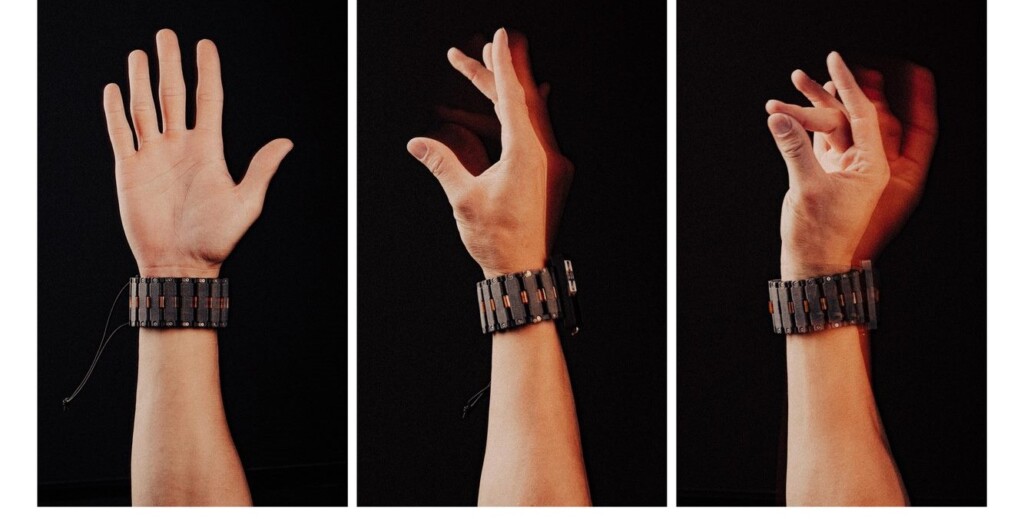
This Bracelet from Meta Translates Hand Movements into Computer Actions

Meta’s Neuromotor Interface – credit, Reality Labs, via Springer Press

A very sci-fi invention has been introduced by engineers from Facebook’s parent company that translates hand gestures into computer actions.

This includes fine motor movements like dotting a lowercase i, and translating handwriting into computer text is something the interface is particularly good at.

Designed inside Meta’s Reality Labs, it’s one of the first major offerings from the in-house moonshot department since the collapse of the company’s “Metaverse” concept which was once expected to “define the future of social connection” according to CEO Mark Zuckerberg, who renamed his company in its honor.

The Metaverse ended up being less of a future-defining technology and more like a damp squib, with the Reality Labs division of Meta losing $14 billion in 2022 and $15 billion in 2023.

Reality Labs was on the chopping block during Meta’s Year of Efficiency, with perhaps as many as 10,000 layoffs taking place in advance of a direction shift to what almost anyone would admit is a more exciting and marketable business direction: stuff that looks like it’s from Star Trek.


The device can translate the electrical signals generated by muscle movements at the wrist into computer commands without the need for personalized calibration or invasive procedures. The bracelet slips on and off as easily as, well, a bracelet.

Technical engineers Patrick Kaifosh and Thomas Reardon who oversaw its development then used deep learning to create generic decoding models that accurately interpret the muscle movements across different people without needing individual calibration, and the more participants who used it, the more accurate the deep learning decoding model became.

However, accuracy and performance was then further increased with personalization, offering a recipe for building high performance biosignal decoders for many applications.

The bracelet works on a Bluetooth connection, and among the various tasks it proved capable of carrying out, its translation of human handwriting movements into text could be done at a speed of 20.9 words per minute, around 16 fewer than the average mobile phone user’s speed.As to exactly who benefits most from the device, a variety of disabilities and paralysis situations immediately come to mind, as well as the obvious benefits for below-the-elbow amputees, or someone using multiple computers and/or monitors at the same time. This Bracelet from Meta Translates Hand Movements into Computer Actions
Read More........

This Wearable Device Monitors Health by Sensing the Gases Passing Through Your Skin

Credit: John A. Rogers / Northwestern University.

Your skin is breathing. This wearable gas sensor can measure it.

Northwestern University researchers have developed the first wearable device for measuring gases emitted from and absorbed by the skin.

By analyzing these gases, the device offers an entirely new way to assess skin health, including monitoring wounds, detecting skin infections, tracking hydration levels, quantifying exposure to harmful environmental chemicals and more.

The new technology comprises a collection of sensors that precisely measure changes in temperature, water vapor, carbon dioxide (CO2) and volatile organic compounds (VOCs), which each give valuable insight into various skin conditions and overall health. These gases flow into a small chamber within the device that hovers above the skin without actually touching it. This no-contact design is particularly useful for gathering information about fragile skin without disturbing delicate tissues.

“This device is a natural evolution of our lab’s wearable electronic devices that collect and analyze sweat,” said Northwestern’s John A. Rogers, who co-led the study. “In that case, we were analyzing sweat to learn about the wearer’s overall health. While useful, that method requires pharmacological stimulation of sweat glands or exposure to a hot, humid environment. We started thinking about what we could capture from the skin that is naturally occurring all the time. It turns out there are all kinds of things coming off the surface of the skin — water vapor, carbon dioxide and volatile organic compounds — that can be correlated to underlying physiological health.”

“This technology has the potential to transform clinical care, particularly for vulnerable populations, including newborn babies, the elderly, patients with diabetes and others with compromised skin,” said Northwestern’s Guillermo A. Ameer, who co-led the study.

“The beauty of our device is that we found a completely novel way to assess the status of delicate skin without having to come in contact with wounds, ulcers or abrasions. This device is the first major step toward measuring changes in gases and correlating those changes with skin status.”

A bioelectronics pioneer, Rogers is the Louis Simpson and Kimberly Querrey Professor of Materials Science and Engineering, Biomedical Engineering and Neurological Surgery at Northwestern — with appointments in Northwestern’s McCormick School of Engineering and the Feinberg School of Medicine — and the director of the Querrey Simpson Institute for Bioelectronics. Ameer is the Daniel Hale Williams Professor of Biomedical Engineering at McCormick, professor of surgery at Feinberg and director of the Center for Advanced Regenerative Engineering. Rogers and Ameer co-led the study with Yonggang Huang, the Jan and Marcia Achenbach Professor in Mechanical Engineering and professor of civil and environmental engineering.

Empowering patients at home

Called the skin barrier, the outermost layer of skin is the body’s first line of defense from the external environment. It maintains hydration by preventing excessive water loss and acts as a barrier against irritants, bacteria and ultraviolet radiation. When the skin barrier is compromised, it can lead to increased water loss (known as transepidermal water loss or TEWL), skin sensitivity, and risk of infection and inflammatory conditions like eczema and psoriasis.

“The skin is critical for protecting us from the environment,” said study co-author Dr. Amy Paller, the Walter J. Hamlin Professor of Dermatology and chair of the Department of Dermatology at Feinberg. “A major element of this protective function is the skin barrier, which is largely characterized by a formidable collection of tightly woven proteins and fats that keeps water in and irritants, toxins, microbes and allergens out.”

By tracking changes in the emission of water vapor and gases from the skin, health care professionals can gain a glimpse into the integrity of their patients’ skin barriers. While technologies to measure water vapor loss do exist, they are large, cumbersome machines that largely reside within hospital settings. The compact wearable device, on the other hand, is designed to help physicians monitor their patients remotely and to empower individuals to take control of their own skin health at home.

“The gold standard for measurement of skin barrier integrity is a large instrument with a probe that intermittently is touched to the skin to collect information about transepidermal water loss — or the flux of water through skin,” Paller said. “Having a device that can measure transepidermal water loss remotely, continuously or as programmed by the investigator — and without perturbing a patient during sleep — is a major advance.”
How the device works

Measuring just two centimeters long and one-and-a-half centimeters wide, the device comprises a chamber, a collection of sensors, a programmable valve, an electronic circuit and a small rechargeable battery. Instead of touching the skin directly, the chamber hovers a few millimeters above it.

“Traditional wearable sensors rely on physical contact with the skin, limiting their use in sensitive situations, such as wound care or for individuals with fragile skin,” Rogers said. “Our device overcomes this limitation by creating a small, enclosed chamber above the skin’s surface.”

An automatic valve opens and closes the entrance to this chamber — a function that dynamically controls access between the enclosed chamber and the surrounding ambient air. When the valve is open, gases flow in or out of the chamber, enabling the device to establish a baseline measurement. Then, when the valve rapidly closes, it traps gases within the chamber. From there, the series of sensors measure changes in gas concentrations over time.

“If our device didn’t incorporate a programmable valve and a time-dynamic measurement approach to quantify flux of species out of and into the skin in a real-time manner, then the system could be confounded by changes in the concentrations of these species that might naturally vary in the surrounding environment,” Rogers said. “Specifically, if the valve were open all the time, the sensor would detect these sorts of changes — not because of anything associated with the skin. On the other hand, if the valve were always closed, then it would perturb natural patterns of flux in a way that also could not account for environmental factors. For workers in potentially hazardous environments, it’s helpful to know how much of those hazardous species are entering the body through the skin.”
Ideal for wound care

Using Bluetooth, the device sends these data straight to a smartphone or tablet for real-time monitoring. These fast results can help health care workers make more informed — and speedier — decisions for wound management and for administering antibiotics.

Because increased water vapor, CO2 and VOCs are associated with bacterial growth and delayed healing, monitoring these factors can help caregivers detect infections earlier and with more confidence.

“Prescribing antibiotics for wounds can be a bit of a gamble,” said Ameer, who is an expert on regenerative engineering approaches to improve wound healing. “Sometimes it’s hard to tell if a wound is infected or not. By the time it’s obvious, it might be too late, and the patient can develop sepsis, which is incredibly dangerous. To avoid this, physicians prescribe a wide spectrum of antibiotics. That can lead to antibiotic resistance, which is a growing problem in health care. Being able to closely, continuously monitor a wound and prescribe an antibiotic at the earliest sign of infection is an obvious and important interest.”

While continuous monitoring is important for all types of wounds, it is particularly crucial for diabetic patients. Ameer previously has developed various strategies, including antioxidant gels and regenerative bandages, for treating diabetic ulcers. Just two years ago, Ameer teamed up with Rogers to create the first transient electronic bandage, which used electrical stimulation to accelerate wound healing. The new wearable provides yet another tool to help these vulnerable patients avoid risky side-effects.

“Diabetic ulcers are the number one non-traumatic cause of lower limb amputations worldwide,” said Ameer. “Sometimes it might appear that the wound is closing, but the skin barrier function is not quite restored. Our device can precisely measure emitted gases, which provides useful information about the skin barrier function.”

Assessing efficacy of bug repellants, lotions

The innovative new technology not only offers unprecedented insights into wound healing and skin health, it also might pave the way for advances in monitoring the efficacy of bug repellents, skin creams and systemic medications designed to improve skin health.

CO2 and VOCs are the very gases that attract mosquitos and other pests. So, measuring these emissions from the skin could help researchers understand and potentially mitigate mosquito attraction. The new device also could enable dermatologists and their patients to measure how fast lotions and creams penetrate the skin, which could provide insights into skin permeability and barrier function. These data also could help other researchers develop more effective transdermal drug delivery systems, monitor the effects of systemically delivered drugs for skin diseases and evaluate the safety of cosmetics and personal care products.

Next, the Northwestern team plans to refine the device’s capabilities, including adding a sensor to track changes in pH levels and developing gas sensors with increased chemical selectivity for early detection of organ dysfunction and other diseases.

“This unusual wearable platform provides a new way to think about and understand skin health,” Rogers said. “This technology is not just about measuring gases and corresponding characteristics of the skin. It's about predicting overall health, preventing infection and disease and creating a future where personalized care is driven by real-time, non-invasive, continuous health tracking through a new collection of parameters that complement those that can be captured with conventional wearables.”

Reference: Shin J, Song JW, Flavin MT, et al. A non-contact wearable device for monitoring epidermal molecular flux. Nature. 2025;640(8058):375-383. doi: 10.1038/s41586-025-08825-2

This article has been republished from the following materials. Note: material may have been edited for length and content. For further information, please contact the cited source. Our press release publishing policy can be accessed here. This Wearable Device Monitors Health by Sensing the Gases Passing Through Your Skin | Technology Networks
Read More........

Concerning spike in back and spine problems due to excessive gadget use: Doctors


New Delhi, (IANS): The excessive use of gadgets among individuals aged 20 to 55 is leading to a significant increase in back and spine problems, doctors warn.

Many are experiencing severe and debilitating symptoms, including sharp, stabbing, or dull pain in the back or neck, muscle spasms, tingling, loss of sensation, and even weakness or limited mobility.

Prolonged screen time is increasing musculoskeletal disorders, particularly affecting the spine, with severe pain, tingling, and functional weakness being reported.

"In this digital era, prolonged screen time is causing a rise in musculoskeletal disorders (MSD), particularly affecting the spine. There has been a 60 per cent surge in back and spine issues. Individuals aged 20-55 are reporting severe pain, sometimes accompanied by loss of urinary or bowel control, tingling in the extremities, and functional weakness. Seven in ten patients I see daily suffer from back and neck pain," Mohit Muttha, Orthopaedic & Spine Surgeon at Apollo Spectra, Pune told IANS.

"Poor posture, especially forward head posture (FHP), due to excessive gadget use, leads to muscle imbalances and tightened hip flexors, making daily activities stressful and painful," added Muttha.

"A 60 per cent increase in low back and neck issues among 20-45-year-olds is linked to gadget addiction, causing discomfort in the neck and cervical spine. If neglected, this can lead to more severe issues, including neck pain, shoulder stiffness, headaches, and restricted mobility. Out of 10-12 patients who visit me daily, around 4-5 have neck and lower back pain related to gadget misuse," Ram Chaddha, Spine Surgeon at Lilavati Hospital, Mumbai told IANS.

Regular breaks, posture, and daily exercises like yoga and stretching are crucial for preventing back and spine issues among 20-50-year-olds."There is a concerning 50 per cent surge in back and spine issues among people aged 20-50. Out of five patients, at least 2-3 suffer from back pain and are advised to rest for prompt recovery," Burhan Salim Siamwala, Consultant Spine Surgeon at Medicover Hospitals, Navi Mumbai told IANS. Concerning spike in back and spine problems due to excessive gadget use: Doctors | MorungExpress | morungexpress.com
Read More........

Secret features of smartphone must be known


Smartphone has some features that many users are not aware of, but these are very effective. These features can be of great help even in times of danger. Let us now know some of the features and tricks that are very effective. 

There is no need to turn off the video if you want to click a picture during make a video on smartphone. The iPhone also displays an icon of the photo while taking video, in where if you click it will capture pictures at the time of video being recorded. 

Many times the remote of the television, speaker or device at home goes bad, to know whether the remote is really damage or not, it can be known through the smartphone. Just place the remote sensor in front of the phone's camera and press the remote button. If the light on the remote sensor blinks, it indicates that the remote is OK and if the light does not blink, then it ensures of damaging condition of remote. 

Smartphone has a very good feature if you want to read any text on the screen when your eyesight is poor; which is called magnification. With this feature different parts of the screen can be zoomed. For this you have to tap the screen three times, it will zoom the screen. 

Nowadays smartphone has the feature of macro lens, which can take pictures of very small objects. Through this, the camera lens can be made more zoomed and smaller objects can be seen in larger resolutions without zooming.

Smartphone headphones are not only useful for listening to music, but also for taking pictures. Although this feature is not present in the earphones of all smartphones. However, it can be verified whether the smartphone has this feature or not. Source: https://www.daily-bangladesh.com/
Read More........

Samsung Galaxy A21s less than 20K phone India launch June 17

For the second consecutive year, Patan topped the state's 33 districts with 86.67 pass percentage

[Galaxy A21s will be Samsung's fourth Galaxy A Series smartphone to arrive in India this year. (Image: community.samsung.com)]

New Delhi: South Korean tech giant Samsung on Monday confirmed that Galaxy A21s will launch in India on June 17.

The device may come in Rs 15,000-Rs 20,000 range and would be sold across Samsung's offline and online channels.

The device will feature a 6.5-inch Infinity O display, 48MP quad camera and a 5000mAh battery. Galaxy A21 is likely to come in two variants - 4/64GB and 6/64GB.

Galaxy A21s will be Samsung's fourth Galaxy A Series smartphone to arrive in India this year.

Samsung earlier launched Galaxy A51, A71 and A31 in India, which did quite well. Galaxy A51 has emerged as a global best seller, according to Strategy Analytics.

Galaxy A21s will be Samsung's fourth smartphone to launch in India since the nationwide lockdown saw relaxation last month.

The phone packs a large 5000mAh battery with 15W fast charging support and runs Android 10 with One UI on top. Source: https://ummid.com
Read More........

Samsung Galaxy A21s less than 20K phone India launch June 17

For the second consecutive year, Patan topped the state's 33 districts with 86.67 pass percentage
[Galaxy A21s will be Samsung's fourth Galaxy A Series smartphone to arrive in India this year. (Image: community.samsung.com)]

New Delhi: South Korean tech giant Samsung on Monday confirmed that Galaxy A21s will launch in India on June 17.

The device may come in Rs 15,000-Rs 20,000 range and would be sold across Samsung's offline and online channels.

The device will feature a 6.5-inch Infinity O display, 48MP quad camera and a 5000mAh battery. Galaxy A21 is likely to come in two variants - 4/64GB and 6/64GB.

Galaxy A21s will be Samsung's fourth Galaxy A Series smartphone to arrive in India this year.

Samsung earlier launched Galaxy A51, A71 and A31 in India, which did quite well. Galaxy A51 has emerged as a global best seller, according to Strategy Analytics.

Galaxy A21s will be Samsung's fourth smartphone to launch in India since the nationwide lockdown saw relaxation last month.

The phone packs a large 5000mAh battery with 15W fast charging support and runs Android 10 with One UI on top. Source: https://ummid.com/

Read More........

Smartphones uncover how the world sleeps


A pioneering study of worldwide sleep patterns combines math modelling, mobile apps and big data to parse the roles society and biology each play in setting sleep schedules. The study, led by University of Michigan mathematicians, used a free smartphone app that reduces jetlag to gather robust sleep data from thousands of people in 100 nations. The researchers examined how age, gender, amount of light and home country affect the amount of shut-eye people around the globe get, when they go to bed, and when they wake up. Among their findings is that cultural pressures can override natural circadian rhythms, with the effects showing up most markedly at bedtime. While morning responsibilities like work, kids and school play a role in wake-time, the researchers say they're not the only factor. Population-level trends agree with what they would expect from current knowledge of the circadian clock. "Across the board, it appears that society governs bedtime and one's internal clock governs wake time, and a later bedtime is linked to a loss of sleep," says Daniel Forger, who holds faculty positions in mathematics at the U-M College of Literature, Science, and the Arts, and in the U-M Medical School's Department of Computational Medicine and Bioinformatics. "At the same time, we found a strong wake-time effect from users' biological clocks - not just their alarm clocks. These findings help to quantify the tug-of-war between solar and social timekeeping." When Forger talks about internal or biological clocks, he's referring to circadian rhythms - fluctuations in bodily functions and behaviors that are tied to the planet's 24-hour day. These rhythms are set by a grain-of-rice-sized cluster of 20,000 neurons behind the eyes. They're regulated by the amount of light, particularly sunlight, our eyes take in. Circadian rhythms have long been thought to be the primary driver of sleep schedules, even since the advent of artificial light and 9-to-5 work schedules. The new research helps to quantify the role that society plays. Here's how Forger and colleague Olivia Walch arrived at their findings. Several years ago, they released an app called Entrain that helps travelers adjust to new time zones. It recommends custom schedules of light and darkness. To use the app, you have to plug in your typical hours of sleep and light exposure, and are given the option of submitting your information anonymously to U-M. The quality of the app's recommendations depended on the accuracy of the users' information, and the researchers say this motivated users to be particularly careful in reporting their lighting history and sleep habits. With information from thousands of people in hand, they then analysed it for patterns. Any correlations that bubbled up, they put to the test in what amounts to a circadian rhythm simulator. The simulator - a mathematical model - is based on the field's deep knowledge of how light affects the brain's suprachiasmatic nucleus (that's the cluster of neurons behind the eyes that regulates our internal clocks). With the model, the researchers could dial the sun up and down at will to see if the correlations still held in extreme conditions. "In the real world, bedtime doesn't behave how it does in our model universe," Walch says. "What the model is missing is how society affects that." The spread of national averages of sleep duration ranged from a minimum of around 7 hours, 24 minutes of sleep for residents of Singapore and Japan to a maximum of 8 hours, 12 minutes for those in the Netherlands. That's not a huge window, but the researchers say every half hour of sleep makes a big difference in terms of cognitive function and long-term health. The findings, the researchers say, point to an important lever for the sleep-deprived - a set that the Centers for Disease Control and Prevention is concerned about. A recent CDC study found that across the US, one in three adults aren't getting the recommended minimum of seven hours. Sleep deprivation, the CDC says, increases the risk of obesity, diabetes, high blood pressure, heart disease, stroke and stress. 
The U-M researchers also found that:
  • Middle-aged men get the least sleep, often getting less than the recommended 7 to 8 hours.
  • Women schedule more sleep than men, about 30 minutes more on average. They go to bed a bit earlier and wake up later. This is most pronounced in ages between 30 and 60.
  • People who spend some time in the sunlight each day tend to go to bed earlier and get more sleep than those who spend most of their time in indoor light.
  • Habits converge as we age. Sleep schedules were more similar among the older-than-55 set than those younger than 30, which could be related to a narrowing window in which older individuals can fall and stay asleep.
Sleep is more important than a lot of people realise, the researchers say. Even if you get six hours a night, you're still building up a sleep debt, says Walch, doctoral student in the mathematics department and a co-author on the paper. "It doesn't take that many days of not getting enough sleep before you're functionally drunk," she said. "Researchers have figured out that being overly tired can have that effect. And what's terrifying at the same time is that people think they're performing tasks way better than they are. Your performance drops off but your perception of your performance doesn't." Aside from the findings themselves, the researchers say the work demonstrates that mobile technology can be a reliable way to gather massive data sets at very low cost. "This is a cool triumph of citizen science," Forger said. The work is funded by the Army Research Laboratory, the Air Force Office of Scientific Research and the National Science Foundation. Source: domain-b.com
Read More........

Google files patent for wearable medical device

Google has filed a patent application for a wearable medical device, able to use nanoparticles to detect and treat illnesses such as cancer.
For those wishing to protect their health and extend their lifespan, a futuristic medical device may become available in the next several years. Details of this wearable technology – known as a Nanoparticle Phoresis – have been published online by Google, via the World Intellectual Property Organisation. The patent application describes a strap, or band, mounted on the lower arm. Similar in appearance to a wristwatch, it would "automatically modify or destroy one or more targets in the blood that have an adverse health effect." This would be achieved by beaming energy into blood vessels to stimulate cells and molecules, increasing their effectiveness at fighting diseases. It could even be used on synthetic nanoparticles. Millions of these tiny objects would be introduced into the wearer's bloodstream, then activated by magnets in the wristband and directed to specific locations. In addition to its physical treatment abilities, the Nanoparticle Phoresis could generate vast amounts of data – not only helpful to the user, but also to researchers and doctors. It could accept inputs from the wearer regarding his or her health state, such as "feeling cold," "feeling tired," "pollen allergy symptoms today," "stressed," "feeling energetic," etc. According to the patent, these user inputs "may be used to complement any other physiological parameter data that the wearable device may collect and establish effective signal levels for and timing of modification of the target." Analysts forecast that wearable technology will see huge growth in the coming years, with unit sales potentially reaching into the
hundreds of millions. This new device from Google – if successfully developed – could become part of that rapidly evolving ecosystem. Initially aimed at patients who are seriously ill, this product (or its derivatives) could also be offered to mainstream consumers who aren't necessarily in bad health, but wish to monitor and improve their well-being. For those with a needle phobia, injections might be possible using high-pressure jets. Although the patent itself makes no mention of this, we can speculate that such a procedure would eventually be incorporated into a wristwatch form factor. Similar to the "hypospray" on Star Trek, these jets would ensure that the skin is not punctured. High-pressure jet injection was covered on our blog in May 2012. Looking further ahead, the prospects become even more exciting. Bill Maris – who helped form Google Calico – this month stated his belief that humans will live to be many centuries old in the future, while today's cancer treatments will seem "primitive" within just 20 years. His comments echo those of futurist and inventor Ray Kurzweil, also employed at Google and currently involved in AI research for the company. Kurzweil predicts that nanoparticles will be superseded by nanobots – small and compact enough to feature motors, sensors and other tools, allowing them to be controlled with extreme precision directly inside cells. If this idea sounds like science fiction, then consider this: a handheld smartphone today contains more processing power than a room-sized supercomputer of the 1980s. With ongoing advances in miniaturisation, together with new materials such as graphene, the future trend seems inevitable. As humans become ever more dependent on technology, our bodies will gradually begin to incorporate these and similar devices on a permanent basis. Later in the 21st century, the line between man and machine could become blurred. Source: Article
Read More........

Scientists make printer that needs no ink, only water


Scientists have created a printer that uses just water to print instead of ink. After about 22 hours, the paper fades back to a plain sheet of white paper, allowing it to be reused. A group of chemists assert that the “water-jet” technology, that is capable of reprinting numerous times, spares people their money and saves trees.
"Several international statistics indicate that about 40 percent of office prints [are] taken to the waste paper basket after a single reading," Sean Xiao-An Zhang, a chemistry professor at Jilin University in China, who supervised the work, said. The paper alone is not ordinary at all, as it is coated with an invisible dye that shows color when water hits it. Later on, the print slowly fades away within a matter of 22 hours, but disappears much faster if exposed to high levels of heat. According to the designers, the print comes out clear and the technology is not expensive at all. "Based on 50 times of rewriting, the cost is only about 1 percent of the inkjet prints," Zhang said in a video. If one page were reused just 12 times, the cost would only be one-seventeenth that of its inkjet counterpart. Zhang said dye-treating the paper, of the type generally used for printing, added about five percent to its price, but this is more than compensated for by the saving on ink. There is no need to change the printer, but the ink cartridge needs to be filled up with water with the help of a syringe. "Water is a renewable resource and obviously poses no risk to the environment," said the study. In the past, such ventures using disappearing ink gave way to low-contrast results at a high price, with some methods using questionable chemicals. Oxazolidine, a dye compound, is the type of mix Zhang and his group used to print off the paper, with clear blue showing in less than one second after the water was put on the page. Four water colors can be printed for the time being, which are blue, magenta, gold, and purple. However, only one color can be printed off at a time. The team hopes to make the resolution and duration time for printing better. Zhang said the dyed paper was "very safe" but toxicity tests are underway on mice to be sure. Voice of Russia, The Sydney Morning Herald Source: http://sputniknews.com/
Read More........

Next generation drones design inspired by nature

© Photo: East News
After being inspired by birds, bats, insects and even flying snakes, researchers from 14 teams have come up with new designs of next generation drones and flying robots. These robots would have the potential to perform multiple tasks from military surveillance to search and rescue, News Tonight reports.
Olga Yazhgunovich: These robots may look similar to many things that nature has given to us in abundance, as flying robot will look like insects and butterflies, Design and Trend says. A report in EurekAlert says that scientists are working on different types of drones that look like different insects and animals. The report also said that scientists have successfully created the smallest drone of all that is as small as merely a millimeter in size. Bioinspiration and Biomimetics journal has come out with fascinating details as to how things are going to shape up in the future as far as the look and shape of the robotic drones are concerned. These drones come with exquisite flight control and can overcome many of the problems drones may face when navigating urban terrain. There is no denying the fact that flying drones are going to be of immense use in different fields in the coming days. It is true that the success of a flying robot depends, obviously, on the exactitude of its flight control, and nothing has more meticulous flight control than the creatures who are born with the gift of flight. Experts are very optimistic about the design and success of such flying robots. Dr. David Lentink of Stanford University says, “Flying animals can be found everywhere in our cities…From scavenging pigeons to alcohol-sniffing fruit flies that make precision landings on our wine glasses, these animals have quickly learnt how to control their flight through urban environments to exploit our resources.” One of the most interesting such robotic drone is a drone under development in Hungary that mimics the flocking of birds. It tries to do it by actually developing an algorithm that allows drones to huddle together while flying through the air. By understanding the ways how tiny insects stabilize themselves in turbulent air, researchers have designed many future drones. One of the researchers from the University of Maryland engineered sensors for their experimental drone based on insects' eyes to mimic amazing capability of flight in clutter. These eyes will act as cameras to record actual position of the drone which will be further monitored by engineers connected to an on-board computer. Another raptor-like appendage for a drone has been designed by some of researchers that can grasp objects at high speeds by swooping in like a bird of prey. Also, a team of researchers led by Prof. Kenny Breuer, at Brown University, has designed an eerily accurate robotic copy of a bat wing with high range of movement, tolerance and flexibility. Prof. Lentink added that membrane based bat wings have better adaptability to airflow and are unbreakable. A few issues will have to be sorted out for the success of such robots. According to the report, one of the biggest challenges facing robotic drones is the ability to survive the elements, such as extreme heat, bitter cold and especially strong winds. To overcome this issue, a team of researchers studied hawk moths as they battled different whirlwind conditions in a vortex chamber, in order to harness their superior flight control mechanisms. Another report in Bioinspiration and Biomimetics says more than a dozen teams are involved in creating flying robots that look like insects, butterflies and others that not just don’t fly in conventional ways but also in unconventional ways and so they are able to fly freely in dense jungles where we cannot expect other drones to fly. Source:http://sputniknews.com/
Read More........

Smartphones would become redundant by 2021

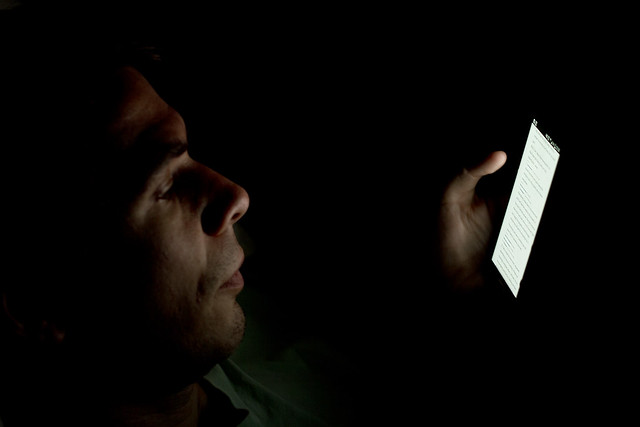
Person looking at smartphone in the dark
Melbourne: Smartphones will become obsolete within five years and would be replaced with artificial intelligence, according to a consumer survey by the Ericsson owned ConsumerLab. Half of the study's respondents said they thought mobile technology would be redundant by 2021 as the growth of artificial intelligence starts enabling interaction with objects without the need for a phone or tablet, Sydney Morning Herald reported. "A smartphone in the hand, it's really not that practical. For example, not when one is driving a car or cooking. And there are many situations where display screens are not so good. Therefore, one in two think that smartphones will belong to the past within five years," Ericsson ConsumerLab's Rebecka Cedering Angstrom was quoted as saying. The research lab surveyed 100,000 people across Sweden and 39 other countries. With around 1.9 billion smartphone users globally, this means ConsumerLab covered just 0.0052 per cent of active users for its study. Source: ummid.com
Read More........

New battery can charge cellphones in 6 minutes

London: Scientists have developed a new battery made with aluminium-filled capsules that could charge your cellphone in six minutes. The battery has four times the capacity of current lithium ion batteries and degrades less over time. It uses nanoparticles with a shell of titanium dioxide wrapped around aluminium, which acts as the battery's negative electrode. Researchers at the Massachusetts Institute of Technology and Tsinghua University in Beijing found that the metal could expand and shrink freely by encasing the aluminium inside a shell, 'The Times' reported. The research overcomes previous problems experienced using aluminium in rechargeable lithium ion batteries. Aluminium is a high-capacity material but it can double in volume and shrink again as it is charged and discharged. The repeated shedding and reforming of the layer consumes lithium and reduces the battery's capacity. The study was published in the journal Nature Communications. — PTI. Source: Article
Read More........

Doctors use Google Glass to restore blood flow to a patient's blocked right coronary artery


In the first instance of its kind, doctors have used Google Glass to successfully restore the blood flow of a chronically blocked right coronary artery in a 49-year old patient. Chronic total occlusion, a complete blockage of the coronary artery, at times referred to as the "final frontier in interventional cardiology", represents a major challenge for catheter-based percutaneous coronary intervention (PCI). Coronary computed tomography angiography (CTA) doctors helps doctors with guidance when performing PCI in lesions. Cardiologists from the Institute of Cardiology in Poland were successful in restoring blood flow in the blocked right coronary artery of a male patient assisted by CTA projections on a wearable VR device based on Google Glass, with an optical head-mounted display. The procedure resulted in successful implantation of two drug-eluting stents. the research has been published in Canadian Journal of Cardiology. The physician-operators could clearly visualise the distal coronary vessel in the display of 3D computed tomographic reconstructions in a mobile application equipped with a hands-free voice recognition system and a zoom function. It helped verify of the direction of the guide wire advancement relative to the course of the blocked vessel segment during the procedure. ''This case demonstrates the novel application of wearable devices for display of data sets in the catheterisation lab that can be used for better planning and guidance of interventional procedures,'' said lead investigator Maksymilian P Opolski from the Institute of Cardiology, IANS reported. ''It also provides proof of concept that wearable devices can improve operator comfort and procedure efficiency in interventional cardiology,'' Opolski added. Google Glass, comprises a wearable, hands-free computer incorporating an optical head-mounted display worn by interventional cardiologists in the catheterisation laboratory. The optical head-mounted display captures and shows images and videos as it interacts with the surrounding environment. The display is an instance the virtual reality concept in which the user is supplemented with additional information generated by the device. Source: Article
Read More........

Powering the next billion devices with Wi-Fi

Wireless LANUniversity of Washington engineers have developed a novel technology that uses a Wi-Fi router -- a source of ubiquitous but untapped energy in indoor environments -- to power devices. The Power Over Wi-Fi (PoWiFi) system is one of the most innovative and game-changing technologies of the year, according to Popular Science, which included it in the magazine's annual "Best of What's New" awards announced Wednesday. The technology attracted attention earlier this year when researchers published an online paper showing how they harvested energy from Wi-Fi signals to power a simple temperature sensor, a low-resolution grayscale camera and a charger for a Jawbone activity tracking bracelet. The final paper will be presented next month at the Association for Computing Machinery's CoNEXT 2015 conference in Heidelberg, Germany, on emerging networking experiments and technologies. "For the first time we've shown that you can use Wi-Fi devices to power the sensors in cameras and other devices," said lead author Vamsi Talla, a UW electrical engineering doctoral student. "We also made a system that can co-exist as a Wi-Fi router and a power source -- it doesn't degrade the quality of your Wi-Fi signals while it's powering devices." PoWiFi could help enable development of the Internet of Things, where small computing sensors are embedded in everyday objects like cell phones, coffee makers, washing machines, air conditioners, mobile devices, allowing those devices to "talk" to each other. But one major challenge is how to energize those low-power sensors and actuators without needing to plug them into a power source as they become smaller and more numerous. The team of UW computer science and electrical engineers found that the peak energy contained in untapped, ambient Wi-Fi signals often came close to meeting the operating requirements for some low-power devices. But because the signals are sent intermittently, energy "leaked" out of the system during silent periods. The team fixed that problem by optimizing a router to send out superfluous "power packets" on Wi-Fi channels not currently in use -- essentially beefing up the Wi-Fi signal for power delivery -- without affecting the quality and speed of data transmission. The team also developed sensors that can be integrated in devices to harvest the power. In their proof-of-concept experiments, the team demonstrated that the PoWiFi system could wire-lessly power a gray-scale, low-power Omnivision VGA camera from 17 feet away, allowing it to store enough energy to capture an image every 35 minutes. It also re-charged the battery of a Jawbone Up24 wearable fitness tracker from zero to 41 per cent in 2.5 hours. The researchers also tested the PoWiFi system in six homes. Users typically didn't notice deterioration in web page loading or video streaming experiences, showing the technology could successfully deliver power via Wi-Fi in real-world conditions without degrading network performance. Although initial experiments harvested relatively small amounts of power, the UW team believes there's opportunity for make the PoWiFi system more efficient and robust. "In the future, PoWi-Fi could leverage technology power scaling to further improve the efficiency of the system to enable operation at larger distances and power numerous more sensors and applications," said co-author Shyam Gollakota, assistant professor of computer science and engineering. Source: ArticleSource: flickr.com
Read More........

New Google tech may prevent specs from falling off

New Google tech may prevent specs from falling off
Washington: Do you have to constantly keep pushing your glasses up as they slide down your nose every few minutes while running? A new Google technology may help! A new patent awarded to Google outlines a system built into a wearable device like Google Glass, that uses motors and motion detectors to automatically tighten or loosen the glasses' arms depending on what the wearer is doing. The new glasses would have an actuator - a little motor for controlling movement - in each arm that could bend the arms in or out as needed, rather like the way a bendy straw works. When the glasses detect that their wearer is bobbing up and down at an increased rate - while running, for example - the arms contract to grip the wearer's head, 'Quartz' reported. This could be a massive boon for athletes who choose not to wear their glasses when active, for fear of breaking them. The actuators could also help solve the one-size-fits-all approach that many glasses have to fitting. In case the glasses are too wide for someone's face, the actuators could automatically resize the glasses so that they fit snugly. However, there is no guarantee that Google will be looking to implement this particular patent in Glass. According to a Google spokesperson, some patents turn into products, and some do not. — PTI. Source: Article
Read More........

Every home will have a drone soon: Indian-origin scientist

Washington: The current craze of grabbing the latest mobile phone may soon be replaced by a desire to own a drone, according to Indian-origin scientist Parimal Kopadekar from NASA. In five to 10 years from now, every home may have a drone, Kopadekar said at a conference on Unmanned Aerial Systems Traffic Management hosted by Nasa and the Silicon Valley Chapter of the Association of Unmanned Vehicle Systems International last week. "I see a time when every home will have a drone," Kopadekar, manager of Nasa's Safe Autonomous System Operations Project at Ames Research Center in Mountain View, California, was quoted as saying by USA Today. gYou are going to use a drone to do rooftop inspections. You are going to be able to send a drone to Home Depot to get a screw driver," he noted. He said that "this is in five or 10 years". Scientists conceive new beneficial applications for these aircraft, including goods delivery, infrastructure inspection, search and rescue, and agricultural monitoring. gThe sky could become increasingly crowded as personal and commercial uses of unmanned aircraft systems (UAS), commonly called drones, become more popular," Kopardekar pointed out. In collaboration with companies like Google, Amazon, Lochheed Martin, Raytheon, Airware, DroneDeploy, Matternet, Cisco and Verizon, NASA is working towards an air traffic control system for small, low-altitude drones. "We have 125 collaborators and it is growing," Kopadekar said. — IANS. Source: Article
Read More........

Soon, your smartphone can tell if you are pregnant

Berlin, July 2Small add-on devices could allow your smartphone to take pregnancy tests or monitor diabetes, scientists say. Researchers at the Hanover Centre for Optical Technologies (HOT), University of Hanover, Germany, have developed a self-contained fibre optic sensor for smartphones with the potential for use in a wide variety of biomolecular tests, including those for detecting pregnancy or monitoring diabetes. According to the researchers, the readings of the sensor can run through an application on a smartphone which provide real-time results. When properly provisioned, the smartphone user has the ability to monitor multiple types of body fluids, including blood, urine, saliva, sweat or breath. In case of medical applications, the sensor readings can be combined with the GPS signal of a smartphone and users can then be guided to the next drug store, hospital or the ambulance, the researchers said. The sensor uses the optical phenomenon of surface plasmon resonance (SPR) - which occurs when light causes electrons on the surface of a thin film to jostle - to detect the composition of a liquid or the presence of particular biomolecules or trace gases. "We have the potential to develop small and robust lab-on-a-chip devices for smartphones. So, surface plasmon resonance sensors could become ubiquitous now," said Kort Bremer, co-author of the new study with Bernhard Roth, director, Hanover Centre for Optical Technologies (HOT), University of Hanover. Surface plasmon resonance is a phenomenon commonly used for biosensing, but typically requires bulky lab equipment involving both a light detector and light source. Smartphones already have both of these, allowing the minimalist, U-shaped device the researchers designed to consist solely of a 400-micrometre diameter core multimode fibre with a silver-coated sensing region. In a proof-of-concept version of the sensor, Bremer carefully excised the polymer coating from a 10 millimetre segment of the optics cable to expose the bare 400 micrometre diameter glass fibre core. He then cleaned the segment, subjected it to a silver-coating process, added a small well in which to pour the solutions being observed, and polished both ends of the fibre to 45 degree angled faces. They were then adhered to the phone's case and, thus, to its LED and camera, the latter of which was affixed with a diffraction grating to separate the light beam into an emission spectrum. In subsequent experiments, the device's sensitivity was tested using various concentrations of glycerol, and the team confirmed it was on par with current equipment, at a fraction of the cost and size. The study was published in Optics Express, a journal of The Optical Society. — PTI. Source: Article
Read More........

Smart phones can now detect depression, claims research

Smart phones can now detect depression, claims researchWashington, July 16: You can hide it from everyone around you, but your phone knows when you are upset and can even detect you depression. According to a research conducted by the Northwestern University, depression can be detected from smart-phone sensor data by tracking the number of minutes a person uses the phone and his daily geographical locations. The research claims that the more time a person spends on his phone, the more depressed he is, as the average daily usage for depressed individuals is about 68 minutes, while for non-depressed individuals, it is about 17 minutes. Author David Mohr said that the significance of this study is that now they can detect if a person has symptoms of depression and the severity of those symptoms without asking any questions. Mohr added that the data showing that depressed people tended not to go many places reflects the loss of motivation seen in depression as when people are depressed, they tend to withdraw and don't have the motivation or energy to go out and do things. The researchers claim that this information can be used to monitor people who are at risk of depression to, perhaps, offer them interventions if the sensor detected depression or to deliver the information to their clinicians. The research is published in the Journal of Medical Internet Research. —ANI. Source: Article
Read More........

Smartphones Can Interfere with Implanted Cardiac Devices

St Jude Medical pacemaker with ruler , Credit: Steven Fruitsmaak
Cardiac device wearers should keep a safe distance from smartphones to avoid unwanted painful shocks or pauses in function, reveals research presented today at EHRA EUROPACE -- CARDIOSTIM 2015 by Dr. Carsten Lennerz, first author and cardiology resident in the Clinic for Heart and Circulatory Diseases, German Heart Centre, Munich, Germany. The joint meeting of the European Heart Rhythm Association (EHRA) of the European Society of Cardiology (ESC) and Cardiostim is being held in Milan, Italy. The scientific programme is here:http://www.flipsnack.com/Escardio/ehra-europace-cardiostim-2015-advance-programme.html. Lennerz said: 'Pacemakers can mistakenly detect electromagnetic interference (EMI) from smartphones as a cardiac signal, causing them to briefly stop working. This leads to a pause in the cardiac rhythm of the pacing dependent patient and may result in syncope. For implantable cardioverter defibrillators (ICDs) the external signal mimics a life threatening ventricular tachyarrhythmia, leading the ICD to deliver a painful shock.' Device manufacturers and regulatory institutions including the US Food and Drug Administration (FDA) recommend a safety distance of 15 to 20 cm between pacemakers or ICDs and mobile phones. The advice is based on studies performed primarily in pacemakers 10 years ago. Since then smartphones have been introduced and mobile network standards have changed from GSM to UMTS and LTE. New cardiac devices are now in use including ICDs, cardiac resynchronisation therapy (CRT) and MRI compatible devices. The current study evaluated whether the recommended safety distance was still relevant with the new smartphones, networks and cardiac devices. A total of 308 patients (147 pacemakers and 161 ICDs, including 65 CRTs) were exposed to the electromagnetic field of three common smartphones (Samsung Galaxy 3, Nokia Lumia, HTC One XL) which were placed on the skin directly above the cardiac device. The smartphones were connected to a radio communication tester, which works like a mobile network station. The investigators put the smartphones through a standardised protocol of the calling process which included connecting, ringing, talking and disconnecting. The actions were performed in GSM, LTE and UMTS at the maximum transmission power and at 50 Hz, a frequency known to influence cardiac implantable electronic devices. Electrocardiograms (ECGs) were recorded continuously and checked for interference. Lennerz said: 'From earlier studies we know that the most vulnerable phases of a call are ringing and connecting to the network, not talking, so it was important to analyse these separately.' More than 3,400 tests on EMI were performed. One out of 308 patients (0.3 percent) was affected by EMI caused by smartphones. This patient's MRI compatible ICD misdetected electromagnetic waves from the Nokia and HTC smartphones operating on GSM or UMTS as intracardiac signals. Lennerz said: 'Interference between smartphones and cardiac devices is uncommon but can occur so the current recommendations on keeping a safe distance should be upheld. Interestingly, the device influenced by EMI in our study was MRI compatible which shows that these devices are also susceptible.' Professor Christof Kolb, last author and head of the Department of Electrophysiology at the German Heart Centre, said: 'Nearly everyone uses smartphones and there is the possibility of interference with a cardiac device if you come too close. Patients with a cardiac device can use a smartphone but they should not place it directly over the cardiac device. That means not storing it in a pocket above the cardiac device. They should also hold their smartphone to the ear opposite to the side of the device implant.' In a second study on EMI, researchers advise limiting exposure to high voltage power lines.2 The study was conducted in response to public concerns about bicycle routes and walking paths under high voltage power lines (230 kV and more) and whether these are safe for patients with cardiac devices. These high electric fields are also encountered in utility substations where employees who bring up power lines, conduct maintenance or work within the buildings (cleaners, for example) may be exposed. Dr. Katia Dyrda, a cardiologist at Montreal Heart Institute, University of Montreal, said: 'High electric fields may interfere with the normal functioning of cardiac devices, leading to the withholding of appropriate therapy (anti-bradycardia pacing, for example) or to the delivery of inappropriate shocks. The International Organization for Standardization says pacemakers and ICDs should give resistance up to 5.4 kV/m (for 60 Hz electric fields) but electric fields can reach 8.5 kV/m under high voltage power lines and 15 kV/m in utility substations.' She added: 'There is a lot of interest in using the areas under power lines as bicycle paths or hiking trails because it's essentially free space. But patients and the medical community want to understand the risks. There are no recommendations from device manufacturers about power lines or higher electric fields.' The study exposed 40 cardiac devices (21 pacemakers and 19 ICDs) from five manufacturers to electric fields up to 20 kV/m in a high voltage laboratory. The devices were mounted in a saline tank at human torso height. Devices were set up as both left and right sided pectoral implants. The researchers found that when pacemakers were programmed to nominal parameters and in bipolar mode they were immune to EMI up to 8.6 kV/m. But when programmed to higher sensitivity levels or in unipolar mode, the EMI threshold decreased to as low as 1.5 kV/m in some devices. When programmed to nominal parameters, all ICDs were immune to EMI up to 2.9 kV/m . There was no difference in EMI thresholds between left and right sided implants. Dyrda said: 'There is no significant concern for patients with pacemakers programmed in the usual configuration (nominal settings, in bipolar mode). For the minority of patients with devices in unipolar mode or with very sensitive settings, counselling should be given at implantation or at medical follow-up.' She added: 'There is no need for patients with a pacemaker or ICD to avoid crossing under high voltage power lines (> 230 kV) but patients should avoid staying in a stationary position underneath them. Passing near pylons rather than between two pylons mitigates exposure to the electric field because the wires sag in the middle and the field is higher at this location.' Dyrda emphasised that this advice does not concern distribution lines (lines delivering electricity to homes), as the 60 Hz electric field that they generate is very low. She added: 'Patients ask us if they should avoid driving on roads that cross under high voltage power lines. The answer is no. If you're in a vehicle you are always protected because your car acts as a Faraday cage and shields you automatically.' Employees with a pacemaker or defibrillator should tell their employer so that their safety at work can be carefully evaluated, urged Dyrda. She said: 'Our study tested the effect of electric fields up to 20 kV/m and the results can be used to assess individual risks depending on exposure levels during specific tasks and the type and model of cardiac device. This may lead to job adjustments or, more rarely, to a job change.' Contacts and sources: European Society of Cardiology, Source: Article
Read More........

The Blind Can Read With New Finger Mounted Device That Converts Text to Audio in Real Time


Courtesy of the researchers
Researchers at the MIT Media Laboratory have built a prototype of a finger-mounted device with a built-in camera that converts written text into audio for visually impaired users. The device provides feedback — either tactile or audible — that guides the user’s finger along a line of text, and the system generates the corresponding audio in real time. Researchers at the MIT Media Lab have created a finger-worn device with a built-in camera that can convert text to speech for the visually impaired. “You really need to have a tight coupling between what the person hears and where the fingertip is,” says Roy Shilkrot, an MIT graduate student in media arts and sciences and, together with Media Lab postdoc Jochen Huber, lead author on a new paper describing the device. “For visually impaired users, this is a translation. It’s something that translates whatever the finger is ‘seeing’ to audio. They really need a fast, real-time feedback to maintain this connection. If it’s broken, it breaks the illusion.” Huber will present the paper at the Association for Computing Machinery’s Computer-Human Interface conference in April. His and Shilkrot’s co-authors are Pattie Maes, the Alexander W. Dreyfoos Professor in Media Arts and Sciences at MIT; Suranga Nanayakkara, an assistant professor of engineering product development at the Singapore University of Technology and Design, who was a postdoc and later a visiting professor in Maes’ lab; and Meng Ee Wong of Nanyang Technological University in Singapore. The paper also reports the results of a usability study conducted with vision-impaired volunteers, in which the researchers tested several variations of their device. One included two haptic motors, one on top of the finger and the other beneath it. The vibration of the motors indicated whether the subject should raise or lower the tracking finger. Researchers at the MIT Media Lab have created a finger-worn device with a built-in camera that can convert text to speech for the visually impaired. Another version, without the motors, instead used audio feedback: a musical tone that increased in volume if the user’s finger began to drift away from the line of text. The researchers also tested the motors and musical tone in conjunction. There was no consensus among the subjects, however, on which types of feedback were most useful. So in ongoing work, the researchers are concentrating on audio feedback, since it allows for a smaller, lighter-weight sensor. Bottom line: The key to the system’s real-time performance is an algorithm for processing the camera’s video feed, which Shilkrot and his colleagues developed. Each time the user positions his or her finger at the start of a new line, the algorithm makes a host of guesses about the baseline of the letters. Since most lines of text include letters whose bottoms descend below the baseline, and because skewed orientations of the finger can cause the system to confuse nearby lines, those guesses will differ. But most of them tend to cluster together, and the algorithm selects the median value of the densest cluster. That value, in turn, constrains the guesses that the system makes with each new frame of video, as the user’s finger moves to the right, which reduces the algorithm’s computational burden. Given its estimate of the baseline of the text, the algorithm also tracks each individual word as it slides past the camera. When it recognizes that a word is positioned near the center of the camera’s field of view — which reduces distortion — it crops just that word out of the image. The baseline estimate also allows the algorithm to realign the word, compensating for distortion caused by oddball camera angles, before passing it to open-source software that recognizes the characters and translates recognized words into synthesized speech. In the work reported in the new paper, the algorithms were executed on a laptop connected to the finger-mounted devices. But in ongoing work, Marcel Polanco, a master’s student in computer science and engineering, and Michael Chang, an undergraduate computer science major participating in the project through MIT’s Undergraduate Research Opportunities Program, are developing a version of the software that runs on an Android phone, to make the system more portable. The researchers have also discovered that their device may have broader applications than they’d initially realized. “Since we started working on that, it really became obvious to us that anyone who needs help with reading can benefit from this,” Shilkrot says. “We got many emails and requests from organizations, but also just parents of children with dyslexia, for instance.” “It’s a good idea to use the finger in place of eye motion, because fingers are, like the eye, capable of quickly moving with intention in x and y and can scan things quickly,” says George Stetten, a physician and engineer with joint appointments at Carnegie Mellon’s Robotics Institute and the University of Pittsburgh’s Bioengineering Department, who is developing a finger-mounted device that gives visually impaired users information about distant objects. “I am very impressed with what they do.” Contacts and sources: Larry Hardesty, MIT News Office, Source: Inffableisland.com
Read More........