Hey dad, your health affects your baby’s well-being too

As a society, we put a significant emphasis on women’s healthF both immediately prior to and during pregnancy – and rightly so. A woman needs to prepare her body for the arduous nine months of gestation ahead to give the growing baby the best possible start to life.

A pregnant woman is likely to take supplements and maintain a healthy diet free of alcohol and cigarettes while protecting herself from unnecessary environmental toxin exposure. In comparison, men’s health prior to conception is relatively insignificant right? Wrong!

Enter father

Our research shows that male diet prior to conception – particularly a fast-food-based diet – can be significantly detrimental to pregnancy success. Using an animal model of diet-induced obesity, we compared pregnancy outcomes when fathers were either normal weight or obese.

We found that rates of pregnancy were significantly lower when the father was obese because embryos generated with sperm from obese males weren’t very good and failed to implant into the mother’s uterus.

When obese fathers were able to achieve a pregnancy, the resulting foetus and placenta were both smaller than normal and the foetus was developmentally delayed. As the theory of the developmental origins of health and disease suggests, these small-for-gestational-age foetuses are at a higher risk of disease in later life, including cardiovascular disease, type 2 diabetes and high blood pressure.

Indeed, our data indicate that being an obese male could significantly compromise the health of the resultant offspring. Initial studies in humans have also shown that the time taken to become pregnant is significantly longer if the father is obese, and IVF embryos are of poorer quality.

This is of particular concern given the rising rates of global obesity.

Smoking fathers

And bad diet isn’t the only vice of modern man that can affect not only his fertility but also the health of his offspring. Almost 20% of Australian adult males smoke despite its well-publicised health risks. Studies from China, Australia and Europe have identified an approximately 30% increase in the rate of childhood cancers when fathers smoke prior to conception.

In particular, the rate of leukaemia, lymphoma and brain tumours were up to 80% higher in children under the age of five when fathers had smoked prior to conception, even though mothers were non-smokers. And the rate of childhood cancer was highest when fathers smoked more cigarettes per day, had been smoking for a longer time, and started smoking before the age of 20.

What’s more, passive smoke exposure of mothers around the time of conception – likely due to fathers’ smoking – is associated with a significantly higher incidence of serious congenital heart defects in infants.

Alcohol harms

The effect of fathers’ alcohol consumption on offspring health is harder to define because of conflicting reports. It’s been suggested that a father’s alcohol consumption prior to conception results in a significant reduction in foetal birth weight, but this is yet to be conclusively proven and is subject to a number of confounding factors.

Animal models have shown fathers’ alcohol consumption to be associated with increased malformations, growth retardation, and behavioural anomalies in offspring, although alcohol exposure in these cases is reasonably high. So any adverse effects of paternal preconception alcohol exposure may be more subtle than this.

The dangers of work

While the effects of paternal diet, smoking, and alcohol consumption on offspring health can be mitigated with appropriate lifestyle changes before starting a family, occupational toxin exposure is harder to avoid.

A recent study involving almost 10,000 children with birth defects was able to relate the rate of foetal malformation to job types their fathers did. Overwhelmingly, fathers exposed to solvents and chemicals in the workplace, such as artists, cleaners, hairdressers, scientists, welders, metal and food processing workers have significantly higher rates of a variety of birth defects among their offspring.

And several paternal occupations such as office jobs and law enforcement were associated with significantly reduced rates of foetal birth defects. But avoiding occupational exposure to reproductive toxicants when planning to start a family is another question altogether. As a society, we really need to know what is bad for sperm.

Passing it on

Damage or changes to the male germ line, the sperm, is how paternal lifestyle and occupation end up having a detrimental effect on foetal development and offspring health. Sperm are particularly vulnerable to oxidative stress, which can damage DNA. And both a high-fat diet and smoking have been associated with increasing levels of oxidative stress.

Fathers’ health prior to conception is clearly just as important as mothers’, and when thinking of starting a family both mum and dad need to be as healthy as possible.The Conversation

David Gardner, Head of the Department of Zoology, The University of Melbourne; Natalie Binder, PhD student, The University of Melbourne, and Natalie Hannan, NHMRC Early Career Research Fellow, The University of Melbourne

This article is republished from The Conversation under a Creative Commons license. Read the original article.

Read More........

WhatsApp bans 2.4 million Indian accounts in July

WhatsApp banned 2.39 million Indian accounts in July, the highest so far this year, the Meta-owned popular instant messaging app said late on Thursday in its monthly report.

The Asian nation’s stricter IT laws have made it necessary for large digital platforms to publish compliance reports every month.

Draft rules circulated in June proposed setting up a panel to hear user appeals, and said that significant social media messaging platforms shall allow identification of the first originator of information if directed by courts to do so.

Of the accounts barred, 1.42 million were ‘proactively banned,’ before any reports from users.

Several accounts were banned based on complaints received through the company’s grievances channel and the tools and resources it uses to detect such offenses, the social media platform said. In July, WhatsApp received a total of 574 grievance reports.

The messsaging platform, which has been criticised earlier for spreading fake news and hate speech in the country, as well as elsewhere in the world, had taken down 2.21 million accounts in India in June WhatsApp bans 2.4 million Indian accounts in July: WhatsApp bans 2.4 million Indian accounts in July
Read More........

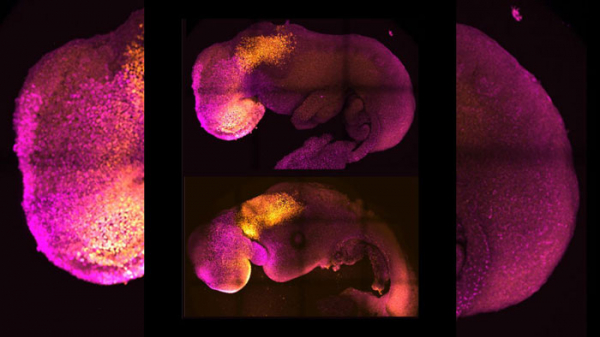
A synthetic embryo, made without sperm, could lead to infertility


A synthetic embryo, made without sperm or egg, could lead to infertility treatments

Scientists have created mouse embryos in a dish, and it could one day help families hoping to get pregnant, according to a new study.

After 10 years of research, scientists created a synthetic mouse embryo that began forming organs without a sperm or egg, according to the study published Thursday in the journal Nature. All it took was stem cells.

Stem cells are unspecialized cells that can be manipulated into becoming mature cells with special functions.

"Our mouse embryo model not only develops a brain, but also a beating heart, all the components that go on to make up the body," said lead study author Magdalena Zernicka-Goetz, professor of mammalian development and stem cell biology at the University of Cambridge in the United Kingdom.

"It's just unbelievable that we've got this far. This has been the dream of our community for years, and a major focus of our work for a decade, and finally we've done it."

The paper is an exciting advance and tackles a challenge scientists face studying mammal embryos in utero, said Marianne Bronner, a professor of biology at the California Institute of Technology in Pasadena (Caltech). Bronner was not involved in the study.

"These develop outside of the mother and therefore can be easily visualized through critical developmental stages that were previously difficult to access," Bronner added.

The researchers hope to move from mouse embryos to creating models of natural human pregnancies -- many of which fail in the early stages, Zernicka-Goetz said.

By watching the embryos in a lab instead of a uterus, scientists got a better view into the process to learn why some pregnancies might fail and how to prevent it, she added.

For now, researchers have only been able to track about eight days of development in the mouse synthetic embryos, but the process is improving, and they are already learning a lot, said study author Gianluca Amadei, a postdoctoral researcher at the University of Cambridge.

"It reveals the fundamental requirements that have to be fulfilled to make the right structure of the embryo with its organs," Zernicka-Goetz said.

Where it stands, the research doesn't apply to humans and "there needs to be a high degree of improvement for this to be truly useful," said Benoit Bruneau, the director of the Gladstone Institute of Cardiovascular Disease and a senior investigator at Gladstone Institutes. Bruneau was not involved in the study.

But researchers see important uses for the future. The process can be used immediately to test new drugs, Zernicka-Goetz said. But in the longer term, as scientists move from mouse synthetic embryos to a human embryo model, it also could help build synthetic organs for people who need transplants, Zernicka-Goetz added.

"I see this work as being the first example of work of this kind," said study author David Glover, research professor of biology and biological engineering at Caltech.

How they did it

In utero, an embryo needs three types of stem cells to form: One becomes the body tissue, another the sac where the embryo develops, and the third the placenta connecting parent and fetus, according to the study.

In Zernicka-Goetz's lab, researchers isolated the three types of stem cells from embryos and cultured them in a container angled to bring the cells together and encourage crosstalk between them.

Day by day, they were able to see the group of cells form into a more and more complex structure, she said.

There are ethical and legal considerations to address before moving to human synthetic embryos, Zernicka-Goetz said. And with the difference in complexity between mouse and human embryos, it could be decades before researchers are able to do a similar process for human models, Bronner said.

But in the meantime, the information learned from the mouse models could help "correct failing tissues and organs," Zernicka-Goetz said.

The mystery of human life

The early weeks after fertilization are made up of these three different stem cells communicating with one another chemically and mechanically so the embryo can grow properly, the study said.

"So many pregnancies fail around this time, before most women (realize) they are pregnant," said Zernicka-Goetz, who is also professor of biology and biological engineering at Caltech. "This period is the foundation for everything else that follows in pregnancy. If it goes wrong, the pregnancy will fail."

But by this stage, an embryo created through in vitro fertilization is already implanted in the parent, so scientists have limited visibility into the processes it is going through, Zernicka-Goetz said.

They were able to develop foundations of a brain -- a first for models such as these and a "holy grail for the field," Glover said.

"This period of human life is so mysterious, so to be able to see how it happens in a dish -- to have access to these individual stem cells, to understand why so many pregnancies fail and how we might be able to prevent that from happening -- is quite special," Zernicka-Goetz said in a press release. "We looked at the dialogue that has to happen between the different types of stem cell at that time -- we've shown how it occurs and how it can go wrong."- 

Read More........

Behaviors of tiniest water droplets revealed

Water mediates all biological processes, but we still don't fully understand its behavior.
From Science Daily: “A new study by researchers at the University of California, San Diego, and Emory University has uncovered fundamental details about the hexamer structures that make up the tiniest droplets of water, the key component of life – and one that scientists still don't fully understand. “The research, recently published in the Journal of the American Chemical Society, provides a new interpretation for experimental measurements as well as a vital test for future studies of our most precious resource. Moreover, understanding the properties of water at the molecular level can ultimately have an impact on many areas of science, including the development of new drugs or advances in climate change
research.A 3-D model of the prism structure of the water hexamer, the smallest drop of water. "Ours are the first simulations that use an accurate, full-dimensional representation of the molecular interactions and exact inclusion of nuclear quantum effects through state-of-the-art computational approaches," says study co-author Joel Bowman, a theoretical chemist at Emory University. "These allow ws to accurately determine the stability of the different isomers over a wide range of temperatures." ‘"About 60% of our bodies are made of water that effectively mediates all biological processes,’ said Francesco Paesani, a study co-author and a biochemist at UC San Diego. ‘Without water, proteins don't work and life as we know it wouldn't exist. Understanding the molecular properties of the hydrogen bond network of water is the key to understanding everything else that happens in water. And we still don't have a precise picture of the molecular structure of liquid water in different environments.’ “As described in the JACS paper, researchers have determined the relative populations of the different isomers of the water hexamer as they
assemble into various configurations called 'cage', 'prism', and 'book'. A 3-D model of the cage structure of the water hexamer. The mesh contours represent the actual quantum-mechanical densities of the oxygen (red) and hygrogen (white) atoms. The small yellow spheres represent the hydrogen bonds between the six water molecules. Model images courtesy of UC San Diego. “The water hexamer is considered the smallest drop of water because it is the smallest water cluster that is three dimensional, i.e., a cluster where the oxygen atoms of the molecules do not lie on the same plane. As such, it is the prototypical system for understanding the properties of the hydrogen bond dynamics in the condensed phases because of its direct connection with ice, as well as with the structural arrangements that occur in liquid water. “This system also allows scientists to better understand the structure and dynamics of water in its liquid state, which plays a central role in many phenomena of relevance to different areas of science, including physics, chemistry, biology, geology, and climate research. For example, the hydration structure around proteins affects their stability and function, water in the active sites of enzymes affects their catalytic power, and the behavior of water adsorbed on atmospheric particles drives the formation of clouds.” Source: eScienceCommons
Read More........

Ethics: Robots, androids, and cyborgs

There may come a time when robots, androids, and cyborgs will be more than science fiction and develop "intelligence" and with intelligence comes decision-making, freedom, responsibility--ETHICS.

One of the local television stations last night dug into its vaults and aired "Westworld" [MGM-1973] written and directed by Michael Crichton and staring Yul Brynner, Richard Benjamin, and James Brolin. An inexpensive film shot on studio back lots, dessert, and Harold Lloyd's estate, the film exploits dreams of a perfect fantasy vacation [at $1,000 a day] at an amusement facility called Delos where the paying adventurer can choose from Roman World, Medieval World, and Western World. Sophisticated androids are the counterparts of the human visitors and bend at the will of human interaction with NO harm to the humans. Well, maybe. Minor glitches happen which are expected in the complicated computer setup...normal malfunction parameters as expressed by a review board. It isn't much longer when the "glitches" become more complicated and numerous until finally there ensues android revolt--utter chaos. Humans are dying. Not a good thing for the investors of Delos...paid realism with deathly results. Yul Brynner [the gunslinger from the "Western World"] runs amuck, the scientists/programers are sealed in their room with locked doors and perish from asphyxiation, James Brolin dies for real in a shoot out with Yul Brynner, and the rest of the film is a quest by the gunslinger to get Richard Benjamin at all costs. Human ingenuity and reason finally foil the gunslinger, but the whole film, beyond its entertainment value, is the question of the rise of mechanical machines driven by computer programs and the establishment of ethical values. The film neither revealed why the androids changed [substandard, untested components?] and why they took an "evil" and "destructive" stance. Why not a stance of superior intelligence. That would have produced a film of little interest for sure. But the question remains as to the nature of the relationship of androids and the development of the fostering of ethical principals. Is the first stage of quality societal norms a function of a pool of negativity, antisocial behavior; that given time the androids would have evolved into positive, functioning members of their own "species" and interact well with other species? Where do ethical norms originate?

How about the penultimate android with an attitude problem and unshakeable pessimistic disposition--"Marvin, the Paranoid Android" equipped with "GPP" [Genuine People Personalities], from the very popular British TV series and the film "Hitchhiker's Guide To The Galaxy". The story line is somewhat complex in this episodic tale but here is a good summation by Joseph DeMarco:

"Narrowly escaping the destruction of the earth to make way for an intergalatic freeway, hitchhikers Arthur Dent (Earthling Idiot) and Ford Prefect (Writer for the Guide) go on a crazy journey across time and space. They are read bad poetry which is considered terrible torture, and they are almost sucked out an air lock into space. After almost being killed many times, and narrowly escaping at the end of each chapter, they join forces with Zaphod Beeblebrox (A two-headed cocky alien), Trillian (another worthless earthling) and Marvin (the depressed robot) to search for the answer to the meaning of life, which may have been hidden on the recently demolished earth."

When you are contemplating this topic consider the character "Data" from "Star Trek: Next Generation", and recall the 1990 episode of "Star Trek: Next Generation" [#64] called "The Offspring" whereby Data has created a daughter called "Lal". Lal is capable of perception and feeling and given Data's "software" of ethics by "neural transfers". But Lal has some problems with citizens of the star ship. Befriended by Guinan she is introduced to the inhabitants of "Ten Forword" to broaden her social intercourse. Data and Captain Picard are embroiled in a discussion regarding Lal's removal from the star ship when they are interrupted by an emergency message from Counselor Troi. Lal is dying...her functions broke down after experiencing an extraordinary gamut of feelings in the counselor's presence. All attempts to save Lal fail and she succumbs to what we humans all must face--DEATH. Curiously, Lal's demise may have been contributed to a more advanced stage of sensitivity and she was unable to interface the new feelings with the supplied software. Consider Data's inability to experience the grief and emotion the crew feels at Lal's loss and must be content to have only memories of Lal. Data may well be equipped with a sense of ethics when dealing with human issues of loyalty, responsibility, self-sacrifice, etc., but he, and all androids of his caliber, may never fully integrate the full range of human emotions--well beyond the ethics.

Remember Isaac Asimov's "Three Laws of Robotics" which I assume would be relegated to androids too? All is fine until something breaks down or a truly unique circumstance arises that confounds even the best mind's of mankind.

1. A robot may not injure humans nor, through inaction, allow them to come to harm.

2. A robot must obey human orders except where such orders conflict with the First Law.

3. A robot must protect its own existence insofar as such protection does not conflict with the First or Second law.

Roger Clarke has written this detailed essay on Asimov's "laws of Robotics".

As I suspect...there will BE those unique events where Asimov's robot imperatives or any additional instructions will fail: "The freedom of fiction enabled Asimov to project the laws into many future scenarios; in so doing, he uncovered issues that will probably arise someday in real- world situations. Many aspects of the laws discussed in this article are likely to be weaknesses in any robotic code of conduct."

I suppose some wonder about definitions here. For example is there a clear cut distinction between robots and androids and another version--cyborgs. Maybe not, and all is a matter of semantics. And it may well be a fortuitous effort to make such a distinction other than what is common sense. Cyborgs and androids clearly take on the mantle of sentient beings whereas not all robots are merely drones of task oriented character such as Robbie the Robot [Forbidden Planet, "Lost In Space"] or "Marvin" ["Hitchhiker's Guide To The Galaxy"]. And consider too that the discussion here is really existing within the realm of science fiction and certainly not correlated to any real life antecedents [yet], but is still worthy of discussion and analysis. The advent of sophisticated computers, biotechnology, genetics, etc. force us to become aware of the possibility of artificial devices becoming human like and subject to the same issues that humans face--those pesky ethical dilemmas. The development and integration of these new forms may just well be part of the whole picture of evolution as one writer suggested. Seeing the forest is impossible for us and thus humans may not realize that "humans" aren't the only form of life in a complex evolutionary scheme; that a carbon based sentient being is neither the end product of evolution nor the only species to embrace ethical issues.

Steve Mizrach offers this essay on cyborg ethics.

Now consider the notion that species ethics are non-transferable; that a species ethics is a category of one and implicitly forbids the overlapping of another category. In such a case the attribution [transfer] of ethical principles [involving servitude and safety of the primary or transferring species, i.e. Asimov's "Three Rules"] would be impossible for an android. This makes the ensuing comment: Each species is unique in its own ethics and only chance would afford similarity. Earth residents have one set of ethics while residents of some very distant planet would have theirs. A unique set for each species that except for chance could well exhibit diametrically opposed ethics. A learning bridge for the sharing of ethics just may not exist--or the simple transfer of ethics that ensures a species safety is impossible. Divergent species just may not have common grounds for mutual acceptance of ethics.

The notion of sound ethics stemming from religion/theology is not new and does carry some significance. [Unfortunately, on the whole, the implementation of such sound ethics has historically been short of world wide demonstration.] Now, whether an android community would adopt ethical norms [be they their own constructs or implanted or borrowed from other beings] to ensure the safety and perpetuation of their species is another mater. It would be arrogant, despite what may appear beneficial, to assume that mankind's ethical resolutions are the best for all species of intelligence or even the only set of ethics in the universe. Androids may discover that the "self" is the most beneficial status and one wonders just how long such a stance would last. Androids may have no community sense of ethics as we would understand. Ethics becomes twisted and inverted in substantial meaning to what we experience. You are quite correct in that survival of the individual and perpetuation of the species is what establishes a set of ethics. Most humans are guided by good ethics and do have a conscience. But you have to wonder just how far those great ethics are really understood and believed. There is no particular pleasure in killing another, but faced with a situation where food for one's survival is at issue, one would consider killing the intruder to sustain one's own existence. Maybe androids would have similar compunctions or maybe they have a different set of ethics that enable them to diffuse the life and death ethical situation.

"From the far horizons of the unknown come transcribed tales of new dimensions in time and space. These are stories of the future, adventures in which you'll live in a million could-be years on a thousand may-be worlds. The National Broadcasting Company in cooperation with Street & Smith, publishers of Astounding Science Fiction Magazine present: "X Minus One".

For you old time radio fans of yesteryear, X Minus One offered many episodes of robots, androids, humanoids, and the like, but one of the most delightful was an episode called "How To" [Episode #45 that aired April 3rd, 1956]. The story was by Clifford D. Simak, radio transcription was by William Welch, and stared Alan Bunce, Ann Seymour, Les Demon, Joe Bell, Jane Bruce, Santos Ortega, Ben Grauer. As the plot indicates: "A man orders a do-it-yourself robotic dog kit and is accidentally sent a kit for an experimental robot humanoid. The mechanical man is both a blessing and a curse." [Troy Holaday]. This has just about everything: Benevolent robots, counterfeiters, tax men, lawyers.

Let's suppose for the sake of the following argument that androids exist and that they have a set of ethics akin to man: A right to life [murder prohibited], mercy, altruism, etc.--including jurisprudence. Jurisprudence for androids?--yes. If they mirror human ethics of conduct, then they must also abide by the laws of human society and be subject to all of the ramifications.

Robert A. Freitas Jr. offers this essay on jurisprudence.

And finally..."Jennifer, an emotionally troubled whiz kid with obsessive-compulsive disorder, is desperate to find her birth mother in China. But she's also petrified to leave her house. So she uses her technological genius to build Jenny Chow, a surrogate devoid of dysfunction, to take the journey in her place."--New York Academy of Sciences.


A new play has opened called "The Intelligent Design of Jenny Chow" by Rolin Jones and is concerned with a lonely young woman's [Jennifer Marcus] acute agoraphobia and genius who builds a companion--an android called Jenny Chow. While reviewer Charles Isherwood is dismayed at the overall tone of the play especially the whimsical demeanor of the android, it nevertheless illustrates the value of, shall we say, an alternate personality--far more complex and interactive than the standard doll or teddy bear of childhood. For those individuals that find it difficult or impossible to relate to "real" people or the "real" world such an android is not without merit for such an item will offer comfort, lessen loneliness, offer interaction on that person's level of communication and may possess value of therapy. Chemical sympathy may not be needed--just someone to talk to would be far more beneficial. life, which may have been hidden on the recently demolished earth. Source: Article
Read More........