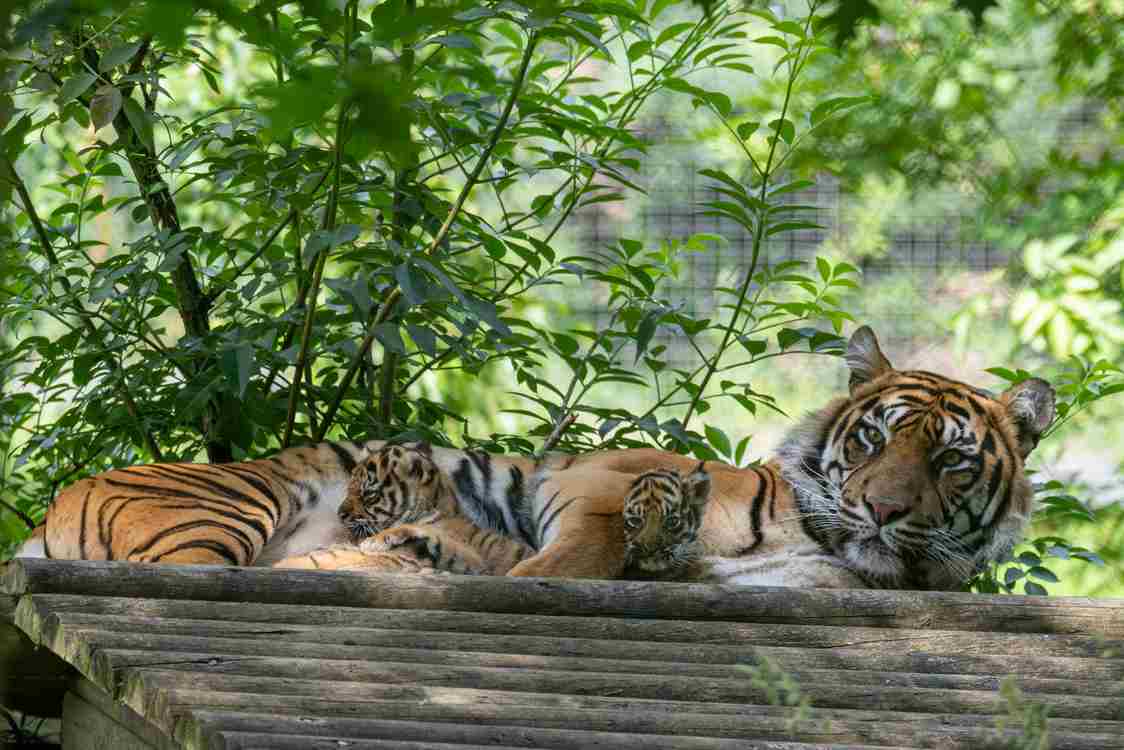
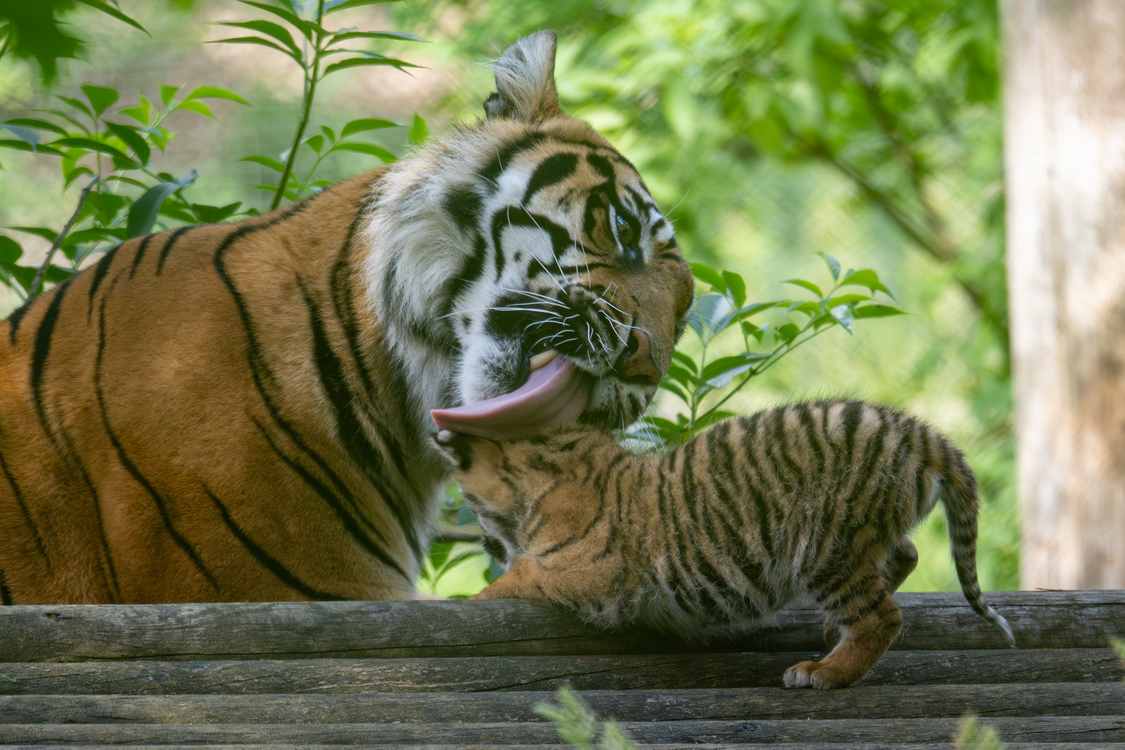
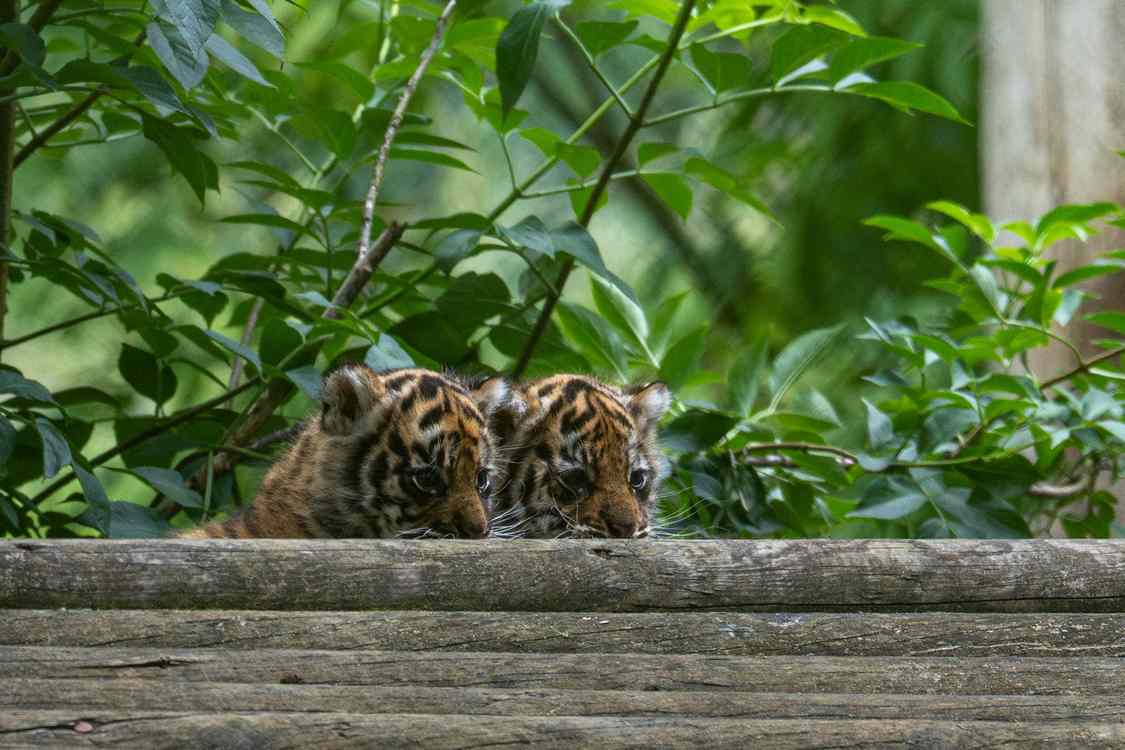
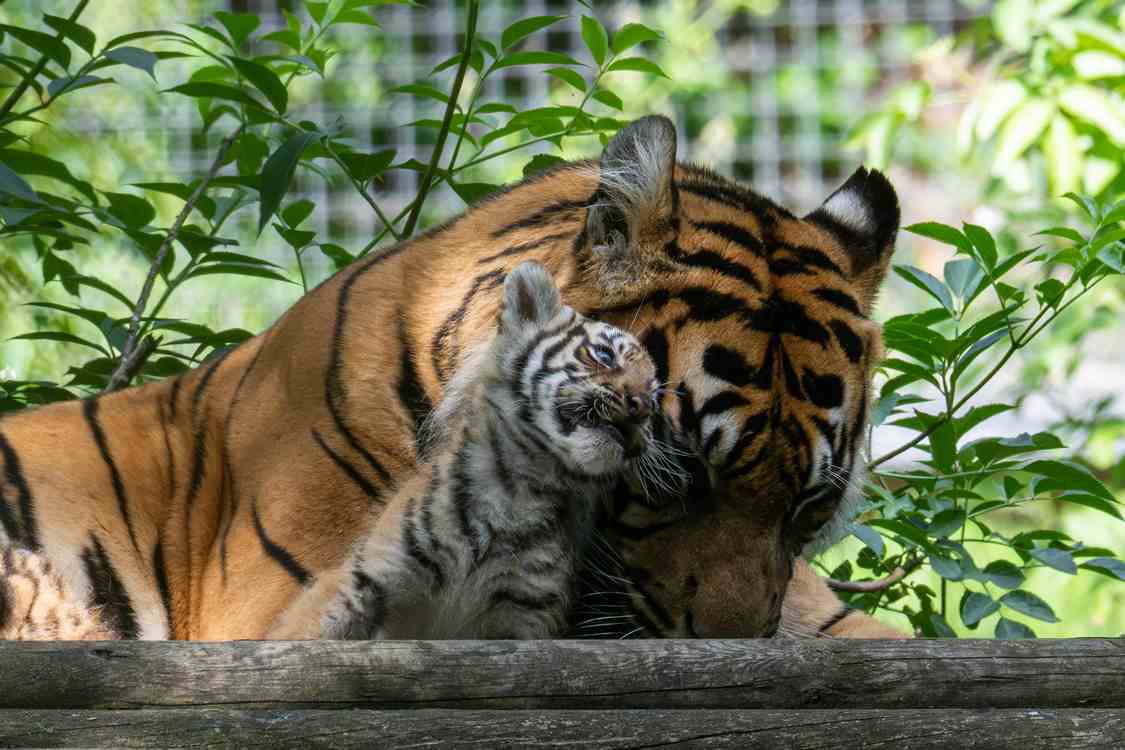
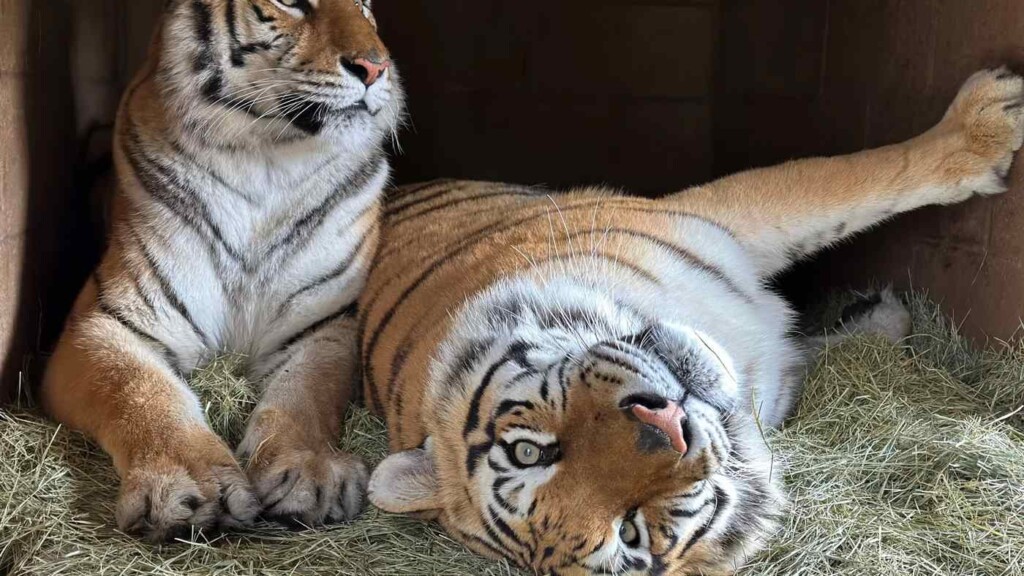
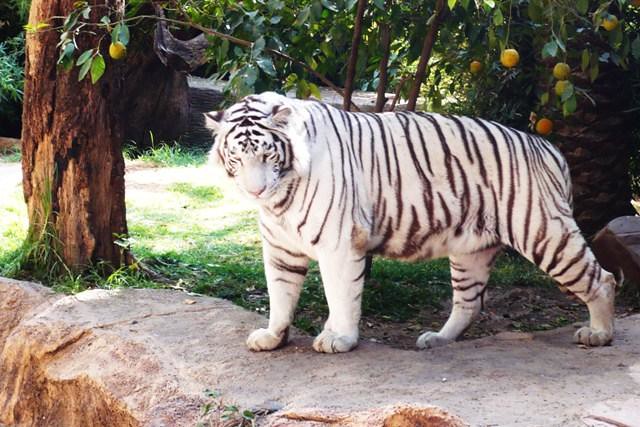
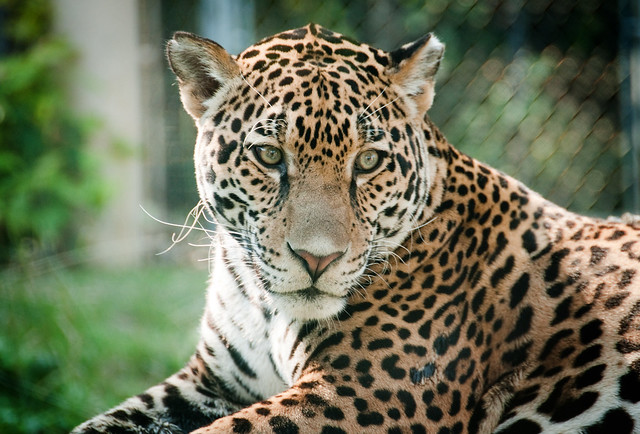
Six Baby Cheetahs Born in the Richmond Zoo's Prolific Breeding Program – 167 Cats Since 2013 (WATCH)

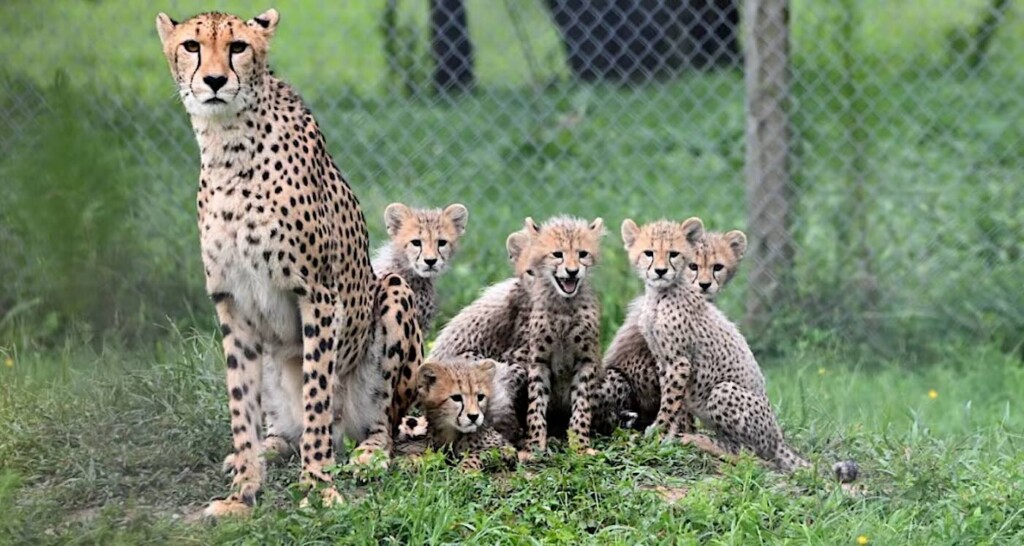
Six cheetah cubs with their mother –Courtesy of Metro Richmond Zoo

At a zoo in Richmond, a raucous litter of cheetah cubs is delighting onlookers having spent the summer months growing in secret.

One of the largest litters born at the zoo, the three-month-old cubs are hitting milestones and progressing well towards adolescence.

Named after African capitals, such as Lusaka, Kampala, and Cairo, the cubs were born in April but were kept hidden away to develop in peace through their most sensitive period with mother Zuri.


Sprinting, jumping on each other, and investigating every object in their enclosure, they seem well on their way to becoming the world’s fastest land animal.

“Some are shy; one is bold and brave — that’s Lusaka,” said Kristina Coonley, a lead zookeeper at the Metro Richmond Zoo, Virginia. “[Cairo] is always the last one out and the last one to come in.”

Though just the 99th most populated city in America, the Richmond Zoo nevertheless boasts one of the country’s most prolific and successful cheetah breeding program for purposes of conservation. Zuri’s litter of 6 takes the total number of captive-born cubs in the program’s history to 167 since 2013.

Coonley told the Washington Post that the Cheetah Conservation Center looks carefully and genetics and disposition when deciding which of their cats are suitable for breeding. Zuri is 5 years old, and has already mothered one litter. Her partner was Ramses, a 13-year-old sire of 25 other cubs.

Though losing out on conservation column inches to the likes of the lion and tiger, cheetah are considered Vulnerable by the IUCN. With around 6,500 individuals across the whole of Africa, a relic populations in Iran, and a diminishing introduced population in India, they are the most at-risk of the African big cats because of their need for space befitting the world’s greatest sprinters.It’s no bad thing then that the Metro Richmond Zoo has seen even bigger litters than these 6, with a resident female last year bringing 9 little mohawked babies into the world. Six Baby Cheetahs Born in the Richmond Zoo's Prolific Breeding Program – 167 Cats Since 2013 (WATCH)
Read More........

Italian circus says escaped lion posed no risk

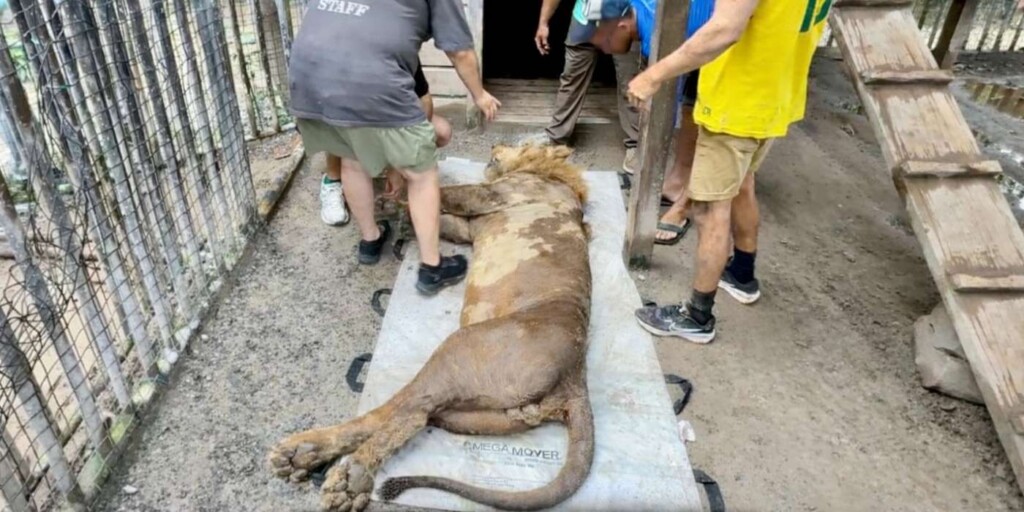
The lion that escaped from a circus near Rome posed no threat to the public, his handler insisted Sunday, as campaigners called for Italy to ban wild animals in entertainment.

Residents of the seaside town of Ladispoli were told to stay indoors for more than five hours on Saturday evening while police, vets and circus staff tracked the lion, finally sedating and then capturing him.

Extraordinary videos published by Italian media, apparently taken by locals, showed the fully-grown lion with a shaggy mane walking through dark and deserted residential streets, padding past parked cars.

But Rony Vassallo, who is responsible for the animals in the Rony Roller Circus, said that while the thought of confronting a lion would make most people fearful, eight-year-old Kimba posed little danger.

Residents of the seaside town of Ladispoli were told to stay indoors for more than five hours on Saturday evening while police, vets and circus staff tracked the lion.

"He met with people in an environment he wasn't used to... and nothing happened, he didn't even for a second have the instinct to attack a person," he told AFP at the circus site.

He said his fear had been "that someone could have harm the animal, out of fear, or excess enthusiasm".

Nearby, not far from the red and white striped main tent where preparations were under way for the afternoon show, the newly captured lion paced inside his cage, occasionally roaring.

- Sabotage? -

Vassallo said Kimba was only lightly sedated and woke up almost immediately, while examinations by vets had concluded he bore no ill-effects from his excursion.

But the handler, whose family runs the travelling circus, said they were all "very shaken and very tense" after the escape, which he believed was not an accident.

Vassallo said he personally checked on the cage an hour before the lion went walkabout, and "everything was in order".

He declined to comment on reports of sabotage, including that the lock was forced, saying an investigation was underway.

But he said it had never happened before and "it's very strange".

He showed how the door to the metal cage opens inwards, secured with a sliding bolt and a lightweight chain with a small padlock.

- Forced into captivity -

Kimba was born and raised in captivity, alongside his two brothers -- Zeus and Ivan -- and sister Maya.

They are among nine big cats at the circus, including tigers, while acts also involve elephants, camels, horses and even bison.

The circus has drawn the ire of animal rights campaigners, who say keeping such wild creatures is cruel.

More than 20 European countries have banned or heavily restricted the use of animals in circuses -- but Italy is not yet among them

More than 20 European countries have banned or heavily restricted the use of animals in circuses -- but Italy is not yet among them.

A law has been drafted but was this year delayed to 2024, according to the LAV campaign group, which estimates that just under 2,000 animals are held in circuses across Italy.

What happened in Ladispoli "highlights the dangers of circuses with animals from the point of view of public security", said the animal rights group OIPA.

But it also highlighted "the discomfort of poor creatures forced into captivity for entertainment", it said.

Ladispoli mayor Alessandro Grando, who had warned residents to stay at home on Saturday, has also called for a change in the law.

"I hope that this episode can stir some consciences, and that we can finally put an end to the exploitation of animals in circuses," he said.

But Vassallo said critics "don't know the reality of the facts, how animals are treated in circuses, of the checks that are carried out".

In the surrounding neighbourhood, residents who spoke to AFP expressed support for the circus -- and seemed more concerned about the lion than public safety.

"I was a little bit scared but afterwards, from the images from the videos, you could see that he was so good," said Barbara Rosolino, 47.

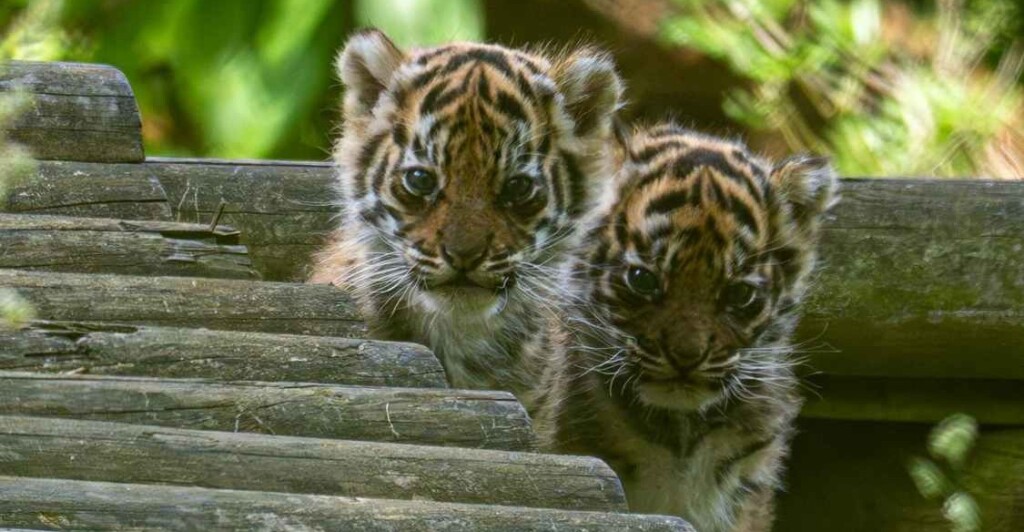
"He wanted to go home anyway, you could see he was scared out of his mind.", Italian circus says escaped lion posed no risk
Read More........

Two Big Cats from Infamous Tiger King Captivity Thriving in San Diego After Sanctuary Helps Save 69 Tigers

Jem and Zoe, rescued from Tiger King Park – credit: Lions, Tigers, and Bears Animal Sanctuary

A San Diego wildlife sanctuary is proud to report that two of the 69 tigers rescued from the infamous collection of the ‘Tiger King’ Joe Exotic are thriving at their Alpine, CA location.

Participating in the rescue of the cats, it took Lions, Tigers, and Bears Animal Sanctuary 3 years to help the pair of Bengal tigers, Jem and Zoe, to put on normal weight and get back to their wild ways, but that perseverance has paid off.

Netflix broke the world of the US tiger trade to the world with a landmark docu-series Tiger King in 2021, which centered around the private menagerie collection of Joe Exotic, and his difficulties with a woman named Carole Baskin, the owner of Big Cat Rescue.

Exotic is now in prison serving 21 years for conspiracy to commit murder after attempting to hire two hitmen to take Baskin out. Tiger King Park in Oklahoma was closed for ongoing violations of the Endangered Species Act.

An organized effort to relocate his 69 captive tigers to sanctuaries around the country saw Lions, Tigers, and Bears (LTB) take in two adults Jem and Zoe.

“Their condition was dire, marked by severe malnutrition, emaciation, dull skin, and other issues,” LTB told Fox News 5 San Diego. “The trauma from long-term abuse led to the development of uncharacteristic behavior, such as not eating for days at a time.”

However, LTB’s efforts succeeded, and after three years the pair are “living their best lives in their forever home.”

People can visit Zoe and Jem at the LTD Sanctuary by reservation only, but the sanctuary relies on visitors as well as contributions to perform life-saving rescues like those from Tiger King Park.

As their name implies, there are more than just tigers there, and visitors can see lions, bobcats, and leopards, along with other large animals beyond the Panthera genus. Two Big Cats from Infamous Tiger King Captivity Thriving in San Diego After Sanctuary Helps Save 69 Tigers
Read More........

Lions added to endangered species list

In response to the alarming decline of lion populations in the wild, the U.S. Fish and Wildlife Service has listed two lion subspecies as endangered and threatened. Without action to protect them, African lions could see their populations halved by 2035.
This week, the U.S. Fish and Wildlife Service (USFWS) announced it will list two lion subspecies under the Endangered Species Act (ESA). Panthera leo leo – located in India and western and central Africa – will be listed as endangered, while Panthera leo melanochaita – found in eastern and southern Africa – will be listed as threatened. In the last 20 years, lion populations have declined by 43% due to a combination of habitat loss, loss of prey base, trophy hunting, poaching for skins and uses in Chinese traditional medicine, and retaliatory killing of lions by a growing human population. The killing of Cecil the lion in July of this year served to further highlight this issue. Coupled with inadequate financial and other resources for countries to effectively manage protected areas, the impact on lions in the wild has been substantial. Having once been present in south-eastern Europe and throughout much of the Middle East and India, the animals have now lost 85% of their historic range, as shown on the map below. Their numbers could be halved again by 2035, according to a recent study in the journal PNAS: "Many lion populations are either now gone or expected to disappear within the next few decades, to the extent that the intensively managed populations in southern Africa may soon supersede the iconic savannah landscapes in East Africa as the most successful sites for lion conservation," the study said. 

In 2011, the USFWS received a petition to list Panthera leo leo as endangered under the ESA. In 2014, the agency published a 12-month finding and agreed to list the subspecies as threatened with a special rule under section 4(d) of the ESA. Based on newly available scientific information on the genetics and taxonomy of lions, the agency assessed the status of the entire lion species and subsequently changed its earlier finding. The new science resolved that the western and central populations of African lion are more genetically related to the Asiatic lion. These lions are now considered the same subspecies, P. l. leo. There are only about 1,400 of these lions remaining; 900 in Africa and just 523 in India. Considering the size and distribution of the populations, the current trends and the severity of the threats, the agency has found that this subspecies now meets the definition of "endangered" under the ESA. The other subspecies – Panthera leo melanochaita – likely numbers between 17,000-19,000 and is found across southern and eastern Africa. The agency determined that this subspecies is less vulnerable and is not currently in danger of extinction. However, although lion numbers in southern Africa are increasing overall, they are declining significantly in some regions, due to various ongoing threats. As a result, the agency finds this subspecies meets the definition of a "threatened" species under the ESA. With an endangered listing, imports of P. l. leo will now be prohibited – except in certain rare cases, such as when it can be found that the import will enhance the survival of the species. To strengthen conservation measures for the threatened subspecies P. l. melanochaita, a new permitting mechanism will regulate the import of all P. l. melanochaita parts and products into the USA. This process will ensure that any imported specimens are legally obtained in range countries as part of a scientifically sound management program that benefits the subspecies in the wild. A third and final rule will enable the agency to support changes that strengthen the governance and accountability of conservation programs in other nations. Protected areas are vital to the future survival of lions; and the building of corridors or funnelling
mechanisms between protected areas is equally critical so that lions can be directed to other suitable habitat, away from potential conflict areas. It takes around $2,000 per square kilometre per year to properly protect these animals in Africa. Scientists from both the USA and the UK have, in recent years, begun collaborating to better understand how lions move across the African landscape and to model ways to conserve genetic diversity and populations across the continent. “The lion is one of the planet’s most beloved species and an irreplaceable part of our shared global heritage,” said USFWS Director Dan Ashe. “If we want to ensure that healthy lion populations continue to roam the African savannas and forests of India, then it’s up to all of us – not just the people of Africa and India – to take action.” Source: http://www.futuretimeline.net
Read More........

A tiger, a probe and a test tube

Baby Tiger By Rich Tosches: Today, in a mature and grown-up way, we will discuss a recent event at our village zoo in which a man with a giant vibrating electric anal probe collected semen samples from a 400-pound tiger. And to answer your first question: Yes. The brave, brave man is still alive. I, however, was also in the room and will never be the same, having witnessed the tiger make three, uh, donations in a short span of time in what's known as multi-sample collecting. (On a personal note, I have another phrase for three such events: All of September and part of November.) Anyway, the semen collecting at the Cheyenne Mountain Zoo was performed on a 5-year-old endangered Amur tiger, formerly known as a Siberian tiger, to determine whether he can reproduce or whether he is, in strict scientific terms, shooting blanks. I was allowed to watch because my wife is on the zoo's board of directors and also, apparently, because the women in the room needed someone to point at while they chuckled and whispered. The tiger who starred in the show came to our zoo with the actual name of Billy Ray, a sleek and beautiful cat who loves playing in his Asian Highlands exhibit, chewing on horse bones and, of course, NASCAR. Today his name has been changed to Grom, which means, literally, "Hey, what's with the giant electric prob ... ROAAAAR?!!!!!!" Grom was sedated and being carried on a stretcher to the operating room at the zoo hospital when we arrived, a magnificent cat stretching more than six feet from his nose to the base of his tail — the latter region where the majority of the action would take place. Here, from a Colorado State University veterinary school website, is some background about the procedure: "Electro-ejaculation involves applying a series of short, low-voltage pulses of current to the pelvic nerves which are involved in the ejaculatory responses." This gives us a scientific overview and, as a bonus, also gives us a pretty good idea of what I believe we're going to see in the next videotape of Toronto Mayor Rob Ford. After some preliminary blood sampling from the cat's front legs, the real work began. On a table near the tiger's rump area was an electric transformer box with a wire leading to the probe, which would be inserted into the tiger's anus. Footnote: I have been writing professionally for some 40 years and that was the first time I have ever used the words "inserted into the tiger's anus." To describe the probe itself I'd say that it was larger than a turkey baster and slightly smaller than the Apollo 13 rocket. Four copper electrode strips ran along its sides and soon the entire thing had disappeared into the tiger's hinterlands. The man manipulating the pulsating probe with his right hand appeared deep in thought with an intense expression — not unlike the look on U.S. Rep. Doug Lamborn's face if you ask him to name five states and a bird. In the man's left hand was a test tube and before you knew it, well, I don't think I have to tell you what happened next: That's right, there was a big stain on Monica Lewinsky's blue dress and the tiger was testifying before a House Judiciary Committee. No, what actually happened is that Grom the tiger had successfully donated a sample into the test tube. I shouted "Eureka!" and for the next hour nobody in the room would make eye contact with me. The man hurried the test tube into an adjoining room, placed a sample of the semen under a microscope and in a few seconds announced, "We have swimmers." (My doctor once surmised that at my conception my father's swimmers were wearing goggles and inflatable water wings.) The whole thing went quite quickly, as I mentioned, with the tiger giving three samples in 15 minutes. If you're keeping score, that's just two shy of the current 15-minute world record held jointly by Charlie Sheen and former New York Gov. Eliot Spitzer. Rich Tosches (rangerrich@csindy.com) also writes a Sunday column in the Denver Post. More Ranger RichSource: ArticleImage: flickr.com
Read More........

White tiger kills man who fell into its enclosure at Delhi zoo


A white tiger attacked and killed a young man who apparently slipped and fell into its enclosure at the Delhi zoo on Tuesday.(Disturbing images, not for children), Source: Article, Image: flickr.com
Read More........

Oh My! Lions, Tigers And Bears Common Ancestor Of Found

Reconstruction of Dormaalcyon latouri. Credit: Art by CharlÚne Letenneur (MNHN) and Pascale Golinvaux (RBINS)
New fossils from Belgium have shed light on the origin of some of the most well-known, and well-loved, modern mammals. Cats and dogs, as well as other carnivorous mammals (like bears, seals, and weasels), taxonomically called 'carnivoraformes', trace their ancestry to primitive carnivorous mammals dating back to 55 million years ago (the beginning of the time period called the Eocene). A study, published in the most recent issue of the Journal of Vertebrate Paleontology, discusses the origins of this group and describes new specimens of one of the earliest of these primitive taxa. The species, dubbed Dormaalocyon latouri, had previously been found at the Belgian locality of Dormaal (thus the name of the genus). New specimens found by lead author Floréal Solé and his colleagues, allow for a better characterization of the animal, and its placement in the evolutionary history of carnivores. "Its description allows better understanding of the origination, variability and ecology of the earliest carnivoraforms," says Solé. This is a hypothetical phylogeny (family tree) of carniovrous mammals showing the placement of Dormaalcyon within the carnivoraformes, and the relationship of carnivoraformes to modern taxa, divided into feliforms (cat-like carnivores) and caniforms (dog-like carnivores).
Credit: Art by CharlÚne Letenneur (MNHN) and Pascale Golinvaux (RBINS).
The new specimens include over 250 teeth and ankle bones. More teeth allow for a description of the entire tooth row ofDormaalocyon, while previous finds only included two upper molars. The new finds even include the deciduous teeth (or 'baby teeth'). The fact that these teeth are very primitive looking, and from a very early time, implies that Dormaalocyon is close to the origin of carnivoraforms, and that this origin may have been in Europe. The ankle bones suggest that Dormaalocyon was arboreal, living and moving through the trees. Previous reconstructions of the environment at Dormaal 55 million years ago inferred a warm, humid, and wooded area. This was a time soon after an event called the Paleocene-Eocene Thermal Maximum (or PETM). This extremely warm period affected the evolution of many mammal groups, including carnivoraforms. Dr. Solé believes that the fact that Dormaalocyon was arboreal, and that carnivoraforms made their way to North America around this time, "supports the existence of a continuous evergreen forest belt at high latitudes during the PETM."

This is a reconstruction of Dormaalcyon latouri showing fossils that have been recovered, including teeth, jaws, and ankle bones.
Credit: Art by CharlÚne Letenneur (MNHN) and Pascale Golinvaux (RBINS).
Although close to the origin of carnivoraforms, the fossils suggest there were even more primitive species in the group in an earlier time period, the Paleocene. Says Solé, "The understanding of the origination of the carnivoraforms is important for reconstructing the adaptation of placental mammals to carnivorous diet. Therefore, Dormaalocyon provides information concerning the evolution of placental mammals after the disappearance of the largest dinosaurs (at the Cretaceous-Paleogene extinction event). Our study shows that the carnivoraforms were very diversified at the earliest Eocene, which allows hypothesizing that they were probably already diversified during the latest Paleocene." This means there are more fossils out there to be found that can answer the question of the origin of this beloved modern group. Contacts and sources: Cody Mooneyhan Society of Vertebrate PaleontologyCitation: Solé, F., R. Smith, T. Coillot, E. De Bast, T. Smith. Dental and Tarsal Anatomy of 'miacis' Latouri and a Phylogenetic Analysis of the Earliest Carnivoraforms (mammalia, Carnivoramorpha). Journal of Vertebrate Paleontology, 34(1): 1-21; 2014, Source: Article
Read More........

Putin in hang glider leads Siberian crane flock in migratory flight

putin swimming
Putin in hang glider leads Siberian crane flock in migratory flight
Vladimir Putin pulled off another of his bizzare stunts when he led a flock of young Siberian white cranes in flight, living up to his action-man image, even as reports said that endangered chicks had died while scientists were setting up the trip. Dressed in a white costume meant to imitate an adult crane, the Russian president was taking part in a project to teach the endangered birds that were raised in captivity to follow the aircraft on their southern migration to Central Asia. Putin has won many admirers with his feats, that have left others less than impressed, starting from 2000 when he flew into Chechnya in the back seat of a fighter jet. He followed it up over the years, with a bare-chested horseback ride through mountains, a Formula One race car drive and piloting a firefighting plane to dump water on wildfires. The flight in the hang glider though hardly cut any ice with the cranes as only one bird followed Putin on his first flight. He attributed it to high winds that caused the hang glider to travel faster than the birds, RIA Novosti news agency reported. He was followed by five birds in his next flight, but after a few circles only two stuck with him through the 15-minute flight. Putin took time off to visit the Kushavet ornithological research station on the Yamal Peninsula in the Russian Arctic on Wednesday on his way to an international summit in Vladivostok, on Russia's Pacific coast. At the station, he set off with a pilot, who sat behind him on the hang glider, as they took the birds for a spin. It was a scene on the lines of one in the 1996 movie Fly Away Home, in which an estranged father and daughter use an ultralight plane to help a flock of geese migrate. The movie though, depicted the efforts of a real-life Canadian, who spent a decade teaching orphaned geese how to fly south. Putin's efforts had an altogether undesired side effect, as a biology student at the station claimed online that two chick cranes died and several others were hurt
in the rush to ready for Putin's arrival. ''One of the chicks got into a hang glider's propeller while training and waiting for Putin," Mariya Goncharova wrote on her page on the Russian social networking website, vk.ru. ''One more broke a beak and stripped its claws off on bad netting, and many simply flayed themselves'' during their transport in boxes to the flight venue. According to Russian biologists less than 20 Western Siberian white cranes are left in the wild worldwide. Putin's flight spun off many a contemptuous joke on the internet though, one of the most popular being ''So Putin is off to wintering with cranes. Does this mean he's not going to be back before spring?'' Putin who is a month short of his 60th birthday, has cultivated an image as an animal lover during his time at the top of Russian politics, even getting a tiger cub as a birthday present. During a televised phone-in last year, when he was prime minister, replying to a viewer who asked him why he looked more comfortable with tigers and leopards than with his own ministers, he said, "The more I know people, the more I like dogs," paraphrasing the greek philosopher Diogenes. "I simply like animals." Putin's stunts have not gone down well with many and there was widespread disbelief in 2008 when he appeared to save a television crew from a rare Amur tiger in far eastern Russia by shooting it with a tranquilliser gun. The Kremlin's press service was also forced to admit the set up which showed footage and photographs of Putin striding away from a dive in the Black Sea after having recovered Greek amphorae was a set up, with the jars having been planted on the sea floor. A row about Putin's date with the endangered cranes had already erupted before the official confirmation of the stunt. Masha Gessen, chief editor of Russia's oldest scientific magazine, Vokrug Sveta, resigned on Monday after she resisted pressure to send a reporter to cover the event. "I'm leaving Vokrug Sveta thanks to Putin for that", Gessen tweeted later that day. She added she considered the request to publish material about Putin's involvement with the Siberian white cranes as "editorial interference". The outspoken journalist has also authored a critical biography of Putin that was released last year titled. Source: Article, Image: flickr.com
Read More........

Saber-Toothed Cats In California Were Not Driven To Extinction By Lack Of Food

Credit: Mauricio Anton Citation: DeSantis LRG, Schubert BW, Scott JR, Ungar PS (2012) Implications of Diet for the Extinction of Saber-Toothed Cats and American Lions. PLoS ONE 7(12): e52453. doi:10.1371/journal.pone.0052453
When prey is scarce, large carnivores may gnaw prey to the bone, wearing their teeth down in the process. A new analysis of the teeth of saber-toothed cats and American lions reveals that they did not resort to this behavior just before extinction, suggesting that lack of prey was probably not the main reason these large cats became extinct. The results, published December 26 in the open access journal PLOS ONE by Larisa DeSantis of Vanderbilt University and colleagues, compares tooth wear patterns from the fossil cats that roamed California 12,000 to 30,000 years ago. Sabertoothed cats were not limited by food in California during the late Pleistocene. The saber-toothed cat and American lion were among the largest terrestrial carnivores that lived during their time, and went extinct along with other large animals approximately 12,000 years ago. Previous studies have suggested many reasons for this extinction, including a changing climate, human activity and competition from humans and other animals for food, which may have grown scarce as a result of these changes. In the current study, the authors found that saber-toothed cats likely consumed carcass bones regularly, but found no differences in bone consumption between older fossils and more recent ones. Based on this, they suggest that the cats' diet did not change significantly near the time they became extinct. In contrast, American lions did not consume much bone even near extinction, and had tooth-wear patterns similar to cheetahs, who actively avoid bone in their prey. "Tooth wear patterns suggest that these cats were not desperately consuming entire carcasses, as was expected, and instead seemed to be living the 'good life' during the late Pleistocene, at least up until the very end," says DeSantis. The study reveals previously unknown differences in the food habits of saber-toothed cats and American lions, and also suggests that though the case of their extinction is still unknown, a lack of food was probably not the main reason. Citation: DeSantis LRG, Schubert BW, Scott JR, Ungar PS (2012) Implications of Diet for the Extinction of Saber-Toothed Cats and American Lions. PLoS ONE 7(12): e52453. doi:10.1371/journal.pone.0052453, Contacts : Jyoti MadhusoodananPublic Library of ScienceSource: Nano Patents And InnovationsSource: Image
Read More........

Black Tiger Beautiful Tailed.

Melanistic or black tigers have tawny, yellow or white stripes on a black ground color. In October 1992, the skin of a melanistic tiger was recovered from smugglers at Tis Hazari. The skin measured eight and a half feetand was displayed at the National Museum of Natural History, New Delhi in February of 1993 (Kumar, 1993). The existence of black tigers without stripes has been reported, but has never been substantiated by specimens or photographs. Eating: Over much of the tiger’s broad geographic range, wild pig, wild cattle and several species of deer are its major prey. All prey are forest or grassland ungulates that range in size from 65 to 2,000 pounds (30-900 kg). Typically, wild tigers gorge themselves on fresh kills, and can eat as much as 40 pounds (18 kg) of meat at one time. The tiger will not eat again for several days. Hunting: Black Tigers are ambush hunters, stalking their prey, approaching as closely as possible, and then charging the animal from behind. They usually bite the neck or throat of their prey. The neck-bite, which severs the spinal cord, is typically used on small or medium sized prey, while the throat bite, which causes suffocation, is used on larger animals. Following mating, the gestation period for tigers is approximately 103 days. The male tiger does not stay with the female after mating, and does
not participate in raising the cubs. The average litter size of tigers is two or three cubs (the largest is five). One usually dies at birth. Tiger cubs are born blind and weigh only about two to three pounds (1 kg), depending on  the  subspecies.  They  live on their mother’s milk for six to eight weeks before the female begin making their own kills at about 18 months of age. Young tigers leave their mother’s range at anywhere from a year and a half to three years of age, depending on whether the mother has another litter. Females tend to stay closer to the mother’s range than males. Social Behavior: Adult tigers are solitary animals that establish their territories in areas with enough prey, cover and water to support them. The difficulty of locating prey in tiger habitat makes it more efficient for tigers to hunt alone. As a result, they do not tend to form social groups like lions. The territory of a tiger usually ranges in size from about 10 to 30 square miles (26-78 sq. km), although the territory of a Siberian tiger may be as large as 120 square miles (310 sq. km). The size of a tiger’s territory depends on the amount of prey available. Tiger territories are not exclusive. Several tigers may follow the same trails at different times, and a male’s territory usually overlaps those of several females. Source: Animal Discovery
Read More........

Jaguar And Puma Kings Tiger

Jaguar, Alert The jaguar and the puma are sympatric throughout the jaguar’s distribution in the Neotropics. Several studies have been conducted on these two species, but few have examined the ecological interactions between them. Trophic separation has frequently been studied, but only two studies have considered variables other than diet.The goal of this study was to identify the ecological and behavioural factors that mediate the coexistence of jaguar and puma in a mosaic landscape in the Venezuelan llanos. An understanding of these mechanisms is critical to the development of conservation and management plans for these two predators in an areawhere both are threatened by loss of preferred prey and by persecution for depredation on livestock. This study was carried out in the llanos of west-central Venezuela from January 1997 to November 1998. It was a continuation of a study initiated in 1996 by Farrell (Farrell,1999) and for that reason part of her data are included. Hato Pi˜nero, the study site, is located in the southeastern corner of the state of Cojedes (8◦40–9◦00N,68◦00–68◦18W). Pi˜nero’s 80 000 ha support both aworking ranch of 10 000 cattle, and a thriving ecotourism business. Average annual precipitation between 1961 and 1965 was 1469 mm, with 86% of the rain falling between May and October. During the rainy season up to 80% of the ranch is flooded, with water depths ranging from a few cm to 1.5m, and the workable study area is reduced to about 30 000 ha. During the wet season, the average low temperature is 19.8 ◦C, and the average high temperature is 31.8 ◦C. In the dry season, the average low temperature is 17.9 ◦C, and the average high temperature is 34.6 ◦C. The topography on the ranch includes permanentrivers, temporary creeks (semi-permanent, seasonally drying water bodies), grassland or open pasture, savanna woodland, non-flooded evergreen forest and dry forested uplands. The ratio of open to forested areas is roughly 50 : 50. While many of Pi˜nero’s streams are bordered by forests, relatively large areas of semi deciduous forest are not adjacent to streams. In general, the landscape can be characterized as a complexmosaic of interdigitated  forests and open areas with vegetation types based on interactions of elevation, substrate and hydrology. Prey diversity and abundance vary greatly across the landscape. Overall, prey diversity declined as elevation increased and was lower in savannas than forests. During the wet season, prey species seemed to become more dispersed within large annual use areas, making use of more dispersed resources, less surfacewater constraints and the phenology of favoured plant foods. Dietary habits of puma and jaguar were determined from scats and kills. Scatswere collected opportunistically from trails and roads and the identity of the predator was assigned by the presence of tracks. Scats were air dried and stored until analysed. Prey contents of the collected scats were visually identified to the lowest taxa possible by examination of teeth and/or hair scale pattern by comparing them to a reference collection. Carcasses of prey animals were located by tracking the radio-tagged cats and from the presence of scavengers and predator sign. If the predatorwas unknown, ancillary evidence such as tracks, scats, teeth marks, type of killing injury, feeding method and caching behaviour was examined to identify the predator involved. Where the identity of the predator that left the scat or made the kill was unknown, these data were excluded from the analysis. In addition to the species of prey killed, records were made of age-class, based on the descriptions given by Ojasti for capybara, and by Dimmick & Pelton for peccary and white-tailed deer.a Source: Animaldiscovery-chanelImage: flickr.com
Read More........

Now, 'Cheetah' robot that runs faster than Usain Bolt


A Pentagon-funded robot 'Cheetah' has clocked 45.5 kilometres per hour to beat the record of the fastest sprinter, Usain Bolt. Jamaican runner Bolt's current record of 44.7 kilometres per hour is the fastest a man has ever run, 'the Telegraph' reported. The Cheetah, a quadrupedal machine built by Boston Dynamics and backed by Darpa, the US Defence Department's research division, not only topped the Olympic 100m and 200m champion's record-setting time, it also beat its previous top speed of 29 kilometres per hour, set just six months ago. However, the robot's developers qualified the achievement. "To be fair, keep in mind that the Cheetah robot runs on a treadmill without wind drag and has an off-board power supply that it does not carry. So Bolt is still the superior athlete," Boston Dynamics said. "Our real goal is to create a robot that moves freely outdoors while it runs fast. "We are building an outdoor version that we call Wildcat, that should be ready for testing early next year," Dr Alfred Rizzi, the head of Cheetah programme, said in a statement. Cheetah, according to the US Defence Department, is being developed for use on terrain where conventional wheels and tracks would struggle and will "contribute to emergency response, humanitarian assistance and other defence missions.Image Link Photobucket, "Source: Indian Express
Read More........

Persian Leopard Habitat and Population

Yawning Persian leopard
The most common subspecies of large felids in West and Central Asia, the Persian leopard has been hunted severely throughout its range for centuries. Now an endangered subspecies, the majority of the world’sPersian leopard lives in Iran. However, poaching along with habitat fragmenta on has reduced its populations to fewer than 1000 individuals in west Asia. An investigation on Persian leopard Panthera pardus saxicolor was carried out from September 2007 to October 2008 in Ghorkhod & Behkadeh Reserve, northeastern Iran. The area is the main buffer habitat around the core (source) population in Golestan National Park, but it suffers severe depletion of natural prey species due to lower level ofprotection measures, and is probably a sink population. We conclude that to ensure corridors and buffer zones, the most urgent and achievable solution is perhaps to designate additional “No Hunting Areas”and to implement anti-poaching measures, which may help the regional Persian leopard population to survive under a meta population framework. Northeastern Iran is supposed to hold the highest density of the Edangered Persian leopard (IUCN 2008) with a number of wellknown sites (e.g. Golestan, Sarigol, Tandureh). The subspecies has on the whole been experiencing a loss of habitat over a wide part of its range which inevitably will lead to its fragmentation into small, genetically isolated populations. However, the range of the leopard is still known to include large parts of Iran and there may be 550–850 specimens in Iran, some 55% of which live in protected Golestan National Park is one of the most outstanding habitats of the subspecies in Iran, connecting to Ghorkhod Protected Area in the east and Behkadeh Razavi No Hunting Area in the northeast. These areas possess suitable leopard habitats, and we suppose that they play a buffer role for Golestan. We call them hereafter “Ghorkhod & Behkadeh Reserve”. The leopard survey in Ghorkhod & Behkadeh Reserve has been part of the research and conservation efforts by the Iranian Cheetah Society (ICS) on Asiatic cheetah andPersian leopard in 2010-03-11-11h16m12.272P4283l
northeastern Iran, which has been initiated since 2003. The present publication describes some ecological aspects of the Persian leopard in a low-density buffer habitat, a sink population where the leopards suffer from serious poaching as well as prey depletion. With this article, we hope to create a more comprehensive perspective among the Iranian wildlife conservation parties in order to consider the necessity of buffer habitats when establishing leopard core reserves to ensure the long-term survival of  the subspecies. With an area of 433 km², Ghorkhod Protected Area is located in the most eastern part of the Caspian forests in the territory of North Khorasan Province. Altitudes from 1000 to 2700 meters, mean annual precipitation of 660 mm, and mean annual temperature of 9 °C produce a Mediterranean and temperate sub-humid climate in Ghorkhod PA (Darvishsefat 2006). Behkadeh Razavi No Hunting Area is smaller (ca. 230 km²) and connected to the  north boundary of Ghorkhod. The area includes two distinct  biomes, the plains (1/3 of the total area) and mountainous terrain. Ghorkhod was added to Golestan NP in 1976, but declared an independent protected area in 1982. Behkadeh Razavi was designated a No Hunting Area in 2006 and merged into Ghorkhod PA due to the presence of goitered gazelle Gazella subgutturosa and the Critically Endangered Asiatic cheetah Acinonyx jubatus venaticus. These twin areas are home to a diversity of carnivore species, including brown bear Ursus arctos, caracal Caracal caracal, wild cat Felis silvestris and grey wolf Canis lupus. It is supposed that lynx Lynx lynx exist in the area, but we did not find  any evidence. The Persian leopard survey was carried out from September 2007 to October 2008 in Ghorkhod & Behkadeh Reserve. Main valleys and trails in both areasPERSIAN LEOPARD CUB
were searched for leopard  signs. We recorded leopard presence based on signs, including tracks, scrapes, scats, and kill remains. Persian Leopard scats were characteristically segmented into several lobes, with a mean diameter of 2.7 cm (2.0–3.0 cm) and pointed ends. Furthermore, leopards are more likely to defecate on trails or on grassy areas along the trails to mark their presence, normally on scrapes (Sunquist & Sunquist 2002). All excrements were inspected for the presence of hairs, bones, nails, and other remains. Hairs were identified using a reference collection compiled by Sepasi & Falahatkar (2006). During the entire study, we recorded all direct leopard sightings, both by researchers and local residents, and leopard tracks and scrapes. We also made inquiries about leopards with local people, mainly shepherds who visit frequently most parts of the study area. Leopard observations by local people were only accepted after proper confirmation, mainly by assessing the observer’s ability to describe the animal’s morphology. Behaviour of the animal, as described by the observer, sometimes helped to reveal the identity of the species. However, as other large carnivores present in the area differ markedly from leopards, the verification of the local people’s observations was not contentious. In parallel, 2 to 4 camera traps were set to photo capture animals, including the leopard.Source: animaldiscovery-chanelPopulationImage: flickr.com
Read More........

Lion


Animal Unique | Lion | Lion is a carnivore (meat eater) and a hunter. Lions are mostly found in Africa and a small reserve in India. The lion is the second largest member of the cat family that lives in Africa. It hunts many animals and people they can live in cold regions, a very hot environment or in dense forests. In the past there were lions in the wild in Europe. Today, many lions live in zoos around the world. In the past they lived in northern India, Pakistan, and Arabia. Lions are also used as symbols of courage. They appear in heraldry often than any other animal. They are considered the king of animals and the icon of courage and royalty.
The lion is the highest of all living cats, bigger than the tiger. Behind only the tiger, the lion is the second largest living felid in height and weight. Its skull is very similar to that of the tiger, although the frontal region is usually depressed and flat, with a shorter post-orbital region. The largest skull has broader nasal openings than the tiger. Because of the amount of variation in the skull, two types, generally only the structure of the lower jaw can be used as a reliable indicator species. Lion color varies from light buff to yellowish, reddish or dark ochraceous brown. The abdomen are generally lighter and the tail tuft is black. Lion cubs are born with brown rosettes (spots) on their body, like that of a leopard. Although these fade as lions reach adulthood,
faint spots often can still be seen on the legs and abdomen, particularly on lionesses. Lions spend much of their time resting and are inactive for approximately 20 hours per day. Although lions can be active at any time, their activity generally peaks after dusk with a period of socializing, grooming and defecating. Intermittent bursts of activity through the night to follow until dawn, when hunting usually takes place. They typically spend two hours a day walking and 50 minutes eating. Lions are the most socially inclined of wild felids still free solitary character. The lion is a predatory carnivores who manifest two types of social organization. Some are residents, living in groups, called pride. Male are 20 to 35% larger than the females
and 50% heavier. The male's most important role is the pride of territory and to protect women against other males. Size is an advantage but it increases the male need for food. Only males grow manes. It makes him look bigger without increasing its weight or need for food. It also protects him from bites and scratches he should go to another man to fight. Each lion, so called, "whisker spots". The pattern is formed by the top row of whiskers differs in each lion and remains the same throughout its lifetime. Field researchers often use this
unique pattern to identify specific animals. Lions are powerful animals who usually hunt in coordinated groups and stalk their chosen prey. They are not particularly known for their endurance. The lioness is one who is hunting the pride, for the lioness is more aggressive. The male lion usually stays and looks at the young in anticipation of the lionesses to return from hunting. Typically, several female lions work together and encircle the herd from different angles. Once they have with a herd, they usually target the closest prey. The attack is
short and powerful, they try to catch the victim with a fast rush and final leap. The prey consists mainly of large mammals, with a preference for wildebeest, impalas, zebras, buffalo and warthogs in Africa and nilgai, wild boar, deer and several species in India. When resting, lion socialization occurs through a number of behaviors, and the animal expressive movements are highly developed. The most common peaceful tactile gestures are head rubbing and social licking, which were compared with care in primates. Lions have a range of facial expressions and body postures that serve as visual gestures. Lions tend to bellow in a very characteristic manner, starting with a couple of deep, longitudinal roar consisting of course in a series of
roar  shorter. They often at night. Lions have the loudest roar of a big cat. Most lions now live in eastern and southern Africa, and their numbers are rapidly, with an estimated 30-50% decline in the past two decades. Lions are part of a group of exotic animals that are the core of the zoo exhibits since the late eighteenth century, the members of this group are always large vertebrates and include elephants, rhinoceroses, hippopotamuses, large primates, and other big cats; zoos sought to gather as much these species. The lion is an icon for humanity for thousands of years in cultures in Europe, Asia and Africa. Despite incidents of attacks on humans, lions have enjoyed a positive image in the culture as strong but noble. A common conception is their representation as "king of the jungle" or "king of beasts", hence the lion is a popular symbol of royalty and stateliness, but also a symbol of courage. Copyright By: IMAGENES, Source Link
Read More........

From Shark Teeth To Shark Cage: some interesting items in the news

As we approach Discovery's Shark Week, here are a couple of interesting shark items that have been traveling the Internet. First, a study by chemists from the University of Duisburg-Essen found that the teeth of mako sharks and tiger sharks contain the mineral fluoroapatite (fluorinated calcium phosphate). Humans' and other mammals' teeth contain an inorganic, bone-like compound, hydroxyapatite. as we all known from or fluoride toothpaste, mouthwash, and water, there is an advantage to having some fluoride protecting our chompers. “In order to make teeth more acid resistant, toothpaste often contains fluoride,” Matthias Epple, a professor of inorganic chemistry at the University of Duisburg-Essen, told Discovery News. “In the surface ofhuman teeth after brushing, a small amount — much less than 1 percent — of hydroxide is exchanged by fluoride. In contrast,(the surface of) shark teeth contains 100 percent fluoride. In principle, sharks should not suffer from caries. As they live in water and as they change their teeth
regularly, dental protection should not be a problem for sharks.” So, sharks have built-in cavity protection. And, as the professor mentioned, they replace their teeth regularly. A shark can contain as many as several hundred teeth in it's jaw at any one time, with rows of fresh new teeth ready to come to the fore as older teeth are pushed out. Which brings me to the second interesting shark item. Many of you have seen images of the white sharks at Seal Beach, South Africa leaping out of the water attempting to either bite down on an unsuspecting seal - or a seal decoy placed in the water by crews hoping to grab some spectacular video or still photos. South Africa's Chris Fallows has built a respected career out of documenting white sharks going airborne with videos like the "Air Jaws" series and some amazing photographs. Australia's The Daily Telegraph ran a brief article on Seal Beach with photographer Dan Callister taking his own memorable photographs of airborne white sharks. As dramatic as his shots were, what caught my eye in several rapid-fire images of a shark grabbing a seal decoy was the clear evidence
of the shark shedding a tooth. You can see it airborne in the image below. Lastly, for those of you who have ever wondered what it would be like to see a great white shark up close, but decided you had to be an experienced diver or half crazy, Kevin Richberg wrote in The Huffington Post's Travel Blogs his experiences cage diving in Australia as part of his 30 Postcards Project. What caught my attention was how he described the experience. When doing any public speaking about white sharks, I often recall the word that first came to mind when I saw my first great white shark. Serene. There is a calm majesty to these animals; not a frantic, teeth gnashing demeanor at all. And that was exactly how Richberg saw it. "What surprised me was that following the initial excitement of seeing the sharks up close, my mood turned quite quickly to being calm and peaceful. I know you're probably thinking that 'peaceful' is the last word you'd use to describe a great white shark encounter, but for me it was true."Source: RTSea
Read More........

Feeding time! Sea lion gets to grips with keeper as he jumps for fish at Vienna Zoo

Methane emissions discovered in Arctic Ocean
At first glance it looks as though this zoo keeper may have found himself in a rather dangerous situation, as he stands with his entire head inside a sea lion’s head. However the scenario is a fundamental part of his job at Vienna Zoo in Austria, for he is actually checking the teeth of the huge animal. The daily ritual also sees the South American sea lions leaping in the air for food and hugging the keeper doling out fish from his bucket. Source: The Coming Crisis
Read More........

Cheetah Population and Habitat

Cheetah Population and Habitat
The Cheetah is smaller than other big cats, measuring 44 to 53 inches long with a tail length of 26 to 33 inches. Cheetahs usually weigh 110 to 140 pounds. The fastest land animal in the world, the cheetah is a marvel of evolution. Cheetah capable of running up to 70 miles per hour, the cheetah’s slender, long-legged body is built for speed. Its spotted coat, small head and ears, and distinctive "tear stripes" from the corner of the eyes down the sides of the nose make the cheetah highly recognizable among the large cats of Africa.Cheetahs live an average of 10 to 12 years and population an estimated 9,000 to 12,000 cheetahs remain in the wild. Once found throughout Africa and Asia, cheetahs are now confined to parts of eastern and southwestern Africa. Cheetah Height and weight: 78 cm (70 - 90), and 50 kg (35 - 65), males more robust and c. 10 kg heavier than females. Lightly built with long, comparatively thin legs and small feet with blunt  (except dewclaw), unsheathed claws; swayback, short neck, small, rounded headMerce Cheetas
with foreshortened face, broad but low ears, teeth relatively small, especially canines. Colouration: tawny, with white underparts, a short ruff, more developed in males, and fluffy hair on belly and chest; spots small and solid, outer tail ringed black and white, tip usually white; black ear backs, lips, nose, and "tear stains" from eyes to mouth; juvenile coat black with faint spots and a cape of long, blue-grey hair. HABITAT: Cheetahs thrive in areas with vast expanses of land where prey is abundant. In Namibia cheetahs have been found in a variety of habitats, including grasslands, savannahs, dense vegetation, and mountainous terrain. Ninety five percent live on commercial farms. Cheetahs are found in the wild primarily in Africa, but in the past their range extended into northern and southern India. Conservationists using camera traps have recently discovered surviving populations in Iran and are taking steps to protect them. In much of their former range they were domesticated by aristocrats and used to hunt antelopes in much the same way as is still done with members of the greyhound group of dogs. Aside from an estimated 200 cheetahs living in Iran (Khorasan Province), the distribution of cheetahs is now limited to Africa. There are 5 subspecies of cheetah in the genus Acinonyx: four in Africa and one in Iran. The endangered subspecies Acinonyx jubatus venaticus lives in Asia (Iran). In 1990, there were reports in the Times of India of a cheetah sighting in eastern India. There is a chance some cheetahs remain in India, though it is doubtful. There have also been reports of Asiatic cheetahs in the Balochistan Province of Pakistan, though these continue to be unverified. The cheetah prefers to live in an Cheetas - Three brothersopen biotope, such as semi desert, prairie, and thick brush. FOOD: Cheetahs rely on a burst of speed to catch such swift prey as gazelles, wildebeest calves, impalas and smaller hoofed animals, knocking their prey to the ground and delivering a suffocating bite to the neck. They must eat quickly to avoid losing their kill to other carnivores. BEHAVIOR: Cheetahs are typically solitary creatures. Females raise their cubs for about a year. Males sometimes live with a small group of brothers from the same litter. Cheetahs hunt in late mornings and early evenings. Chases last from 20 to 60 seconds. Only half are successful. Cheetahs reach sexual maturity in 20 to 24 months. Mating season is throughout the year. The cheetah can live over twenty years, but their life is often short, for they lose their speed with old age. Unlike other felines, the adult females do not have true territories and seem to avoid each other, though some mother/daughter pairs have been known to continue for small periods of time. Cheetahs have a unique, well structured social order. Females live alone except when they are raising cubs. The females raise the cubs on their own. The first 18 months of a cub's life are important; cubs learn many lessons because survival depends on knowing how to hunt wild prey species and avoid other predators such as leopards, lions, hyenas, and baboons. At 18 months, the mother leaves the cubs, which then form a sibling group, that will stay together for another 6 months. At about 2 years, the female siblings leave the group, and the
young males remain together for life. Males live alone or in coalitions made up of brothers from the same litter. Some coalitions maintain territories in order to find females with which they will mate. Territories are often located in areas where there is a rich supply of wild game and/or water. Fierce fights between male coalitions, resulting in serious injury or death, can occur when defending territories. Coalitions of many male cheetahs are much more successful at winning and keeping territories than the ones who live alone. Life span is up to 12 years in wild. OFFSPRING: Two to four cubs are born to a litter. Cubs are smoky grey in color with long wooly hair, called a mantle, running along their backs. This mantle is thought to help camouflage cubs in grass, concealing them from predators. Mothers move cubs to new hiding places every few days. At five to six weeks, cubs follow the mother and begin eating from her kills. Cubs stay with their mother for about a year. THREATS: The future of the cheetah is doubtful because of increasing loss of habitat, declines in prey, high cub mortality rates and conflict with ranchers. Cheetah fur was formerly regarded as a status symbol. Today, cheetahs have a growing economic importance for ecotourism and they are also found in zoos. Because cheetahs are far less aggressive than other big cats, kittens are sometimes sold as pets. This is an illegal trade, because international conventions forbid private ownership of wild animals or species threatened with extinction. Cheetahs were formerly, and are sometimes still, hunted because many farmers believe that they eat livestock. When the species came under threat, numerous campaigns were launched to try to educate farmers and encourage them to conserve cheetahs. Recent evidence has shown that if cheetahs can avoid it they will not attack and eat livestock, preferring their wild prey. However, they have no problem with including farmland as part of their territory, leading to conflict. Cheetah cubs have a high mortality rate due to genetic factors and predation by carnivores in competition with the cheetah, such as the lion and hyena. Some biologists now believe that they are too inbred to flourish as a species. Cheetah is Status is endangered. CAPTIVITY: While zoos and aquariums may appear to be educational and conservation-oriented, most are designed with the needs and desires of the visitors in mind, not the needs of the animals. Many animals in zoos and aquariums exhibit abnormal behavior as a result of being deprived of their natural environments and social structures. Some zoos and aquariums do rescue some animals and work to save endangered species, but most animals in zoos were either captured from the wild or bred in captivity for the purpose of public display, not species protection. The vast majority of captive-bred animals will never be returned to the wild. When the facility breeds too many animals they become "surplus" and often are sold to laboratories, traveling shows, shooting ranches, or to private individuals who may be unqualified to care for them.animaldiscovery-chanel: Cheetah Population and Habitat 
Read More........

South Carolina Bull Shark

Another shark video is making the viral rounds on the Internet. But rather than be one that invokes sadness or anger for depicting some poor trophy prize hung by its tail or a sea of shark fins drying in the sun, this short video from South Carolina illustrates a unique quality of what is considered to be one of the more aggressive sharks. Along South Carolina's North Myrtle Beach is House Creek which is fed by tens of smaller creeks and streams and ultimately spills out to the sea. This transition from fresh to saltwater makes for brackish water that some ocean fish are able to tolerate. One such animal is the bull shark. If you have not yet seen the video, a young woman, Sarah Brame, accompanied by her fiance and stepfather, was fishing off the dock at Cherry Grove Inlet, a small body of water connected to House Creek by a small feeder stream. As she was reeling in her first fish, a local variety called drum, a 5-6 foot bull shark suddenly lunged, breaking the surface and taking her catch in one swift flurry of splashing water and hungry shark. Quite a remarkable piece of video (see below).  What makes the video all the more remarkable is its illustration of the bull shark's ability to withstand brackish to near fresh water, which allows it to move up streams and rivers and get into places where you least expect to find a large shark. (See the map of the Cherry Grove Inlet and House Creek.) Bull sharks have been found many miles upstream in South American rivers and the famous Matawan Creek shark attack of 1916 in New Jersey, which many at the time attributed to a great white, was, in hindsight,
 very likely  a bull shark. Bull sharks are also one of the more aggressive sharks. Aggressive in that, when on the hunt, they do not rely on a single massive bite, like a white shark will do to a seal (or a mistaken swimmer). Instead, the bull shark will hunt large prey with repeated bites. This has been borne out by reports of swimmers or surfers who, when attacked by a bull shark, found that it would give chase and bite repeatedly in a rather tenacious, never-give-up manner. While a bull shark, like all sharks, do not single out humans as a specific prey, it is this determined behavior by the bull shark that puts it in the top four of most dangerous sharks (the other three being, white sharks, tiger sharks, and oceanic white tips). I have had the opportunity to get up close with a variety of shark species and the bull shark is the one that draws my utmost attention. After Sarah lost her catch in such a spectacular fashion, her fiance and stepfather contemplated taking their 10-foot boat out on the water to track down the shark, but after a few minutes on the water, they rethought the matter. "We need a bigger boat and a bigger net," said Van Hughes, Sarah's stepfather. "We need a bigger boat." Now, where have I heard that before. . . .  According to Dan Abel, shark researcher at the Coastal Carolina University, "It's not like just because we saw this shark yesterday that was just chasing this fish that was struggling on a line means that everything is going haywire. They're out there all the time anyway. It just so happens that this one opportunity a person caught it on film." Just another apex predator doing its thing.Source: RTSea Blog
Read More........

Siberian Tiger and Amur Tiger

Siberian tiger, resting
Siberian tigers are the largest living feline in the world. It is a massively built animal with a rounded head,
137790_Shop Under Armour Power In Pink Collection and Join The Fight + Free Shipping on $45large canine teeth , muscular body, powerful limbs, especially the forearm and shoulder which enables it to overpower a prey larger than itself. The tail is usually slightly shorter than half the head and body length. Their ears are small and rounded. The males can reach as long as nine to twelve feet and three to four feet high at the shoulder, weighing as much as 700 pounds. The females Siberian Tiger are somewhat smaller. Their coloration is lighter than other tiger species which is an environmental adaptation for survival.Siberian Tiger body fur is a reddish-fawn color with blackish-brown stripes and a white belly. Their long, thick fur enables them to withstand winter temperatures as low as -40 degrees. These tigers also develop a thick layer of fat on their belly and flanks as insulation from the cold. Built in 1988, the tiger exhibit is located in the middle of the Zoo’s main animal building, behind a beautiful water fountain. The windows  exhibit may also be viewed from largeat eitherSiberian Tiger
end of the EcoStation Exhibit. Geographical Range There are a total of 200-300 Siberian tigers in the
137790_Shop UA Hunt - Be Unseen, Unheard, Unrivaled + Free Shipping on $45 With CodeAmur-Ussuri region of Asia (northern Asia), northern China and Korea. Southeastern Siberia and Manchuria. There are probably nearly as many Siberian tigers in captivity as there are roaming free due to habitat loss. Habitat: Reeds and bushes in river valleys, mountain taiga andmixed forests traversed by rivers with rock outcroppings. In summer they live at altitudes of up to4,000 feet; in winter they move to lower altitudes. The Amur tiger (also known as the Siberian tiger) inhabits areas along the Amur River in extreme eastern Russia. Habitat varies from tropical forests to tall grass jungles and coniferous woodlands. Tigers prefer forest areas or areas that provide dense cover, access to water and sufficient large prey. Known as “The Great Wanderers,” tigers cover large areas ranging from 1,200 to 1,600 square miles. Behaviors: Amur tigers often spend days staying cool by swimming in rivers, lakes and ponds. At sundown, they begin the hunt, generally patrolling water holesAmur Tiger
popular to deer, boar and other large mammals. In the wild, tigers are solitary due to their hunting habits.
137790_Shop Under Armour Hoodies. We’re Just Getting Warmed Up.  They hunt their prey by hiding in high grass or other cover and ambushing their intended target. Tigers will mark their territories with scent from scent glands, urine and scat. They will also produce claw marks from sharpening their claws on tree trunks. These marks carry scent from their feet.Tigers also advertise their territories by vocalizing, heard most often during the breeding season. Reproduction: Sexual maturity is reached at about 3 years of age. Siberian tigresses show behavioral estrous cycles and ovarian follicular phase cycles beginning in late January and ceasing in early June. Tigers usually mate from January to June but may mate at any time during the year. Mating will occur many times, up to 4 times per hour. The male will then seek another female in estrous. Litters of 1-4 cubs are born after a gestation of 104 days. The cubs are born blind and remain in the den for 3 months. At 13 weeks of age, the cubs begin to eat meat and are gradually weaned by Siberian Tiger and Amur Tiger
17 months of age. They spend the next 12 months learning to hunt before going off at 2 - 3 years of age to
137790_Our seriously seamless Under Armour Pure Stretch women's underwear, now available 3 for $30their own solitary lifestyle. Conservation Status:  IUCN status: Critically Endangered on Red List 2004; CITES Appendix I. Human activities (poaching, hunting, logging, and loss of habitat) are the principal cause of declining tiger populations. Tigers have long been considered trophy animals and are therefore hunted for sport. Tiger parts are also used for ancient Chinese medicines. Native farmers kill tigers that have attacked their livestock. Amur tigers are part of the SSP (Species Survival Plan). Tatiana and Karana produced three cubs here in June of 2004, contributing to the SSP. Laws and tiger reserves are also helping to save the tigers in the wild. The Siberian Tiger Monitoring Program has released results indicating that Siberian tiger numbers are falling in the Russian Far East, primarily due to poaching and habitat degradation. The results can hopefully be used to  improve conditions for tigers in Russia. Official estimates of Siberian tiger numbers in Russia come from full Siberian Tiger and Amur Tiger
range surveys conducted only once every 10 years. The last such survey, conducted in 2005, revealed
603690_The lateaset street fashion online storethat 428-502 tigers resided in Russia (compared to the 1995 survey, when 415-476 tigerswere reported). These results suggested that tiger numbers were stable during that 10-year period. But lots can happen to a tiger population during these ten-year interludes, so a yearly monitoring program was designed to act as an “early warning device” in case changes in the status of tigers occurred between full range surveys. Since 1998, tigers and their prey are counted on 16 survey units totaling 23,555 km2 (over 9000 square miles), which represent 15-18% of the existing tiger habitat in Russia. In 2009, only 56 adult tigers were counted on these survey units, representing a 40% decrease from the 12-year average. “We’re deeply concerned,” said Yuri Dunishenko, a scientist at the All-Russia Wildlife Research Institute in Khabarovsk, Russian Far East, and a coordinator of the Siberian Tiger Monitoring Program. “Deep snows this past winter may have forced tigers to reduce the Siberian Tiger and Amur Tiger
amount they traveled, making them  less  detectable, but  nonetheless,  we’ve  seen  a  4 - year  trend  of
decreasing numbers of  tigers and this is most likely due to poaching. It’s time to respond.” Last winter’s extremely low count could be an anomaly in terms of tiger numbers, but trends in red deer and roe deer numbers (key prey for tigers), as well as tiger track counts all suggest that both prey and tiger numbers are falling in the Russian Far East. “If tiger numbers were responding to the reduced number of prey” said Dimitri Pikunov, one of the coordinators of the monitoring program and a representative of the Russian Academy of Sciences, “we would expect there to be a lag before we saw tigers decrease. The fact that both prey and tigers are falling simultaneously strongly suggests that poaching is the driving force.” Record snowfalls in the northern portions of tiger range further exacerbated the situation in 2009. At the epicenter Sikhote-Alin State Reserve, which is the largest reserve protecting tigers in Russia - two meters of snow fell in 3 days, paralyzing ungulates and burying their food resources. Director of the Reserve, Anatoly Astafiev, noted “We were able to minimize the impact of the deep snows by beefing up security along our border to reduce the chance of poachers harassing ungulates, but some animals nonetheless died of starvation.” The Siberian Tiger Monitoring Program, begun in 1998 through coordination of WCS and a number of Russian governmental organizations including protected area staff and members of the Russian Academy of Sciences, has been largely funded by international sources, but in 2009, for the first time, the Russian Academy of Sciences provided key support. John Seidensticker, chairman of council of the Save-The-Tiger Fund, which has been the primary sponsor of the monitoring program, said, “We’re glad the monitoring program is serving its purpose, which is to warn us ofcoming dangers, though of course we wish the news were better. We’re hopeful that this information can be used to improve conditions.” Both within Russian and across the tiger’s range in Asia, poaching is considered one of the primary threats to tigers and appears to be the primary factor driving tigers to extinction The increase in demand for tiger products within Russia and continuing demand for use in traditional Asian medicines, in concert with inadequate laws, have exacerbated the poaching problem. Source:AnimalDiscovery

Read More........