EV Charging Answer: Quantum Technology Will Cut Time it Takes to Charge Electric Cars to Just 9 Seconds


Institute for Basic Science

Scientists in South Korea have proven that a new technology will cut the time it takes to charge electric cars to just nine seconds, allowing EV owners to ‘fill up’ faster than their gasoline counterparts.

And even those plugging-in at home will have the time slashed from 10 hours to three minutes.

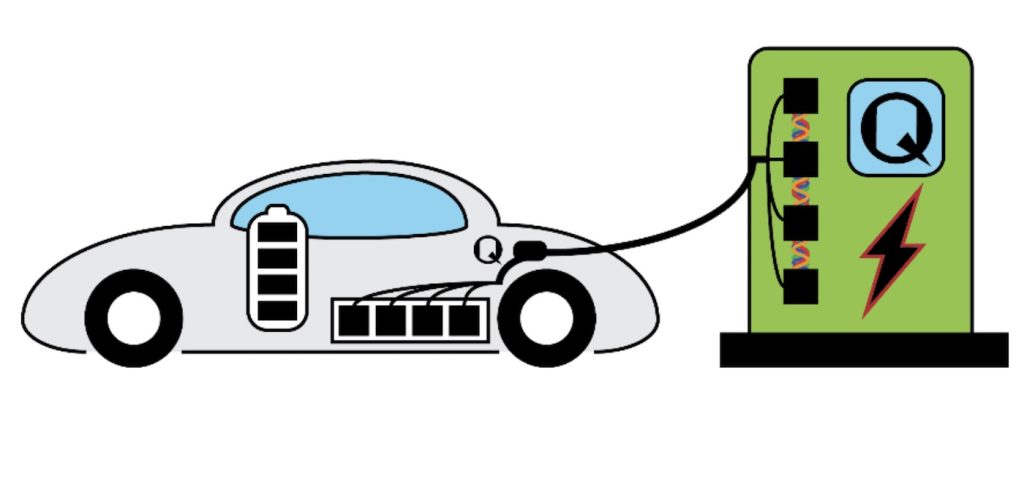
The new device uses the laws of quantum physics to power all of a battery’s cells at once—instead of one at a time—so recharging takes no longer than filling up at the pump.

Electric cars were rarely seen on the roads 10 years ago, but millions are now being sold every year and it has become one of the fastest growing industries, but even the fastest superchargers need around 20 to 40 minutes to power their car.

Scientists at the Institute for Basic Science (IBS) in South Korea have come up with a solution. Co-author Dr. Dario Rosa said the consequences could be far-reaching.

“Quantum charging could go well beyond electric cars and consumer electronics. For example, it may find key uses in future fusion power plants, which require large amounts of energy to be charged and discharged in an instant.”

The concept of a “quantum battery” was first proposed in a seminal paper published by Alicki and Fannes in 2012. It was theorized that quantum resources, such as entanglement, can be used to vastly speed up battery charging.

The researchers used quantum mechanics to model their super fast charging station with calculations of the charging speed showing that a typical electric vehicle with a battery containing around 200 cells would recharge 200 times faster.

Current collective charging is not possible in classical batteries, where the cells are charged in parallel, independently of one another.

“This is particularly exciting as modern large-capacity batteries can contain numerous cells.”

The group went further to provide an explicit way of designing such batteries.

This means charging times could be cut from 10 hours to three minutes at home and from around 30 minutes to just a few seconds at stations.

Co-author Dr Dominik Å afránek said, “Of course, quantum technologies are still in their infancy and there is a long way to go before these methods can be implemented in practice.”

“Research findings such as these, however, create a promising direction and can incentivize the funding agencies and businesses to further invest in these technologies.

“If employed, it is believed that quantum batteries would completely revolutionize the way we use energy and take us a step closer to our sustainable future.”

The findings were published in the February 8 edition of the journal Physical Review Letters. [GNN updated the earlier broken link.] EV Charging Answer: Quantum Technology Will Cut Time it Takes to Charge Electric Cars to Just 9 Seconds
Read More........

Deep Sleep Brain Waves Offer Protection Against Alzheimer’s, Shows New Research

Credit: Ruliff Andrean for Unsplash+

Poor sleep quality has been linked to cognitive decline, neuro-degeneration and Alzheimer’s disease in seniors—but it may be possible to counteract certain risks.

A new study shows that specific sleep brain waves provide protection against the harmful effects of a brain chemical associated with wakefulness, sleep transition, and narcolepsy.

Concordia University-led researchers examined levels of the neurotransmitter orexin in the cerebral spinal fluid of 60 adults with mild to moderate Alzheimer’s Disease over a three-year period.

They found that individuals with elevated levels of orexin, which is vital to sleep and appetite regulation, were more likely to exhibit symptoms of cognitive decline, including poorer memory and thinking, more severe behavioral and psychiatric symptoms and had higher levels of biological markers associated with neurodegenerative disease and inflammation.

However, that relationship was found to be mitigated by specific brainwaves during sleep. Individuals who produced stronger sleep spindles and sleep oscillations — types of brainwaves associated with memory support and preservation — during non-rapid eye movement (NREM) sleep had less cognitive decline over time than those with weaker ones.

This sleep activity appears to provide neural resilience against the negative effects of higher levels of orexin on their cognition and mental health.

“This study shows that there is a direct association between orexin levels in the brain and biomarkers of Alzheimer’s disease,” says study co-author Thanh Dang-vu, a neurologist and professor in the Department of Health, Kinesiology and Applied Physiology.
Clear pathways to treatment

The study’s data, published in the journal Neurology, was collected by researchers at Lleida University in Catalonia, Spain. The 60 participants spent a night in a sleep laboratory where researchers recorded their brain activity using overnight poly-somnography. The following morning, cerebrospinal fluid samples were collected to measure orexin and other established Alzheimer’s biomarkers.

Participants also completed a series of cognitive and neuropsychiatric assessments at regular intervals over the next three years, allowing researchers to examine how sleep, brain chemistry and cognitive decline changed together over time.

“Having this longitudinal data is important, because Alzheimer’s disease is a moving target,” says the study’s co-first author Arsenio Paez, a neuroscience lecturer in the Sleep, Cognition and Neuroimaging Lab.

“With this data, we can see how the course of people’s Alzheimer’s disease changes over time. Alzheimer’s is a very long process, so this gives us a better picture of how conditions can change over time and we might intervene at different stages of the disorder.”

The researchers note that orexin-blocking drugs are already being used to treat insomnia and narcolepsy, and are being explored as possible therapies for Alzheimer’s disease.

This study suggests that monitoring sleep spindles, slow oscillations and orexin levels could help measure disease progression and to identify which patients would benefit from specialized treatment.“This study shows us that there are new ways to potentially act on sleep to slow the progression of Alzheimer’s disease, and opens the door for further studies moving forward,” says Dang-vu. Deep Sleep Brain Waves Offer Protection Against Alzheimer’s, Shows New Research
Read More........