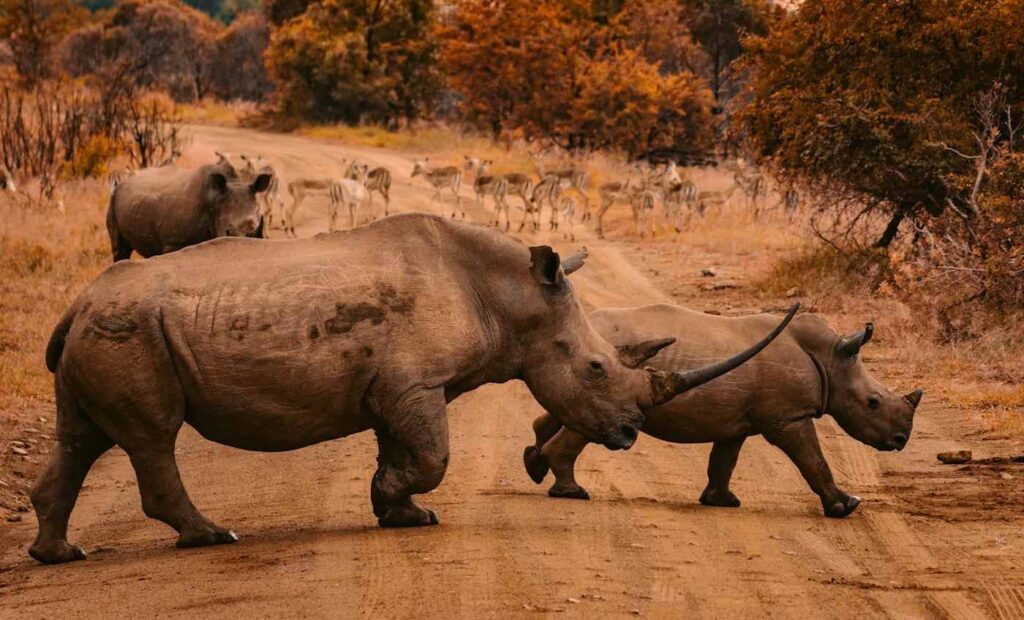
Birth of UK's Only Bonobo Baby Gives Fresh Hope for World's Most Endangered Ape

credit – Adam Kay, Twycross Zoo / SWNS

Conservationists and zookeepers are celebrating our closest living relative giving birth to a healthy baby.

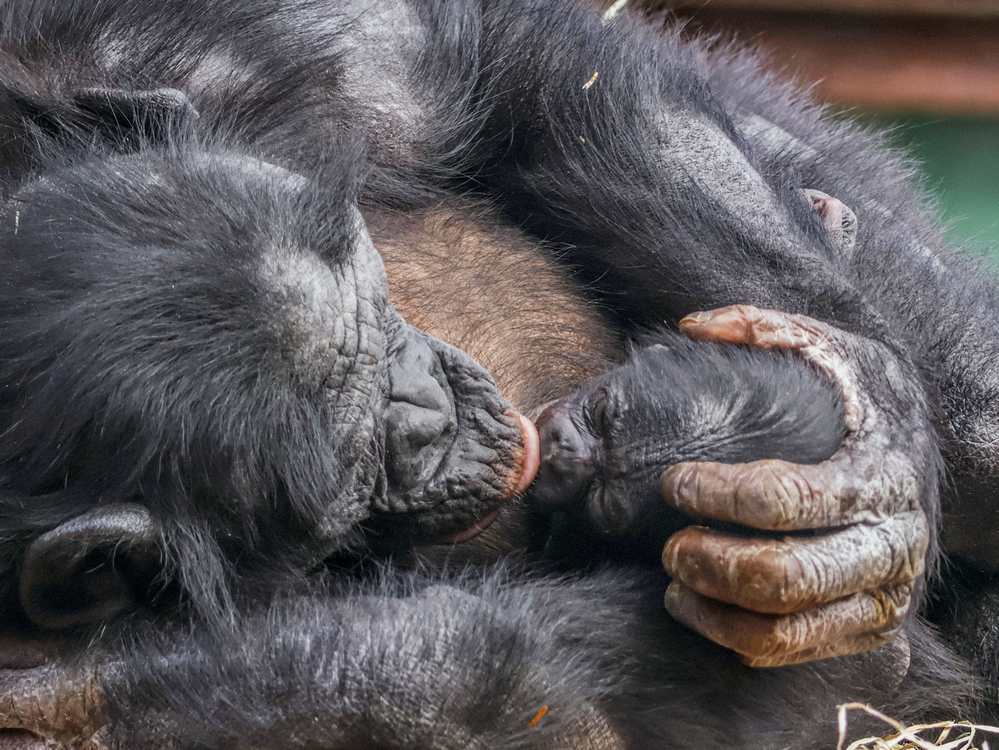
Heart-tugging photos show the bonobo mother Yuli cradling her tiny newborn after it was born at Twycross Zoo in Leicestershire last Thursday.

Experts have hailed the birth as a ‘globally significant’ moment which could help save one of the world’s rarest apes and humanity’s cousin.


Twycross Zoo is the only UK zoo to care for the species, and says the new arrival has the distinguished status as the only baby bonobo in the whole country.

The infant’s mother Yuli arrived at Twycross Zoo from Vallée Des Singes in France as part of the European-led conservation program in 2023.

“Bonobos are human’s closest living relatives, yet they remain one of the most endangered and least understood apes on Earth,” said Dr. Rebecca Biddle, chief conservation officer at Twycross Zoo. “Every birth is a true milestone and a powerful reminder of what can be achieved when zoos work together.

“As the only UK zoo caring for bonobos, here at Twycross Zoo, we are immensely proud and feel a great responsibility to play our part in protecting this incredible species,” she added.

credit – Adam Kay, Twycross Zoo / SWNS

Bonobos, which are listed as “Endangered” on the IUCN Red List of Threatened Species, are indeed as Biddle says—Homo sapiens’ closest living relatives, sharing more than 98% of our DNA.

In the wild, their population is said to be decreasing due to many human-caused threats such as poaching and deforestation.

Found only in the wilds of the Democratic Republic of the Congo, the bonobo is a highly unique ape due to their matriarchal society. Typically, primate troops are led by a dominant male, but bonobos are one of few primate species, and the only great ape, to live in female-led societies.

The conservation program looks after 10% of all the bonobos in Europe, and is a key part of a collaborative effort between EAZA (European Association of Zoos and Aquaria) member zoos.At the moment, neither mother nor newborn will be visible to the public as they enjoy a critical period of bonding and nurturing. Birth of UK's Only Bonobo Baby Gives Fresh Hope for World's Most Endangered Ape
Read More........

Rarest Monkeys Now Number Close to 2,000 Thanks to One Man's Jane Goodall-like Passion

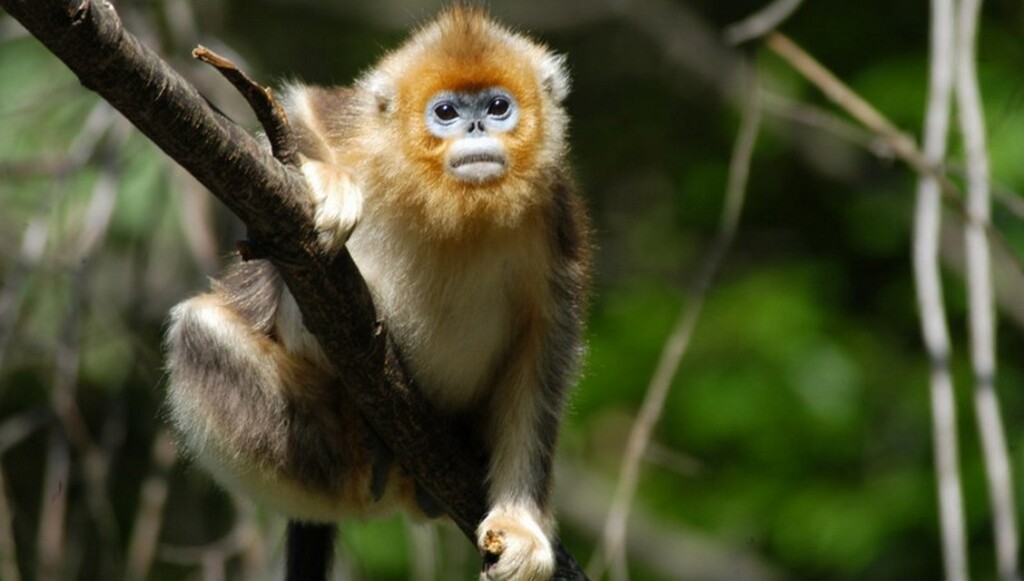
A golden snub-nosed monkey in Tanjiahe National Nature Reserve, Sichuan Province – credit, David Blank CC BY-NC-SA 3.0.

From the BBC comes the story of an intrepid and dedicated scientist who has spent decades working in China’s mountain forests in an effort to protect and understand one of the nation’s most amazing animals.

The golden sub-nosed monkey is revered alongside the giant panda as “national treasures” of Chinese wildlife, yet this couldn’t protect them from logging and hunting that followed in the wake of Mao’s Cultural Revolution.

Members of this sub-species located in the UNESCO-listed Shennongjia mountains of Hubei Province, were the subject of intense study by Professor Yang Jingyuan, a research ecologist who arrived in these mountains in 1991.

For Yang, the golden sub-nosed monkey was Jane Goodall’s chimpanzees. By the time Yang arrived in Shennongjia, the population had collapsed to just 500 or so individuals across 6 family groups. Years of illegal logging as a form of subsistence living had reduced forest coverage in the mountains to 63%.

But before Yang could protect the animals, he had to first learn to understand them. With his research colleagues, he began striking out into the newly-created Shennongjia Forest Reserve to study these incredible animals.

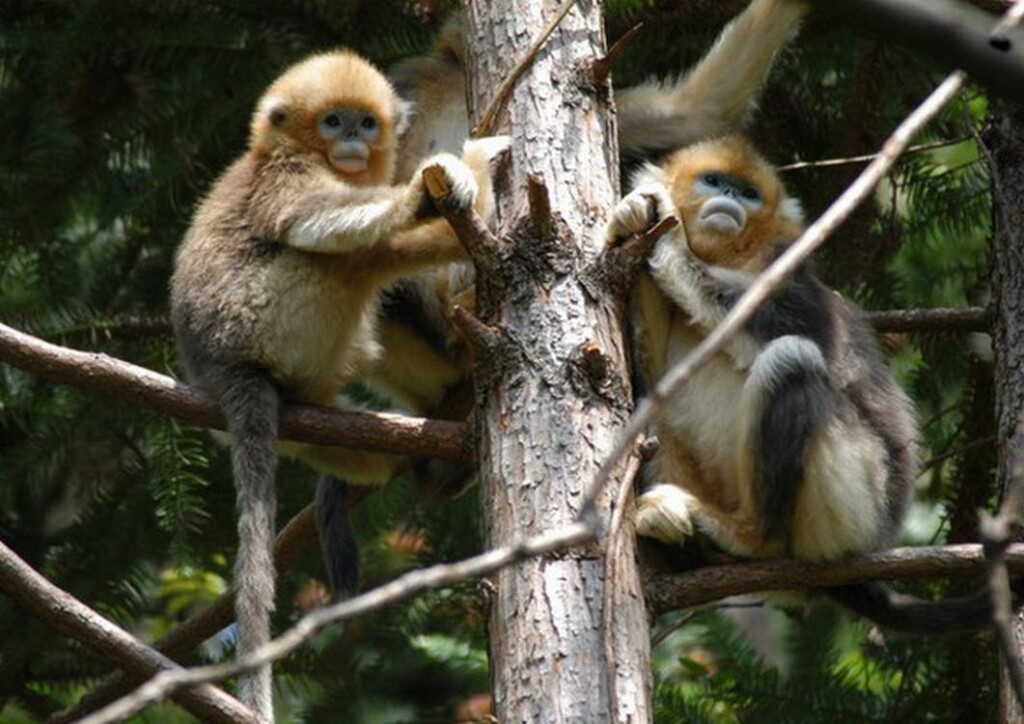
The monkeys were at first so wary of humans that Yang and his team had to stay half a mile away to be able just to observe the monkeys in their habitat. Eventually though, with repeated encounters, half a mile became and quarter mile, and a quarter mile became 200 yards, 100 yards, 20 yards—until Yang and whoever he brought with him were accepted by the troupes.

The BBC’s China Correspondent, Stephen McDonell, experienced this treatment as baby monkeys and curious juveniles climbed all over him on a visit to special, 100 square kilometer monkey zones hat are off-limits to the hundreds of thousands of visitors who come to enjoy a mountain ecosystem that is without exaggeration unique in the world.

“Even after logging was banned there were still people illegally felling timber. If they didn’t cut down trees, how would they have money?” Professor Yang, director of the Shennongjia National Park Scientific Research Institute, told McDonell.

Golden snub-nosed monkeys in Tanjiahe National Nature Reserve, Sichuan Province – credit, David Blank CC BY-NC-SA 3.0.
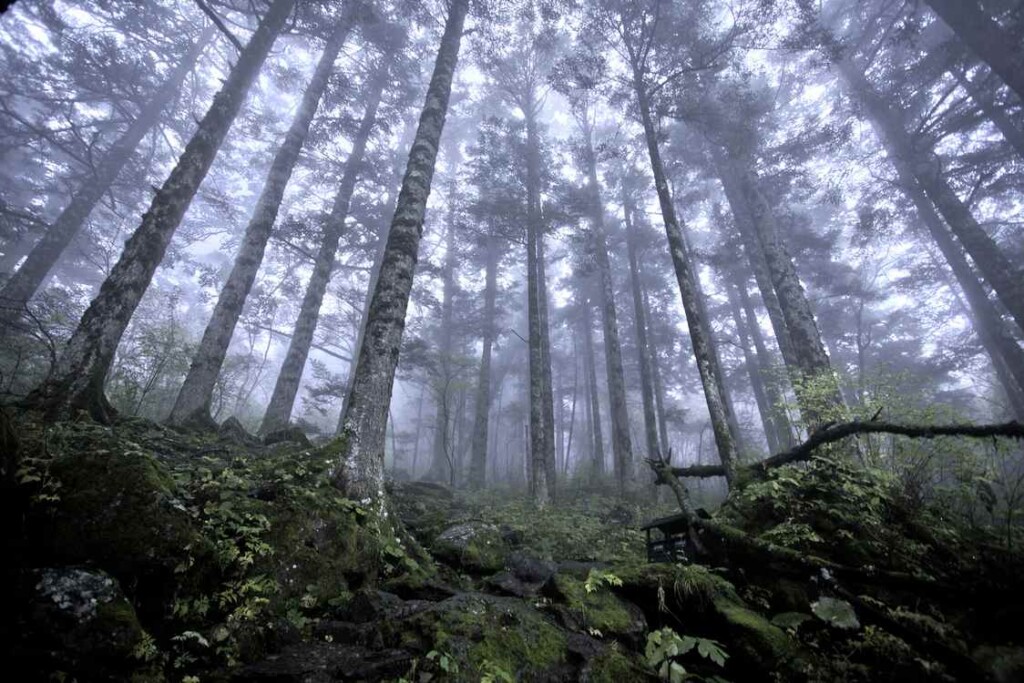
Shennongjia virgin forest – credit, Evilbish CC BY-SA 3.0

“There were also people secretly hunting here to survive. It was only after a long period of building awareness that the consciousness of local farmers changed.”

In the 1990s, with a shifting focus from forestry to forest conservation, local residents eking out this subsistence living were offered government money to relocate so that the forests could regrow. Many accepted the offer, and now benefit from the tourism boom the mountains are experiencing.

There is no place on Earth that has greater biodiversity of deciduous woody plants than Shennongjia, and a dizzying 3,400 higher-order plant species, and over 600 invertebrates have been recorded there. The golden snub-nosed monkey is very much a fuzzy golden cherry on top of a biodiverse cake ten layers-high.

“I’m very optimistic,” said Prof Yang. “Their home is now very well protected. They have food and drink, no worries about life’s necessities and, most of all, their numbers are growing.”
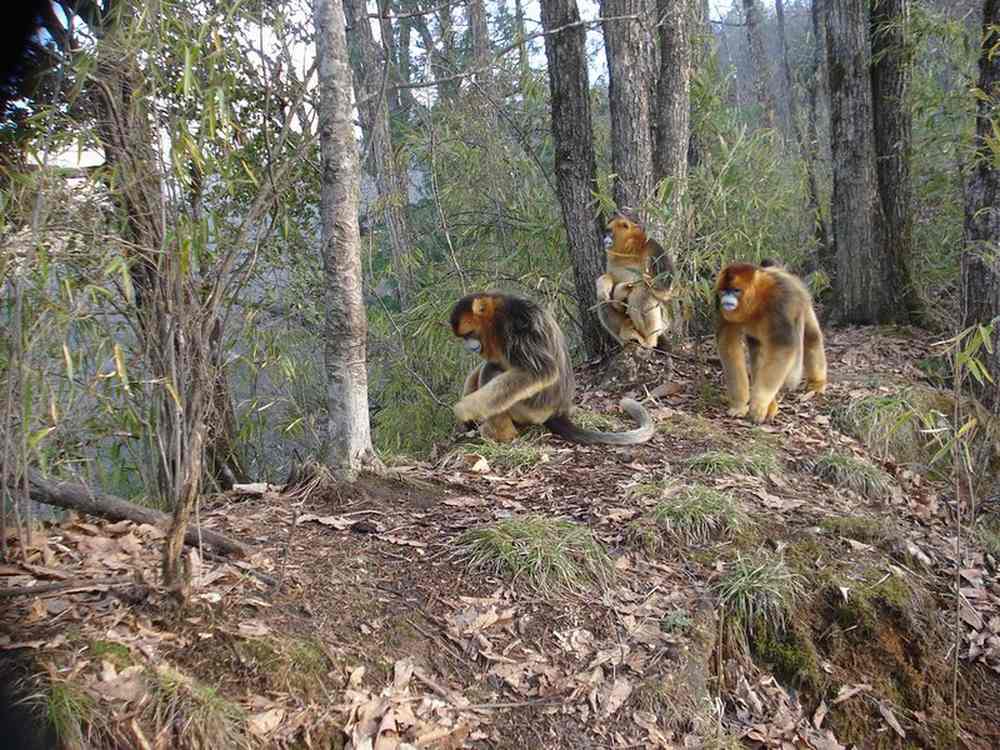
Golden snub-nosed monkeys captured via camera trap – credit, eMammal CC 2.0. via Flickr

Indeed, an archived report from Xinhua claimed that those 500 remnant individuals became 1,200 by 2013. This represents major progress since females give birth to only one baby at a time.

At the time McDonell visited, their numbers had jumped again to 1,600, and forest cover along the hills and valleys had increased to around 96% of the reserve’s total area.

Professor Yang can live freely among them like some character of fable. He speaks to them in their calls, having learned the meanings of each vocalization during his many years of observing them.

Like Goodall, his research has yielded incredible insights into their lives. For example, each monkey has an egg timer-like understanding of its lifespan, and when it’s time to pass away, they silently leave their families behind and visit special, secluded areas to die alone in the forest.

According to Yang, there hasn’t been a single successful attempt to find these sites, either by researchers or rangers.Yang’s institute estimates that the monkeys will come to number 2,000 individuals in Shennongjia sometime over the next 10 years, a testament to the magnificent outcomes conservation can provide, providing there’s someone in the right place at the right time to make the effort to make a difference. Rarest Monkeys Now Number Close to 2,000 Thanks to One Man's Jane Goodall-like Passion
Read More........

Six Baby Cheetahs Born in the Richmond Zoo's Prolific Breeding Program – 167 Cats Since 2013 (WATCH)

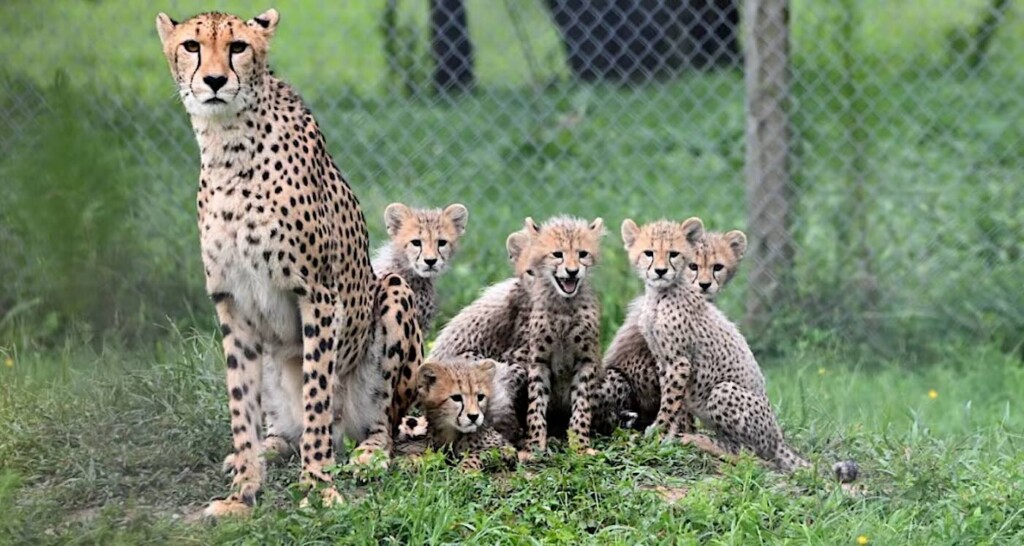
Six cheetah cubs with their mother –Courtesy of Metro Richmond Zoo

At a zoo in Richmond, a raucous litter of cheetah cubs is delighting onlookers having spent the summer months growing in secret.

One of the largest litters born at the zoo, the three-month-old cubs are hitting milestones and progressing well towards adolescence.

Named after African capitals, such as Lusaka, Kampala, and Cairo, the cubs were born in April but were kept hidden away to develop in peace through their most sensitive period with mother Zuri.


Sprinting, jumping on each other, and investigating every object in their enclosure, they seem well on their way to becoming the world’s fastest land animal.

“Some are shy; one is bold and brave — that’s Lusaka,” said Kristina Coonley, a lead zookeeper at the Metro Richmond Zoo, Virginia. “[Cairo] is always the last one out and the last one to come in.”

Though just the 99th most populated city in America, the Richmond Zoo nevertheless boasts one of the country’s most prolific and successful cheetah breeding program for purposes of conservation. Zuri’s litter of 6 takes the total number of captive-born cubs in the program’s history to 167 since 2013.

Coonley told the Washington Post that the Cheetah Conservation Center looks carefully and genetics and disposition when deciding which of their cats are suitable for breeding. Zuri is 5 years old, and has already mothered one litter. Her partner was Ramses, a 13-year-old sire of 25 other cubs.

Though losing out on conservation column inches to the likes of the lion and tiger, cheetah are considered Vulnerable by the IUCN. With around 6,500 individuals across the whole of Africa, a relic populations in Iran, and a diminishing introduced population in India, they are the most at-risk of the African big cats because of their need for space befitting the world’s greatest sprinters.It’s no bad thing then that the Metro Richmond Zoo has seen even bigger litters than these 6, with a resident female last year bringing 9 little mohawked babies into the world. Six Baby Cheetahs Born in the Richmond Zoo's Prolific Breeding Program – 167 Cats Since 2013 (WATCH)
Read More........

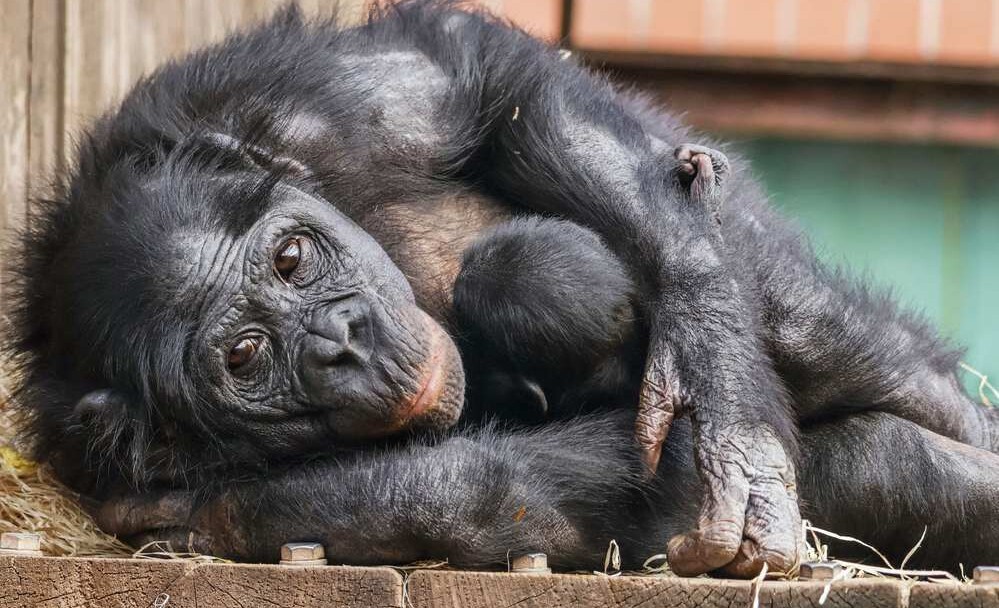
Researchers Test Use of Nuclear Technology to Curb Rhino Poaching in South Africa


In South Africa, biologists and scientists have developed a novel way of disincentivizing poaching that will allow rhinos to keep hold of their horns.

Previously it was widespread practice to capture and de-horn rhinos to disincentivize poachers from killing them, but the lack of a horn deeply interfered with the animals’ social structures.


Instead, rhinos at a nursery in the northern province of Limpopo have had radioactive isotopes embedded into their horns. The idea is that the radiation given off by these isotopes will mark out anyone at any border crossing as having handled a rhino horn.

It’s a superior form of tracking because even if the tracker is removed the radiation remains on the horn, as well as anything that touches it.


Nuclear researchers at the University of the Witwatersrand’s Radiation and Health Physics Unit in South Africa injected 20 live rhinos with these isotopes.

“We are doing this because it makes it significantly easier to intercept these horns as they are being trafficked over international borders because there is a global network of radiation monitors that have been designed to prevent nuclear terrorism,” Professor James Larkin who heads the project told Africa News. “And we’re piggybacking on the back of that.”

Larkin adds that innovation in poaching prevention is urgently needed, as all existing methods have limitations, and South Africa still loses tens of rhinos every year.


Professor Nithaya Chetty, dean of the science faculty at Witwatersrand, said the dosage of the radioactivity is very low and its potential negative impact on the animal was tested extensively.While poaching elephants for their ivory yields a unique material for sculpture and craft, rhino horn is trafficked to criminal groups in Asia who sell it for the incorrect belief that it contains therapeutic properties. Researchers Test Use of Nuclear Technology to Curb Rhino Poaching in South Africa
Read More........

Local Communities Protecting Millions of Acres of Orangutan Habitat Beyond Nat. Park Boundaries

Orangutans by Getty Images for Unsplash+

On the island of Borneo, forest-dwelling communities have become key to ensuring that orangutans have enough intact forest to survive and thrive down the centuries.

Documented by the Nature Conservancy, which is assisting in establishing and equipping these forest communities for conservation, these communities maintain millions of acres of forests for sustainable economic use and conservation.

This includes logging, but research has shown that when legitimate, transparent logging operations cease, their former land concessions become akin to a no man’s land, and are taken over by illegal logging circuits, poaching, and agriculture.

Instead, by logging small numbers of mature trees one small area at a time over a 30-year time horizon, the forest doesn’t shrink, and the communities can use profits from the hardwoods to sustain their families, and ensure that areas of intact forest remain poacher free.

Areas like the vast Kutai National Park suffer from similar problems as the logging concessions, the Nature Conservancy writes. Their remoteness acts as a curtain to hide illegal activities.

But 80% of orangutans live beyond the borders of protected areas, often very near forest villages. Because of this, an estimated 1.3 million acres of forest habitat is now protected by local forest guardians for the benefit of ecotourism, honey production, scientific research and of course, conservation.

Support from the Indonesian government, which controls the majority of Borneo, the world’s third-largest island, helps the guardians manage their land concessions, while interest from the international community has also led to large-scale donations from companies like Arhaus, a furniture maker.

Matt Miller, the Nature Conservancy’s director of science communications, visited these community concessions, and saw first hand how they view their future as guardians of the forests.“The communities are the leaders here. They are the key to the conservation of Borneo’s forests and biodiversity,” a local program director told Miller. “We are here to support them. We can provide science and help them shape what they want their future to be. But this is the reflection of their dream.” Local Communities Protecting Millions of Acres of Orangutan Habitat Beyond Nat. Park Boundaries
Read More........