Gene essential for vitamin D absorption may boost cancer treatment

IANS Photo

New Delhi, (IANS): Scientists have identified a key gene essential for vitamin D absorption, which may also boost treatments for cancer and autoimmune diseases.

The gene, called SDR42E1, is crucial for taking up vitamin D from the gut and further metabolising it -- a discovery with many possible applications in precision medicine, including cancer therapy.

"Here we show that blocking or inhibiting SDR42E1 may selectively stop the growth of cancer cells,” said Dr Georges Nemer, Professor at the University of College of Health and Life Sciences at Hamad Bin Khalifa University in Qatar.

Previous research showed that a specific mutation in the SDR42E1 gene on chromosome 16 is associated with vitamin D deficiency.

The mutation caused the protein to be cut short, rendering it inactive.

In the study, published in the journal Frontiers in Endocrinology, the researchers used CRISPR/Cas9 gene editing to transform the active form of SDR42E1 in a line of cells from a patient with colorectal cancer, called HCT116, into its inactive form.

In HCT116 cells, the expression of SDR42E1 is usually abundant, suggesting that the protein is essential for their survival.

Once the faulty SDR42E1 copy had been introduced, the viability of the cancer cells plummeted by 53 per cent, the researchers explained.

The results suggest that inhibiting the gene can selectively kill cancer cells, while leaving neighbouring cells unharmed.

“Our results open new potential avenues in precision oncology, though clinical translation still requires considerable validation and long-term development," said Dr Nagham Nafiz Hendi, Professor at Middle East University in Amman, Jordan.

“Because SDR42E1 is involved in vitamin D metabolism, we could also target it in any of the many diseases where vitamin D plays a regulatory role,” said Nemer.However, as long-term effects of SDR42E1 on vitamin D balance remain to be fully understood, the researchers stressed the need for further studies. Gene essential for vitamin D absorption may boost cancer treatment | MorungExpress | morungexpress.com
Read More........

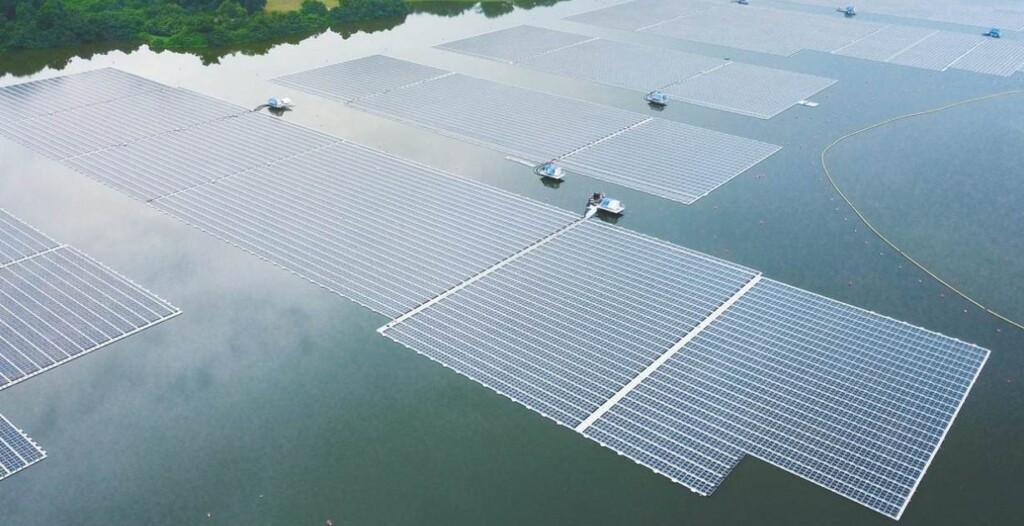
Resourceful Singapore Finds Perfect Place for 86 MW Solar Farm–its Biggest Reservoir

– credit, courtesy of Sembcorp

How do you decarbonize a city state? With so little space, so many demands on power, and so many citizens, generating any meaningful electricity from renewable energy is a major challenge for urban planners.

But over its history, the planners of Singapore have shown themselves to be nothing if not resourceful, and so maybe it’s no surprise they’re set to begin construction on an 86-megawatt solar farm.

The surprise though comes from where they’ve built it—on top of the country’s largest reservoir—forming a floating solar farm that will join two others already present on two other reservoirs.

The contractor, Singapore-based engineering firm Sembcorp Solar Singapore, won the bidding process with designs for an 86MW PV solar farm on Pandan Reservoir, issued by Singapore’s national water agency.

It will be the third such floating solar farm built by Sembcorp, with the other two located on Singapore’s two other reservoirs. One was built in 2021, and another was commissioned this year by Facebook parent company Meta to power the data center for its local subsidiary.

All tolled, the solar panels will generate 296 megawatts of clean energy.

“Floating solar projects at reservoirs like Pandan, Tengeh and Kranji are vital for Singapore’s land-scarce energy landscape,” said Ms. Jen Tan, CEO of Sembcorp Solar Singapore.

Floating solar installations have a unique benefit to terrestrially-mounted panel arrays, which is that the water underneath helps keep their electronics cool even while their black surfaces bake in the tropical sun. When properly cooled, panels can produce around 2% more power.Other installations such as rooftop panel arrays mean that Singapore actually generates over 1,000 megawatt-hours of solar energy, half of what the city-state plans to install by 2030. It will be fascinating to see where they put the next solar array, having run out of reservoirs. Resourceful Singapore Finds Perfect Place for 86 MW Solar Farm–its Biggest Reservoir
Read More........

Local Communities Protecting Millions of Acres of Orangutan Habitat Beyond Nat. Park Boundaries

Orangutans by Getty Images for Unsplash+
On the island of Borneo, forest-dwelling communities have become key to ensuring that orangutans have enough intact forest to survive and thrive down the centuries.

Documented by the Nature Conservancy, which is assisting in establishing and equipping these forest communities for conservation, these communities maintain millions of acres of forests for sustainable economic use and conservation.

This includes logging, but research has shown that when legitimate, transparent logging operations cease, their former land concessions become akin to a no man’s land, and are taken over by illegal logging circuits, poaching, and agriculture.

Instead, by logging small numbers of mature trees one small area at a time over a 30-year time horizon, the forest doesn’t shrink, and the communities can use profits from the hardwoods to sustain their families, and ensure that areas of intact forest remain poacher free.

Areas like the vast Kutai National Park suffer from similar problems as the logging concessions, the Nature Conservancy writes. Their remoteness acts as a curtain to hide illegal activities.

But 80% of orangutans live beyond the borders of protected areas, often very near forest villages. Because of this, an estimated 1.3 million acres of forest habitat is now protected by local forest guardians for the benefit of ecotourism, honey production, scientific research and of course, conservation.

Support from the Indonesian government, which controls the majority of Borneo, the world’s third-largest island, helps the guardians manage their land concessions, while interest from the international community has also led to large-scale donations from companies like Arhaus, a furniture maker.

Matt Miller, the Nature Conservancy’s director of science communications, visited these community concessions, and saw first hand how they view their future as guardians of the forests.“The communities are the leaders here. They are the key to the conservation of Borneo’s forests and biodiversity,” a local program director told Miller. “We are here to support them. We can provide science and help them shape what they want their future to be. But this is the reflection of their dream.” Local Communities Protecting Millions of Acres of Orangutan Habitat Beyond Nat. Park Boundaries
Read More........

Locals Release 10 Endangered Siamese Crocodiles into Laos Wetlands to Save Species from Extinction

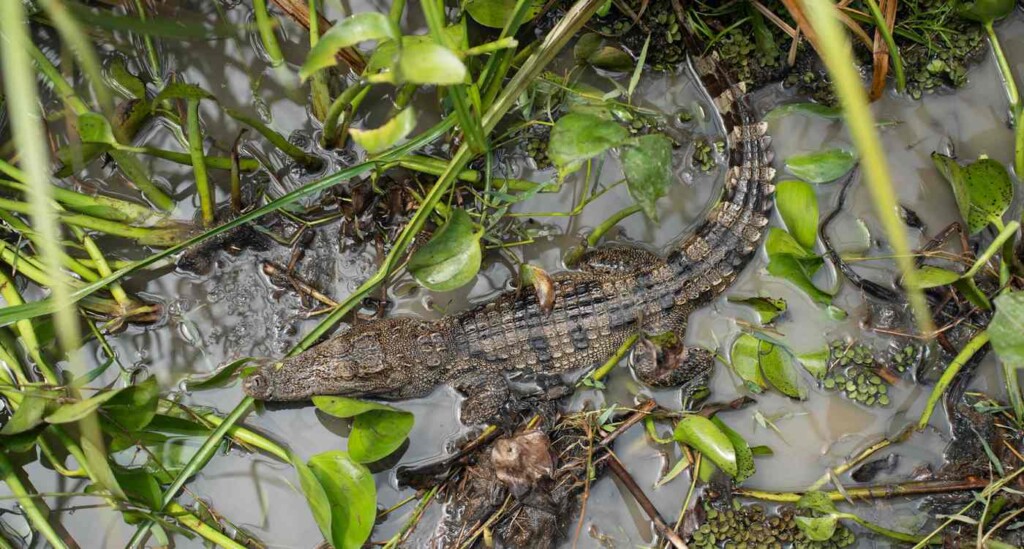
One of the Siamese crocodiles released – credit Phetpakay Bounhaxay © WCS

While less than 1,000 Siamese crocodiles remain in the wild, community members in Laos have released ten of the rare animals into a local wetlands to boost the population.

While crocodiles are not hunted, the species (Crocodylus siamensis) is ranked as Critically-Endangered by the International Union for Conservation of Nature because of the threats of entanglement in fishing nets, the clearance of wetlands, and seasonal draining of habitat to expand dry-season rice cultivation.

Unlike many of its other aggressive cousins, the Siamese crocodile is not a threat to humans. Communities that reside close to the species’ habitat hold the crocodiles in high regard spiritually—believing they bring good luck.

The Xe Champhone Wetland where they were released is located in the Savannakhet province which represents the larger of two ‘Ramsar sites’ (Wetland of International Importance).

It’s home to an abundance of aquatic biodiversity such as endangered turtle species and waterfowl.

A dedicated conservation program for the Siamese crocodile is in place in the four target districts where they’re found. Volunteers work with government officials and eggs are collected to be transported to the village administration office for incubation at ambient temperature for about two months.

Once hatched, the baby crocodiles will be raised for about 32 months—at which time they will exceed 3 feet in length—and then released back into the wetlands. 163 small crocodiles are currently being nursed by the crocodile conservation team at the village level.

Since the start of the program, a total of 183 crocodiles have been successfully released back into the wild. 6 to 8 nests are being found each year, and based on these nest counts, an estimated population of 200-250 Siamese crocodiles inhabit the Xe Champhone Wetlands.
A new visitor center boosts enthusiasm

The new visitors’ center offers an immersion in the incredible biodiversity of the Xe Champhone wetlands. With educational panels displayed all along the visitors’ path as well as wall murals on the crocodile’s life.

“I hope that the opening of the Xe Champhone Wetland and Crocodile Information Center, along with today’s release of the crocodiles, will bring lasting benefits to local communities as part of a long-term conservation effort,” said Mr. Khammone Thilavong, Deputy Director of Provincial Forestry and Agriculture Ministry, according to the Wildlife Conservation Society, which assisted in the reintroduction, and released a statement on the success.

“I also trust that everyone here shares a strong commitment to environmental preservation and the protection of these endangered species.” Locals Release 10 Endangered Siamese Crocodiles into Laos Wetlands to Save Species from Extinction
Read More........

Indonesia's Semeru volcano erupts again, spewing ash 1 km above summit

Jakarta, (IANS): The Semeru volcano, located in Indonesia's Java, erupted again early on Monday at 03:35 a.m. local time, spewing thick grey ash up to 1 kilometre above its summit.

"This eruption was recorded by a seismograph with a duration of 122 seconds and a significant maximum amplitude," said Ghufron Alwi, an officer at the Semeru Volcano Observation Post.

Earlier, at 01:47 a.m. local time, a similar eruption occurred with a duration of 146 seconds and an ash column height of 1 kilometre, indicating high volcanic activity in the past few hours, Xinhua news agency reported.

From January until November 11, 2024, Mount Semeru has erupted 1,738 times, with volcanic activity dominated by eruption tremors, signaling continuous magma pressure beneath the surface.

The Centre for Volcanology and Geological Hazard Mitigation (PVMBG) has prohibited people from conducting any activities within an 8-kilometre radius of the summit, including along the Besuk Kobokan River, which is at risk of hot ash clouds and lava flows.Authorities also warned of the potential for hot ash and lava flows to extend up to 13 kilometres from the summit, given the increasing eruption intensity. Indonesia's Semeru volcano erupts again, spewing ash 1 km above summit | MorungExpress | morungexpress.com
Read More........