Planting Billions of Trees Turned Barren Desert into a Carbon Sink That Lowers CO2

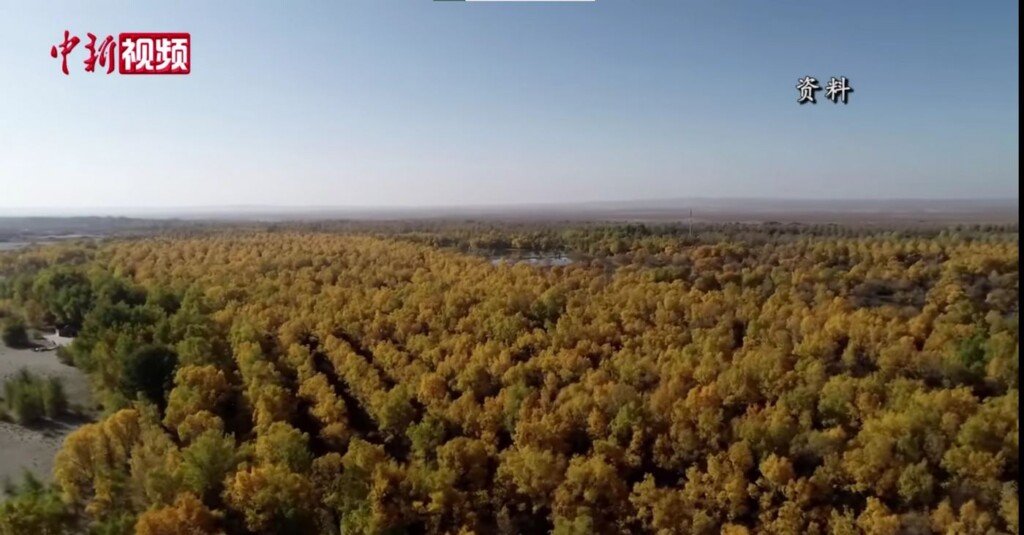
A mixed-species section of the Green Great Wall – Credit: 中国新闻网 CC 3.0. BY

China’s multi-decade long, successful effort to plant a ring of trees around one of the world’s most hostile deserts has sprouted an unexpected benefit to humanity.

Along with protecting the nation’s grasslands and agriculture from the spreading sands of the dismal Taklamakan Desert, the giant ring of trees has turned previous unproductive land into a carbon sink that draws CO2 out of the atmosphere.

It’s thought, and some isolated research has indeed demonstrated, that humans can prevent the worst effects of a rise in average global temperatures by planting trees to absorb more CO2 from the atmosphere.

This strategy has limits, however, when viewed on a global scale. Atmospheric CO2 levels continue to rise, while there is a limit in the amount of land that can be turned over to forests.

One-third of our planet is covered in deserts, where vegetation is sparse or absent, and rainfall is scarce, yet despite their vast acreage they collectively hold less than one-tenth of the world’s carbon stock, or the amount of carbon that is held underground.

A study conducted by NASA and California Technical Institute (Caltech) has used satellite data to demonstrate that the “sea of death” as the Taklamakan Desert was called in antiquity, could be utilized to store carbon and reduce the greenhouse effect.
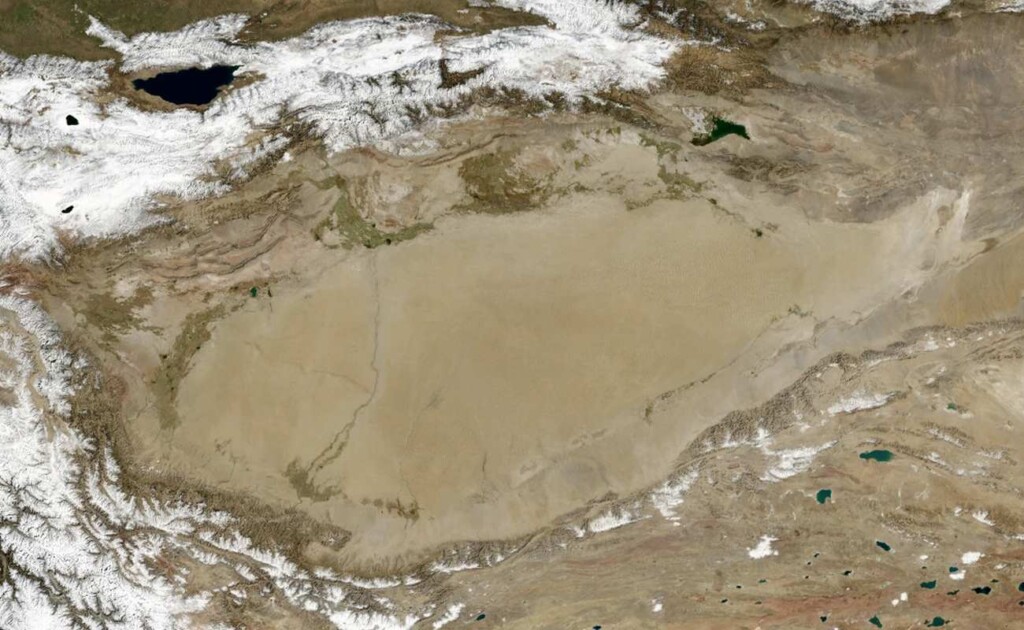
The Taklamakan Desert. Credit: NASA World Wind 1.4.

Starting in 1978, China’s Three-North Shelter Belt program aimed to plant trees along the borders of the great Taklamakan to stop sandstorms from ruining adjacent pasture and agriculture land. As the world’s single farthest point from any ocean, the Taklamakan is one of the driest and most hostile landscapes on our planet.

The massive Himalayas rise to the south and east, the Pamirs to the southwest, and a pair of mountains known as the Tian Shan and the Altai to the west, leaving landscape completely isolated from moisture.

66 billion trees have been planted by estimates since the start of the Shelter Belt program, which finished in 2024. Monikered the “Green Great Wall,” this incredible increase in greenery has raised average rainfall by several millimeters, resulting in a natural growth of foliage during the wet season that boosts photosynthesis along the tree line, leading to greater degrees of sequestration.

“We found, for the first time, that human-led intervention can effectively enhance carbon sequestration in even the most extreme arid landscapes, demonstrating the potential to transform a desert into a carbon sink and halt desertification,” study co-author Yuk Yung, a professor of planetary science at Caltech and a senior research scientist in NASA’s Jet Propulsion Laboratory, told Live Science in an email.

By precise numbers, it has reduced the average carbon content in the desert air from 416 parts per million to 413 ppm. Parts per million is used as a measurement for the greenhouse effect. Worldwide, the number is 429.3. It was 350 in before the advent of industrialization.If more shelter belt-style tree planting efforts could be used to reclaim desert landscapes, it could open vast areas to absorbing carbon. With little to no vegetation, deserts in their natural state have precious little ability to do so. Planting Billions of Trees Turned Barren Desert into a Carbon Sink That Lowers CO2
Read More........

New Spray-on Powder Instantly Seals Life-Threatening Wounds in Battle or During Disasters

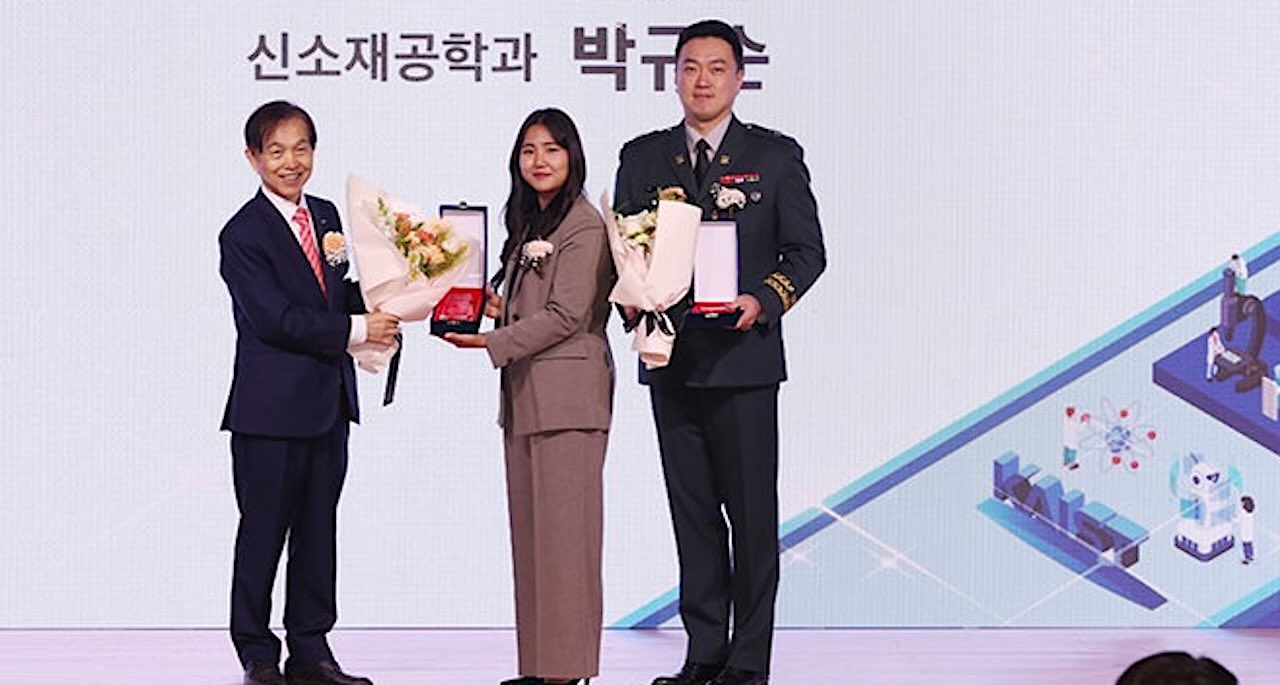
South Korean scientists win award for wound powder – SWNS

A spray-on powder that instantly seals life-threatening wounds could save thousands of lives, say scientists.

The new substance can help prevent excessive bleeding which is the leading cause of death due to injuries in war, according to a study.

The fast-acting powder that stops bleeding in just one second was developed by South Korean scientists who say it can also be applied in emergency hospital procedures.

The research team at the Korea Advanced Institute of Science and Technology (KAIST) in Daejeon, which included an Army Major, created the powder that rapidly forms a strong hydrogel barrier when sprayed directly onto a bullet wound.

The team designed the technology with real combat conditions in mind, and the direct involvement of an Army Major helped ensure its practical readiness.

Major Kyusoon Park, who is also a PhD candidate and served as a study co-author, said the substance not only allows “instant hardening” under extreme conditions like combat or disasters but also delivers high usability and storage stability.

“Until now, patch-type hemostatic agents widely used in medical fields have had limitations due to their flat structure and sensitivity to temperature and humidity.”

They cannot withstand pressure applied to the wound. Also, current powders that stop blood flow have limited functionality by physically absorbing blood to form a barrier, according to the study published in the journal Advanced Functional Materials.
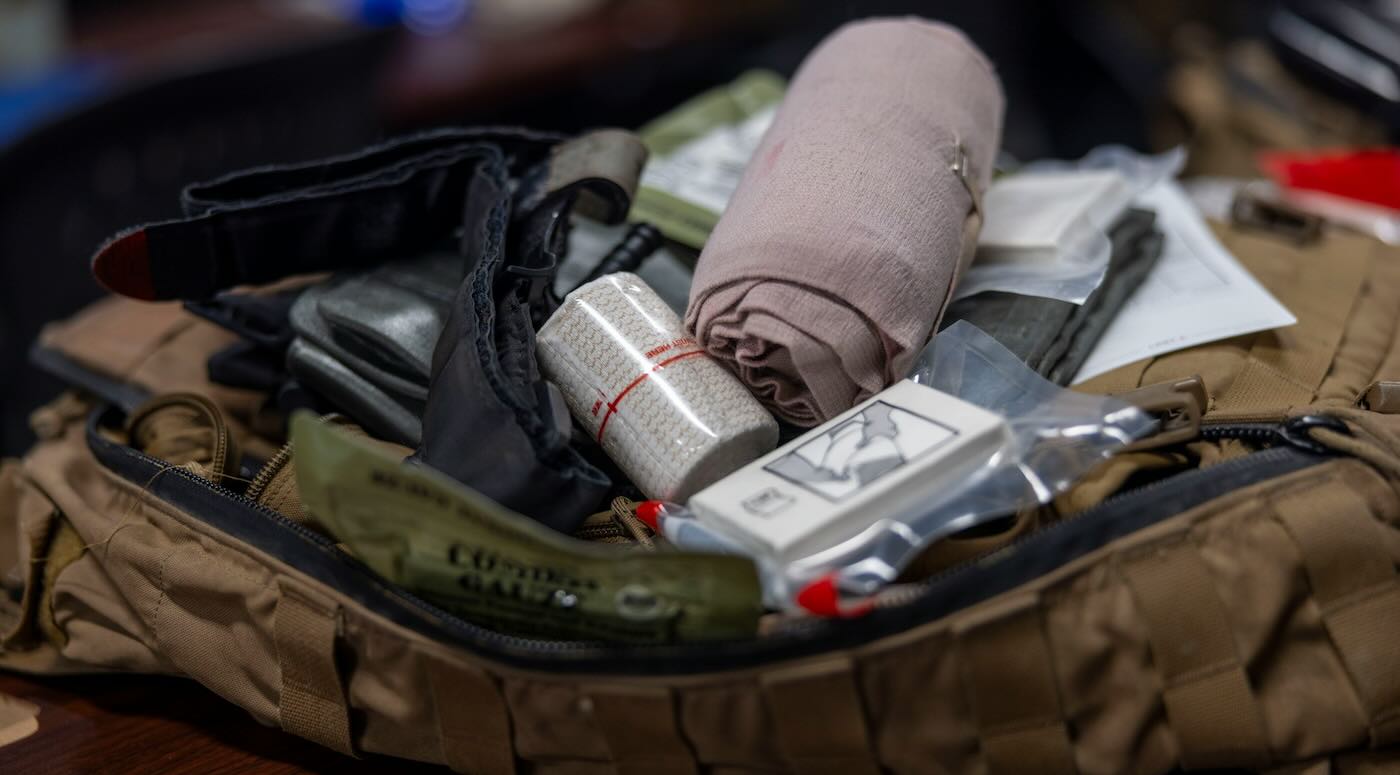
Medical first aide equipment for combat care at Marine Corps Base Camp Lejeune – Credit: Navy Medicine via Unsplash

“The new AGCL powder reacts with cations, such as calcium in the blood, to turn into a gel state in one second, instantly sealing the wound,” said study co-leader Professor Steve Park.

“Furthermore, by forming a three-dimensional structure inside the powder, it can absorb blood amounting to more than seven times its own weight.”

“It shows superior sealing performance compared to commercial hemostatic agents—with a high adhesive strength and a level of pressure that can withstand being pressed strongly by hand.”

AGCL powder is composed entirely of naturally derived materials with an antibacterial effect of 99.9%.

It has a structure that combines biocompatible natural materials such as alginate and gellan gum—that react with calcium for fast gelation and physical sealing—and chitosan, which bonds with blood components to enhance chemical and biological hemostasis.

“In animal experiments, excellent tissue-regeneration effects, such as rapid wound recovery and promotion of blood vessel and collagen regeneration, were confirmed,” explained Prof. Park.

“In surgical liver injury experiments, the amount of bleeding and hemostasis time were significantly reduced compared to commercial methods.”

“It also maintains its performance for two years, even in room temperature and high humidity environments, possessing the advantage of being ready for immediate use in harsh environments.

“Although this is an advanced new material technology developed with national defense purposes in mind,” said Major Park, “it has great potential for emergency medicine, disaster sites, developing countries, and medically underserved areas.”“I started the research with a sense of mission to save even one more soldier—but I also hope this technology will be used as a life-saving technology in private medical fields.” New Spray-on Powder Instantly Seals Life-Threatening Wounds in Battle or During Disasters
Read More........