IIT Kanpur-incubated startup inks pact for India’s first 100 pc electric compact tractor

IANS Photo

New Delhi, (IANS): An SIIC IIT Kanpur-incubated startup, ScaNxt Scientific Technologies, entered into an agreement with two institutions under the Ministry of Science and Technology for the technology transfer of India’s first indigenously developed 100 per cent electric compact tractor, a statement has said.

The electric compact tractor, developed with over 90 per cent indigenous components, has been specifically designed for India’s small and marginal farmers.

Conventional diesel-based mechanisation models have historically remained economically inaccessible for small land holders, creating a structural productivity gap across rural India.

India’s agricultural economy remains heavily dependent on smallholder farmers, with over 86 per cent of farming households operating on less than 2 hectares of land.

The tractor integrates a fully electric drivetrain, Vehicle-to-Load (V2L) functionality capable of powering irrigation pumps and farm equipment, compact operational architecture suited for smaller farms, and simplified controls designed to improve accessibility for women farmers.

“Our Smart Compact EV Tractor will dramatically cut cultivation costs, generate green jobs in rural India, and usher in a new era of precision and prosperous farming,” the ScaNxt team said in the statement.

The development also signalled the emergence of a new category within India’s farm mechanisation landscape.

With electric agricultural equipment still at an early stage nationally, the initiative opens opportunities for manufacturing, distribution, servicing, and ecosystem development around sustainable rural mobility solutions.

SIIC IIT Kanpur signed the Memorandum of Understanding (MoU) with CSIR-CMERI and the National Research Development Corporation (NRDC) during the Vigyan Tech 2026 exhibition in New Delhi.

Under the agreement, ScaNxt Scientific Technologies will commercialise the technology under its own brand identity, with a focus on creating an affordable, energy-efficient, and scalable mechanisation solution for India’s rural economy."The agreement reflects the growing maturity of India’s translational innovation ecosystem — where publicly funded research, startup entrepreneurship, and institutional incubation are converging to solve large-scale national challenges through indigenous technologies," the statement noted. IIT Kanpur-incubated startup inks pact for India’s first 100 pc electric compact tractor | MorungExpress | morungexpress.com
Read More........

Signs of Breast Cancer Could Be Spotted 3-6 Years Before Diagnosis Using AI Screening, Shows Massive Study

\
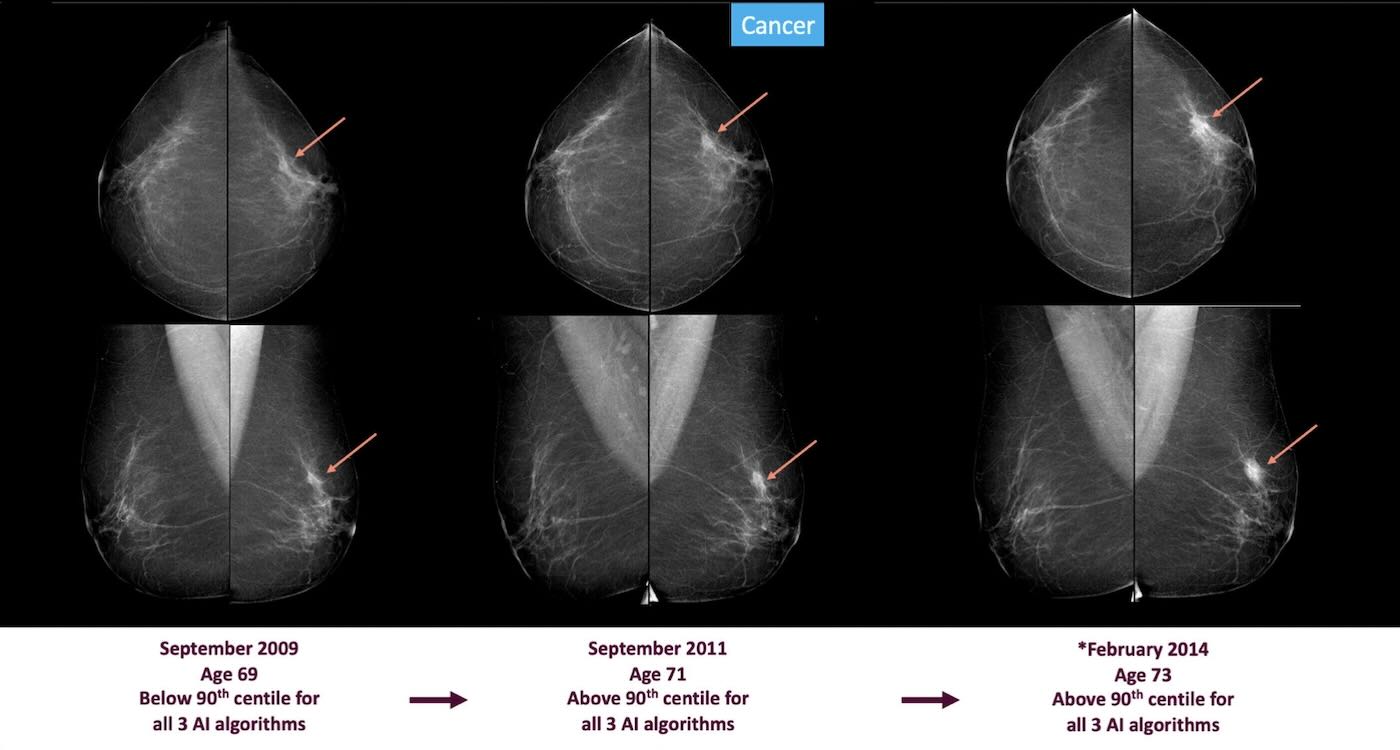
AI could have detected disease up to 6 years before 2014 breast cancer diagnosis screenings

Early warning signs of breast cancer could have been spotted years in advance using AI, suggests a new study that analyzed 88,963 mammograms performed during a 10-year period on over 31,000 patients.

The researchers showed that the latest artificial intelligence technology can provide an “early alert” for the disease up to six years before a diagnosis.

Swedish researchers tested three commercially available AI-based computer-assisted detection (AI-CAD) radiology systems on the mammogram data.

The findings, published in the journal Radiology, showed that cancer prediction scores issued by AI-CAD were elevated, on average, for people who were eventually diagnosed with breast cancer, while scores were low for those who remained cancer-free.

“Approximately 20% of breast cancer cases demonstrate mammographic signs that are already visible to AI around six years before diagnosis,” said senior co-author Professor Fredrik Strand, of Karolinska University Hospital, Stockholm.

“Our study confirms the potential of AI to, in some cases, find signs of cancer in the mammograms much earlier than when radiologists detected it.”

AI-based systems have shown promise for predicting 5-year risk of breast cancer and identifying women at risk of “interval” cancers between regular screening mammograms, but Prof. Strand’s team looked at their potential to flag mammographic signs that were present up to 10 years (in advance), after collecting mammograms from volunteers aged 40 to 74 across Sweden.

After these volunteer screening exams, two radiologists analyzed each mammogram, which was scheduled every two years—taken between 2008 and 2019.

Across that period, 12,072 of the participants (38.5%) were diagnosed with cancer by radiologist readers.

The AI-CAD systems successfully identified many of those cancers at earlier screening points.

It achieved 90% “specificity” (able to distinguish between a true positive and a true negative result) in nearly 20% of participants six years before their recorded diagnosis, up to 25% of individuals four years before diagnosis and up to nearly 40% two years before diagnosis.

“This study aims to add to the growing literature regarding the application of AI in breast cancer screening and how it can help play a role in earlier detection of breast cancer,” said Strand.

“Analyzing the AI scores of screened individuals over time could provide insight into how early detectable changes arise, potentially allowing for earlier intervention.” Signs of Breast Cancer Could Be Spotted 3-6 Years Before Diagnosis Using AI Screening, Shows Massive Study:
Read More........