UWM researcher receives Shaw award to study why some breast cancer cells survive radiation

Qingsu Cheng (left), assistant professor of biomedical engineering at UWM, examines magnified images of fibroblast cells with post-doctoral researcher Michael Weizheng Wang. Cheng has received funding to investigate the interactions of fibroblasts with breast cancer cells during radiation treatment. (UWM Photo/Laura Otto)

Why does breast cancer sometimes come back, even after what seems like successful treatment and periods of being cancer-free? A researcher at UW-Milwaukee is investigating the fact that some cancer cells go dormant to hide from radiation treatment – only to wake up later and return, sometimes even stronger.

Between 40% to 50% of breast cancers return after a period of remission. One reason may be that certain cancer cells survive treatment by slipping into a dormant state. These “sleeping” cells aren’t actively growing or dividing, which makes them harder for radiation and chemotherapy to detect and destroy.

Qingsu Cheng, assistant professor of biomedical engineering, believes a certain kind of cell called a fibroblast might be helping cancer cells enter and later emerge from this hidden state.

Cheng will dig deeper into whether fibroblasts facilitate the cancer cells’ work-around during radiation exposure with funding from the Shaw Scientist Award from the Greater Milwaukee Foundation.

The annual award supports research in biochemistry, biological sciences, and cancer research by providing $200,000 in funding to early career scientists at UW-Madison and UW-Milwaukee. The fund was established by the late James D. and Dorothy Shaw, donors to the Greater Milwaukee Foundation.

Cancer’s effect on fibroblasts

Fibroblasts are usually part of the body’s healing system. But in cancer, tumors can hijack fibroblasts, reprogramming them from defenders into promoters that help cancer grow, spread and resist treatment.

“We know some parts of the story, but not all of it,” Cheng said. “If we can stop cancer cells from going dormant in the first place, we might reduce the chance of the cancer coming back after successful treatment.”

Radiation is a powerful tool in the fight against cancer because it can reach deep into tissues and destroy cancer cells. But some cells survive. Cheng wants to know: What exactly happens at the cellular level when radiation penetrates the tumor’s microenvironment? And are fibroblasts somehow being recruited to help in the process of dormancy?

Other factors

His lab will also explore what revives these hidden cells and how the body’s circulatory system may be involved in helping cancer cells spread or resist treatment during radiation exposure.

If radiation plays a role in these processes, then a logical related question for Cheng is: Does a patient’s lifetime exposure to low-dose radiation — like from medical scans or mining work – fit into the puzzle?

Some people are more susceptible to the radiation than others, but little is known about why. Findings of this project could provide clues.

The project also will look at high-density breast tissue, which tends to contain more reprogrammed fibroblasts and is a known risk factor for developing breast cancer. It may also play a role in why some cancers return after treatment.“By understanding the microenvironment around tumors, we can start to identify new targets for treatment,” Cheng said. Once those targets are known, he plans to test potential drugs or therapies to stop cancer from hiding. UWM researcher receives Shaw award to study why some breast cancer cells survive radiation
Read More........

UK Zoo Helps Hatch Three of World's Rarest Birds–Blue-Eyed Doves–with Only 11 Left in Wild

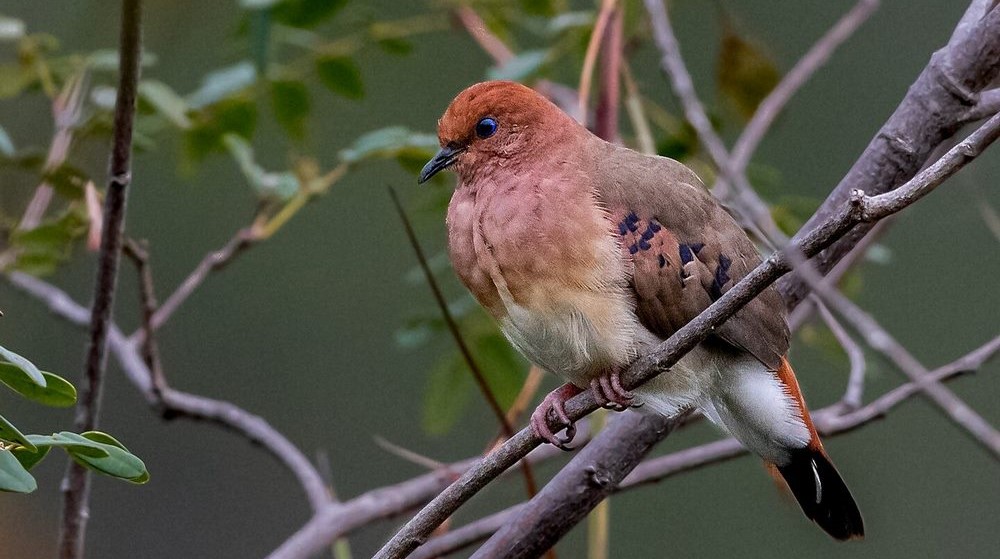
Columbina cyanopis, or the blue-eyed dove, in the Rolinha do Planalto Natural Reserve – credit, Hector Bottai CC BY-SA 4.0.

A UK zoo is celebrating after helping to hatch three of the world’s rarest birds in what could be a breakthrough moment in saving the critically-endangered species from extinction.

The trio of blue-eyed ground dove chicks were successfully hand-reared in Brazil, boosting the survival odds of one of the most endangered birds on the planet, only 11 of which are thought to remain in the wild.

An international team, including British experts from the Chester Zoo, managed to rear the birds in the Brazilian state of Minas Gerais, the only place they are found.

The team, also featuring Brazilian and American conservationists, say their arrival could provide a vital lifeline for the ultra-rare species by boosting their insurance population.

The blue-eyed ground dove was a species shrouded in mystery, with no confirmed records for more than 70 years, until its rediscovery in 2015.

“It’s a real privilege for Chester Zoo to be involved in the work to help conserve the blue-eyed ground dove,” said Andrew Owen, Chester Zoo’s head of birds.

“This unique species is on the brink of extinction and without the dedication and passion of all the conservationists involved, including Chester Zoo’s bird staff, this bird may be lost forever.”

“This year saw the successful hand-rearing of three blue-eyed ground doves – building on the successes of 2023 and 2024 and doubling the conservation-breeding insurance population.”

The effort to build on those successes started earlier this year, when a team of Brazilian and international bird conservationists were tasked with selecting and incubating a small number of wild-laid eggs. The resulting hatchlings would help to create an insurance population in human care.

Andrew traveled to Brazil to provide technical support while Victoria Kaldis, lead keeper for birds at Chester Zoo, also flew over to assist with the hand-rearing of the chicks. The effort was led by Minas Gerais’ Parque das Aves and SAVE Brasil, with additional support coming from the Toledo and Bronx zoos in the United States.

“Seeing these chicks is exciting. Each hatching represents a real chance to reverse the fate of this species,” said Paloma Bosso, technical director of Parque das Aves. “It is a joy and also a great responsibility.”

“With the arrival of these three new individuals, Parque das Aves is now home to six blue-eyed ground doves. All are being carefully monitored and are part of a coordinated reproductive management plan.”

The blue-eyed ground dove is Critically-Endangered according to the the International Union for Conservation of Nature’s Red List.

It once had a wide distribution in the Cerrado biome (the Brazilian savanna), but due to habitat loss driven by farming and timber plantations, it has radically declined.

Currently, the only known population is found in Botumirim in the state of Minas Gerais and a 2025 census confirmed the species remains exceedingly rare.“The blue-eyed ground dove depends on the efforts of many people and institutions, so that its song can be heard in the Cerrado for many years to come,” said Ben Phalan, head of conservation at Parque das Aves. UK Zoo Helps Hatch Three of World's Rarest Birds–Blue-Eyed Doves–with Only 11 Left in Wild
Read More........