Cameroon islands offer safe home for orphaned chimps


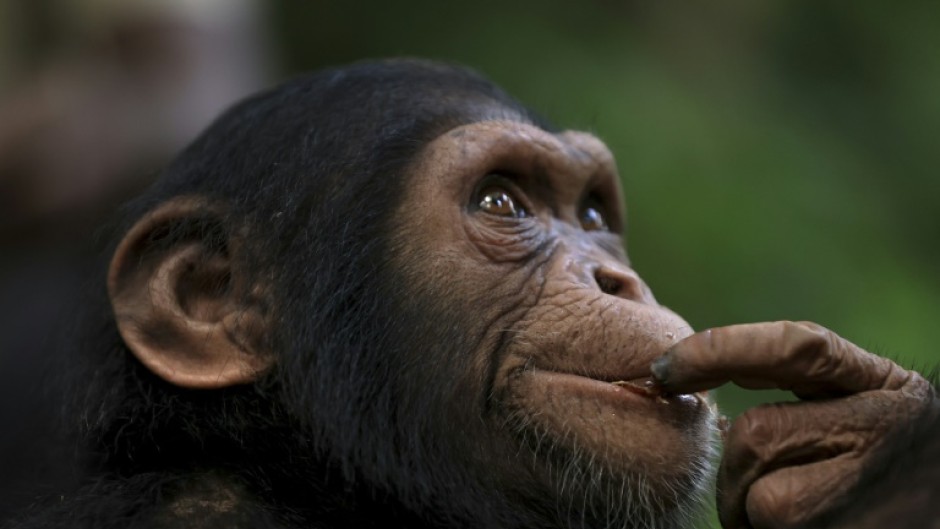
MARIENBERG - Adolescent chimps are, in some respects, rather similar to their human counterparts.

They live with mum until well into their teens, are sometimes a bit cheeky and, being highly social animals, struggle to survive alone until they have been taught how to fend for themselves.

So when poachers kill mother chimps for food, keep the young chained in captivity for the exotic pet trade, or the family group is destroyed when its forest home is cleared for commercial palm oil plantations, the orphaned chimps need help.

In Cameroon, the NGO Papaye International runs a sanctuary for the endangered animals on three islands in the Douala-Edea national park.

"The chimpanzees in the sanctuary are chimpanzees that have had a tragic past due to poaching, deforestation and groups that have been killed," said Marylin Pons Riffet, the 57-year-old French head of the charity.
AFP | Daniel Beloumou Olomo

"We only take in orphaned chimpanzees, who are young and therefore need the helping hand of man after having had a gun pointed at them or their habitat destroyed," she told AFP.

The charity helps the orphans become re-accustomed to surviving in semi-wild conditions, but on islands away from their only predator -- the humans with whom they share 98 percent of their DNA and a good degree of behaviour.

Populations of common chimpanzees, which used to roam across 26 countries in equatorial Africa, have plummeted since the 1980s, and they are at risk of extinction in the wild.

- We are family -

Fabrice Moudoungue, a 39-year-old carer, travels by boat every day to bring food to the three rainforest-covered islands on the Sanaga river where Papaye International's 34 chimps live

"Here Water Lily! Here Star!" he calls.

The chimps, who recognise his voice, scamper excitedly along the bank of Yakonzo-Okokong Island towards the boat and hug him when he wades out to offer them bananas, coconut, tomatoes and dates.
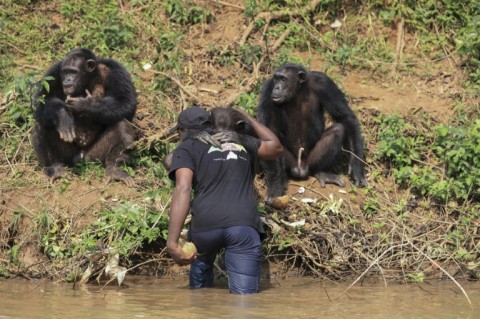
AFP | Daniel Beloumou Olomo

"They're not 'like' my family. They 'are' my family because we spend all the time, every day, with them," he said with a smile.

Chimps are usually fearful of humans and can be aggressive when scared, especially if they have been mistreated in captivity in the past.

But through daily, gentle contact, Moudoungue and his colleagues at the sanctuary have earned their trust.

"These are young ones that we released about four to five years ago. We visit them all the time to keep contact, so that in case one of them gets sick they will still accept us," said manager Francois Elimbi.

When he reaches Yatou Island, Honey wraps him in her long black arms.

The mature female chimp was released there in 2019 after needing almost 10 years of care at the sanctuary.

"It's inexplicable, very powerful. It even gives you goosepimples when a monkey hugs you. That means he still recognises you. You're his friend," Elimbi said.

- Special bond -

Tchossa and Conso are still too young and inexperienced to be released onto the islands.

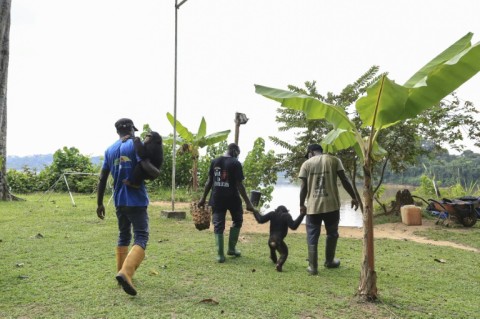
They have a big cage near the carers' lodgings on Yatou where they play on their swings and sleep in hammocks, awaiting their daily walk with the staff to rediscover the forest.

Alioum Sanda, 67, has a special bond with Conso.

"He has the marks of the shackles because after the poachers killed his mother, the little one didn't trust them so they shackled him," he said, pointing to the scars on the chimp's body.

He recalled how Conso had changed since his arrival at the sanctuary.

"He was very aggressive considering the mistreatment he'd received when he was in Douala. It took at least two months before he gave me his trust," Sanda recalled.

"I would put nappies on him. I would wipe his wounds."

Conso, now fully recovered, started dancing around, sensing it was nearly time for his daily outing.

Sanda took his bony hand.

"If we don't do what we are doing, they will disappear," he said softly.

“We'll just say then that there used to be an animal called a chimpanzee. We must try to preserve them so that future generations -- our grandchildren -- can see them too." The information contained in the article posted represents the views and opinions of the author and does not necessarily represent the views or opinions of eNCA.com. Cameroon islands offer safe home for orphaned chimps
Read More........

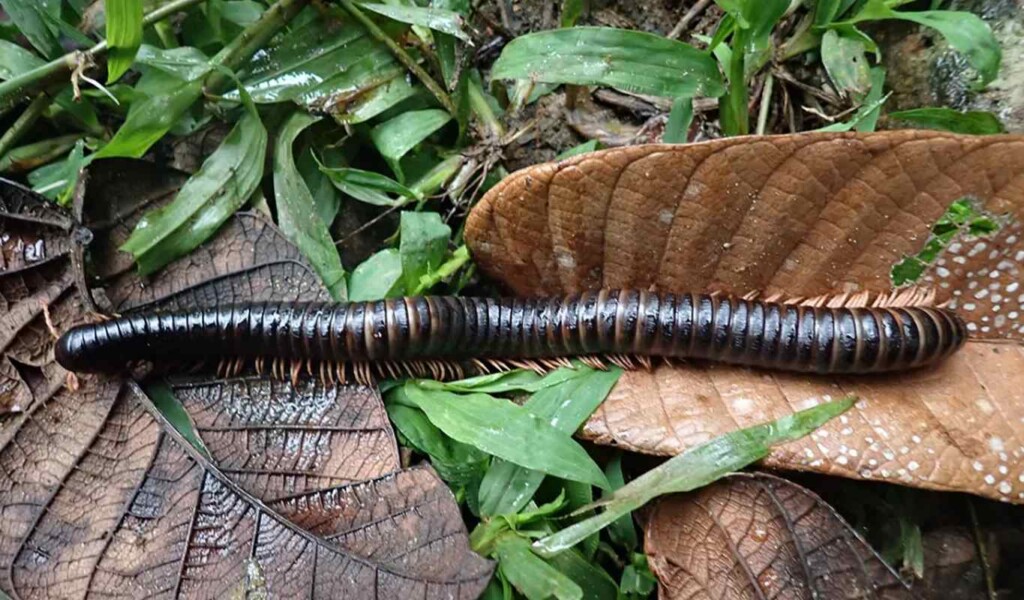
Giant Millipede Lost to Science for a Century Rediscovered in Madagascar with 20 More Species in World-First Expedition

Spirostreptus sculptus (Photo by Dmitry Telnov/NHM London, UK)
It may be the very definition of a creepy crawly, but this species of giant millipede was a major discovery for a recent scientific expedition to Madagascar.

Not seen in 126 years, it was part of a bevy of species identified by scientists among the trees and waterfalls in a remote section of the largest forest on the island, called Makira.

The expedition was part of Re:wild’s Search for Lost Species program, on the progress of which GNN has reported substantially over the last four years. It included teams of scientists and conservationists from 4 different organizations, as well as local guides.


Different specialized team members were searching for mammals, fish, birds, reptiles, amphibians, and invertebrates that have not had a documented sighting in at least a decade or more, but are not assessed as extinct by the IUCN Red List of Threatened Species. The full team, which numbered more than 30 people, searched Makira for several weeks in September 2023 and spent several months analyzing their results.

“In the past the Search for Lost Species has primarily looked for one or two species on each expedition, but there are now 4,300 species that we know of around the world that have not been documented in a decade or more,” said Christina Biggs, lost species officer for Re:wild, whose eDNA work during the expedition detected 37 additional vertebrate species that the taxonomic experts didn’t sight.


“Madagascar is a biodiversity hotspot and Makira is an underexplored area within the country, so we decided to pilot a new model for lost species searches there. We convened a group of scientists to search for as many species as possible, and it proved successful.”

The expedition team initially had a list of 30 lost species they were hoping to find in Makira. The species on the list included 3 mammals, 3 fish, 7 reptiles, 12 insects, and 5 spiders. With the help of local guides and fishermen, the team found the 3 fish species on the list highlighted by the Makira rainbow fish, not seen in 20 years.

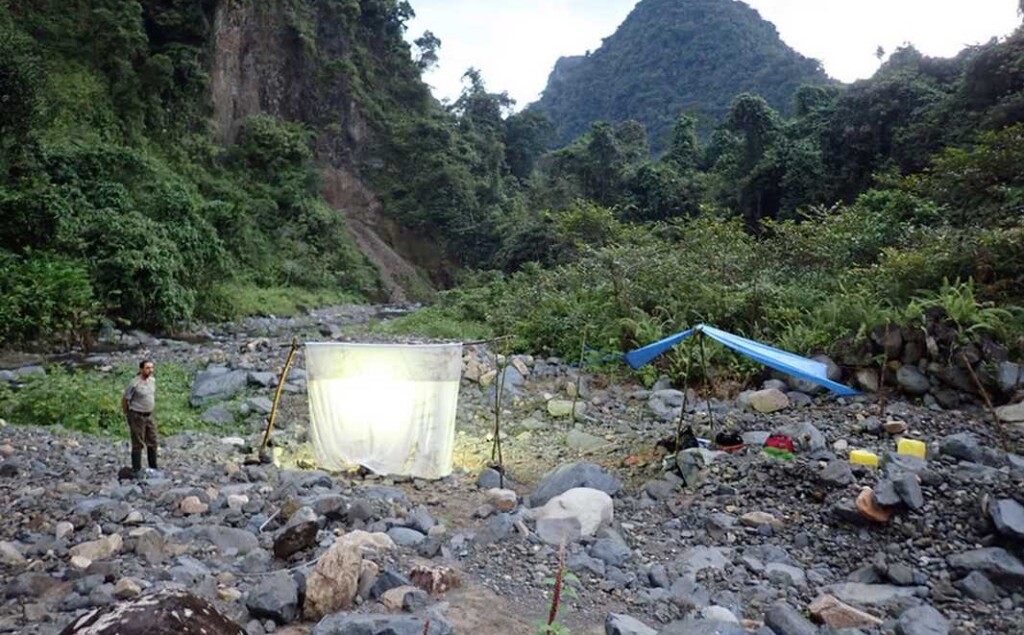
Setting up a light trap in Makira to survey invertebrates at night during a lost species expedition in September 2023. (Photo by Merlijn Jocque)
“When we didn’t find anything during the first five days of the expedition it was very frustrating,” said Tsilavina Ravelomanana, fish biologist at Antananarivo University, who had been to Makira 20 years earlier to survey freshwater fish. “We sampled a small tributary of the Antainambalana River, then the main river, then upstream, and then downstream, but we still didn’t find any fish.”

Two of the expedition’s local guides, Melixon and Edmé, hiked around a steep waterfall and over mountains to villages that were within a few days’ walk of the expedition’s base camp along the Antainambalana River. After several days, the guides were able to find a Makira rainbow fish, a common fish to local communities, and brought it back to the camp in a bucket of water.

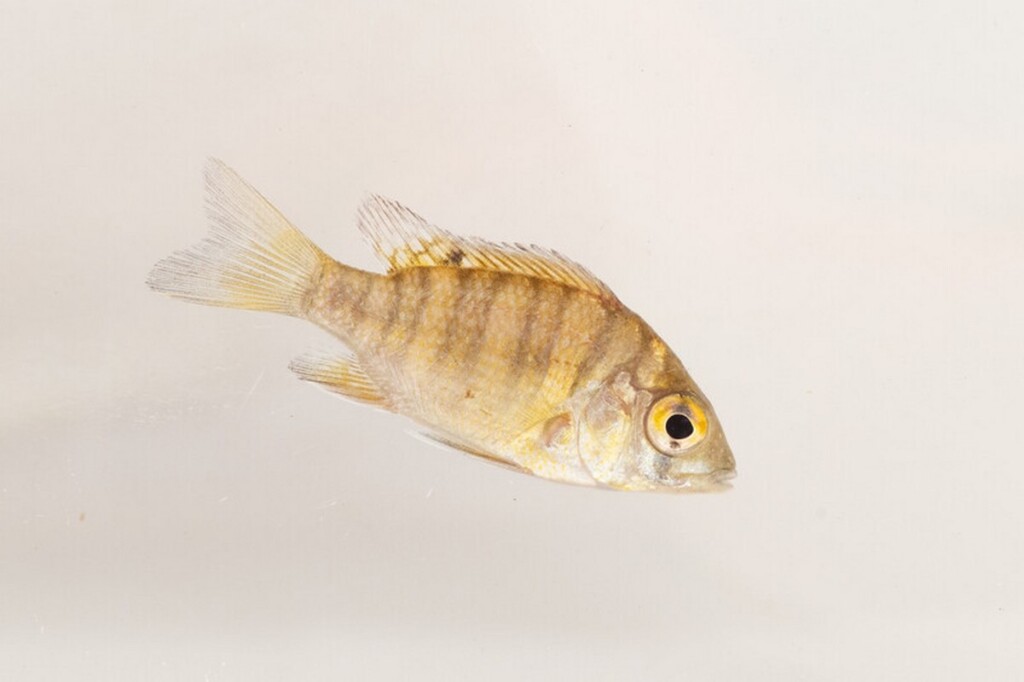
Ptychochromis makira, a species lost to science since 2003. It was rediscovered in 2023 with the help of local guides and fishermen (Photo by John C. MittermeierAmerican Bird Conservancy)
The semi-translucent fish is only a few inches long. The guides were also able to find Ptychoromis makira, which biologists think may only live in one small area near Andaparaty, and is a rare species—even to local communities.

Makira proved to be home to several lost species of insects including bugs and some that were not even on the initial list of lost species for the area. Entomologists found two different species of ant-like flower beetles that had been lost to science since 1958. However, the most unexpected rediscovered lost species was a giant, dark brown millipede.

“I personally was most surprised and pleased by the fact that the giant millipede Spirostreptus sculptus, not uncommon in Makira Forest, appeared to be another lost species known only from the type specimen described in 1897,” said Dmitry Telnov, an entomologist on the expedition team. “The longest specimen of this species we observed in Makira was a really gigantic female measuring 27.5 centimeters [10.8 inches] long.”

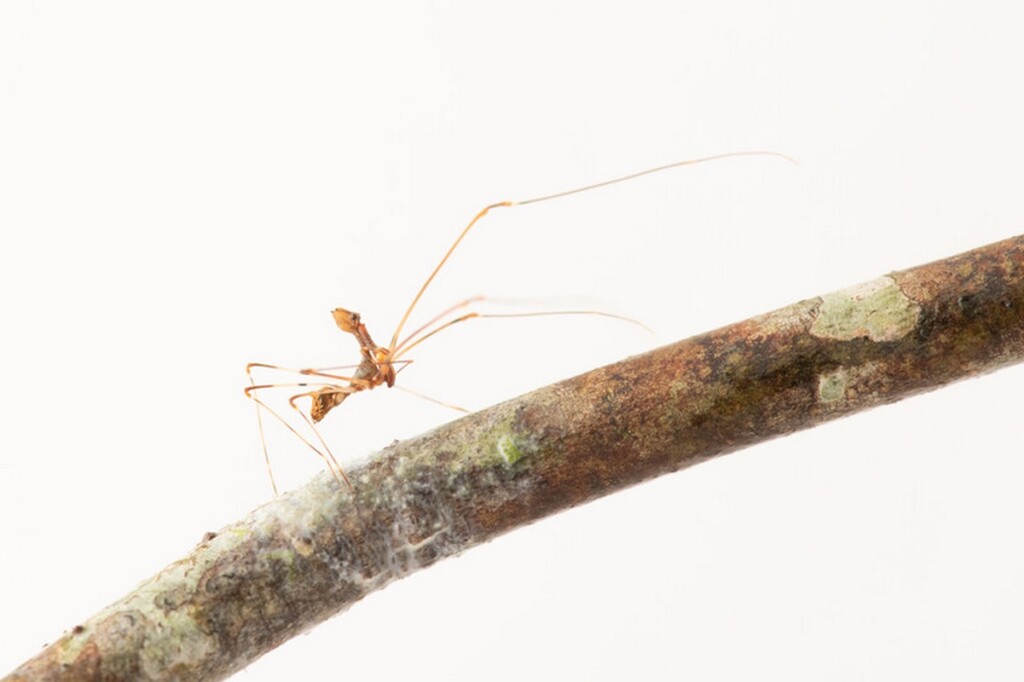
New species of spider Madagascarchaea sp. discovered during Makira expedition (Photo by John C. MittermeierAmerican Bird Conservancy)

The expedition team also found a variety of spider species in Makira, including five jumping spiders that were lost to science and 17 spiders that are new to science. The longest-lost spider was the jumping spider Tomocyrba decollata, which had not had a documented sighting since 1900, when it was first described by science.

The most unexpected discovery was a new species of zebra spider. One evening a hanging egg sac in the entrance of a small cave caught the eye of one of the team members.

“I immediately recognized them as something special,” said Brogan Pett, director of the SpiDiverse working group at the Biodiversity Inventory for Conservation and doctoral candidate at the University of Exeter.

“Pendulous egg sacs are one of the characteristics of the family of zebra spiders this new species belongs to. I crawled a short way inside the cave and saw a few adult spiders guarding egg sacs—they were quite large spiders and it was remarkable that they had gone unrecognized for so long.”

Although the expedition found nearly two dozen lost species, there were several that the expedition team was unable to find including the Masoala fork-marked lemur; a large chameleon, Calumma vatososa, meaning “beautiful stone” in Malagasy, and the recently rediscovered dusky tetraka. The lemur has not had a documented sighting since 2004 and the chameleon since 2006.

The dusky tetraka was rediscovered by the Search for Lost Birds in Madagascar in December 2022 and January 2023 in two different locations in Andapa and Masoala. Makira is between these sites, and ornithologists were hoping to determine if the species also lives there. They were unable to find any of the cryptic olive and yellow birds during the expedition, but they are not ready to rule out the forest as a habitat for the species yet.

“The Makira Forest has the potential for two rare bird species, the dusky tetraka, and the Madagascar serpent eagle, but we were not able to find them this time,” said Lily Arison Rene de Roland, Madagascar program director for the Peregrine Fund, another organization that joined the expedition.Madagascar has one of the highest rates of endemism of anywhere on planet Earth. For millions of years, plants and animals have evolved in seclusion—creating unique ecosystems that don’t exist anywhere else. Giant Millipede Lost to Science for a Century Rediscovered in Madagascar with 20 More Species in World-First Expedition
Read More........