Those Who Got Shingles Vaccine Were 20% Less Likely to Get Dementia in Study of 280,000 Seniors

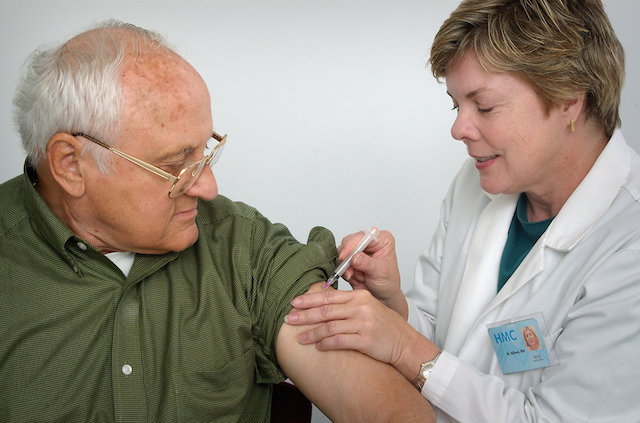
CDC library – public domain

Older people who received the vaccine for shingles had a 20% lower risk of dementia, according to researchers who called the results “remarkable”.

The study looked into the health records of seniors in Wales and revealed that those who received the shingles vaccine were 20% less likely to develop dementia over the next seven years than those who didn’t receive the jab.

Scientists say the findings support an emerging theory that viruses which affect the nervous system can increase the risk of dementia.

The new findings suggest that a preventive intervention for dementia is already close at hand.

Shingles is a viral infection that produces a painful rash, and is caused by the same virus that causes chicken pox, varicella-zoster. After people contract chicken pox, usually in childhood, the virus remains dormant in the nerve cells for life. In people who are older or have weakened immune systems, the dormant virus can reactivate and cause shingles.

Previous studies based on health records have linked the shingles vaccine with lower dementia rates, but the research could not account for one major source of bias: people who are vaccinated also tend to be more health conscious.

The study’s senior author, Dr. Pascal Geldsetzer of Stanford Medicine, said that most studies suffered from the basic problem. “In general, they’re seen as not being solid enough evidence to make any recommendations on.”

But two years ago, Dr. Geldsetzer recognized a fortuitous “natural experiment” in the rollout of the shingles vaccine in Wales that seemed to sidestep the bias.

The vaccination program, which began in September 2013, specified that anyone who was 79 was eligible for the vaccine for one year. That age rule, designed to ration the limited supply of the vaccine, also meant that the slight difference in age between 79 and 80 made all the difference in who had access to the vaccine.

By comparing people who turned 80 just before the roll-out with those who turned 80 just after, the circumstances were about as close to a randomized controlled trial as possible, without actually conducting one—and the results are all well-documented in the country’s health records.

(Watch a Stanford video about the study, or continue reading below…)

The Stanford team analyzed details of more than 280,000 adults who did not have dementia at the start of the vaccination program. They focused their analysis on those closest to either side of the eligibility threshold – comparing people who turned 80 in the week before with those who turned 80 in the week after.

“We know that if you take a thousand people at random born in one week and a thousand people at random born a week later, there shouldn’t be anything different about them on average,” explained Geldsetzer.

“What makes the study so powerful is that it’s essentially like a randomized trial with a control group – those a little bit too old to be eligible for the vaccine – and an intervention group, those just young enough to be eligible.”

Fast-forward seven years and by 2020, one in eight of the Welsh seniors had been diagnosed with dementia.

But those who received the shingles vaccine were 20% less likely to have developed dementia than those who were unvaccinated.

“It was a really striking finding,” said Geldsetzer. “This huge protective signal was there, any which way you looked at the data.”

The scientists looked for other variables that might have influenced dementia risk, but found none.

“Because of the unique way in which the vaccine was rolled out, bias in the analysis is much less likely than would usually be the case. The signal in our data was so strong, so clear and so persistent.”

The study, published in the journal Nature, also showed that protection against dementia was much more pronounced in women than in men.

Geldsetzer believes that could be because women, on average, have higher antibody responses to vaccination, and because shingles is more common in women than in men.

In the past two years, his team has replicated the Wales findings in health records from other countries, including England, Australia, New Zealand and Canada, that had similar rollouts of the vaccine.

“We just keep seeing this strong protective signal for dementia in dataset after dataset,” insisted Geldsetzer.

He is seeking funding for a larger trial, which would provide even stronger proof of cause and effect, noting that the live-attenuated vaccine used at that time contained a weakened form of the virus, which is no longer manufactured by pharmaceutical companies.“It would be a very simple, pragmatic trial because we have a one-off intervention that we know is safe.” Those Who Got Shingles Vaccine Were 20% Less Likely to Get Dementia in Study of 280,000 Seniors
Read More........

Using tranquillisers on racehorses is ethically questionable and puts horses and riders at risk

Australia’s horse racing industry is in the spotlight after recent allegations of tranquilliser use on horses so they can be “worked” (exercised) between race days.

A recent ABC report stated workers in the Australian racing industry allegge horses are being routinely medicated for track work at the peril of rider and horse safety.

Using tranquillisers on horses during training and management may not be illegal but this could breach nationwide racing rules.

The prevalence of the practice is not clear but many industry insiders report it as common.

Racing Australia had “recently become aware” of the use of acepromazine for track work and had begun collecting data about the practice, but had not been made aware of any complaints or concerns.

What medications are horses given?

Horses may be given a low dose of a tranquilliser, most commonly acepromazine. This makes their behaviour easier to control in certain situations, such as when they’re being examined by a veterinarian.

This drug must be prescribed by an attending veterinarian, and it can calm unfriendly and apprehensive animals. This could assist with making excited, hyperactive horses easier to control and less likely to buck, rear or put people at risk of injury from uncontrolled flight responses.

But proprioception – the way horses feel the world around them, notably the ground beneath them – is likely to be compromised. So, from a work health and safety perspective, the risk of tripping and falling is front of mind.

Other risks to horses from acepromazine can include impaired blood clotting, lower blood pressure, respiratory depression and, in rare cases, permanent paralysis of the penis in male horses.

A dangerous combination

In the racing industry, tranquillisers are given to reduce the difficulties that come from riding and handling very fit, young horses that have been bred, fed and managed to be highly reactive and move at very high speeds.

This combination of selective breeding and only basic training can make them very difficult to control both during trackwork, when speeds of over 60 kilometres per hour can be reached, as well as during routine management.

Thoroughbreds’ diets, intensive management and relative lack of behavioural conditioning can be a dangerous combination.

The diets and confinement make them excitable and likely to take off; if they do, the lack of appropriate training makes them difficult to stop.

What makes race thoroughbreds hard to handle?

All horses have three fundamental needs – friends, forage and freedom, known as the “three F’s”.

Friends: horses have evolved to spend time with large mixed groups. They feel safer in these groups and this safety is highly valued: mutual grooming with preferred conspecifics (other equids) can calm them. In contrast, most stabled horses have no choice about who their neighbours are and can usually only have minimal physical interactions. Once out on the track, horses are highly motivated to stay with other horses and are more likely to be distracted rather than to attend to the rider.

Freedom: horses evolved to move for up to 70% of their day, which is essential for their welfare. In contrast, most racehorses, and indeed many other performance horses, often spend up to 23 hours a day confined in stables. Unfortunately, stabled horses are harder to train and more likely to buck. Prolonged confinement leads to many horses becoming more reactive, a state that increases the likelihood of injuries to riders.

Forage: horses are trickle feeders that graze on high-fibre, low-nutrient forages for up to 16 hours a day. In contrast, racehorses are fed high-energy diets that can be quickly consumed, leading to risk of digestive disturbances, such as gastric ulcers and long periods during which, confined to their stables, they have nothing to do.

Modern racehorse management and training often denies them access to these “three F’s”, which leads to behavioural problems that are then sometimes managed by tranquillising the horse.

Lastly, there’s the kind of work racehorses do.

High-intensity work increases the concentrations of adrenaline and cortisol to support the energy demands of the work. However, this increases the horse’s arousal and reduces their ability to attend to rider cues.

This can make them hard to control.

Collectively, these factors create horses that are not having their fundamental needs met. It’s no wonder that, once free of the confinement of their stables, they can become excited and hard to control, putting their riders and even themselves at risk of injury.

A band-aid solution

There is no textbook that advises vets on how to diagnose or treat horses that are hyperactive, nor are there any data on how horses can be safely tranquillised before being ridden.

However, a UK government data sheet for the most common equine tranquilliser globally, acepromazine maleate, states: “do not, in any circumstances, ride horses within the 36 hours following administration of the product”.

In Australia, racing trainers must keep records of all medications given to horses. Unfortunately, the veterinarians who supply this medication to trainers for use on racehorses are usually doing so without a specific diagnosis or treatment plan.

Routine use of tranquillisers is a band-aid solution to an industry-wide practice of confining, over-feeding and under-training fit, young horses that have been bred to run.

If this practice is ever policed, there will likely be enormous repercussions for the sustainability of racing.

As a first step to addressing this issue, the industry could commit to monitoring and publishing annual data on the routine use of tranquillisers.The Conversation

Paul McGreevy, Professor, School of Veterinary Science, University of Sydney and Cathrynne Henshall, Post-doctoral Fellow, School of Agricultural, Environmental and Veterinary Sciences, Charles Sturt University

This article is republished from The Conversation under a Creative Commons license. Read the original article.

Read More........