Newly Identified Neural Stem Cells Could Transform Parkinson's Treatment

Credit: Gerd Altmann/ Pixabay

The detection of peripheral neural stem cells could transform treatment of Parkinson's disease and spinal cord injuries.

A team of researchers from more than ten laboratories in Europe, Asia and North America examined newly identified cells in mice called peripheral neural stem cells. These cells share important molecular and functional characteristics with neural stem cells of the brain. Peripheral neural stem cells have the same cell morphology, self-renewal and differentiation capacity as neural stem cells of the brain. They express several specific markers and have genome-wide transcriptional and epigenetic profiles that are consistent with those of neural stem cells in the brain. Furthermore, many peripheral neural stem cells that migrate out of the neural tube can differentiate into mature neurons and, to a limited extent, glial cells during embryonic and postnatal development.

The discovery of the new cell type not only provides new insights into the development of the mammalian nervous system. Their existence also challenges a long-standing hypothesis in neuroscience and, because they can be grown in substantial numbers in the petri dish, opens up new possibilities for regenerative medicine. Furthermore, obtaining neural stem cells from the brain is not a favoured method. By contrast, obtaining neural stem cells from other organs or tissues appears to be a viable and practical approach. “This was the longest-running project in my career. Originally, we wanted to replicate experiments that were published more than 10 years ago, namely, to induce pluripotent stem cells through low pH. Like other laboratories, we were unable to reproduce this. But fortunately, our attempts were not in vain: We found previously unknown peripheral neural stem cells, challenging the long-held dogma that neural stem cells do not exist outside the central nervous system,” says Hans Schöler from the Max Planck Institute for Molecular Biomedicine and the senior author of the study.

Dong Han, the lead researcher of the study, who carried out most of the experiments in this work as a member of Schöler's laboratory, emphasised the possible implications of this result: “If these cells exist in humans and can be propagated indefinitely as they can in mice, they could have enormous therapeutic potential. This is particularly exciting because accessible peripheral neural stem cells could provide a new avenue for neural repair and regeneration, bypassing many of the challenges associated with sourcing stem cells from the central nervous system.”
Plasticity in the nervous system

The discovery of peripheral neural stem cells outside the central nervous system suggests a previously unrecognised level of cellular plasticity within the nervous system. In contrast to neural crest-derived stem cells, which have a limited self-renewal capacity, peripheral neural stem cells closely resemble brain-derived neural stem cells and show the ability to sustain neurogenesis over an extended period of time.

Hans Schöler emphasised the crucial role of interdisciplinary cooperation in making this discovery possible: “We involved many laboratories with different areas of expertise to ensure that this study is watertight. The combination of genetic lineage analysis, single-cell analysis and functional tests in vivo provides compelling evidence that these peripheral neural stem cells are a genuine and previously unrecognised component of the mammalian nervous system.”
Potential Impact on Medicine

The ability to harness peripheral neural stem cells could have far-reaching implications for the treatment of neurodegenerative diseases and nerve cell repair strategies. If such cells exist in humans, they could provide an easily accessible source of neural stem cells that could be used in the future to treat diseases such as Parkinson's disease, spinal cord injury and other neurodegenerative disorders. Future studies will aim to establish the existence of peripheral neural stem cells in humans and explore their full therapeutic potential. The results thus pave the way for further research into the role of these cells in human biology and their potential application in the treatment of neurodegenerative diseases and in regenerative therapies.

Reference: Han D, Xu W, Jeong HW, et al. Multipotent neural stem cells originating from neuroepithelium exist outside the mouse central nervous system. Nat Cell Biol. 2025. doi: 10.1038/s41556-025-01641-w

This article has been republished from the following materials. Note: material may have been edited for length and content. For further information, please contact the cited source. Our press release publishing policy can be accessed here.b Newly Identified Neural Stem Cells Could Transform Parkinson's Treatment | Technology Networks
Read More........

Those Who Got Shingles Vaccine Were 20% Less Likely to Get Dementia in Study of 280,000 Seniors

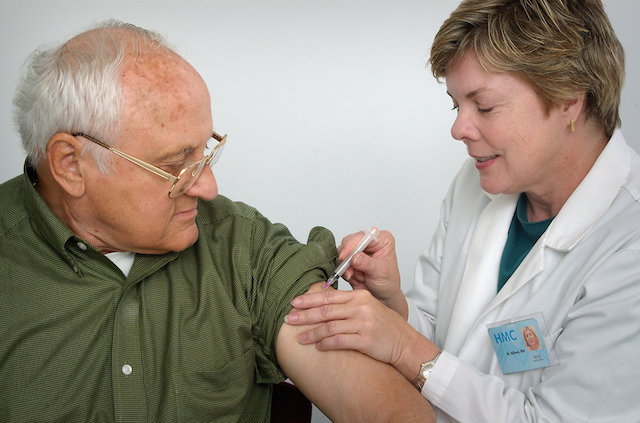
CDC library – public domain

Older people who received the vaccine for shingles had a 20% lower risk of dementia, according to researchers who called the results “remarkable”.

The study looked into the health records of seniors in Wales and revealed that those who received the shingles vaccine were 20% less likely to develop dementia over the next seven years than those who didn’t receive the jab.

Scientists say the findings support an emerging theory that viruses which affect the nervous system can increase the risk of dementia.

The new findings suggest that a preventive intervention for dementia is already close at hand.

Shingles is a viral infection that produces a painful rash, and is caused by the same virus that causes chicken pox, varicella-zoster. After people contract chicken pox, usually in childhood, the virus remains dormant in the nerve cells for life. In people who are older or have weakened immune systems, the dormant virus can reactivate and cause shingles.

Previous studies based on health records have linked the shingles vaccine with lower dementia rates, but the research could not account for one major source of bias: people who are vaccinated also tend to be more health conscious.

The study’s senior author, Dr. Pascal Geldsetzer of Stanford Medicine, said that most studies suffered from the basic problem. “In general, they’re seen as not being solid enough evidence to make any recommendations on.”

But two years ago, Dr. Geldsetzer recognized a fortuitous “natural experiment” in the rollout of the shingles vaccine in Wales that seemed to sidestep the bias.

The vaccination program, which began in September 2013, specified that anyone who was 79 was eligible for the vaccine for one year. That age rule, designed to ration the limited supply of the vaccine, also meant that the slight difference in age between 79 and 80 made all the difference in who had access to the vaccine.

By comparing people who turned 80 just before the roll-out with those who turned 80 just after, the circumstances were about as close to a randomized controlled trial as possible, without actually conducting one—and the results are all well-documented in the country’s health records.

(Watch a Stanford video about the study, or continue reading below…)

The Stanford team analyzed details of more than 280,000 adults who did not have dementia at the start of the vaccination program. They focused their analysis on those closest to either side of the eligibility threshold – comparing people who turned 80 in the week before with those who turned 80 in the week after.

“We know that if you take a thousand people at random born in one week and a thousand people at random born a week later, there shouldn’t be anything different about them on average,” explained Geldsetzer.

“What makes the study so powerful is that it’s essentially like a randomized trial with a control group – those a little bit too old to be eligible for the vaccine – and an intervention group, those just young enough to be eligible.”

Fast-forward seven years and by 2020, one in eight of the Welsh seniors had been diagnosed with dementia.

But those who received the shingles vaccine were 20% less likely to have developed dementia than those who were unvaccinated.

“It was a really striking finding,” said Geldsetzer. “This huge protective signal was there, any which way you looked at the data.”

The scientists looked for other variables that might have influenced dementia risk, but found none.

“Because of the unique way in which the vaccine was rolled out, bias in the analysis is much less likely than would usually be the case. The signal in our data was so strong, so clear and so persistent.”

The study, published in the journal Nature, also showed that protection against dementia was much more pronounced in women than in men.

Geldsetzer believes that could be because women, on average, have higher antibody responses to vaccination, and because shingles is more common in women than in men.

In the past two years, his team has replicated the Wales findings in health records from other countries, including England, Australia, New Zealand and Canada, that had similar rollouts of the vaccine.

“We just keep seeing this strong protective signal for dementia in dataset after dataset,” insisted Geldsetzer.

He is seeking funding for a larger trial, which would provide even stronger proof of cause and effect, noting that the live-attenuated vaccine used at that time contained a weakened form of the virus, which is no longer manufactured by pharmaceutical companies.“It would be a very simple, pragmatic trial because we have a one-off intervention that we know is safe.” Those Who Got Shingles Vaccine Were 20% Less Likely to Get Dementia in Study of 280,000 Seniors
Read More........